
























NATO commander says Western weapons must be redesigned for modern warfare
French Adm. Pierre Vandier said Ukraine has exposed an arsenal that cannot be produced at the scale now required, warning there is "no way to produce 50,000 Patriots a year."
Days after NATO allies committed tens of billions of dollars to new air and missile defenses, the alliance’s top transformation commander warned that the West must fundamentally redesign its weapons and industrial base to withstand attacks at the scale now being demonstrated in Ukraine and the Middle East.
"Today, the math is not in favor of the West," Adm. Pierre Vandier, NATO’s Supreme Allied Commander Transformation (SACT), told Fox News Digital in an exclusive interview following the alliance’s summit in Ankara, Turkey, in early July.
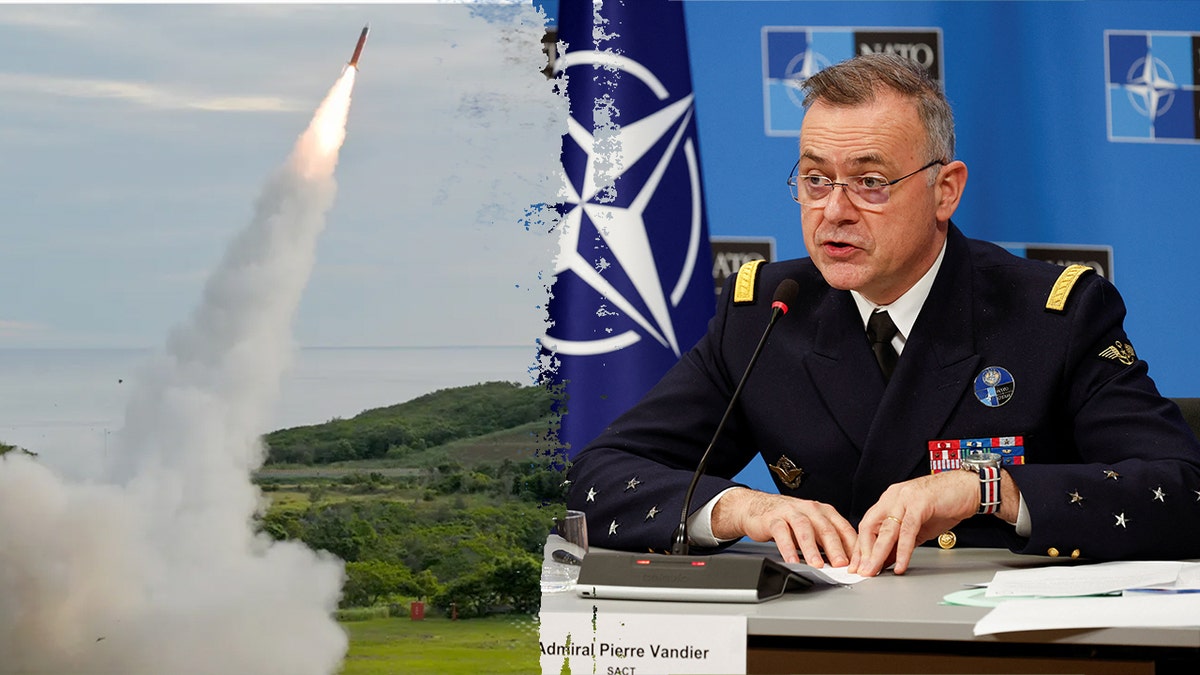
A U.S.-made MIM-104 Patriot surface-to-air missile is launched during a live-fire exercise at the Chiupeng missile base in Pingtung County on Aug. 20, 2024, Adm. Pierre Vandier ( )
The summit produced commitments to acquire 900 Patriot missiles and invest more than $40 billion in counter-drone capabilities throughout five years.
But Vandier argued that simply buying more of the West’s existing weapons will not solve the underlying problem.
TRUMP ENTERS FINAL NATO SUMMIT DAY AS UKRAINE, DEFENSE SPENDING TAKE CENTER STAGE
Russia’s nightly barrages against Ukraine have exposed an air-defense model designed for smaller numbers of incoming threats. The U.S.-Iran conflict has simultaneously intensified demand for the high-end interceptors needed to defeat ballistic missiles, including Patriots and Terminal High Altitude Area Defense (THAAD) that cannot quickly be replaced.
"There is no way to produce 50,000 Patriots a year," Vandier said. "We don’t have the supply chain, and it’s not worth doing that given the cost of the weapon."
Instead, Vandier said NATO needs a layered mix of defenses: cheaper weapons that can be mass-produced to counter waves of drones, while preserving advanced interceptors for ballistic missiles and other sophisticated threats.
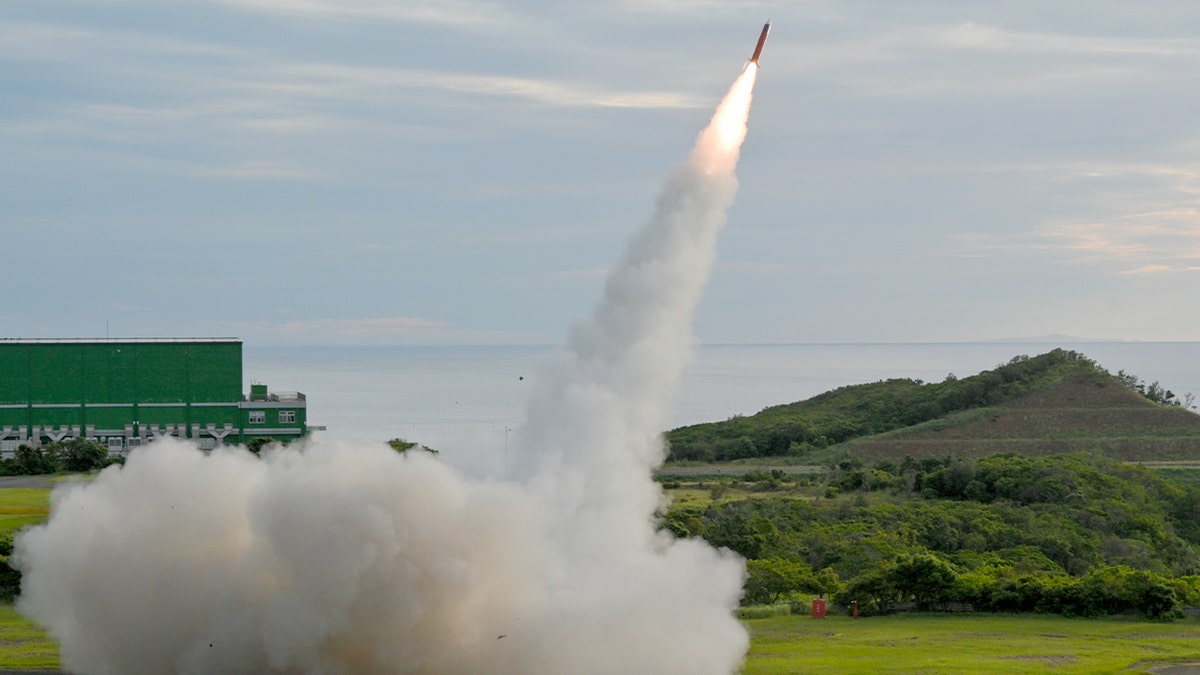
A U.S.-made MIM-104 Patriot surface-to-air missile is launched during a live-fire exercise at the Chiupeng missile base in Pingtung County Aug. 20, 2024. (Sam Yeh/AFP via Getty Images)
THE TWO MOST IMPORTANT AMERICAN WEAPONS SYSTEMS NATO IS EAGER TO HAVE
"You need to have attritable, low-cost, mass-produced weapons to just kill the low-cost weapons that are coming by big waves," Vandier said. "And then you need still the exquisite, complex weapons to kill the most complex weapons, as ballistic missiles."
Trump announced at the summit that the United States would grant Ukraine a license to manufacture Patriot interceptors, potentially allowing Kyiv to build more of the weapons it urgently needs to defend against Russian ballistic missiles.
But asked whether the announcement changed his assessment that Patriots alone could not protect Europe throughout the next five years, Vandier pointed to a deeper obstacle: Western weapons were designed around an industrial base that no longer exists.
UKRAINE’S BATTLEFIELD IS TRANSFORMING THE FUTURE OF NATO
"The design needs to change," Vandier said. "We are at a moment where some stuff will be redesigned under pressure to be mass-produced."
NATO also is attempting to transform against a threat that is changing in real time. Asked about a recent Russian live-fire exercise on Lake Peipus, between Estonia and Russia, which Estonia’s defense minister assessed was likely practice against Ukrainian-style naval drones, Vandier said Russia has demonstrated an ability to absorb battlefield lessons and adjust "on a weekly basis."
"War — if you do not adapt, you die," Vandier said. "All your brain is about how you outmatch, outpace, outrun the enemy. And so Russia is not that bad at that."
"For NATO now, it’s a question of speed of adaptation," Vandier said. "It’s a mind game."
Ukraine’s defense industry, meanwhile, is increasingly setting the pace for the larger Western manufacturers that once supplied most of its weapons, Vandier said. Ukrainian companies have been able to develop, field and modify systems quickly in response to changes on the battlefield.
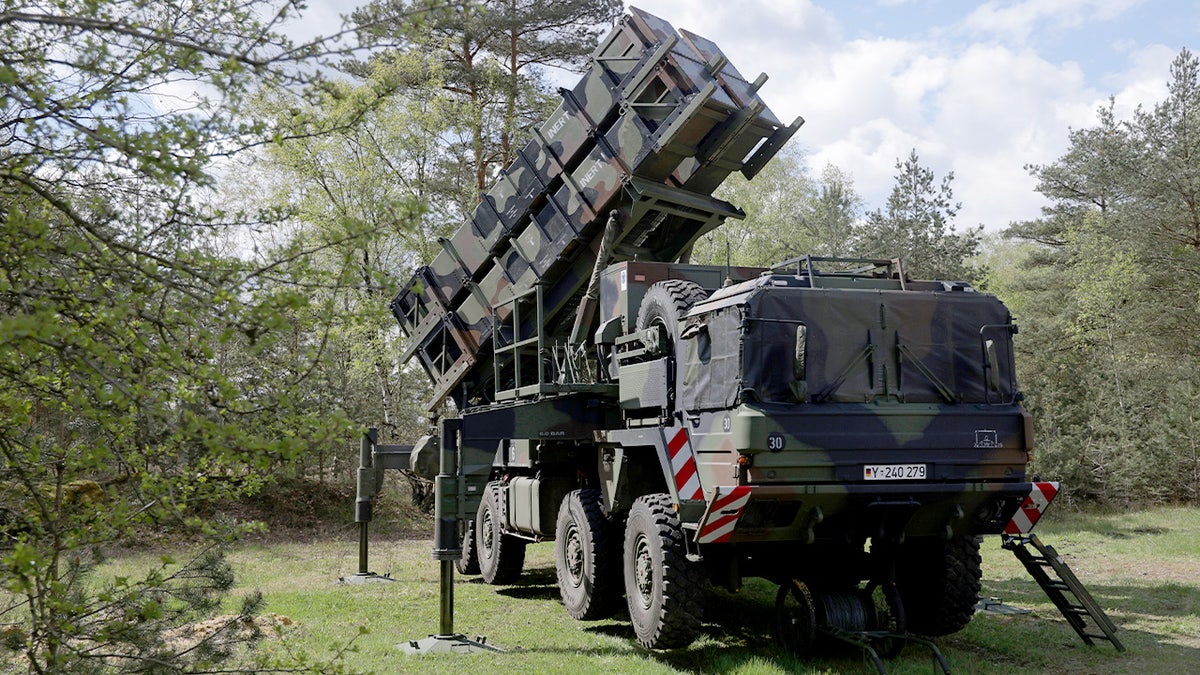
President Donald Trump said the United States would send more Patriot missiles to Ukraine during a meeting with NATO Secretary General Mark Rutte in the Oval Office on July 14, 2025. (Sean Gallup/Getty Images)
"The very agile and fast-evolving industrial base in Ukraine is now giving the pace to the European and Western industry," Vandier said.
But the technological competition is not confined to drones and air defenses. Vandier warned that the collapse of the Intermediate-Range Nuclear Forces Treaty has reopened a broader race over long-range missiles in Europe, as Russia and NATO allies seek weapons capable of holding targets farther behind enemy lines at risk.
The 1987 treaty prohibited the United States and Russia from possessing ground-launched missiles with ranges between 500 and 5,500 kilometers. The first Trump administration withdrew from the agreement in 2019 after accusing Moscow of violating it, an allegation Russia denied.
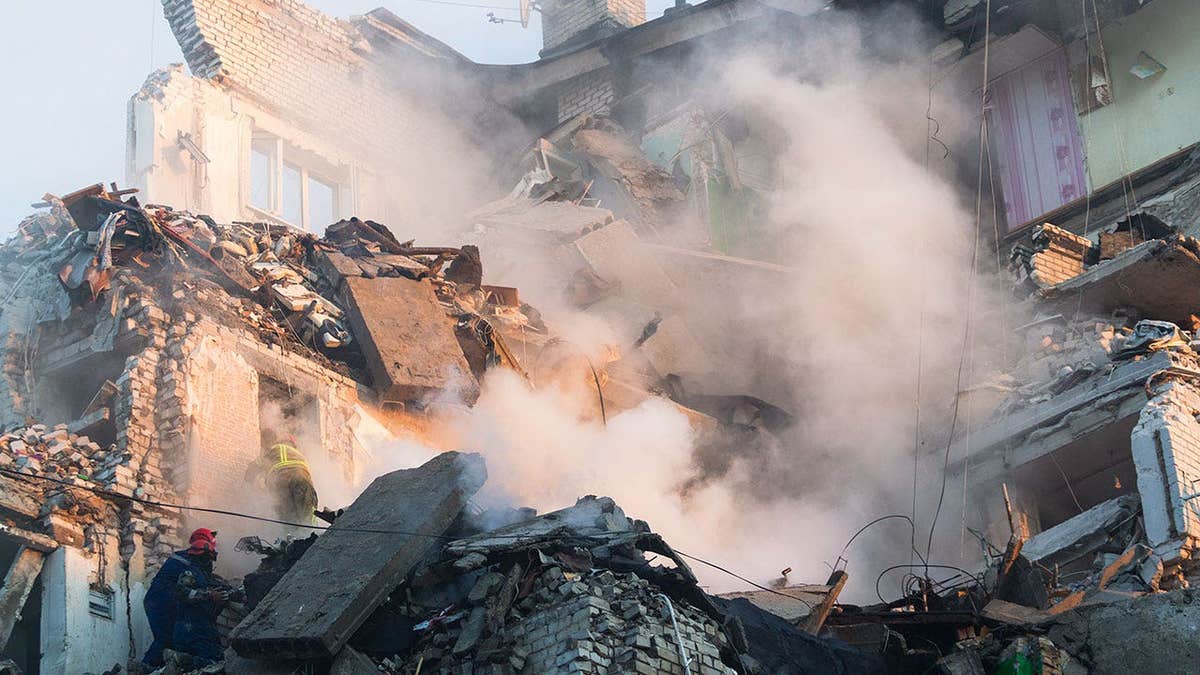
Rescuers conduct search and rescue operations at a multi-storey residential building damaged in a massive Russian missile and drone attack in the Darnytskyi district of Kyiv, Ukraine, on July 2, 2026. Russian forces launched a large-scale attack on the city using strike drones and various types of missiles. Private homes, apartment buildings, an emergency medical substation, and a hotel building were damaged (Kyrylo Chubotin/Ukrinform)
CLICK HERE TO DOWNLOAD THE FOX NEWS APP
Vandier said the disappearance of those limits has produced a period of "complete strategic instability," with both sides under pressure to develop new capabilities to preserve deterrence.
"The Pandora’s box is open again," Vandier said, "and we’ll try to close it down one day."
