





















Supreme Court sides with marijuana user in gun case, protecting Second Amendment rights
The Supreme Court delivered a unanimous ruling siding with a marijuana user in a gun case, asserting that the government cannot prosecute individuals for firearm possession simply due to cannabis use. Fox News contributor Joey Jones highlights the ruling's importance for Second Amendment rights, drawing a comparison to alcohol and emphasizing responsible gun ownership by marijuana cardholders in Florida.
The Supreme Court agreed Monday to hear an Alaska man’s challenge to the state’s effort to confiscate his plane over a six-pack of beer, setting the stage for a case that could upend the ability of law enforcement to impose asset forfeiture.
Kenneth Jouppi, now 82, was operating a one-man air taxi service using his personally-owned 1969 Cessna plane in 2012 when Alaska state troopers executed a search warrant on his plane and found alcohol on board, including one six-pack that they said was plainly visible. At the time, Jouppi was on a runway in Fairbanks preparing to take a customer and her groceries to the remote village of Beaver near the center of the state.
Having beer on board wasn’t illegal on its own. However, since Beaver had banned the possession or sale of alcohol within its limits, Jouppi was convicted of alcohol importation, a misdemeanor. The Alaska Supreme Court held that, under the alcohol importation ban, the state was required to confiscate Jouppi’s Cessna.
GOP LAWMAKERS URGE SUPREME COURT TO STRENGTHEN FIRST AMENDMENT PROTECTIONS FOR STREET PREACHERS
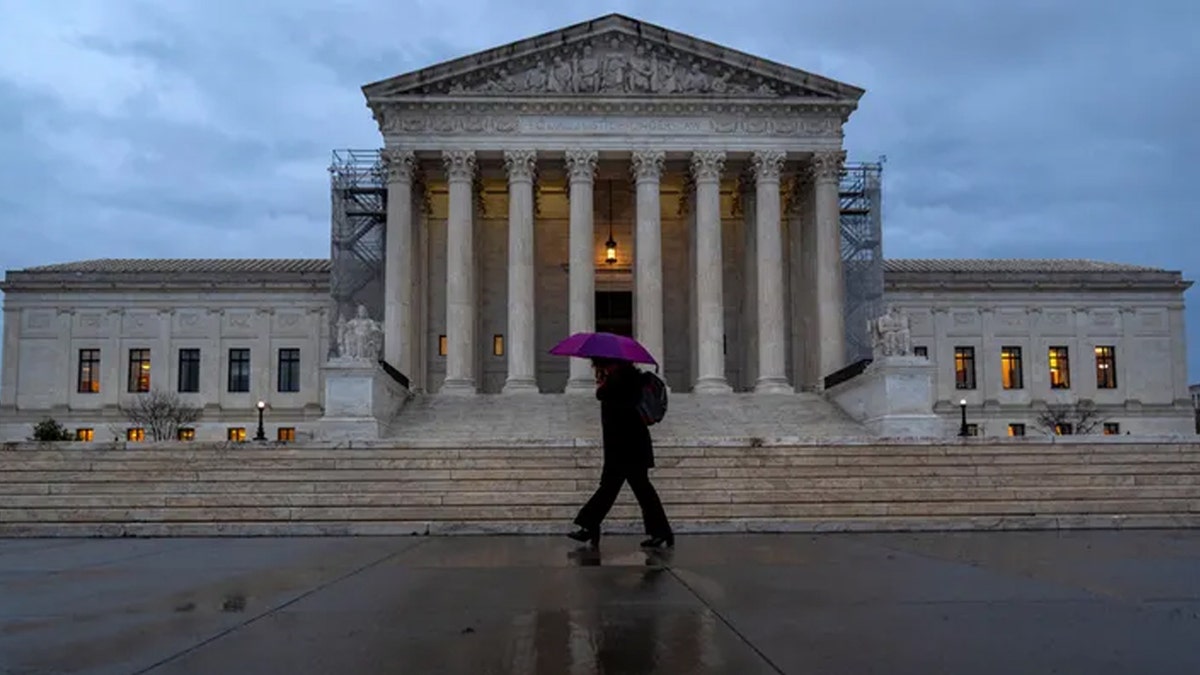
Person walks outside of the U.S. Supreme Court in Washington, D.C. (AP Photo/Jacquelyn Martin/File)
Jouppi has since argued in court that the state’s seizure of his plane, valued at $95,000, runs afoul of the 8th Amendment’s ban on excessive fines. Now, the Supreme Court will weigh in on whether he’s right.
When ruling on Jouppi’s case, the court will have the opportunity to seriously rein in the ability of state and local governments to impose asset forfeiture — a longtime goal of civil libertarians.
"For centuries, English common law took into account the characteristics of the defendant and his or her specific violation in determining excessiveness," a trio of scholars working for the libertarian Cato Institute wrote of the case. "When courts lose touch with the original understanding of a fundamental right, they risk watering down the constitutional protections that must be afforded to everyday people. Such dilution of rights is especially dangerous today as governments generate billions of dollars in revenue through civil and criminal asset forfeiture."
SUPREME COURT UNANIMOUSLY LIMITS USE OF GUN LAW USED TO PROSECUTE HUNTER BIDEN

The U.S Supreme Court is seen on June 25, 2026 in Washington, DC. (Kevin Dietsch/Getty Images)
"This case gives the Supreme Court the opportunity to ensure that the people are afforded the protection that the Eighth Amendment promises them," they added.
Alaska, however, argues that confiscating the planes of those who facilitate illegal imports is the only way the state can meaningfully prevent the problems caused by alcoholism in its remote regions.
DOJ SUES DENVER OVER BAN ON ‘ASSAULT WEAPONS’ AS CITY'S DEM MAYOR SAYS IT 'WILL NOT BE BULLIED'

Alaska wilderness near Fairbanks. (Getty Images)
"Alcohol abuse is a serious problem in rural Alaska, and airplanes are sometimes the only realistic means to commit the crime of alcohol importation," a legal brief from the state reads. "Jouppi was convicted for his own knowing and intentional misconduct, and forfeiture removes the business asset that was the means used to commit the offense."
Some villages in Alaska are not connected to major road networks, making them primarily accessible by small planes, such as the one owned by Jouppi.
CLICK HERE TO DOWNLOAD THE FOX NEWS APP
A trial court in 2018 ruled that the state taking Jouppi’s plane would be an excessive fine under the Constitution, though the Alaska Supreme Court ultimately decided otherwise in 2025, leaving the United States Supreme Court as the one-time pilot’s only remaining outlet for recourse.
Oral arguments in Jouppi’s case are likely to take place either later this year or early next year, with a decision expected to come down by next summer.
