













It's been six months since President Obama consented to a full-blown press conference. The White House says not to expect one any time soon.
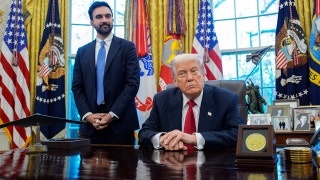
For White House reporters starving for access to Obama, there's another White House strategy that will keep reporters at bay. Though less noted, the White House has a pre-meditated strategy of avoiding taking potentially off-topic questions from reporters during brief question and answer sessions when Obama appears with his cabinet, other US officials or foreign dignitaries.
These sessions – which frequently involve reporters included in the daily White House pool – have become virtually non-existent since last summer. Obama’s consented to only 16 (fewer than 4 a month) since his last press conference. He’d held 31 before that.
According to Martha Joynt Kumar, who scrupulously tabulates presidential communication as a political science professor at Towson University, Obama’s adopted a striking pattern of keeping beat reporters at bay – at least when compared to his two predecessors.
Kumar’s data shows Obama’s 47 exchanges with reporters in short question and answer sessions pale next to the 147 George W. Bush held in the first year of his presidency and the 252 Bill Clinton conducted in his first year.
“What that means is that he's taking few questions from individual reporters in a setting where has to respond to the issues that reporters want to talk about,” Kumar said. “Instead, he can focus on interviews where he can talk about subjects he wants to talk about."
The White House does not disagree with Kumar’s numbers or interpretation.
Deputy White House Press Secretary Josh Earnest said it’s “all about message discipline.”
Obama prefers interviews and has granted far more than Bush or Clinton in their first years in office. Between Jan. 20, 2009 and Jan. 20, 2010, Obama’s given 161 interviews, according to Kumar. Bush gave 50, Clinton 53.
“President Obama has focused on interviews in a way that his predecessors did not,” Kumar said. “That's because as a professor, as a lawyer, he likes to put in all of the 'buts' and 'wherefores' and talk about something in-depth. He sees himself as an explainer. And the kind of format that is comfortable for him is one where he can speak at length.”
Defending Obama against press gripes over the recent lack of a full-blown press conference, Press Secretary Robert Gibbs pointed to Obama’s interviews.
“We have done countless number of interviews,” Gibbs said. “More interviews in the first year than any president certainly in recent memory.”
Earnest says Obama likes interviews because “the conversation gives him an opportunity to communicate and explain and engage on or two topics.” The brief question and answer sessions, Earnest says, often seek to drive Obama off message or introduce topics outside of where the president wants to take his message.
That, of course, is precisely what White House reporters crave.
"Reporters view themselves as surrogates for the public,” Kumar says. “Their job is to be there to ask the questions that the public would like to have answered. “
Earnest said the approach of keeping brief question and answer sessions with Obama to a minimum will continue.
For the record, Kumar’s numbers show Obama in the middle of Bush and Clinton as far as holding press conferences in the first year of a presidency. Obama’s held 27 (11 solo, 16 joint); Bush held 19 (4 solo, 15 joint); Clinton held 45 (14 solo, 31 joint).
When asked Thursday if any there were any to hold a full-blown press conference “soon,” Gibbs said: “None that I'm aware of.”
