
Trump says Iran ‘no longer a threat,’ US will keep hitting country ‘very hard’ in next phase
President Donald Trump told Americans in a primetime address Wednesday that Iran is no longer “the bully of the Middle East.” The president outlined the next phase of the war, saying U.S. forces will strike Iran “very hard” over the next two to three weeks and bring the country “back to the Stone Ages.”
Coverage for this event has ended.
Trump issues new threat to Iran: 'bridges next, then electric power plants'
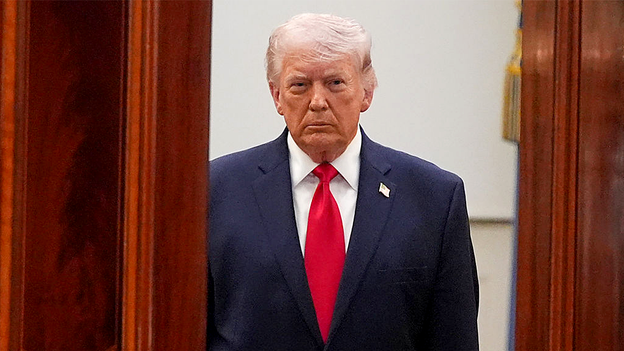
President Donald Trump on Thursday said the U.S. military "hasn’t even started destroying what’s left in Iran," vowing to target bridges and electric power plants next.
"Our Military, the greatest and most powerful (by far!) anywhere in the World, hasn’t even started destroying what’s left in Iran," Trump wrote on Truth Social.
"Bridges next, then Electric Power Plants! New Regime leadership knows what has to be done, and has to be done, FAST!" the president continued.
Get the latest coverage on Iran
Iraq's oil-dependent economy hit hard by energy crisis linked to war on Iran
Iraq's economy, which is heavily dependent on oil, has been hit hard by the global energy crisis triggered by the war on Iran.
Iraq relies on oil revenues for about 90% of its budget, with most of it exported through the Strait of Hormuz, which has been under a blockade since the war began in late February.
The conflict has also prompted a significant reduction in the volume of imported goods reaching southern Iraq’s ports, and stopped traffic at Iraq's border with Iran.
Iraq, unlike other countries in the Middle East, hosts both entrenched Iran-aligned forces and significant U.S. interests, meaning it is exposed to attacks from both sides of the conflict.
Officials in Iran have offered assurances that Iraqi crude oil can safely move through the Strait of Hormuz, according to Bassem Abdul Karim, the head of Iraq’s Basra Oil Company. But since Iraq does not have its own tanker fleet and relies on chartered vessels, shipments are dependent on whether tanker owners are willing to accept the increased risks, and most are not.
The Associated Press contributed to this report.
Pakistan fuel prices rise by 42% amid global oil price surge due to war on Iran
The Pakistani government on Thursday announced that fuel prices would see significant increases amid the energy crisis linked to the ongoing war on Iran.
The price of petrol would surge by 42.7% to 458.40 rupees, or $1.66, per liter and the price of diesel would be raised by 54.9% to 520.35 rupees, or $1.88, per liter.
"It was inevitable to raise the prices due to the international market prices going out of control after the US-Iran war," Pakistan's petroleum minister, Ali Pervaiz Malik, said at a news conference.
Prime Minister Shehbaz Sharif said the war has hit Pakistan's economy hard and that he is attempting to bring the U.S. and Iran to the negotiating table.
Reuters contributed to this report.
Bangladesh adopts austerity measures, including shortening office hours and closing malls early
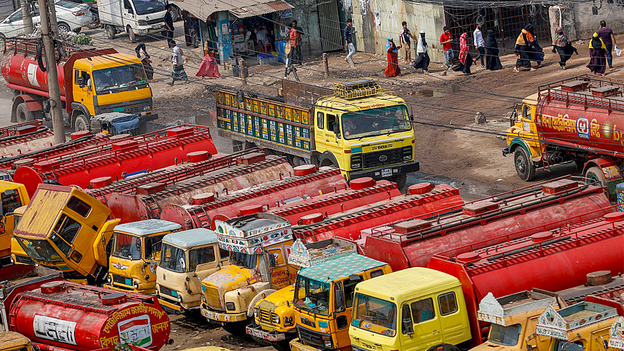
Bangladesh announced a series of measures to address the energy crisis linked to the war on Iran, including cutting office hours and closing malls and shops early beginning on Friday.
Government office hours will be cut to 9 a.m. to 4 p.m., while malls and shops must close by 6 p.m. to deal with the energy crisis.
Officials also ordered 30% spending cuts for fuel and power at government offices, suspended some staff training and stopped purchases of new vehicles, ships and aircraft.
Additionally, decorative lighting will not be allowed for celebrations.
Bangladesh is searching for alternative fuel sources and $2.5 billion in external financing for imports, which make up 95% of its fuel.
The Associated Press contributed to this report.
Australia urges drivers on Easter getaways to refuel in cities before returning home
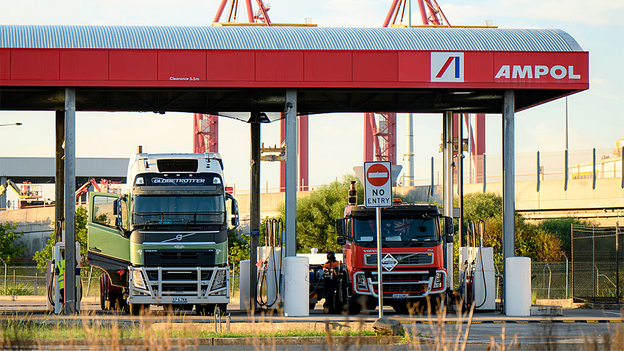
Australian Energy Minister Chris Bowen encouraged motorists heading out for a long weekend during the Easter holiday to refuel in cities, as most of the country's fuel shortages are in rural areas.
"For those Australians planning a road trip this weekend, given our shortages are predominantly in rural and regional Australia, it makes sense to fill up in the city to help the country if you can," Bowen said on Friday.
Of the 2,400 gas stations in Australia’s most populous state of New South Wales, 182 had run out of diesel by Friday.
In the country's second-most populous state, Victoria, 76 gas stations were out of diesel. Additionally, Queensland had 75 stations without diesel, Western Australia had 37, South Australia had 28 and Tasmania had seven.
Australia’s government said it is focusing on delivering fuel to farmers for planting crops. The government has also blamed regional shortages on panic buying and distribution problems.
The Associated Press contributed to this report.
Iran says it is drafting proposal to 'monitor' Strait of Hormuz with Oman
An Iranian diplomat claimed that the country was drafting a proposal to "monitor" the Strait of Hormuz with Oman, after shipping and production disruptions due to Iran's blockade of the strait.
Kazem Gharibabadi described the proposal as "intended to facilitate and ensure safe passage and provide better services to ships passing through this route," according to the state-run news agency IRNA.
Iran's attacks on shipping in the region and its reported demands for as much as $2 million for passage through the narrow mouth of the Persian Gulf have created a chokehold on the route.
It is unclear what the proposal would entail.
"Naturally, when we face an act of aggression, navigation encounters serious problems, and this is the result of the aggressive act," Gharibabadi said. "We are currently at war and cannot expect pre-war rules to govern wartime conditions."
The Associated Press contributed to this report.
Australia won’t take offensive action against Iran, foreign minister says
Australia will not undertake offensive operations against Iran or deploy ground troops, instead backing efforts to de-escalate tensions after joining more than 40 countries in discussions on reopening the Strait of Hormuz, Foreign Minister Penny Wong said Thursday.
“Iran is deliberately inflicting economic harm on communities worldwide, including in the Indo-Pacific, with the burden falling most heavily on the most vulnerable,” Wong said in a post on X.
“Australia has joined its partners in condemning the Iranian regime’s weaponization of the Strait of Hormuz," she said.
Iran warns retaliation after tallest bridge collapses amid US airstrikes
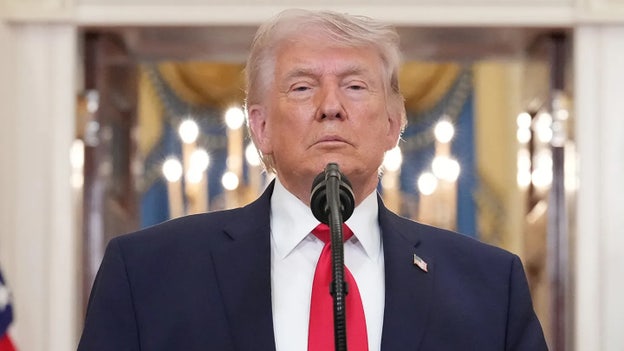
Iran’s biggest bridge near Tehran crashed down in a stunning scene captured on camera following reports of U.S. airstrikes, President Donald Trump announced Thursday, as he pressed the regime to make a deal before tensions escalate further.
The B1 highway bridge, a key link between Iran’s capital and the western city of Karaj, is considered the tallest in the Middle East and was only inaugurated earlier this year.
Iranian state TV reportedly warned of potential retaliation, claiming the state's military has identified multiple bridges in American-allied Middle East nations as targets, according to Iran International.
Trump posted a video on social media capturing a massive plume of smoke and debris after the bridge’s apparent collapse.
"The biggest bridge in Iran comes tumbling down, never to be used again — Much more to follow! IT IS TIME FOR IRAN TO MAKE A DEAL BEFORE IT IS TOO LATE, AND THERE IS NOTHING LEFT OF WHAT STILL COULD BECOME A GREAT COUNTRY!" Trump said in a post on Truth Social.
The strike on the bridge was aimed at cutting drone and missile supply lines to Iranian firing units targeting U.S. and Israeli forces, Middle East outlet i24NEWS reported, citing sources.
Iranian state TV also said the bridge was hit twice, roughly an hour apart, resulting in civilian casualties, Fars News reported.
"A few minutes ago, the American-Zionist enemy once again targeted the B1 bridge in Karaj," the broadcast said, noting that the first strike killed two civilians.
Fars News also reported that other areas of Karaj were struck.
The outlet reported that Iran is considering plans to rebuild the bridge with the help of its engineers and experts.
In retaliation, Iran’s Islamic Revolutionary Guard Corps has reportedly identified several bridges in American-allied nations across the Middle East as potential targets, including infrastructure in Kuwait, Saudi Arabia, Bahrain, Abu Dhabi and the Jordan-West Bank region.
This is an excerpt from a report by Bonny Chu.
Trump says Israel will ‘do what I tell them,’ admits Iran can ‘withstand tremendous pain’
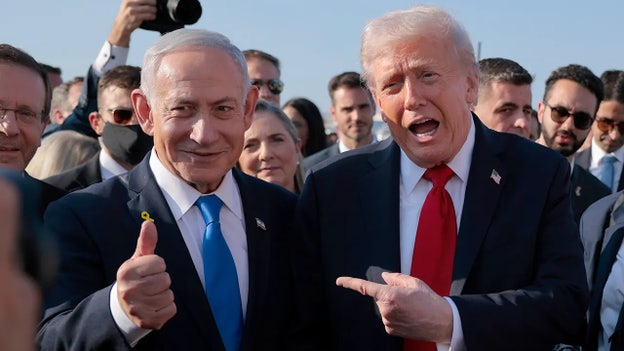
President Donald Trump said Israel will follow his direction for the remainder of the U.S.-Israel campaign against Iran and would halt its attacks only when he decides to end the conflict.
“They’ll do what I tell them,” Trump told Time magazine in an interview Thursday.
“They’ve been a good team player. They’ll stop when I stop,” he added, before qualifying that Israel would respond if provoked: “They’ll stop unless they’re provoked, in which case they’ll have no choice—but they’ll stop when I stop.”
Trump also described Iran as “very tough” for resisting pressure to make concessions in negotiations aimed at ending the war.
“They’re able to withstand tremendous pain, so I respect them for that,” he told the oulet adding, “The fact is, I think they’re better negotiators than they are fighters.”
The remarks come as Israeli Prime Minister Benjamin Netanyahu remains closely aligned with Trump on Iran policy, reflecting the partnership between the two leaders while maintaining a joint hard-line stance toward Tehran.
Dr. Ehud Eilam, a former analyst at the Israeli Ministry of Defense, told Fox News Digital that collaboration between Israel and the U.S. remains strong.
“The joint and highly successful U.S.-Israeli effort severely degraded Iran’s military capabilities, and with it its ability to threaten others,” Eilam said.
“There has been very close and effective coordination between the two militaries in sharing intelligence, planning strikes and logistics, so all that has enabled them to maximize their efforts while avoiding misunderstandings, waste of resources and above all, preventing risks to their troops.”
“The IAF (Israeli Air Force) relies on U.S. aircraft, ammunition and the IAF has trained many times with the U.S. military over the years.”
“This background makes it easier to coordinate between them during the current confrontation.”
“There is also a close and effective U.S.-Israeli coordination in air defense, in shooting down Iranian drones and missiles.” Eilam added.
Kremlin aid confirms Strait of Hormuz is open for Russian shipping
The Strait of Hormuz is open to Russian commercial vessels, Kremlin aide Yuri Ushakov said Thursday.
“It is open for us,” Ushakov stated in remarks to Russia’s state TV channel Vesti, according to the Interfax news agency, via Reuters.
His comments followed a phone call between Russian Foreign Minister Sergei Lavrov and Iranian Foreign Minister Abbas Araghchi, during which the two discussed navigation in the strategic waterway, Russia’s Foreign Ministry said.
The ongoing U.S.-Israeli war with Iran has effectively halted shipments of about one-fifth of the world’s oil and liquefied natural gas, contributing to rising global energy prices.
Three UN Security Council powers resist Gulf states' push for military action to reopen Hormuz
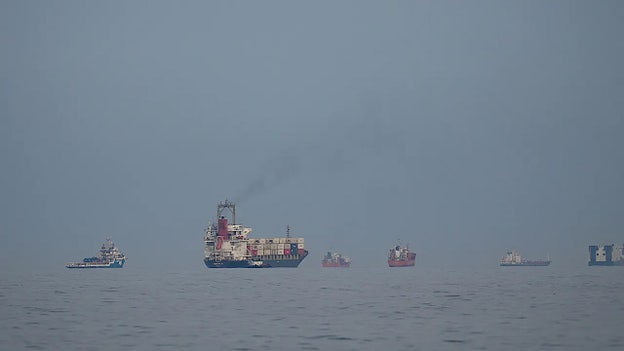
Russia, China, and France are pushing back against efforts by Middle Eastern countries to secure U.N. authorization for military force against Iran to reopen the Strait of Hormuz, according to The New York Times.
The three nations oppose language allowing force in a draft resolution backed by Bahrain and Gulf Arab states, with a vote expected Friday.
Diplomats say divisions also persist among non-permanent Security Council members.
The draft—now in its fourth revision after weeks of negotiations—is stalled over wording that would allow countries to use “all necessary means” to protect shipping through the strait, the outlet said.
Katz warns Hezbollah leader he won't live to see 'very heavy price' for Passover attacks
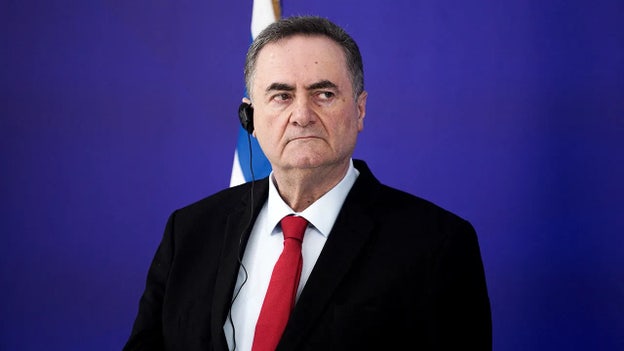
Defense Minister Israel Katz warned Hezbollah Secretary-General Naim Qassem that he would not live to see the “very heavy price” Israel plans to exact for attacks carried out during Passover, the Jerusalem Post reported Thursday.
Katz said Qassem would end up “at the bottom of hell” alongside other eliminated leaders of Iranian-backed groups.
“I have a clear message to Naim Qassem, Secretary-General of the Hezbollah terrorist organization: You and your friends will pay a very heavy price for the increased shooting at Israeli citizens while they are sitting down to celebrate the Seder Night,” Katz said in a video message.
You will not be able to see the heavy price, because you will be at the bottom of hell together with Nasrallah, Khamenei, Sinwar, and all the eliminated members of the axis of evil,” Katz continued, adding that “the Hezbollah terrorist organization, which you now head, and its supporters in Lebanon will pay the heaviest prices."
Iran advances World Cup talks with FIFA as conflict clouds planned US trip

FIFA President Gianni Infantino met with Iranian soccer officials in Turkey after the outbreak of war with the United States and Israel on Feb. 28, amid uncertainty over Iran playing in the 2026 World Cup.
After qualifying in March 2025, Iranian officials have suggested the team may be unable to play, face travel restrictions to the U.S., or need matches to be moved to Mexico.
However, the Iranian federation’s statement after Thursday’s meeting did not mention relocating games, The Associated Press reported.
Infantino offered FIFA’s support to help the team prepare, though Iran’s domestic league — where most national players compete — has been suspended during the conflict.
Organizers in Arizona say preparations, including security planning, are continuing on schedule.
USS Gerald R. Ford heads back to Middle East mission after fire repairs: report
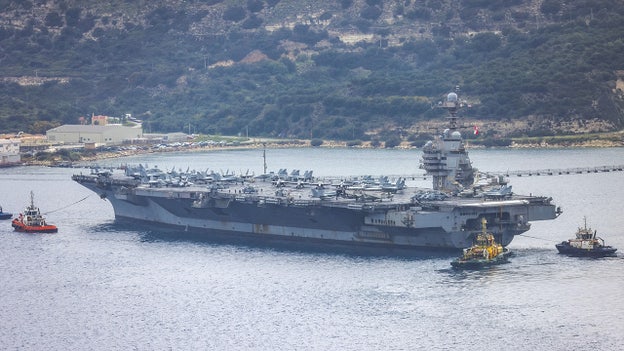
The USS Gerald R. Ford is preparing to rejoin U.S. military operations in the Middle East after several days of repairs following a fire, according to reports.
The Navy’s largest aircraft carrier spent five days in Croatia undergoing repairs and resupply after the fire broke out in a laundry unit. An investigation into the cause of the fire is ongoing.
According to Wall Street Journal, the Navy said the carrier is now heading back to the region and is “poised for full mission tasking.”
The Gerald R. Ford had left the Red Sea and traveled to Crete for refueling and repairs before continuing on to Croatia on March 28.
U.S. Central Command (CENTCOM) said two sailors were treated for non-life-threatening injuries following the fire.
The carrier and its strike group had been supporting Operation Epic Fury with the USS Abraham Lincoln carrier strike group. The USS George H.W. Bush has also been deployed to the Middle East.
Araghchi fires back at Trump 'Stone Age' threat, claims bridge strike shows 'enemy in disarray'
Iranian Foreign Minister Abbas Araghchi on Thursday pushed back on President Donald Trump’s remarks in posts on X, questioning Washington’s strategy and warning attacks on infrastructure would deepen tensions.
His comments followed Trump’s address to the nation Wednesday, in which he said the U.S. would take Iran “back to the stone ages” amid ongoing military operations — a message echoed by Secretary of War Pete Hegseth, who wrote on X: “Back to the Stone Age.”
“There's one striking difference between the present and the Stone Age: there was no oil or gas being pumped in the Middle East back then,” Araghchi wrote on X Thursday, before adding:
“Are POTUS and Americans who put him in office sure that they want to turn back the clock?”
The Iranian foreign minister also responded to a separate post from Trump on Truth Social, in which the president claimed an Iranian bridge had been destroyed in a U.S. airstrike and urged Tehran to “make a deal before it’s too late.”
Trump shared a video of what he described as a strike on the “B-1 bridge,” calling it “the biggest bridge in Iran.” The reported destruction has not been independently confirmed.
In Araghchi’s second X post, he dismissed the strategic impact of such strikes.
“Striking civilian structures, including unfinished bridges, will not compel Iranians to surrender,” he wrote.
“It only conveys the defeat and moral collapse of an enemy in disarray.”
“Every bridge and building will be built back stronger. What will never recover: damage to America’s standing,” Araghchi said.
IRGC says it has attacked Oracle data center in Dubai: report
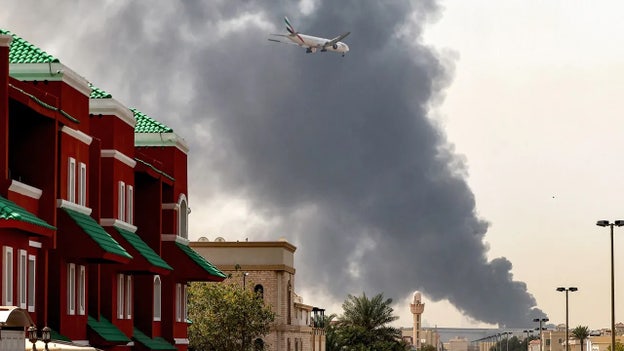
Iran’s Islamic Revolutionary Guard Corps (IRGC) has attacked an Oracle data center in Dubai, according to state media.
On Thursday, two drones also targeted a U.S. diplomatic facility near Baghdad International Airport in Iraq, security sources said.
According to the Jerusalem Post, the IRGC also struck an Amazon cloud computing center in Bahrain “in retaliation for attacks on Iran,” the Iranian Students News Agency (ISNA) reported
Houthis claim ballistic missile strike on Israel, IDF reports interception
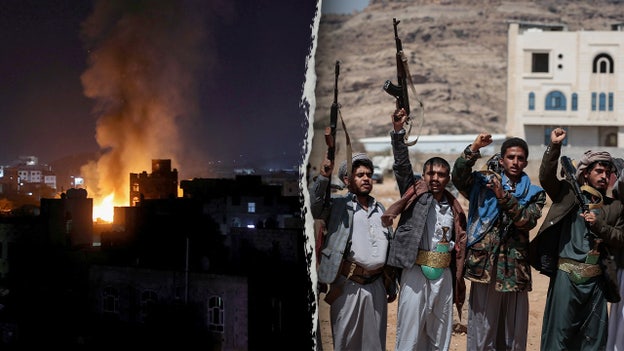
Yemen’s Iran-backed Houthis claimed responsibility for a ballistic missile attack targeting Israel Thursday, saying they launched a barrage aimed at “vital Israeli enemy targets.”
The Times of Israel reported the Israel Defense Forces (IDF) said a single missile triggered air raid sirens in Jerusalem before being successfully intercepted.
The Houthis, in a statement, asserted the strike targeted the Tel Aviv area.
The Times of Israel also said the group claimed the attack was part of its ongoing military operations against Israel.
Israel says it killed Iranian surface-to-surface missile unit commander in strike operation
The Israel Defense Forces (IDF) said it has killed a commander from a surface-to-surface missile unit based in western Iran during a recent operation.
In a statement released Thursday, the military identified the commander as Mokarram Azimi, alleging he was responsible for multiple missile launches targeting Israel.
The IDF added that three battalion commanders from the same unit were also killed in the strike, describing them as key figures involved in launching projectiles toward Israeli territory.
“We will continue to pursue all those who fire missiles at Israel—launchers, missiles, and personnel,” the statement said, according to Iran International.
Iran initiates call with Russia's Lavrov to discuss Strait of Hormuz
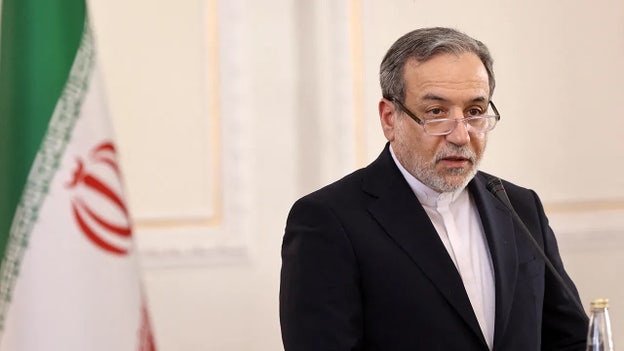
Russian Foreign Minister Sergey Lavrov held a phone call on Thursday with Iran’s Foreign Minister Abbas Araghchi to discuss the situation in the Strait of Hormuz, according to a statement from Russia’s Foreign Ministry.
The ministry said the call was initiated by Iran and formed part of Araghchi’s ongoing consultations with several counterparts.
During the conversation, the two ministers discussed bilateral relations and exchanged views on United Nations Security Council discussions regarding the situation around the Strait of Hormuz, Iran International reported.
According to Russian news agencies, the call also covered broader Middle East issues, with both sides reviewing regional and international developments.