
Trump vows 'total victory' over iran within weeks as Netanyahu confirms ceasefire
President Donald Trump predicted "total victory" over Iran within two weeks as Israeli Prime Minister Benjamin Netanyahu confirmed a ceasefire while reaffirming Israel's right to self-defense.
Coverage for this event has ended.
Vance admits US, Israel interests can 'diverge' on Iran, signals differences with Netanyahu
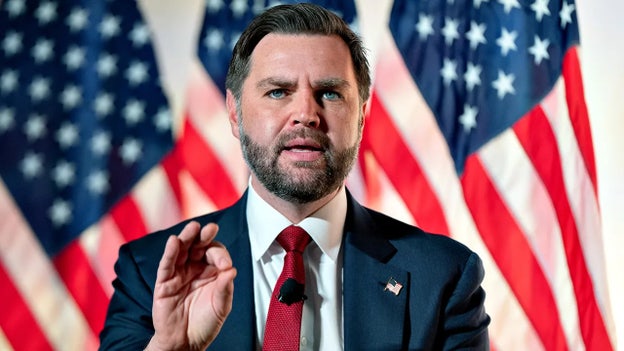
Vice President JD Vance said Monday that while the United States and Israel share interests, Washington's approach to Tehran will be guided by what President Donald Trump thinks is best for the U.S.
Vance's remarks come amid reported tensions with Prime Minister Benjamin Netanyahu over missile strikes on Iran and with the Israeli leader favoring a more hard-line approach.
"The Israelis and the United States, we have a lot of shared interests," Vance told Jesse Watters.
"But we also have some situations where our interests diverge, and I think where the president has been very clear here is that while Israel obviously has some objectives that it has, the United States' main objective in Iran is to ensure that Iran does not have a nuclear weapon," he added.
"Over the last year and a half, we've created the space necessary where the president believes — and I think he's right — that we can get a long-term settlement to Iran's nuclear issue," Vance said.
"Now, Israel may like that, they may not like that, but fundamentally, we think this is in the best interest of the United States of America," he said, adding that Washington will continue pursuing that goal because "that's what the president of the United States was elected to do."
Iran signals willingness to strike Israel again if Hezbollah, Lebanon targeted: report
Iranian officials and media are suggesting Tehran's recent missile strike on Israel is the start of a new deterrence strategy, Iran International reported Monday.
Their message is that future attacks on Hezbollah or Lebanon could trigger direct Iranian retaliation, even if Iran itself is not targeted.
Supporters of the approach argue Iran must defend Hezbollah to keep its influence in the Middle East.
Farda News, a website close to Iranian Parliament Speaker Mohammad Bagher Ghalibaf, said attacks on Lebanon would no longer be cost-free, while he wrote on X that Iran's response would remain unchanged.
The report also said many ordinary Iranians are concerned about the risks, warning that further involvement in regional wars could bring greater instability, economic costs and the threat of a wider war impacting Iran
CENTCOM chief updates congress on US military priorities in Middle East
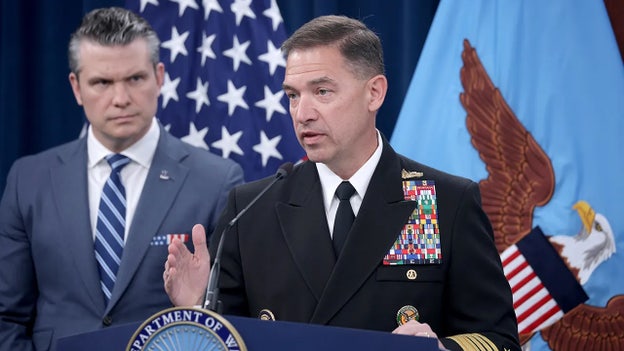
Adm. Brad Cooper, commander of U.S. Central Command (CENTCOM), briefed the House Appropriations Defense Subcommittee on Monday about U.S. military operational priorities across the Middle East.
According to CENTCOM, Cooper met with lawmakers in Washington and is scheduled to provide a similar briefing to a Senate appropriations panel on Tuesday.
The congressional briefings follow testimony Cooper gave last month before the House and Senate Armed Services committees.
Vance warns US won't assume Iran is 'acting in good faith' in any potential nuclear deal
Vice President JD Vance said Monday that any potential nuclear deal with Iran woild need strict verification measures to ensure Tehran complies.
“The president's attitude on this is we have to verify,” Vance told Jesse Watters.
“Of course, one of the most important things in determining whether this ultimate settlement is a success is not what the Iranians write on the paper, but whether they actually comply with some of the requirements of the settlement that we come up with,” he added before citing the Obama deal and “what went wrong with it.”
“There was not a proper inspection regime to ensure that the Iranians could never build a nuclear weapon,” Vance said.
Vance said the administration would approach any agreement with skepticism and prioritize monitoring.
“Assuming we're ultimately able to make a deal, I don't assume that anybody is acting in good faith.
“We're going to take the attitude of accomplishing the president's mission, but verify over the long term that the Iranians are keeping their end of the bargain,” he added.
Vance acknowledged the challenge of securing a durable agreement but said the Trump administration believes it has leverage to reach one.
“It's a tall order, but it's one that the president has put us in a good position to achieve. Because let's be honest, the Iranians don't want this war to continue.
“I think they're coming to the table, putting some real things on the table. We're, of course, going to verify it, but if we get this deal, it's going to be a home-run win for the American people.”
Trump predicts ‘total victory’ over Iran within two weeks as peace talks continue

President Donald Trump said during a tele-rally Monday night that the United States would achieve “total victory” over Iran within two weeks.
According to NewsNation correspondent Libbey Dean, Trump predicted a swift end to the conflict, telling supporters, "You're really going to win it over the next two weeks when we declare total victory. It will be a total victory and it will happen very soon."
The comments came as The Associated Press reported Monday that Iran and the United States continue to work toward a negotiated peace agreement.
Iran’s ambassador to the United Nations, Amir Saeid Iravani, told the outlet he was hopeful Tehran and Washington would reach an agreement “very soon,” potentially by the end of the month.
Lebanon appeals to Israel to pursue dialogue, not war: report
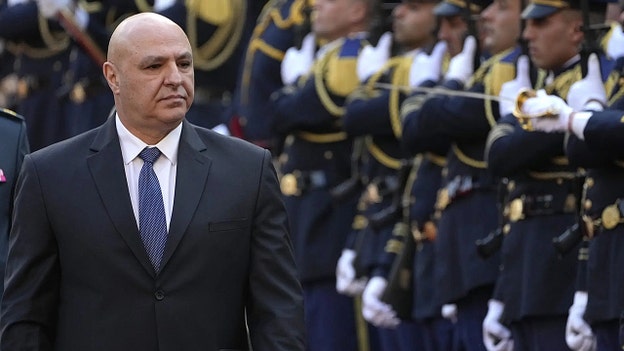
Lebanese President Joseph Aoun appealed to the Israeli government and its people in an interview with CNN on Monday, saying a military solution "will never provide you with security and safety" for residents of northern Israel.
"We are ready, we are willing, we are committed. Are you? If you are, let's sit and talk," Aoun said.
The Lebanese leader also said he would not meet with Israeli Prime Minister Benjamin Netanyahu before an agreement is reached to end the conflict. Aoun said such an agreement would take the form of a nonaggression pact rather than a full peace treaty.
The remarks came amid continued Israeli strikes in southern Lebanon.
Lebanese leaders who support negotiations with Israel have faced heavy criticism from Hezbollah and its supporters, as well as public campaigns that include what critics describe as incitement, according to Ynet.
"Negotiation is safer than war, but it will not solve the problem immediately," Aoun said.
Prosecutor who sought Netanyahu arrest warrant suspended over misconduct allegations
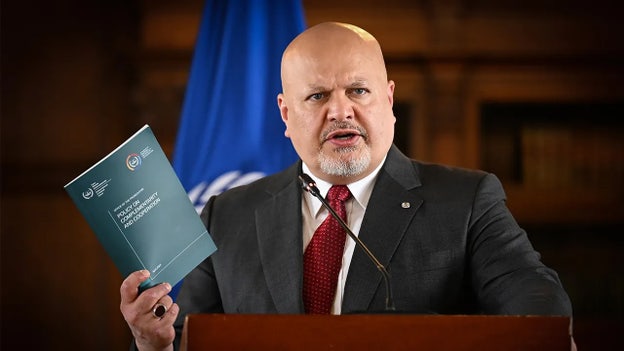
The International Criminal Court’s chief prosecutor, Karim Khan, has been suspended pending a vote by member states on his future, the court’s governing body announced Monday, following an investigation into allegations of sexual misconduct.
According to The Times of Israel, citing a source, the ICC’s executive bureau found Khan committed serious misconduct after an investigation into accusations that he engaged in nonconsensual sexual interactions with a lawyer in his office.
Khan, who sought arrest warrants for Prime Minister Benjamin Netanyahu and former Defense Minister Yoav Gallant over the war in Gaza, has denied the allegations.
The findings will be sent to the ICC’s 125 member states, which are expected to vote on whether to remove Khan from office, the outlet said.
“The astounding story of the world’s International Criminal Court and its lead prosecutor headed by an alleged criminal and rapist, is not just about one rotten apple,” Anne Bayefsky President, Human Rights Voices, said in a statement.
"Khan has taken the credibility of the whole shameful ICC apparatus down with him. It’s time to hold the whole dangerous operation to account, “ the Director of the Touro Institute on Human Rights and the Holocaust added.
IDF intercepts suspicious aerial target from Yemen as Houthis claim earlier attack on Israel
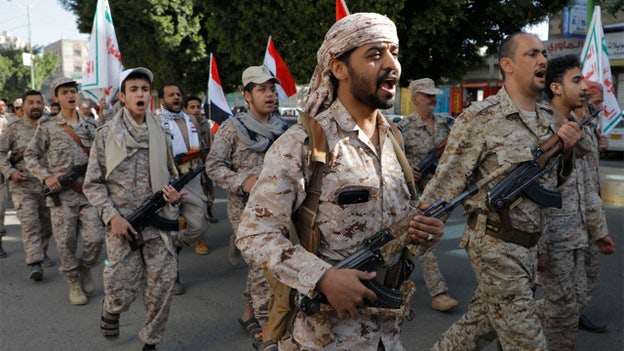
The Israeli Defense Forces (IDF) said Monday that it intercepted an aerial target launched from Yemen.
“Following the sirens that sounded a short while ago regarding a hostile aircraft infiltration in the Eilat area, a suspicious aerial target from Yemen was intercepted. The incident was concluded,” the IDF said in a statement.
This came after Saudi Arabia's Ministry of Defense said a missile detected earlier Monday that was launched from Yemen was heading toward a "regional country," without identifying the destination, according to The Associated Press.
The ministry said an investigation found that the missile had "deviated from its course and fell in an open area near the Saudi-Yemeni border."
Iran denied launching the attack on Saudi Arabia, while the Iran-aligned Houthis said it had carried out an attack targeting Israel.
The Houthis said Israel-linked vessels would also be targeted in the Red Sea as well as the Gulf of Aden and the Bab el-Mandeb Strait.
A statement from Brig. Gen. Yahya Saree was broadcast on the Houthis’ al-Masirah satellite news channel on Monday, The Associated Press reported.
UN chief calls for de-escalation after Israel-Iran strikes
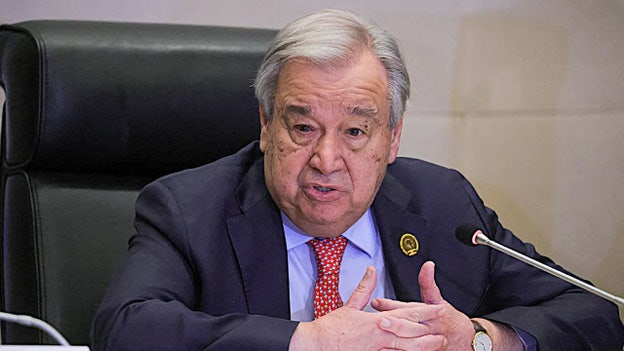
United Nations Secretary-General António Guterres on Monday called for de-escalation in the Middle East following strikes by Israel and Iran.
“The Secretary-General is deeply alarmed by the renewed escalation in the Middle East. He calls on all concerned parties to immediately stop attacks, exercise maximum restraint, and refrain from any action that could further inflame an already volatile situation,” a spokesperson for Guterres said in a statement.
The statement also said the Secretary-General also urged all parties to abide by ceasefires in Lebanon, Iran and Gaza and to avoid steps that could undermine ongoing diplomatic efforts.
Guterres reiterated that there is no military solution to the conflicts in the Middle East.
“The only way forward is through dialogue and negotiations,” the statement said before adding that Guterres “urges all concerned parties to work towards diplomatic solutions that advance regional and international peace and security.”
Iran-bound tanker disabled by US forces after ignoring warnings: CENTCOM
U.S. forces disabled a Botswana-flagged oil tanker in the Persian Gulf on June 2 after its crew ignored orders to stop while sailing toward Iran's Kharg Island, according to U.S. Central Command (CENTCOM).
"The ship's crew ignored repeated warnings, failing to comply with directions from U.S. forces multiple times over a 24-hour period," CENTCOM said in a post on X.
According to the military, a Hellfire missile was fired into the engine room of the unladen tanker, called M/T Lexie.
The incident marks the latest enforcement action under the blockade of Iranian ports that has been in effect since April 13.
CENTCOM also confirmed it had redirected 122 commercial vessels and disabled six ships during the ceasefire with Iran.
Drone strike hits Iranian Kurdish opposition group camp in Iraq's Erbil region: report
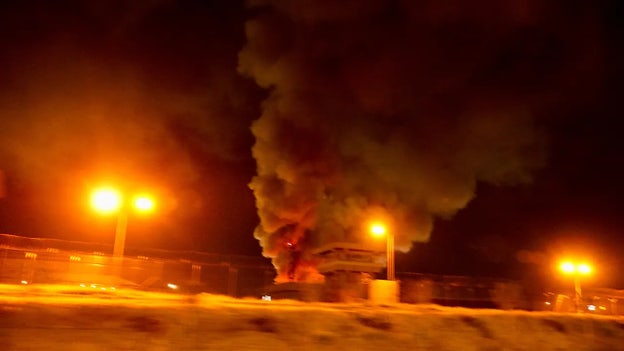
A drone strike hit a camp housing Iranian Kurdish opposition groups in Iraq's Erbil region, according to reports.
Reuters reported the strike, citing security sources.
On Sunday, Reuters also reported two drone attacks near Iraq's Sulaymaniyah. One targeted a base used by Kurdish peshmerga forces, while the other struck a camp housing Iranian Kurdish opposition groups west of the city, according to security sources.
Iraq closed its airspace during Iran's attacks on Israel, according to The Jerusalem Post.
During Operation Epic Fury Tehran had also mobilized Iran-backed militias in Iraq to target Kurdish and U.S. interests, the outlet reported.
Netanyahu, far-right ministers divided over Trump's call for Israel to halt Iran strikes: report
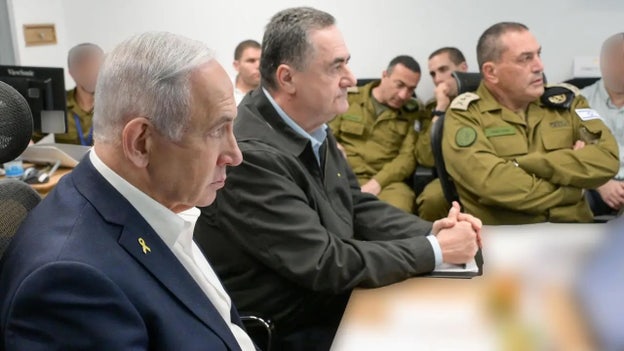
Israeli Prime Minister Benjamin Netanyahu and far-right security cabinet ministers appeared divided Monday over whether to follow President Donald Trump’s call for Israel to halt strikes on Iran, according to reports.
The Times of Israel reported tense exchanges during meetings, with Netanyahu defending coordination with Trump and arguing the president is aligned with Israel’s goals regarding Iran.
National Security Minister Itamar Ben Gvir urged Israel to resist Trump’s pressure, saying it must “stand our ground” and defend its red lines.
The report also said Netanyahu warned that Israel would strike Hezbollah targets in Beirut if the group attacks northern Israeli communities.
Israeli opposition leader says Iran strikes failed to degrade nuclear, missile programs
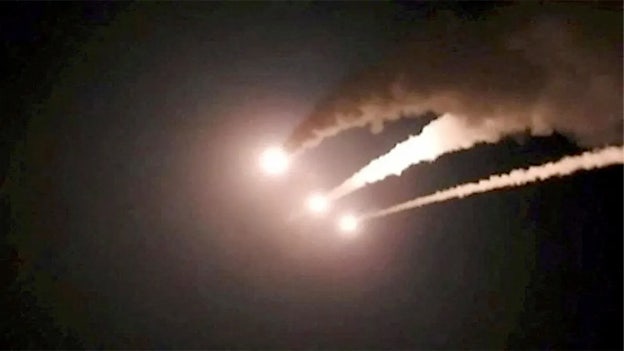
Israeli opposition leader Yair Lapid said Monday that Israel’s strikes on Iran lacked a clear strategic purpose, arguing they failed to achieve military objectives while drawing Israelis into another cycle of conflict.
Speaking at a Knesset press conference, Lapid said he had previously supported military action against Iran but now viewed the operation as one that “serves no strategic objective of the State of Israel.”
“When war is forced upon us, we must strike with overwhelming and disproportionate force. But war alone cannot become our automatic response to every problem,” he said, according to The Jerusalem Post.
“The government is sending its citizens to shelters, the economy is paralyzed, and there is no strategic objective behind all of this that anyone can understand — including people within the security establishment,” he added.
Lapid also argued that Israel’s previous operation neither advanced regime change nor significantly degraded Iran’s ballistic missile or nuclear programs, pointing to Tehran’s Sunday missile launches as evidence.
Trump says he convinced Netanyahu to scale back Iran strike, planes were already en route
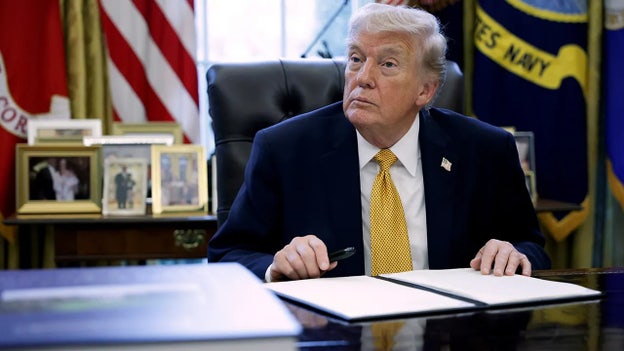
President Donald Trump said he scaled back the scope of an Israeli attack on Iran on Sunday after five Middle Eastern countries involved in mediation efforts urged him to push Prime Minister Benjamin Netanyahu toward diplomacy instead of military action.
According to Axios, the president said: “The Israelis gave us an update at a very late stage. They were already on their way to Iran. I managed to reduce the scope of the attack.”
EU sanctions Iran's Revolutionary Guard Navy over Strait of Hormuz interference
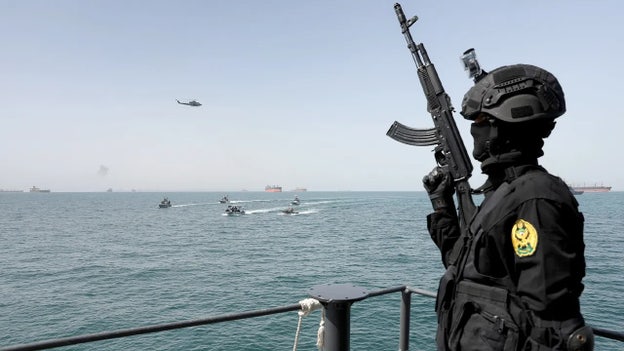
The European Union on Monday imposed sanctions on a unit of Iran’s Islamic Revolutionary Guard Corps (IRGC) Navy and two Iranians accused of threatening freedom of navigation in the Strait of Hormuz.
In a statement, the bloc said it had added the Hormozgan Provincial Command of the IRGC Navy to its sanctions list, along with Mohammad Akbarzadeh, the IRGC Navy’s deputy commander for political affairs, and Hamid Hosseini, a representative of Iran’s Oil, Gas and Petrochemical Products Exporters’ Union.
Iran’s deputy foreign minister went on to dismiss the sanctions as "hypocritical."
In a post shared on X, Kazem Gharibabadi said Tehran would continue exercising sovereign rights over the waterway, citing the sanctions as a "fraudulent move."
Gharibabadi also said that the EU "deliberately remained silent in the face of the U.S. naval blockade against Iran, which is considered an act of war!"
"The legal regime emphasized by Iran in the Strait of Hormuz is 'innocent passage,' based on customary international law and observance of maritime safety and security considerations of the coastal state," he said.
"Iran does not attach any value to this political and hypocritical European move and will continue its strategy of maintaining sovereignty and exercising sovereign rights over the Strait of Hormuz," he added.
Iran threatens new 'security belt' spanning key Middle East waterways
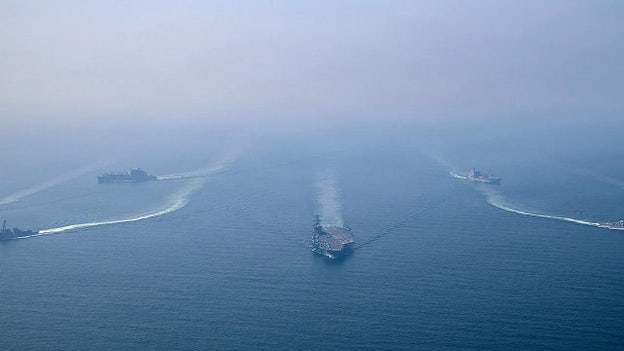
Iran's Quds Force commander, Esmail Qaani, announced Monday plans for a new "resistance" security corridor stretching from the Strait of Hormuz to the Bab al-Mandab Strait, linking strategic waterways between the Persian Gulf and the Red Sea.
"From the Strait of Hormuz to the Bab al-Mandab Strait and from the Persian Gulf to the Red Sea, a new security belt of the resistance will be formed," Qaani said in a message, according to Iran International.
Qaani also praised Yemen's Houthi rebels for launching missile attacks against Israel and suggested other Iran-aligned groups could join the effort if needed.
According to Iran's state-run IRNA news agency, Qaani said recent actions by allied groups across the region demonstrated growing coordination among members of what Tehran calls the "resistance front."
"The hostile acts of the Zionist regime and America in this region will draw a reaction from the united resistance front," Qaani said.
"The timely and powerful action of heroic Yemen shows the wisdom of the resistance front. If necessary, others will also join," he added.
Qaani also issued a warning to Israel and the United States.
"Borderless fighters are overlooking your passage chokepoints. Continue the aggression, and they will grab you by the throat," he said.
Qaani's remarks come amid heightened regional tensions following military exchanges between Iran and Israel and ongoing hostilities involving Iranian-backed groups across the Middle East.
On Sunday, the Israel Defense Forces (IDF) said a missile was launched from Yemen toward Israeli territory and air defense systems were activated to intercept the threat.
Ghalibaf says US naval blockade undermined trust, vows to turn it into 'another defeat'
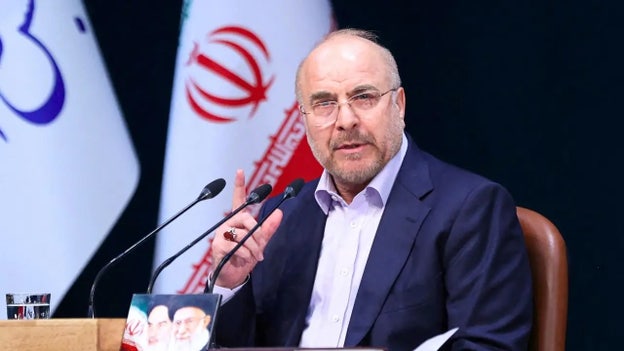
Iranian Parliament Speaker and chief negotiator Mohammad Bagher Ghalibaf said Monday that the U.S. blockade of Iranian ports had undermined trust between Tehran and Washington.
He also accused the U.S. of acting against agreed-upon terms and showing it was not genuinely seeking dialogue or a lasting ceasefire.
"We will turn the naval blockade into another defeat for the 'enemy,' " Ghalibaf said, according to Reuters.
"Trump's statements about the MOU were against the agreed parts of the deal," he added before stating, "This shows the U.S. is neither seeking a ceasefire nor dialogue."
Ghalibaf said Iran's goal is ending the war and achieving "stable security," adding that Iran has "no trust in the opposing party."
In a separate post shared on X, Ghalibaf reiterated the trust issue.
"We have disrupted the equation of a ceasefire on paper and its repeated violations in the field," he said. "As long as you lack the genuine will to build trust, Iran's response will be exactly this."
Ghalibaf's remarks came as Iran's joint military command said its armed forces had suspended military attacks against Israel but warned that attacks could resume if Lebanon came under fire.
Trump warns Netanyahu to 'be very careful' as Israel risks losing US backing in Iran conflict
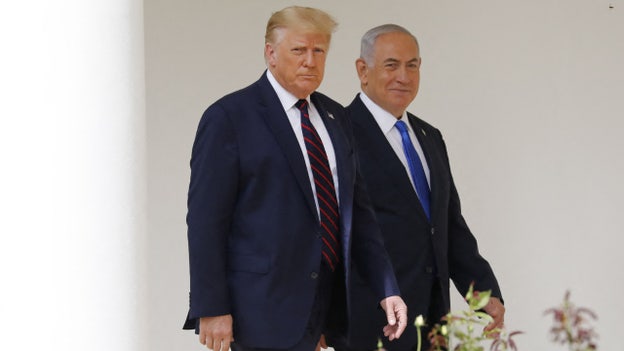
President Donald Trump warned Prime Minister Benjamin Netanyahu on Monday that escalating military action could leave Israel isolated in a conflict with Iran, according to reports.
The warning came at a fragile moment following missile exchanges between Israel and Iran and amid efforts to preserve the ceasefire.
"I told Bibi, 'You better be very careful with what you do because you might soon be left alone against Iran,'" Trump was quoted as saying, according to Israel's Channel 12.
The remarks came after Iran and Israel said they had stopped military attacks.
Iran International also reported that Israel had approved a "dramatic attack" against Iran before Trump called it off, also citing a report from Channel 12.
Netanyahu confirms Israeli ceasefire, notes 'appreciation and respect' for Trump
Israeli Prime Minister Benjamin Netanyahu confirmed that Israel is now in a ceasefire with respect to Iran on Monday.
Netanyahu's announcement comes after President Donald Trump demanded that both Iran and Israel cease hostilities earlier Monday morning.
“Right now, the fire has been halted," Netanyahu said.
The Israeli leader went on to note that Israel is still committed to its right to self-defense, however, "and I say this with appreciation and respect in my good conversations with my friend President Trump," he said.
US forces disable oil tanker attempting to violate Iran blockade
U.S. forces opened fire on a oil tanker in the Gulf of Oman after the vessel attempted to violate the U.S. blockade on Iranian ports Monday.
"U.S. Central Command (CENTCOM) disabled Palau-flagged M/T Marivex as it transited international waters in the Gulf of Oman toward Iran. An F/A-18 Super Hornet from USS Abraham Lincoln (CVN 72) fired a precision munition into the ship's engineering and steering spaces after the crew failed to comply with directions from U.S. forces. Marivex is no longer sailing to Iran," CENTCOM announced in a statement on X.
"CENTCOM forces have disabled seven non-compliant vessels, redirected 134 ships that complied, and allowed 42 vessels supporting humanitarian aid to pass since initiating the blockade on April 13," CENTCOM added.