
Trump's 5-day pause kicks off as Iran downplays claims of 'very good' talks
President Donald Trump's 5-day pause on striking Iran's infrastructure entered full swing on Tuesday even amid reports that the U.S. and Israel were escalating other aspects of the war against Tehran.
Coverage for this event has ended.
Iran's IRGC consolidates power, pushes ‘unrealistic’ cease-fire demands: report
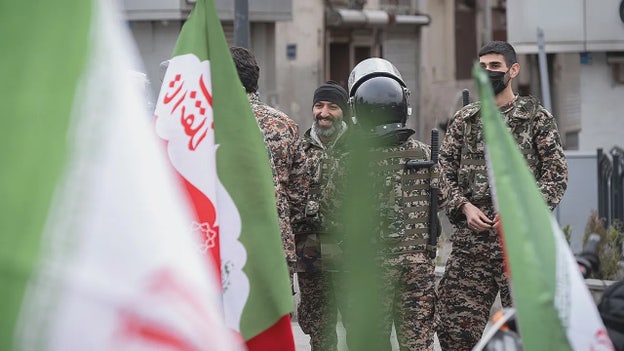
Iran has raised the stakes ahead of potential cease-fire talks with a list of demands, according to The Wall Street Journal.
The outlet also reported that the Islamic Revolutionary Guard Corps (IRGC) has consolidated power within the broken regime and is pushing the additional demands.
These include the closure of all American bases in the Gulf and reparations for attacks on Iran.
Other demands include allowing Iran to collect fees from tankers in the Strait of Hormuz, as well as guarantees that the war wouldn’t restart.
The IRGC has also asked for an end to Israel’s strikes on Hezbollah and the lifting of all sanctions on Iran.
The final demand was permission to keep its missile program with no negotiations to limit it.
A U.S. official called the IRGC's demands “ridiculous and unrealistic,” the outlet said.
The official also said the first messages of the new diplomatic round came from Middle Eastern intermediaries last week, and that the U.S. and Iran are not in direct contact.
State Dept official does not rule out resuming underground nuclear weapons tests: 'No decision'
A senior State Department official on Tuesday did not rule out a resumption of full-scale underground nuclear tests, noting that the U.S. is still weighing how to implement President Donald Trump's order to resume U.S. nuclear weapons tests.
"We've made no decision specifically on how or what any testing program would look like," Undersecretary of State for Arms Control and International Security Thomas DiNanno testified to the Senate Foreign Relations Committee.
DiNanno said the U.S. believes Russia and China have secretly conducted explosive nuclear underground tests, although Moscow and Beijing denied these allegations.
China's last official underground test was in 1996 and Russia's was in 1990.
"The Chinese and Russian programs are underground. They are at yields that I can't talk too much about in this open hearing," DiNanno said, adding that "the Chinese underground testing program would be in the hundreds of tons."
"This creates intolerable disadvantage to the United States not testing," he continued.
Trump issued the order to resume tests in October just before meeting Chinese President Xi Jinping in what some experts viewed as an unsuccessful attempt to pressure Beijing to drop its refusal to open talks on its growing nuclear arsenal.
This comes amid the ongoing U.S.-Israeli strikes on Iran, aimed at destroying its nuclear weapons program and pushing regime change.
Reuters contributed to this report.
Pope Leo calls to work toward peace 'but not with weapons' as he renews appeal for ceasefire
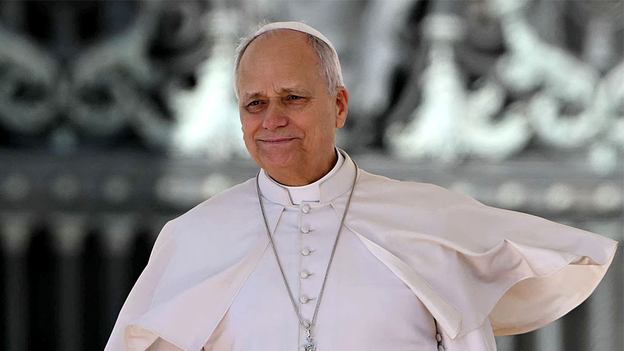
Pope Leo XIV on Wednesday renewed his push for a ceasefire in the war on Iran, but stressed that peace should be sought without the use of gunfire.
"I want to renew the appeal for a ceasefire, to work for peace but not with weapons — rather through dialogue, truly seeking a solution for everyone," Leo told reporters.
"Now, hatred and violence are increasing, getting worse and worse. There are more than a million people displaced, and many have died," he continued.
The pontiff added: "We want to pray for peace, but we also invite all authorities to truly work through dialogue to resolve the problems."
Since the war began late last month, Leo has repeatedly called for peace and for an end to the conflict.
The pope's latest comments come after reports that the Trump administration is planning to deploy thousands of soldiers to the Middle East as part of the escalating campaign against Iran.
Reuters contributed to this report.
Nearly 300 US troops wounded thus far in war in Iran, CENTCOM says
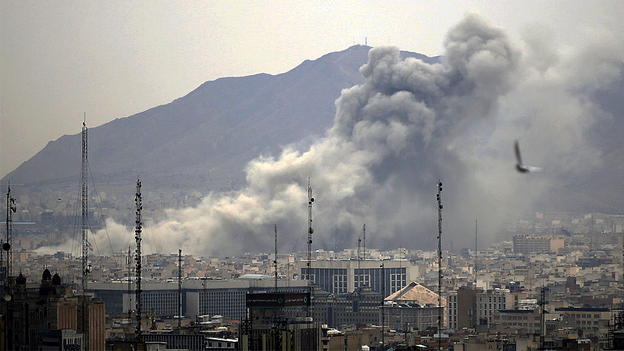
Since the U.S.-Israeli war on Iran began last month, 290 U.S. troops have been wounded, according to Capt. Tim Hawkins of U.S. Central Command.
This total adds 90 since the last update given on March 16. Last week, 20 service members were too injured to return to their posts.
Among the 290 service members wounded thus far, 255 have returned to duty, Hawkins said.
Of the 35 still wounded and out of action, 10 remain seriously wounded, he added.
A total of 13 U.S. service members have been killed in the war.
The Associated Press contributed to this report.
Iraq authorizes militias to act in self-defense amid ongoing Middle East tensions
The Iraqi government on Wednesday approved its militias and other members of its security forces to act in self-defense if attacked, as the U.S.-Israeli war on Iran nears four weeks.
State-sanctioned, mainly Shiite militias, known as the Popular Mobilization Forces, have developed into a powerful political faction within Iraq and have been targeted after Shiite militias attacked Iraqi locations associated with the U.S., according to reports.
The decision to approve acts of self-defense appears to be an effort to secure the uneasy coalition government now in control in Iraq as it balances competing forces within the Middle Eastern nation.
The Associated Press contributed to this report.
White House slams 'utterly false' CNN report that Iran prefers talks with VP over Witkoff, Kushner
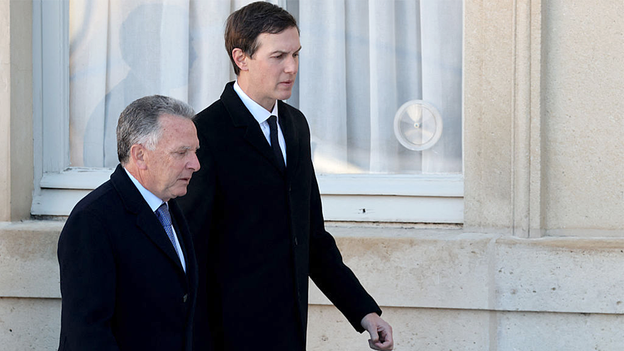
The White House is pushing back on a CNN report that said Iranian officials told the Trump administration that they would rather talk with Vice President JD Vance instead of special envoy to the Middle East Steve Witkoff and Jared Kushner, President Donald Trump's son-in-law.
"This story is utterly false," a White House official told Fox News. "This obvious op sourced entirely to 'regional sources' is clearly a coordinated foreign propaganda campaign meant to undermine the president."
According to CNN, which cited two regional sources, Iranian representatives notified the Trump administration that they do not want to re-enter negotiations with Witkoff and Kushner and would prefer to speak with Vance.
The message, which the outlet reported was passed through back channels to the U.S. government, suggests Iran believes discussions with Witkoff and Kushner would not be productive given the lack of trust after the breakdown of negotiations ahead of the U.S.-Israeli strikes that began late last month.
Vance, however, is viewed as more sympathetic in wanting to end the war, the sources told CNN.
"The perception is that Vance would be intent on wrapping up the conflict," one of the sources told the outlet.
Fox News' Patrick Ward contributed to this report.
Ex-Israeli general warns Iran could be ‘weeks’ from uprising as regime weakens
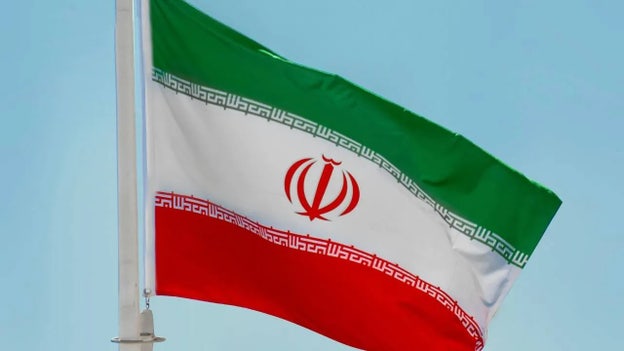
Iran could be weeks away from conditions for an uprising, according to an interview reported by Iran International, and as the U.S. and Israel may soon view the Islamic Republic as weak enough to encourage mass protests.
“It’s a matter of weeks until the US and Israel will assess that this regime is weak enough,” said Brigadier General (res.) Amir Avivi, CEO of the Israel Defense and Security Forum.
“And then there will be a call to the Iranian people to go to the streets and take over the country.”
Avivi also suggested such a scenario would involve external backing. “And when they will do that… there will be Israeli drones and American capabilities defending them from the air — and any attempt to hit the Iranian people will be met by an attack.”
Avivi said weakening the regime’s internal security forces is key.
“It’s about destroying the command and control of the Revolutionary Guards and the Basij forces. Eliminating their motivation to fight.”
“We see defection in many units. Some units you have 90 percent defection.”
He also dismissed the idea of reform from within the system. “I met this week with a very, very prominent diplomat who asked me… whether maybe Larijani will be the solution.”
“The guy is not moderate at all — not at all.”
“None of these leaders in this vicious regime can be rulers the day after. Iran needs completely different leadership," Avivi said.
Pointing to mounting economic pressure, he said: “There is a siege on Iran… How long can a country continue with no import, no export? The currency is broken… it’s obvious where this is going.”
“I foresee a change of regime. This regime is not going to stay,” Avivi added.
US, Israel give temporary immunity to senior Iranian officials during talks: report
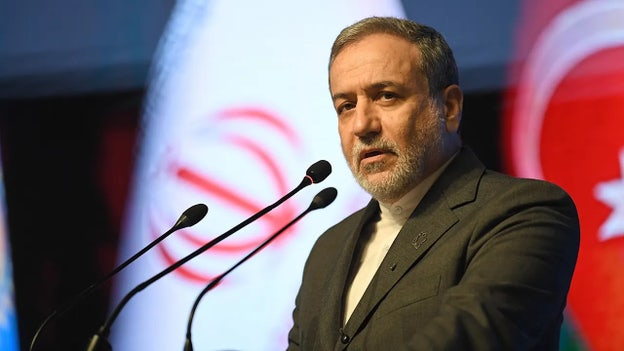
The United States and Israel have granted temporary immunity to two senior Iranian officials amid ongoing negotiations with Tehran, according to reports.
The officials named by Channel 14 News Israel are Iran’s foreign minister, Abbas Araghchi, and Parliament Speaker Mohammad Baqer Qalibaf.
The immunity is said to be valid for at least five days, covering the duration of the current round of talks.
Neither U.S., Israeli nor Iranian authorities have officially confirmed the arrangement.
Iran tells UN maritime body that 'non-hostile vessels' can pass through Strait of Hormuz
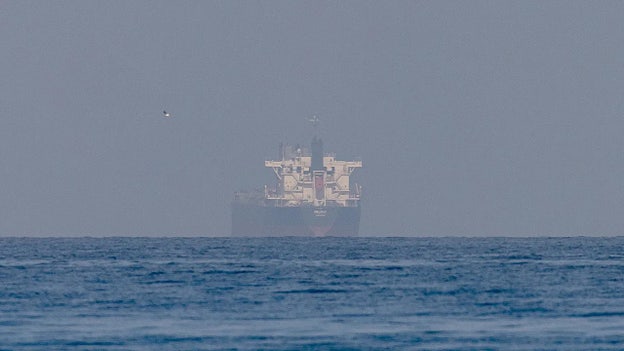
“Non-hostile” vessels are allowed to pass through the Strait of Hormuz, Iran told the United Nations’ maritime organization Tuesday.
“Non-hostile vessels, including those belonging to or associated with other States, may—provided that they neither participate in nor support acts of aggression against Iran and fully comply with the declared safety and security regulations—benefit from safe passage through the Strait of Hormuz in coordination with the competent Iranian authorities,” it said in a post shared on X.
Trump keeps war powers over Iran after Senate blocks resolution in 53-47 vote
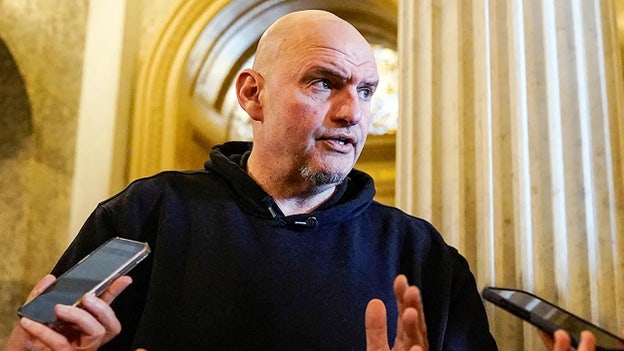
The Senate defeated legislation Tuesday that would have blocked President Donald Trump from continuing the war against Iran without congressional authorization.
The third attempt to limit Trump's military power since the conflict began was unsuccessful, with the 53-47 vote the latest effort by Democrats to give Congress a say in the war.
It was also part of an effort by some Democratic senators to continue forcing votes on war powers resolutions until top Trump officials publicly testify about the U.S.-Israeli bombing campaign.
Sen. Rand Paul, R-Ky was the only Republican to support the resolution. Sen. John Fetterman, D-Pa. was the only Democrat to oppose it.
Five-day pause in US-Iran war sparks debate on if conflict achieved goals
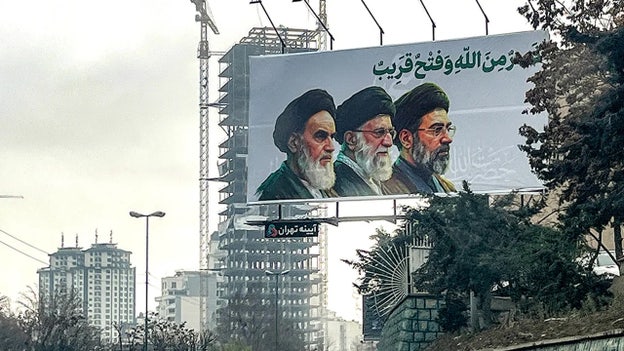
After 25 days of war with Iran, President Donald Trump announced what he described as “productive conversations” with Tehran, alongside a temporary halt to attacks on energy infrastructure.
The move raises questions about whether the conflict is nearing a negotiated turning point or drifting toward an outcome that leaves Iran’s core capabilities intact, The Jerusalem Post reported Tuesday.
Israeli lawmaker Ram Ben Barak of Yesh Atid, a former deputy Mossad chief, told the outlet that the outcome will depend on the terms of any agreement.
“If the war ends with enriched uranium still in Iranian hands and their missile program not limited and supervised, then everything we did was for nothing,” he said, adding that while wars must end in agreements, “the agreement has to reflect what we achieved … and not give the Iranians something for nothing.”
Prof. Eytan Gilboa, an expert on U.S.-Israel relations, said Gulf states have pushed to avoid escalation, particularly around energy infrastructure, and suggested Trump may be seeking to reduce risks without appearing to retreat.
He noted that referring to “conversations” rather than “negotiations” signals a lower level of commitment and leaves room for maneuver.
While Jonathan Sayeh of the Foundation for Defense of Democracies warned that ending the conflict without a clear exit strategy could be damaging, saying an abrupt halt would risk prospects of regime change.
“If you were to end this war too abruptly, it would definitely risk any prospects of regime change,” he told the outlet.
Sayeh also addressed reports that factions within Iran’s Islamic Revolutionary Guard Corps (IRGC) have expressed resistance to the diplomatic track.
“It is inherently a paradox to assume there are pragmatic IRGC members,” he said. “The end goals are the same for them. It’s just the mechanism they use to get there.”
“Diplomatically engaging the regime, does it prolong the war? I mean, yes, it does,” he said. “Yes, it drags out the process longer than it has to.”
Trump’s 15-point plan pressures Iran to dismantle nuclear program: report
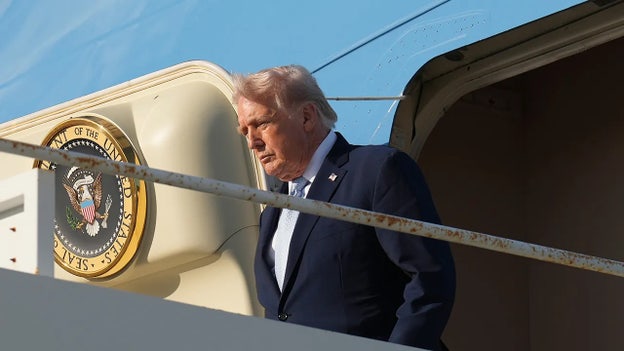
The U.S. has sent Iran a sweeping 15-point plan in a bid to end the war and bring about an end to its nuclear program, according to reports.
The plan, officials told The Wall Street Journal, centers on previous Trump administration demands of Tehran.
The document has been sent through intermediaries and demands Iran dismantle its three key nuclear sites and end enrichment, as well as its ballistic missile work.
The plan also sets out ending support for proxies and reopening the Strait of Hormuz.
According to the officials, the return benefits for Iran would include having nuclear-related sanctions lifted. The U.S. would also monitor the country’s civilian nuclear program.
News of the report came after Trump told reporters in the Oval Office Tuesday that Iran would “like to make a deal.”
“They’ve agreed they will never have a nuclear weapon,” he said.
Canada condemns Israel's plans to occupy southern Lebanon up to the Litani River
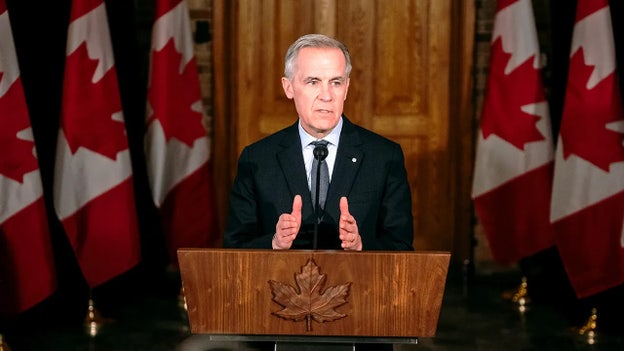
Canada’s foreign ministry has criticized Israel’s plans to occupy territory in southern Lebanon, specifically the areas spanning between the Lebanon-Israel border and the Litani River.
The comments came after Defense Minister Israel Katz said Tuesday that Israel hopes to occupy the area to secure a "defensive buffer."
At a meeting with the military chief of staff, Katz described how Israeli forces would "control the remaining bridges and the security zone up to the Litani."
“Canada strongly condemns Israel’s plans to occupy territory in southern Lebanon,” the Canadian foreign office said on X.
“Lebanon’s sovereignty and territorial integrity must not be violated. Hezbollah’s attacks on Israel must cease, and they must disarm,” it said
Macron urges Iran enter 'good faith negotiations,' stop regional attacks immediately
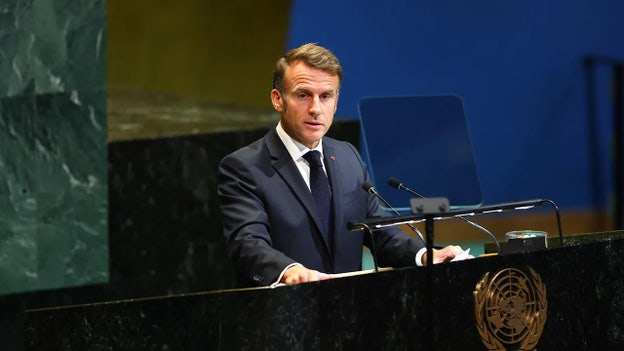
France’s president Emmanuel Macron said he spoke with Iran’s president Masoud Pezeshkian Tuesday and urged an end to attacks in the region and to engage in “good faith negotiations.”
“I reiterated the absolute necessity of putting an end to the unacceptable attacks against the countries of the region, of preserving energy and civilian infrastructure, and of restoring freedom of navigation in the Strait of Hormuz,” Macron said in a post shared on X.
“I called on Iran to engage in good faith in negotiations, in order to open a path toward de-escalation and to provide a framework that allows for addressing the expectations of the international community regarding Iran's nuclear and ballistic programs, as well as its regional destabilization activities,” he said.
Finally, Macron also said that he urged Iran to “allow the return to France of our compatriots Cecile Kohler and Jacques Paris at the earliest possible time.”
Gingrich, ex-military leaders throw support behind Iran opposition group
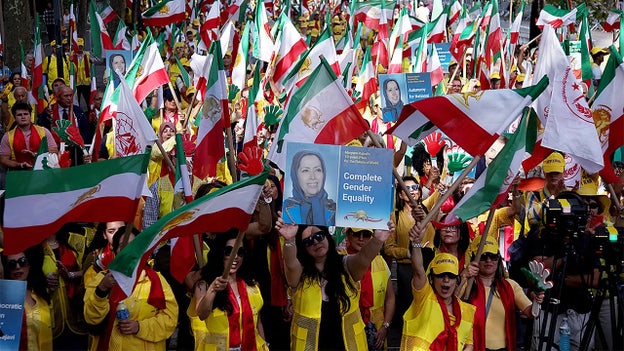
A bipartisan group of former senior U.S. officials — including former military leaders, diplomats, and former House Speaker Newt Gingrich — has issued a letter backing regime change in Iran and endorsing an opposition roadmap for the country’s future.
The letter, signed by about 30 key individuals calls on Western governments to support Iran’s democratic opposition, the National Council of Resistance of Iran (NCRI).
“With the Tehran regime discredited and weakened, not since 1979 have the Iranian people been in such a position of strength to take it back.” the letter states.
“Democracy should never have been stolen from the citizens of Iran in 1953 and again in 1979.
“The West must now back the democratic movement, and support Iran’s long-suffering citizens as they fight to regain their own country. America has a stake in their success, and we reiterate here our unwavering support for the cause of a Free Iran.”
Supporters of the NCRI say the effort reflects growing momentum among Iranians protesting what they describe as “totalitarian rule under the ayatollahs,” and argue the current government is “deceitful and hostile to allied interests.”
The bipartisan group also endorsed the provisional government announced by the NCRI, which is based on Maryam Rajavi's Ten-point Plan, and is committed to holding free and fair elections within six months of the regime overthrow to elect a constituent assembly which will draft the new republic 's constitution.
The plan calls for an end to clerical rule, democratic governance, and a new constitution guaranteeing freedoms of speech, religion, and assembly, equality under the law, separation of religion and state, and a non-nuclear Iran.
Among the signatories are Gingrich, former U.S. Ambassador to Morocco Marc Ginsberg, Ret. Gen. James L. Jones 32nd Commandant of the Marine Corps and former Rep. Ted Poe.
Multiple casualties reported after Iranian missile barrages strike central, southern Israel
Multiple casualties and significant damage from Iranian missile strikes were reported across central Israel on Thursday, including in the Tel Aviv area.
Magen David Adom (MDA) said it had evacuated at least 19 people following the latest strike in the area.
In a separate incident, 12 people — including six children and two elderly women — were taken to local hospitals in Bnei Brak after sustaining shrapnel injuries from a barrage of cluster munitions, according to the Jerusalem Post.
MDA said all but one of the injured were in mild condition and suffering from shrapnel or blast-related injuries.
Among those rescued was a 94-year-old woman who was evacuated from her top-floor apartment.
Meanwhile, Soroka Medical Center reported that 20 people were admitted to its emergency department following a separate Iranian missile barrage in the south.
Hezbollah rocket kills woman in northern Israel as Iran fires ballistic missiles
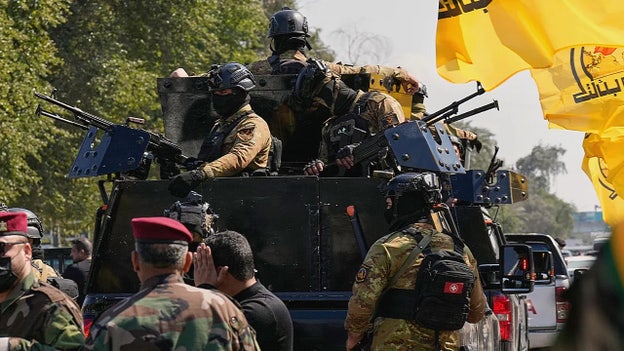
A rocket attack by Hezbollah on Galilee in northern Israel Tuesday killed a woman, according to The Times of Israel.
The terrorist proxy group had launched a barrage of around 30 rockets toward the area, as well as firing drones amid increased fighting and Israeli airstrikes across Lebanon.
The woman, in her 30s, was critically injured by the rocket impact near the Mahanayim Junction, and the Magen David Adom (MDA) ambulance service said its medics declared her death at the scene, the outlet said.
Hezbollah had also fired drones that triggered sirens throughout the north, as it continued to mount near-constant attacks amid intensifying fighting.
Two others were also hurt by shrapnel before Iran fired a ballistic missile salvo that triggered alerts across northern Israel.
Since it started its attacks March 2, Hezbollah has been firing about 150 rockets per day, the IDF said.
Israel eyes occupying southern Lebanon up to Litani River, Hezbollah calls it 'existential threat'
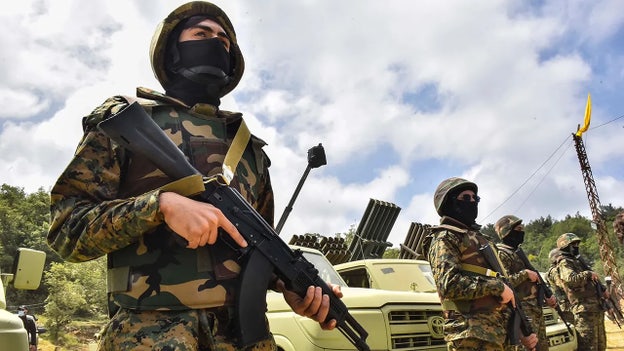
Israel hopes to occupy southern Lebanon up to the Litani River in order to secure a "defensive buffer," Defense Minister Israel Katz said Tuesday, the Jerusalem Post reported.
At a meeting with the military chief of staff, Katz described how Israeli forces would "control the remaining bridges and the security zone up to the Litani."
The Litani is a river that meets the Mediterranean about 30 kilometers (20 miles) north of Israel's border.
In response, Hezbollah said it would fight to stop the IDF from occupying the area and called the move an "existential threat" to the Lebanese state.
Senior Hezbollah lawmaker Hassan Fadlallah said any Israeli occupation south of the Litani would be met with resistance.
"We have no choice but to confront this aggression and cling to the land," he said, according to Reuters.
Projectile strikes Iran's Bushehr nuclear plant as IAEA warns of safety risk
A projectile struck the grounds of a key nuclear plant in Iran on Tuesday as the International Atomic Energy Agency (IAEA) called for “maximum restraint to avoid nuclear safety risks during conflict.”
In a post shared on X, the IAEA said it had been informed by Iran that the projectile hit the premises of the Bushehr Nuclear Power Plant.
“According to Iran, there was no damage to the NPP itself nor injuries to staff, and the condition of the plant is normal,” the IAEA said.
“DG @rafaelmgrossi reiterates call for maximum restraint to avoid nuclear safety risks during conflict,” the agency added, noting Director General Rafael Grossi.
Who’s really running Iran? Key power players amid Trump’s 'top' official talks
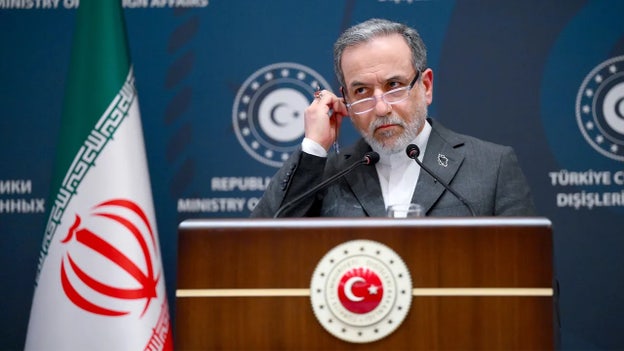
"Nobody knows who to talk to," President Donald Trump said Tuesday at the White House, describing what he portrayed as both chaos and opportunity inside Iran’s leadership.
"But we're actually talking to the right people, and they want to make a deal so badly."
His remarks come as the U.S. claims it is engaged in talks with a "top" Iranian figure, even as Tehran publicly denies negotiations are taking place.
The question now is not just whether talks are happening, but whether anyone in Tehran has the authority to deliver.
With strikes on senior Iranian leadership and growing internal fractures, Iran appears to be operating less like a centralized theocracy and more like a wartime system run by overlapping power centers, with the Islamic Revolutionary Guard Corps (IRGC) at its core.
The IRGC: The real power behind the state
Across intelligence assessments and recent reporting, one conclusion is consistent: the Islamic Revolutionary Guard Corps has emerged as the dominant force in Iran’s political system.
Behnam Ben Taleblu, senior fellow at the Foundation for Defense of Democracies, said the current moment is accelerating a long-standing trend.
"No doubt both the 12-Day war and this current conflict have trimmed the commanding heights of the Islamic Republic's political and military leadership," he said. "But it has also expedited the trend lines inherent in Iranian politics, which is the dominance of the security forces and the ascendance of the IRGC."
The command room: Supreme National Security Council
If the Islamic Revolutionary Guard Corps is the power in Iran, the Supreme National Security Council appears to be the mechanism through which that power is exercised.
The Supreme National Security Council is Iran’s top forum for coordinating military and foreign policy, bringing together senior Islamic Revolutionary Guard Corps commanders and government officials under the authority of the supreme leader. It was established after the 1979 revolution and has played a central role in managing major crises, from nuclear negotiations to wartime operations.
Mojtabā Khamenei: The supreme leader in name
Formally, Iran’s system centers on Supreme Leader Mojtaba Khamenei. But his actual grip on power remains uncertain.
Ghalibaf: The man at the center of Trump’s claim
Trump’s statement that he is speaking to a "top person" has focused attention on one name in particular: Mohammad Bagher Ghalibaf.
Araqchi: The diplomat carrying messages
Foreign Minister Abbas Araqchi remains one of the most visible figures internationally.
If talks were to take place, Araqchi likely would be part of the Iranian delegation alongside Ghalibaf, Reuters reported.
The wider power circle: generals, clerics and enforcers
Beyond the headline figures, a broader group of officials who continue to shape Iran’s direction can be identified.
These include Islamic Revolutionary Guard Corps chief Ahmad Vahidi, Quds Force commander Esmail Qaani, naval commander Alireza Tangsiri, Judiciary Chief Gholamhossein Mohseni-Ejei, President Masoud Pezeshkian, and senior clerical and political figures such as Saeed Jalili and Ayatollah Alireza Arafi.
This is an excerpt from a report by Efrat Lachter.