Artemis launch live: NASA Artemis II launch time, countdown and updates
NASA is set to launch Artemis II at 6:24 p.m. ET from Kennedy Space Center, marking a historic return to deep space with astronauts aboard for the first time in more than 50 years. The mission will send four astronauts on a 10-day journey around the moon and back, serving as a critical step toward future lunar landings and renewed competition in the global space race.
Coverage for this event has ended.
NASA administrator calls Artemis II launch a 'defining moment for our nation'
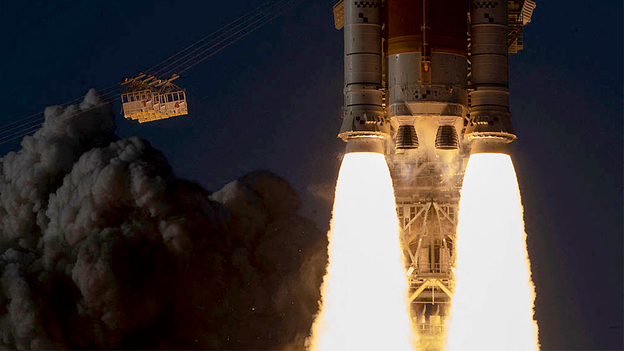
NASA Administrator Jared Isaacman on Wednesday said the launch of astronauts on Artemis II marks a "defining moment for our nation and for all who believe in exploration."
"Artemis II builds on the vision set by President Donald J. Trump, returning humanity to the Moon for the first time in more than 50 years and opening the next chapter of lunar exploration beyond Apollo," Isaacman said in a statement.
"Aboard Orion are four remarkable explorers preparing for the first crewed flight of this rocket and spacecraft, a true test mission that will carry them farther and faster than any humans in a generation," he continued.
Isaacman added that Artemis II "is the start of something bigger than any one mission."
"It marks our return to the Moon, not just to visit, but to eventually stay on our Moon Base, and lays the foundation for the next giant leaps ahead," he said.
Sen Mark Kelly says Artemis II crew 'making our country proud'
Sen. Mark Kelly, also a retired NASA astronaut, said on Wednesday that the astronauts on the Artemis II launch are "making our country proud."
"The crew of Artemis II is making our country proud," Kelly, D-Ariz., said in a post on X.
"This is just the start of a new era of Moon missions and I couldn’t be more excited," the lawmaker continued.
Trump praises Artemis II launch, calls astronauts ‘brave’ in Iran address

President Donald Trump opened remarks on Iran by congratulating NASA and the Artemis II crew following the mission’s successful launch.
“Let me begin by congratulating the team at NASA and our brave astronauts on the successful launch of Artemis II,” Trump said.
The president touted the scale of the mission, noting the spacecraft will travel farther into space than any crewed mission in decades.
“It’s amazing. They are on the way and God bless them,” Trump said. “These are brave people.”
Trump’s comments come as four astronauts begin a 10-day journey around the moon and back, marking the first crewed mission beyond low Earth orbit in more than 50 years.
Artemis II teams working through minor issues after launch as crew adapts to space
NASA officials said the Artemis II mission is proceeding as planned after launch, even as engineers work through several minor issues during the spacecraft’s early hours in orbit.
Among the items being addressed are a brief communications disruption, a toilet system controller issue and a water tank valve that was found in the wrong position during ascent and is expected to be reset.
Officials also reported a minor electronics “transient” caused by radiation, a known phenomenon seen on previous missions that was handled automatically by onboard systems.
Despite the issues, NASA stressed that none of the problems have impacted the mission or crew safety.
“This is a flight test,” Dr. Lori Glaze, Deputy Associate Administrator for NASA's Exploration Systems Development Mission Directorate said. “We anticipate to have a lot of these.”
The four astronauts, meanwhile, are adapting to life in zero gravity after launch, a period that can be physically demanding as the body adjusts from Earth’s gravity.
The crew appears to be feeling well while managing a packed schedule of early mission tasks.
NASA said teams will continue monitoring systems and gathering data as Artemis II progresses through its initial phase in Earth orbit ahead of its planned journey toward the moon.
Inside Artemis II life: Wall-mounted beds, freeze-dried meals and a next-gen space toilet
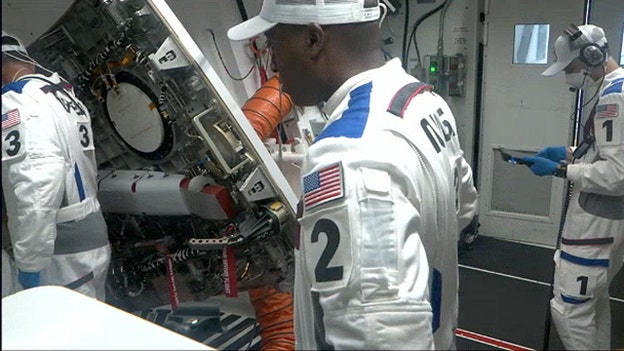
The Artemis II crew will need to adjust to some lifestyle changes during their nearly two weeks aboard the Orion spacecraft — including wall-mounted sleeping bags, limited meals and a unique bathroom situation.
The four astronauts will sleep in lightweight sleeping bags attached to the wall or ceiling, functioning much like stretched hammocks across the cabin, according to NASA.
To ensure they are well-rested, all four crew members are scheduled to sleep at the same time for a full eight hours.
In relation to meals, the voyagers will be limited to a strict diet of three meals per day, including one shared 60-minute mealtime.
Cooking will look different, with astronauts using water to rehydrate freeze-dried food and powdered drinks, and heating up food with a suitcase-style warmer that can be stuck to the walls with Velcro.
The Orion also features a dedicated "hygiene bay” and is equipped with a water supply system that stores and distributes potable water specifically for the crew's hygiene, medical, drinking and food preparation needs.
In an improvement to the previous space shuttle, the Artemis II crew will use a new, highly compact space toilet called the Universal Waste Management System (UWMS), which is expected to be easier and more comfortable for both men and women to use.
Taking up only about 5 cubic feet of volume, it is 60% smaller and lighter than the toilet used on the space shuttle.
Artemis II crew briefly unable to respond during communications issue
NASA briefly lost the ability to hear responses from the Artemis II crew, though mission control continued receiving data from the spacecraft.
During the momentary communications issue, ground teams reported they were still getting good telemetry and data from Orion and its upper stage but could not hear the astronauts themselves.
Communications were quickly restored, with mission control and the crew confirming they could hear each other again.
“Good to hear your voice,” one voice from the ground said once contact resumed.
“It’s good to hear yours as well,” a crew member responded.
The issue appeared to be temporary, and the mission is continuing as planned.
NASA nails high-stakes engine burn to lock Orion into stable Earth orbit
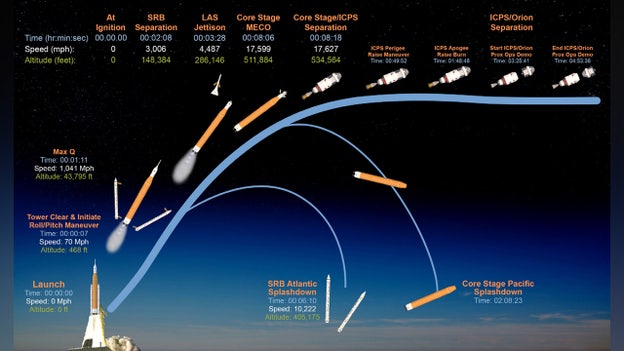
NASA's Artemis II mission passed the perigee raise maneuver milestone, one of the most critical steps in the early hours of the spacecraft's flight.
The highly calculated engine firing happened as the Orion spacecraft reached the apogee, or the absolute highest point, of its initial sub-orbital trajectory.
The rocket's upper stage, called the interim cryogenic propulsion stage (ICPS), created the powerful blast — raising the spacecraft's perigee, which is the lowest point of its orbit, to a safe altitude of 100 miles.
The Orion capsule and the ICPS are now locked into a stable low-Earth orbit.
Looking ahead, at about 13 hours and 44 minutes after liftoff, the astronaut crew will be woken up to perform a second perigee raise burn.
The additional engine firing is essential to shift Orion into position for the next phase of the mission Thursday.
Artemis II solar arrays deploy as Orion powers up for moon mission
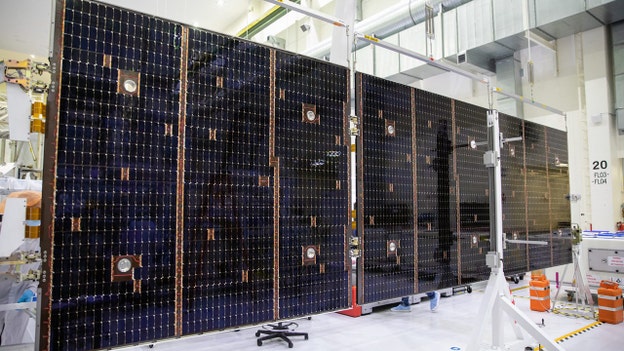
NASA’s Orion spacecraft has fully deployed its solar array wings, marking a key milestone shortly after liftoff.
Flight controllers confirmed all four arrays unfolded and locked into place at 6:59 p.m. EDT, allowing the spacecraft to begin generating power for the mission.
The arrays extend from Orion’s European Service Module, giving the spacecraft a wingspan of about 63 feet. Each wing contains thousands of solar cells and can rotate to track the sun, maximizing power as the spacecraft travels through space.
The solar arrays will supply electricity for critical systems, including life support, communications and onboard operations during the 10-day mission around the moon.
The successful deployment is a major step in preparing Orion for its journey beyond Earth's orbit.
Artemis II launches: NASA sends astronauts toward the moon for first time in 50 years
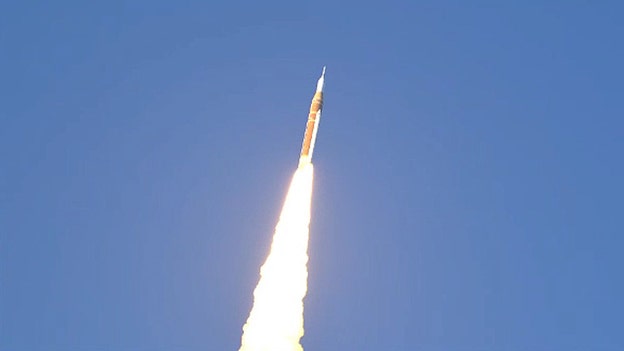
NASA’s Artemis II mission has officially lifted off at 6:35 p.m. EDT, sending four astronauts toward the moon for the first time in more than half a century.
The Space Launch System rocket roared to life at Kennedy Space Center, producing nearly 9 million pounds of thrust as it carried the crew aboard the Orion spacecraft into space.
The mission marks NASA’s first crewed flight beyond low Earth orbit since 1972 and a major step toward returning humans to the lunar surface.
Aboard the spacecraft are commander Reid Wiseman, pilot Victor Glover, and mission specialists Christina Koch and Jeremy Hansen.
During the 10-day mission, the crew will travel around the moon but not land before returning to Earth, testing critical systems needed for future lunar missions.
Artemis II astronauts' diet to include beef brisket, mango-peach smoothies
NASA astronauts traveling to the moon Wednesday as part of the Artemis II mission will have a taste of home in space with a line up of stellar meals.
A menu released by NASA showed the crew will be enjoying 189 unique foods, drinks and condiments as they fly toward the moon.
Drinks include coffee, green tea, mango-peach smoothies, chocolate breakfast drinks and apple cider.
Among the most common food items were vegetable quiche, breakfast sausage, barbecued beef brisket, macaroni and cheese, and broccoli au gratin.
Astronauts will also enjoy five different types of hot sauces and nearly a dozen culinary flavorings.
Former NASA astronauts said their favorites included tomato basil soup, shrimp cocktail and brownies.
"I spy a lot of REAL FOOD on the Artemis II crew menu!" Health and Human Services Secretary Robert F. Kennedy Jr. wrote in a social media response to the impressive menu. "Godspeed."
Artemis II astronauts sealed inside capsule as hatch closes ahead of launch
The Artemis II crew is now sealed inside their Orion spacecraft as the capsule hatch has been closed ahead of launch from Kennedy Space Center.
The milestone marks one of the final steps before liftoff, with the astronauts now strapped in and awaiting the countdown inside the Space Launch System rocket.
A closeout crew assisted the astronauts into their seats, connected communications and cooling systems, and secured the hatch before departing the launch pad.
Once the hatch is closed, the astronauts are on their own inside the spacecraft for the duration of the mission.
The four-person crew is preparing for a 10-day mission that will send them around the moon and back, marking NASA’s first crewed mission beyond low Earth orbit in more than 50 years.
Artemis II clears key system check after delay, launch still a 'go'
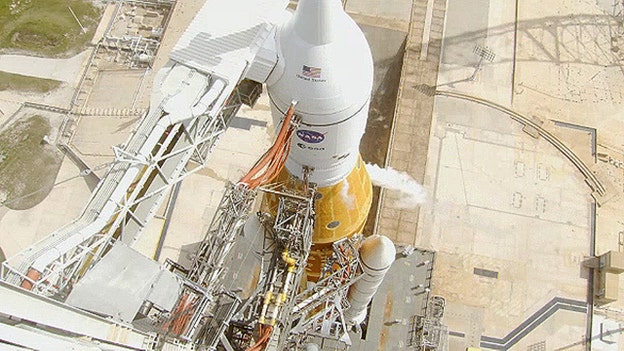
NASA confirmed the Artemis II mission is back on track after engineers quickly resolved a last-minute Flight Termination System (FTS) issue that briefly put the mission in “No-Go” status.
Officials confirmed the news just over an hour before the scheduled 6:24 p.m. ET launch.
Crews used legacy Space Shuttle-era equipment, retrieved by an experienced operator, to help verify the system while working to avoid delaying the launch.
Who are the Artemis II astronauts? Meet the crew heading back to the moon
NASA’s Artemis II mission will send four astronauts around the moon for the first time in more than 50 years.
The 10-day mission will mark the first time a Black astronaut, a woman and a Canadian astronaut travel to the moon.
Reid Wiseman, a Baltimore native and retired U.S. Navy captain, will command the mission. He previously flew to the International Space Station in 2014.
Victor Glover, a U.S. Navy captain, will serve as pilot and is set to become the first Black astronaut to travel to the moon. He first flew to space in 2018.
Christina Koch, a mission specialist, is set to become the first woman to travel to the moon. She first flew to space in 2018.
Jeremy Hansen, of the Canadian Space Agency, will also serve as a mission specialist and is set to become the first Canadian to travel to the moon.
The crew will fly aboard NASA’s Orion spacecraft on a lunar flyby mission, not a landing, before returning to Earth.
NASA turns to space shuttle relic amid high-stakes Artemis II launch trouble
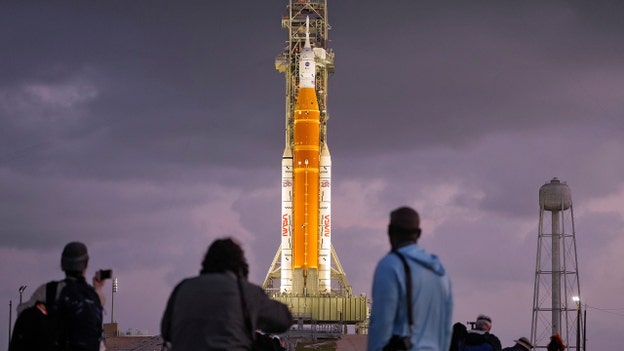
NASA's Artemis II mission has hit a temporary hurdle, forcing the launch team to rely on legacy hardware from the Space Shuttle program while the highly anticipated countdown continues.
The mission team is currently troubleshooting a critical technical issue with the Flight Termination System (FTS), according to NASA and the Kennedy Space Center Visitor Complex.
The FTS is a system that allows engineers on the ground to send a signal to destruct the rocket if it were to veer off course during ascent, to protect public safety.
Without a cleared FTS, the rocket is not allowed to fly, leaving the range listed in a "No-Go" status.
However, engineers thought of an unlikely solution to verify the system and are currently preparing to test it.
An FTS console operator was dispatched to the Vehicle Assembly Building (VAB) to retrieve a specialized piece of legacy equipment originally used during the Space Shuttle era.
The veteran operator, who has specific experience using the older hardware, was granted immediate permission to access it and verify the integrity of the modern system.
Crews are working to resolve the issue without delaying the scheduled 6:24 p.m. ET launch window.
Artemis II astronauts reveal mission patch with hidden meaning ahead of moon launch
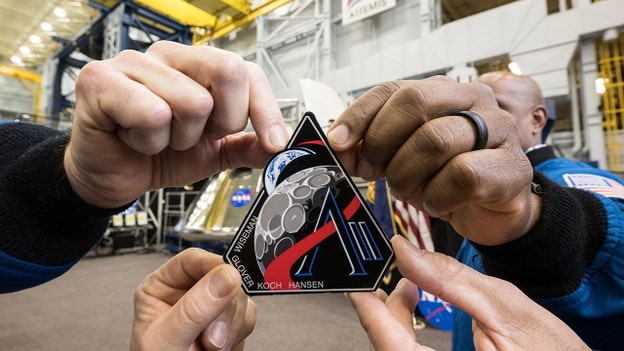
NASA’s Artemis II astronauts have unveiled their official mission patch, a design that highlights both their journey to the moon and the importance of returning home.
The emblem features a stylized “AII," a nod to Artemis II, and draws inspiration from the iconic Apollo 8 “Earthrise” image, showing both Earth and the moon.
According to NASA, the moon in the patch represents exploration and the mission’s destination, while Earth symbolizes home and the perspective gained from spaceflight.
The design also points to NASA’s broader Artemis program and future missions to the moon and Mars.
Artemis II will send NASA astronauts Reid Wiseman, Victor Glover and Christina Koch, along with Canadian astronaut Jeremy Hansen, on a roughly 10-day mission around the moon.
Artemis II astronauts suit up, head to launch pad ahead of historic moon mission
Astronauts preparing for NASA’s Artemis II mission suited up and departed crew quarters at Kennedy Space Center on Wednesday, beginning the final steps before liftoff on a historic journey around the moon.
The four-person crew emerged to cheers from NASA staff before boarding the “Astrovan” for the ride to the launch pad, a longstanding tradition dating back to the Apollo era.
Retired NASA astronaut Terry Virts described the moment as one of the most significant in any mission.
“This is a really cool moment,” Virts said. “When you walk out the door, you see all those patches… astronauts have been doing this going back to Apollo.”
The Artemis II mission will mark the first time astronauts travel beyond low Earth orbit since 1972, with the crew set to spend about 10 days flying around the moon and returning to Earth.
Once at the pad, astronauts will climb aboard the roughly 300-foot Space Launch System rocket, where a closeout crew will help secure them inside the Orion spacecraft before hatch closure, a moment Virts described as when “it gets real.”
The mission will test critical systems aboard Orion, including life support and navigation, as NASA prepares for future missions aimed at landing astronauts on the lunar surface.
During the flight, the crew will orbit Earth before firing a powerful engine burn to send the spacecraft toward the moon, eventually traveling farther from Earth than any humans in history.
Despite the scale of the mission, living conditions inside the Orion capsule will be tight, with Virts comparing the space to “a small spare bathroom” for the four astronauts over the 10-day journey.
Artemis II countdown underway as NASA eyes weather concerns ahead of launch
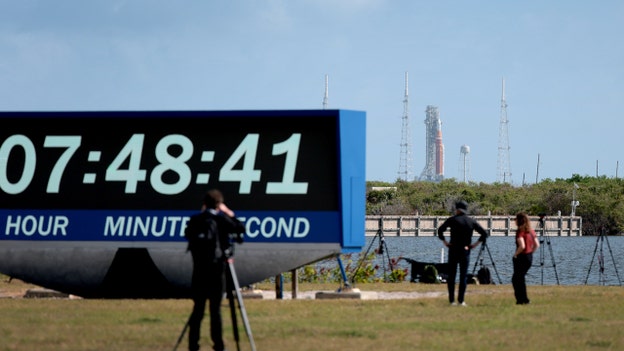
NASA is set to launch its Artemis II mission at 6:24 p.m. ET Wednesday, with an 80% “go” forecast as officials keep a close watch on weather conditions.
Fox Weather is also keeping an eye on launch conditions throughout the afternoon.
While the current forecast is promising, about an hour before takeoff, meteorologists were monitoring potential wind shear and a deck of thick clouds drifting over the SLS rocket.
Officials said the primary hurdle will be NASA's "Cumulus Cloud Rule," which dictates the rocket must remain at least 10 miles away from any clouds that could potentially trigger lightning during its ascent into space.
Artemis II will fly astronauts around the moon, but won’t land
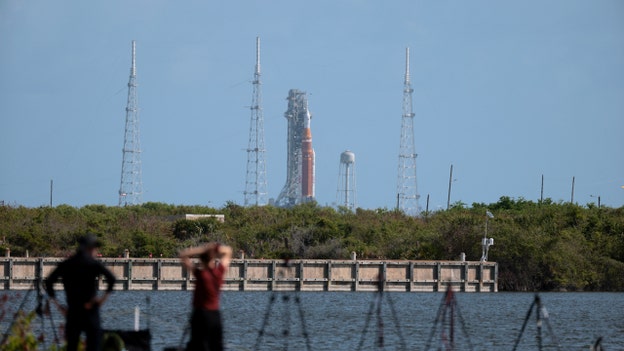
NASA’s Artemis II mission will send astronauts toward the moon for the first time in more than 50 years, but the historic flight will not include a lunar landing.
Instead, the mission will carry four astronauts on a roughly 10-day journey around the moon before returning to Earth, marking NASA’s first crewed mission beyond low Earth orbit since the Apollo era ended in 1972.
The flight is designed to test critical systems aboard the Orion spacecraft, including life support, with astronauts onboard for the first time. NASA says the mission will help validate the technology needed for future lunar landings.
Artemis II is a key step in the agency’s broader Artemis program, which aims to return humans to the moon later this decade and eventually send astronauts to Mars.
Trump reacts to Artemis II launch: ‘America is going back to the Moon!’
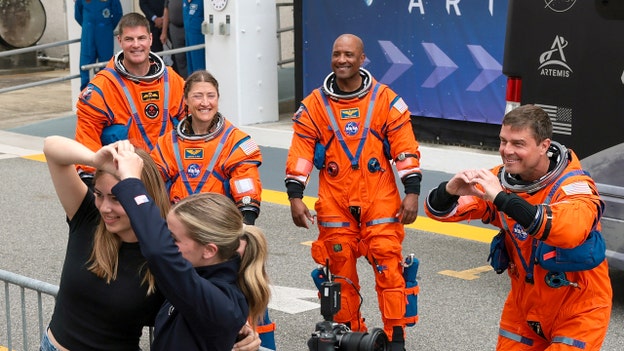
President Donald Trump celebrated NASA’s Artemis II launch in a Truth Social post ahead of liftoff, touting the historic return to deep space and America’s push to lead the modern space race.
“Tonight at 6:24 P.M. EST, for the first time in over 50 YEARS, America is going back to the Moon!” Trump wrote.
The president described Artemis II as “among the most powerful rockets ever built” and praised the astronauts set to travel farther into deep space than any humans before.
“We are WINNING, in Space, on Earth, and everywhere in between,” Trump added. “America doesn’t just compete, we DOMINATE, and the whole World is watching.”
Trump also praised NASA and the Artemis II crew, writing, “God bless our incredible Astronauts, God bless NASA, and God bless the Greatest Nation ever to exist.”
The Artemis II mission will send four astronauts on a 10-day journey around the moon, marking the first crewed mission beyond low Earth orbit since the Apollo era.
Live Coverage begins here