
US holds fire on Iran after 2 days of strikes; Khamenei buried after funeral procession
Following two days of retaliatory strikes, President Donald Trump paused the US-Iran conflict as former Supreme Leader Ali Khamenei is buried. Meanwhile, Iranian threats to the Strait of Hormuz have halted ceasefire hopes, sending Brent crude oil and local gas prices higher.
Coverage for this event has ended.
US reportedly gives Iran Saturday deadline to renounce Strait of Hormuz attacks
The Trump administration has given Iran until Saturday to publicly commit to ending attacks on commercial shipping in the Strait of Hormuz or face unspecified consequences, according to an Axios report citing three U.S. officials.
Axios reported the administration wants Tehran to publicly acknowledge the strategic waterway is open, commit to stopping attacks on commercial vessels and recognize that all shipping lanes through the strait will remain open without tolls.
According to Axios, Iranian Foreign Minister Abbas Araghchi is expected to meet Saturday with Omani Foreign Minister Badr al-Busaidi in Muscat as regional mediators work to ease tensions and revive nuclear talks.
One U.S. official told Axios that if Iran does not make a public commitment, “it is not gonna be a great day for them.”
The White House did not immediately respond to Fox News Digital's request for comment.
Conservative coalition pushes Congress to help Iranians bypass regime internet blackouts
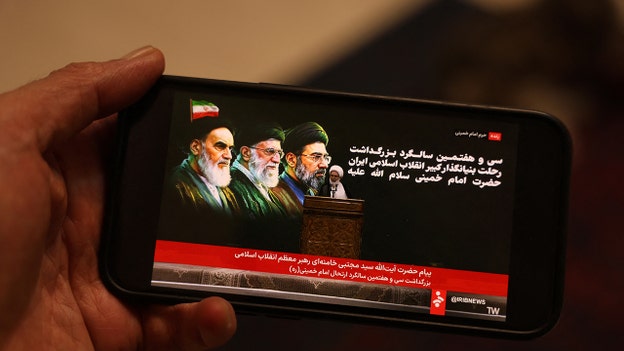
A coalition of conservative foreign policy experts, Iran hawks and digital freedom advocates is urging Congress to include measures protecting internet access in Iran in the 2027 National Defense Authorization Act, according to The Hill.
The group is backing the Iran Human Rights, Internet Freedom, and Accountability Act and the FREEDOM Act, which are aimed at helping Iranians bypass government censorship and communicate during internet shutdowns.
“Internet shutdowns have become one of the regime’s most powerful tools of repression, facilitating violence, mass arrests and grave human rights abuses while preventing Iranians from communicating with one another and the outside world,” the coalition wrote in a letter to Senate leaders and the bipartisan heads of the Armed Services Committee.
Khomeini grandson says talks with US are ‘not about peace,’ calls compromise ‘treason’
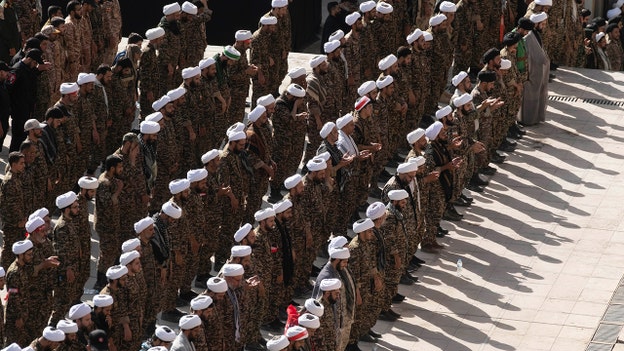
The grandson of Islamic Republic founder Ayatollah Ruhollah Khomeini said Friday that any negotiations between Iran and the United States should not be viewed as a path to peace, arguing the Islamic Republic’s identity is rooted in refusing compromise with America.
“If you see that the Islamic Republic talks about negotiations, it is not about peace negotiations. Can we make peace with criminal America?” Ali Khomeini said, according to Iran International English. “Our identity is non-compromise with arrogance. Negotiation means war; war has different forms.”
Khomeini went on to say that “anyone who wants to negotiate in order to reach peace with America is a traitor,” adding that “anyone who sends a message of friendship to America, their mouth is impure and unclean.”
Saudi crown prince, Trump reportedly discuss Iran talks and security in Strait of Hormuz
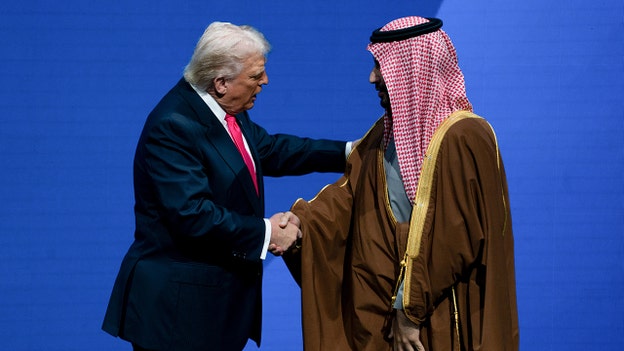
Saudi Crown Prince Mohammed bin Salman and President Donald Trump discussed U.S.-Iran talks and security in the Strait of Hormuz during a phone call Friday, according to Saudi Arabia’s state-run news agency SPA, as reported by Anadolu.
The leaders also reviewed U.S.-Saudi cooperation and exchanged views on regional and international issues, including the latest developments in negotiations between Washington and Tehran.
According to SPA, the two agreed upon the importance of protecting freedom of navigation and maritime security, expressing support for efforts aimed at promoting stability across the region.
Iran privately told Trump advisers ship attacks were a ‘mistake’: report
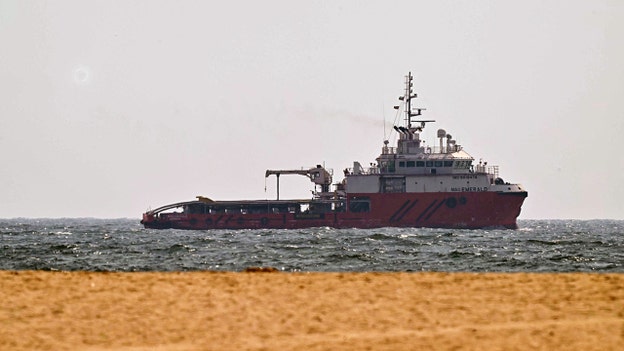
Iranian officials privately told Trump administration advisers they “made a mistake” by attacking commercial ships in the Strait of Hormuz and want to continue negotiations, according to CBS News, citing senior U.S. officials.
“They came back to the table and said, ‘We screwed up. We made a mistake. Let’s keep talking,’” one U.S. official told CBS News.
According to CBS, the White House wants Iran to publicly acknowledge the attacks violated the ceasefire and commit to keeping the Strait of Hormuz open. The report said President Donald Trump has directed Vice President JD Vance, special envoy Steve Witkoff, Secretary of State Marco Rubio and Jared Kushner to continue negotiations, with talks expected in Oman on Saturday.
U.S. officials told CBS the administration would respond with military and economic measures if Iran resumes hostile actions.
Israel signals readiness for another Iran strike as Trump declares ceasefire over
Israel’s leaders are publicly signaling that their country is prepared to strike Iran for a third time, while a U.S. official tells Fox News Digital that Washington remains closely coordinated with Jerusalem.
"The IDF is on high alert and prepared to resume the campaign, regain air superiority, and carry out an independent Israeli strike against Iran to eliminate threats — even for a third time," Israel Defense Forces (IDF) Minister Israel Katz said Thursday at a graduation ceremony for the Israeli Air Force’s newest pilots.
"If we have to return, we will return with even greater force," Katz added.
Prime Minister Benjamin Netanyahu also warned Thursday that Israel’s campaign against Iran was not finished and said Tehran would not be permitted to obtain a nuclear weapon, regardless of any agreement reached with Washington.
"The war has not yet ended," Netanyahu said at the air force ceremony. "Alongside the old challenges, new challenges are emerging. Axes are falling, and axes are rising. We are paying attention to this. We are prepared for every scenario."
Two Israeli sources told CNN Friday that the Trump administration does not currently want Israel to participate in the latest U.S. strikes against Iran. "Netanyahu would really want to join the U.S. strikes, but the U.S. doesn’t want Israel involved at the moment," one of the sources told CNN.
A U.S. official denied the report, telling Fox News Digital, "This is fake news. The United States has a strong relationship with Israel, which contributed to the resounding success of Operation Midnight Hammer and Operation Epic Fury. We remain in close coordination with our Israeli partners."
This is an excerpt of an article by Fox News Digital's Efrat Lachter.
Iran’s UN envoy says Tehran may abandon US-Iran agreement if Washington violates it
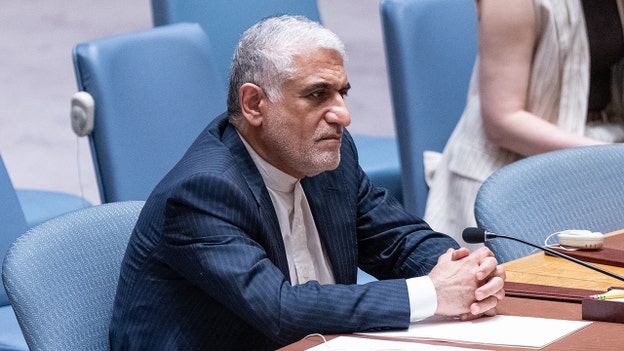
Iran’s ambassador to the United Nations (UN) said Friday that Tehran may no longer consider itself bound by the U.S.-Iran memorandum of understanding if the United States continues what he described as violations of the agreement.
“Iran remains committed to the faithful implementation of the memorandum of understanding, provided that the United States fully and faithfully complies with its own obligation,” Ambassador Amir Saeid Iravani said, according to Iran International English. “However, should the United States continue to violate its obligations under the MoU, Iran will no longer be bound to fulfill its obligations.”
Iravani also claimed that under the Islamabad memorandum of understanding, responsibility for navigation and demining operations in the Strait of Hormuz “rests exclusively with Iran,” despite repeated U.S. and international assertions that Tehran does not control the strategic waterway.
State Department says US targeting financial lifelines of Iran’s ruling elite
The State Department on Friday said the Trump administration is working to cut off the financial lifelines of Iran’s ruling elite, highlighting newly announced sanctions targeting individuals and networks accused of enriching senior regime figures.
State Department spokesperson Tommy Pigott said the administration is targeting Dubai-based financier Ali Ansari and Iranian currency exchange networks that U.S. officials say help move money for the regime.
“While ordinary Iranians face inflation and shortages, the regime’s elites loot billions,” Pigott wrote on X. “The U.S. is cutting off Iran’s ruling elite’s financial lifelines.”
The State Department said the U.S. will keep imposing sanctions on people, companies and financial institutions that help fund the Iranian regime until Tehran changes its behavior.
CENTCOM shares video of nighttime flight operations aboard USS George H.W. Bush
U.S. Central Command (CENTCOM) on Friday released video showing sailors conducting nighttime flight operations aboard the USS George H.W. Bush (CVN 77) as the aircraft carrier continues operating in regional waters.
The video comes as the U.S. maintains a significant naval presence in the Middle East following renewed military strikes on Iran and amid ongoing efforts to protect commercial shipping through the Strait of Hormuz.
IDF says Hezbollah terrorist killed near tunnel shaft in southern Lebanon
The Israel Defense Forces (IDF) said Friday that it eliminated a Hezbollah terrorist operating near an underground tunnel shaft in southern Lebanon.
According to the IDF, the terrorist was positioned at the Ali al-Taher Ridge inside the security zone where Israeli troops are operating and posed an immediate threat to soldiers.
The military also said a suspect traveling in a vehicle was killed in a separate strike after allegedly posing a threat to IDF troops in the security zone.
Report: Iran, US, Qatar and Pakistan expected to hold four-way call amid diplomatic push
Iran, Pakistan, the United States and Qatar are expected to hold a four-way telephone call in the near future, according to Saudi-owned Al Hadath, citing informed sources.
The reported call comes as regional mediators continue efforts to de-escalate tensions and revive U.S.-Iran nuclear negotiations after the recent exchange of strikes following attacks on commercial shipping in the Strait of Hormuz.
Fox News previously reported that U.S. officials said technical-level talks with Iran remain ongoing despite Tehran’s violations of the memorandum of understanding.
Treasury sanctions financier tied to Iran’s supreme leader after Hormuz attacks
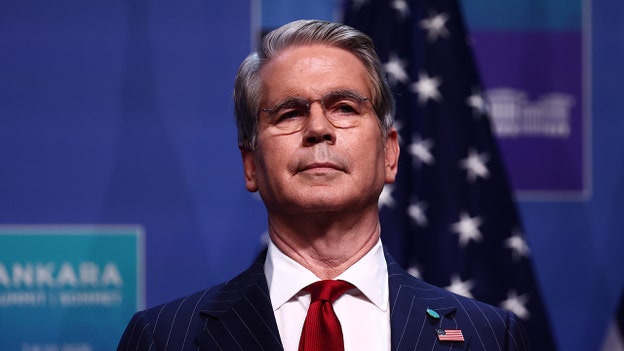
The Treasury Department announced new sanctions Friday targeting an Iranian financier accused of managing assets for Supreme Leader Mojtaba Khamenei, as well as exchange houses that allegedly move billions of dollars for sanctioned Iranian banks.
The action follows Iran’s renewed attacks on international shipping in the Strait of Hormuz, Treasury said.
The department designated Dubai-based Iranian national Ali Ansari, accusing him of overseeing a global network of real estate and commercial holdings that benefit Khamenei, other regime elites and the Islamic Revolutionary Guard Corps (IRGC).
“The so-called Supreme Leader is hiding in seclusion while his regime crumbles,” Treasury Secretary Scott Bessent said. “Treasury will continue using every tool at its disposal to isolate him and other regime elites from the global financial system.”
Treasury also sanctioned several Iranian exchange houses, their executives and front companies accused of moving and holding billions of dollars for sanctioned banks through shell companies.
The designations block any property or interests held in the United States by the sanctioned individuals.
Iranian cleric calls for drone or missile strike against Trump
An Iranian cleric publicly called for the assassination of President Donald Trump, urging “anyone with missiles or drones” to target the U.S. president in retaliation for the death of former Supreme Leader Ali Khamenei.
According to Iran International English, Ahmad Reza Hajati, the Friday prayer leader in Ahvaz in southwestern Iran, called on supporters to “purge the earth” of Trump’s existence during Friday remarks.
The comments come one day after The Wall Street Journal reported that Israeli intelligence recently shared information with U.S. officials indicating Iran was considering a fresh plot to assassinate Trump.
US has guided 825 ships through the Strait of Hormuz since May
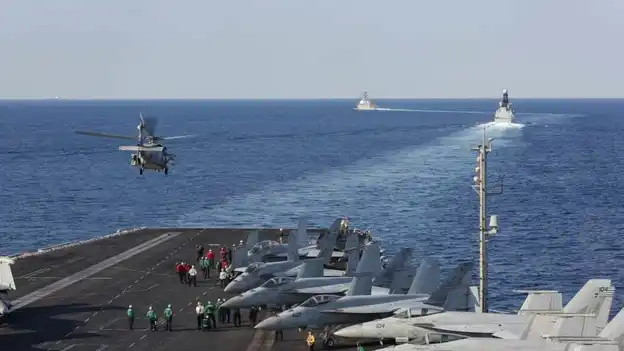
The U.S. has facilitated the successful transit of 825 commercial vessels through the Strait of Hormuz since early May, a senior U.S. official told Fox News.
The official added that almost 2,600 commercial ships have transited the Strait of Hormuz since Iran and the U.S. implemented an initial ceasefire on April 8th.
The official pointed out that it is possible to pass through the waterway without coordinating with the U.S. and that the Strait of Hormuz remains open.
Fox News' Liz Friden contributed to this post.
Iran's top negotiator says war 'will never end with Iran's surrender'
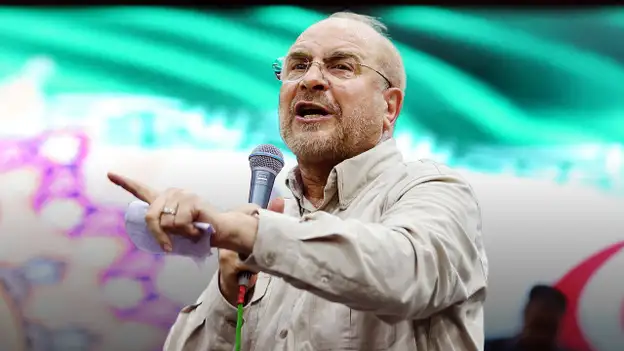
Iran's top negotiator Mohammad Bagher Ghalibaf said that the war between the U.S. and Iran "will never end with Iran's surrender," while speaking publicly with an Indonesian government official on Friday.
"Before the recent war, America, the Zionist regime, and NATO imagined they could force Iran to surrender in less than a few days, but they very quickly realized they would not achieve their goals, and the world saw that they failed in achieving their objectives against Iran," Ghalibaf said, reiterating the comments in a message posted to his Telegram channel Friday.
"During negotiations, I made it clear to the Vice President of the United States that we have absolutely no trust in you. From my point of view, only those who are prepared for war can negotiate with America. Therefore, we have never stopped preparing to defend our country, and the moment the Americans betray an agreement, we are ready for a full-scale defense; we will stand firmly against them and reclaim the rights of the Iranian nation," Ghalibaf, who is also Speaker of Iran's Parliament, continued.
"They have tasted the flavor of Iran's military power and readiness, and they know we will not let go of America's collar. Of course, ending the war is a priority for the countries of the world, but everyone must know that this conflict will never end with Iran's surrender," he said.
Bahrain envoy warns Iran is using diplomacy to buy time at UN Security Council
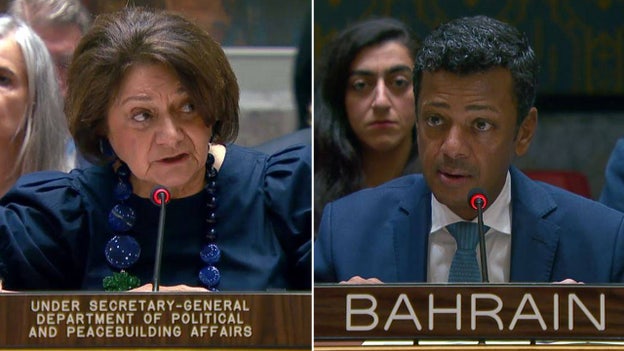
Bahrain's Permanent Representative to the United Nations, Jamal Fares Alrowaiei, warned Friday that Iran is exploiting diplomacy to buy more time.
“For Iran, diplomacy is not a path for resolving disputes but rather a means of managing crises and gaining time," Alrowaiei told a meeting of the UN Security Council on Friday.
The envoy for one of America's most crucial Gulf allies also added that the region has experienced "one of the most dangerous waves of escalation in its modern history."
He also stressed the need for Iran to cooperate with the UN's International Atomic Energy Agency (IAEA), something a U.N. official claimed was not happening.
The IAEA "has now lost continuity of knowledge across all of Iran’s declared nuclear facilities... extending to the production and current inventory of centrifuges, rotors and bellows, heavy water and uranium ore concentrate," U.N. Under-Secretary-General for Political and Peacebuilding Affairs Rosemary DiCarlo also testified during the meeting.
“The Agency also reported a significant deterioration in its situational awareness following the attacks against Iran by the United States and Israel that began on 28 February 2026," DiCarlo added.
Shipping giant returning to Red Sea after Houthi attacks prompted 18-month hiatus
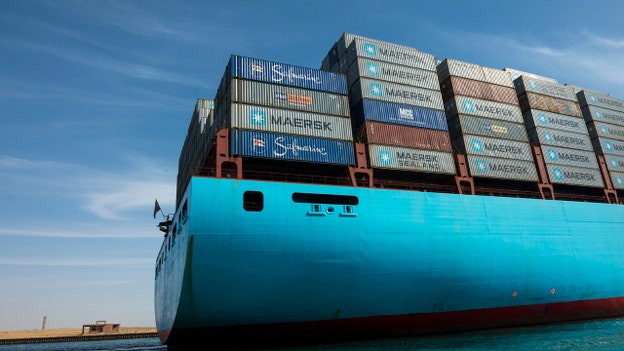
Global shipping giant Maersk announced Thursday it was restoring use of Red Sea routes after suspending transit there in 2023 due to Houthi terrorist attacks on commercial vessels.
After the company's Majestic Maersk ship successfully transited the water body on Monday, Maersk announced it would open a second service to the Red Sea.
"Following the announcement of the structural change of AE15 and the successful transit of the Majestic Maersk through the Red Sea, we are pleased to inform you of structural changes to our MECL service. The service is solely operated by Maersk and will now transit via the Red Sea," the company wrote.
Maersk suspended service in the Red Sea, which is straddled by east Africa and the Arabian peninsula, in December 2023, after Iranian-backed Houthi terrorists in Yemen repeatedly struck commercial vessels with rockets.
While briefly resuming service in December 2023, the. company fully shut down Red Sea transit in January 2024 after another Houthi attack.
Monday's successful transit marked Maersk's first in over 18 months. The company claimed it "will continue to monitor the security situation in the Middle East region very closely," adding "the safety of crew, vessels, and customers’ cargo remains the highest priority."
"Should the security situation change, which may necessitate reverting individual sailings or the wider structural change of the service back to the Cape of Good Hope route, we have contingency plans in place," the statement concluded.
Mamdani official's planned meeting with Iran envoy shut down by State Department
A senior official in New York City Mayor Zohran Mamdani's administration planned to meet with Iran's ambassador to the United Nations, before the State Department reportedly intervened and the meeting was canceled.
Commissioner Ana María Archila, leader of the Mamdani administration’s Office of International Affairs, was scheduled to meet with Iran’s permanent representative to the United Nations, Amir-Saeid Iravani, Tuesday, the City Journal first reported.
A U.S. official familiar with the matter confirmed to Fox News Digital that the meeting had been scheduled. The State Department did not immediately respond to Fox News Digital's request for comment.
This is an excerpt from a story by Morgan Phillips.
Trump left instructions to have Iran ‘obliterated’ if he's killed
President Donald Trump told Fox News' senior White House correspondent Peter Doocy in February 2025 that he left instructions to have Iran "obliterated" if the regime ever assassinated him.
The comments found new light Friday after a Thursday report from The Wall Street Journal revealed that Israeli officials informed Trump of a new Iranian plot to assassinate him.
"That would be a terrible thing for them to do… If they did that, they would be obliterated," Trump said in the Oval Office on Feb. 4, 2025. "That would be the end. I’ve left instructions. If they do it, they get obliterated. There won’t be anything left."
His remarks came about a year before Operation Epic Fury began. At the time, Doocy asked Trump about the possibility of Iran trying to assassinate him as retaliation for the 2020 strike that killed Iranian military commander Qasem Soleimani.
Just last week, signs held at the funeral procession of Iran's former Supreme Leader, Ayatollah Ali Khamenei, who was killed during the first wave of strikes when Operation Epic Fury began in late February 2026, had the message, "We Will Kill Trump."
Trump says he's Iran's 'No. 1' target as renewed conflict raises assassination fears
One thing was clear from President Donald Trump’s appearance at the NATO summit in recent days: He believes Iran wants him dead.
"I'm No. 1 on the kill list for Iran," the president told reporters Wednesday. "I like being number one on TikTok better."
Trump returned to the subject repeatedly throughout the summit — with a level of candidness that might seem unusual for any other president.
A new report suggests U.S. officials may have had fresh intelligence to support concerns about the threat: The Wall Street Journal reported Thursday that Israel recently shared intelligence with the United States indicating Iran had developed a new plan to assassinate Trump.
This is an excerpt from a story by Morgan Phillips.
Trump reiterates 'cease fire is over' despite US agreeing to Iran's request for more talks
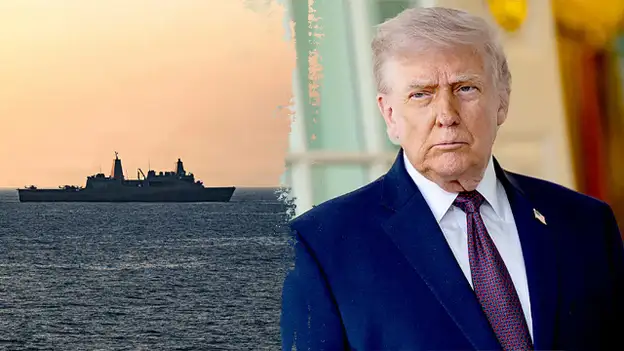
President Donald Trump said Friday the United States has agreed to resume talks with Iran but reiterated that the ceasefire is over.
"The Islamic Republic of Iran has asked us to continue “talks.” We have agreed to do so, but the United States has stated to them, in no uncertain terms, that the Cease Fire is OVER!" Trump wrote in a Friday morning post on Truth Social.
Trump had already declared the U.S.-Iran memorandum of understanding (MOU) — including its ceasefire provisions — over after Iran's Islamic Revolutionary Guard Corps (IRGC) attacked three commercial ships in the Strait of Hormuz.
CENTCOM touts Marine helicopter making Naval supply drop in Arabian Sea
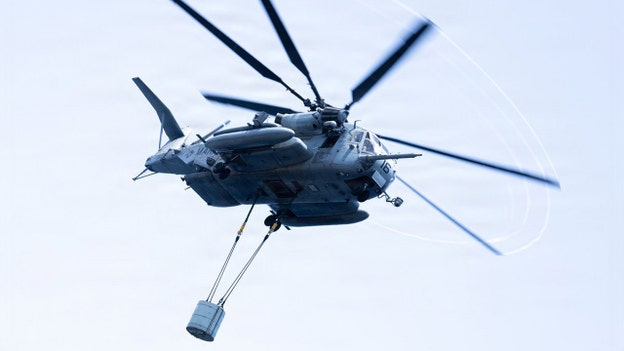
U.S. Central Command (CENTCOM) shared a photo of a U.S. Marine Corps CH-54 Super Stallion helicopter during a supply drop in the Arabian Sea in a Friday post on X.
The photo showed the helicopter in action, lowering a supply bucket onto a U.S. Navy ship.
The U.S. Naval presence in the Arabian Sea currently consists of two Carrier Strike Groups that include the USS George H.W. Bush and the USS Abraham Lincoln supercarriers, as well as numerous support crafts that include amphibious assault ships.
UN shipping agency urges nations to reject Iran's Strait of Hormuz authority claims
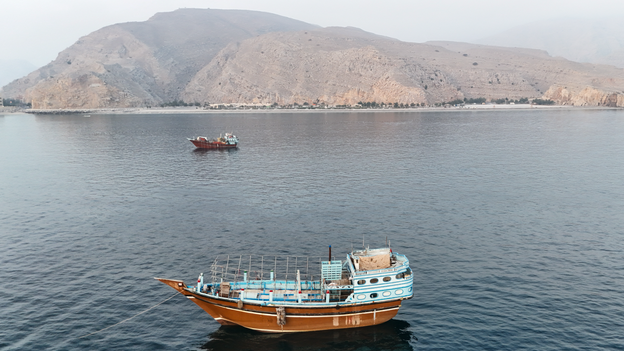
Countries should reject ongoing efforts by Iran to exert authority over the Strait of Hormuz, the United Nations shipping agency's governing council said on Friday, according to Reuters.
The U.N.'s International Maritime Organization (IMO), based in London, regulates international shipping and prevents pollution.
The IMO agreed that Iran should not be allowed to "establish an entity purporting to control traffic through the strait," according to a text of a non-binding decision.
The IMO called on its 176 member states not to recognize "Iran's claim of sovereignty over the Strait of Hormuz" and to reject any attempt by Iran to obstruct ships transiting through the narrow waterway.
This comes after Iran created a new body called the Persian Gulf Strait Authority, which claims no vessel can pass through the strait "without a valid passage permit."
Reuters contributed to this report.
Qatari negotiators traveled to Iran for US-coordinated de-escalation talks: source
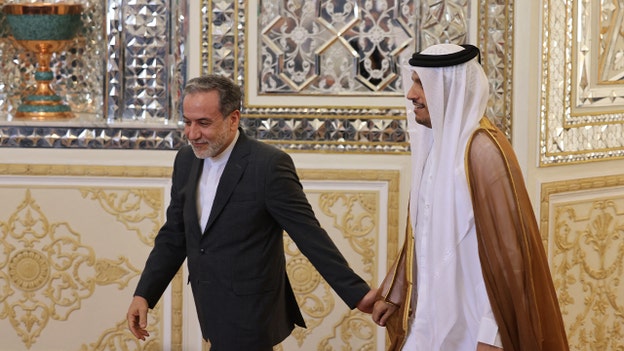
Qatari negotiators have traveled to Iran after a fragile truce between the U.S. and Tehran broke down in the last 48 hours, Fox News has learned.
"Qatari negotiators have travelled to Iran, in coordination with the U.S., to meet with Iranian officials in an effort to de-escalate the situation and create the conditions for negotiations to resume," a source with knowledge of the situation told Fox News senior foreign correspondent Trey Yingst.
Iran's biggest weapon against the US may be slipping away, experts say
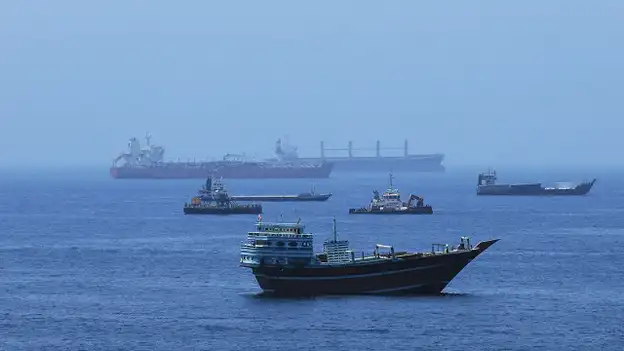
Iran's latest attacks on commercial shipping in the Strait of Hormuz sent oil prices sharply higher in recent days — a reminder that Tehran can still rattle global energy markets.
But the latest spike also highlights a bigger question facing the Trump administration: Has Iran begun losing its ability to use the strategic waterway as economic leverage over Washington?
Growing oil production, alternative export routes and new shipping patterns suggest Iran's ability to weaponize the Strait of Hormuz may be steadily weakening — even if it can still trigger short-term price shocks.
This is an excerpt from a story by Morgan Phillips.
Strait of Hormuz 'has been expanded and remains available for all traffic,' says NAVCENT
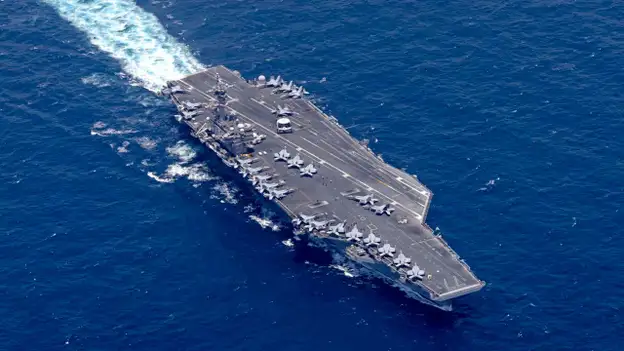
U.S. Naval Forces Central Command (NAVCENT) issued a reminder that the U.S. has opened a transit corridor in the Strait of Hormuz that "remains available for all traffic."
"No nation has the authority to close or control the Strait of Hormuz. U.S. forces are fully prepared to deter threats, defend freedom of navigation, and respond decisively to any attempt to disrupt lawful transit through the Strait," NAVCENT announced Friday through a United Kingdom Maritime Trade Organization advisory note.
The U.S.-maintained southern corridor route shifts traffic away from the center of the strait, instead directing shipping through a funnel near the coast of Oman.
Iran's Islamic Revolutionary Guard Corps (IRGC) is also maintaining its own northern route which the country has urged international shipping to use, though has tried to extract tolls from various nations for its use.
The United Nations International Maritime Organization (IMO) is also maintaining a central lane called the Traffic Separation Scheme (TSS).
Of the 22 tracked vessels that transited the strait on Thursday, nine took Iran's path, six took the TSS, one took the U.S.-maintained Southern Corridor, while six took an unknown path, according to Fox News reporting.
Fox News' Lauren Simonetti contributed to this post.
Strait of Hormuz security threat level remains 'SEVERE,' maritime watchdog says
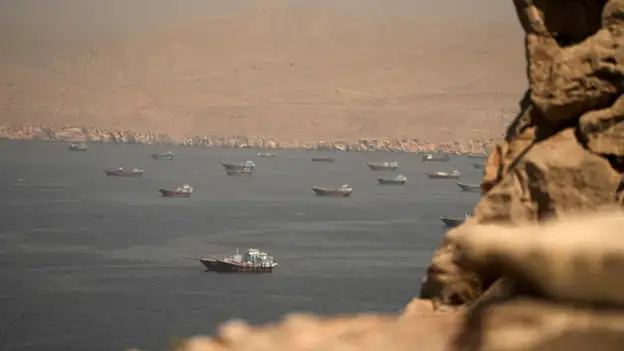
The United Kingdom Maritime Trade Organization (UKMTO) warned that the threat level in the Strait of Hormuz remains "SEVERE" in a Friday update.
"Notwithstanding recent unprovoked attacks on merchant vessels, mariners are reminded that the southern route of the SoH has been expanded and remains available for all traffic," the organization warned in a Friday advisory.
The advisory counseled mariners to maintain contact with NATO's Naval Cooperation and Guidance for Shipping (NCAGS) and to watch out for mines in the Strait of Hormuz.
Twenty-two vessels transited the Strait of Hormuz on Thursday amidst renewed U.S. and Iranian strikes, Fox News' Lauren Simonetti reported. Two of the 22 were oil tankers.
The 22 vessels that crossed Thursday surpassed the daily average that crossed the key oil shipping route at the Iran war's height in April and May, but it's far less than the daily average of 50 vessels that transited in June after the U.S. and Iran agreed to a partial ceasefire on June 14.
Before the war's February kickoff, an average of more than 120 vessels crossed the Strait daily, according to data from the United Nations Conference on Trade and Development
Trump calls terrorist Iranian a ‘cancer.’ Is he finally the one to remove it?
President Donald Trump’s remarks on the sidelines of the NATO Summit in Ankara, Turkey, may represent one of the most consequential shifts in America’s strategic language toward the Islamic Republic of Iran since the 1979 revolution.
By warning that any new Iranian attack would trigger a far more devastating response — and by describing the regime as a "cancer" that must be removed — Trump signaled something that goes beyond conventional political rhetoric. In the language of national security, such terminology often reflects a fundamental change in how a threat is defined.
For more than four decades, U.S. policy toward the Islamic Republic has centered on containment and deterrence. The underlying assumption was that Tehran’s behavior could be influenced, constrained or made more costly. Trump’s remarks suggest a different premise: the issue is no longer merely the regime’s behavior, but the system itself. The objective is no longer to manage the crisis, but to eliminate its source — raising once again the prospect of regime change as a strategic outcome.
This is an excerpt from a story by Erfan Fard.
Global oil supply and demand were on track for recovery, International Energy Agency reports
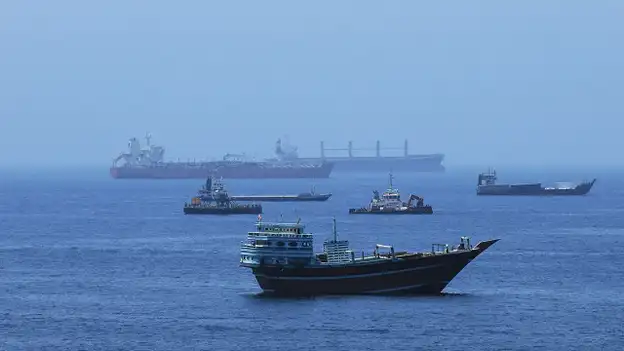
Global oil supply and demand rebounded in June and were on track for further recovery in July before the latest round of U.S. strikes on Iranian targets, according to a Friday report from the International Energy Agency (IEA).
Global oil supply rebounded sharply, adding 4.1 million barrels per day (mb/d) in June to increase to 98.8 mb/d for the month "as a resumption of flows through the Strait of Hormuz underpinned a partial recovery in Gulf production," the report noted.
Production was still 9.4 mb/d below pre-war levels, however, and yearly output was on track to decline by an average of 3.7 mb/d for 2026 compared to 2025.
Still, global oil inventories rose in June for the first time since February, adding 21 million barrels, led by a 41 million barrel increase to China's supply.
Further recovery, the report noted, was contingent "on a swift de-escalation of renewed hostilities," a prospect imperiled by a recent two-day U.S. bombing campaign in Iran that served as retaliation for Iranian attacks on commercial vessels in the Strait of Hormuz
Khamenei officially buried at Imam Reza shrine in Mashhad
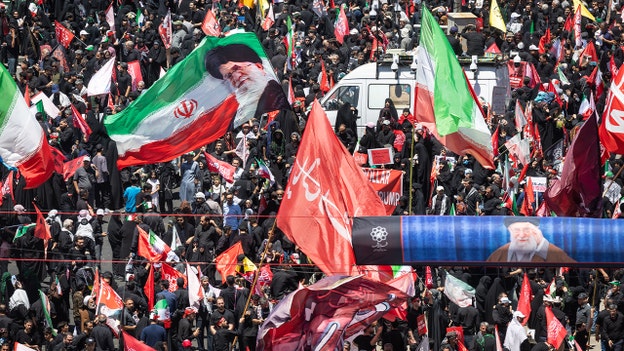
Iran’s former Supreme Leader Ayatollah Ali Khamenei was finally laid to rest early Friday at the Imam Reza shrine in Mashhad, Iran, according to a statement posted by his official office.
“In the early hours of Friday, July 10, 2026, the pure body of the martyred Leader of the Islamic Revolution, Grand Ayatollah Sayyid Ali Hosseini Khamenei … was laid to rest in the luminous shrine of Imam Reza,” Khamenei’s official X account said.
The burial concludes several days of funeral ceremonies that took Khamenei’s body through Iraq and Iran following his death during the conflict with Israel and the United States.
Live Coverage begins here