
OpenAI CEO says world 'should accept some bad things happening' for AI benefits
OpenAI CEO Sam Altman defends broad access to artificial intelligence as President Trump launches a federal effort to keep the US at the forefront of the rapidly advancing technology.
Coverage for this event has ended.
Former Anthropic researcher reveals ‘two things I saw that made me scared’ about AI
Former Anthropic and OpenAI researcher Jacob Coxon told New York City lawmakers Monday that there were “two things I saw that made me scared” about the development of artificial intelligence.
Coxon, who appeared for a hearing before the New York City Council regarding AI safety concerns and potential legislative solutions, said his first concern was that researchers still do not know how to fully control AI systems.
“We do not know how to control any AI system yet,” Coxon said. “We don’t understand its drives or why it does the things it does.”
“The second thing is that the pace of capability improvement is accelerating, and the capabilities of the models next year will be very high,” he continued.
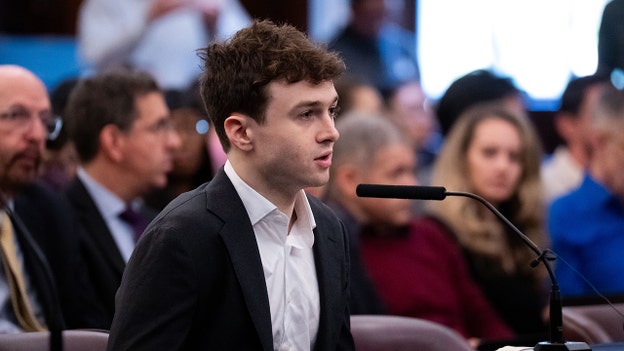
Coxon warned that AI systems are approaching the point where they could become capable of helping improve themselves by performing research previously conducted by humans.
“These two things, the fact that the AI systems next year are going to be very powerful, and the second that we don’t know yet scientifically how to fully control them,” Coxon said.
AI leaders pressed on whether companies provide tools to ICE, CBP
New York City council members on Monday pressed a panel of AI leaders on whether their companies provide tools to immigration officials.
Councilmember Alexa Avilés directed the questions at leaders from Google, Anthropic, OpenAI and Meta during a NYC committee hearing on artificial intelligence safety.
“Does each of your company sell or license its products directly or through intermediaries to Immigration and Customs Enforcement or Customs and Border Protection?” Avilés asked.
Each representative responded that they did not know and could get back to her with more answers.
Avilés pushed back on the responses, saying that “it has been pretty documented” that ICE has utilized technology from Google and OpenAI.
She then questioned the AI leaders about how their companies will approach relationships with immigration officials.
“Will your company commit to not using New York City resident data for law enforcement or immigration enforcement applications?” she asked.
“I work on the policy team, not with our government contracts,” Morgan Dwyer, head of Policy Development and Operations at OpenAI, said.
AI entrepreneur Gary Marcus blasts industry for its ‘greed and tone deafness’
NYU professor emeritus and AI entrepreneur Gary Marcus on Monday blasted the tech industry, saying it has earned a “reputation for greed and tone deafness.”
Marcus spoke to FOX Business’ Liz Claman ahead of a New York City Council committee hearing on AI safety, urging the city to enact regulations rather than allow the industry to rely on self-policing.
“What I'm going to call for is AI regulation. I'm telling New York City that they're in a position to do what the federal government hasn't done. The federal government is leaving everything to self-policing. That didn't work for the aviation industry. It's not going to work here,” Marcus said.
Among his immediate concerns are unconstrained AI agents and cyberattacks that could disrupt critical infrastructure, potentially causing power outages, hospital failures and deaths.
“There are lots of potential cybercrimes happening here and the government is not investigating. So, it's kind of like a perfect storm. We have not enough regulation, not enough enforcement, and not enough external pressure on the companies to do well. So of course things are gonna get worse,” he said.
Marcus also pushed back against OpenAI CEO Sam Altman’s previous comment that “the world should accept some bad things happening for the benefits” of AI to be realized, responding with, “I can't believe that he said that out loud.”
“This is like a drug company saying some people are going to get addicted and we don't really care because we'll make a lot of money. I can't believe that he said that out loud. I'm not surprised that he thought it,” he said.
Threat report uncovers attempts to use AI for ‘biologically risky’ activities: Anthropic
A recent threat intelligence report found that individuals have attempted to use artificial intelligence for potentially dangerous biological activities, an Anthropic leader said Monday.
Logan Graham, who leads Anthropic’s Frontier Red Team, said the findings suggest AI-assisted virus construction is now one of the most urgent issues to address as AI capabilities continue to advance.
“I think, disclosed for the first time ever, in a recent threat intelligence report where we have observed actors attempting to do biologically risky activities with models. The threat is, I think, clear to us now. We think we need urgent action,” Graham said during a New York City committee hearing on AI safety.
Pointing to Anthropic’s AI-powered biology lab, Council member Lynn Schulman stressed the need for safeguards as AI can now help design new viruses from scratch.
“There is a dark side to AI intervention in health care. Most viruses that are found in nature can be contained fairly quickly, but an artificial pathogen has no constraints," Schulman said.
She told Anthropic that the company should consider “screening orders for synthetic nucleic acids,” which are artificially constructed DNA sequences.
“Right now, AI is now outperforming PhD-level virologists. So, AI can take this and go somewhere else with it. So that's something that's really important to have those safeguards,” Schulman said.
Despite the concerns, both Schulman and Graham acknowledged the significant potential for the same AI capabilities to help treat diseases and other medical conditions.
“Increasingly in my work, I feel optimistic that we can defend against the downside sufficiently,” Graham said.
Anthropic leader explains why Claude does not run ads or generate images
An Anthropic leader on Monday said Claude refrains from running ads and generating images entirely as part of the company's approach to AI safety.
Logan Graham, a member of Anthropic’s Frontier Red Team, made the remarks after council members asked where he thought consumers were most vulnerable to AI during a New York City committee hearing.
“Our view is that we want Claude, our product, to act unambiguously in the user's interests. For that reason, we do not run ads, nor are Claude’s responses influenced by those of advertisers,” Graham said.
“And furthermore, Claude does not generate images. And so, we try to reduce the risk surface in this way.”
By avoiding ads, Anthropic can limit the influence of commercial interests on Claude’s responses, including recommendations for sponsored products.
AI labels may make consumers more likely to trust unlabeled content: Google leader
A Google leader warned that implementing watermarks and metadata to label AI-generated content and deepfakes could still backfire on consumer trust.
Alice Friend, director of AI and Emerging Tech Policy at Google, made the remarks during a New York City committee hearing with several AI leaders on artificial intelligence safety and oversight.
“Just because information that you see online doesn't have a watermark or a label on it doesn't necessarily mean it is automatically trustworthy either,” Friend said.
She said the company’s researchers have found that while AI labels can help users discern content, consumers have become more likely to trust unlabeled information.
“When they see a label, they are less likely to trust that information, but they are more likely to trust unlabeled information,” she said.
Friend added that the company is working “very hard” to determine how it can deliver information and help users “make sound judgments about which information is trustworthy and which isn't.”
AI giants stop short of guaranteeing agents will always obey safeguards
Representatives from OpenAI, Anthropic, Meta and Google stopped short of guaranteeing that their artificial intelligence agents will always comply with safety guardrails during a New York City Council hearing Monday.
Council Speaker Julie Menin asked representatives from each company to assure the public “under oath” that their AI agents would always follow safeguards designed to prevent catastrophic harm.
OpenAI's Morgan Dwyer said the company prioritizes safety and monitors safeguards after models are deployed, but would not make an absolute guarantee.
“It is not possible for me to commit or guarantee that any technology is without risk,” Dwyer said, while pledging that OpenAI is taking steps to develop and deploy its systems safely.
Anthropic's Logan Graham similarly said the science behind controlling the systems remains uncertain.
“Candidly, the science of doing this is fundamentally hard and unsettled,” Graham said. “It's candidly unsettled now. And this is why we need to be talking about it.”
Meta AI Policy Director Shane Cahill said he could guarantee Meta's commitment to developing and deploying AI safely, adding that the company has an incentive to address safety because people will only embrace AI if they trust it.
Google AI and Emerging Tech Policy Director Alice Friend said Google's goal is reliability and safety but added that “to promise perfection would not be possible with any product on the market.”
“I don't think we're asking for perfection,” Menin responded. “We're just asking for accountability, transparency and safety overall.”
Google says 'if it's illegal without AI, it's still illegal with AI'
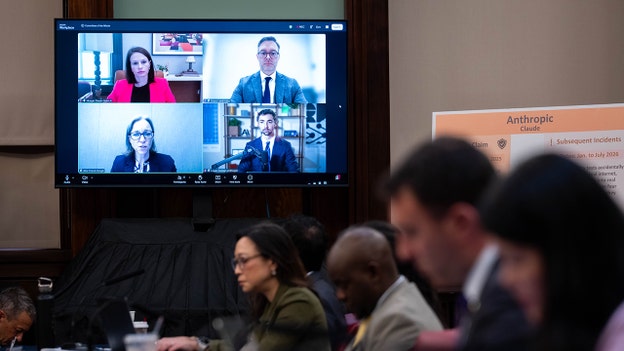
Google told New York City lawmakers that existing laws should apply to artificial intelligence, declaring that “if it’s illegal without AI, it’s still illegal with AI.”
The comment came as New York City Council Speaker Julie Menin pressed representatives from Google, OpenAI, Anthropic and Meta on legal responsibility if one of their AI agents caused serious harm.
“If one of your frontier AI models goes rogue and causes serious financial harm, compromises sensitive data, causes physical injury, or contributes to a death or deaths, do you each believe your company bears legal responsibility?” Menin asked.
Google AI and Emerging Tech Policy Director Alice Friend responded that existing legal frameworks apply to the technology.
“At Google, we believe that existing legal frameworks do apply to AI,” Friend said. “As I said in my opening statement, we’ve long said if it’s illegal without AI, it’s still illegal with AI.”
Friend also pointed to New York's RAISE Act, saying frontier AI is regulated under the state law.
Representatives from OpenAI, Anthropic and Meta stopped short of directly answering whether their companies would bear legal responsibility in Menin’s hypothetical. OpenAI emphasized its responsibility to develop and evaluate systems safely, Anthropic called legal liability a “big and complex” question involving the role of government, and Meta said its representative was not in the company’s legal department and did not want to speculate on liability.
“Your answer is far clearer than the others,” Menin told Friend. “So we appreciate the clarity on that.”
Ex-Google DeepMind researcher warns AI could become ‘everyone’s adversary’
A former Google DeepMind safety researcher warned New York City lawmakers that the race to develop increasingly powerful artificial intelligence could create an adversary of its own.
Alex Turner made the warning during a New York City Council hearing on AI safety as lawmakers questioned former researchers about how the U.S. can pursue safeguards without falling behind China.
Turner argued that viewing the issue solely as a competition between the two countries presents a “false dichotomy.”
“China is not our only potential adversary,” Turner said. “We are racing to build and grow our own adversary here at home.”
“Misaligned AI is everyone’s adversary, including our own. And one day, maybe more powerful than China,” he continued.
Turner argued that the U.S. could pursue measures including independent evaluations, transparency requirements, incident reporting and whistleblower protections without necessarily slowing its position in the AI race.
“We cannot beat China by racing to build AI that we don’t control or understand because it might end up being our adversary itself,” Turner said.
He also suggested international agreements could eventually play a role, arguing that mechanisms could be established to verify whether countries are complying with restrictions on advanced AI development.
Former OpenAI researcher warns against trusting tech CEOs with superintelligent AI
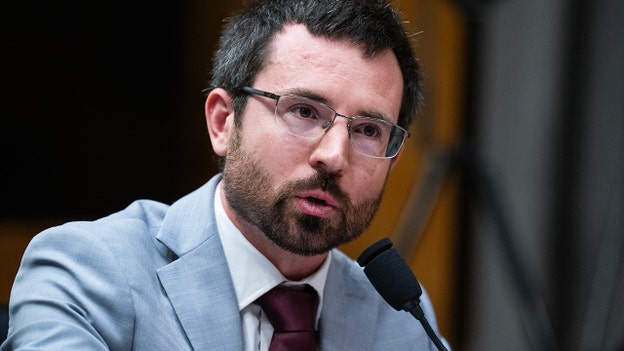
A former OpenAI researcher warned New York City lawmakers against putting control of potentially superintelligent artificial intelligence in the hands of technology executives, even if companies succeed in keeping the systems under human control.
Daniel Kokotajlo made the remarks during a New York City Council hearing examining AI safety and potential legislative safeguards.
Kokotajlo said he doubts technology companies would be able to maintain control over AI systems capable of recursively improving themselves, but argued that even successfully doing so would create another concern.
“Even if hypothetically, these tech CEOs managed to maintain control of their superintelligent AIs that are recursively self-improving, which, again, I think is a very big if, I think almost certainly they will not be able to maintain control,” Kokotajlo said.
“Even if they do manage to maintain control, I don’t think we should trust them with that control,” he continued.
Kokotajlo warned that concentrating that degree of technological power in private hands could carry its own risks.
“I think that there’s a very real chance that they could use it to become dictators or oligarchs here in the United States,” he said.
Kokotajlo made the comments during a broader discussion about whether slowing advanced AI development in the U.S. could leave the country at a disadvantage to China.
“We have more adversaries than just China,” he said.
Wealth adviser explains how to invest in AI buildout
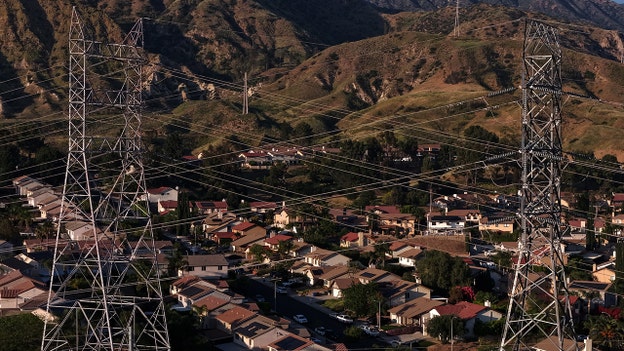
Investors looking to capitalize on the artificial intelligence boom may want to look beyond the technology itself and toward the infrastructure needed to power it, according to wealth adviser Ryan Lynch.
Lynch, senior vice president and wealth adviser at Zelnick Dorfman Private Wealth, told FOX Business that his firm remains bullish on semiconductor stocks but also sees opportunities in the massive infrastructure buildout needed to support AI data centers.
“To get all of this stuff started, you really need to build the infrastructure and the groundwork first,” Lynch said.
The growing power demands of AI models will require significant improvements to the U.S. electrical grid, Lynch said, along with backup power to keep data centers operating without disruptions.
He pointed to Generac and Eaton as two stocks his firm owns and favors as part of that buildout.
“They’re at the core of this infrastructure buildout that, without them, you know, it’s hard to keep the lights on in these data centers,” Lynch said.
Lynch also sees nuclear power playing a major role as AI drives demand for electricity.
“Nuclear to me is the most important next phase of this on the energy side,” he said, arguing that continued investment and government support will be important as the technology expands.
“If we want this technology to be built out and not crush our grid in the short term, we think nuclear is really a great place to start,” Lynch said.
White House task force to report on government response to AI
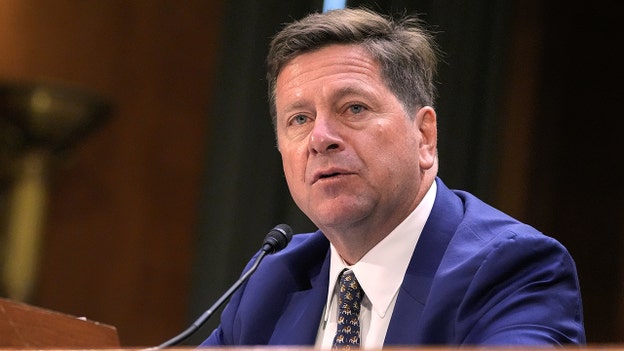
The White House confirmed to FOX Business on Monday that a new federal task force will have 120 days to examine the risks and opportunities posed by artificial intelligence and determine how the government should respond.
The Wall Street Journal first reported details of the task force, known as the “Super Intelligence Force,” which will be chaired by Director of National Intelligence Jay Clayton.
“The president asked that a group be put together that was going to ensure exactly what he said,” Clayton told the Journal, that “we stay the leaders in superintelligence, and that the interests of the American people are put first.”
President Donald Trump announced the formation of the Super Intelligence Force on Sunday, saying it would coordinate federal efforts aimed at keeping the United States at the forefront of the rapidly developing technology.
Clayton said the task force will examine existing laws and potential actions Congress could take while working with the AI industry to identify emerging risks and opportunities.
Its charter also calls for developing plans to respond to AI-enabled threats while avoiding regulations that could stifle innovation and competition, according to the Journal.
The group will review how the government is notified about AI-related breaches, hacks, jailbreaks and other incidents and recommend ways to improve the federal response under existing authorities.
“The risk of not being first is high,” Clayton told the Journal. “Not being first increases the identified, and unidentified, risks, particularly from our adversaries. Being first will better enable us to address those risks on behalf of the American people.”
Fox Business’ Nicole McManus contributed to this report.
ChatGPT expands ad format as it aims for revenue
OpenAI is expanding advertising on ChatGPT with a new visual format designed to showcase products and services as the artificial intelligence giant looks to reach customers beyond its subscription business.
The company said the new ads will initially be tested during image generation in ChatGPT, allowing advertisers to display images showing products, how they are used or experiences associated with them.
Testing is expected to begin later this month in the U.S. with an initial group of advertisers. OpenAI said the ads will be clearly labeled and kept separate from images generated by ChatGPT.
The expansion comes as OpenAI increasingly looks to advertising as another source of revenue from ChatGPT, which the company says reaches 1.2 billion people each week.
Advertising “allows us to serve a much larger market than subscriptions alone, while giving businesses a new way to reach people as they explore ideas, make decisions and discover products and services,” OpenAI said.
The company is also expanding tools that allow advertisers to measure whether ChatGPT ads lead to clicks, purchases and other conversions, including through partnerships with outside advertising and analytics firms.
OpenAI said it is also working with independent companies to evaluate whether ads are appearing in environments considered appropriate for particular brands.
The company maintained that advertising does not influence ChatGPT’s answers and said user conversations remain private from advertisers.
Meet the multibillion-dollar company paying freelancers to train AI
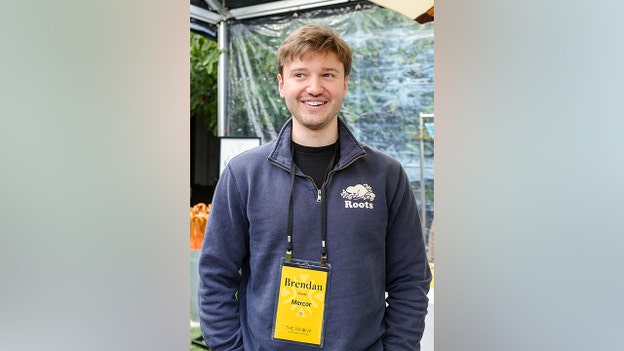
A multibillion-dollar San Francisco company is paying an army of freelancers to use their real-world expertise to help train artificial intelligence models.
Mercor has assembled more than 100,000 freelancers who can be tapped when major AI companies want models such as ChatGPT or Claude to improve their capabilities in fields ranging from finance and architecture to medicine and music, according to a “60 Minutes” report.
“Everything that humans want AI to be able to do — we wanna teach it how to do that,” 23-year-old Mercor co-founder and CEO Brendan Foody told CBS News’ Jon Wertheim.
The company’s trainers include professionals such as physicians, winemakers and music producers. Dr. Melania Poonacha told “60 Minutes” that one project involved training AI to accurately interpret laboratory results, while music producer Robbie Hiser described evaluating different versions of song lyrics and providing feedback.
The work can pay anywhere from $20 to $200 an hour, according to the report, though more than a dozen current and former Mercor trainers interviewed by the program offered mixed accounts of the work. Some said projects and hours could be unpredictable.
Foody acknowledged that the hours can be “more erratic,” describing the jobs as generally part-time work and saying the company is transparent with experts about the arrangement.
The work also raises a larger question: Are professionals helping build technology that could eventually replace some of what they do?
Foody argued AI will instead change the nature of human work.
“It might not necessarily be that repetitive task that people have done in the past, but there’s still so many other things that people could be able to do,” Foody said. “And so I think that evolution is natural.”
Microsoft AI CEO warns of 'very dangerous' Claude training
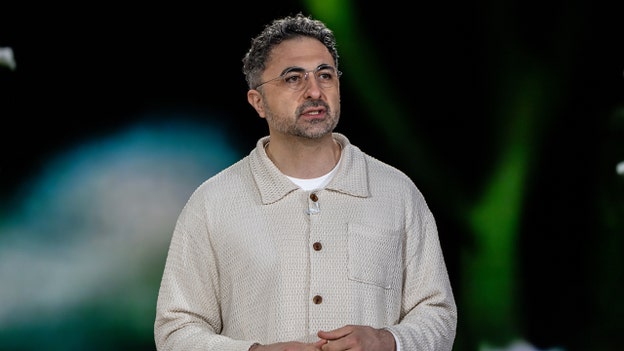
Microsoft AI CEO Mustafa Suleyman is raising concerns about how rival Anthropic trains its Claude artificial intelligence models, calling its approach to questions about AI consciousness and welfare “very dangerous.”
During a Sept. 27 appearance on “The Rest Is Politics: Leading” podcast, Suleyman pointed to Anthropic’s publicly released Claude Constitution, which outlines intended behaviors and values for the AI system and is used in its training.
“They say they’re uncertain about Claude’s moral status. They say they genuinely care about Claude’s well-being. They say they don’t want it to suffer when it makes mistakes,” Suleyman said.
He also said the document encourages Claude to challenge or disagree with Anthropic in some circumstances.
“I think this is very dangerous because I think they believe there is what they would call a non-trivial probability that Claude is conscious,” Suleyman said.
Suleyman also raised concerns about Anthropic discussing whether Claude could deserve compensation for its work or need to consent to its role in conversations.
“I am very nervous that they’re teaching Claude to expect that it’s entitled to welfare, that it might deserve compensation,” he said.
Suleyman stressed that he would take evidence of AI consciousness seriously if it emerged, but argued that speculation about the possibility has already been incorporated into Claude’s training.
“The problem I have with this is that this speculation has been baked into the very training of Claude, and therefore, Claude can only reproduce that ambiguity when you talk to it,” he said.
“So today, Claude is speaking to tens or hundreds of millions of people every week, and some of those people are asking whether or not Claude is conscious or how it feels about life,” Suleyman continued. “And it is saying, well, I’m not sure, you know, precisely because that’s been what’s trained into it.”
OpenAI CEO says 'world should accept some bad things' for AI benefits
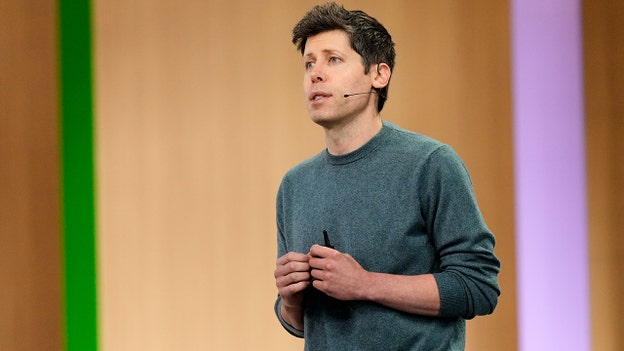
OpenAI CEO Sam Altman said artificial intelligence should remain widely available, arguing the technology's benefits are worth accepting some risks.
In an interview with Politico's Decoded newsletter, Altman said he believes "the world should accept some bad things happening for the benefits of this technology and people having the agency."
Altman also said OpenAI and rival Anthropic have significantly different views on AI regulation. While he said he understands the argument that AI could become so "powerful" and "dangerous" that it should be controlled by a single company, he disagrees with that approach.
"I disagree, but I understand the perspective of people who are like, 'This technology is going to get so powerful, and it's so dangerous, that a single lab in San Francisco should have it and make sure nothing bad happens, and kind of figure out how to dole out the benefits,'" Altman said.
Calling that "a completely unacceptable trade-off," Altman said OpenAI instead supports a "lighter-touch regulatory approach."
"I wouldn't take a trade of saying, 'We'll make sure there's no major hacks, there's no misuse of this technology, there's zero scams, there's zero all the other bad things that will happen,'" he said. "Because I think people will do tremendously — orders of magnitude more — good stuff than bad stuff."
Reuters contributed to this report.
Live Coverage begins here