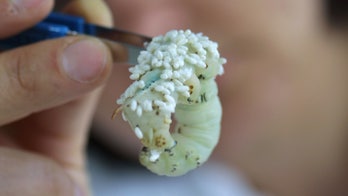
May 2, 2016 Cartwheeling spider, corpse-hoarding wasp among bizarre new species A morbidly maternal wasp, a crop-circle-creating pufferfish and an acrobatic arachnid are among the bizarre and awe-inspiring new species named in 2014, according to a new ranking
May 2, 2016 Termite ‘superswarm’ threatens South Florida Two of the world’s most destructive termite species are swarming South Florida, and the fact that they are mating has scientists sweating.
May 2, 2016 'Super' termite hybrid may wreak havoc on Florida The two most invasive termite species in the world are shacking up, producing a potentially powerful new termite hybrid in South Florida, a new study finds.
May 2, 2016 Moth lays two eggs in reporter's ear on live TV Fox 5 reporter in Washington, D.C. Bob Barnard had quite the unexpected surprise when he reported live from the Smithsonian’s National Museum of Natural History. Following his on-air appearance Monday, Barnard found that a moth laid two eggs in his ear — not the typical day in the office.
May 2, 2016 Meet 2 new spider species: 'Skeletorus' and 'Sparklemuffin' Two gorgeous new species of peacock spiders nicknamed "Skeletorus" and"Sparklemuffin" have been discovered in Australia, according to a new report
May 2, 2016 Wasp DNA produces genetically modified butterflies When a wasp injects its eggs into a caterpillar, the results are grisly to say the least. The viral DNA of the wasp alters the caterpillar’s immune response, allowing the host to stay alive as the eggs grow into larvae and begin to eat its body. After about 10 days of feeding, the larvae emerge, killing the caterpillar.
May 2, 2016 Leaf-eating caterpillars use their poop to trick plants Caterpillars that munch on corn leaves have developed a clever way to get the most nutrients from their meals: They use their poop to trick the plants into lowering their defenses
May 2, 2016 Surprise! Newfound venomous spider drops in on scientists Most people likely wouldn't react well to being surprised by a venomous spider, but recently, scientists at Booderee National Park, on the southern coast of Australia, were excited when a highly venomous funnel-web spider showed up unannounced. Many species of funnel-web spiders, named for their funnel-shaped webs, are indigenous to Australia, but only one of these species, the Sydney funnel-web spider, is known to live in Booderee National Park
May 2, 2016 Ants are safer, more effective than pesticides, study says There’s a new ant–agonist on the pesticide market. According to a review published in the Journal of Applied Ecology, trees protected by weaver ants have less pests, less plant damage, and show an increased yield when compared to trees sprayed with pesticides. The small, red tree dwellers are also cheaper to use and better for the environment.
April 28, 2016 Bizarre ant life rafts have assigned seating It's weird enough that some ant species can work together to build living rafts in the event of a flood.