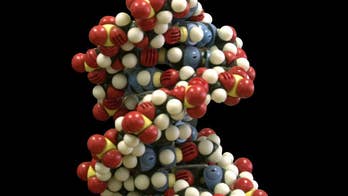
October 21, 2015 Genetics breakthrough enables scientists to edit any part of human genome, report claims A new technique has enabled scientists to engineer parts of the human genome with extreme precision, a breakthrough which could mean new treatment possibilities for maladies such as cancer, HIV, and inherited genetic disorders.
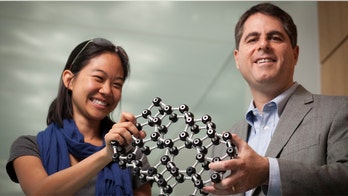
October 21, 2015 World's thinnest glass shatters records -- by accident It's an earth-shattering record. At just one molecule thick, researchers at Cornell and Germany's University of Ulm discovered the world's thinnest sheet of glass -- by accident.
October 21, 2015 Wormhole best time-travel option, astrophysicist says The concept of a time machine typically conjures up images of an implausible plot device used in a few too many science-fiction storylines.
October 21, 2015 The telltale heartbeat? Head wobble indicates pulse A new computer program can take someone's pulse without laying a finger on them. It analyzes videos of people trying to hold still and spots a tiny tic that betrays every heartbeat.
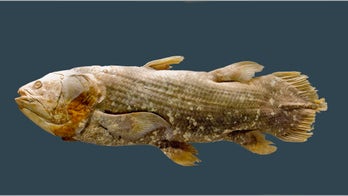
October 21, 2015 Scientists decode DNA of 'living fossil' fish Scientists have decoded the DNA of a celebrated "living fossil" fish, giving them new insights into how today's mammals, amphibians, reptiles and birds evolved from a fish ancestor.
October 21, 2015 Letter from DNA Nobel Prize winner fetches more than $5M at auction A letter that scientist Francis Crick wrote to his son about his Nobel Prize winning DNA discovery has been sold at a New York City auction for a record-breaking $5.3 million.
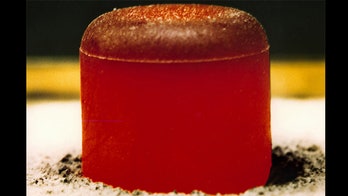
October 21, 2015 NASA starts making plutonium again After a 25-year hiatus, the Unites States has produced its first non-weapons grade plutonium needed to power space probes when solar energy won’t suffice.
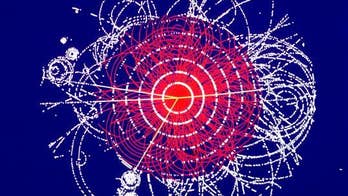
October 21, 2015 6 implications of finding a Higgs boson particle Physicists announced today (March 14) that a particle discovered at the world's largest atom smasher last year is a Higgs boson, a long-sought particle thought to explain how other particles get their mass.
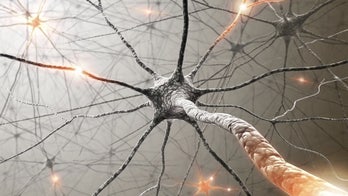
October 21, 2015 Brain cells can outlive the body Brain cells can live at least twice as long as the organisms in which they reside, according to new research
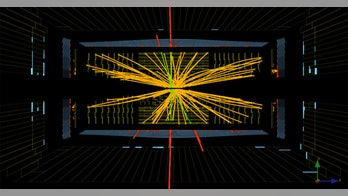
October 21, 2015 Higgs boson find may spell doom for universe A subatomic particle discovered last year that may be the long-sought Higgs boson might doom our universe to an unfortunate end, researchers say