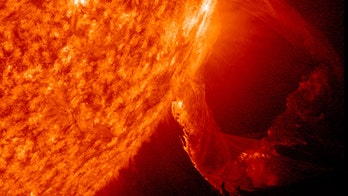
October 21, 2015 Earth is closer to the sun today than in rest of 2013 If the sun looks a little larger than usual today, you're not seeing things. Jan. 2 marks the the point in Earth's orbit at which it is closest to the sun.
October 21, 2015 Surviving solar storms: Could the 'Scorch Trials' world become real? Some researchers are warning not all states in the U.S. will be ready for the threat of solar storms. Will your state survive a mega-blast from the sun?
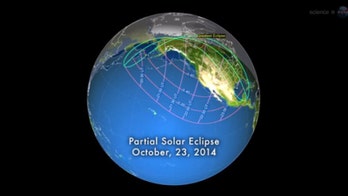
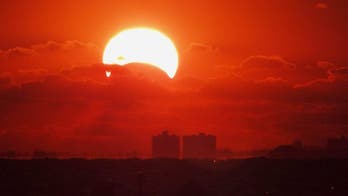
October 21, 2015 Partial solar eclipse today: A weather forecast Viewers throughout most of the United States are in position to see a partial solar eclipse Thursday afternoon (Oct.23).
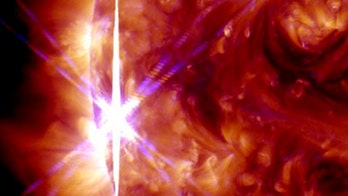
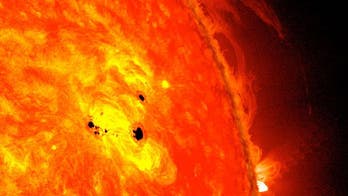
October 21, 2015 Huge solar flare delays rocket launch to Space Station Worries over space weather radiation caused by a huge solar flare unleashed from the sun have delayed by 24 hours the planned launch of a private cargo ship to the International Space Station.
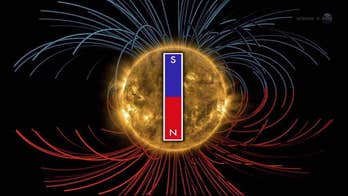
October 21, 2015 Sun's magnetic field will flip soon The sun's polarity is getting closer to flipping.
October 21, 2015 Rare solar eclipse wows skywatchers A rare solar eclipse that began as a "ring of fire" and transformed into a spectacular total eclipse of the sun amazed skywatchers from North America to Africa.
October 21, 2015 Massive solar storms may peak this year -- again The sun is surprisingly quiet at the moment, but that may be because our star is gearing up for the second phase of a one-two wallop in its 11-year activity cycle, some scientists say.
October 21, 2015 NASA finds star as cold as North Pole A brown dwarf as cold as the North Pole has been discovered lurking remarkably close to our solar system, and it appears to be the coldest of its kind yet found, scientists say.
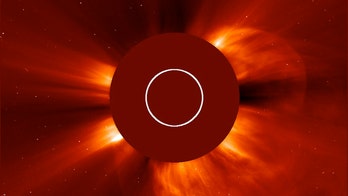
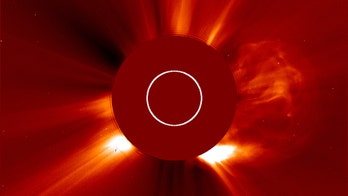
October 21, 2015 The massive solar blast that almost wreaked havoc on Earth Earth dodged one of the most massive magnetic solar bursts ever on July 23, 2012, scientists with the University of California, Berkeley revealed on Wednesday -- saving the planet from widespread havoc.
October 21, 2015 China’s moon rover a wake-up call, former NASA division chief says The U.S. has led in major technological advances in the 19th and 20th centuries, inventing, enhancing or perfecting many small steps and giant leaps. So why shouldn’t we continue to lead in space exploration?