Some elderly men get prostate cancer tests despite limited benefit About one in five elderly U.S. men get invasive tests to look for prostate tumors even though they may not live long enough to benefit from treatment, a recent study suggests.
Arsenic in New England well water tied to bladder cancer risk Low to moderate levels of arsenic in New England well water may be responsible for an increased risk of bladder cancer in that region, suggests a new study.
Dr. Potarazu: The waiting game: A physician's personal encounter with cancer I’m no longer just a physician. I’m a patient, and I’m waiting to hear if a lump I found was benign or malignant.
Laser brain cancer treatment may bring extra advantage Neurosurgeons using lasers to treat brain cancer have discovered that the technique breaks down the blood-brain barrier, a finding that could lead to new treatment options for patients with the deadly disease.
Polluted air may up risk of many cancers For elderly people in Hong Kong, long term exposure to fine-particle air pollution is tied to an increased risk of dying from many cancers, including breast, liver and pancreatic cancer, in addition to the expected lung cancer risk, according to a new study.
India's top court says tobacco industry should follow stringent package warning rules India's Supreme Court on Wednesday told the tobacco industry to adhere to rules requiring stringent health warnings on cigarette packs, but ordered a state high court to hear all pleas challenging the same.
Big verdict doesn't assure more wins for plaintiffs in talc-cancer cases The $72 million verdict this week against Johnson & Johnson in a U.S. case alleging links between talc-based powder and ovarian cancer has prompted global headlines, social media buzz and calls to lawyers from would-be plaintiffs.
Social media users concerned over J&J talc powder after verdict Consumers expressed concern on social media about a talc-based baby powder made by Johnson & Johnson on Wednesday after a Missouri jury ordered the company to pay $72 million in damages to the family of a woman who said her death from cancer was linked to use of the product.
How IBM's Watson supercomputer is battling cancer with advanced genomics Back in 2003, when he was a fourth year medical student at Washington University in St. Louis looking at a career in oncology, Lukas Wartman was diagnosed with acute lymphoblastic leukemia. For Wartman, the diagnosis was bleak – while this type of leukemia, which affects the blood and bone marrow, is very treatable for children, it often proves fatal for adults. Two years of chemotherapy followed and Wartman went into remission and completed his medical studies. The reprieve was short-lived. By 2008, he relapsed again.
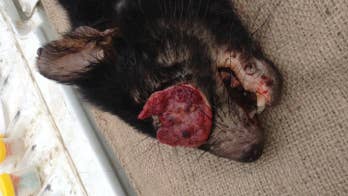
Tasmanian devils' mysterious cancer may come in two varieties The Tasmanian devil has long been known to suffer from an unusual type of cancer that can spread from animal to animal, but now researchers say the endangered species is plagued by at least two kinds of infectious cancer