








MOSCOW -- Ethnic tensions are "deadly dangerous" for Russia and could break it up if the government fails to stem violent nationalism and act more harshly to disperse riots, President Dmitry Medvedev said Monday.
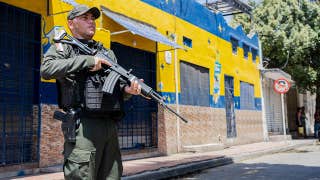
Medvedev said police must act more harshly to put down the kind of riots that occurred just outside the Kremlin on Dec. 11. They involved soccer fans and racists chanting "Russia for Russians!" who clashed with police and beat members of ethnic minority groups from the Caucasus region.
He also told top officials in the Kremlin that regional governors must work more closely with ethnic groups to prevent a rise in aggressive nationalism.
"Inter-ethnic conflicts are deadly dangerous for Russia," Medvedev said. "We mustn't allow some dimwits to destroy our common home."
The violence in Moscow raised doubts about the government's ability to control a rising tide of xenophobia, which threatens the country's existence. It also embarrassed the Kremlin just days after FIFA awarded the 2018 World Cup to Russia, and raised questions about Russia's ability to safely stage international sporting events, including the 2014 Winter Games in Sochi.
While ethnic Russians make up four-fifths of Russia's population of 142 million, the country is also home to about 180 ethnic groups. The Caucasus region, with its mountainous terrain and isolated valleys, hosts at least 100 ethnicities including Chechens, who have waged two separatist wars against Moscow after the 1991 collapse of the Soviet Union.
Analysts say the Chechen conflict, with atrocities and killings of civilians committed by both Russian forces and militant Islamists, has triggered the rise of xenophobia and neo-Nazism in Russia as well as growing resentment of Caucasus natives to ethnic Russians and Moscow's rule.
Despite poverty and instability, the Caucasus region has Russia's highest birth rate. Tens of thousands of young people leave the region each year, heading to central Russia and Siberian oil towns in search of jobs and a better future.
Medvedev's predecessor and mentor, Prime Minister Vladimir Putin, who sat next to him at the meeting, suggested Monday that the authorities might restore harsh Soviet era-restrictions on movement into big cities like Moscow or St. Petersburg. Such a move would target dark-complexioned people from the Caucasus, who flee their impoverished regions for big cities.
"We went for liberal rules of registration too early," Putin said, adding that the rules of access to big cities should be toughened. He called for amending the law to make violation of new, tougher rules punishable by criminal law, not just fines as it is now.
Putin also suggested limiting jury trials, introduced all over Russia in recent years. He said that trials by jury for suspects in murders and other grave crimes should only be held on an inter-region level instead of a local level to prevent acquittals based on clan loyalties.
"Jury trials are inefficient," he said. "In some regions, they make decisions based on clan and ethnic principles."
Putin pointed at a suspect in the killing of a Spartak club soccer fun that helped trigger Moscow riots, saying that he walked free despite his convictions of violent crimes.
During his eight-year presidency, Putin moved steadily to roll back Russia's post-Soviet freedoms, abolishing direct elections of provincial governors and pushing other electoral changes that strengthened the Kremlin's control over Russia's political life.
