

















MAIDUGURI, Nigeria – Motorcycle-riding gunmen shot and killed the dominant gubernatorial candidate in a northeast Nigeria state and six others Friday, throwing a region already under attack by a radical Muslim sect into a panic.
Meanwhile, authorities say as many as 13 people died in renewed violence between Christians and Muslims in Nigeria's restive central belt. The violence comes ahead of April elections that many worry could ignite simmering ethnic and religious tensions in a country that became a democracy only a decade ago.
Families in the northern city of Maiduguri hid inside their homes and shops shut their doors as police cordoned off large neighborhoods searching for the killers of Modu Fannami Gubio.
He was the Borno state candidate of the All Nigeria People's Party, a conservative party dominant in Nigeria's Muslim north, for the upcoming April elections. The party already controls politics in Borno state.
Gubio had left Friday prayers in Maiduguri and was walking to his father's home when the gunmen attacked, said Borno state police commissioner Ibrahim Abubakar. Gubio tried to run for a sport utility vehicle parked nearby, but was cut down before he reached the cover, the police commissioner said.
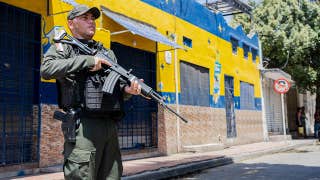
Two plainclothes police officers and four others — including a 12-year-old boy — also died in the attack, Abubakar said. Five others were wounded. No arrests had been made Friday afternoon, though paramilitary police patrolled the streets and shut down traffic.
Neighborhoods "have been condoned off by the police, including parts of the palace of Shehu of Borno in pursuit of the fleeing gunmen that killed seven people today in broad daylight," the commissioner told journalists.
No one immediately claimed responsibility for the killing. However, the attack mirrors the style used by a radical Muslim sect operating in the area called Boko Haram. Abubakar blamed the group as well in his initial statement to reporters, but offered no evidence to show the group's involvement.
Boko Haram, which means "Western education is sacrilege" in the local Hausa language, has attacked churches and engineered a massive prison break in recent months. The group was thought to be vanquished in 2009, when Nigeria's military crushed its mosque into concrete shards, and its leader was arrested and died in police custody.
Suspected Boko Haram members have used motorcycle-riding gunmen to attack soldiers and police manning checkpoints throughout Borno state, as well as those who publicly oppose the group. But much remains murky about Boko Haram's intentions, and whether all the killings in Maiduguri are due to the group's reemergence.
In Nigeria's restive central region, as many as 13 people died after gunmen attacked four villages near Jos, a flash point of violence between Christians and Muslims. The attackers targeted Christian neighborhoods.
"The attacks were carried out in a number of villages simultaneously," said Fom Dakwak, a local government official.
A military and police joint task force later arrested 29 people suspected of taking part in the attacks after a gunfight that saw two people killed and a soldier shot, said Capt. Charles Ekeocha, a military spokesman.
Among them, a Ekeocha said soldiers found a Muslim officer with Nigeria's mobile police — known as "kill-and-go" for their quick use violence to put down unrest in Africa's most populous nation.
Rumors of uniformed soldiers and police officers taking part in killings have run rampant since violence began around Jos last year, fueled largely by political and economic strife. At least 1,000 people died in killings there in 2010 and another 200 more have died within the last month, Human Rights Watch said.
The violence in central and northern Nigeria comes as President Goodluck Jonathan, a Christian who took power after the death of Nigeria's elected Muslim leader, seeks the presidency. Some believe a northern candidate should stand in Jonathan's place to appease an unwritten power-sharing agreement in the oil-rich nation's ruling party.
___
Associated Press writers Ahmed Saka in Jos, Nigeria; Shehu Saulawa in Bauchi, Nigeria and Jon Gambrell in Lagos, Nigeria contributed to this report.
