

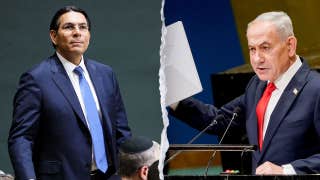







BRUSSELS – In a tough, terse statement, a top European Union official pressured Romania's prime minister Thursday to address concerns about political wrangling that has led to the impeachment of the country's president and raised fears that its judiciary is being undermined. How Romania responds could affect its goal of attaining greater privileges within the regional bloc, including access to its passport-free zone.
Last week, the Romanian parliament, which is dominated by supporters of Prime Minister Victor Ponta, voted to impeach President Traian Basescu, accusing him of meddling in affairs beyond his authority. That set the stage for a July 29 national referendum on whether Basescu should be removed from office. Ponta and his supporters have also taken other recent steps that seem aimed at consolidating control and sidelining the judiciary.
European Council President Herman van Rompuy met Thursday with Ponta in Brussels after summoning him to explain the political turmoil. After the meeting, van Rompuy issued a statement in which he again expressed "deep concerns" about the developments in Romania, a nation of 19 million that emerged from communism in 1989 and joined the EU in 2007.
"President van Rompuy underlined he follows the events closely," the statement noted, adding that the rule of law and the independence of the judiciary ... are fundamental principles on which the Union is based and which are natural for all governments to respect.
"President van Rompuy encouraged Prime Minister Ponta to engage in a constructive dialogue with the European Commission and to address the issues identified by the Commission as problematic."
EU officials have in particular been concerned about the speed of the impeachment process, and they have warned that the political turmoil may delay Romania's entry to the bloc's Schengen open-borders agreement, which allows for passport-free travel. Romania has long sought to join the Schengen zone.
Before meeting with van Rompuy, the Romanian premier told reporters that the conflict between his leftist governing coalition and the center-right Basescu arose due to a failure of their working relationship. "Basescu ... blocked laws made by the new majority (in parliament) and the government," Ponta said.
Ponta, 39, became prime minister in May — the third premier in four months after the previous two were ousted over unpopular cuts to spending and other economic austerity measures. Basescu, 60, became president in 2004. He was impeached in 2007 but survived a referendum, though his popularity has declined steeply in the last two years.
