


















Nobel laureate says Yemenis — not outside powers — must lead fight against Houthis
Tawakkol Karman tells Fox News Digital that restoring the Yemeni state is the only path to lasting peace and countering the Iran-backed Houthis.
The Iran-backed Houthis’ escalating attacks on shipping through the Bab el-Mandeb Strait are raising a growing strategic question: Could the waterway become the next Strait of Hormuz?
The answer is complicated by the geography — and by Yemen itself. Unlike Hormuz, where Iran can directly threaten shipping from its own coastline, Tehran’s leverage over Bab el-Mandeb depends largely on its Houthi allies. And the country overlooking the strait is fractured among competing armed and political forces, leaving the U.S. and its regional allies confronting a threat that may be difficult to solve with naval power alone.
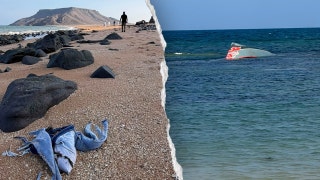
The danger was underscored Tuesday when the Houthis attacked the Egyptian-owned cargo ship Tihamah in Bab el-Mandeb. Four crew members — three Pakistanis and one Indonesian — were killed, according to Yemeni and Pakistani officials, while two Yemeni rescuers were killed when the Houthis struck again after rescue crews arrived, Yemen’s Coast Guard said. Reuters reported that the fatalities, if confirmed, would be the first deaths in a Houthi strike on shipping since the U.S.-Iran war began Feb. 28.
IRAN-BACKED HOUTHI THREAT IN RED SEA COULD LEAD TO MAJOR US POLICY SHIFT, ANALYSTS SAY
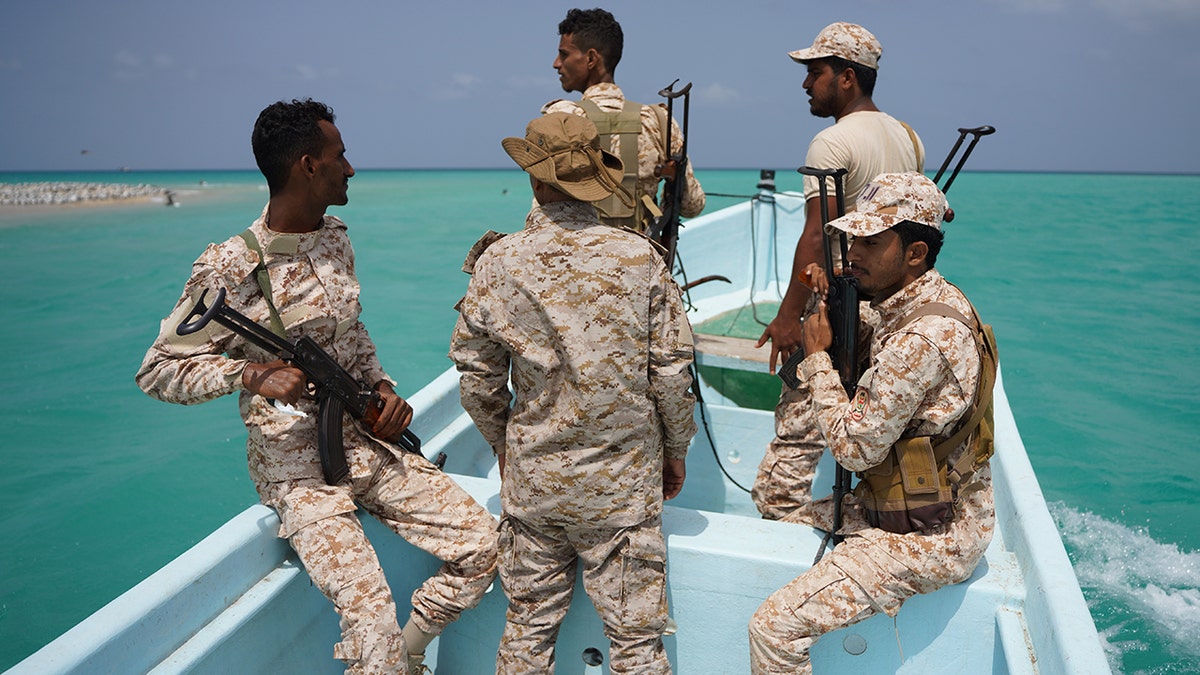
Yemeni soldiers patrol the strategic Bab el-Mandeb Strait, Yemen, April 5, 2026. (Abdulnasser Alseddik/AP Photo)
The Bab el-Mandeb Strait, is located between Yemen and the Horn of Africa, connects the Gulf of Aden and Arabian Sea to the Red Sea and, farther north, the Suez Canal and the Mediterranean. It is a crucial route for energy and commercial shipping. The Suez Canal and Egypt’s SUMED pipeline effectively form the northern end of the same Red Sea corridor.
But the southern side of that corridor borders a country that has been at war for more than a decade.
The Houthis control the capital, Sanaa, and much of northern Yemen, while the internationally recognized, Saudi-backed government and an array of allied or competing groups control areas elsewhere. The Southern Transitional Council, a separatist movement that has been backed by the United Arab Emirates, has been a major force in the south.
That fragmentation is becoming increasingly relevant to the security of the waterway.
IRAN-BACKED TERROR PROXY HOUTHIS THREATEN FRESH ATTACKS AFTER YEMEN AIRPORT STRIKE
Amr Al Bidh, the STC’s foreign affairs chief, told Fox News Digital that naval forces can defend individual vessels but cannot by themselves remove the threat posed by Houthi-controlled territory overlooking the maritime route.
"Naval presence protects individual ships. It does not take away Houthi launch sites, it does not interdict the smuggling routes that resupply them and it does not hold terrain," Al Bidh said.
He said that "you have to be on the ground" to ultimately secure Bab el-Mandeb.
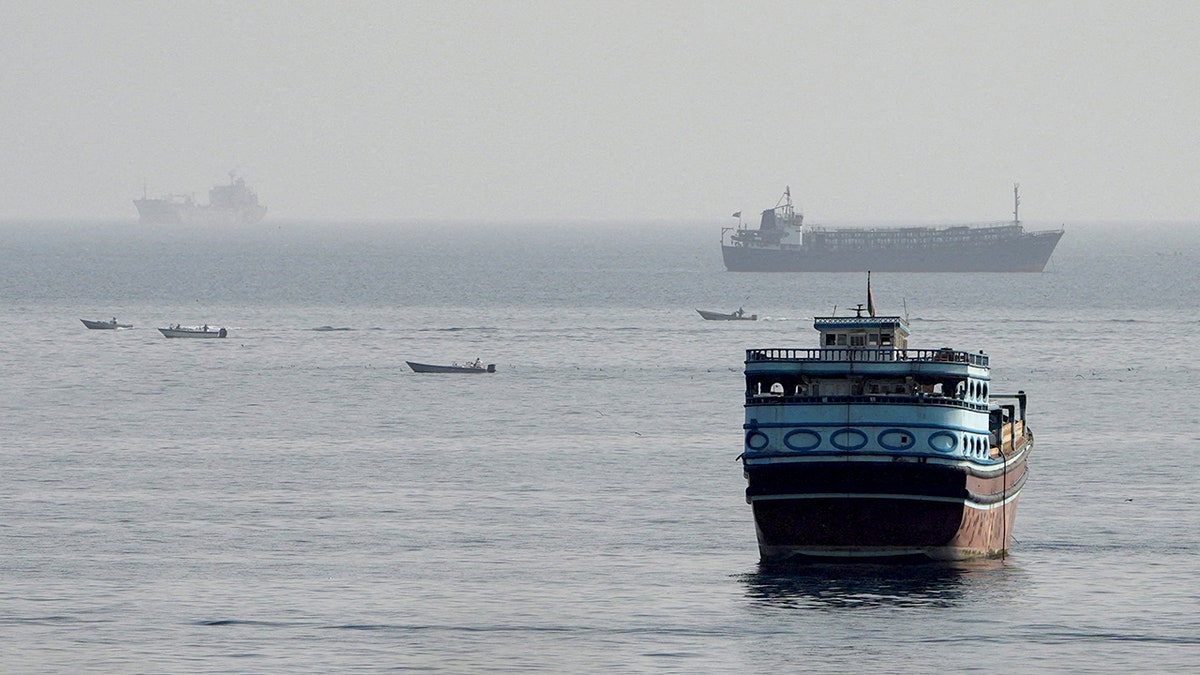
Vessels in the Strait of Hormuz, as seen from Musandam, Oman, on Aug. 3, 2026. (Reuters)
The deterioration comes amid a broader escalation in Yemen. U.N. Special Envoy Hans Grundberg told the Security Council Thursday that the country faces its most serious threat of a return to large-scale war since the U.N.-brokered 2022 truce, warning that renewed Houthi attacks on commercial vessels risk drawing Yemen deeper into the wider regional confrontation.
That truce sharply reduced major fighting after years of war following the Houthis’ seizure of Sanaa in 2014 and the Saudi-led military intervention the following year. Though the formal truce expired in October 2022, large-scale hostilities remained comparatively limited for years.
IRAN BLOCKADE ‘GOING GLOBAL’ IS A WARNING SIGNAL TO CHINA AND RUSSIA
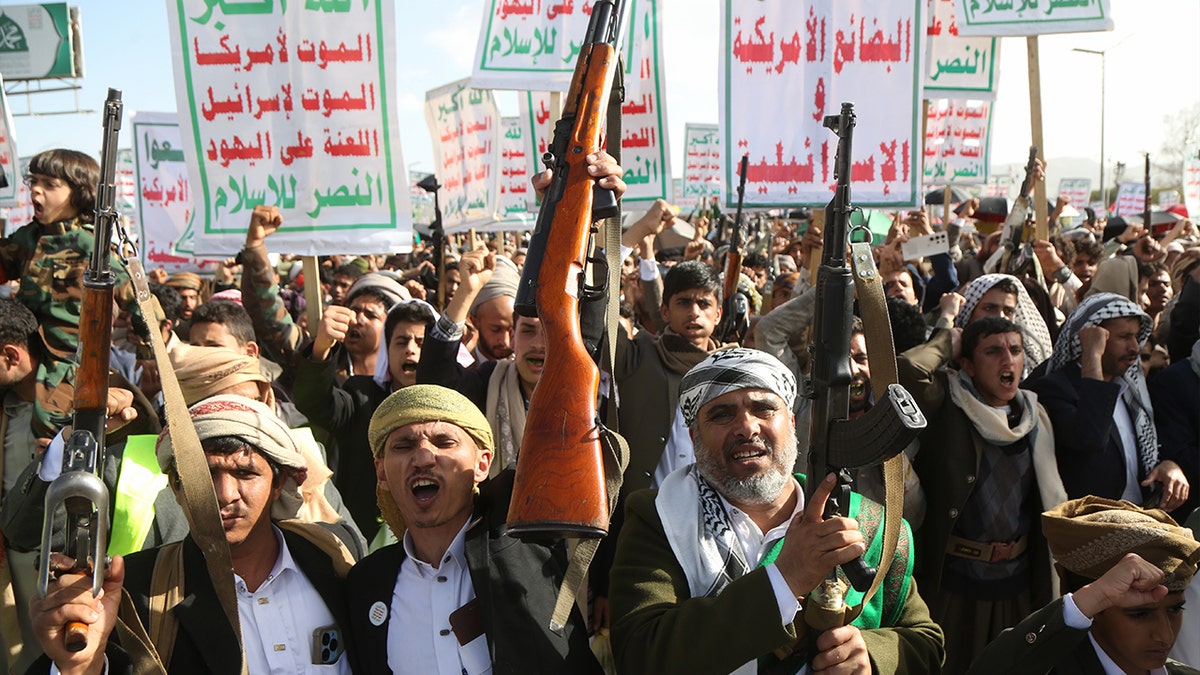
Yemen's Iran-backed armed Houthi group has warned they will move to shutter the Bab Al-Mandeb Strait through missile-drone attacks if Gulf nations join the US-Israel war on Iran. (Mohammed Hamoud/Getty Images)
On July 20, the Houthis declared what they called a naval blockade of Saudi Arabia, threatening vessels doing business with Saudi ports. Riyadh denies the Houthi accusation that Saudi Arabia has imposed a siege on Yemen.
A White House official, speaking on background, said the United States expects the Houthis to continue to uphold the terms of the ceasefire. The official said the Houthis "saw during Operation Rough Rider that the United States and President Trump will take necessary action to protect freedom of navigation and U.S. commercial shipping from Houthi terrorist attacks."
The official added that the United States is focused on protecting core national security interests — including freedom of navigation in the Red Sea — while "empowering our regional partners to take the lead in managing and resolving regional security challenges." The official said Washington is in continuous dialogue with Saudi Arabia and the Republic of Yemen government regarding regional stability.
United Against Nuclear Iran, citing Joint Maritime Information Center data, has put the decline in tanker transits since the July 20 blockade declaration at roughly 40%. UANI also said tankers have been observed broadcasting messages including "CHINESE OWNER" and "ARMED GUARD ON BOARD" through their tracking systems, apparently in an effort to reduce the chance of being targeted.
TRADE VESSEL STRUCK BY PROJECTILE IN STRAIT OF HORMUZ AMID US-IRAN TALKS
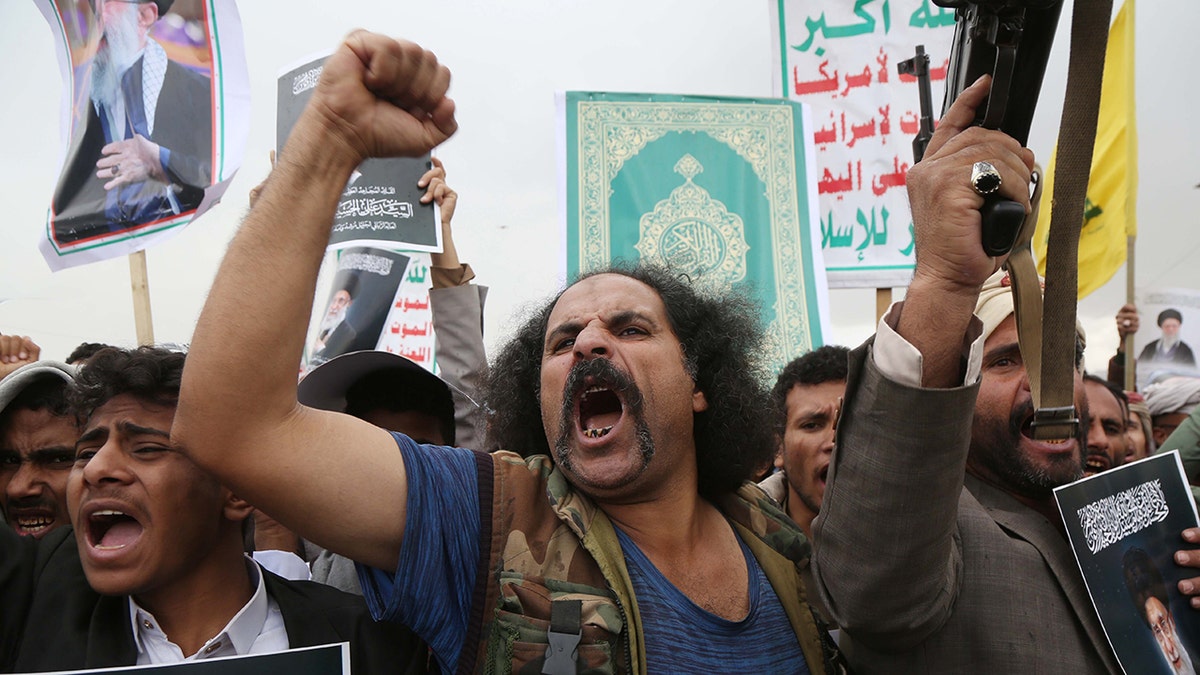
Thousands of people gather at Sabeen Square, under the control of the Iran-backed Houthis in Yemen, to protest the killing of Iran’s supreme leader in U.S. and Israeli airstrikes on Iran, in Sanaa, Yemen on March 6, 2026. (Mohammed Hamoud/Anadolu via Getty Images)
China, meanwhile, has been in contact with the Houthis over safe passage for Chinese vessels, according to a July 28 Reuters report citing Chinese and regional sources. Four China-bound tankers had crossed Bab el-Mandeb following the blockade announcement as Beijing sought assurances for its shipping.
The economic stakes are rising because of what is happening hundreds of miles to the east.
Saudi Arabia has increasingly relied on its Red Sea export infrastructure as shipping through the Strait of Hormuz has been disrupted by the U.S.-Iran conflict.
That makes the Red Sea both an alternative to Hormuz — and a potential second pressure point.
Yemeni Nobel Peace Prize laureate Tawakkol Karman warned at the United Nations Thursday that Yemen’s internal collapse is increasingly threatening interests far beyond its borders.
"This is no longer a Yemeni crisis alone," Karman said. "The continued collapse of the state in Yemen threatens international navigation and trade, energy security, and global supply chains and undermines regional and international peace and security."
Karman had been invited by Denmark, which holds the Security Council presidency, to brief council members, but Denmark’s deputy U.N. ambassador said "strong opposition" prevented the briefing from taking place. Karman instead addressed reporters outside the chamber.
In a separate interview with Fox News Digital, Karman argued that restoring a functioning Yemeni state is ultimately essential to defeating armed groups and securing the country.
TRUMP WARNS IRAN FIGHTING ISN'T OVER AS HE VOWS US WILL 'WIN' AS TALKS FADE
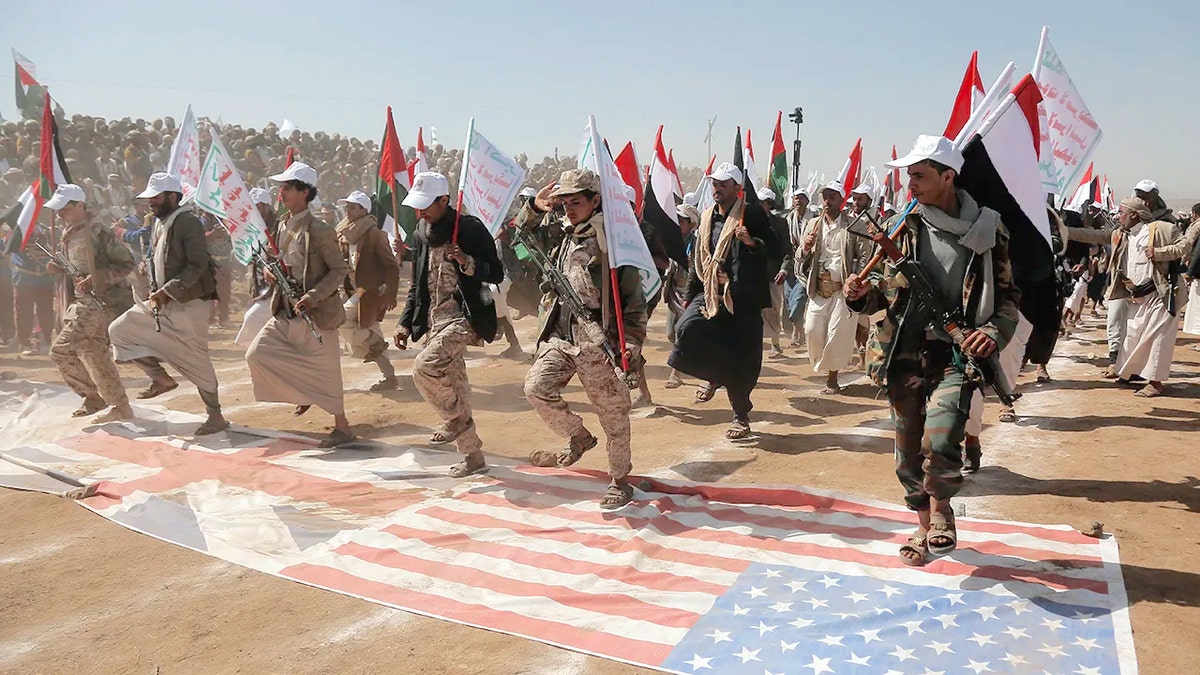
Houthi terrorists walk over British and U.S. flags at a rally in support of Palestinians in the Gaza Strip, and Houthi strikes on shipping in the Red Sea and Gulf of Aden on Feb. 4, 2024, on the outskirts of Sana'a, Yemen. (Mohammed Hamoud/Getty Images)
"Yemeni people can do that," Karman said of defeating the Houthis and other militias. "We can be partners on saving the global and regional security."
"Without restoring Yemen, that means there is not any sustainable peace," she added.
But U.S. experts caution against treating Bab el-Mandeb as simply a second Hormuz.
"Iran doesn’t have the same direct influence on flows through the Bab al-Mandeb as it does for the Strait of Hormuz," Richard Goldberg, a senior advisor at the Foundation for Defense of Democracies and former National Security Council official, told Fox News Digital.
"The strategy would depend much more on proxies — Iraqi groups focusing fire on infrastructure and the Houthis focusing on the Red Sea," Goldberg said.
But he said there are limits to that strategy. "The Houthis act much more independently than they used to, and have not yet shown an interest to going to war against the world — just against Riyadh," Goldberg said.
He also pointed to one critical difference between the two waterways: ships that cannot safely cross Bab el-Mandeb can bypass the Red Sea entirely by sailing around Africa.
"Unlike Hormuz, shippers can go around the Red Sea if they really need to," Goldberg said. "It adds cost and time but it’s not a single point of failure like Hormuz."
The question facing U.S., Saudi Arabia and its partners is therefore how to prevent the Houthi threat from becoming more serious.
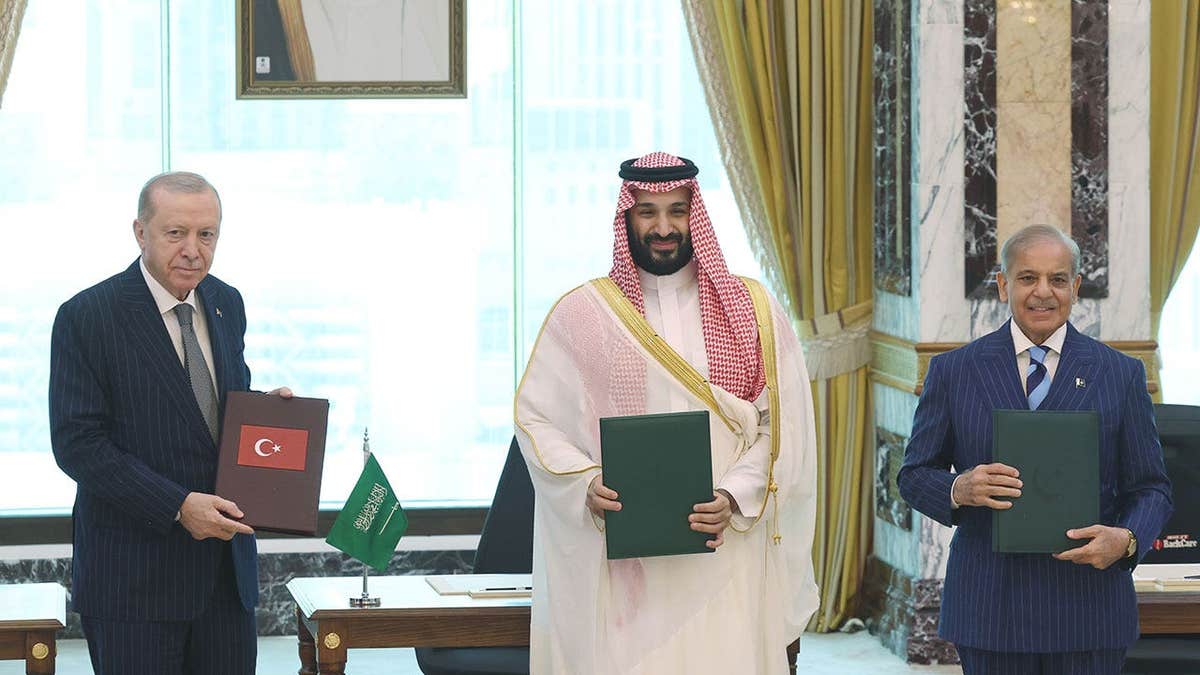
Turkish President Recep Tayyip Erdoğan, left, Saudi Crown Prince Mohammed bin Salman, center, and Pakistani Prime Minister Shehbaz Sharif sign a defense agreement in Mecca, Saudi Arabia, on Aug. 7, 2026. (TUR Presidency/Murat Cetinmuhurdar/Handout/Anadolu via Getty Images)
Riyadh is now trying to assemble two overlapping layers of regional security cooperation.
Saudi Arabia, Turkey and Pakistan signed the Mecca Joint Defense Agreement on Aug. 7, a mutual-defense pact that calls for high-level political and military coordination, joint exercises and deeper defense-industry cooperation. Turkey has stressed that the agreement is defensive and does not identify Iran or any other country as an enemy.
Dr. Aziz Alghashian, a Saudi foreign-policy researcher and senior non-resident fellow at Gulf International Forum, told Fox News Digital earlier this week that one immediate implication could be greater coordination against Iran-backed groups, particularly the Houthis.
Alghashian said the pact could produce a greater trilateral presence near the Saudi-Yemeni border, "especially in the maritime dimension," while allowing Riyadh to take a firmer collective approach toward Iran-backed militias even as it maintains a more diplomatic approach toward Tehran itself.
Separately, Saudi Arabia is leading an effort specifically focused on the waterways.
The Saudi Defense Ministry announced July 30 plans for a multinational maritime-defense coalition intended to protect freedom of navigation and commercial and energy routes through Bab el-Mandeb, the Red Sea and the Gulf of Aden. Fourteen countries, including Turkey, Pakistan, Egypt, Sudan and Djibouti, initially backed the initiative.
Turkey’s Defense Ministry confirmed Thursday that Ankara is participating in meetings in Jeddah aimed at establishing the coalition.
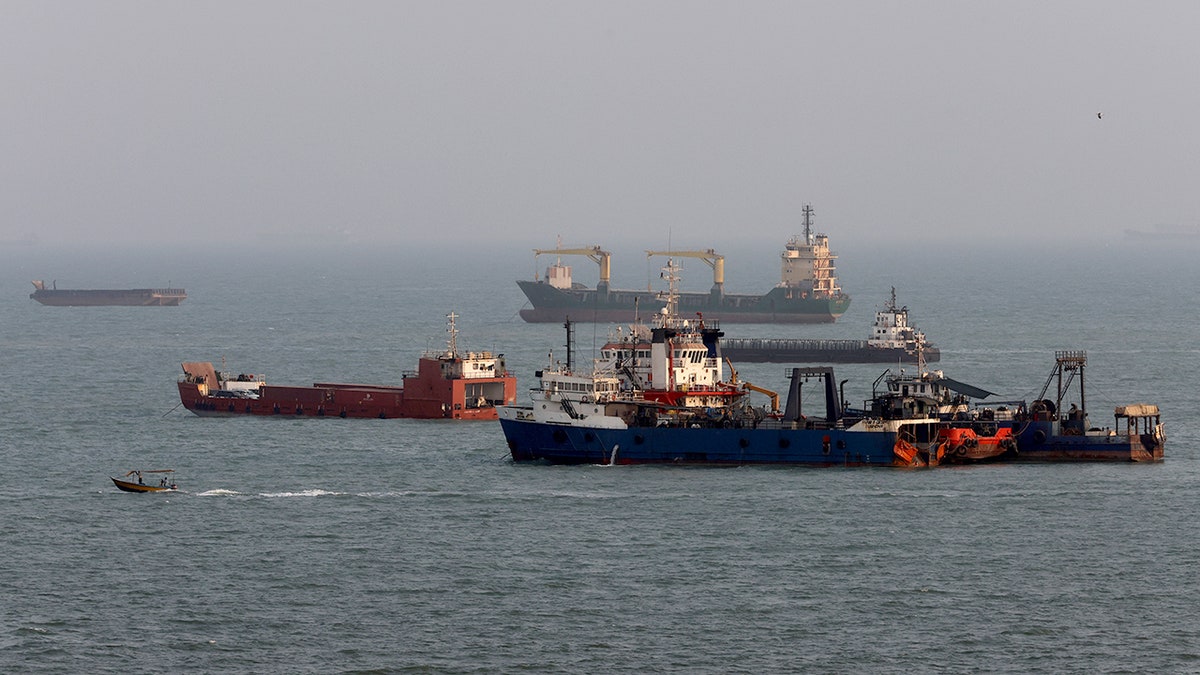
Ships are anchored in the Strait of Hormuz on Aug. 10, 2026, off the coast of Bandar Abbas, Iran. (Ali Saeedi/Getty Images)
CLICK HERE TO DOWNLOAD THE FOX NEWS APP
A State Department spokesperson separately told Fox News Digital that protecting commercial shipping through both the Red Sea and the Strait of Hormuz remains a "top priority" for the Trump administration, pointing to freedom of navigation as one of Washington’s core national security interests in the Middle East. "We will continue to work with international partners to deter Iranian and Iranian-proxy attacks on merchant vessels, ensure the free flow of commerce and hold accountable those who threaten the safety of international shipping lanes," a State Department spokesperson said.
The spokesperson said the administration is also seeking to disrupt the flow of Iranian money and weapons to the Houthis, noting that the U.S. has sanctioned more than 200 entities associated with the group.
"We condemn Iran’s flagrant violation of Yemen’s sovereignty and international law in threatening freedom of navigation and supporting their Houthi proxies," the spokesperson said. The State Department also emphasized Washington’s support for Saudi Arabia and Yemen’s internationally recognized government as the threat around Bab el-Mandeb grows.
"The United States stands firmly with the Kingdom of Saudi Arabia and the internationally recognized government of Yemen against Houthi terrorism," the spokesperson said. "We are in close consultation with our Saudi and Yemeni partners and remain committed to their security."
