













Former counterterrorism official: The threat has changed
Javed Ali, a former US counterterrorism official who served at DHS and FBI, says America is safer from a 9/11-style attack — but today’s threats are harder to detect.
On the morning of Sept. 11, 2001, Javed Ali drove past the Pentagon on his way to work in northern Virginia.
Roughly half an hour later, American Airlines Flight 77 slammed into the building.
From his office in Falls Church, Ali could see smoke rising from the Pentagon. A year later, in a turn that captured how dramatically the country had changed, he was walking into the still-damaged building himself — now working in the Defense Intelligence Agency's counterterrorism office.
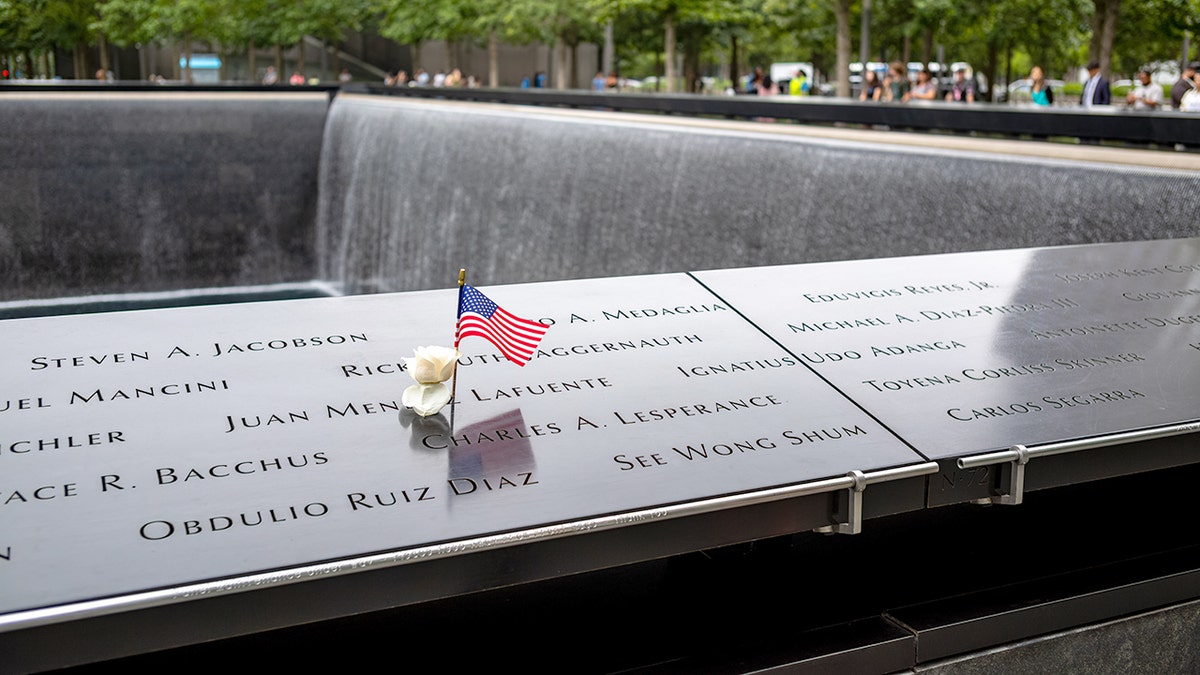
Thousands of brave Americans still dying from 9/11 toxic exposure effects decades later. (iStock)
"It was a very eerie and odd and surreal moment in my career," Ali told Fox News Digital.
Ali's career would eventually take him from the DIA to the newly created Department of Homeland Security and later the FBI, giving him a front-row seat to the enormous national security architecture America constructed after the deadliest foreign attack on U.S. soil.
Twenty-five years later, that architecture presents something of a paradox.
By one of its clearest measures, the post-9/11 system appears to have made another attack on the scale of 9/11 far harder. The United States has not suffered another terrorist attack remotely approaching the scale and complexity of 9/11, which killed 2,977 people. U.S. intelligence and military operations dismantled much of the al Qaeda network that planned it, while new agencies, surveillance authorities, watchlists and intelligence-sharing systems were designed to ensure that another group could not exploit the same seams in American defenses. The 2026 U.S. intelligence community assessment said counterterrorism operations have degraded al Qaeda and ISIS's ability to quickly rebuild their leadership and plan large-scale attacks against the U.S. homeland.
But success against the threat of 2001 did not eliminate terrorism. It helped change it.
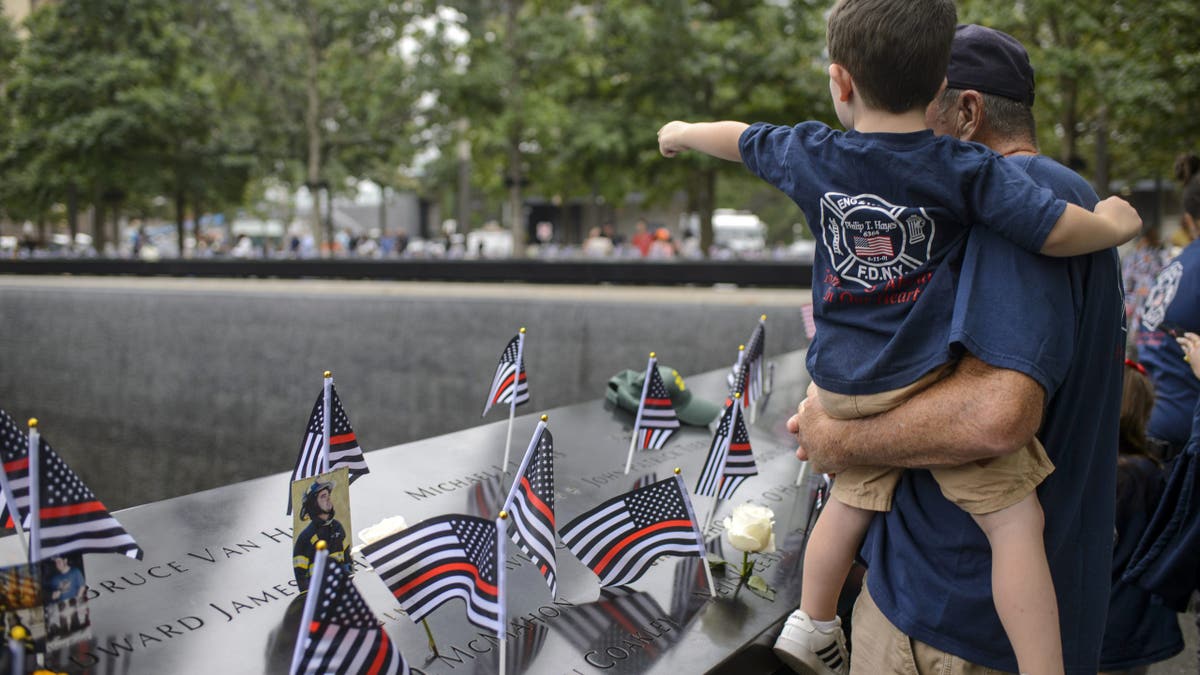
A boy points towards the center of the reflecting pool at the National September 11 Memorial Museum in New York on Sunday, Sept. 11, 2022. (Bonnie Cash/UPI/Bloomberg via Getty Images)
Today's most difficult threats increasingly involve individuals radicalized online, small cells with little warning signature, foreign terrorist organizations seeking to inspire attacks from afar, and an expanding layer of cyber and state-sponsored threats capable of reaching deep inside the United States without hijacking an airplane.
The question 25 years after 9/11, therefore, is not simply whether Americans are safer.
They are safer from one kind of attack — while increasingly exposed to others.
AN AI CYBERATTACK COULD TURN OFF AMERICA'S LIGHTS BEFORE WASHINGTON EVEN UNDERSTANDS WHY
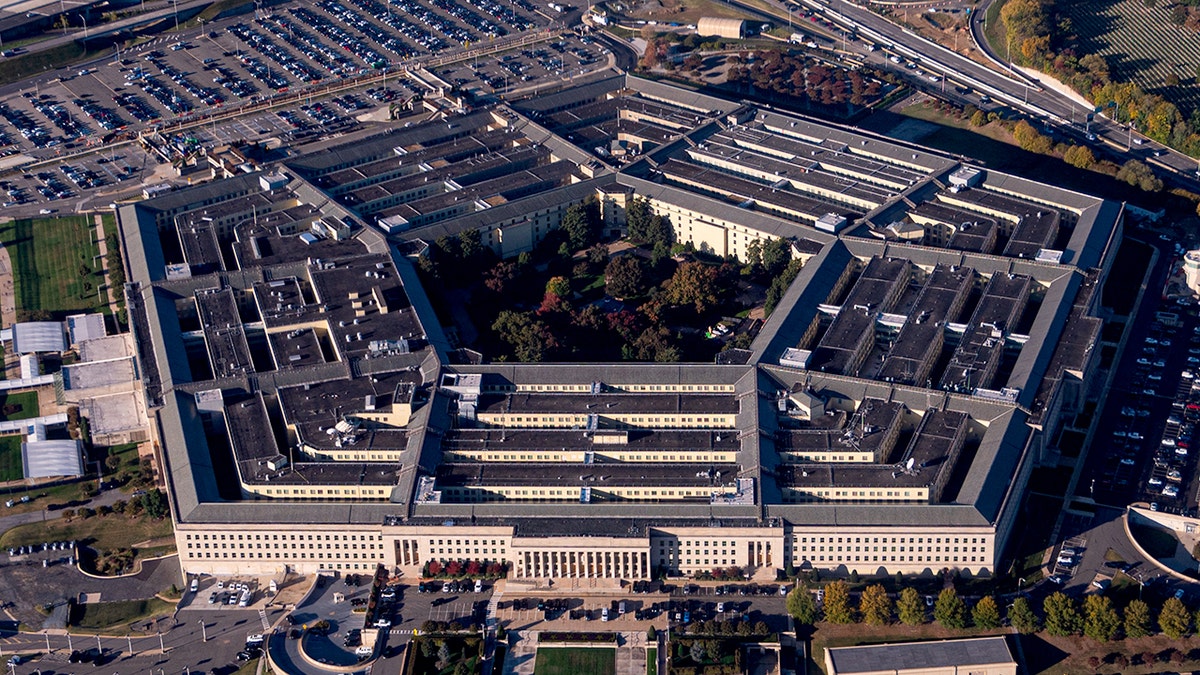
Aerial view of the Pentagon building in Arlington, Va., on Wednesday, Oct. 22, 2025. (Bill Clark/CQ-Roll Call, Inc. via Getty Images)
Building a security state after 9/11
The scale of the American response was extraordinary.
Just over two months after the attacks, President George W. Bush signed legislation creating the Transportation Security Administration. TSA says its creation amounted to the largest civilian undertaking in U.S. government history at the time, with the federal government rapidly assuming responsibility for airport passenger and baggage screening.
The following year, Congress created the Department of Homeland Security, combining all or part of 22 federal agencies and offices. DHS began operating in March 2003 and today employs more than 260,000 people across missions ranging from border and aviation security to cybersecurity, intelligence and emergency response.
The changes went far beyond new agencies.
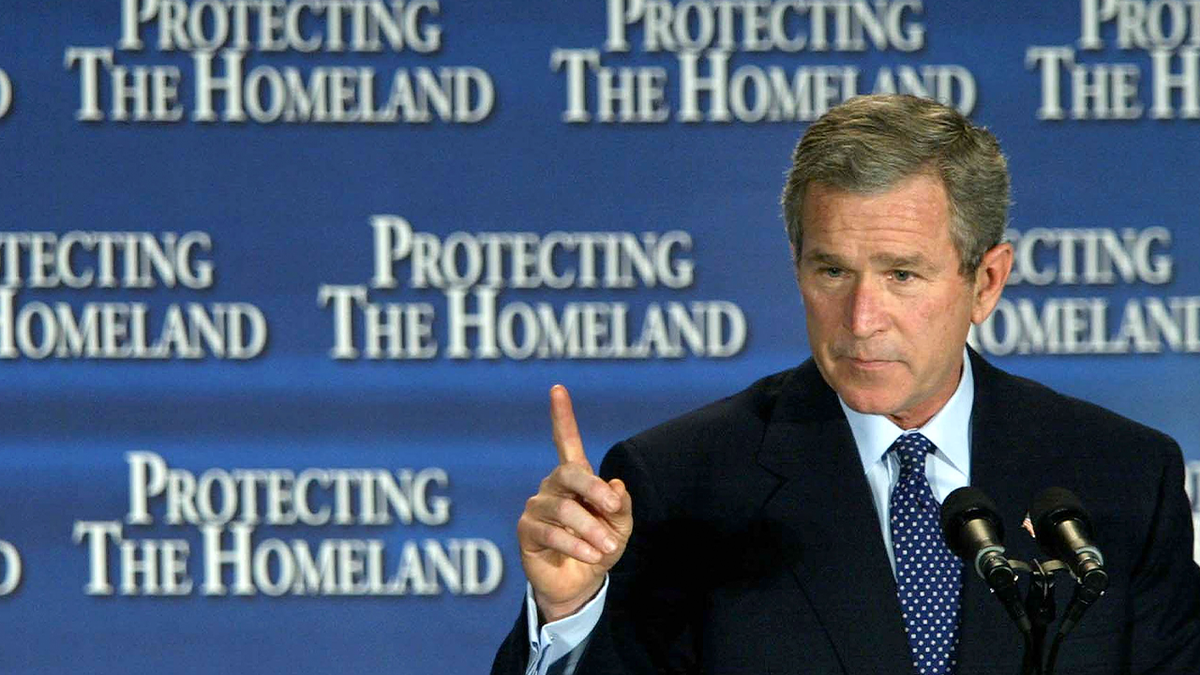
President George W. Bush discusses creating the Department of Homeland Security following 9/11. (Getty Images)
The 9/11 Commission found that the pre-attack breakdown was deeper than the familiar failure to "connect the dots." Responsibility had been scattered across agencies, information was not consistently shared, and no single entity was empowered to integrate intelligence and drive joint action across the foreign-domestic divide. The commission concluded that "responsibility and accountability were diffuse."
Washington spent the next two decades trying to close those gaps.
Brown University's Costs of War project estimates that post-9/11 wars and related obligations have cost roughly $8 trillion. It estimates that more than $1.1 trillion has been spent on homeland security efforts to prevent and counterterrorism inside the United States since DHS was created.
Al Qaeda didn't disappear overnight
Ali said it can be easy, with 25 years of hindsight, to forget how persistent the original threat remained.
Even after the United States invaded Afghanistan, killed or captured senior al Qaeda figures and put the organization under extraordinary pressure, the group continued attempting to find ways back into the homeland.
During Ali's years at DHS, he said officials repeatedly confronted plots involving al Qaeda and its affiliates, including a 2006 plot originating in Britain to bomb transatlantic airliners traveling to North America.
The threat then evolved again.
Usama bin Laden was killed by U.S. forces in Pakistan in May 2011. But rather than marking the end of the era of jihadist terrorism, the following years produced a new and in some ways more difficult challenge.
ISIS grew out of al Qaeda in Iraq, expanded rapidly amid the wars in Iraq and Syria and declared a self-described caliphate in June 2014. At its height, the group controlled vast territory and millions of people in Iraq and Syria while encouraging or directing attacks far beyond its borders. The State Department reported that ISIS had emerged from al Qaeda in Iraq and expanded dramatically during 2013 and 2014.
For U.S. counterterrorism officials, Ali said, the center of gravity increasingly shifted from identifying trained operatives sent by an organized group to finding individuals who might be radicalizing inside Western countries.
Then came another shift: attacks by lone offenders across different ideologies, often with no direct operational relationship to an organization overseas.
"Mostly lone actors, lone offenders, not tied to groups overseas, not traveling overseas, and not being directed by people overseas," said Ali, now an associate professor of practice at the University of Michigan's Ford School of Public Policy.
DHS CHIEF ANNOUNCES CHANGES TO ITS SEAL TO REFLECT THAT DEPARTMENT IS 'AT WAR EVERY SINGLE DAY'
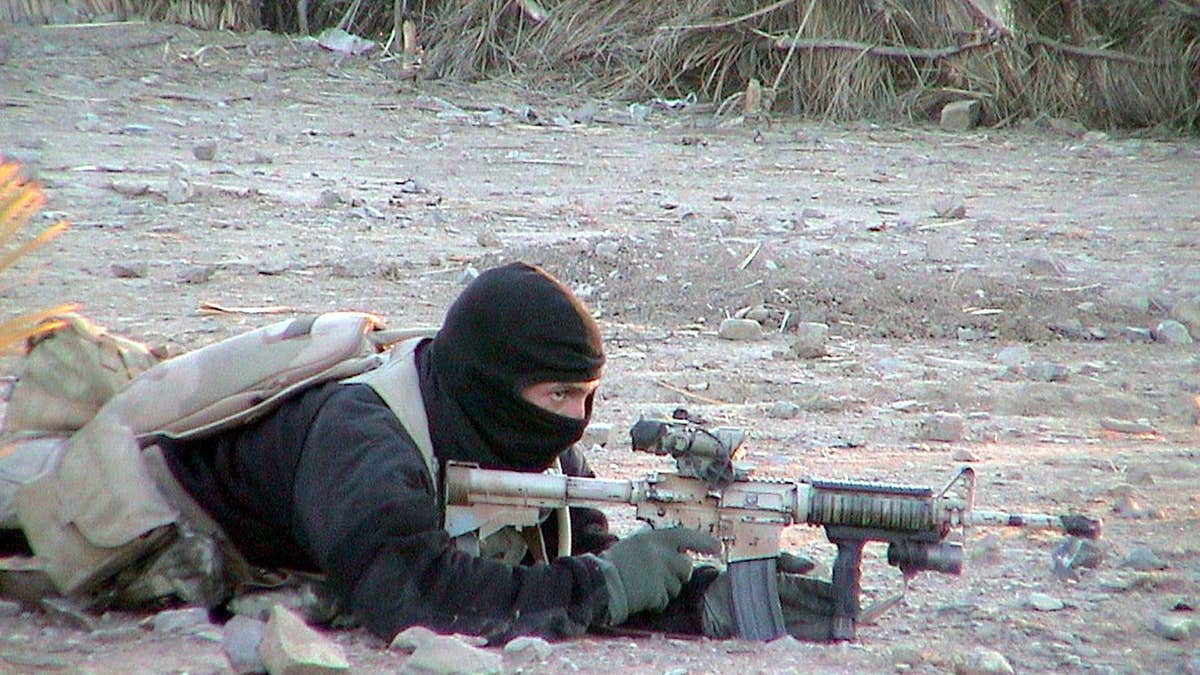
A U.S. Navy SEAL provides cover for teammates advancing on a suspected al Qaeda and Taliban location during missions in Afghanistan supporting Operation Enduring Freedom. (Mai/Getty Images)
The terrorist organization became a phone screen
The transformation is now reflected in the government's own threat assessments.
The 2026 Annual Threat Assessment from the Office of the Director of National Intelligence said setbacks to the ability of Islamist terrorist groups to conduct "large-scale complex attacks" have pushed them toward information operations and propaganda designed to inspire or enable people in or with access to Western countries.
The assessment said there were at least three Islamist terrorist attacks in the United States in 2025 and that law enforcement disrupted at least 15 U.S.-based Islamist terrorist plotters that year. Roughly half of those disrupted plotters had some online contact with Islamist terrorists or were inspired by foreign terrorist organizations, according to the assessment.
The vulnerability was demonstrated on New Year's Day 2025, when Shamsud-Din Jabbar, a U.S. citizen from Texas, drove a pickup truck into a crowd on Bourbon Street in New Orleans, killing 14 people. The FBI described the attack as an act of terrorism and said Jabbar had become increasingly isolated before adopting extremist views.
In the days after that attack, the FBI said lone actors and small cells who radicalize online had posed the greatest terrorism threat to the homeland in recent years precisely because they can be so difficult to detect and disrupt.
That presents almost the inverse of the 9/11 problem.
The 9/11 plot required 19 hijackers, overseas leadership, financing, international travel, flight training and years of planning. The challenge for investigators was collecting pieces of information held across different agencies and assembling them quickly enough.
A lone actor may offer far fewer pieces to collect in the first place.
Ali said many recent attackers or alleged plotters had not previously come onto the radar of the FBI or local law enforcement, leaving authorities with the extraordinarily difficult task of identifying people who may not commit an obvious crime until they move toward violence.
"So yes, we are safer from a certain type of threat," Ali said, "but again, we are not immune from terrorism, and other types of threats are much more difficult to identify or stop."
KASH PATEL REVEALS THE CHILLING HOLIDAY TERROR PLOTS FBI FEDERAL AGENTS QUIETLY STOPPED
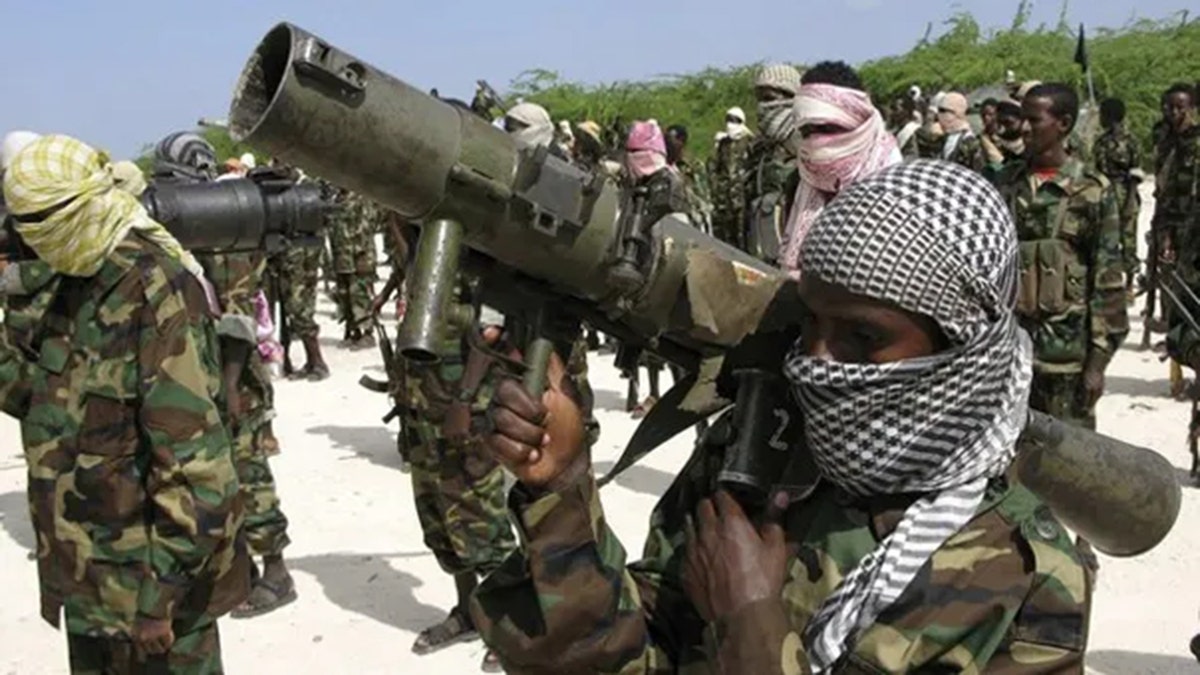
A handout released to Reuters by IntelCenter shows members of Somalia's Islamist rebel group al Shabaab in Mogadishu Jan. 1. (IntelCenter Handout/Reuters)
A security system built for yesterday?
That changing threat has also fueled a broader debate over whether the institutions created after 9/11 became too large, too expensive or too focused on the dangers of the previous era.
Morgan Murphy, who served as press secretary to the secretary of Defense during the first Trump administration and later worked in the Trump White House, argues that Washington built too much bureaucracy around the 9/11 threat while other vulnerabilities grew.
"TSA agents still pat down grandma and gum up travel while Beijing wires our living rooms with cheap TVs and selfie sticks through the supply chain handed to them by Clinton, Bush, Obama and Biden," Murphy said. "We spent two decades frisking American passengers while our adversaries plugged themselves into our homes and businesses."
"The genius of America after Pearl Harbor was that we built to fight. After 9/11, we built to process," Murphy told Fox News Digital, "Real security means sovereignty at home and lethality abroad — a sealed border, an untangled supply chain, and enemies who fear us."
Theo Wold, who served as acting assistant attorney general in the Justice Department's Office of Legal Policy and as deputy assistant to the president for domestic policy during the first Trump administration, offered a similar critique, arguing that post-9/11 Washington relied too heavily on large bureaucracies, expansive government authorities and wars in the Middle East.
"George W. Bush and the D.C. governing elite responded to 9/11 the way their politics demanded: create large, unwieldy bureaucracy, push for special legal authorities with limited oversight and activate ground wars in the Middle East," Wold told Fox News Digital.
"Those wars didn’t make us safer, the legal authorities were wielded against Americans, and the bureaucracy is full of waste and has proven nearly unworkable," he said.
Wold argued that the lesson from the past quarter-century should be a more narrowly targeted national-security model.
"Now we know better. Americans are safest when we are nimble and focus ruthlessly on targeting real enemies," he said.
The next threat may not look like 9/11
The challenge now extends beyond terrorism.

ICE arrests a suspected al Qaeda member released into the U.S. by the Biden administration. (ICE)
The 2026 intelligence assessment warns that China, Russia, Iran, North Korea and non-state ransomware groups continue seeking access to U.S. government networks and private critical infrastructure for espionage, financial gain and possible future disruption. It also warns that artificial intelligence is accelerating cyber capabilities and that several state adversaries are developing missile systems capable of threatening the homeland.
The security landscape that began with al Qaeda operatives training to fly passenger jets has therefore expanded into something far less geographically defined: terrorist propaganda transmitted to an individual's phone, malicious code inserted into a computer network, attacks on critical infrastructure and state adversaries capable of reaching Americans from thousands of miles away.
For Ali, however, the evolution of the threat should not lead Washington to conclude that the original threat has vanished.
One of the central lessons of the years before Sept. 11, he said, was that emerging terrorist organizations have to be confronted before they have the time and space to develop operational capability.
"When these terrorist threats start to emerge, whether it's overseas or here, you have to put pressure on them before they gather momentum to carry out operations," Ali said.
The danger, he argued, would be allowing counterterrorism to fall so far down Washington's list of priorities that the country begins recreating the complacency that existed before 9/11.
"Terrorism as a tactic is probably never going to be defeated," Ali said.
Twenty-five years after he watched smoke rise from the Pentagon, Ali's answer to whether America is safer reflects the contradiction at the heart of the post-9/11 era.
The United States built a massive system to prevent the next 9/11.
It appears to have made another 9/11 far harder to execute.
CLICK HERE TO DOWNLOAD THE FOX NEWS APP
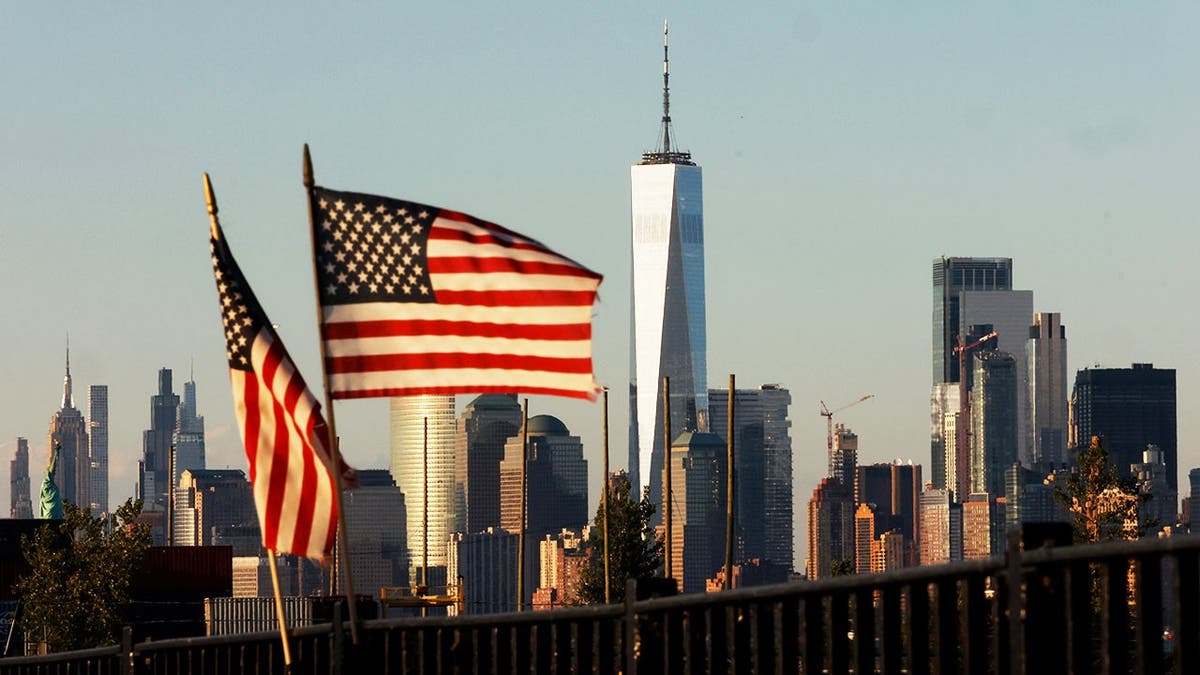
Two flags flutter on a fence in front of Lower Manhattan and One World Trade Center at the Tear Drop 9/11 Memorial at sunset on June 13, 2026, in Bayonne, New Jersey. (Gary Hershorn/Getty Images)
The harder question now is whether that system can recognize the attack that doesn't look anything like it.
