




Cavuto: 'I've been vaccinated,' we're being treated same as unvaccinated
'Your World' host discusses vaccine hesitancy with Former FDA Commissioner Mark McClellan
This is a rush transcript from "Your World with Neil Cavuto," August 5, 2021. This copy may not be in its final form and may be updated.
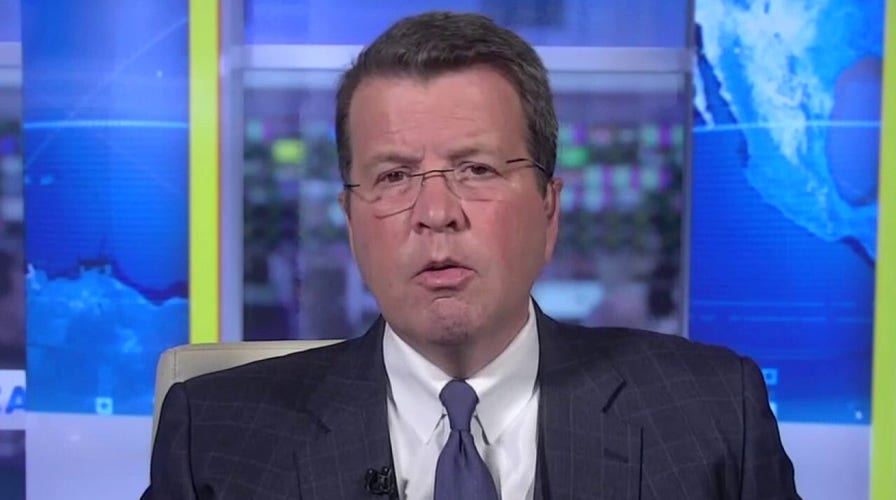
NEIL CAVUTO, FOX NEWS ANCHOR: Well, two very different men profiled today, Dr. Francis Collins, the director of the NIH, and Curtis Sliwa, the Republican candidate for mayor of New York City. They have very different reactions to COVID mandates and restrictions and very different policies going forward as to how we deal with that, not only in New York City, if Mr. Sliva gets his way, but nationally if the good doctor has his way.
Welcome, everybody. I'm Neil Cavuto. And this is "Your World," and a busy "Your World" at that, amid the push to address spikes and COVID cases all around the country, but growing divisiveness about how we respond to that, and the vaccine mandate debate itself, and how far you can go urging businesses and restaurants to police the issue, to make sure that you have been vaccinated, to make sure you're wearing the mask.
They don't want anything to do with that.
To Edward Lawrence right now at the White House on how far they're going to push it at the federal level -- Edward.
EDWARD LAWRENCE, FOX BUSINESS CORRESPONDENT: Yes, they are pushing that at the federal level.
And it started a war of words, so to speak. It's very clear at the White House here, over the past few days, they have really singled out Texas and Florida for an increasing number of cases. Now, from the president to the White House Briefing Room, they have -- they have called out that both of those states for that.
Now, they singled them out, in fact, both of them. Now, they started the back-and-forth with Governor Ron DeSantis. Listen to this.
(BEGIN VIDEO CLIP)
GOV. RON DESANTIS (R-FL): To try to single out Florida over COVID. This is a guy who ran for president saying he was going to -- quote -- "shut down the virus." And what has he done? He's imported more virus from around the world by having a wide open Southern border.
(END VIDEO CLIP)
LAWRENCE: And he went on to say that the president should do his job
Now, White House Press Secretary Jen Psaki says that this is not a political issue for them. It is more of a health issue for them. And she went on to then point out that Florida is one that has had 25 percent of the hospitalizations in the entire country there in that state.
So, when it comes to Texas, a city report from McAllen, Texas, shows that 7,000-COVID positive migrants since February have been released into the city by the administration after crossing the border illegally. White House Press Secretary Jen Psaki sidestepped the question when Peter Doocy pressed her on this. Listen.
(BEGIN VIDEO CLIP)
JEN PSAKI, WHITE HOUSE PRESS SECRETARY: I know there was also reporting about the vaccination of migrants. That's not what the CBP is doing. There are NGOs and other international organizations who are vaccinating migrants as they come across the border and as they work in partnership with us., that helps keep a range of people safe in the country.
(END VIDEO CLIP)
LAWRENCE: Yes, but the fact is, 1, 500 of those migrants were released onto the streets of McAllen, Texas, in the past seven days, according to Customs and Border Protection statistics there.
So, the war of words and facts related back and forth doesn't seem like it's slowing down -- Neil.
CAVUTO: Not at all.
Edward, thank you very much, Edward at the White House.
To Art Del Cueto right now, the Border Patrol union vice president.
Art, this seems to be putting the administration in a bit of a vise here. It gets criticized for implementing restrictions and the like on those who might be exposed or increasingly exposed to COVID, but doesn't seem that much of an issue about the surge in such cases at the border. Does that worry you?
ART DEL CUETO, VICE PRESIDENT, BORDER PATROL UNION: No, it's definitely very, very worrisome.
We are (AUDIO GAP)...
(CROSSTALK)
CAVUTO: All right.
(CROSSTALK)
DEL CUETO: ... are not vaccinated.
And we don't know if they have some kind of issue. There's been instances, just to give you an example...
CAVUTO: All right, I apologize. Art, we're having some problem with your audio. And I do want to address that, if we can.
In the meantime, I want to go to Susan Li right now in the middle of all of this, because, despite what's happening at the border and the concerns and mixed messages we're getting from the White House, we should point out that a number of institutions, including Wells Fargo and BlackRock...
SUSAN LI, FOX NEWS CORRESPONDENT: Yes.
CAVUTO: ... have pushed back their in person return to work, as well as Amazon, which has now pushed into early next year.
LI: Yes. That's right.
CAVUTO: What is going on?
LI: That's right.
And that might be the trend there, Neil. So Amazon's latest and the last of America's big tech giants to delay the return to the office for corporate staff, at least. And, as you mentioned, not just by month, but we're talking about for the rest of this year, and that's longer than Apple Alphabet, Microsoft, and Facebook, which are all still targeting a return to work sometime this fall.
And it's not just technology. If you look at finance, media and insurance companies also all delaying or mostly delaying their office return. So, BlackRock, the world's biggest money manager, just announcing today that employees will get an extra month to work at home. So they're delaying until October. Same for Wells Fargo, as you mentioned.
Then you have Viacom, CBS, Travelers, the insurance group, delaying a return until October, and other companies like job sites Indeed, Roblox, Lyft, Overstock. And they're just kind of like Amazon, pushing out the return to early next year. And Airbnb already said September 2022.
So there's also a growing list of companies that will require their workers to get vaccinated before they come back in. So, this week, we had Microsoft saying that all workers and vendors need to be vaccinated before the entered the facilities. Walmart says the corporate staff have until October to get their shots.
Disney giving non-hourly staff 60 days to get vaccinated, and all Tyson staff have until November to get their shots. So they're incentivizing as well. Some companies are paying out bonuses or giving time paid or paid time off in order to get those jabs. And that includes Walmart paying $150. You have Kroger's giving out 100 bucks. Tyson is $200 there.
And you get paid time off from McDonald's and American Airlines. And, Neil, just today you have Vanguard offering $1,000 to staff if they get vaccinated. Now, even when workers do come back, it's mostly going to be a hybrid work model, meaning a few days in, a few days out. And as you can imagine, the world of work, Neil, is changing rapidly.
CAVUTO: You know what is interesting about a lot of these requirements on the part of these companies? You cannot enter their building unless you are vaccinated or you are testing negative for the virus.
LI: Correct.
CAVUTO: They're not booping around about it. And that's already led to some firings.
And I'm just wondering how far this goes, because this is really a take-no- prisoners approach to forcing the issue.
LI: Yes, that's right, and also a change in corporate culture as well.
CAVUTO: Right.
LI: Because now you have to walk into these buildings. You heard from Microsoft, you're not coming into any of our U.S. facilities without proving you have gotten vaccinations.
And even if you come back in and you're not vaccinated, you do have to get -- be regularly tested. So it's a whole different environment that we're going to be working in, Neil.
CAVUTO: All right, Susan, great reporting on that.
Taking a look at all these companies that are upping the ante and demanding that you do what is being recommended. In New York, it's the mayor recommending it. In New York, also, a guy who wants to be the next mayor is condemning it, saying it's one thing for companies to do this of their own volition, but not necessarily being strong-armed by any politician.
We will get the read from him and from Dr. Francis Collins, the NIH director. The only thing the good doctor wants is for you to be safe. But how far do you go pushing that?
After this.
(COMMERCIAL BREAK)
CAVUTO: All right, a dozen prominent companies, as we have just been telling you, now have sort of pushed back their in person return to offices, among them, Wells Fargo and BlackRock, the huge financial institution, Amazon, of course, pushing this back well into the early part of next year, following the likes of Apple and Google, and, to a limited degree, Facebook.
Again, they seem to be sector by sector, group of companies by group of companies, pushing this back a little bit, until we get over this spike situation that's gripping the country right now.
To address that, Dr. Francis Collins, the director of the NIH.
Doctor, very good to have you back with us.
Do you think these companies are wise to be pushing back the in person return?
DR. FRANCIS COLLINS, DIRECTOR, NATIONAL INSTITUTES OF HEALTH: Well, it certainly is a difficult situation right now, Neil.
Look at the way the cases have been rising. We will now probably in the next day or so have the seven-day average go above 100,000 cases a day, which we haven't seen since several months have gone by, back in February maybe.
So, of course, if you want to try to keep your employees safe, this may not be a moment to begin to make a change about bringing people back to work, if they can still safely telecommute, which a lot of people have been doing.
So, yes, everybody's kind of looking at this with deep concern. The good news is, again, the vaccines work against this spike. So, the best thing these companies could be doing and all of us could be doing is to try to get that sort of last 90 million folks who haven't yet gotten immunized to decide, this is the moment...
CAVUTO: Yes.
COLLINS: ... if we want to try to limit what is otherwise turning out to be a really distressing return to a movie that we don't like the ending of.
So, come on, folks. We can turn this around.
CAVUTO: Do you think we are returning to some bad stuff?
Because Dr. Anthony Fauci had said of these 93 million or so unvaccinated Americans, that they're part of a significant pool of vulnerable people. Do you agree with that?
COLLINS: Oh, they are.
If you're unvaccinated right now, this virus, which is much more contagious than its predecessors, and maybe even more likely to be severe, although that's not absolutely clear, it's looking for you. This is now a pandemic of those 93 million unvaccinated people. They can still protect themselves, but time is getting short here, with this being so rapidly contagious.
Look at what's happening across Missouri, Arkansas, Louisiana, Mississippi, Alabama, Florida. And now you can see this also in Kentucky and Tennessee. This is occupying a lot of our country. And that's just the place where the vaccination rates are down in the sort of 30 to 35 to 40 percent, which makes a lot of people vulnerable.
CAVUTO: What is it, though, with this Delta variant, Doctor? And it's proved very, very stubborn.
Some of the major drugmakers, vaccine makers have talked about the need for a booster shot to deal with it in the future. The World Health Organization has recommended against that, trying to save such shots for those who have not yet been vaccinated.
Where are you on this?
COLLINS: Well, I'm a scientist and a physician, and looking at this data almost daily.
At the present time, in the United States, there is not a reason for people to begin to think about needing a booster. The vaccines, the Moderna, the Pfizer, the J&J, do provide very good protection against severe illness from Delta. So, if you're already in that state of having gotten your vaccine -- vaccinations, you're fully covered.
But we are watching that, because, of course, the concern is that the level of protection may start to wane over time. In Israel, they are already expressing concern about that and beginning to offer boosters to older people.
Our data in the U.S. does not yet require that. But, believe me, people are looking at that, the FDA, the CDC, the NIH. And if the time comes where it's indicated, we will be sure we're ready for it. But, right now, we're in good shape, as long as you're vaccinated. The big push is for the people who haven't yet rolled up their sleeve.
And they're the ones at risk that we hope are beginning to get the sense that it's time to get off the fence and take care of yourself.
CAVUTO: You know, a lot of those unvaccinated, Doctor, take a look at those who have been vaccinated who are contracting the virus.
Senator Lindsey Graham comes to mind. There are many others. And I know Senator Graham has said that, if did not have the vaccine, he would be in a lot worse shape. I'm paraphrasing here.
But what do you make of that? It's still a small percentage of cases. But no doubt a lot of the unvaccinated are saying, well, this is yet another reason for me not to get vaccinated. I'm still at risk of getting it.
COLLINS: I'm glad you're bringing it up, Neil, because I do think this has confused people.
We're not surprised, any of us who have worked on these vaccines for a year-and-a-half, that they would not necessarily completely protect you against a mild case of the sniffles. Most vaccines aren't able to do that.
We have just been looking really hard in this situation. And notice that the people who have had breakthrough cases, like Senator Graham, have had mild illness almost entirely. If they hadn't been vaccinated, they might be in much worse shape.
So, it's still -- although it sounds scary, calling it a breakthrough, a breakthrough in that situation is another indication of how critical the vaccine has been to save those people from the ICU or the morgue. So, again, look at that data, pay attention to it, but don't use that in any way as an indication that the vaccines aren't working or that you don't want to have one for yourself and your family.
CAVUTO: For those who have been vaccinated, Doctor, they really chafe at the notion that they have to put masks on, that they have to be very careful in indoor settings, that they're not treated any differently than those who didn't heed your warnings and the recommendations of your friend Dr. Fauci, and they get ticked off.
They get very, very angry. They get angry at you. What do you tell them?
COLLINS: Yes, I get some pretty nasty e-mails right now from some of those folks.
(LAUGHTER)
COLLINS: You know, I wish that was not where we were.
But, hey, let's all kind of control our emotions here and look at the data. What does the data say, Neil? It says that people who are vaccinated, like I am, are still capable of getting the virus in their nose. And it turns out, actually, the virus can get to pretty high levels, if it's Delta, because it's really good.
You may not even know that you have it at that point. But you could be at that point spreading it to others who are unprotected, like kids under 12, or like immunocompromised people, or like other unvaccinated.
So, stand back from that statement, and then say, OK, let's put 100 people in an indoor space where they're kind of crowded together. If you don't have everybody with a mask on, then the chances that trouble is going to happen goes up, because even those vaccinated people might be the ones in that room who, unknown to them, are spreading the virus to those who could get very sick.
Again, this is kind of a love-your-neighbor moment.
CAVUTO: Yes.
COLLINS: So, for us, as vaccinated people, we kind of did what we needed to, to take care of ourselves. Now we're going to have to take care of other people as well by putting the mask back on in those indoor crowded spaces to try to be sure we're not spreading it to other vulnerable people.
It seems like now the right thing to do. And I know people are sick of this. And I know they wonder, hey, what happened here, and is this just another flip-flop? No. It's we have new data. We have stuff now we know that we didn't know, that Delta is not last year's virus.
CAVUTO: Yes.
COLLINS: It's like we have got to write the playbook over again for Delta, because it's behaving differently.
CAVUTO: But the playbook, I guess, would -- and you're the doctor here. I'm not.
But it just seems to be mutating or things changing almost by the day. And I know you follow the science, Doctor. I get that. But, in following it, it changes the script almost daily, now concerns -- and Dr. Fauci has raised this -- about variations of this Delta virus that could be even worse and Lambda and all these others that could be even worse.
And did any of this even come up in initial discussions with President Trump or now with President Biden that there is a possibility this could veer this way or this way? You know what I'm saying?
Like, were those variables that you think, in retrospect, should have been telegraphed to the American people, even those who did hurry and get vaccinated?
COLLINS: I don't think we probably spoke about it publicly as much as maybe we might have to warn people a year ago that this could be the case.
But who knew this whole thing was going to go the way it was and that we would have so many infections, 400 million infections in the United -- in the world by now? That's a scary number.
Basically, what happens, every time the virus gets into somebody's system, it has a chance of making a mistake when it's copying its instruction book. And that's a mutation. And even though this is a virus that's not particularly prone to do that -- it's not like influenza, which is changing its code all the time, or like HIV -- it still does it at a certain level.
CAVUTO: Yes.
COLLINS: And with such a huge range of opportunities for that to happen, because this virus has been in so many people over the course of the last year-and-a-half, these things happen. This is biology in action. This is a textbook of viral evolution.
And the other part of this -- and I'm sure this is what you're referring to -- is that we may not be done with it yet. Delta is our focus right now. Delta is bad enough.
CAVUTO: Right.
COLLINS: But, happily, Delta is protected by people who've been vaccinated. But what's coming next, we don't know. The best way to prevent that is to reduce infections, which is to get people vaccinated now.
But here's the place where we got to think about not just our own country, but the whole world, because if a new variant pops up somewhere to else that the vaccines don't work for, it may find its way to us.
CAVUTO: Well, to that point -- to that point about the world, Doctor -- I'm sorry, jumping on you there.
But the president is already looking at, we're told, making sure that any foreigners traveling from abroad here be vaccinated, or they're not allowed in. Separately, we're seeing that there's a move afoot that the nearly 1.5 million service members be fully vaccinated as well.
And a lot of people hear and see that type of development and say they're going to mandate this vaccine for everybody.
Do you think vaccines should be mandated for everyone?
COLLINS: Well, the federal government is not doing so.
I do think some businesses are doing so. Certainly, hospitals, where you have vulnerable people, you would maybe want to consider. We are thinking about that right now, because I run a research hospital at NIH.
CAVUTO: Right.
COLLINS: Shouldn't the health care providers or anybody who comes in contact with a patient who's immunocompromised, shouldn't they be vaccinated? Is that not a reason to require it? And I think there are strong arguments for that.
And this is not a new idea. Go back to 1905...
CAVUTO: Right.
COLLINS: ... Jacobson vs. Massachusetts. The Supreme Court said there are times where the government can mandate vaccination. It was smallpox at that point.
CAVUTO: How many more people do you think will get vaccinated if the FDA approves it?
COLLINS: I hope a lot, Neil.
I know there are people who are troubled about the fact that we haven't seen the full approval yet of the vaccines. It's still under emergency use. And we hear that FDA, after pulling out all the stops, may be within a month or so of doing that.
And if that is what's been holding people back, I would just urge them, don't wait for that, because I think the likelihood that FDA will not approve these vaccines is at this point extremely low, because we know so much about them.
CAVUTO: Right.
COLLINS: But if it's -- if that's what it's going to take...
CAVUTO: All right.
COLLINS: ... well, bring it on.
CAVUTO: Got it.
Dr. Francis Collins, I'm sorry to hear about the nasty e-mail you get. I get a little bit of that myself.
(LAUGHTER)
CAVUTO: So, you have got a kindred spirit there.
(LAUGHTER)
CAVUTO: Thank you very much, the NIH director, Dr. Francis Collins.
Curtis Sliwa, the guy who's running for mayor of New York City, doesn't like a lot of these restrictions and mandates. In fact, he says all that will change if he becomes mayor.
Is that a good or bad thing? I will ask him.
(COMMERCIAL BREAK)
CAVUTO: All right, New York Governor Cuomo is digging in.
The guy who wants to be the next mayor of New York, Republican Curtis Sliwa, has a message for him: Just get out.
Sliwa next.
(COMMERCIAL BREAK)
CAVUTO: Bill de Blasio in New York City can't order companies to go ahead and check if people are vaccinated and testing negative of the virus, but he can strongly recommend it and put them on the spot.
And the guy who wants to succeed him, Republican mayoral candidate Curtis Sliwa, was telling me he doesn't like any New Yorker being put in that position.
Curtis Sliwa.
(BEGIN VIDEOTAPE)
CURTIS SLIWA (R), NEW YORK CITY MAYORAL CANDIDATE: This is crazy.
Can you imagine that Mayor de Blasio is following in the footsteps of Macron in France and the Italian government? How's that worked out over there? We're taking a lead from the French and the Italians, in which this new policy, this crackdown, these mandates have paralyzed their countries?
And just yesterday, after the announcement by de Blasio, by the way, because he can't deal with the shots that really count in New York City, all of the shots being fired at people and tourists, the lead poisoning you get, not the vaccines, the international auto show decided it was going to cancel its dates in the Jacob Javits Convention Center, which would have sent a signal to everyone, we're back.
There's not enough cars, as you have reported, both used cars and new cars. This would have stimulated a lot of tourism and a lot of travel. And now the vendors are not coming. The tourists are not coming.
And, as your report mentioned, Amazon putting off opening up its offices until January, others pushing back to October. This will be economically devastating to the city. But it's par for the course for de Blasio, who has taken a Miley Cyrus wrecking ball to the city that we love and destroyed it in so many ways, economically, in terms of crime, quality of life.
And I guess he wants more people to continue the exodus out of here and leave and tell them, hey, don't let the door hit your behind.
CAVUTO: Curtis, you're the first person to compare the New York mayor to Miley Cyrus, so touche there.
But let me ask you a little bit about what you would do. If you got elected mayor and these spikes were continuing or even increasing, what would you do?
SLIWA: Well, number one, you are going to follow the science.
But I'm not going to allow the constituents of New York City to get vertical because Fauci says one thing, then CDC says another thing, and then, all of a sudden, I'm saying a completely different thing. Got to get everybody on board, everybody focused in what is the best interests of everybody.
But you cannot disrupt people's right of choice and freedom. Look at how many people in New York City, because of prevailing conditions, cannot get vaccinated, even if they wanted to. It would be a death sentence to them, people whose religions won't permit them, people who don't trust the vaccine, especially in minority communities, because the FDA has not given it signed, sealed and approval to it.
What are we to tell them, if they can't...
(CROSSTALK)
CAVUTO: Well, Curtis, would you support -- would you support businesses? Would you support businesses that require it?
SLIWA: Like, look, a private business can make that choice. And then employees can take them to court and challenge that.
But I would be discouraging that, because, really, what they're doing is, they're delaying the return of the work force into these glass-encased steel tower buildings that are empty.
And, Neil, there is something even a little more devious than everything that's been announced so far. De Blasio said enforcement would begin of this edict on September 13. The NYPD rightfully said, don't expect us to enforce it. Who's going to enforce it?
And if you notice, it's right at the time that my three sons and everyone else in the public school system finally were promised that there would be in-classroom training. And, already, we have seen Randi Weingarten with the national teachers union say, well, maybe not, the UFT, which represents the teachers in New York City, vacillating.
I have a feeling this may prevent our children from going back to school. Even President Joe Biden sternly pointed his finger at the camera and said, we have pumped millions of dollars into your public schools throughout America. You have got to get the kids back in the classroom.
And I think there's a lot of vacillating here. And de Blasio once again is leading an effort that is going to take us backwards, instead of forwards.
CAVUTO: Do you ever get angry -- and you mentioned some stipulations for those who personally are leery of vaccines, period, others who just aren't sure about the ones that are out there for this -- that they are ruining it, though, for everybody else because they're so dead set against it?
Do you think -- and, as mayor, if you were mayor, would you push that people get vaccinated?
SLIWA: Of course. I have been vaccinated, and I promote people getting vaccinated.
If you look at the sort of bipartisan effort, Trump has said get vaccinated. Biden has said get vaccinated. There very few out there who are not encouraging vaccination. We are encouraging people to get vaccinated by giving them $100. I'm sure we could raise the ante.
I'm sure we could have counselors go in, especially in the...
(CROSSTALK)
CAVUTO: Would you do that? Would you do that, Curtis? Would you raise the ante?
Some, like Vanguard, the big mutual fund group, is paying its workers $1,000 to get vaccinated. What would you do?
SLIWA: Absolutely.
I'm a believer that, the more people that get vaccinated, the quicker we can return to normalcy, and get back to where we were before the lockdown and the pandemic. But, again, people have to make choices in America. This is America. This is not a totalitarian dictatorship. And we keep moving in this direction.
All these mayors and governors -- and thank God our Governor Cuomo, who actually abused the executive orders the most, has been rendered impotent by the problems that he has created for himself as to whether he can continue on or not.
But Bill de Blasio is starting to sign all these executive orders. Again, they're drunk with power. And I say, where is the evidence? Seventy percent of us are already vaccinated in New York City. The most vulnerable group, those who are 65-plus, 77 are vaccinated.
Young people are not at that level. Black and Hispanics are not at that level. Conservatives are not at that level. So, do we stop everything because everyone is not at the herd immunity level? We're getting there very quickly. But we're destroying our economy.
And, what, are we going to keep pumping stimulus dollars, keep spending money for those who are not working or getting unemployment? This is -- this is just crushing New York City, which was the city that had never slept 24/7, the economic engine of the world, the epicenter of capitalism.
And think about it, Neil. If you were a socialist or you believed in some of the socialist principles, this is putting us on the road to socialism, where it's total government control from the cradle to the grave, in which you have no choice. I want people to have the opportunity to make free choices with their own life.
CAVUTO: You know, you mentioned Governor Cuomo. And he's resisting calls to resign.
I know, yesterday, you had delivered a resignation demand to his New York City office. Have you heard back from anyone at his office?
SLIWA: Well, I not only asked that Andrew Cuomo resign now, and more so for the speech he gave afterwards, when Attorney General Tish James announced all the evidence against him, in which he claimed -- he claimed cultural immunity, that it was in his DNA, because he's Italian American. He saw this in his father, Mario. Liar. He saw this in his mother, Matilda. Liar.
I have also coupled this with Chris Cuomo and said, Chris, now is the time you have to speak out to defend the honor of your father, who is no longer with us, and your mother, thankfully, Matilda, who is alive and well at 89.
He's blamed his groping and his perverted ways on being taught this through the Italian American culture, through his DNA? Neil, in the streets of Brooklyn, where I was raised, we call that (SPEAKING ITALIAN).
That is a sin against family...
(CROSSTALK)
CAVUTO: Well, now, we -- but there's a lot we don't know. And you're quite right about that.
I think what he was trying to say is, people mistake his actions for being a touchy-feely person. I get where you're coming from, because, certainly, these 11 women who have charged him with harassment and much worse disagree. This is quite different.
But I am curious about where you see this going. I mean, let's say he keeps fighting this and you become mayor. He could still technically be governor. You have to work with the governor, whether it's going to be Governor Cuomo or the lieutenant governor. How's that going to go?
SLIWA: Well, my adversary, Eric Adams, the Democratic candidate -- and he hasn't been coronated yet -- has been an enabler of Andrew Cuomo and his many ways, not just in terms of perversions and in terms of being a groper, but his threats, his intimidation. That's his style of leadership.
CAVUTO: But he has recommended the governor step down, and I know just like you have recommended that.
That's not enough?
SLIWA: Right, finally.
But he and also Cuomo have advocated stripping qualified immunity from police across New York state. How ironic that Andrew Cuomo will now get socked with millions of dollars of civil lawsuits, rightfully so, and we are going to have to defend him with our tax dollars? He will not have to spend a nickel, dime or penny of the $5.5 million that he made on that book to talk about how to handle a crisis in the midst of a pandemic?
We are going to be held responsible for all the costs, because the governor has qualified immunity. And yet he's the leader of the pack to strip it from police, who could now be personally sued as a result of actions that they take on our behalf. How hypocritical is that of these officials to allow him to have his qualified immunity, while stripping it away from men and women who put on a bulletproof vest and go out each and every day to defend us and put their lives on the line?
(END VIDEOTAPE)
CAVUTO: All right, Curtis Sliwa, the Republican candidate for New York mayor.
We did reach out to his Democratic opponent, Eric Adams. He's not returned calls, but hope springs eternal, fair and balanced and all of that.
All right, in the meantime, the push to get the FDA to approve a vaccine and the hope that that will encourage many to get the vaccine as well.
The read from the former FDA Commissioner Mark McClellan -- after this.
(COMMERCIAL BREAK)
(BEGIN VIDEO CLIP)
COLLINS: We may not be done with it yet. Delta is our focus right now. Delta is bad enough.
CAVUTO: Right.
COLLINS: But, happily, Delta is protected by people who've been vaccinated. But what's coming next, we don't know. The best way to prevent that is to reduce infections, which is to get people vaccinated now.
(END VIDEO CLIP)
CAVUTO: And the other way is maybe to get the FDA to approve one of the vaccines. We're told the Pfizer one as soon as next month. That would be a big deal and could get a lot of people unvaccinated off the couch and to their doctor to get their shot.
Mark McClellan is a former FDA commissioner under President Bush and director of the Duke-Margolis Center for Health Policy over at Duke University.
Doctor, very good to have you back with us.
I know it's a mug's game here and is hard to quantify, but if you saw the FDA give its stamp of approval, let's say, to the Pfizer vaccine, do you think that will make a material difference in the unvaccinated getting vaccinated?
DR. MARK MCCLELLAN, FORMER FDA COMMISSIONER: Neil, I think it will help. And that's why FDA is trying to move as quickly as possible without cutting corners.
This is a full approval process that's designed for when you're not in an emergency. The emergency authorization is not an experimental authorization. There have been very large clinical trials and now data on millions of people who have taken the Pfizer vaccine. So, we have a really good idea about its safety and effectiveness.
But this is a process for dotting the I's, crossing the T's, seeing how stable, say, storing a vaccine in a freezer is for many, many months. So, not really emergency questions, but it is very thorough. And so I think that will help. It'll help both individuals who have some hesitancy now, and it may make a difference for some businesses that are trying to take steps to reopen safely and protect their customers.
CAVUTO: You know, I'm sure you have been vaccinated, Commissioner. And I have been vaccinated.
And it kind of ticks me off -- I'm understating it -- to know that I have to put a mask on indoors or submit proof that I have been vaccinated, go through all of this when I'm just at a restaurant. It might shock you, Doctor, that I like to go to restaurants.
But, having said that, it does seem annoying. And I think a lot of vaccinated folks out there are saying, we have done everything we're supposed to do and we're being herded with the same group that doesn't. We're not treated any differently.
MCCLELLAN: Well, the challenge is this Delta variant, just like you heard from Francis Collins at the top of this segment.
It is easier for people to get infected. So there are a lot of individuals, and mainly people who are unvaccinated, who are transmitting the virus. They're also getting hospitalized. You are seeing like big increases in hospitalizations, including among young, healthy people, even deaths among children who are unvaccinated, because of this increased spread right now.
Neil, hopefully this big Delta surge is going to come back down and make it easier for all of us to get the masks off and be able to do the things we like to do. But the thing that would make the most difference in speeding that process is more people getting vaccinated.
CAVUTO: Are we in an area close to this herd immunity, Doctor?
I know, is it 60 percent, 70 percent, 80 percent? We're told that that's the sort of the flipped switch that everything's going to be all right. But we seem to be far from that.
MCCLELLAN: You know, we're far from it in some ways, because the number went -- for herd immunity went up because of Delta. It's so much easier to get infected. You don't have to be exposed for as long. There's more virus in the air from people who have an active infection.
So it's going to be a big number. But the vaccines we have are really effective. And the best way to prevent further infections and to prevent even worse variants from emerging is to get the vaccination rates up.
So I think, Neil, we may not ever fully get rid of COVID. But with high vaccination rates, and not many people can transmit it, it means you may see a few outbreaks. With people who are vaccinated, if they have symptoms at all, they're much more likely to just have flu-like symptoms.
It's much, much easier to deal with.
CAVUTO: Yes, but I'm thinking, with kids, Doctor, little kids and wearing masks. Really? Is that necessary?
MCCLELLAN: It is while we have got so much COVID in the community.
Hopefully, the rates are going to come back down. I think in areas of the country where people can be further apart, or there's less spread, where there's less COVID, the masks won't be as necessary.
I'd like to go back to what we saw in May and June, low rates of infection, much less use of masks.
CAVUTO: Right.
MCCLELLAN: The fastest way to get there is to get the COVID rates down.
Also, Neil, looking ahead, while the vaccines haven't been approved yet for kids under 12, that -- those studies are under way right now. And I expect to see some more evidence on that and maybe vaccines being available for kids as young as 5 sometime this fall.
CAVUTO: Yes, knock on whatever.
Commissioner, very good seeing you again. Thank you very, very much for helping us sort all of this out.
Mark McClellan, the former FDA commissioner.
I have got an interesting item in our newsroom right now concerning Joe Manchin now urging the Federal Reserve to address this inflation threat, saying, don't overheat our economy.
Now, keep in mind, the only thing the Federal Reserve can do to address that is to raise interest rates. Senator Manchin is saying, essentially, then do that -- after this.
(COMMERCIAL BREAK)
CAVUTO: Poll after poll after poll, it is our number one concern right now, inflation. It's above the national debt, all of that, because the inflation, we feel.
Go to the grocery store, when you try to go anywhere, the rise of prices is unstoppable, so much so Joe Manchin is indicating right now the Federal Reserve better do something about it, and the sooner, the better. The only thing really it can do is really raise interest rates. And that would not be welcomed to a lot of folks.
But let's get the fallout from all of this with my friend Bob Cusack, The Hill editor in chief, an uncanny read of these developments.
This inflation thing is sticking. And I think we had sort of telegraphed that a few months ago, when all of it was starting to percolate, and it is sticking around. And to your point, that's what inflation tends to do. It's rarely transitory.
But the fact that now you have a prominent Democratic senator saying, do something about it, that shows some urgency. What do you think?
BOB CUSACK, THE HILL: Oh, yes, absolutely. Neil.
I mean, overall, Republicans have tried to tag Joe Biden with a lot of criticisms. But they're kind of connecting on this inflation issue. His numbers have taken a hit. We're seeing COVID cases rise. And, Neil, I mean, this bipartisan bill is not fully paid for that Joe Manchin supports. So that's not going to help inflation.
A lot of people think the Fed is being too defensive on the need to address it. And, of course, the markets are watching. And then, after this bipartisan bill, then there could be another bill that cost trillions of dollars. We don't know how much it's going to be paid for.
But -- so this problem, I don't think is going to go away. The Federal Reserve basically thinks it's going to go away. But there's a lot of concern on Capitol Hill about this.
CAVUTO: You know, I don't want to be crassly political about it, Bob, but if I'm Jerome Powell, I certainly don't want to raise rates right now. I want to see if I'm going to be reappointed.
And if he were to start raising rates or even been talking of doing so right now, that might explode that. But what do you think of the pressures on him right now?
CUSACK: Oh, I think there's enormous pressure.
The left is not very fond of Powell, but he has the support of centrist Democrats and a lot of Republicans. And I think he's probably going to be reappointed. But a lot of it depends on what happens between now and early next year, when his term expires.
So, yes, he's got a lot of pressures. And I think, if he did raise rates now, the White House would not look kindly on that.
CAVUTO: You know, in this big infrastructure back-and-forth between Democrats and Republicans, there's talk that Joe Biden might be open to something akin to a mileage tax, to something that would be, to hear almost any economist put it, would be a very regressive tax, because it would go at the very people the president has promised he wouldn't go after or raise taxes.
What do you think of this?
CUSACK: Well, it's interesting.
The bill, the bipartisan bill, has a pilot project on this that would raise taxes. It's a pilot project, so it's not going to be implemented.
CAVUTO: Right.
CUSACK: But, Neil, you know with the Highway Trust Fund. I mean, we're moving towards electrical vehicles.
So, the Highway Trust Fund is funded by the gas tax, and we're going to be using less gas in future years. This is a huge problem for policy-makers, where they have got to make -- they got to find money to support fixing highways.
CAVUTO: So, in other words, you put a mileage fee on there...
CUSACK: Yes.
CAVUTO: ... people in electric vehicles can't circumvent that, right?
CUSACK: Exactly.
CAVUTO: But that is going to be a comeuppance for him, though, because people said, you said you wouldn't raise taxes on people earning less than 400 grand.
That changes things.
CUSACK: That would violate his pledge. And that's why the White House has pushed back.
CAVUTO: Got it.
CUSACK: And a lot of people really on both sides of the aisle want a gas or mileage tax, but Biden has shut it down. But it's getting back into the conversation.
CAVUTO: Got it.
Bob Cusack, thank you very, very much, The Hill, the editor in chief there.
CUSACK: Thanks, Neil.
CAVUTO: More on the fallout from this after this.
(COMMERCIAL BREAK)
CAVUTO: All right, Governor Cuomo is not resigning, but, through a spokesman, cooperating right now on the opportunity he will have to work with the state Assembly and those in power as they begin potential impeachment proceedings.
Here comes "The Five."
Content and Programming Copyright 2021 Fox News Network, LLC. ALL RIGHTS RESERVED. Copyright 2021 VIQ Media Transcription, Inc. All materials herein are protected by United States copyright law and may not be reproduced, distributed, transmitted, displayed, published or broadcast without the prior written permission of VIQ Media Transcription, Inc. You may not alter or remove any trademark, copyright or other notice from copies of the content.
