


This is a rush transcript from “Your World with Neil Cavuto," August 13, 2020. This copy may not be in its final form and may be updated.
NEIL CAVUTO, FOX NEWS ANCHOR: Fifteen cents, that isn't bad, John. Thank you very much, my friend.
We are following a lot of developments simultaneously right now. We have got the White House, Capitol Hill, and the ongoing debate over what coronavirus stimulus should look like.
The whole matter of this changed when we got news this morning that jobless claims were soaring, but under one million, first time we have seen that in some 20 weeks. And it follows on the heels of an employment report last month that showed that the unemployment rate continues to tick down.
Larry Kudlow, the National Economic Council director, has been saying he could see it in single digits, and maybe sooner, rather than later. He will be joining us momentarily.
In the meantime, the markets were pouncing on these developments, also pouncing on the notion that maybe the stimulus package needn't be so big, to the point that many Republicans have been raising.
Susan Li keeping track of all of that right now.
Hey, Susan.
SUSAN LI, FOX NEWS CORRESPONDENT: Well, it's another sign that the employment picture is improving, Neil.
So, jobless claims falling in the weak to below one million for the first time since March; 963,000 represents a second straight weekly decline, indicating that layoffs are slowing and hiring is picking up.
Now, the drop in jobless claims could also be a result of the extra $600 benefits expiring last week, discouraging Americans from filing these claims. Meantime, Democrats and Republicans are still far apart on a second stimulus plan.
Democrats are pushing for the $3.4 trillion HEROES Act, while Republicans and the White House have stood firmly behind a $1 trillion proposal. House Speaker Nancy Pelosi using stronger language than usual to indicate her frustrations, saying they need to meet in the middle.
(BEGIN VIDEO CLIP)
REP. NANCY PELOSI (D-CA): Leader Schumer and I said, we will come down to trillion, if you go up a trillion. We will meet you halfway. And when we do that, we can negotiate how those resources are spent.
KAYLEIGH MCENANY, WHITE HOUSE PRESS SECRETARY: You have Nancy Pelosi saying, we were willing to come down to trillion if they came up with trillion.
Well, it's fundamentally unserious, because the Democrats, the chief of staff has told me, wouldn't even tell us what they would take out of the $1 trillion. So they said, we would come down a trillion, but wouldn't list out the things that they would take out of their Democrat wish list.
So, Nancy Pelosi needs to come back from recess and negotiate, because the American people deserve better.
(END VIDEO CLIP)
LI: Meantime, Senate Majority Leader Mitch McConnell says that the Democrats aren't negotiating; they're throwing spaghetti at the wall to see what sticks.
Also announcing August recess, meaning that a deal, Neil, may not happen until September.
CAVUTO: All right, Susan Li, thank you very, very much, Susan Li in our FOX Business newsroom.
Right now, I want to go to Larry Kudlow, the National Economic Council director. He joins us outside the White House.
Larry, very good to see you again.
How are things looking?
LARRY KUDLOW, DIRECTOR, NATIONAL ECONOMIC COUNCIL: Thank you, Neil. Appreciate it. Pleasure to be back on the show.
CAVUTO: So, let's get a sense of this jobless claims report. It continues steady improvement we have seen on the claims front, now under a million, first time more than 20 weeks we have seen that.
Do you think that this will signal that the 10.2 percent unemployment rate we have got now, which is down from almost 15 percent at the height of all of this, is going to be under 10 percent?
KUDLOW: Well, it's awfully hard to predict these things short run, particularly in the virus period, because we haven't had this pandemic in 100 years.
But I acknowledge your point. Claims had sort of leveled off. Last two weeks, I think they have come down nicely. Continuing claims coming down, Neil, some people think that's a leading indicator of the unemployment rate. I wouldn't be surprised if it dropped to single digits in the August report. I don't want to make a forecast. Just would -- it wouldn't surprise me.
Across the board -- the president did this at his news conference last evening -- we are seeing not only a tremendous stock market rise, but we're seeing V-shaped recovery, housing, manufacturing, automobiles, retail sales, all V-shaped recoveries so far, May, June, July.
We were concerned that the hot spot virus pop-ups in key states in the South and West would restrain the economic recovery. I think what's happening is, there was some restraint with respect to businesses and restaurants, small businesses and restaurants. But it was very small. That's the reading right now.
It's a hard thing. I hate to predict. But, so far, that's what we see, which means, I think, the V-shaped recovery is intact. And I would argue, with no inventories and zooming consumer car demands and other demands, this will be a self-sustaining economic recovery, with very big numbers in Q3 and Q4.
CAVUTO: You know, Larry, Republicans have been saying on the Hill right now that this latest report gives them a little bit more resolve to say, we can cool it on the stimulus.
I don't know the total cost of what the president had been talking about with his executive actions, but let's assume it's around a trillion bucks, I mean, that that's as -- that's as generous as Republicans and the president plan to be. Is that accurate?
KUDLOW: Yes.
At the present time, that's exactly right. That's exactly what the president has been saying. That's what Secretary Mnuchin and Chief Mark Meadows have also said.
Look, Neil, I don't want to pronounce. I mean, right now, the negotiations are stalled. We were asked by Speaker Pelosi, I think, to get our numbers up to $2 trillion or $2.5 trillion. Secretary Mnuchin said no, because the president prefers a $1 trillion number. By the way, so does Mitch McConnell and the Republican Caucus -- Republican Conference in the Senate.
So, I don't want to negotiate on the show. But I'm just saying, we're not going to make a big commitment. This is even apart from the improving economic numbers. There are many, many things in this bill that have nothing to do with COVID.
And that is very troubling to the president, things -- whatever your opinion is about voting by mail, or harvesting votes, or signing your voter card, or letting felons out of jail, or giving assistance to aliens, immigrant -- whatever your view is on that, they have nothing to do with COVID.
And we want this to be a much narrower, much more targeted bill. So, the numbers and the shape of the bill and the contours has to all change. I don't want to speculate on it. I'm just saying, I mean, we just had a meeting with the president in the Oval Office. And these things are what he wants.
CAVUTO: You know, Larry, I know the payroll tax cut feature that the president has been espousing here, and for those earning $104,000 or less, a lot of CEOs with whom I talk are a little uncomfortable about it, because, while they might support what he's doing, they're convinced that this will be reversed, they will be on the hook for this money if they dole it out now.
I know the president has talked about maybe addressing this later, if he is reelected, maybe after that point, make this permanent. He's talked about a permanent payroll tax cut.
But how do you get them to go along with this, because they're leery of the fact it's just him stating it, not Congress doing it?
KUDLOW: No, fair enough.
Look, the president will be talking to a lot of CEOs. I will be, Secretary Mnuchin, others in the administration. The president is determined to forgive the deferral amount, the payback, if you will. That's what he's been talking about this past week.
CAVUTO: Right.
KUDLOW: He's not ending the Social Security tax or anything like that. But he would like to forgive and terminate any payback.
And he is determined to do everything in his power. It probably will be a post-election issue. If he is reelected, without question, we think we can get this deferral forgiven. So, that's probably the best we can do, is just to assure people that this is where our policy is going, and that's where the president's determination is going.
And, as you know, when President Trump is determined to do something, more often than not, he gets it.
CAVUTO: He has also said -- and he echoed it again today, Larry -- that, if Joe Biden had his way, and he were elected president, you could kiss all of this economic improvement goodbye. The markets that are flirting with new records again, the S&P just short of one today, the Nasdaq in and out of records, the Dow 5 percent away, all that goes.
Now, the Kudlow-Kamala Harris team -- I'm sorry, the -- Joe Biden has been saying, no, no, no, no, no, that's not the case here. We will make this fairer.
What do you make of that, when they say, we will make this fairer?
KUDLOW: What I make of that is higher taxes.
It's very clear that the other team is going to raise taxes. It's in their policy book. We're looking at, at least a $3 trillion tax increase.
I would just say, Neil, I'm not the political guy. I'm a policy guy. If you are in or coming out of a pandemic contraction, such as we have experienced, brutal, difficult, heartbreaking stuff, you don't want be raising taxes.
I mean, it's like, where are the Keynesians, now that we need them? A self- respecting Keynesian would say, spend more and tax less. And that team, Biden team, is talking about, yes, they are going to spend a lot more, but they're also going to tax a lot.
They're going to raise corporate tax. They're going to raise the individual tax. They're going to raise the capital gains tax to 50 percent? What a deterrent to investment and productivity and real wages.
They're going to take out the regulatory reforms. President Trump has rolled back regulations more than any other president in history, one reason why the economy was doing so well before the pandemic.
I believe the Biden camp is going to roll back our reductions. They want to have the government run health care. Then they want to go after the oil and gas companies, what made us energy-independent and brought down the price with plenty of supply. They're going to go after that.
And on trade deals, they're so ambiguous. I don't think Mr. Biden will stand up to China. Maybe I'm going to be wrong, but, so far, we're not hearing it. I think he said he's going to take back the Trump tariffs.
Look, the China deal -- I mean, the rest of the China relationship is not good, but we are engaging on the China phase one trade deal, no question.
And Ambassador Lighthizer has said it's working.
CAVUTO: Do you think China is going to make good on that, though, Larry?
KUDLOW: Well, that's -- you know...
CAVUTO: Do you think China is going to make good on that? With all the acrimony on both sides, a lot of people say, you can kiss that deal goodbye.
KUDLOW: No, don't go there, because, again, after our meeting, Ambassador Lighthizer really went through -- China is purchasing more crops, more corn, more soybeans, more commodities, more agriculture commodities than we have ever seen before.
I think he said 2017 was peak commodity by year for China at around 20 percent of the total. Now it's running 40 to 45 percent. So, it's really quite good.
I'm not saying they will make good on all parts of the deal. We don't know that yet, intellectual property, forced transfer of technology and so forth, which are very important issues.
And, of course, the president is in a sour mood towards China regarding their very bad performance and lack of transparency with respect to the coronavirus, with respect to their taking freedom away from Hong Kong and ending a deal that was 50 years old, with respect to their behavior in the China South Sea, also their human rights, their lack of human rights with the Uyghurs. Those are big problems. And many of our people have talked about it.
But, on trade, we are engaged. And, thus far, Ambassador Lighthizer is satisfied with the progress.
CAVUTO: All right, we will watch it closely.
Larry Kudlow, thank you very much -- Larry Kudlow, the chief economic adviser of the president of the United States, outside the White House.
All right, we're also following some violent developments, certainly, in the city of Chicago. Right now, it's frustrating the mayor to the point of saying, maybe a lot of his violence is being shipped in.
What we do know is, the Magnificent Mile ain't so magnificent. And, in fact, some businesses are leaving, because they have had it -- after this.
(COMMERCIAL BREAK)
CAVUTO: It's called the Magnificent Mile in Chicago, a shopping business destination, but anything but magnificent now, with recent violence and demonstrations and looting going on there.
So many business owners are saying, enough already, we are out of here.
Grady Trimble has been following it very closely. He joins us in Chicago -- Grady.
GRADY TRIMBLE, FOX NEWS CORRESPONDENT: Neil, normally, this time of year, the Magnificent Mile would be filled with shoppers, bags in hands.
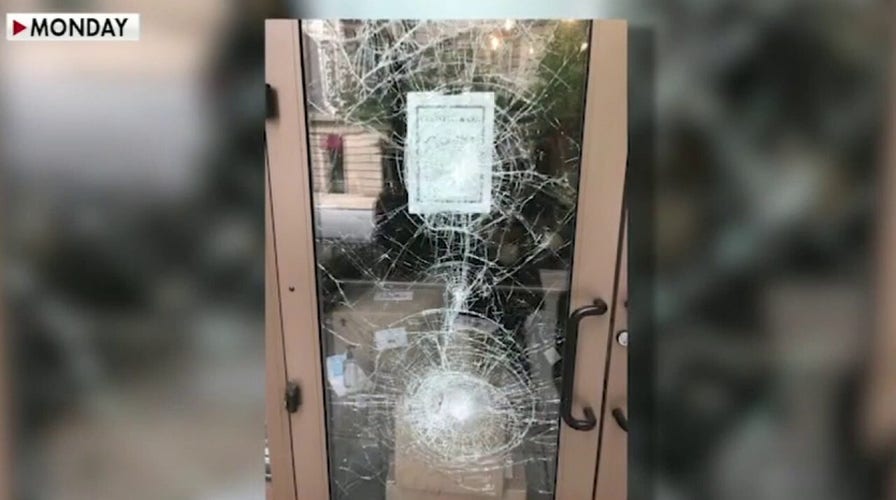
We're not seeing that anywhere near the ordinary volumes. And that's partly because of the recent looting. You see businesses like these boarded up, some of them closed entirely for now.
And city officials, as well as the Chamber of Commerce, worry that some of these businesses member abandon the city of Chicago because of what's gone on recently.
But it's not just these big national retailers that are struggling right now. Small businesses are as well. In fact, already, because of the pandemic, Yelp, the online review site, estimates around 60,000 small businesses across the country went out of business between March and July. The U.S. Chamber of Commerce says six in 10 small business owners fear closing for good.
In Chicago, that fear of closing is compounded by the recent looting.
Gene & Georgetti, it's a small family business that's been looted twice in the last couple of months. It's also dealing with a sales decline of around 80 percent because of coronavirus restrictions, and now the third- generation owner of that company is struggling to keep the family business alive.
(BEGIN VIDEO CLIP)
MICHELLE DURPETTI, OWNER, GENE & GEORGETTI: Nobody wants to close. Everyone is fighting. But how long can you fight if there's just nothing there? I think that's the problem.
(END VIDEO CLIP)
TRIMBLE: Not just business owners worried now. A lot of people who live here are as well.
In fact, a property management company that represents thousands of residents in this area sent a letter to Mayor Lori Lightfoot, saying that people just don't feel safe anymore. They're scared to go out after dark. They're scared to go out onto their balconies, some of them, Neil, even contemplating leaving the city entirely.
CAVUTO: Grady, thank you very, very much.
And, Grady, sure enough, a business owner joins me right now who is of that mind-set, betwixt and between, because this has happened to her a couple of times, Dianne Crosell, of Crosell and Company, a store owner there, who might not be there much longer.
Dianne, explain what you have been dealing with. And it's very good to have you to share this.
DIANNE CROSELL, SHOP WAS ATTACKED: Oh, thank you for having me.
The -- well, the problem is, I'm a small independent retail business, and we were shut down because of COVID. Just when we were allowed to open again in June, right before that, we were looted and robbed and property was destroyed.
It's taken us two months to get everything back up, ready to run. We opened August 4, and then this happened August 10. So it's very difficult. It's -- how do you come back from all of this?
CAVUTO: What are you going to do?
CROSELL: Well, I'm really -- I'm weighing my options.
I would like to stay in business. I have been in business since 2006. And it's -- what's happened is criminal activity. And, unfortunately, they can't seem to stop it. And there's only so many hits you can take.
So, I have to look at it. I mean, we're struggling trying to stay open, but I don't know -- I don't know what the options are at this point.
CAVUTO: Dianne, your mayor has been talking increasingly about the possibility these are not native or local Chicagoans doing this, they're being bused, to mention rentals and vans and that sort of thing.
Do you suspect that a lot of this is being triggered by groups that are outside the Chicago area coming in to sort of stir things up?
CROSELL: Well, all I can tell you is what I have seen, and it seems like it's very targeted.
CAVUTO: Yes.
CROSELL: It's very well-organized. And in order to do that, it's also got to be funded.
In front of my store, on this last looting, there was a U-Haul truck that was abandoned because it had a flat tire. There was also an abandoned car that had a bunch of empty liquor bottles in it that had temporary license plates.
So I don't know where it's coming from. I wish we could figure out who's organizing all this. But it seems like it's a very organized, well-thought- out situation.
CAVUTO: There have been a lot of groups who have been sympathetic to some of the protesters, saying, when it came to looting, that a lot of them were desperate for clothing, for goods, they're hungry.
What did you make of that?
CROSELL: I don't think that's what's going on in this particular case.
All I can tell you is, they are looting all stores, big, small and everything in between. They're just vandalizing things to vandalize things, and I don't see how that's a desperate act and people that need clothing and food.
CAVUTO: All right, Dianne, I feel so much for what you're going through. You're just trying to run a business, help some people out, and very loyal customers who right now are probably leery of even going anywhere near where you are.
Hopefully, cooler, calmer heads prevail. But hang in there.
Dianne Crosell, she is the owner of the store that has gotten looted at least twice. After a while, you just say, what am I doing? What am I doing?
All right, we have a lot more coming up, including a read from Emanuel Cleaver, a minister by training, a congressman right now, on how there does have to be a sort of a reckoning back to being human beings -- after this.
(COMMERCIAL BREAK)
CAVUTO: You're looking live at Biscayne Beach in Florida right now, at a time when Joe Biden and Kamala Harris today were calling for a mask mandate for everybody, no ifs, ands or buts.
The mayor of Miami, what he thinks of that -- after this.
(COMMERCIAL BREAK)
CAVUTO: All right, you're looking at a Mike Pence event focusing on law and order in Iowa right now, Urbandale, Iowa, to be more specific.
The administration is seizing on this as an issue of great importance, at a time when we have had multiple demonstrations and peoples in a number of cities. We were just showing what's going on in Chicago along the Miracle Mile that right now and has not been either a miracle or magnificent, business owners concerned about reopening after a lot of looting and violence there.
Emanuel Cleaver has dealt with this in Missouri, as the former mayor of Kansas City, and now as a United States congressman. His take on all of this.
It's always good to have you, Congressman.
REP. EMANUEL CLEAVER (D-MO): It's good to be here.
CAVUTO: But, obviously, this is getting out of control. And mayors themselves seem to be ill-prepared how to control it.
The mayor of Atlanta, the mayor of Chicago among those saying, this is bigger than just demonstrators in our respective cities. I'm just wondering what you make of that, particularly the Chicago mayor's belief that these are outsiders coming in and just agitating.
CLEAVER: Well, I don't think there's any question.
We kind of had the kickoff to this movement of massive demonstrations in -- here in Missouri several years ago. And we found out afterward that, because the FBI had done some surveillance, and we found out later that we had people who had come into Kansas City from as far away as Los Angeles, and who -- and there were some who had come in, frankly, from Chicago.
So, there are -- the bad part of this is that there are some decent young people who want to make change happen, and they, frankly, are following in the footsteps of some of the nonviolent -- the nonviolent predecessors.
But then we have people coming in whose sole objective is to create discord. And it's always -- there's always been a problem in trying to separate the two.
But make no mistake about it, there are people who are coming in who are taking advantage of our nation's struggle right now to -- I don't know if they're doing it for ideology or they're doing it for money. Either way, it can't be tolerated.
CAVUTO: But, Congressman, I hear you saying that. I hear, when she's pushed up against the wall, the mayor of Chicago fearing that.
But, at a -- national Democrats, and even this particular newly minted presidential ticket, I don't hear many aspersions against the protesters or even the looting. I hear a lot about George Floyd, addressing racial grievances, but not addressing some of the darker side of these protests, when they get out of control, and almost dismissing the law and order issue.
Do you think that's fair?
CLEAVER: Yes, that may be a fair assessment. I'm not sure.
But when we had demonstrations in Kansas City, they started on a Friday night. And on Saturday, I dressed a crowd of about 5,000, maybe 7,000 people. And I said to them, look, I appreciate what you're doing.
These are the good and decent people, black and brown and white, all sitting on the ground together. And I said, you guys are young, too young to remember this, but Martin Luther King never led a march at night.
He marched during daylight hours. He wanted the world to see what was going on. And the point was that those who want to protest under the cover of darkness usually had motives that were not in harmony with the people who came out to get something -- to get a message across.
And I have been very, very strongly condemning them. And I know Mayor Bottoms, I heard her, it's been several weeks ago, come out and very strongly condemn some looters in Atlanta.
And I can remember saying that the place they looted was near her...
(CROSSTALK)
CAVUTO: Yes, we just need to hear more of it, right? We need to hear more of it.
And I think we need to hear more of it out of Joe Biden, Kamala Harris. I mean, these are big issues here, right?
CLEAVER: Yes.
Kamala Harris is being condemned -- my wife and I have been talking about it over the last couple of days, and our youngest son. Kamala Harris is being criticized because she has been saying we need more police, not less.
CAVUTO: Right.
CLEAVER: And so -- as a former attorney general.
So, we have people who are on the extremes really attacking her. I don't -- I'm not a Twitter person, but my children give me the...
CAVUTO: Well, you're right. You're right. And that's coming back to -- that is coming back to bite her.
We will see where we go with all of this.
But, Congressman, I think you're always a very calming presence in urging, like, dignity on both sides. It's not an alien concept.
Emanuel Cleaver, the Missouri congressman, of course, he dealt with riots and demonstrations and all of this when he was the Kansas City mayor, so some powerful words there.
We are also following another powerful development today. Talk about people who can put differences aside.
Israel and the United Arab Emirates have struck a deal that recognizes each other's right to do business with, to exist. It was brokered by the president of the United States. And some are saying, it's like a new Camp David accord. Is it?
Ric Grenell, the former ambassador to Germany, intelligence acting director, on what he makes of the significance of what went down today.
(COMMERCIAL BREAK)
CAVUTO: This one certainly came out of the blue today.
Israel and the United Arab Emirates entering a deal where they will recognize each other, have embassies in each other's countries, one recognizing Israel's right to exist, the other expanding a blueprint that now includes the likes of Egypt and Jordan that have healthy relations with the Jewish kingdom, all announced by the president earlier today, who orchestrated this.
Ric Grenell, our former acting director of intelligence, former ambassador to Germany, weighing in on the significance of all this and where it goes next.
Take a look.
(BEGIN VIDEOTAPE)
RICHARD GRENELL, FORMER U.S. AMBASSADOR TO GERMANY: First, we have been working on a peace deal, this peace deal for a very long time.
Jared Kushner has never stopped working on this deal. He deserves enormous credit. He's always believed that there was a path. And part of believing that there was a path is really twofold.
One, the Europeans were frustrated with the Iran policy coming out of the U.S. I think too much of our media were black and white about exactly the Iran peace deal vs. not an Iran deal.
And the reality is, is that the Obama-Biden Iran policy has really created instability in the Middle East. Our Arab partners have been begging to have a more realist -- realistic approach.
I think today's deal is a real signal that there is a fear that we could return to the Biden policy. And, remember, he was the brains on foreign policy for the Obama-Biden team. He's always told us that was his expertise and that he would be leading.
Now that he's running for president, he would be totally implementing his view of the world. And I think the Arab partners are very fearful of that, because it's a policy that doesn't have strings.
And so it's consensus-built. It is Jell-O. Consensus sounds good, but it means it's the lowest common denominator of a whole bunch of people. I can tell you, I have been inside the Security Council trying to get 15 countries to agree to a statement, means that you water down the statement, so that it is completely unhelpful.
What President Trump believes is that we, the United States, for our policies, should do two things. One, we should bring our troops home. We should not have foreign entanglements. And we should be very clear that we will always help, but we will always have strings.
U.S. money should not be free. There should always be strings. And that is not what the Biden approach has been. It's always been about consensus, give the money, try your best, but keep giving the money. And we have been taken advantage of.
CAVUTO: Well, you might be surprised to learn that the Biden-Senator Harris team disagree with that.
Just yesterday, Kamala Harris was saying that she is concerned that the president is isolating the U.S. from the rest of the world. She says Washington must reclaim its moral authority on the world stage, that, in other words, this Lone Ranger approach we take sometimes adds more insult to injury.
Others have mentioned the announcement the president had where he's pulling some of our troops out of Germany, that he would risk global security to get more money out of the Germans to foot the NATO bill.
What do you make of that?
GRENELL: Well, look, I keep hearing these arguments all the time. And I would really welcome this debate.
We should have segments every single day on the two different views, because the reality is, is that what Kamala Harris is saying is that we need consensus in the world, everybody needs to agree, and we shouldn't move forward unless everyone agrees.
I can tell you, my eight years at the U.N., that's a disaster in the making, because the United States is the one that's always called upon to fund the programs, to put the money into the programs. But then we're supposed to just sit back when the programs don't work.
And that's not what we want. The clear fact is, is that the Biden/Harris team wants Washington to be the capital of the world. And Donald Trump wants Washington to be the capital of the United States and fight for the American people.
We have fundamental disagreements, but take -- take just a closer look at what's happening in the Middle East. I think our Arab partners would say to Kamala Harris: You're wrong. We need a realist -- a realist approach.
We don't need people who are going to give billions of dollars to the Iranian regime. We need an administration, a U.S. administration that's willing to take out Soleimani and that's willing to pull our troops back.
And one point on the Germany troop level, look, Neil, the media is doing a terrible job of communicating what the deal is. We have 34,500 troops in Germany. What Donald Trump is saying, let's lower it to 25,000; 25,000 American troops in Germany seems like enough.
I can tell you, as the U.S. ambassador to Germany, it's plenty. Germany is the largest economy in Europe.
CAVUTO: But do you think it ends there, Ric? Do you think -- isn't the fear that he's going to extend it beyond that?
GRENELL: Well, look that -- that's a completely different argument than what senators or the media are saying.
I have been lectured to about the history of World War II and how we had this commitment. Part of the commitment that we had to rebuild Europe was because Europe was devastated and poor.
Look at the German economy now. It's a fundamentally different paradigm shift. Why is it so bad to think differently about some of these issues? We don't have zero-based budgeting in Washington. We have this system where you keep adding money and adding money. And nobody stops to say, wait a minute, Germany is the largest economy in Europe.
It has a surplus. Maybe we shouldn't be footing the bill for the Germans, when they're not paying their bill at NATO. I actually think that we need a strong transatlantic alliance with the Europeans.
But I love Donald Trump's position to say, the Europeans have moved towards socialism. They have moved away from us. The reality is, the Europeans need to come back to us. We are trying to pull them back into the West.
We don't need the German government to take nine days to think about what side they're on in Venezuela. They're the West. We have fought for them very hard. We have sacrificed a lot. The American people care very deeply about Germany and the transatlantic alliance. We think that it's not too much to demand that they are with the West, they're innately with the West, and they don't play games with socialism.
(END VIDEOTAPE)
CAVUTO: All right, Ric Grenell on all of that.
I want to go to Kevin Corke at the White House on what started this back- and-forth talk about the president's foreign policy, this deal, this agreement between the United Arab Emirates and Israel.
What are you learning about it, Kevin?
KEVIN CORKE, FOX NEWS WHITE HOUSE CORRESPONDENT: Well, very interesting.
And I really enjoyed that conversation. I think there was a lot of meat there to sort of explain what the process has been like here at the White House, again, trying to expand economic and diplomatic relationships across the globe.
The president, you heard him say it today, look, this was a historic peace agreement between Israel and the UAE. In fact, in a joint statement, he said that Israel had agreed to forego plans to annex part of the West Bank, which, as you know, had been claimed by Palestinians.
They also agreed to pursue full normalization of relations with the UAE.
The president -- you probably heard this, Neil -- he called it the Abraham Accord, the administration saying the deal was named for the father of the three main religions, Islam, Christianity and Judaism. He said that no person better symbolizes the potential for unity than Abraham.
By the way, in a statement -- I want to pass this along -- we got this late this afternoon from Joe Biden. He said that this agreement was very good. He called it one that was certainly worth keeping and emulating. In fact, he added that a Biden/Harris administration would look to build on this progress and challenge other nations in the region to keep pace.
Very interesting. Plaudits all around, at least so far, Neil, except, of course, from Hamas. We heard a statement from one of their leaders, saying that this does nothing for the Palestinians. No surprise that not universal support for what we saw today -- Neil.
CAVUTO: All right, Kevin, thank you very much. Good seeing you again, my friend.
CORKE: You too.
CAVUTO: Kevin Corke, at the White House.
Meanwhile, the controversy over masks. Should you? Shouldn't you?
If he became president of the United States, Joe Biden said, you should. In fact, I'm going to mandate it -- after this.
(COMMERCIAL BREAK)
CAVUTO: All right, we are hearing things are stabilizing a little bit, or off some of the worst levels spikes that we had earlier heard in Florida right now.
Francis Suarez joins us now, the Republican mayor of Miami.
Mayor, always good to have you on.
Let me, first of all, get an update from you how things are looking there.
FRANCIS SUAREZ (R), MAYOR OF MIAMI, FLORIDA: Oh, things are looking much better.
We -- our percent positive over a seven-day period dropped from about 15 percent to about 13 percent. Our hospitalizations have dropped from a high of 2,300 to about 1,600. So, that's about a 700-patient differential. It's a big, big difference.
And we're seeing our new cases also are dropping at probably the most dramatic rate since -- since it began. So, it's all very good news for the city right now.
CAVUTO: With the spike in cases elsewhere, Joe Biden was talking today with Kamala Harris, his new running mate, that maybe a mandate for masks is in order for the whole country, no ifs, ands or buts. What do you think of that?
SUAREZ: Look, a mask -- we implemented a mask mandate in Miami, and it definitely worked.
I -- so, it's hard to ask me, because it's something -- we're a very urban city. And for a city like us, having a mandatory mask mandate has worked. I mean, there's no doubt about it, that and a curfew and closing businesses...
CAVUTO: Right.
SUAREZ: ... that are not complying with the rules.
So, I don't know how it would work nationwide. One-size-fits-all has been a very difficult thing during this pandemic. But, certainly, if you had some sort of standards where, if it meets a certain threshold, there should be a mask-in-public rule at all times would be something that I would certainly consider.
CAVUTO: All right, Mayor, I want to thank you very much.
I apologize for the truncated time, with all this breaking news and developments, peace agreements and all of that.
Thank you, sir. Very well. And best to you and your family. I know you have young kids, and juggling school and everything else. Good luck with that, Francis Suarez, the Republican mayor of beautiful Miami.
SUAREZ: Thank you.
CAVUTO: We have a lot coming up here.
You heard Larry Kudlow at the top of the show talking about the improving economy, and it's improving so much, and we have got so much good economic news of late, that you don't need to make that stimulus package huge.
What Frank Luntz thinks of that and how that is polling -- after this.
(COMMERCIAL BREAK)
CAVUTO: All right, you're looking live at the White House right now.
The president will be addressing the nation, another press event, I think, scheduled for 5:15 Eastern time, so about 20 minutes from now.
We heard from the White House National Economic Policy Director Larry Kudlow earlier on the show, talking about the view that he kind of likes stimulus that around the trillion-dollar mark, thinks that, eventually, given the improvement we have seen in claims and jobless numbers, that we could be in the single-digit unemployment rate certainly in the very near future.
Frank Luntz on the importance of that.
The economy often is very key in election years. There are a lot -- obviously, a lot of other factors going on. But I did want to get his read on this.
Frank, how you doing? What do you think of what Larry Kudlow was saying, the trend is our friend?
FRANK LUNTZ, POLLSTER: But the question is, is it too little too late?
So, let's be candid. The economy back in March, before COVID, was the strongest economy this country has ever seen in modern times. And that economy was strong enough to propel Donald Trump to reelection, lowest unemployment numbers, lowest black unemployment numbers, Latino unemployment numbers, a great growth rate, prices stable.
Everything that you would want in an economy to get somebody reelected was perfect.
But what we have seen since then, with the shutting down in the economy, which is why the president wants it opened up as quickly as possible, is an unemployment that has surged.
We have been asking Americans, what is the single most important factor for you to decide whether the economy is working or not? The president talks about the stock market. That is important to about 15, maybe 20 percent of the population.
The number one answer for them is unemployment. And if unemployment remains in double digits, I don't see how that doesn't have a huge impact on the election.
CAVUTO: My own view is that we will definitely get under double digits by the election. I could be wrong. That trend has been that.
I don't know whether being at 9 percent makes a difference, being vs. 10- something percent. But I think it will be.
But you seem to be arguing it could be a phenomenon like George Bush Sr. had to endure. Technically, we knew, in retrospect, the economy was coming out of it, but it was too, too little too late to be sensed by the time of Election Day, right?
LUNTZ: And the same thing happened to Gerald Ford back in 1976. The same thing actually happened to Al Gore in 2000, when he was trying to run on Bill Clinton's economic record.
The American people tend to use Labor Day as a decision-maker. But, in the end, there's going to be factors that are much more important. And one of them is being the debates. They are going to happen. These two candidates are going to stand side by side for 90 minutes three times.
And they're going to have to make the case not just for the past, and not just for the present, but also for the future. And that's why, Neil, I think China is going to emerge as the number two issue behind the economy, and which presidential candidate do you think is more likely to take control of the supply chain, take control of manufacturing, so that America never has to be held hostage by the Chinese government, by Chinese manufacturing?
CAVUTO: All that is very interesting, but far more interesting to me, Frank, is the room behind you.
This is your home, right? That looks exactly like the Oval Office.
LUNTZ: And there you go. Now you can see the whole thing.
And I'm going to even give you a better look like this.
I want to thank Donald Trump for loaning me his office. This is not my home, actually, Neil. You know that I...
(LAUGHTER)
LUNTZ: I'm doing this from 1600 Pennsylvania Avenue. Neil...
CAVUTO: Why did you do that? Why did you do that? What came into...
LUNTZ: This has -- this room has raised over $7 million in 2019 and $5 million in 2018 for charities that help veterans, that help educational institutions, cancer, Alzheimer's.
I wanted to build something. And I will show you, because this...
CAVUTO: The allure of seeing an Oval Office duplicate, an Oval Office duplicate, that's the thing, and that draws people to it, right?
LUNTZ: Exactly.
And I just showed you the Lincoln Bedroom.
CAVUTO: OK.
LUNTZ: I'm the only person who has an Oval Office that you can sleep in, and you don't have to be (AUDIO GAP)
CAVUTO: All right.
I'm worried about you, Frank. But I think you're brilliant. I do think you're brilliant.
I'm going to redo my entire house right now.
(LAUGHTER)
CAVUTO: I have time.
Frank Luntz, thank you very, very much, my friend. Reporting live from his Oval Office, Frank Luntz.
Here comes "The Five."
Content and Programming Copyright 2020 Fox News Network, LLC. ALL RIGHTS RESERVED. Copyright 2020 ASC Services II Media, LLC. All materials herein are protected by United States copyright law and may not be reproduced, distributed, transmitted, displayed, published or broadcast without the prior written permission of ASC Services II Media, LLC. You may not alter or remove any trademark, copyright or other notice from copies of the content.
