
















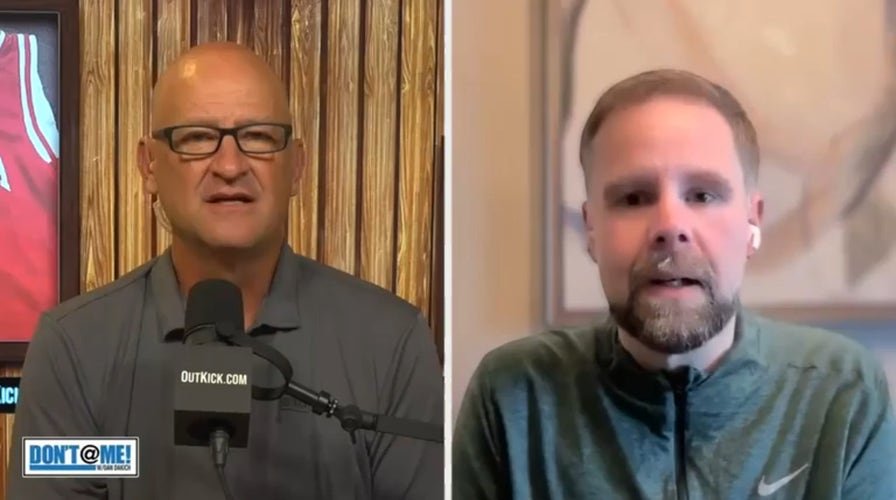
What are the most interesting outcome from a college sports bill? | Don't @ Me w/Dan Dakich
Trey Wallace tells Dan Dakich what the most interesting elements are that could be included in a new college sports bill.
Well, the clock is ticking on lawmakers to pass the Protect College Sports Act that was further discussed on Wednesday during a Senate Commerce hearing.
Now, President Donald Trump is weighing in on the bipartisan legislation created by Sens. Ted Cruz (R-Texas) and Maria Cantwell (D-Wash.) that is currently being discussed on Capitol Hill between congressional leaders and college athletic officials.
Among the issues currently impacting college athletics is how schools are going to afford to keep up with those within the Big Ten and SEC, who are also opposed to any type of law that would have them needing to approve pooling media rights with other conferences.
ZERO BS. JUST DAKICH. TAKE THE DON'T @ ME PODCAST ON THE ROAD. DOWNLOAD NOW!
Though the bill says that this part is optional, there are still skeptics around how much this would actually raise financially for schools wanting to create one large pool.
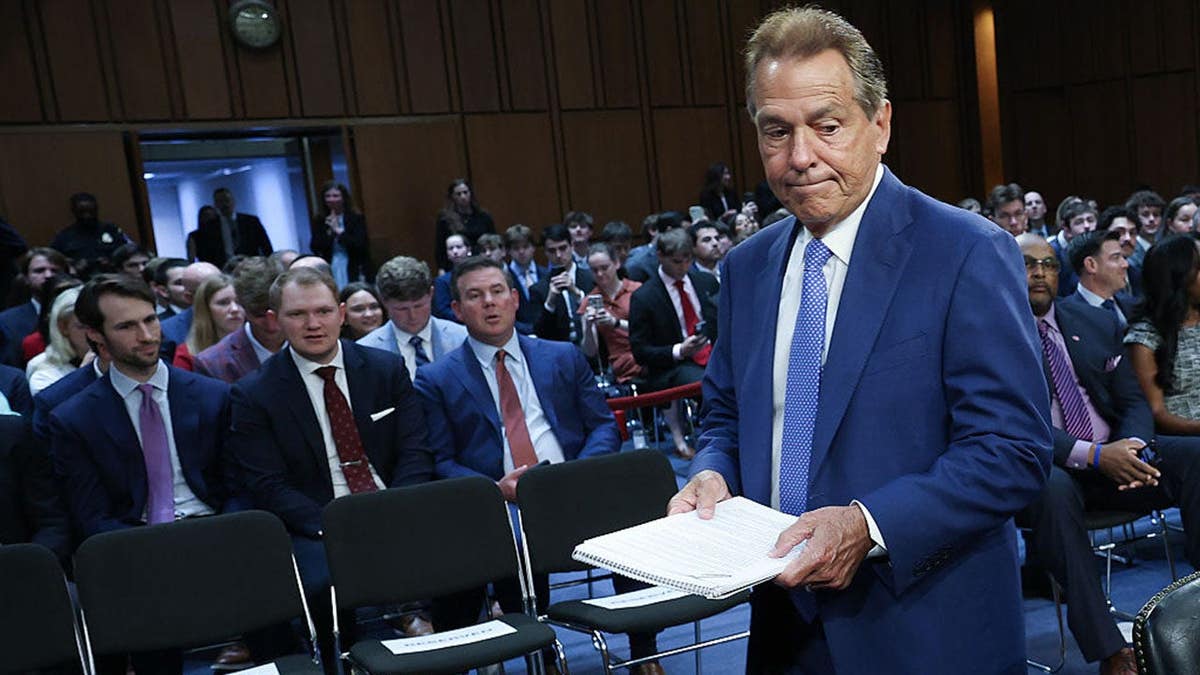
Nick Saban, former head football coach at the University of Alabama, arrives for testimony before the Senate Committee on Commerce, Science, and Transportation in the Hart Senate Office Building in Washington, D.C., on June 3, 2026. (Win McNamee/Getty Images)
On the other hand, as Nick Saban pointed out numerous times on Wednesday, the current model of paying for rosters has reached a pivotal point. The former Alabama head coach testified that his former school only had $2.7 million to work with from its NIL collective in the first year of its inception.
That number, according to Saban, has skyrocketed to $24 million this past season at Alabama, while we are already witnessing some schools spend over $40 million this season.
"But that is not the same thing as turning NIL into a pay-for-play system. It is not the same thing as using collectives and outside entities to create a bidding war for recruits and transfers. When the system becomes whoever raises the most money gets the best players, then we are no longer talking about college athletics as millions of fans and I have known it."
As for President Trump, he has signed two executive orders since last summer aimed at fixing the current problems in college athletics, though he even admitted they would be challenged in a courtroom.
Now, he is urging the Senate and House to figure out a solution to the newly introduced legislation so that it can pass through both chambers and be signed this summer.
"College sports are turning into pro sports, except with absolutely no rules, a result no one wants," Trump said on Truth Social. "University presidents, conference commissioners, student-athletes, coaches, and athletic directors all complained to me that it has become a disaster, after years of no action, and that schools were losing hundreds of millions of dollars a year.
"They compared it to a freight train that can't be stopped."
Runaway train, fast car, it's all moving at an incredibly fast pace
On Wednesday, Nick Saban likened it to someone not being able to pump the brakes on a Ferrari speeding down the highway.
For Donald Trump, he's looking for some type of resolution that would then result in him being able to sign the bill into law this summer. And yes, that sounds like a tall task when there are many divided opinions, though it's not impossible if there are adjustments.
"The House has worked long and hard on this issue as well, and I am very grateful to Speaker Mike Johnson and Leader Steve Scalise for their work to fix this very major problem," Trump further stated.
"I urge the House and Senate to come together to pass a final Bipartisan Law, that I can sign this summer, that reflects the views and input of both Chambers. WE HAVE TO SAVE COLLEGE SPORTS!"
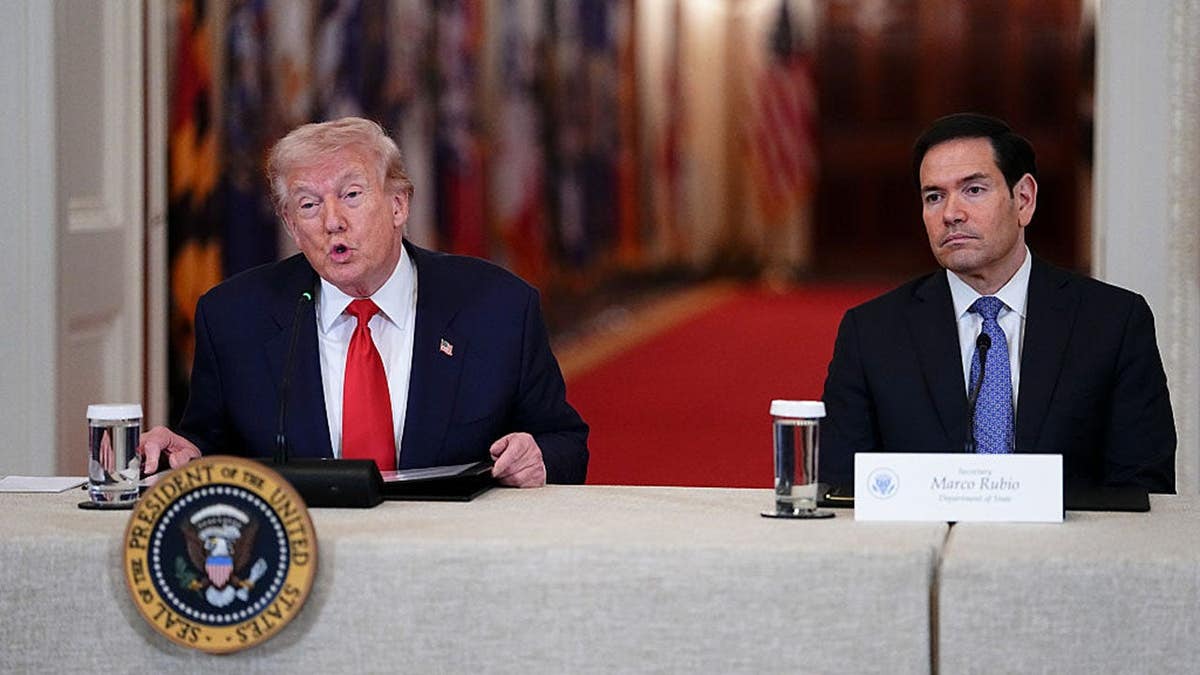
President Donald Trump and Secretary of State Marco Rubio participate in a "Saving College Sports" roundtable in the East Room of the White House in Washington, D.C., on March 6, 2026. The new council is expected to discuss a potential antitrust exemption related to college sports. (Aaron Schwartz/Bloomberg via Getty Images)
But, a problem arose just minutes after Trump posted his thoughts on the bipartisan bill.
House Majority Leader Steve Scalise was already pushing back on the legislation, noting that there are "big problems" within his chambers on how this would continue to present challenges in the court system, along with the House.
"I'm glad they're doing some work on the Senate side, but for the House to be able to take anything up, you got to prevent employment status of the student athletes," Scalise said. "You also don't want to open up all the schools to lawsuits from trial lawyers that would make a much more litigious environment. Those are things that have been big problems on the House side."
Getting everyone on a path toward a solution is a tall task, but possible
There was always going to be pushback from the House, but this will obviously be a hurdle that will need to addressed and talked through.
In other terms, the negotiations are going to ramp up even further, especially with LSU grad Steve Scalise hitting the alarm button.
"Nobody can credibly say they're going to move a bill to address college athletics and have opposition from the two major college athletic conferences," Louisiana's Steve Scalise pointed out. And yes, he was referring to the SEC and Big Ten.
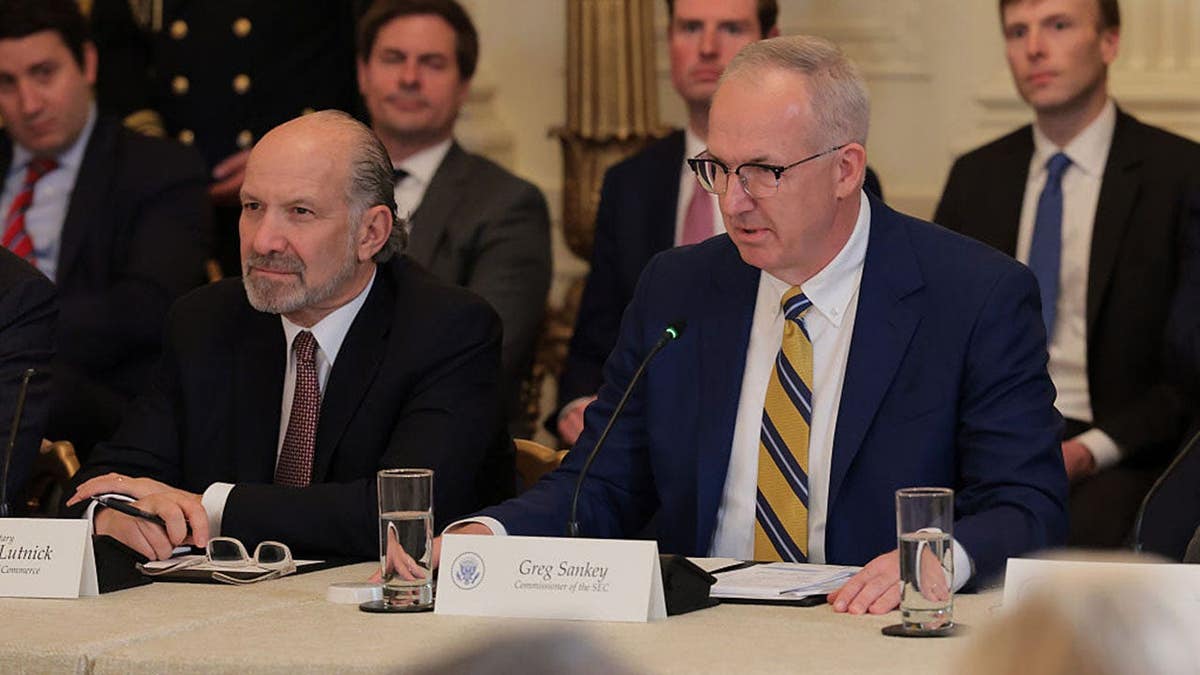
SEC Commissioner Greg Sankey speaks during a roundtable discussion on college sports in the East Room of the White House on March 6, 2026, as Commerce Secretary Howard Lutnick looks on. The Trump administration hosted the event titled "Saving College Sports" with leaders from the Power Four conferences, media executives and former coaches. (Anna Moneymaker/Getty Images)
Now that the Senate has completed its first hearing, the process moves to the amendment stage that could result in a vote.
CLICK HERE TO DOWNLOAD THE FOX NEWS APP
But, with SEC Commissioner Greg Sankey and Big Ten commissioner Tony Petitti meeting with legislators on Thursday, you can bet that there will be a number of tense discussions to come.
The race to August continues, as both Republicans and Democrats voice their opinions on the legislation, with a congressional recess essentially acting as a "Drop/Add" date for this bill to pass.
