










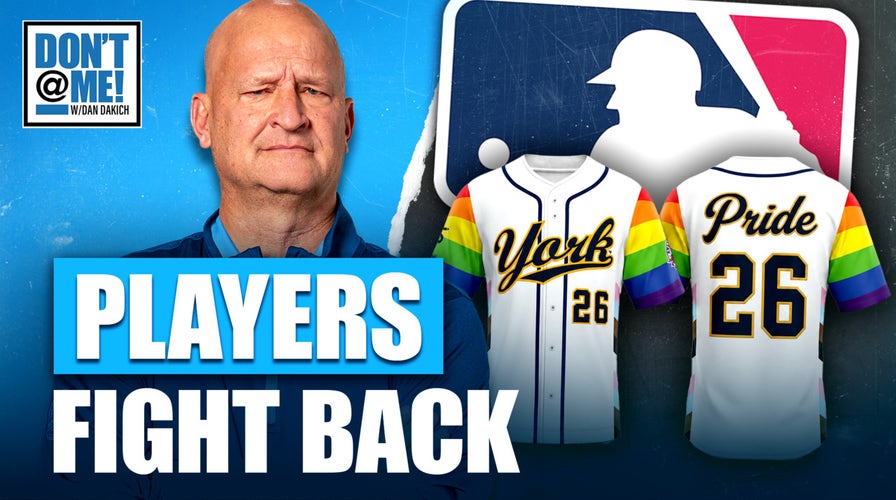
MLB Pride BACKLASH Continues As York Revolution REFUSE To Wear Pride Jerseys | Don't @ Me w/ Dan Dakich
The MLB Pride backlash has officially spread to Trevor Bauer’s league after the York Revolution forfeited a game when players refused to wear LGBTQ-themed jerseys.
For years, Major League Baseball has promoted Pride Nights as a way to celebrate and support the LGBTQ community. After multiple teams in the early 2000s held "gay days" and LGBTQ awareness nights at their ballparks, including the Chicago Cubs, Los Angeles Dodgers and San Francisco Giants, by 2016 more than a dozen MLB teams were hosting official Pride Nights. Now every team except the Texas Rangers hold a Pride Night each season.
Pride Nights became a norm in MLB as a way to acknowledge the acceptance of gay marriage under the law and culturally as a nation, though there were many Americans that still opposed it. Over the past decade, Pride Nights have morphed into something much larger, radical and sinister, in my opinion. Teams promote and affirm multiple sexual preferences, lecture fans on preferred pronouns and even endorse the idea that children can change their biological sex, with some teams even providing resources to explore irreversible gender reassignment surgeries.
I’d argue Pride Nights were radical from the start, but there’s no denying they have been increasingly radicalized every year since. LGBTQ-identifying fans and allies argue these events foster inclusion and make baseball more welcoming to everyone. Yet many conservative Christians, like myself, view these celebrations very differently.
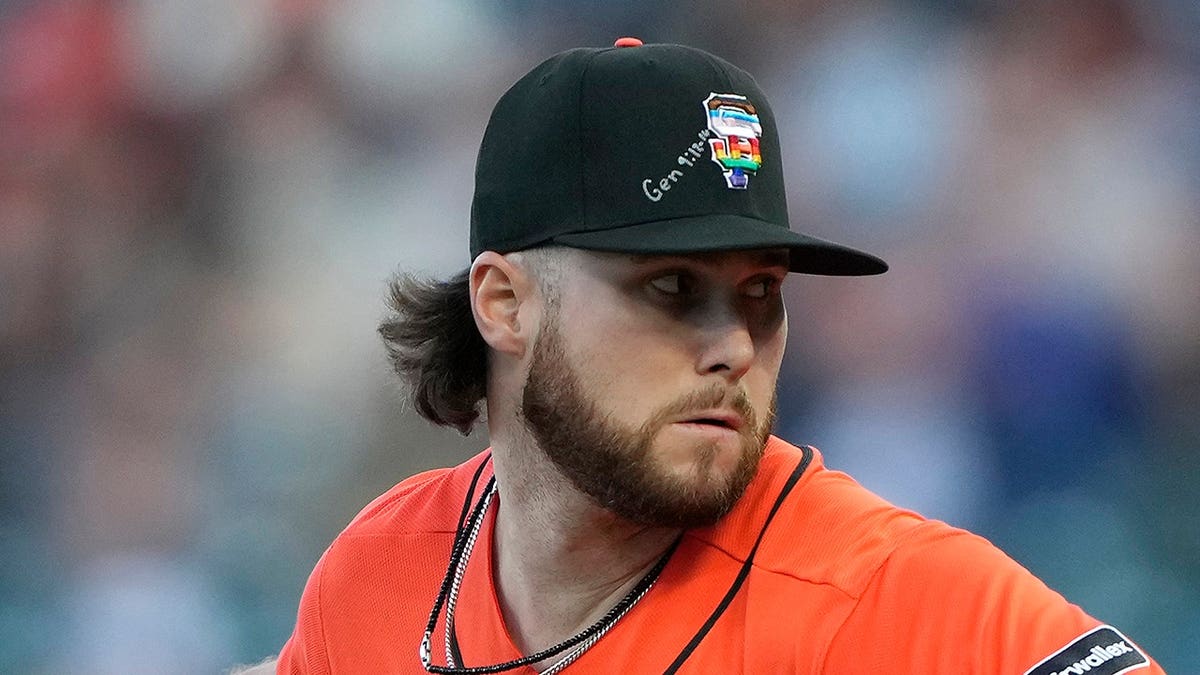
San Francisco Giants pitcher Landen Roupp wrote "Genesis 9:12-16" on his Pride-Night themed hat. (Thearon W. Henderson/Getty Images)
Pride Nights have become a cultural lightning rod, especially in the aftermath of four Christian San Francisco Giants pitchers, who decided to protest their team’s Pride Night. There has been much debate about how the league, team, fans, teammates, politicians and other players around the league should respond. I believe we should do away with Pride Nights altogether.
Here are five reasons why:
1. Sports Should Be Politically Neutral
Baseball has long been known as America's pastime. It’s a place where people from all backgrounds can come together and enjoy a game. You root for this team. I root for that team. That’s it. I’ve said for my entire career in sports media that sports should be the ultimate unifier and an outlet away from politics, but leagues and teams have unfortunately dived headfirst into divisive political positioning, especially since 2020. I firmly believe that sports leagues should remain neutral on controversial social issues rather than taking institutional positions. But time and time again, the league has chosen to cater to and even promote left-wing politics. Baseball has supported Black Lives Matter, moved the 2021 MLB All-Star Game from Atlanta because Georgia was requiring ID to vote and Joe Biden laughably claimed it was "Jim Crow in the 21st Century" and "an atrocity," and more politically divisive nonsense.
Here’s the main issue: When Major League Baseball promotes a particular social cause, it alienates fans who disagree with that cause. They then operate as a political entity when they should stick to being an entertainment company. Rather than serving as a unifying force, an outlet away from politics, which fans crave and have cherished for decades, the league can, and has become another battleground in America's ongoing culture wars. Many fans simply want to watch baseball without being confronted by political or ideological messaging.
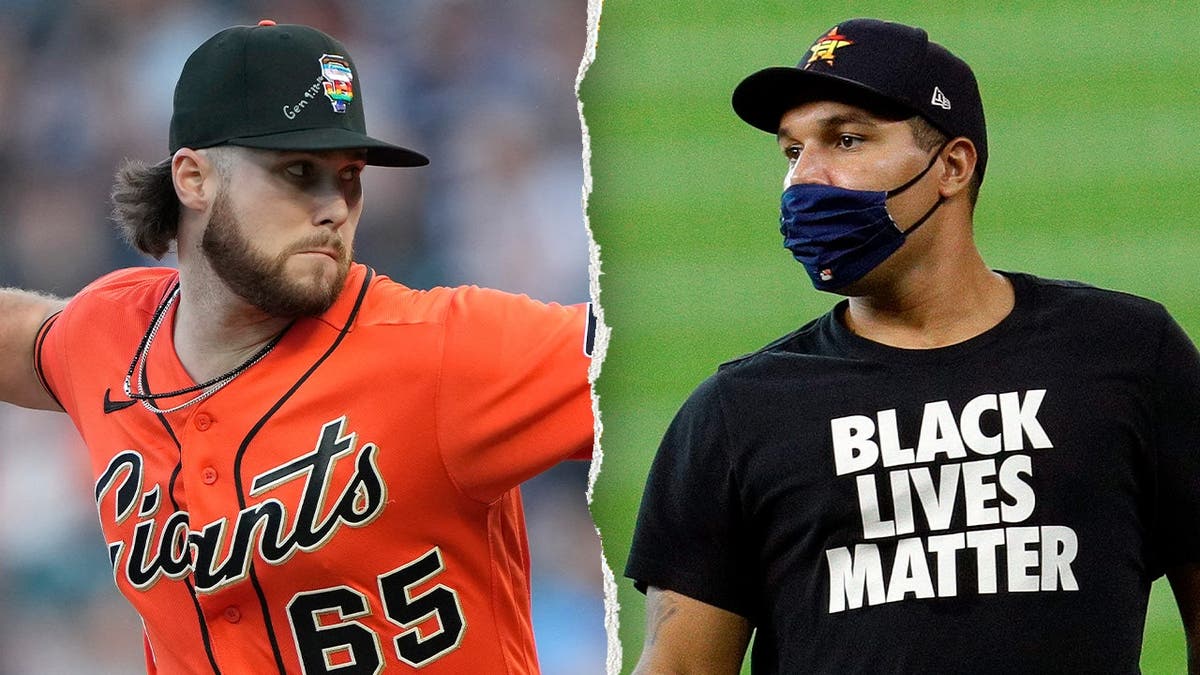
San Francisco Giants pitcher Landen Roupp was warned by MLB after writing a Bible verse on a "Pride Night" cap, a move critics contrasted with the league’s past support for Black Lives Matter messaging. (Left: (Photo by Thearon W. Henderson/Getty Images); Right: (Photo by Bob Levey/Getty Images))
2. Players Should Not Be Used as Political Posterboys
Let’s face the facts. Far too many athletes have been pressured, and even coerced into participating in Pride Nights and other LGBTQ-related events/promotions, though these political and ideological campaigns conflict with their personal beliefs.
Remember Blue Jays pitcher Anthony Bass? In 2023, he was paraded in front of reporters and forced into apologizing to the LGBTQ community because he simply shared a video from a Christian content creator about boycotting Target and Bud Light because of their promotion of transgenderism. The next day, the Blue Jays designated him for assignment, releasing him hours before their Pride Weekend celebration. The team claimed the move was a "baseball decision," but that is too much of a coincidence for me to buy that. That is just one example of many Christian and conservative athletes have been unfairly punished because of their religious and political beliefs because Major League Baseball and its teams have decided what political and religious beliefs are acceptable. They essentially want all players to be walking billboards of the LGBTQ agenda and movement, or stay silent about their opposition. That’s not freedom. That’s not the America our Founding Fathers envisioned. This is not the country men and women have fought and died for over the centuries.
Professional baseball players are hired to play baseball, not to serve as spokesmen for social justice movements, especially when it is antithetical to their political and religious belief systems. While players should be free to support causes they personally believe in, league-sponsored Pride events have put relentless pressure on athletes to conform and have shown that there is a complete and utter intolerance to contrary beliefs about LGBTQ-identifying fans and their movement.
US SOFTBALL LEGEND LEAH AMICO OPENS UP ON MLB PRIDE NIGHT CONTROVERSY, BACKS CHRISTIAN PLAYERS
No player should have to compromise or denounce their faith and foundational values, in order to support the LGBTQ movement. All fans are welcome. They have been welcome, and the idea that LGBTQ Pride Nights are essential to push the narrative that these fans are welcome, is just pure virtue signaling. You don’t need a player to wear the colors and symbols of your movement to feel welcome. If you’re a Giants fan, you’re welcome at Oracle Park. If you’re a LGBTQ-identifying person of another team, or just happen to be going to a game, you’re welcome. No one is discriminating against you.
If you need a player who respectfully disagrees with your lifestyle choices to wear the colors and symbols of your community in order to feel welcome, the problem lies with you. These players are not your political pawns, though you have bent over backwards to shame them for not falling in line with your agenda.
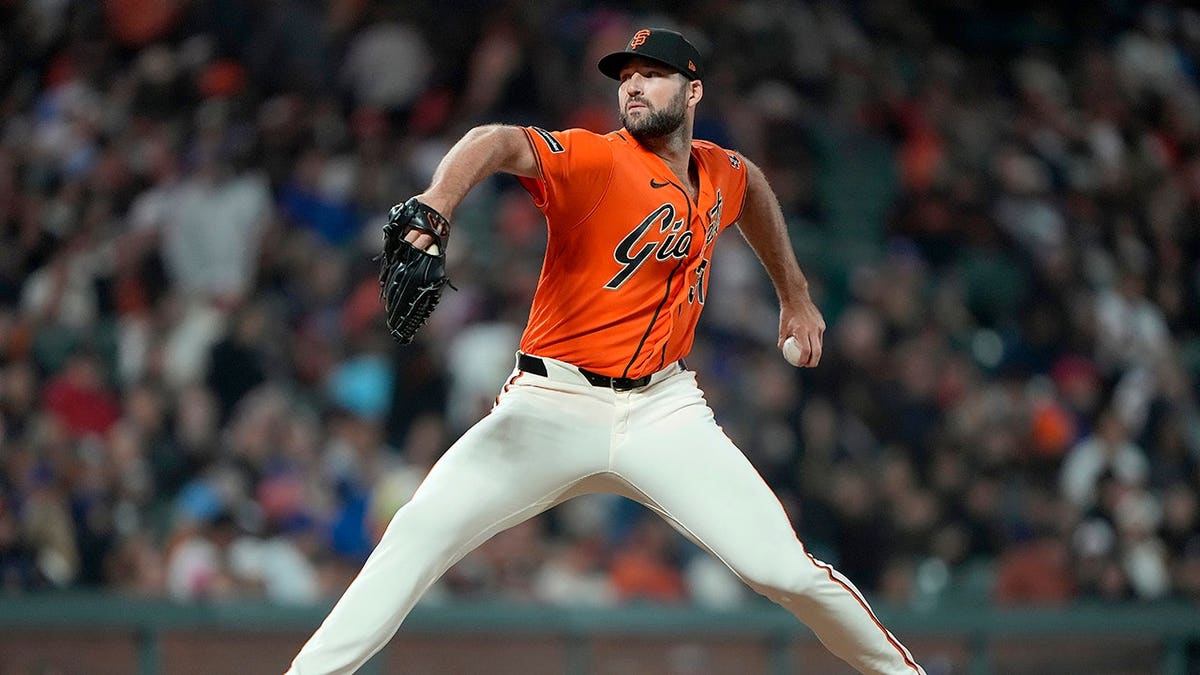
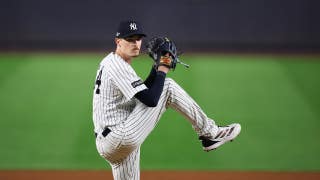
Sam Hentges pitches for the San Francisco Giants against the Chicago Cubs in the top of the eighth inning of 'Pride Night' at Oracle Park in San Francisco, Calif., on June 12, 2026. (Thearon W. Henderson/Getty Images)
3. Pride Nights Are Anti-Christian
At the heart of this debate is a fundamental disagreement about sexuality, morality and identity.
Christianity teaches that marriage is between one man and one woman and that God's design for human sexuality is rooted in biological sex. You don’t have to look past the first few chapters of the Bible (Genesis) to understand that. LGBTQ Pride Nights are contrary to what Jesus said during His earthly ministry and The Bible as a whole.
As a result, many Christians, such as Landen Roupp, JT Brubaker and Ryan Walker, the San Francisco Giants pitchers who wrote Bible verses on their Pride hats, and Sam Hentges who refused to wear the hat at all, see MLB's endorsement of Pride Nights not as a neutral act of inclusion but as an endorsement of ideas that conflict with their faith. They are being unfairly pressured into conformity of a political movement or put into a position where they need to proclaim that their religious beliefs don’t align with what their team and the league are endorsing. They should just be focused on performing their duties as baseball players on the mound.
Though these Christian players support treating all people with dignity and respect, as Jesus calls them to, that love they show for their fellow man is not an acceptance of what The Bible calls sin.
Let’s put it this way, if there was ever a stadium-wide Christian Night, though I have no desire for a team to have one because we don’t need a Christian Night to feel seen, heard, and accepted, I wouldn’t expect non-Christians to wear a hat with a cross on it and a jersey that stated "Christ is Lord." I sure as heck wouldn’t consider a player opting out of wearing the gear or writing "Love is Love" on their cap hateful, bigoted, or consider it some sort of act of inciting violence on the Christian community. I’d disagree with them, but I wouldn’t want them to lose their job, get demoted, or have any harm done to them. The same can’t be said to the LGBTQ community’s response to these players from the Giants over the last week.
MAJOR LEAGUE BASEBALL FACES BACKLASH FOR ITS STANCE ON CHRISTIANS WRITING BIBLE VERSES ON PRIDE CAPS
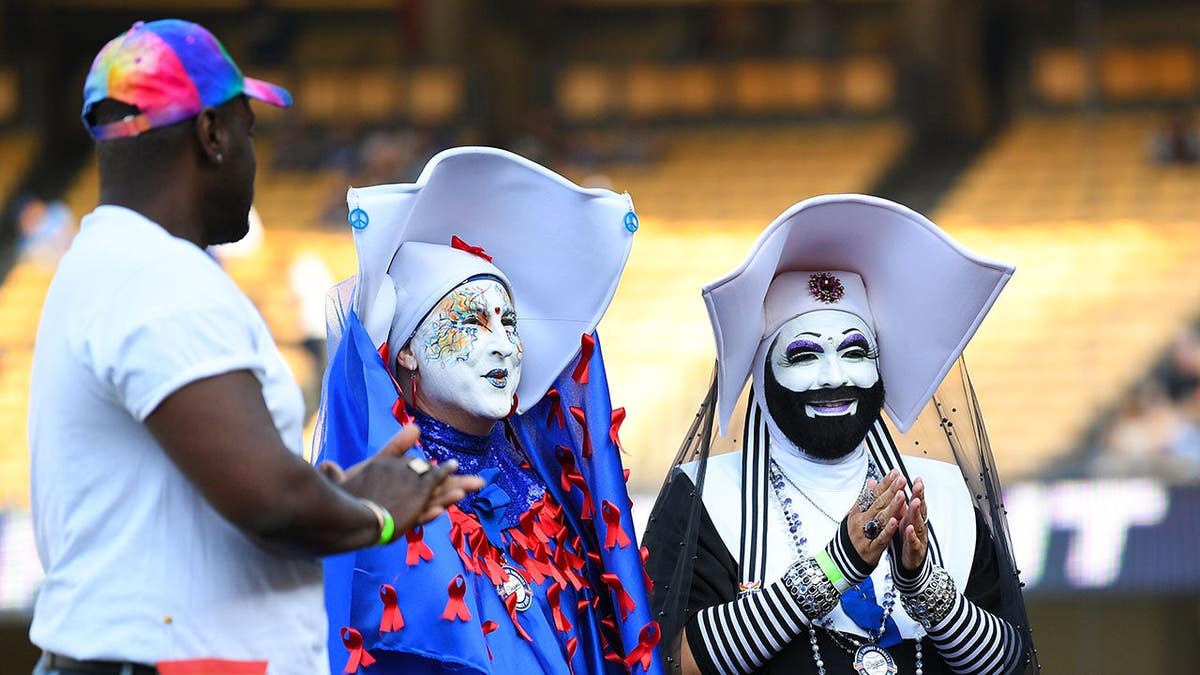
"Sister Unity" and "Sister Dominia" of the Sisters of Perpetual Indulgence were honored on Pride Night before the MLB game between the San Francisco Giants and Los Angeles Dodgers at Dodger Stadium in Los Angeles on June 16, 2023. (Brian Rothmuller/Icon Sportswire)
4. Pride Nights Are Not Family Friendly
No parent should be forced into a conversation about sexual ethics with their kids because of what is promoted at MLB games during Pride Nights. Sporting events should remain focused on the game itself rather than social causes involving sexuality and biology. Just as I believe elementary schools should not be lecturing children about LGBTQ lifestyles, sports shouldn’t either.
When MLB and its teams decide to endorse LGBTQ themes and promote the lifestyle through Pride Nights, you are not only alienating fans but also stealing innocence from children. What used to be a family-friendly environment is now filled with drag queens, definitive political and ideological statements about sexuality, and mascots decked out in the colors and symbols of that movement.
RED SOX FANS TREATED TO DRAG SHOW AT FENWAY AS TEAM PROMOTES 'INCLUSIVITY' DURING PRIDE NIGHT EVENT
This is no longer about "making sure LGBTQ folks feel welcome", this is about evangelizing fans to that cause, even children, when they shouldn’t have to be subjected to those conversations in the first place.
Parents, not sports leagues, should determine how and when conversations about sexuality and gender take place with their children. For families attending games, baseball should provide a family-friendly environment, absent of adult sexual content. Baseball games should be centered on competition, teamwork, and entertainment.
5. Pride Functions Like a Religion
Now this may be my most controversial and debated stance about Pride Nights and the LGBTQ movement.
I believe the modern-day LGBTQ Pride movement has evolved beyond a civil-rights movement and now functions similarly to a religious worldview.
It has its own symbols, sacred observances, moral teachings, and beliefs about human identity. Holiday-like celebrations (Pride Month), rainbow flags, public affirmations, government recognition, and expectations of participation/acceptance all serve as functions resembling religious practices.
Interestingly, LGBTQ Pride and Christianity often offer competing answers to the same fundamental questions: Who am I? What is my purpose? Where does my identity come from? Because these worldviews frequently arrive at different conclusions, obviously on the polar opposite of each other, Christians don’t see Pride Nights as solely a political debate, but a theological one as well.
Final Thoughts
What I’m ultimately trying to do as we continue this discussion around Pride Nights in the aftermath of the controversy involving multiple Giants pitchers, is to get Christians, non-Christians and those on every side of the political aisle to recognize that Pride Nights are indeed divisive and aren’t actually about tolerance, acceptance, and inclusion. They have done the opposite, actually. Pride Nights and radical members of the LGBTQ community, including Giants broadcaster Mike Krukow, have shamed, and even ostracized millions of fans and many players who don’t align with their ideology.
EMOTIONAL MLB BROADCASTER THROWS A FIT OVER PITCHERS WEARING BIBLE VERSES ON HATS DURING PRIDE NIGHT
This whole debate obviously reflects a larger national conversation about faith, identity and the role of major institutions in cultural debates. MLB and teams like the Giants are unfairly expecting ideological endorsements, which objectively divides fans, pressures players and conflicts with traditional Christian beliefs. It’s completely avoidable.
For many conservative Christians, the issue is not whether LGBTQ individuals should be treated with dignity. We believe every person is created in the image of God and deserves respect. Rather, the question is whether Major League Baseball should use its platform to celebrate a worldview that many of its fans, players and families do not share.
Take notes from the National Hockey League. They did away with players wearing specialty jerseys a few seasons ago after multiple Christian players refused to participate. They saw the divisiveness and unnecessary vitriol it caused to the players and fans.
CLICK HERE TO DOWNLOAD THE FOX NEWS APP
This is my official call for MLB to end Pride Nights. Enough is enough.
If anything, the league should downgrade them to a "community night" just like Faith & Family Nights. Those promotional nights are not stadium-wide like Pride Nights are currently. It’s relegated to a specific section of the ballpark, where groups can purchase tickets that usually come with a community-specific giveaway. That way these teams still reach these fans, just like they do Christian groups. If they went this route, players, coaches and staff would no longer be put in uncomfortable positions to publicly display allegiance to an ideology or not through their uniforms. Players who wanted to show support could do that after the game just like Christian players do by gathering with fans at Faith & Family Night.
