















'Of course' Iran wants a deal: Rich Goldberg
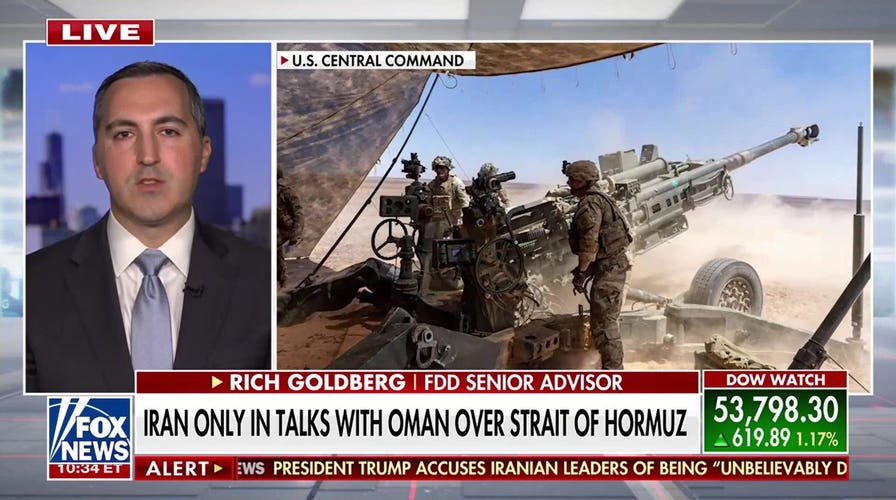
Foundation for Defense of Democracies senior advisor Rich Goldberg discusses the prospects of a potential deal with Iran on 'America's Newsroom.'
The United States finds itself in a protracted standoff with the Islamic Republic of Iran – which, in many respects, it has been in for decades. The difference this time is the opportunity to do lasting damage to the regime’s pursuit of regional domination and end its 47-year-old assault on core U.S. national interests.
In the past few weeks, President Donald Trump has rightly opted for a policy of exerting economic pain on the regime and its sources of funding. The Treasury Department has unveiled a slew of strident measures to further squeeze Iran’s access to revenues from oil sales.
These measures include sanctions targeting Chinese, Indian and other third-country oil brokers and tanker operators. Treasury has also gone after operators behind Iran’s "shadow fleet" and illicit Iranian financial networks.
TRUMP'S 60-DAY IRAN DEAL REACHES HALFWAY MARK AS CEASEFIRE COLLAPSES INTO ESCALATING WAR
America’s economic pressure on the regime is backed up by the U.S. Navy’s blockade of Iranian ports, involving over 20 warships and hundreds of military aircraft, and costing Iran tens of millions of dollars every day.
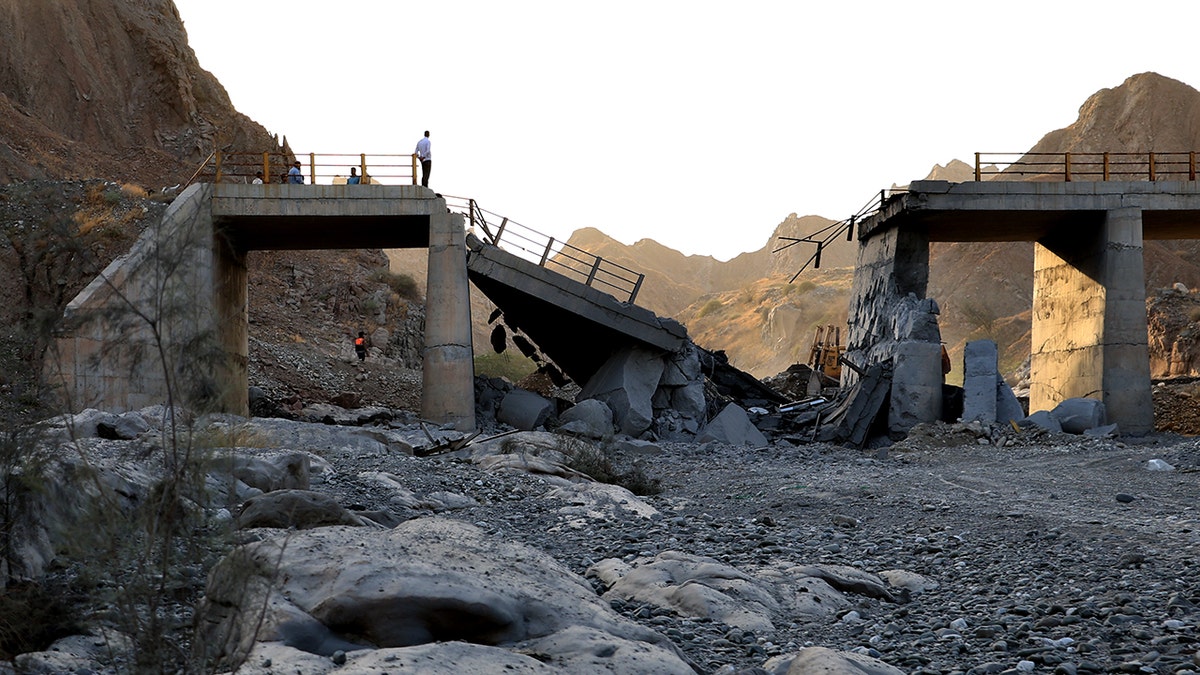
People stand on a bridge destroyed after a strike in Hormozgan province, southern Iran, Saturday, July 18, 2026. (Amirhosein Khorgooi/Iranian Students' News Agency via AP)
Crucially, this "maximum pressure" strategy is underpinned by the use of tactical yet large-scale air strikes and other military measures designed to do additional damage to the Islamic Revolutionary Guard Corps (IRGC) and other military targets across Iran. Its goal is to keep the regime in Tehran on its back heels while intermediaries (such as the Pakistani and Qatari governments) pursue efforts to reach a deal on a sustainable cessation of hostilities.
This diplomacy is a necessary part of the standoff that has pulled in Iran’s neighbors, many of whom are still reeling from the shock of being attacked by Iranian ballistic missiles and drones.
However, based on the regime’s defiance and unwillingness to open the Strait of Hormuz in June and July – even after Trump agreed to a ceasefire under a "memorandum of understanding" that was widely considered to be quite advantageous to Iran – it is unlikely that diplomacy will succeed in achieving a lasting end to the conflict.
TRUMP WARNS IRAN FIGHTING ISN'T OVER AS HE VOWS US WILL 'WIN' AS TALKS FADE
The IRGC generals now running Iran will almost certainly violate both the terms and the spirit of any agreement or understanding – as Iran did in a variety of ways in the years following the 2015 Iran nuclear deal.

The most important element of the U.S. "maximum pressure" campaign, therefore, is what it means for the Iranian regime itself. Iran’s economy was in tatters, even before the joint U.S.-Israeli air campaign initiated on February 28 inflicted close to $150 billion of damage.
Years of egregious economic mismanagement and rampant corruption – notably by IRGC generals and their thugs – contributed to no less than four mass protest movements in Iran since 2018. It is easy to forget that the largest of these crescendoed in January of this year, when Iran’s then-rulers ordered security forces to open fire on men, women and children marching in numerous cities and towns across Iran.
Thousands of people – possibly tens of thousands – were slaughtered by their own government. The regime continues to hang young Iranians on a daily basis for their participation in those protests, and, equally importantly, to try to scare Iranians from taking to the streets again – a sign of innate weakness on the part of regime leaders, if not fear.
IRAN HANGS 2 PROTESTERS IN PUBLIC, CROWD CRIES 'DISHONORABLE' AS SECURITY FIRES TEAR GAS
Meanwhile, the regime’s upper echelons are in disarray. Supreme Leader Ayatollah Ali Khamenei was killed along with 40 of Iran’s most senior military commanders during the opening salvos of Operations Epic Fury and Roaring Lion. Iran is ostensibly led by a supreme leader who hasn’t been seen in public since he was seriously wounded on February 28. But it’s increasingly clear that IRGC generals are calling the shots – and are at odds with civilians in the government tasked with reaching an agreement with the United States.
These measures include sanctions targeting Chinese, Indian and other third-country oil brokers and tanker operators. Treasury has also gone after operators behind Iran’s "shadow fleet" and illicit Iranian financial networks.
Many of these men are literally running scared. They know that the Mossad has penetrated Iran’s national security apparatus and likely has the ability to target senior IRGC and other officials – as it did with devastating effectiveness last summer and six months ago. None of this bodes well for regime coherence and coordination.
Nobody knows when the Iranian people will rise up again. But the economic crisis is deepening, and, under Trump’s "maximum pressure" campaign, the situation could come to a boil. Will Iranian policemen keep getting their paychecks? Will they open fire on their neighbors’ kids when they take to the streets again?

CLICK HERE FOR MORE FOX NEWS OPINION
Regime collapse could lead to a period of upheaval; the United States and its regional partners need to be prepared for that. But it’s a reckoning that is all but inevitable: Few governments in the world are as deeply despised by their own people; and the corrupt IRGC’s hold on power makes a mockery of the Islamic Republic’s religious foundations.
CLICK HERE TO DOWNLOAD THE FOX NEWS APP
The Trump administration can hasten the regime’s demise by maintaining the economic squeeze on oil reserves, keeping up tactical military and covert pressure on IRGC centers of power and funding, and expanding support for activists inside Iran. President Trump could then rightly take credit for helping usher in a new Middle East.
