
Tehran warns of 'harsh retaliation' against US before Khamenei funeral as Waltz blasts late leader
Iran warned the U.S. and Israel against any "miscalculation" ahead of Ayatollah Ali Khamenei's funeral as U.S. Ambassador Mike Waltz declared the longtime supreme leader had "blood on his hands.
Coverage for this event has ended.
Fox News' coverage of the Iran conflict has moved
Fox News' coverage of the Iran conflict and the peace talks in Doha, Qatar has moved to Saturday's liveblog.
Iran warns of nuclear policy shift after Israeli threat targeting Mojtaba Khamenei
Ebrahim Rezaei, spokesman for Iran's Parliament National Security and Foreign Policy Commission, warned Thursday that Tehran could reconsider its nuclear commitments after Israel's defense minister reportedly threatened to assassinate Supreme Leader Mojtaba Khamenei.
"The threat by the Zionist regime's war minister to assassinate the leader of the Iranian nation constitutes a valid and compelling reason for reconsidering the nuclear doctrine as well as Article 8 of the Islamabad Accord," Rezaei said in a post on X.
Israel Katz reportedly made the remark during a closed military briefing June 30, saying Khamenei had been "marked for death."
Article 8 of the memorandum of understanding (MOU) commits Iran to forgo developing nuclear weapons, place excess enriched uranium under International Atomic Energy Agency supervision and negotiate a final framework for its future nuclear program.
Israeli foreign minister accuses Turkish official of ‘incitement to genocide’ over Israel remarks
Israeli Foreign Minister Gideon Sa’ar accused Turkish Foreign Minister Hakan Fidan of “incitement to genocide” on Thursday after Fidan said Israel had become “a burden that humanity can no longer bear” and urged global sanctions.
Fidan had said in an interview that Israel was “not just Turkey’s problem” but “humanity’s common problem,” adding, “These people have become a burden that humanity can no longer bear, with their policies and their mindset. Humanity cannot bear this... This is a problem for all of you,” The Times of Israel reported.
Sa’ar later called the remarks “textbook incitement to genocide.”
“Dehumanizing the Jewish people as an ‘unbearable burden’ is the classic, horrific language of history’s worst eliminationist regimes,” Sa’ar wrote in a post shared on X.
“The civilized world and Turkey’s NATO allies must unequivocally condemn this explicit call for the erasure of Israel,” he added.
Waltz erupts at Iran envoy during fiery UN clash over Bahrain attacks
U.S. Ambassador to the United Nations Mike Waltz erupted at Iran's U.N. envoy during a tense Security Council meeting Thursday.
Bahrain Foreign Minister Abdullatif Al-Zayani accused Iran of deliberately targeting civilian facilities, infrastructure and residential areas, while Iran's U.N. Ambassador Amir-Saeed Iravani dismissed the accusations as baseless and accused Washington and its allies of attempting to silence Tehran at the Security Council.
Waltz immediately fired back: “Let me remind you where you are. This is not Tehran. This is the United States of America. This is the United Nations Security Council. You will not silence this body,” Waltz responded before holding up photographs of the damage in Bahrain.
Waltz then challenged Iravani's assertion that members of the council were lying.
“The representative goes on to say that the ambassador from Bahrain, the foreign minister, myself, and other members of this body are full of lies, that we're lying.
“May I ask you, what here is a lie? Who's lying here?” he said, showing the images.
“This hypocrisy is what this council is here to denounce today. I asked the representative, ‘Are these lies? Are these photographs lies?’ I'd say not,” Waltz added.
Trump says US blew up Iran's 'new radar center,' secretly escorted tankers through Gulf
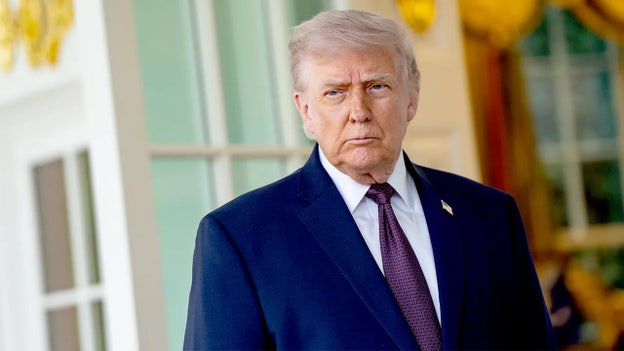
President Donald Trump said Thursday that U.S. forces destroyed a newly built Iranian radar facility last week, leaving Tehran without key air surveillance capabilities.
Speaking to CNBC's Joe Kernen from the Oval Office, Trump also said the U.S. conducted covert nighttime operations to escort oil tankers through the southern Persian Gulf.
"Every night we were taking ships out through the south, which is the furthest point from where they have their little weapons," Trump said. "They were going along the coast with no lights for a month and a half."
Trump said the U.S. escorted dozens of tankers, including 22 in a single night.
"We had one night where we took 22 ships out. That's a lot of oil," he said. "We escorted them out, and nobody knew. The lights were off. Everything was off. Everything was silent."
Trump also claimed the U.S. had repeatedly struck Iran's radar infrastructure.
"We blew up Iran's radar. They had no radar. They still don't," Trump said.
"They had a nice new radar center. They were all set to go, and we blew it up last week. They have to start all over again for a third time," he added.
The president also told CNBC that Tehran had "agreed to just about everything we need."
Iran warns US, Israel ahead of Ayatollah Ali Khamenei's funeral
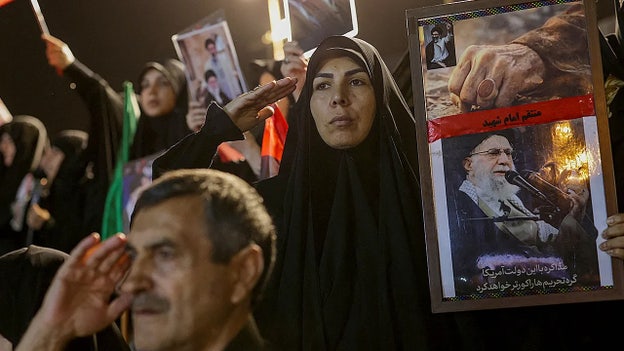
Iran sent a warning Thursday to the United States and Israel as it prepares for the funeral of Iranian Supreme Leader Ayatollah Ali Khamenei, Reuters reported.
"We warn the enemies of Iran, especially the U.S. and the Zionist regime (Israel), to avoid any miscalculation and to think about the harsh retaliation our armed forces would make to any threat and aggression against our country," Ali Abdollahi, commander of Khatam al-Anbiya Central Headquarters, said in a statement carried by state media.
Funeral processions for Khamenei will begin Friday in Tehran and end July 9 with his burial in his hometown of Mashhad. Additional ceremonies are planned in Qom and Iraq between those dates.
The head of Iran's Civil Aviation Organization also said that temporary airspace restrictions would be in place over several cities, including Tehran and Mashhad.
Some European leaders accept Iran likely to charge Hormuz tolls: report
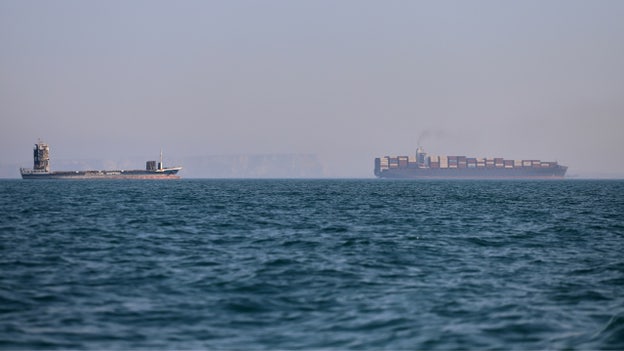
Some European leaders are prepared for Iran to charge transit tolls for ships passing through the Strait of Hormuz, Bloomberg reported Thursday.
Citing officials, the outlet said the prospect of a service charge was increasingly likely in private discussions.
Privately, some Gulf Arab officials also hold the same view, the report said, though this is not necessarily the formal position of their governments.
This came as Washington and Gulf Arab nations remained firm that Iran and Oman cannot impose charges for traversing the waterway.
Oman had told European officials there was no way of going back to the pre-war status quo in the Strait of Hormuz, Bloomberg also reported last week.
The outlet reported that Oman's leaders think a Malacca-type system would only work if all Persian Gulf states accept it, according to a source.
Six Kurdish fighters killed in IRGC ambush as clashes spread across western Iran
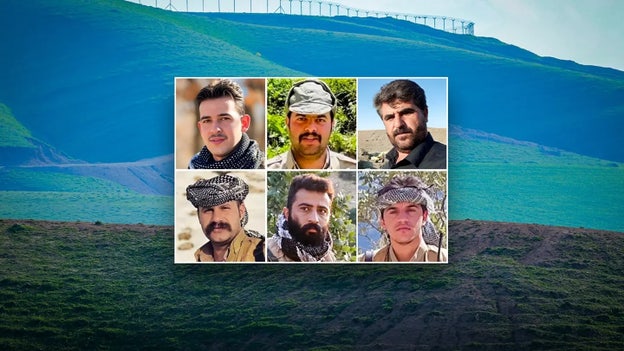
Iran’s Islamic Revolutionary Guard Corps said Thursday it killed five members of the Democratic Party of Iranian Kurdistan, while the Kurdish opposition group told Fox News Digital that six of its Peshmerga — a term commonly used for Kurdish fighters — were killed in what it described as an Islamic Revolutionary Guard Corps ambush in northwest Iran.
The clash marks another escalation in Iran’s Kurdish-majority west after days of reported attacks and clashes involving Iranian security forces, the Islamic Revolutionary Guard Corps and Kurdish armed factions.
It also underscores the current position of Iranian Kurdish opposition groups that recently were viewed by U.S. and Israeli officials as a possible pressure point against Tehran during the U.S.–Israeli war with Iran, but ultimately stayed out of the conflict amid mixed signals from Washington and pressure from both Iran and Turkey.
Majeed Gly, president of the American Kurdish Committee, told Fox News Digital that the latest clashes should not be read as a full-scale uprising, but also should not be dismissed as routine border violence.
"What I’m hearing is, this is not business as usual," Gly said. "This is not like periodic clashes on the border. This is operations, and it seems to be deep inside."
This is an excerpt from a report by Fox News' Efrat Lachter.
Treasury-targeted Iran smuggling empire takes hit, sanctioned oil tanker runs aground in Hormuz
A Comoros-flagged oil tanker reportedly controlled by a sanctioned Iranian shipping magnate is stranded in the mud in the Strait of Hormuz, maritime monitors reported Thursday, highlighting the reach of an U.S. sanctioned Iranian smuggling ring.
The vessel, the Arista, is said to be part of a front-company fleet overseen by Mohammad Hossein Shamkhani, according to TankerTrackers.
Iran's Islamic Revolutionary Guard Corps, or IRGC, had described the Arista only as a "foreign tanker" that ran aground after following a "U.S.-recommended route."
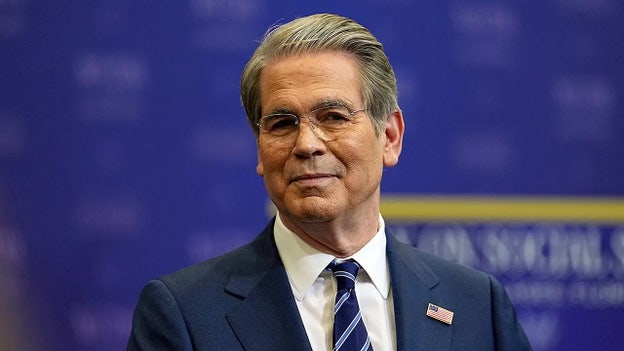
The U.S. Treasury Department had targeted the Shamkhani network in a sweeping 2025 sanctions package — the largest of the Trump administration's renewed "maximum pressure" campaign — designating more than 115 individuals, companies and vessels.
"The Shamkhani family's shipping empire highlights how the Iranian regime elite leverages its positions to accrue massive wealth," Treasury Secretary Scott Bessent had said of the crackdown in 2025.
"This network transports oil and petroleum products from Iran and Russia, as well as other cargo, to buyers around the world, generating tens of billions of dollars in profit," the Treasury said in a statement.
According to U.S. officials, Shamkhani leveraged the political influence of his late father, Ali Shamkhani, to build an empire that controls a significant portion of Iran's crude oil exports.
The elder Shamkhani, a senior security official sanctioned by the U.S. in 2020, was reportedly killed in the Feb. 28 joint Israeli-U.S. airstrikes on Tehran, alongside Supreme Leader Ayatollah Ali Khamenei, whose funeral is scheduled to begin Friday.
Waltz says Khamenei has 'blood on his hands' as Iran prepares to bury supreme leader
U.S. Ambassador to the U.N. Mike Waltz said Thursday that former Iranian Supreme Leader Ayatollah Ali Khamenei had "blood on his hands" after decades of repression and executions and spoke out as Iran prepared for his funeral.
Talking to Iran International after a U.N. Security Council meeting, Waltz dismissed any expectation of widespread mourning for Khamenei to be buried July 9.
“I don't think there'll be very many tears being shed for an Ayatollah with 40,000 at least of his own people's blood on their hands that were literally machine gunned in the streets for a day of daring to speak out,” he told the outlet.
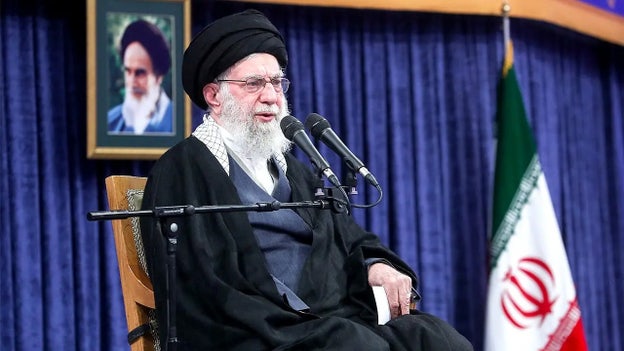
Waltz highlighted recent cases of young men who were executed over the last 10 days, saying their plight had been brought to light by a “number of international human rights organizations that have been able to penetrate the internet blackout.”
“These young men, you know what their crime was, quote, according to the revolutionary court, being at war with God.”
“This is the kind of regime we're dealing with that says young men who are students who dared speak out and protest, asking for a better life, are, I guess — according to the Iranian regime and its court system — at war with God and therefore execute them.”
“It's horrific,” Waltz added.
Austria says it has resumed embassy operations in Tehran
Austria has resumed standard operations at its embassy in Tehran, the embassy announced Thursday.
"The timing for the resumption of consular services will be announced subsequently through the embassy's official channels," the embassy said in a post shared on X.
Iran claims CENTCOM has undermined security in the Middle East
Iranian Foreign Minister Abbas Araghchi argued Thursday that U.S. Central Command (CENTCOM) has undermined, rather than strengthened, security across the region, before citing “outside interference.”
“Has CENTCOM brought security or insecurity to our region? The answer is clear,” Araghchi said in a post on X.
“Our Powerful Armed Forces have proven that outsiders cannot even protect themselves,” he added.
Araghchi also said peace in the Middle East can be maintained only if it is “comprehensive and inclusive, with no outside interference.”
His remarks came after CENTCOM led a regional security dialogue hosted by Bahrain which brought together defense leaders from 12 nations to discuss regional security cooperation.
Pakistan, Saudi Arabia discuss US-Iran talks, praise progress in Qatar
Pakistan’s Foreign Minister Ishaq Dar spoke with his Saudi counterpart, Prince Faisal bin Farhan Al Saud, on Thursday to discuss their mediation efforts and the “progress” made in talks between the United States and Iran in Qatar.
“They expressed satisfaction with the positive progress made during the negotiations and hoped that the discussions would continue in the near future,” the Pakistani Foreign Office said in a post on X about the conversation.
“His Highness Prince Faisal appreciated Pakistan’s efforts and steadfast commitment to the implementation of the Islamabad MOU and its continued role in advancing dialogue and promoting lasting peace in the region,” the office said.
Trump's patience with Iran 'not unlimited,' Waltz warns at UN
President Donald Trump's patience with Iran is "not unlimited," U.S. Ambassador to the United Nations Mike Waltz warned Thursday, as he urged Tehran to comply with its international obligations and accused the regime of threatening global stability.
"I cannot stress enough the possibility of real transformative positive opportunity for the nation and people of Iran is on the table, but President Trump's patience is not unlimited," Waltz said.
Waltz also said Iran "must abide by its obligations to this Council" and argued the international community must hold the regime accountable.
"The world cannot continue to suffer, and Iran must abide by its obligations to this Council that this Council voted for without opposition, and the world must hold this regime to account," he said.
Mojtaba Khamenei 'wants to emerge' from hiding but unlikely to attend father's funeral: report
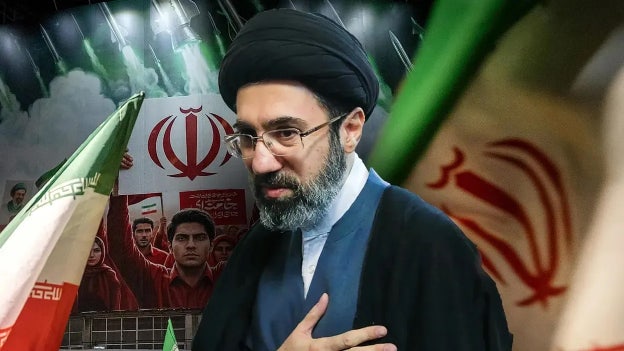
Supreme Leader Mojtaba Khamenei wants to come out of hiding "to meet people," according to his representative in India, Ayatollah Hakim Elahi, who spoke Thursday.
Speaking to India Today before heading to Tehran from New Delhi, Elahi also told the outlet that Mojtaba Khamenei is unlikely to appear at the funeral of his father, former Supreme Leader Ayatollah Ali Khamenei, because authorities cannot guarantee his safety.
"I was in Iran last week and met some of my friends who met him. They said he wants to come out. He wants to meet people. But the security doesn't allow him to come," Elahi said.
"They said, 'It is very dangerous, and we cannot provide security for him.' I think he will not come out," he added.
His remarks came as Tehran prepare for days of funeral ceremonies for Ali Khamenei, who was killed Feb. 28 in a joint U.S.-Israeli strike in Tehran.
Kuwait reportedly boosts oil output after US-Iran deal
Kuwait sharply increased crude oil production in June as Gulf exports began recovering after the U.S.-Iran interim peace agreement, an exclusive source told Reuters.
The OPEC member’s output rose to 1.65 million barrels per day in June, up from 580,000 barrels per day in May, according to the report.
Daily production climbed as high as 1.9 million barrels per day during the final 10 days of June.
The rebound signals that Gulf oil flows through the Strait of Hormuz are recovering after wartime disruptions snarled exports and left cargoes stranded.
Kuwait had been producing roughly 2.5 million barrels per day before Iran's attacks on the Strait following U.S. and Israeli attacks at the end of February.
Oil prices extended earlier losses Thursday after the report, with crude already trading at its lowest level since late February.
Kuwait was hit especially hard by the disruption because it relies almost entirely on the Strait of Hormuz for crude exports, unlike Saudi Arabia and the United Arab Emirates, which have alternative routes.
Reuters contributed this report.
Israel hit by more than 30,000 projectiles in 1,000 days since Oct. 7 massacre
More than 30,000 of projectiles have crossed into Israeli territory over the past 1,000 days since the Oct. 7 terrorist attacks.
The heaviest fire came from Lebanon, where more than 20,000 projectiles crossed into Israel. More than 10,000 crossed from the Gaza Strip, while more than 1,000 came from Iran, according to reports.
Israel also recorded more than 80 projectiles from Yemen and more than 40 from Syria.
The figures underscore the multi-front threat Israel has faced since Hamas’ Oct. 7 attack, with civilians and military personnel targeted from several directions across the region.
Israeli officials have maintained that the country reserves the right to defend itself against terror groups and hostile actors launching attacks into its territory.
The 1,000-day milestone comes as Israel continues to confront security threats from Gaza, Lebanon, Iran-backed groups and other fronts across the Middle East.
Fox News' Yael Kuriel contributed to this report.
Hope grows for progress in Iran peace talks as Qatar reports movement
There is cautious hope across the Middle East that the latest round of talks with Iran could lead to a quieter period for the region, Fox News chief foreign correspondent Trey Yingst reported Thursday from Tel Aviv.
Qatari mediators said “positive progress” was made during technical talks Wednesday as a memorandum of understanding moves forward.
Iran is now acknowledging that some nuclear inspections will take place, while some sanctions relief money would be used to buy goods for the Iranian people, according to Yingst.
President Donald Trump said the negotiations are centered on a single objective: stopping Iran from obtaining a nuclear weapon.
“The denuclearization of Iran is moving along well,” Trump said. “They have had very good meetings. I think they’ve come a long way.”
Trump said the U.S. hit Iran “very hard” last week, but framed the current moment as a diplomatic opening.
“It is the denuclearization of Iran, very simple: Iran cannot have a nuclear weapon,” Trump said.
GAO report: Navy withheld payments to Northrop Grumman over missile delays
The U.S. Navy withheld “certain payments” to Northrop Grumman after “significant delays” hit a key missile program meant to counter enemy air defenses, according to a new Government Accountability Office (GAO) assessment.
The Advanced Anti-Radiation Guided Missile-Extended Range, or AARGM-ER, is designed to give Navy aircraft greater range, speed and survivability against air defense threats, but the program has been slowed by software, hardware and testing problems, the GAO found.
“The AARGM-ER program continued to experience significant delays due to software problems discovered during testing,” page 129 of the report read.
“A February 2025 flight test failed due to a software issue, which it attributed to a lack of rigor in the contractor’s software development and testing process,” it added.
Software challenges had already been a major driver of earlier delays, according to the report.
The military tech program initially expected to reach operational capability in July 2024. Officials now expect that milestone in September 2026, more than two years late.
GAO said initial missile deliveries, originally planned for late 2023, are now expected to begin in mid-2026. Navy officials told the watchdog they will not accept deliveries until qualification and flight testing show the missile is safe and performs as expected.
GAO warned that starting defense weapons production before proving the system works increased the risk of costly rework.
The Department of Defense (DOD) continues to struggle to deliver technologies quickly and within budget. Since its last annual assessment, GAO found: • Programs are delaying interim events and milestones for some of the costliest major defense acquisition programs (MDAP). • DOD has increased its use of the middle tier of acquisition (MTA) rapid prototyping and fielding pathways—intended to be completed in 5 years. • Some programs began on the MTA pathway with technologies that require more time to develop, hindering timely delivery of essential capabilities. • Programs do not consistently follow leading practices for product development that could help DOD achieve its stated goals. Schedule delays persisted across MDAPs, signaling overly optimistic time frames. The overall average time frame to deliver a capability increased this year to over 12 years. Further, several MDAPs have not set new delivery dates or are delaying critical interim milestones. By keeping delivery dates static, these programs raise questions about how realistic their estimates are. This means the 12-year average will likely increase in the future.
Israel marks 1,000 days since Oct. 7 massacre as families demand accountability
Israel marked 1,000 days since the Oct. 7 massacre with renewed calls for accountability, as families and survivors pushed the government to launch an independent inquiry into the failures that allowed the attack to unfold.
Israelis are using the milestone not only to remember those killed, but to demand answers from their leaders, Fox News chief foreign correspondent Trey Yingst reported Thursday from Tel Aviv.
“We demand an official commission of inquiry by the Israeli government to investigate,” a woman on the street said, calling for “an independent commission of inquiry to uncover what happened and what policies led to this terrible tragedy.”
The commemoration comes as the region remains on edge following the latest round of tensions with Iran.
For many families, remembrance is no longer enough. They want a public accounting of the decisions, warnings and security lapses that preceded the massacre.
“What happened and what policies led to this terrible tragedy?” she asked.
The moment reflects the deep frustration inside Israel as the country waits for answers nearly three years after the attack, Yingst reported.
Iran war urgency hangs over House NDAA defense bill clash, GOP Rep. Issa says
House Republicans need to move quickly on the annual defense authorization bill, according to Rep. Darrell Issa, R-Calif., on Thursday, arguing “this time of war” and a changing battlefield make the National Defense Authorization Act (NDAA) too important to stall over an election-security fight.
“We do have at this time of war — and quite frankly, Maria, a change in the battlefield — we need to authorize the new programs that are in the NDAA,” Issa told FOX Business’ “Mornings with Maria.”
House Republicans remain divided over whether to attach the Save America Act to the National Defense Authorization Act.
The clash helped send lawmakers home for the July 4 recess earlier than expected after Rep. Anna Paulina Luna, R-Fla., and several GOP colleagues objected to moving forward without stronger action on the election bill.
Luna was “right” to push Senate Republicans to act on voter ID and proof-of-citizenship requirements, according to Issa, but forcing the measure into the NDAA would likely backfire in the Senate.
“She’s made her point; now we need to move on,” he said.
House Speaker Mike Johnson appears to want a “cooling off period” before returning to the defense bill, he added.
“There’s no question at all: We’re going to move the defense authorization,” Issa said.
Navy touts ‘free and open seas’ as Iran war keeps focus on maritime chokepoints
U.S. Navy leaders touted America’s role in protecting “free and open seas” Thursday as the Iran war keeps renewed attention on maritime chokepoints and the flow of global commerce.
“The review is more than just a parade of ships and aircraft,” Adm. Karl Thomas, commander of U.S. Fleet Forces Command, said of the upcoming International Naval Review 250 in New York City showcasing U.S. sea power and the allied partnerships behind it.
“It’s really a living tribute to 250 years of American global sea power.”
Thomas said the U.S. sea services have long played a central role in defending trade routes and deterring aggression, particularly in the Strait of Hormuz.
“From the Revolutionary War to the complex global challenges that we have today, your sea services have been the guarantor of free and open seas, protecting the vital arteries of commerce that fuel our economy, while defending the freedoms of this great, great nation,” Thomas said. “Our history is inseparable from the history of our Navy.”
Vice Adm. Jo-Ann Burdian of the U.S. Coast Guard signaled the importance of cooperation with U.S. partners.
“The only way to do complex things is together,” Burdian said. “And the dozens of international allies and partners who are here are emblematic of us preserving freedom and democracy together.”
Thomas said the U.S. is bringing the USS Nimitz to New York Harbor for the celebration, calling it a rare show of naval force.
“We don’t do that very often,” Thomas said. “But for this really special occasion, we brought our biggest, our most capable warship.”
Economic Director Hassett praises Trump on lower gas prices after Iran war spike
Gas prices are poised to fall after oil drops from Iran war spike thanks to President Donald Trump, according to White House National Economic Council Director Kevin Hassett.
"The spot price of oil almost made $150 a barrel; now it’s in the 60s,” Hassett told reporters outside the White House on Thursday morning. “It’s about a 50% drop.”
That kind of decline in oil prices typically takes time to show up at the pump, but Hassett predicted drivers could see relief over the next several weeks.
“Normally, that kind of percentage change of oil prices feeds through to gasoline prices over the next month or two,” Hassett said. “And so we’re very, very bullish on what’s going to happen to gas prices over that aggressive summer.”
Hassett also addressed Trump’s calls for retailers to lower prices at the pump, saying the administration wants to ensure companies are not using market power to keep prices elevated.
“There are a lot of big oil companies that have large market shares, and I think the president just wants to make sure that market power doesn’t influence their decisions to price gas,” Hassett said.
Hegseth praises National Guard over Iran war role: 'You do your job'
The National Guard’s role in recent Iran war operations drew praise Thursday in Washington, D.C., with officials noting they were “there for Midnight Hammer” and remain “always ready, always there.”
“You do your job no matter what,” War Secretary Pete Hegseth said, thanking the troops for carrying out their mission despite criticism, Democrat obstruction, leftist protests, heat and long hours.
“In fact, this background noise this morning is perfect. It’s the sound of ingrates — ingratitude of people who are so blinded by ideology they can’t see law and order and common sense in front of them.”
Hegseth said the Guard’s work in the capital is not political, but rooted in public safety.
“There’s nothing ideological about this group," he added. "There’s nothing political about this exercise.
“Law and order is something all Americans deserve — Black, white, rich, poor, man or woman, from D.C. or far-flung places in this country.”
He also called the troops “the real 1%” of Americans who raised their right hand to serve.
“It’s incredible Americans like you who ignore the noise and you do your job and you do it with courage, and you do it with professionalism,” Hegseth said. “And you do it because you love your country, which is why you raised your right hand in the first place.”
Air Force Gen. Steven Nordhaus, chief of the National Guard Bureau, said, praising the Guard's service in defining moments throughout U.S. history, from the Revolutionary War to World War II and modern operations in the Middle East.
“The National Guard has been there from the beginning,” he said.
“We joined George Washington as we won our independence back in 1776. We were there on the beaches as we came on Normandy and Omaha Beach on June 6, 1944. We were there for Midnight Hammer, Absolute Resolve and continue in Epic Fury, and our National Guard will be always ready, always there.”
Nordhaus said about 40,000 Guard members are currently engaged globally as the U.S. marks its 250th anniversary.
“Most Americans will get up and they’ll think about barbecues and family and friends,” Nordhaus said. “They’ll think about where they’re going to watch the fireworks. But our National Guard, about 40,000 globally engaged somewhere, and they’ll wake up and they’ll lace up their boots.”
Energy Secretary Wright says gas prices are ‘headed the right direction’ for peak travel season
Gas prices are expected to keep falling as Americans hit the road for the July 4 holiday weekend, according to Energy Secretary Chris Wright on Thursday, crediting rising supply and U.S. military efforts to keep oil moving through the Strait of Hormuz.
“Oh, they’ll keep falling, Maria,” Wright told FOX Business’ “Mornings with Maria.” “You know, look, the American Military — not any benign actions from Iran — but the American military has oil flowing back through the Strait of Hormuz.”
Wright said U.S. production remains at record levels while Venezuelan production is also rising, adding that increased supply is pushing oil prices lower before those declines show up at the pump.
“Supply is growing, and that’s driving prices down first in oil and then gasoline,” Wright said. “But gasoline prices are on their way down. I was in my home of Denver last weekend, and there were $2.99 gas stations around town, so we’re headed the right direction. Very excited to see it. And just in time for the peak travel season.”
Oil was trading around $67 a barrel Thursday morning, while the national average for gasoline stood at $3.83 a gallon, down from $4.29 one month ago.
‘Ridiculous!’: Trump rips NATO spending gap, says US pays far more than allies
It is "ridiculous" to have the U.S. spending more than NATO allies on Europe's own defense, President Donald Trump lamented in a scathing Truth Social post as U.S. Ambassador to NATO Matt Whitaker was speaking on Fox News.
“The United States spends more money on NATO than any other country, by far, to protect them, without getting any benefit from so doing,” Trump wrote Thursday morning.
Trump listed U.S. spending at $999 billion, compared with $90.5 billion for the United Kingdom, $66.5 billion for France, $48.8 billion for Italy and $44.3 billion for Poland between 2014 and 2025.
“Others, including Germany, are MUCH LOWER,” Trump wrote.
The post came while Whitaker was on "Fox & Friends" warning NATO to not "quibble" with the U.S. operation in Iran, saying use of its bases globally should not "be blocked."
“Ridiculous!” Trump concluded.
"The United States spends more money on NATO than any other country, by far, to protect them, without getting any benefit from so doing: U.S. 999 Billion Dollars, United Kingdom, 90.5 Billion Dollars, France, 66.5 Billion Dollars, Italy, 48.8 Billion Dollars, Poland, 44.3 Billion Dollars. Others, including Germany, are MUCH LOWER. (2014-2025) Ridiculous! President DJT"
NATO Amb. Whitaker warns allies not to ‘quibble'; US will not 'be blocked’ in next Iran-style op
The Trump administration expects allies to be fully aligned with Washington in future military operations or face President Donald Trump's ire, according to U.S. Ambassador to NATO Matt Whitaker.
The U.K., specifically, "probably messed up some of our operations," Whitaker told Fox News' "Fox & Friends" on Thursday morning, warning allies to not "quibble" with Trump because the U.S. will not "be blocked by some of our allies."
“President Trump was very frustrated during Epic Fury, especially at the start where we had either allies that didn’t cooperate with use of our own bases or even more importantly, were very negative on the efforts politically with their statements,” Whitaker said.
Whitaker said Trump “made the world better” by stopping Iran from remaining on a path toward a nuclear weapon, but argued the U.S. needs stronger political and military backing from its allies.
“We have to make sure that our allies are with us politically and militarily at all times because that’s how we’re strong and capable as ourselves, but we are stronger and even more capable when our allies are alongside of us,” he said.
Asked whether NATO allies had come around after some initially resisted U.S. operations, Whitaker said most were now providing the access Washington needs.
“I think the U.K., after the first few days where they made it difficult and probably messed up some of our operations that we were able to, of course, because we can project power from anywhere, were able to overcome,” he said. “Most of our allies, in fact, all of our allies in NATO countries, are allowing us bases and access and overflight that we need.”
Whitaker said the issue will be part of a six-month review of the U.S. military posture in Europe, including how American troops are treated in countries where they are stationed.
“We need to make sure that when we do the next Epic Fury, that we can have very clear deal in place, that we don’t have to quibble or be blocked by some of our allies,” Whitaker said.
The comments come ahead of next week’s NATO summit, which Whitaker predicted would be “a good news story” because European allies are increasing defense spending.
“We can point to European allies spending a lot more money on their own defense and, therefore, making NATO stronger,” he said.
Oil prices continue to fall before July 4 as Strait of Hormuz ships keep moving
Oil prices fell for a third straight day Thursday, sliding to about $67 a barrel, while the national average for gas stood at $3.83 a gallon heading into the busy July 4 holiday travel weekend.
The move lower comes even as tensions remain high around the Strait of Hormuz, the critical waterway for global energy shipments.
There have been 121 ships to cross the strait since Monday, including 42 on Monday, 34 on Tuesday and 45 on Wednesday, according to Kpler.
Shipping traffic also appears to be adjusting to the security environment. Convoys of vessels have been lining up to cross near the southern coast of the strait, close to Oman and farther from Iran, likely under U.S. cover.
The steady crossings suggest commercial traffic is still moving through the region despite the threats and uncertainty. For now, markets are watching both the price action and the ship counts for signs of whether tensions will meaningfully disrupt energy flows.
FOX Business' Lauren Simonetti contributed to this report.
Trump praises 'Freedom Fuel,' falling oil prices heading into busy July 4 travel holiday
President Donald Trump says he is delivering lower gas prices, despite some stations not being "fast" enough to lower its prices amid the increasing global oil supply with the reopening of the Strait of Hormuz.
Trump said a Northeastern fuel retailer will lower gas prices at 25 “Freedom Fuel” stations across the Greater Philadelphia area on July 3 as part of a celebration tied to America’s 250th birthday.
“Oil Prices are plummeting FAST, and Gas Prices at the pump are dropping too, but not as fast as they should be,” Trump wrote in a Truth Social post, adding that the retailer was “taking the lead” and that “others should follow.”
Trump said the promotion was meant to wish Philadelphia a “Happy Birthday” ahead of the nation’s semiquincentennial, pointing to Pennsylvania’s role as the birthplace of the Declaration of Independence.
“We are proud to celebrate America’s 250th Birthday in the Great Commonwealth of Pennsylvania,” Trump wrote.
The president also linked falling gas prices to what he called his administration’s successful “excursion” in Iran, saying prices would soon return to the “record low” levels Americans previously saw at the pump.
“Happy Birthday America!” Trump concluded.
"Just as I promised, Oil Prices are plummeting FAST, and Gas Prices at the pump are dropping too, but not as fast as they should be. As we approach America’s 250th Birthday, I am pleased to announce that a VERY smart Retailer, located throughout the Northeast, is stepping up, and wishing the People of Philadelphia a 'Happy Birthday!' "On July 3rd, the Freedom Fuel Network will be lowering gas prices at 25 'FREEDOM FUEL' Stations across the Greater Philadelphia Area. This Retailer is taking the lead, and others should follow. They are doing this because they love the U.S.A. We are proud to celebrate America’s 250th Birthday in the Great Commonwealth of Pennsylvania, the Birthplace of our very special, one-of-a-kind Declaration of Independence, and where I won BIG in the Presidential Election! America has never been stronger than it is now, and Gas Prices will soon be back to the Record Low Prices Americans enjoyed at the pump before our very successful 'excursion' in Iran. Happy Birthday America! President DONALD J. TRUMP"
Iran threatens oil tankers to use its Strait of Hormuz routes or face 'forceful response'
Iran’s joint military command warned Thursday that oil tankers traveling through the Strait of Hormuz must use Tehran-approved routes or risk an “immediate and forceful response,” escalating tensions over one of the world’s most important energy corridors.
The warning, reported by Iranian state television, came after U.S. and Iranian diplomats met with mediators in Qatar as talks continue over a permanent end to the Iran war.
“Any failure to comply, deviation from the designated route, or disregard for the navigation protocols of the Islamic Republic of Iran in the Strait of Hormuz will be met with an immediate and forceful response from the armed forces, endangering the security of the violating vessels,” the Iranian statement said.
The U.S. fighter jets over the strait “causes insecurity in this waterway and threatens regional security,” it added.
“Any attempt by the United States to interfere in security matters or any disruptive action in the Strait of Hormuz will be considered a threat to Iran’s national sovereignty and will be met with a rapid and decisive reaction,” the Iranian warning added.
Iran and the U.S. agreed to allow ships to pass through the waterway without fees for 60 days. under the memorandum of understanding (MOU). But Tehran has insisted it should control vessel routes and eventually charge passage fees, a demand opposed by the U.S. and several Gulf Arab states.
The Associated Press contributed to this report.
Live Coverage begins here