
Iran says no military solution to war as currency hits new low under US blockade
Both President Donald Trump and Iran are fully prepared for either diplomatic engagement or military action, as the Strait of Hormuz has choked out the Iranian economy and ostensibly forced it into collapse to bring it back to the table on giving up nuclear weapons aspirations.
Coverage for this event has ended.
Iran fires back at diplomat expulsion reports: ‘Oozes of desperation and defeat’
Iranian Foreign Minister Abbas Araghchi pushed back Sunday against reports that Tehran’s U.N. delegation had been forced out of the United States, insisting all diplomats left "as scheduled" following the U.N. General Assembly.
Araghchi's remarks came after reports emerged that Secretary of State Marco Rubio had demanded on Sept. 28 that the Iranian delegation immediately leave the United States at the end of the summit and as sideline talks between Washington and Tehran stalled.
“All Iranian diplomats who attended the U.N. General Assembly, except one who departed earlier, left as scheduled,” Araghchi said on X.
“Taking pride in fake diplomat 'expulsion' is inappropriate for the head of any diplomatic corps,” he added. "It oozes of desperation and defeat, and is inconsistent with UN host nation obligations."
Oil prices climb after Houthi missile attack on Saudi facilities
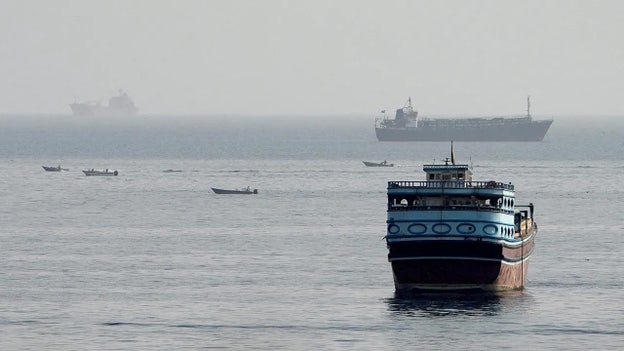
Oil prices climbed in early Monday trading in Asia after Yemen’s Iran-backed Houthi group said it launched ballistic missiles and drones at Saudi Aramco oil facilities in Riyadh and Khurais, Reuters reported.
As fresh supply concerns weighed on the world’s top oil-exporting region, Brent crude futures were up 81 cents, or 0.79%, at $103.06 a barrel by 10:02 p.m. GMT.
U.S. West Texas Intermediate crude also rose 46 cents, or 0.50%, to $91.57 a barrel, the outlet reported.
US Air Force removes all bombers from RAF Fairford, Pentagon says
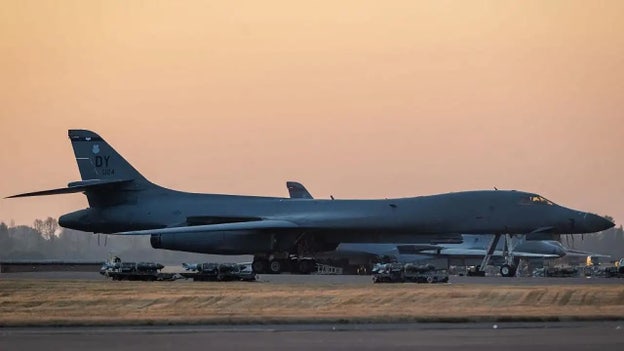
The Department of War confirmed Sunday that U.S. Air Force bombers were pulled out of RAF Fairford in England as authorities continue to investigate a suspected terror plot targeting the base.
Six people were arrested in connection with the security incident near the base on Sept. 27, including a dual British-Iranian national suspected of preparing terrorist acts.
“U.S. Air Force bombers routinely operate around the world to support global force readiness and operational requirements,” a department official told Fox News Digital.
“While operational security precluded us from confirming the movement of our assets and forces in real time, we can acknowledge now that all U.S. bombers that were deployed to RAF Fairford have redeployed to their home stations in the United States,” the official said.
“The Airmen that operate America’s bomber force, including B-1s, B-2s, and B-52s, remain ready to deliver precision global strike capabilities — including through operations that launch and recover from the continental United States — anywhere, anytime,” the official added.
A U.S. official also confirmed that about a dozen B-1 bombers were redeployed.
RAF Fairford, about 100 miles west of London, has been used by U.S. bombers during the current war with Iran and in previous Middle East conflicts.
Multiple explosions reported near tanker off Yemen coast: UKMTO
The U.K. Maritime Trade Operations reported Sunday that it received information about an incident 60 nautical miles south of Al Mukha, Yemen.
The maritime authority said a security officer aboard a tanker had reported multiple explosions nearby.
The crew was reported safe, UKMTO said, and no environmental impact was reported.
Authorities are investigating the incident.
Ships transiting the area were advised to proceed with caution and report any suspicious activity to UKMTO.
IDF says it killed Hamas terrorist posing as Turkish humanitarian aid director
The Israel Defense Forces (IDF) said it killed a Hamas Nukhba operative Sunday who led a group that claimed humanitarian status while funding terror networks that targeted its troops.
Saqr Nabil Musa Qaisi had taken part in the Oct. 7 massacre while serving as director of a Turkish aid organization, the IDF said.
"He also served as the director of the Turkish organization Deniz Feneri, which presents itself as a humanitarian aid organization but in practice maintains ties with senior figures in Hamas’ leadership and with elements within the Turkish leadership," the IDF said on X.
“Recently, and throughout the war, the terrorist advanced terrorist activities against Israeli civilians & IDF troops and worked to restore Hamas’ capabilities, in systematic violation of the ceasefire."
Australia investigating FlyDubai attacker's ties to radical Aussie mosques, extremist websites
Australian counterterrorism authorities are investigating the alleged FlyDubai hijacking suspect’s links to the country after officials said the co-pilot stabbed the captain and tried to seize control of a flight bound for Israel.
The Victorian Joint Counter Terrorism Team, which includes federal police, state police and the ASIO intelligence agency, is “investigating the man’s links to Australia,” an Australian Federal Police spokesperson told Reuters.
The Financial Times reported Sunday that attacker had allegedly visited what it described as radical mosques and extremist websites while in Australia, citing two people familiar with the investigation. Australian intelligence services held a file on the individual, according to the Financial Times.
Two sources briefed on the investigation told Reuters the co-pilot studied at a university in Melbourne, while a third source said he studied at RMIT University about a decade ago. RMIT declined to comment.
The co-pilot of FlyDubai flight FZ1073 attacked the pilot with an emergency crash ax, the United Arab Emirates prosecutor general said Saturday, calling the incident a “terrorist attack.”
Two sources identified the co-pilot to Reuters as Omani national Hamam Al-Hamami. Israeli officials have said the co-pilot was from Oman, but UAE authorities and FlyDubai have not publicly disclosed his identity.
Israeli Prime Minister Benjamin Netanyahu said the co-pilot had undergone radical Islamist indoctrination and was “clearly suicidal,” and ordered a review of “all security aspects” involving foreign civilian aviation to Israel.
Reuters contributed to this report.
Iran changes oil ministers amid Strait of Hormuz blockade, economic woes
Iran’s oil minister has resigned, state media reported, as the country faces mounting pressure on its energy sector during the war with the United States.
President Masoud Pezeshkian accepted the resignation of Oil Minister Mohsen Paknejad and appointed Hamid Bovard as acting oil minister, according to Iranian state media cited by a local news outlet via a public Telegram board.
The reported shakeup comes as Iran’s oil exports and regional energy flows remain under intense strain from the conflict, including disruptions around the Strait of Hormuz and the wider Gulf.
The Oil Ministry change also follows OPEC+ sources telling Reuters that Gulf producers have been pumping far below output targets as the U.S.-Israeli war on Iran continues to disrupt exports.
Reuters contributed to this report.
Netanyahu orders review of 'all aspects of security' in Israeli airspace
Israeli Prime Minister Benjamin Netanyahu has ordered a comprehensive review of security surrounding foreign civilian aviation to Israel, his office said Sunday.
Netanyahu instructed National Security Council Director Shmuel Ben Ezra to appoint an examiner to review “all aspects of security” related to foreign civil aviation to Israel, according to a translated statement from the prime minister’s Office.
"Prime Minister Benjamin Netanyahu has instructed National Security Council Director Shmuel Ben Ezra to appoint an examiner to conduct a comprehensive review of all aspects of security relating to foreign civil aviation to Israel."
The move comes amid heightened aviation security concerns during the Iran war, including recent allegations that a co-pilot attacked a pilot aboard a FlyDubai flight bound for Israel.
U.S. Ambassador to Israel Mike Huckabee said Sunday that the FlyDubai incident was under “a very intense investigation” and called it a “terrorist act.”
Houthi terrorists claim taking over Yemeni Presidential Leadership Council Chair's home
Iran-aligned Houthi forces reportedly took control of Yemeni Presidential Leadership Council Chairman Rashad al-Alimi’s residence after government forces withdrew from al-Aloum and several areas of Taiz Governorate, according to a local news outlet cited by Yemen News Portal.
The claim, if confirmed, would mark a symbolic blow to Yemen’s internationally recognized government as it says military operations are underway to retake remaining territory from the Houthis.
The report comes after al-Alimi announced the start of operations to restore state control across Yemen, while government-aligned forces reported strikes against Houthi targets in Sanaa and Saada.
The fighting has intensified as part of the regional spillover from the Iran war, with the Houthis declaring a naval blockade on Saudi Arabia in July and launching attacks on Saudi territory and shipping.
Amb. Mike Huckabee: FlyDubai attack ‘terrorist act,’ hero plumber saved passengers
A co-pilot’s attack on a FlyDubai pilot with an ax was a “terrorist act,” U.S. Ambassador to Israel Mike Huckabee said Sunday, praising Israeli plumber Yaniv Hayoun for helping save 174 people aboard the flight.
“He really is an incredible hero. Had he not acted 174 people, including 30 children, would absolutely have been lost," Huckabee told Fox News' "Sunday Briefing." "And the fact that he acted without hesitation that he went and subdued the co-pilot, then, jumped on the yoke of the plane and pulled it back, not because he'd ever had a flying lesson in his life, but he had watched a television show called 'Air Disaster' and somehow intuitively knew what to do. It was one miracle after another."
The investigation will be "very intense," according to Huckabee.
“It was a terrorist act: He tried to kill everybody on that plane," he continued.
"He would have died, too, but he didn't care. I think it's one of the most amazing stories. How this would have been horrible. Tragedy got diverted – not because there were armed security, but because there were just brave people who said, not today, Satan. And they took him down.”
Huckabee said he invited Hayoun to the U.S. Embassy after seeing him say he wanted to thank President Donald Trump, then gave him a MAGA hat signed by Trump that Huckabee had kept in a display case.
“This guy is a hero. He has earned that hat,” Huckabee said.
Fmr national security official Brett McGurk: Israel had 'false assumption' Hamas was at bay
Israeli leaders were operating under a “false assumption” before the Oct. 7 attacks that Hamas had been deterred, according to former White House national security official Brett McGurk, stressing that U.S. intelligence had no warning or indicator that the attack was coming.
McGurk said Israel still has not held the kind of national commission of inquiry the U.S. convened after 9/11, arguing that such a review is needed to understand the intelligence and policy failures before the massacre.
“I think they had an assumption that was deeply ingrained that Hamas was deterred, assuaged, and was not about to do something massive on any scale like this,” McGurk told CBS's "Face the Nation." “I think that was a false assumption in their system, failure of imagination, and it was tragic.”
McGurk also said Israeli Prime Minister Benjamin Netanyahu was focused more heavily on destroying Hamas’ rule in Gaza than on a phased hostage deal.
“Netanyahu was focused far more on the military campaign and ensuring Hamas can never retain power in Gaza,” McGurk said, adding that U.S. officials were pushing to “get some of the hostages out first.”
He said Washington’s role was to “stop a war and get the hostages home,” arguing the two goals were “completely linked.”
Terror cells inside foreign airlines 'certainly a possibility,' former Delta, Air Force pilot says
The FlyDubai terrorist attack is shedding new light on potential security loopholes with the crash ax and vetting shortcomings, according to retired Air Force Lt. Col. Buzz Patterson.
In an interview with Fox News Digital, Patterson warned that terrorist cells could be lurking in international airlines, highlighting the need for vetting pilots, cabin crew and airport staff beyond current "self-reporting."
"It’s possible that terror cells can exist inside airline companies – overseas, probably a lot easier than here, but it's certainly a possibility,” Patterson, a former 16-year Delta Air Lines pilot, said.
“And I think it is something that DOJ needs to take a quick, really good look at.”
The warning came after a FlyDubai flight from the United Arab Emirates to Tel Aviv was forced to make an emergency landing in Tabuk, Saudi Arabia, after the co-pilot attacked the captain mid-flight, reportedly with the crash ax.
The flight was carrying 174 passengers and eight crew, and investigators are still probing the motive, including possible terrorism or mental health factors – both of which leave Patterson concerned for public safety, if not national security.
Israel reportedly warned of Iran attacks on US bases in Germany
Israel reportedly warned Germany of an increased risk of attacks against U.S. military bases on German soil, including Ramstein Air Base and Spangdahlem Air Base, amid concerns over possible Iranian-backed threats in Europe.
The warning followed intelligence received in mid-September suggesting possible Iranian-backed attacks on U.S. facilities in Europe, including RAF Fairford in the United Kingdom, The New York Times reported, citing a senior U.S. official.
The assessments reportedly raised concerns about possible drone attacks but did not identify a specific time or target.
Ramstein serves as the headquarters for U.S. Air Forces in Europe – Air Forces Africa and NATO Allied Air Command, while both bases are used by NATO air forces.
Israeli Prime Minister Benjamin Netanyahu separately told The Daily Mail that Israel had provided British security services with intelligence that helped thwart what he described as a deadly Iranian-backed attack on RAF Fairford.
“Had it not been for the intelligence we provided, the attack would probably have gone ahead, and we do not know how many Britons would have been killed,” Netanyahu said.
FlyDubai crash ax cockpit attack was 'savage,' retired pilot says
Every Boeing 737 in the world has a crash ax behind the co-pilot seat, retired Air Force Lt. Col. Buzz Patterson, a 16-year Delta Air Lines pilot, noted after the "savage" FlyDubai attack.
"Eevery 737, and that's what I flew my entire life of all the different models, has a crash ax in the cockpit right behind the co-pilot so that we can, if we have to, either crack into the door or crack into into the windows in the event of an emergency, we can do it," Patterson told Fox News Digital on Thursday. "If the co-pilot used the crash ax, that is savage because that thing will hurt you."
Patterson has sounded the warning on the dangers of vetting pilots around the world in this highly charged environment.
"It sounds like a crash ax, and, you know, in the crash ax, again, it very conveniently is located behind the co-pilot and you basically unstrap it from the wall because it has to be there in emergency settings, you know, for emergency requirements," he added. "But it's right there. You know, I can easily see the co-pilot saying he needed to stretch. He pulls out of the seat because we do this in the 737. It's a very tight cockpit.
"Occasionally one pilot to get up, it'll stand in the back of the cockpit and just stretch, you know, get the blood pumping. And it would be very easy for the co-pilot just to reach down while I stand it up and grab that ax.
"I mean, I can see it happening and God forbid if it did, because that's brutal."
Houthis claim ballistic missile, drone attacks on Khurais and Riyadh
The Iran-aligned Houthis claimed Sunday that they carried out successful ballistic missile and drone attacks on Aramco facilities in Khurais and Riyadh, Saudi Arabia, according to a statement posted on a public Telegram board.
The claim, which could not immediately be independently verified, marks another escalation in the regional spillover from the Iran war.
The Houthis have repeatedly targeted Saudi territory and shipping since declaring a naval blockade on Saudi Arabia in July, while Saudi Arabia has responded with airstrikes in Yemen and support for government-aligned forces battling the group.
The claimed strikes come as Yemen’s internationally recognized government says military operations have begun to retake remaining territory from the Houthis, including reported strikes on Sanaa and Saada.
Reuters contributed to this report.
Yemeni military striking Houthi terrorists to root them out of last remaining territory
The head of Yemen’s Presidential Leadership Council said military operations have begun to retake remaining territory from the Iran-aligned Houthis.
"Today, I announce the start of military operations to retake the remaining territory of the republic and extend the authority of the state and its institutions across the entire national territory," Yemeni President Rashad al-Alimi said in a televised address.
Rashad al-Alimi’s announcement came amid reports Yemen’s armed forces reported strikes in Sanaa and Saada, marking a new escalation in Yemen’s renewed fighting, which has flared as a spillover from the broader war between Iran and the United States.
Yemen’s armed forces, aligned with the internationally recognized government, said early Sunday they were conducting strikes against the Houthis in the capital Sanaa and the group’s stronghold of Saada.
A spokesperson said the forces were targeting “vital targets.”
Houthi-run Al Masirah TV had earlier reported an attack on Sanaa that it said was carried out by Saudi Arabia.
The conflict had largely paused after a 2022 truce, but hostilities resumed this year after the Houthis declared a naval blockade on Saudi Arabia in July and began attacking Saudi territory and shipping, while also making major territorial gains along Yemen’s Red Sea coast.
Reuters contributed to this report.
Yemeni armed forces striking Houthi terrorists
Yemen’s armed forces said early Sunday they were carrying out strikes against the Iran-aligned Houthis in Sanaa and the group’s stronghold of Saada, as fighting in Yemen continues to flare amid the wider Iran war.
A spokesperson for Yemen’s armed forces, which are aligned with the internationally recognized government, said the strikes were targeting “vital targets,” but did not provide further details.
Houthi-run Al Masirah TV had earlier reported an attack on Sanaa that it said was carried out by Saudi Arabia.
The conflict between the Houthis and forces aligned with Yemen’s Saudi-backed government had largely paused after a 2022 truce, but fighting has resumed as a spillover from the broader war between Iran and the United States.
Hostilities intensified this year after the Houthis declared a naval blockade on Saudi Arabia in July and began attacking Saudi territory and shipping, while also making major territorial gains along Yemen’s Red Sea coast.
Saudi Arabia has responded with airstrikes in Yemen and backed government forces trying to repel the Houthis.
Reuters contributed to this report.
US aircraft carrier George H.W. Bush docks in Thai resort island of Phuket
The U.S. aircraft carrier George H.W. Bush docked in Phuket, Thailand, on Sunday, giving its roughly 4,800 sailors a rest-and-recreation break after six months supporting U.S. operations in the Middle East.
The Nimitz-class carrier and its strike group had been supporting Operation Epic Fury and the U.S. naval blockade in the U.S. Central Command area of responsibility, where Washington says it has been working to secure maritime stability during the Iran war.
The Navy said Phuket marks the George H.W. Bush Carrier Strike Group’s first port call since departing Norfolk, Virginia, and Mayport, Florida, in March.
Crew members are expected to come ashore through Phuket Deep Sea Port and remain on the island from Oct. 4 to Oct. 9, with sailors taking part in cultural and community events, including sightseeing tours and a U.S.-Thailand soccer match.
The visit follows a five-day port call by the U.S. carrier Abraham Lincoln also docked in eastern Thailand last month with about 5,000 sailors and Marines aboard.
Thailand is the United States’ only treaty ally in mainland Southeast Asia.
Reuters contributed to this report.
OPEC+ to keep oil product steady for November
OPEC+ has agreed in principle to keep oil production targets steady for November as the Iran war continues to disrupt Gulf exports, three sources close to the talks told Reuters.
The group’s seven core members — Saudi Arabia, Russia, Iraq, Kuwait, Algeria, Kazakhstan and Oman — were meeting Sunday, while the Joint Ministerial Monitoring Committee was also scheduled to review the market.
Gulf OPEC+ producers have been pumping far below their targets, with exports fluctuating between 60% and 80% of normal levels in recent months because of continuing disruptions from the U.S.-Israeli war on Iran.
The conflict has also delayed the group’s capacity review, which is needed to determine members’ 2027 production quotas, because future production potential has become harder to assess.
OPEC+ had been raising output targets for much of 2026 after years of production cuts, but Reuters reported that most of those increases remained largely on paper because of the Middle East conflict.
The seven core OPEC+ members pumped 25 million barrels per day in August, up 630,000 bpd from July, but still about 5 million bpd below prewar levels in February, according to OPEC data.
Reuters contributed to this report.
Defiant Iran plans to expand range of its missiles
Iran’s military plans to increase the range of its missiles following the war with the United States, citing the distance of American forces from the Iranian coast.
“During this war, we concluded that we absolutely must increase the range of our missiles, and we have now moved in that direction,” Iranian Army spokesperson Mohammad Akraminia told Fars news, noting U.S. forces are now positioned as much as 1,000 kilometers, or about 621 miles, from Iran’s coast.
The range of Iranian missiles has been a contentious point for President Donald Trump, particularly with its refusal to give up nuclear weapons aspirations.
Not country that chants "death to America" should be given a path to a nuclear weapon, Trump has maintained for years.
Reuters contributed to this report.
Iran demands control over Strait of Hormuz, rejects US conditions
The latest U.S. counterproposal largely tracks Washington’s earlier positions on denuclearization, according to Iran, which is pushing to make the Strait of Hormuz the immediate focus of any talks.
“The Americans’ propositions are more or less in line with their previous positions, specifically on the nuclear issue,” Iranian Foreign Ministry spokesperson Esmaeil Baghaei said. “We told them our focus in this stage is the issue of the Strait of Hormuz and the return to security in this waterway requires clear steps from the U.S.”
Baghaei also denied that Iran had offered to allow U.N. nuclear watchdog inspections in exchange for U.S. sanctions relief, saying Iran had not entered into nuclear discussions with Washington.
Reuters reported last week that the proposal being circulated outlines a seven-day trust-building period aimed at returning the two sides to an enhanced version of the June memorandum of understanding, including concrete steps on Iran’s nuclear program.
Reuters contributed to this report.
Iran FM: If Trump, US 'move toward military solutions, we are more prepared than before'
After President Donald Trump rejected the Iranian peace conditions, Iran is reportedly doubling down on them.
Iranian Foreign Minister Abbas Araghchi said a plan put forward by Tehran to resolve its dispute with Washington could lead to the Strait of Hormuz reopening within seven days, hoping Washington would choose diplomacy but warned that Iran was prepared to respond if the United States again chose military action.
“If they again move toward military solutions, we are more prepared than before and will take whatever action is necessary to defend ourselves,” Araghchi said.
Nournews reported Iran's parliament speaker Mohammad Baqer Qalibaf said Sunday that it will not stop the Strait of Hormuz attacks until seven Iranian conditions are met.
“The Americans, who say something different in the media, have recently put forward proposals through a mediator, but they must understand that the period of dragging out the process and dictating one-sided demands is over," Qalibaf said.
"The position of the Islamic Republic of Iran is completely clear and firm, and the Strait of Hormuz will not be opened until our seven conditions, based on the Islamabad Memorandum of Understanding, are met."
Reuters contributed to this report.
Commercial ship attacked in Strait of Hormuz, UK says
A commercial tanker was hit by an unknown projectile in the Strait of Hormuz, damaging its engine room, the United Kingdom Maritime Trade Operations said Sunday.
UKMTO received a report of an incident inside the key waterway, noting the crew was safe, and no environmental impact had been reported at the time the notice was issued.
The Strait of Hormuz is one of the world’s most critical energy chokepoints, making any attack on commercial shipping there a potentially major escalation risk amid the Iran war.
Reuters contributed to this report.
Iranian rial at new low, as central bank sells dollars to support currency
Iran's rial continued its decline this weekend, as the central bank announced an injection of up to $2 billion to support the currency while the economy faces U.S. sanctions and a naval blockade.
President Donald Trump said if Iran refuses to stop terrorizing commercial ships in the Strait of Hormuz, it will suffer the economic consequences to it being stopped by the U.S. blockade.
The U.S. dollar was sold around 2.688 million rials Saturday, up from 2.632 million Friday, according to free-market tracking website bon-bast.com, while alanchand.com reported 2.695 million rials per dollar.
State television said state banks began selling up to $2 billion to support the currency, which has lost more than half of its value in the past year.
With an inflation rate of more than 70%, life is becoming ever tougher for ordinary citizens unable to afford basic necessities or rent as a U.S. blockade cuts the state's financial lifeline – oil exports.
Reuters contributed to this report.
Live Coverage begins here