
Trump won't rule out more Iran strikes as Pezeshkian touts path back to nuclear talks
President Donald Trump says the Iran war will be won "very soon" and doesn't rule out more strikes, while Iranian President Masoud Pezeshkian says Tehran remains open to nuclear talks if the U.S. shows it is not seeking regime change.
Coverage for this event has ended.
Trump touts Iran war gains, leaves door open to more strikes before midterms
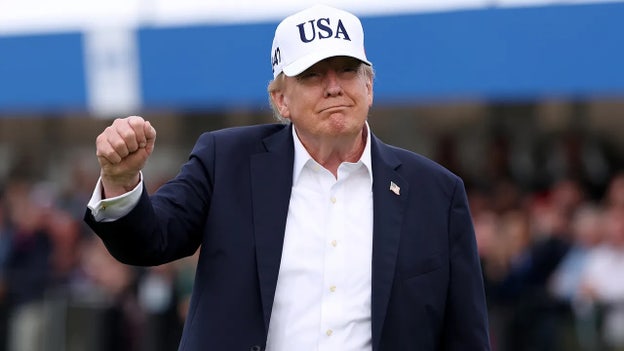
President Donald Trump said Sunday that he believes the war with Iran will be won “very soon,” while acknowledging that additional military strikes before the midterm elections are “possible.”
“I think what's going to happen is we're going to win this war very soon, and as soon as we win it, the oil will go down, way down to what it was before the war,” Trump said the PGA Tour Presidents Cup.
“And the key is, Iran will not have a nuclear weapon,” he added, saying nuclear deterrence was “key to the whole thing.”
When pressed further on Operation Economic Outcast and whether Washington was winning through military or economic means, Trump said the U.S. was succeeding on both fronts.
“I think both. I think we'll win it both ways. We've already won it really from a military standpoint,” he said.
“But that doesn't mean we've stopped that.”
“We're certainly winning it very big. If you look at their economy, it's gone.”
“They have no economy,” he said of Iran.
“The value of their money is, as they say, valueless. We have inflation. They have inflation now of close to 300%. I heard 318% as of this morning. 300, meaning their money is shot, their economy is shot, their military is shot. They're in trouble.”
Asked specifically whether military strikes could be back on the table before the midterm elections, Trump declined to rule them out.
“I don't want to say that. I don't want to say that. I mean, it's possible, but I just don't want to say that.”
Trump says more details coming ‘soon’ on thwarted RAF Fairford terror plot
President Donald Trump said Sunday that information on the men arrested on suspicion of preparing a terrorist act near a British air base used by the U.S. military would be shared “soon.”
“I know all about them and you'll be hearing about it very soon. We caught them,” Trump told reporters Sunday night at Joint Base Andrews.
The five suspects were arrested early Sunday near RAF Fairford in Gloucestershire, England, on suspicion of preparing a terrorist act and committing offenses under Britain’s Explosives Act.
RAF Fairford, a Royal Air Force base used by the U.S. military, has served as a hub for American bomber operations during the war with Iran.
Earlier Sunday, Trump praised the arrests while speaking to reporters in Chicago.
“It was fantastic. Working with Britain, it was an amazing job. We had them under investigation. They were looking to do big damage to our fort, and working with the British worked out great,” Trump said.
Oil jumps more than 1% after Trump rejects Iran proposal to reopen Strait of Hormuz
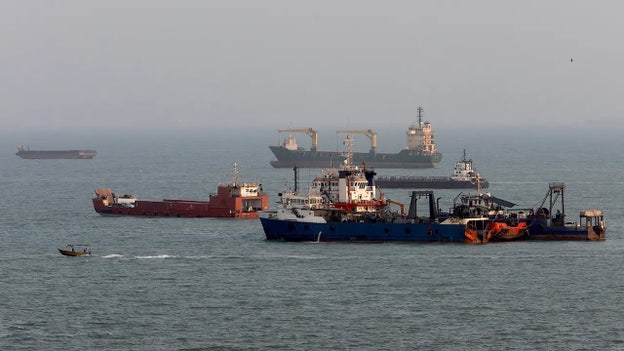
Oil prices climbed more than 1% in early Asian trading Monday after President Donald Trump rejected a proposal from Iran aimed at ending the conflict and reopening the Strait of Hormuz, Reuters reported.
Brent crude futures rose $1.82, or 1.74%, to $106.14 a barrel, while U.S. West Texas Intermediate crude gained $1.14, or 1.23%, to $93.55 a barrel.
Reuters said the gains reversed some of Friday's losses as traders weighed the growing risk of prolonged disruptions to global energy supplies.
Ortagus says 'disorganized' Iranian regime ‘hanging by a thread’ as US blockade tightens squeeze
Former Middle East envoy Morgan Ortagus said Sunday that Iran’s regime is “hanging by a thread,” arguing that the U.S. blockade has left Tehran increasingly isolated and its leadership appearing chaotic.
“I understand what's going on behind the scenes,” Ortagus told “Fox News Sunday.” “I really think we have the upper hand right now in Iran, and I'm not just saying this as a cheerleader.”
Ortagus went on to argue that the U.S. blockade is working, saying Iran is getting “not a drop of oil onto the open market.”
“Not only oil, they're not trading anything. Nothing's coming in. Nothing's going out,” she said.
“So they're really hanging by a thread, by a lifeline,” Ortagus said of the Iranian regime.
“And what I saw this week, especially in New York, was a really disjointed message from Iran,” she said.
“Their leaders were trying to have side meetings with the U.S. and the Europeans. Meanwhile, IRGC heads back home are chiding them and saying, ‘Wait, wait, you don't have the authority to have that meeting.’”
“It looked disorganized. It looks chaotic,” Ortagus added.
Israeli envoy says son’s life ‘hangs in the balance’ after West Bank terror attack
Israeli Ambassador to the U.S. Yechiel Leiter said Sunday that his son, Neria Leiter, has shown some improvement after being critically injured in a car-ramming attack in the West Bank last week.
“My family and I are grateful to everyone who is praying for us and supporting us during this time,” Leiter said on X, adding that Neria's life is “still hanging in the balance, but we have seen some encouraging signs and we are holding onto them with hope.”
“We believe in the power of prayer, in the fact that the Lord hears prayers and can heal even when healing seems impossible,” he added, expressing his gratitude and asking for continued prayers.
“I ask that the prayers for Neria also include wishes for complete healing for all those who were severely injured by terrorists,” he added.
Leiter also praised his son and his friends, calling them “heroes.”
“Neria and his friends are the heroes who ensure that we can persevere and prevail in the fight against those who sow murder and destruction,” Leiter said.
Iran threatens shipping restrictions over Hormuz routes, warns of 'financial and human losses'
Iran’s Persian Gulf Strait Authority (PGSA) warned shipowners Sunday against using “unauthorized” routes through the Persian Gulf and Strait of Hormuz, threatening consequences for noncompliant shipping companies.
“Reports have been sent to #PGSA indicating that some charterers are forcing vessels to transit through invalid routes,” the U.S.-sanctioned authority said on X.
“This action, in addition to creating the risk of financial and human losses for the vessel, owner, captain, and crew, also seriously restricts the vessel's future passage through the Strait of Hormuz,” it added.
In a second post, the authority also cited “unlawful actions by certain charterers” and warned that in the event of “confirmed violations by charterers, these companies will be added to the Non-Compatible List (#NCL), and the passage of all related vessels through the #Strait_of_Hormuz will face restrictions.”
Yemen says military launched 756 operations against Houthi targets in 72 hours
Yemen's internationally recognized government said Sunday its armed forces had carried out hundreds of targeting operations against the Houthis across the region.
“Armed Forces spokesman Col Majid An-nuzaili reported that over the past 72 hours, armed forces executed 756 targeting operations against Houthis terrorist militia positions, personnel & military capabilities on Kitaf & Al-Buqa, Baqim, Al-Jawf, Marib, Bayda, Lahj & Taiz fronts,” the Media Center of Yemeni Armed Forces said on X
Renewed fighting erupted in Yemen on Sept. 4, when the Houthis launched a major offensive that captured strategic territory near the Bab el-Mandeb Strait.
Iran accuses Washington of ‘faking’ Strait of Hormuz control as risk premiums soar
Iranian Parliament Speaker Mohammad Bagher Ghalibaf claimed Sunday that financial markets prove Washington is “faking it” in its account of who controls the Strait of Hormuz.
“The market prices a big premium, $35 over pre-invasion and $50 using dated/actual,” Ghalibaf said in a post on X.
“So either the market’s dumb or the U.S. narrative-laundromat is faking it,” he added. “Free-dollar vending machine in Hormuz for believers. Go grab it," he said.
Iranian president says Tehran open to nuclear limits, inspections in negotiations with US
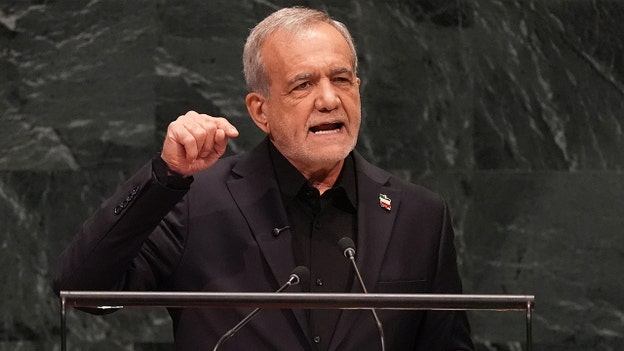
Iranian President Masoud Pezeshkian said Iran remains engaged in negotiations with the United States and is willing to discuss limits on its nuclear program, but argued Washington must first demonstrate that it is not seeking to overthrow his government.
“We're still talking, we're still engaging in dialogue, and we're making our demands within the framework of international law,” Pezeshkian said via translator in an interview with CBS’ “Face the Nation” that aired Sunday.
The interview was conducted Friday, a day before President Donald Trump publicly rejected Iran’s latest proposal to reopen the Strait of Hormuz and resume nuclear negotiations.
Pezeshkian said Iran was prepared to move forward with its latest proposal to the U.S., which he described as being based on the framework of an earlier memorandum between the two countries.
“If the United States agrees to proceed in that way, everything will return to the way it was before,” Pezeshkian said. “These are things that both sides need to open up first. Then we can sit down at the negotiating table and discuss other issues at hand.”
Asked whether he could guarantee Iran’s military would abide by the proposal if President Donald Trump accepted it, Pezeshkian replied, “Obviously, we will abide by whatever we commit to.”
The Iranian president also said Tehran was willing to negotiate limits on its nuclear program, maintaining that Iran does not intend to develop nuclear weapons.
“Of course we agree,” Pezeshkian said when asked about nuclear limits. “We had already reached an understanding on this in our previous talks.”
Pezeshkian also indicated that access for international nuclear inspectors could be negotiated as part of a broader agreement.
“If they want to come in and have inspections, we can reach accords and agreements vis-à-vis that specific topic within the negotiations,” he said.
But Pezeshkian said deep distrust between Washington and Tehran remains an obstacle to direct talks, arguing that the U.S. must demonstrate that it “does not intend to overthrow our government or our administration.”
“We don't want to fight, but certainly if they strike us, we will defend ourselves,” Pezeshkian said.
Trump expects more talks with Iran this week after rejecting Tehran’s proposal
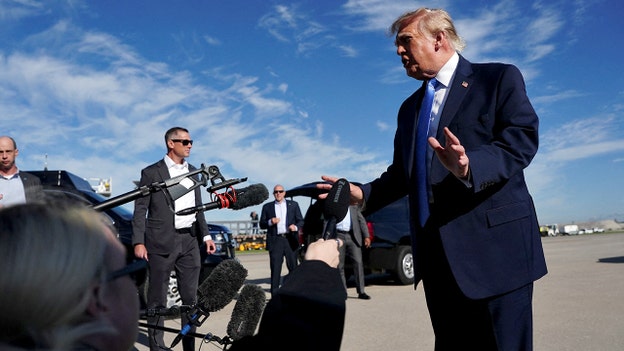
President Donald Trump said Sunday that he expects the U.S. to hold more talks with Iran this week, one day after rejecting Tehran’s latest proposal to reopen the Strait of Hormuz and resume nuclear negotiations.
“I expect more talks with Iran [this week],” Trump told Axios during a phone interview. “They want to make a deal, but it is not the deal that I want to make. It is what we would have maybe agreed to a year ago. They overplayed their hand.”
Two regional sources told the outlet that another round of indirect talks between the U.S. and Iran could take place as early as Monday, as Qatar and other regional mediators continue efforts to reach an agreement.
Trump also left open the possibility of renewed U.S. military action against Iran.
Asked whether he was considering resuming strikes against Tehran, Trump told the outlet, “I am always thinking about it.”
Trump also told the outlet that more than 20 million barrels of oil moved through the Strait of Hormuz over the weekend, which he said was the largest amount since the war began.
A U.S. defense official further told the outlet that 22 million barrels of oil were exported through the strait Friday night.
Sen. Mark Kelly calls Iran war a ‘disaster,’ blames Trump’s ‘failed leadership’
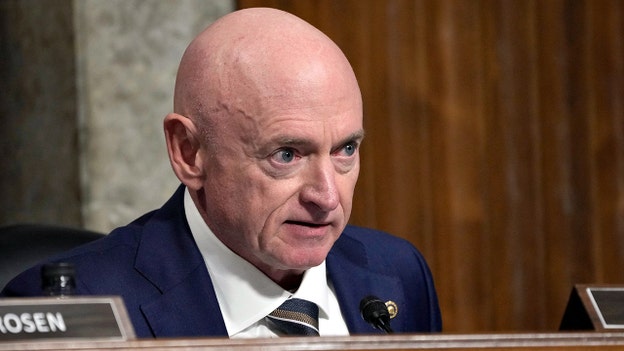
Sen. Mark Kelly, D-Ariz., sharply criticized President Donald Trump’s handling of the war with Iran on Sunday, calling the conflict a “disaster” and a “mistake” while accusing the president of entering it without a clear strategy.
“The president got into this without a strategic goal, without a plan, without a timeline, without an exit strategy,” Kelly said during an appearance on ABC’s “This Week.” “He’s stuck.”
Kelly blamed Trump for the course of the conflict and argued that the administration’s approach had left the U.S. worse off.
“This thing has been a disaster, and it’s been a mistake, and it’s because of the failed leadership of this president,” Kelly said.
Kelly also criticized the administration’s approach to negotiations with Tehran, taking aim at the involvement of Trump’s son-in-law Jared Kushner.
“He’s got his son-in-law trying to negotiate this with his Gulf and real estate buddy,” Kelly said. “I mean, they’re not the best people in our country to do this.”
Kelly argued that the administration should instead rely on officials with experience dealing with Tehran.
“You have to get some professionals who understand the Iranians and know how to negotiate with them,” he said.
The Arizona Democrat said Iran should not be allowed to control the Strait of Hormuz or obtain a nuclear weapon, but argued that the U.S. was in a better position before the conflict began.
“I think what the president would love to do is get back to where he was before he started this thing,” Kelly said.
Iran foreign minister says Tehran prepared for ‘doomsday war,’ but remains open to diplomacy
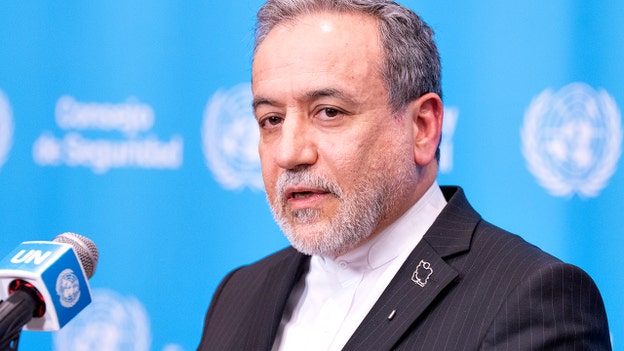
Iranian Foreign Minister Abbas Araghchi said Sunday that Tehran is prepared for fighting with the United States to resume — even if it leads to a “doomsday war” — while insisting Iran remains open to diplomacy with President Donald Trump.
Araghchi made the remarks to NBC News’ “Meet the Press” when asked about a Wall Street Journal report that Trump could seek to resume bombing Iran after the U.S. midterm elections.
“We are fully prepared for the war to be resumed,” Araghchi said. “We stand firm in the face of any new aggression, even if it comes to a doomsday war.”
“At the same time, we stand ready for diplomacy,” he added. “It is up to President Trump to choose.”
The comments come after Trump publicly rejected Iran’s latest proposal to reopen the Strait of Hormuz and resume negotiations.
Despite Trump’s announcement, Araghchi said Tehran had not yet received an official rejection through the mediators handling communications between the two countries.
Iran remains willing to reopen the Strait of Hormuz as part of an agreement ending the conflict, Araghchi said, but is demanding that frozen Iranian assets be released and that Tehran be allowed to sell its oil.
“We want our monies, our assets, which are illegally frozen, to be released,” Araghchi said. “We want to be able to sell our oil.”
Araghchi argued that Iran’s conditions were not new and said Tehran was continuing to pursue negotiations despite its grievances with Washington.
“If you ask us, there is no reason why we should go back to diplomacy,” Araghchi said. “But I am still trying diplomacy because I think we shouldn’t miss any chance for peace.”
Araghchi also dismissed the suggestion that Iran’s decisions are being driven by the upcoming U.S. midterm elections.
“We don’t care about U.S. midterm elections,” he said. “We care about our national interests.”
Waltz reveals why Trump rejected latest Iran proposal
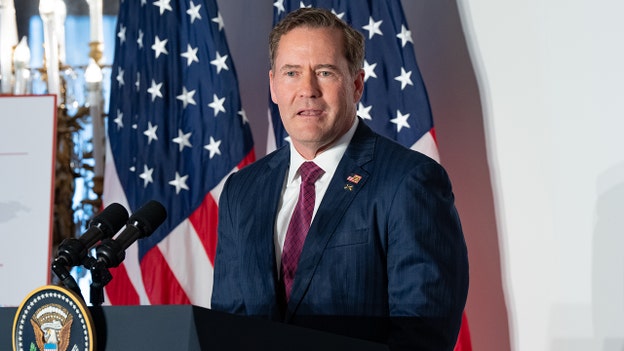
U.S. Ambassador to the United Nations Mike Waltz said Sunday that President Donald Trump rejected Iran’s latest proposal because Tehran was seeking concessions upfront while offering only a promise to negotiate afterward.
“The bottom line is, they were asking for everything up front with a promise that they would then talk,” Waltz said during an appearance on CNN's "State of the Union."
Waltz said Trump was not confident Iran was negotiating in “good faith,” pointing to what he described as Tehran’s violation of a previous memorandum of understanding and attacks on international shipping.
“The president's just not confident that the Iranians are coming in good faith and that [they] will truly negotiate the end of their nuclear program,” Waltz said.
Waltz also pushed back on a Wall Street Journal report that Trump wants bombing of Iran to resume after the midterm elections, noting that the president had not publicly said that.
“I don't think that the president has said that himself. That's some reporting by a newspaper,” Waltz said.
Waltz said Trump has argued that Iran is miscalculating if it believes U.S. policy toward Tehran is being driven by domestic politics.
“The president is looking to make not just this generation, but the next generation safer,” Waltz said, while reiterating the administration’s opposition to Iran obtaining a nuclear weapon.
Trump predicts Iran war will end ‘soon,’ oil prices will ‘come plummeting down’
President Donald Trump predicted Sunday that the war with Iran will end “soon,” saying oil prices will “come plummeting down” once the conflict is over.
“As soon as Iran gives up, as soon as the war is over, which will be soon, oil is going to come plummeting down,” Trump told reporters on the White House South Lawn before departing for Illinois to attend the Presidents Cup golf tournament.
Oil prices fell about 2% Friday amid growing hopes for a truce between the U.S. and Iran. Trump rejected an Iranian ceasefire proposal Saturday, however, potentially renewing upward pressure on oil prices as uncertainty over the conflict continues.
Trump also said a record amount of oil moved through the Strait of Hormuz overnight, claiming it exceeded levels seen before the war.
“We’re taking tremendous amounts of oil out,” Trump said. “Last night we took a record amount of oil out from the strait, more than we took out before the war.”
Trump’s comments come as the administration continues to pressure Tehran over the Strait of Hormuz, a critical waterway for global energy supplies.
UK police arrest 'explosive' suspects near US airbase, key to Iran war
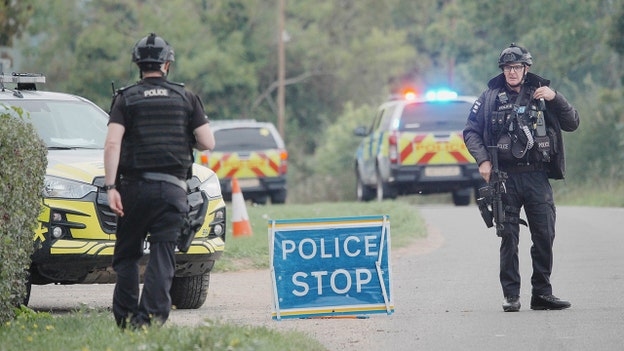
U.K. police say they arrested multiple suspects for offenses under the "Explosives Act" near a U.S. airbase in southwest England on Sunday.
Gloucestershire Police say the arrests took place just two miles from RAF Fairford, which hosts U.S. Air Force assets. The U.S. has recently used the base in operations relating to the war in Iran.
"A number of properties are currently being evacuated in the Whelford area following the declaration of a major incident," Gloucestershire Police said in a statement. "It follows the arrest of several men on suspicion of offenses under the explosives act."
"The Army's specialist explosive ordnance disposal team are currently examining a number of vehicles," police added.
Authorities did not name the suspects or detail exactly how many were arrested.
British Defense Secretary Wes Streeting wrote on X that the situation is "being dealt with."
This is an excerpt from an article by Fox News Digital's Anders Hagstrom.
Trump rejects Iran proposal as Bessent says economic pressure is ‘delivering results’
President Donald Trump said Saturday that he rejected Iran’s proposal to reopen the Strait of Hormuz and resume nuclear talks, as Treasury Secretary Scott Bessent said the administration’s economic pressure campaign against Tehran is “delivering results.”
Under the Iranian proposal, Tehran would reopen the key waterway and resume nuclear negotiations within seven days if the U.S. lifts its naval blockade of Iranian ports, waives sanctions on Iranian oil sales and observes a ceasefire that would include Lebanon.
“They want to make a deal, and I think that’s fine. I like making a deal, too, but that deal would not be acceptable,” Trump told reporters Saturday.
Trump claimed the U.S. has “total control” of the Strait of Hormuz and said 29 ships passed through the waterway Friday night.
“What they want to do is immediately open the Hormuz Strait. You know why? Because they’re dying,” Trump said, arguing that Iran has been cut off from revenue. “They have no money coming in.”
Treasury Secretary Scott Bessent, meanwhile, said Saturday that the administration’s economic pressure campaign against Iran is prompting countries and financial institutions to restrict business with Tehran.
Bessent said Treasury officials were dispatched around the world following the launch of Operation Economic Outcast to press governments to take action against Iran.
“These efforts are delivering results,” Bessent wrote on X, pointing to restrictions involving Iranian airlines and commercial banks in Türkiye, Oman and the United Arab Emirates.
Bessent also cited the declining value of Iran’s currency as evidence of the economic toll on Tehran and said the administration would continue its pressure campaign.
The developments come as Iranian President Masoud Pezeshkian departed New York for Tehran following the annual gathering of world leaders at the United Nations. During his U.N. appearance, Pezeshkian pushed back against Trump’s threats against Iran while also signaling that Tehran remains open to diplomacy.
Fox News Digital’s Greg Norman-Diamond and Brittnay Miller contributed to this report.
Trump's comments prompted Pezeshkian to change approach to UN address
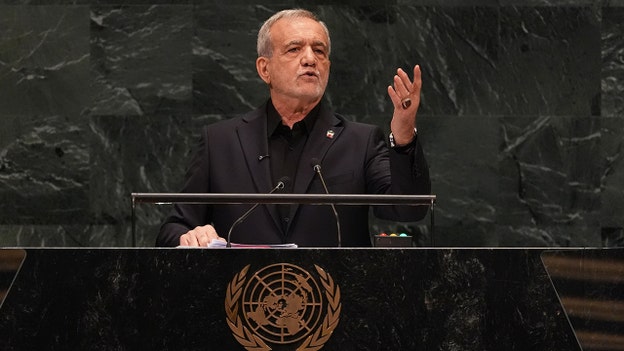
Iranian President Masoud Pezeshkian said he adjusted his U.N. General Assembly address after hearing President Donald Trump's comments while in New York.
Pezeshkian, who returned to Tehran after a five-day trip, said Trump's remarks prompted him to respond more directly from the General Assembly podium.
“After arriving in New York and learning of the US president’s remarks, our approach to the General Assembly speech was affected by them,” Pezeshkian said.
Pezeshkian said the shift led him to defend Tehran's positions “explicitly” during his address as tensions between the U.S. and Iran continue.
US ambassador to NATO says Trump 'right to reject' Iran's latest deal
U.S. Ambassador to NATO Matthew Whitaker backed President Donald Trump's rejection of Iran's latest proposal Saturday, arguing that Tehran's economic troubles have left it eager to reach a deal.
"President Trump has been so successful with the naval blockade and the sanctions. Their economy is crippled. They are completely broke. Their currency is weak. Inflation is high, and you know they desperately want a deal," Whitaker said on "The Big Weekend Show."
Whitaker said the U.S. position remains that Iran cannot have a nuclear weapon and must abandon its nuclear program.
"But these kind of half measures that they offer or illusory deals to make themselves look good on the world stage are just not acceptable. And so President Trump's right to reject it," he said.
Whitaker also addressed the Strait of Hormuz, saying the U.S. is in "total control" of the key waterway and that the American blockade is preventing Iranian vessels from transiting while allowing other shipping to pass.
Live Coverage begins here