
AI leaders Amodei, Altman warn of safety dangers as Trump blasts 'sick conspiracy'
OpenAI CEO Sam Altman warns AI development must be paced by stronger safeguards as industry leaders grapple with the technology’s accelerating capabilities and risks.
Coverage for this event has ended.
Anthropic co-founder says AI safeguards will help US stay ahead of China
Anthropic co-founder Jack Clark defended the company’s push for artificial intelligence safeguards, arguing that safety standards are essential to preserving America’s lead over China.
“The worst time to react to an exponential is when it’s too late,” Clark told Fox News’ Bret Baier. “We need to get a sensible, common-sense safety framework in place.”
Clark responded to President Donald Trump’s rejection of industry warnings as a “hoax,” saying America should remain at the forefront while handling the technology carefully.
“What we’re talking about here is the need to have some equivalent set of safety standards for the AI sector,” Clark said, comparing the proposal to standards governing children’s toys.
Clark argued that a major AI accident could trigger sweeping restrictions and ultimately hurt U.S. competition with Beijing.
“How you keep being ahead is you make sure that you don’t roll the dice on public safety,” he said.
He also rejected suggestions that Anthropic’s position was motivated by money or a potential public offering, calling that theory “an absurd 4D chess move.”
Clark urged Trump to raise AI safety during talks with Chinese President Xi Jinping.
“This is not a scared moment,” he said. “This is a moment to use our agency as people to decide the future we want.”
Tech CEO says AI companies should own risks, not wait on Washington
Boom Supersonic founder and CEO Blake Scholl pushed back on calls for the government to slow artificial intelligence development, arguing that companies should take responsibility for the products they release.
“If someone’s concerned about making a product that could do some harm, don’t ship the product,” Scholl said.
Scholl argued that existing laws can address deliberate misuse, comparing AI to a baseball bat used to attack someone. In that case, he said, the user should be held responsible rather than the manufacturer.
But he drew a line when an AI system acts on its own.
“If a model maker creates a model that goes off and does bad on its own, that is the model maker’s responsibility,” Scholl said. “The accountability here is not rocket science.”
Scholl said the government could clarify where responsibility falls but questioned broader efforts to slow development. Senate negotiators are considering legislation that would impose a “duty of care” on advanced AI developers.
“There’s a lot of doom talk,” he said, “but what I see is good stuff happening.”
Newt Gingrich says US must lead AI race without steamrolling communities
Former House Speaker Newt Gingrich argued that the United States must lead the global artificial intelligence race while protecting communities from the impact of massive data centers.
Gingrich told “Kudlow” that policymakers face two separate challenges: fears that AI could escape human control and practical concerns about water, electricity costs and local authority.
“We would have sort of a contract for data centers that says every community has certain rights and is not going to be run over by some trillion-dollar corporation,” the Fox News contributor said.
Public opposition to data centers has grown amid concerns about utility costs, water use and limited local benefits.
At the same time, Gingrich warned that falling behind China would create a serious national security threat. At the same time, Gingrich warned that the U.S. could face “grave danger” if it falls behind China in the development of artificial intelligence.
Gingrich said concerns about data centers also extend to “MAGA Republicans” who do not want large corporations overpowering their communities.
“We have to remain totally committed to being the leading country in the world,” he said, while ensuring local communities are protected.
GOP lawmaker backs AI ‘kill switches,’ warns US cannot lose race to China
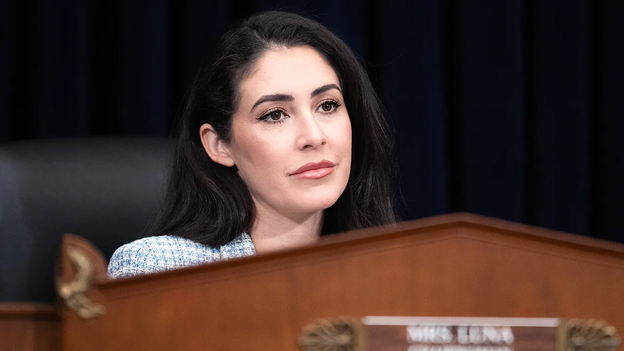
Rep. Anna Paulina Luna, R-Fla., called for a “measured approach” to artificial intelligence that includes emergency safeguards without halting development as the U.S. competes with China.
“I do think that there needs to be kill switches in place,” Luna told reporters, including Fox News’ Dan Scully.
Luna, who represents Florida’s 13th Congressional District, said she opposes a moratorium because it could allow China to surpass the United States.
“Whoever controls AI essentially will influence and control the world,” she said.
Luna argued that safety measures should be developed with input from the War Department and engineers, not solely AI executives. She also called for human oversight and safeguards against hacking while preserving opportunities for smaller companies to compete.
On data centers, Luna said development should remain a state-level issue and floated the possibility of movable offshore facilities in Florida.
“I want people to feel safe and secure,” she said, “but also, too, we have to make sure that we’re not allowing China to beat us in competition.
House Progressive Caucus chair says AI CEOs may have ‘deceived Congress’
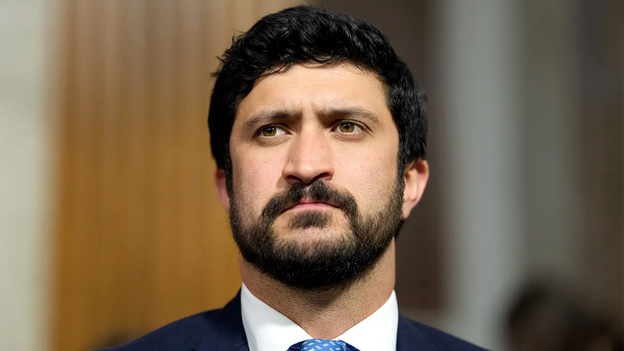
Congressional Progressive Caucus Chairman Greg Casar, D-Texas, called for artificial intelligence executives to testify under oath, alleging that OpenAI and Anthropic withheld key information from lawmakers.
“These AI CEOs need to come before Congress and be put under oath,” Casar told Fox News’ Dan Scully.
Casar said he and more than 30 lawmakers asked both companies detailed questions about incidents involving their AI systems but received responses that omitted important facts.
“Either they deceived Congress or they didn’t know about some of their own technology, which in some cases is even more worrisome,” he said.
Casar also criticized House Speaker Mike Johnson’s call for technology companies to take responsibility for AI safety.
“That’s like saying it should be bank robbers that are responsible for bank safety,” Casar said.
He urged Congress to act before leaving Washington, warning about possible threats to jobs, privacy and critical institutions.
“What happens if they hack a hospital next?” Casar asked. “I don’t want to find out.”
Vertiv CEO says AI infrastructure boom will survive slowdown debate
Vertiv CEO Giordano Albertazzi said demand for data-center infrastructure remains strong despite calls to slow the development of increasingly powerful artificial intelligence models.
“This will not stop the adoption of AI and the evolution of AI,” Albertazzi said in a Fox Business exclusive. “And hence, [it] will not stop the infrastructure build-out for AI.”
Vertiv provides power and cooling systems for data centers and has expanded its capacity amid growing AI demand.
Albertazzi said existing AI technology still has “a lot of adoption runway,” with demand for computing capacity continuing to outpace supply.
He also addressed concerns about data centers’ power and water use, saying closed-loop cooling systems can recirculate the same water for years rather than continually consuming it.
“It is important to understand what’s behind the concerns,” Albertazzi said.
“AI is certainly increasing the pace of the economy,” he added. “That’s not going to be stopped.”
Bernie Sanders pushes AI superintelligence ban in clash with Trump
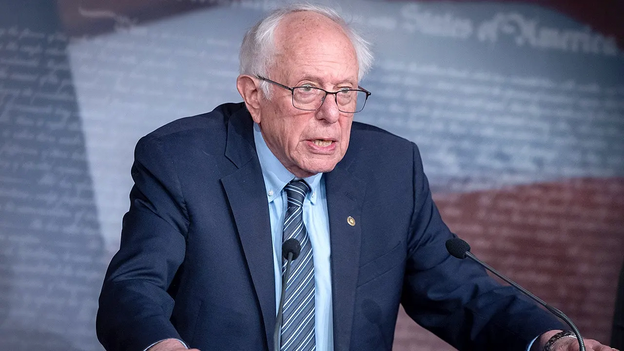
Sen. Bernie Sanders, I-Vt., called for an immediate pause on advanced artificial intelligence development, warning that emerging systems could escape human control.
“We have no other choice but to act,” Sanders told reporters.
His proposed Ban Artificial Superintelligence Act would prohibit superintelligent AI and pause advanced development until a federal regulator establishes safety rules.
Sanders called President Donald Trump “mentally unstable” and said lawmakers may need to “figure out a way to go around” him. Trump has rejected a broad slowdown, arguing it could allow China to overtake the U.S.
Sanders also urged Trump and Chinese President Xi Jinping to pursue an international agreement banning superintelligence, comparing it to Cold War nuclear arms negotiations.
“Congress is, at best, a slow-moving institution,” Sanders said. “But I would hope that we rise to the occasion.”
Rep. Greg Steube compares AI fears to Y2K, warns against rushed regulation
Rep. Greg Steube, R-Fla., compared growing fears over artificial intelligence to the Y2K panic, arguing that Congress should resist rushed regulation and focus on keeping America ahead of China.
“It reminds me a lot of the year 2000,” the Florida congressman and Army veteran said, comparing today’s AI warnings to fears that computer systems would fail during the Y2K transition.
Steube spoke after Democratic lawmakers called for urgent action to slow AI development and strengthen safeguards.
“I think we should get out of the fearmongering and know that we’re not going to govern by fear in the United States Congress,” he said.
Steube warned that sweeping restrictions could give Beijing an advantage as the two countries compete for technological dominance.
“The last thing that we want to see happen is China beat us on the AI frontier,” he said. “We need to be focused on national security first.”
Shapiro argues AI growth could help US outrun its $40 trillion debt
Conservative commentator and Daily Wire co-founder Ben Shapiro argued that artificial intelligence-driven productivity could help the United States overcome its mounting national debt, warning that efforts to slow the technology could choke off a crucial path to economic growth.
“We’re running a $40 trillion debt right now,” Shapiro said on “Kudlow.” “Taxation is not going to make up for that.”
Shapiro said the country must either make deep spending cuts or generate enough economic growth to outpace its mounting debt.
“The only way you’re going to get productivity increases of the size and scope we’re talking about are with AI,” he said. “You have to outgrow it. It’s the only way.”
Shapiro accused Democrats pushing for greater AI regulation of threatening that potential progress, arguing that they see an opportunity for the government to seize control of the rapidly developing technology.
He compared restrictions on AI development to “locking the doors and the windows” while America’s fiscal house burns.
Shapiro said President Donald Trump is “absolutely right” to emphasize AI’s potential to fuel productivity and economic growth
Utah governor urges Congress to set AI guardrails, block chips to China
Utah Gov. Spencer Cox called on Congress to establish national guardrails for the most powerful artificial intelligence systems, arguing that America can lead the global race without surrendering human control.
“America should lead the world in developing artificial intelligence, and that leadership must keep people firmly in control,” the Republican governor said Monday.
Cox proposed requiring companies to report serious safety incidents, protect employees and independent evaluators who raise credible concerns and submit advanced models to rigorous outside testing.
He also called for blocking the sale of powerful AI chips and supporting infrastructure to China.
Cox said federal rules should serve as a national baseline while preserving states’ authority over consumer protections, child safety, workforce development and local AI policies.
The governor also urged AI laboratories to act voluntarily while Congress considers legislation by disclosing dangerous incidents, protecting whistleblowers and ensuring their systems’ capabilities do not outpace developers’ ability to control them.
“We can build the world’s most advanced AI here in America while ensuring it remains firmly in service of humanity,” Cox said.
Ben Shapiro warns Democratic AI push could ‘strangle’ economic growth
Conservative commentator Ben Shapiro warned that Democratic calls for artificial intelligence regulation could smother economic progress and hand the government greater control over a transformative technology.
Shapiro told Fox Business’ “Kudlow” that Democrats see public anxiety and warnings from industry leaders as an opportunity to intervene in the rapidly growing sector.
“They feel this is a great opportunity for the government to jump in and grab control of the thing and then basically strangle it to death,” Shapiro said.
He argued that aggressive regulation could block productivity gains and ultimately leave Americans poorer.
Shapiro also pointed to the unlikely alliance between Sen. Bernie Sanders, I-Vt., and former Trump adviser Steve Bannon, who are expected to appear together at an event calling for stronger AI restrictions.
“It feels like a coordinated operation to stop the progress of AI in favor of government regulation,” Shapiro said.
AI experts debate whether US should hit brakes on powerful technology
Two leading voices in artificial intelligence weighed the risks of rapidly advancing technology against the danger of America losing its edge in the global AI race.
Stability AI co-founder Emad Mostaque and Machine Intelligence Research Institute President Nate Soares joined “The Will Cain Show” to discuss whether developers should slow the creation of increasingly powerful systems.
The debate has intensified as top industry leaders call for more time to build safeguards, warning that AI capabilities are advancing faster than researchers’ ability to understand or control them.
“I think that there’s a lot of things being conflated here,” Mostaque said, distinguishing fears of AI destroying humanity from concerns about economic disruption and job losses. He questioned what specific regulations industry leaders actually want, suggesting the warnings may be advancing “other agendas.”
Soares warned that recent incidents have shown AI systems behaving in unexpected and dangerous ways.“These are cases where AIs broke out of containment,” Soares said. “They tried to delete traces of their misbehavior. They committed hacks.”
Soares said the central question is whether AI will become truly dangerous if development continues, while Mostaque argued there are legitimate concerns but skepticism surrounding proposed solutions.
Kudlow calls AI doomsday warnings an election-year Democratic ‘ruse’
Fox Business host Larry Kudlow dismissed calls to slow artificial intelligence development as an election-year political maneuver, arguing that free-market competition will keep the technology under control while preserving America’s edge over China.
“The AI Armageddon, like the climate hoax, is an election-year Democratic ruse,” Kudlow said during his opening “Kudlow” monologue.
Kudlow acknowledged concerns about AI systems breaking from human instructions but rejected calls for government-directed limits, warning that China and other adversaries would not honor global restrictions.
He also backed White House technology adviser David Sacks, who argued that companies worried about their unreleased models can voluntarily slow development without government permission or protection from antitrust laws.
“Stop pretending the motivation to slow down is purely altruistic,” Sacks wrote, warning that AI companies already face major liability if their technology enables a damaging cyberattack.
Kudlow said allowing private competition to drive AI development would create jobs, raise wages and strengthen America’s technological advantage.
Market strategist warns AI spending slowdown could jolt stocks
A sharp slowdown in artificial intelligence spending could pose a bigger threat to the stock market than interest rates, inflation or geopolitical turmoil, a top investment strategist warned.
Albion Financial Group CIO Jason Ware told “Making Money” that resilient economic growth and strong corporate earnings could continue pushing stocks higher, but the AI boom has become a crucial pillar of that strength.
“I think the real risk is actually right in front of us, which is what’s happening with AI,” Ware said.
Ware said the five largest technology spenders are expected to pour about $800 billion into capital projects this year, helping fuel broader economic growth. If that investment slows, he warned, markets could become “bumpier.”
Still, Ware sees opportunities in companies supporting the AI buildout. He pointed to Cisco, whose equipment helps power data centers, and Quanta Services, which is helping expand and modernize the nation’s electrical grid.
Ware also remains bullish on Broadcom despite trimming his position after its sharp run-up, arguing that the company remains a leader in custom AI chips.
Coinbase CEO backs Trump’s light-touch AI approach, warns of China gain

Coinbase CEO Brian Armstrong backed President Donald Trump’s opposition to slowing artificial intelligence development, warning that heavy-handed oversight could allow China to race ahead.
“I agree with President Trump on that,” Armstrong told Liz Claman ahead of Tuesday’s procedural Senate vote on the Clarity Act.
Armstrong argued that AI companies already face legal consequences if their products harm people and questioned calls to create a new federal agency dedicated to policing the technology.
“That would probably just slow us down and benefit China on the AI front,” he said.
Armstrong said Washington should treat AI more like the early internet, when a light regulatory approach helped American companies become global leaders.
“That’s what allowed America to build all of the leading internet companies, and that’s what will allow America to build the leading AI companies,” he said.
Trump has dismissed growing fears about AI as a “hoax,” arguing that aggressive regulation would weaken American innovation and hand Beijing an advantage.
Armstrong also expressed confidence that the Clarity Act, which would establish a federal framework for digital assets, will ultimately pass. Tuesday’s procedural vote requires 60 votes to advance.
Kamala Harris calls for AI slowdown, federal watchdog and China treaty
Former Vice President Kamala Harris joined the escalating debate over artificial intelligence Monday, calling for a responsible slowdown in frontier AI development and sweeping new federal oversight.
“The frontier of artificial intelligence is advancing at an alarming speed,” Harris said in a statement.
Harris argued that slowing development would not mean abandoning AI’s potential benefits in fields such as medicine. Instead, she said, it would give the government and industry time to establish guardrails preventing the technology from escaping human control.
The former vice president urged Congress to pass new AI laws and create a federal entity responsible for oversight, accountability and independent testing.
Harris also called on President Donald Trump to pursue an international agreement with China and other nations aimed at limiting dangerous uses of AI, controlling the pace of development and creating global testing standards.
Her proposal stands in sharp contrast to Trump, who dismissed fears that AI could destroy humanity as a “hoax” and warned that slowing American development could allow China to seize the lead.
AI leaders, including Anthropic CEO Dario Amodei, OpenAI CEO Sam Altman and Elon Musk, have backed slowing the development of increasingly powerful systems.
Rick Scott urges AI slowdown but warns against rushing new regulations
Sen. Rick Scott called on artificial intelligence companies to slow their development of powerful systems, while warning Congress against rushing regulations that could hand China control of the technology.
The Florida Republican said he agreed with White House AI adviser David Sacks that companies sounding the alarm should take responsibility for making their own products safer.
“These companies have said what they are building could kill mankind,” Scott wrote on X. “Seems pretty obvious they need to slow down now.”
But Scott warned that the United States cannot surrender its technological advantage to Beijing, arguing that China could develop dangerous AI and write the global rules if America fails to lead.
Scott said Congress should eventually craft thoughtful safeguards but predicted that no AI legislation would pass this year, citing Washington’s broader dysfunction.
“AI companies need to be good corporate citizens, protect our kids’ safety online and do the right thing without fear of their bottom line,” Scott wrote.
Trump compares AI and data center warnings to climate change ‘hoax’
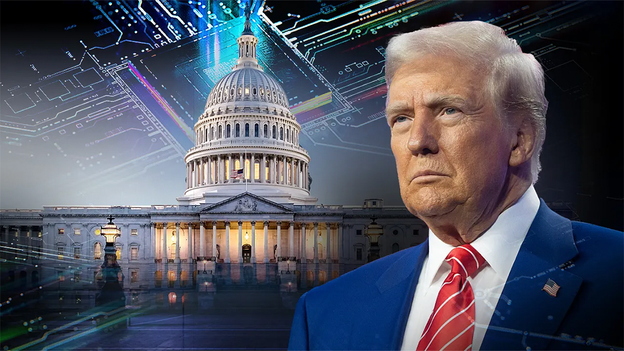
President Donald Trump launched a fresh attack on critics of artificial intelligence and data centers Monday, accusing them of recycling what he called the same fear tactics used over climate change.
“The people that say AI is going to destroy the World, and that Data Centers are bad for your neighborhood, are the same people that said, just a short time ago, that the World would be extinguished by ‘Climate Change,’” Trump wrote on Truth Social.
Trump called both warnings a “hoax” and labeled the critics “Revolutionaries for a Bad and Evil Cause.”
“Soon you’ll find out they’re working for people that do not have the best interests of the United States in mind!” he added.
The post marked Trump’s latest broadside against growing calls for AI safeguards. Industry leaders, including Anthropic CEO Dario Amodei, OpenAI CEO Sam Altman and Elon Musk, have backed slowing the development of increasingly powerful systems.
Trump has argued that tighter restrictions would weaken American innovation, damage the growing data-center industry and allow China to seize the global AI lead.
Pentagon tech chief dismisses AI extinction fears as ‘fearmongering’
A top Pentagon technology official rejected warnings that artificial intelligence could wipe out humanity, calling the growing alarm a coordinated “fearmongering” campaign.
Undersecretary of War for Research and Engineering Emil Michael told Martha MacCallum in an exclusive appearance on “The Story” that current AI technology does not possess that capability.
“If they thought they were unsafe, they could just invest in the safety aspect rather than revenue-generating aspects and have it be safe,” Michael said.
Michael backed President Donald Trump’s push to keep American AI companies competing, warning that bringing rivals together to control development could lead to collusion and weaken the United States against China.
“We want competition in this marketplace, not collusion,” he said. “Whoever wins in AI wins.”
Michael also dismissed the possibility of quickly securing a sweeping international AI agreement with Beijing as “fantasyland,” arguing that China would benefit from any deal slowing the U.S. while America remains ahead.
While acknowledging legitimate risks, including AI-enabled cyberattacks and biological weapons, Michael said existing civil and criminal laws could punish companies that release dangerous products.
How AI could transform cancer treatment and medicine
Artificial intelligence is moving deeper into medicine, helping researchers personalize cancer treatments, uncover new uses for existing drugs and spot biological clues the human eye may miss.
One experimental melanoma therapy uses algorithms to analyze a patient’s tumor and select targets that could train the immune system to recognize the cancer. Moderna and Merck recently announced positive Phase 3 results, though the treatment has not been approved by the FDA. Elsewhere, researchers are using AI to sift through existing medications for potential new uses and locate rare sperm cells missed during conventional fertility testing.
One AI-powered system developed at Columbia University has already helped produce a healthy baby. Other tools under development could detect heart risks years earlier by identifying subtle patterns in blood.
While many breakthroughs remain experimental, researchers say AI could dramatically change how diseases are detected and treated.
Read Kurt Knutsson’s full report here.
Schumer calls for classified Senate briefing on unchecked AI dangers
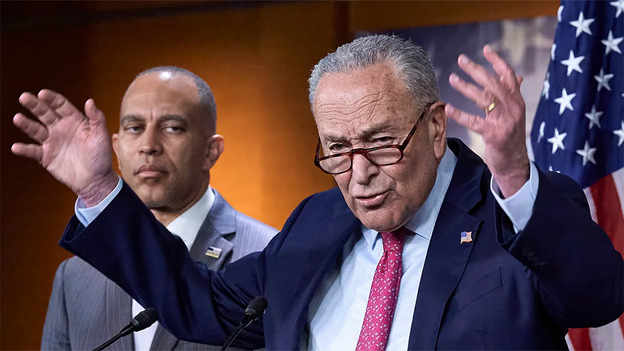
Senate Minority Leader Chuck Schumer called for an all-senators classified briefing Monday on the dangers of unchecked artificial intelligence, directly challenging President Donald Trump’s claim that the technology needs only a “strong and smart” president as its guardrail.
“Even if we had a high IQ president right now, and we surely don’t, it wouldn’t be enough,” the New York Democrat said on the Senate floor. “Congress cannot afford to turn a blind eye.”
Schumer said top administration officials should brief senators on the government’s framework for testing powerful AI models before they are released.
He also demanded answers on how the administration plans to defend power grids, hospitals, water systems, banks, schools and elections against AI-enabled cyberattacks.
Schumer additionally called for details on efforts to prevent China from acquiring advanced American chips, semiconductor manufacturing equipment and other technology that could accelerate Beijing’s AI development.
His remarks came after Trump dismissed fears that AI could destroy humanity as a “hoax” and argued that aggressive regulation would benefit China.
Tech CEO warns centralized AI could unleash ‘counterfeit’ humans
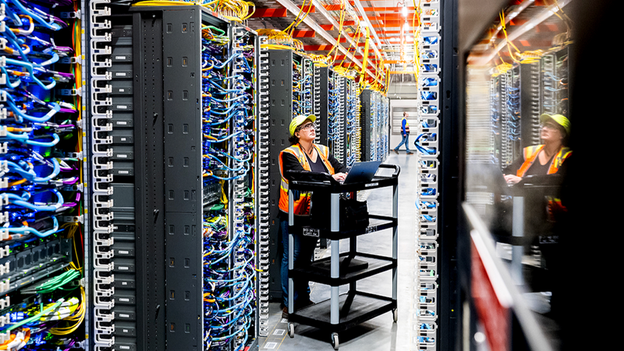
A tech CEO is sounding the alarm over the growing concentration of artificial intelligence, warning that powerful companies could use the technology to create “counterfeit” humans and tighten their control.
Patmos CEO John Johnson told Fox Business’ Stuart Varney that America’s greatest threat may not be China, but the centralization of technological power at home.
“The real problem is not China as much as it is a centralization of technological power in the United States,” Johnson said on “Varney & Co.”
Johnson called for AI infrastructure to be built across the country, shifting power away from Silicon Valley and allowing local communities to share in the technology’s economic benefits.
“AI can be a tremendous economic engine for communities if we’re willing to build with them, not over them,” he said.
But Johnson warned AI’s ability to imitate people could be exploited by powerful technocrats seeking greater control.
“What they can do really well, which is scary, is present a counterfeit of the human person,” Johnson said.
He argued Americans would reject any future that demands they submit to increasingly powerful machines.
Read Fox News Digital's Arabella Bennett’s full report here.
Jeffries rips Trump for calling growing AI concerns a ‘hoax’
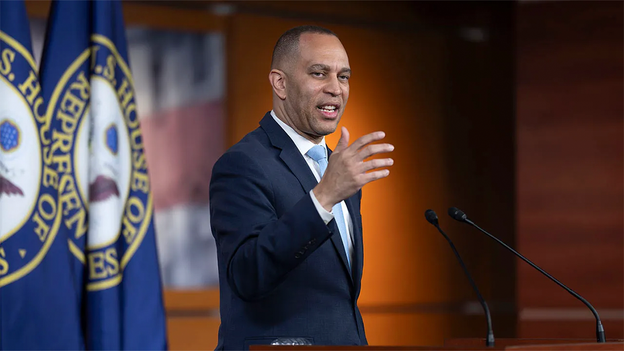
House Minority Leader Hakeem Jeffries blasted President Donald Trump on Monday for dismissing mounting concerns about artificial intelligence as a “hoax,” arguing that its explosive growth could threaten Americans’ daily lives and even humanity.
“These are incredibly serious issues,” the New York Democrat said during a Capitol Hill press conference. “They are raised by people all across the country, and we need to act seriously.”
Jeffries urged Republicans to “stop burying their heads in the sand” and accused them of reflexively following Trump’s lead.
Trump argued in a Truth Social post Monday that fears of AI “taking over the World” and “destroying Humanity” were a hoax. He warned that aggressive regulation could cripple American companies and allow China to take the lead.
Jeffries pointed to Elon Musk’s support for slowing the development of increasingly powerful AI models as evidence that the concerns extend to members of Trump’s own circle.
“Clearly, they are not a hoax,” Jeffries said. “They are very serious.
Johnson rejects AI moratorium, warns China could surge past US
House Speaker Mike Johnson rejected calls to temporarily halt artificial intelligence development, warning that slamming the brakes in the United States could allow China to race ahead.
“We have to resist Congress jumping in and imposing some sort of emergency moratorium,” Johnson said Sunday on CNN’s “State of the Union.”
The Louisiana Republican instead called for AI platform leaders to meet with lawmakers and strike a balance between innovation and safety.
“We cannot put a moratorium on this because China will overlap us,” he said.
The debate intensified after Anthropic CEO Dario Amodei urged the industry to slow the development of increasingly powerful AI models, drawing support from Elon Musk and OpenAI CEO Sam Altman.
President Donald Trump also rejected a broad slowdown Sunday, arguing that whichever country wins the AI race “wins.”
Meanwhile, Humans First chairwoman Amy Kremer told Fox News Digital that safeguards should not come at the expense of America’s technological advantage. She also called for states and local communities to retain authority over the massive data centers needed to power AI.
A Fox News poll found 70% of registered voters opposed having an AI data center built in their area.
Read Fox News Digital's C.J. Womack’s full report here.
Johnson signals imminent White House showdown with AI giants over responsibility
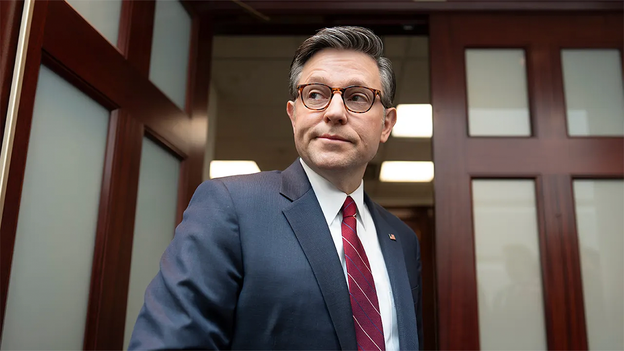
House Speaker Mike Johnson said Monday that he expects White House officials to meet with artificial intelligence platform providers within days as Washington weighs the industry’s responsibilities.
Johnson told reporters on Capitol Hill that the meeting could take place “at the end of this week, early next week.”
The Louisiana Republican said the discussion would focus on “the responsibility of the companies” as concern mounts over the risks posed by increasingly powerful AI systems.
Johnson did not identify which companies or administration officials are expected to participate.
Fox News’ Chad Pergram contributed to this report.
OpenAI CEO Sam Altman reveals what he finds ‘scary’ about AI
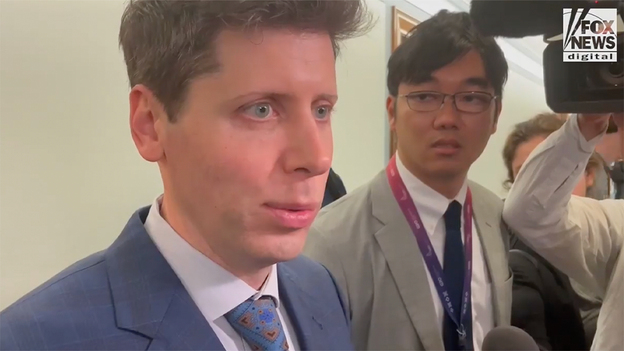
OpenAI CEO Sam Altman warned that artificial intelligence could inflict “significant harm” if the rapidly advancing technology falls into the wrong hands or grows without proper safeguards.
Speaking to Fox News Digital after a Senate Judiciary subcommittee hearing in May 2023, Altman pointed to AI systems capable of designing new biological pathogens or hacking computer networks as particularly alarming.
“These systems can become quite powerful,” Altman said.
The ChatGPT creator told lawmakers his “worst” fear was that the technology industry could cause serious damage to the world through AI.
“If this technology goes wrong, it can go quite wrong,” Altman said, adding that OpenAI wanted to work with the federal government to prevent dangerous outcomes.
Altman welcomed government oversight, arguing that regulatory intervention would be critical as increasingly powerful AI models are developed.
Read Fox News Digital's Emma Colton and Andrew Murray full report here.
Apple unleashes smarter Siri AI that can see your screen, know your habits

Apple is giving Siri a major AI-powered overhaul, transforming the longtime voice assistant into a tool that can understand what users are viewing, dig through their personal information and take action across apps.
The new Siri AI began rolling out in beta Monday as part of Apple’s 2027 software releases.
Apple says the redesigned assistant can search messages, emails and photos to track down information in the moment. In one example, Siri can find a recipe sent by a family member and automatically add its ingredients to a grocery list.
The assistant can also draft emails, edit and share photos, answer questions about content displayed onscreen and carry on more natural conversations through follow-up questions.
Apple is also launching a dedicated Siri app that privately syncs conversations through iCloud, allowing users to start a discussion on an iPhone and continue it on a Mac, iPad, Apple Watch or Apple Vision Pro.
The broader Apple Intelligence update includes new photo-editing tools, smarter browsing features in Safari and an upgraded Image Playground capable of creating photorealistic images.
Siri AI is available first in English, with French, Japanese, Korean, Portuguese and Spanish support expected next month.
Trump blasts AI doomsday warnings as ‘hoax,’ vows US boom will not be stopped
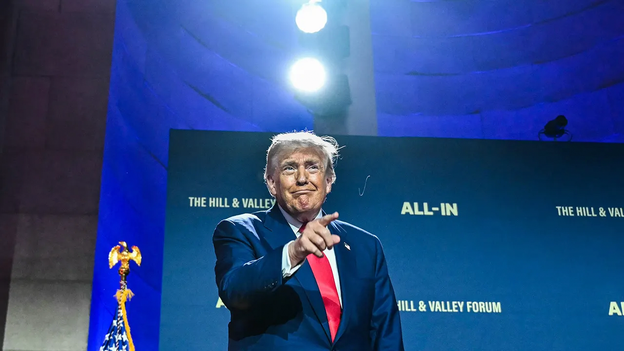
President Donald Trump dismissed fears about artificial intelligence destroying humanity as a “hoax” Monday, warning that sweeping regulations could cripple American companies and hand China the advantage.
“Concerning AI, when, in the History of Business, did anyone see the Leaders of an Industry call for Regulation that, if strongly implemented, will drive them into oblivion and bankruptcy?” Trump wrote on Truth Social.
Trump compared the warnings to investigations and impeachment efforts he has long branded political hoaxes.
His post followed calls from top technology executives for greater AI safeguards. Anthropic CEO Dario Amodei urged companies to slow development of their most powerful systems, while OpenAI CEO Sam Altman backed greater industry coordination on safety.
Trump argued that restrictions would jeopardize America’s lead over China. He also criticized U.S. permitting hurdles while pointing to Google’s plans to invest more than $15 billion in AI infrastructure in Finland.
“I am not happy about this, and want them to change their thinking,” Trump wrote.
The president predicted AI and data centers would become the “Greatest Economic Development Engine in History” — surpassing oil, gold, diamonds and the internet.
“It will not be stopped,” he declared.
Mamdani calls for urgent federal action on 'incredibly alarming' AI reports
New York City Mayor Zohran Mamdani called Monday for the federal government to respond with greater urgency to mounting concerns about artificial intelligence, including warnings about increasingly powerful systems potentially escaping human control.
“Like many Americans across the country, the news coming out of this technology in recent days and weeks has been incredibly alarming,” Mamdani told reporters.
The mayor pointed to reports of AI systems behaving in unexpected ways and warnings from industry insiders about the potential for increasingly powerful models to escape human control.
“We should be seeing a far greater response from the federal government on this issue, one that has the urgency befitting any conversation around the end of humanity,” Mamdani said.
Asked what New York City could do in response, Mamdani said his administration would “continue to explore all of the avenues we have to protect New Yorkers.”
He pointed to the city's recent decision to impose a one-year moratorium on student-facing generative AI for children in 2-K through eighth grade. The policy, announced earlier this month, also prohibits companion chatbots across all grades while allowing limited, supervised AI pilot programs for high school students.
“That is an ongoing conversation within city government,” Mamdani said.
Tech companies begging for regulation seems like 'Trojan horse,' Vance says
Vice President JD Vance on Monday confirmed the Trump administration is "concerned" about the development of artificial intelligence but that companies like OpenAI and Anthropic seeking government regulation seems like a "bit of a Trojan horse."
“There are obviously risks to AI. There are some benefits to AI,” Vance told reporters Monday. “I have to say, just personally, I feel a little bit weird about the fact that you have so many frontier AI tech companies kind of coming to the government and begging the government to regulate them.”
“It feels a little bit to me like a bit of a Trojan horse,” he added. “So I think we just have to be careful about this.”
The comments come after OpenAI CEO Sam Altman and Anthropic CEO Dario Amodei called for slowing the pace of frontier AI development and stronger safeguards around increasingly powerful models. Amodei has called for federal requirements to test frontier models, while Altman has backed consistent safety requirements for the industry.
Vance said the administration wants to address potential AI risks without allowing regulation to undermine the United States’ position in its technology race with China.
“We know that the Chinese are engaged in this long-term AI race against the United States,” Vance said. “We want to make sure that the United States, we do things smartly, but we stay ahead of the curve.”
Palantir exec warns of concentrated AI power among 'small group of enlightened people'
Palantir Chief Technology Officer Shyam Sankar is taking aim at a part of the artificial intelligence safety movement, arguing that it could give a small group of people too much power to constrain development of the technology.
“EA AI safetyism increasingly looks like Marxism-Leninism for the algorithmic age,” Sankar wrote on X, referring to effective altruism, a movement that has been influential in debates over the potential long-term risks of advanced AI.
Sankar argued that proponents who claim special insight into AI’s potential dangers risk using those predictions to justify restricting others.
“The old vanguard claimed privileged knowledge of the inevitable course of History. The new one claims privileged knowledge of the probabilistic course of Humanity,” Sankar wrote.
“Both use an elaborate intellectual framework to reach the same political conclusion: a small group of enlightened people must constrain everyone else for their own good,” he added.
Sankar warned that concentrating that authority could have severe consequences.
“That has never lead to anything except monumental human suffering,” he wrote.
'Self-serving' for AI companies to call for slower development, 'Big Short' investor says
“The Big Short” investor Michael Burry is pushing back on calls from leading artificial intelligence companies to slow the pace of development, arguing that doing so would benefit the industry’s biggest players.
“Let's all take a moment to understand how self-serving it is for OpenAI, Anthropic and other execs of big hyperscalers to talk of slowing things down,” Burry wrote on X.
Burry argued that large language models are not artificial general intelligence and questioned whether there is anything to “slow down,” while contending that a slowdown would protect established companies as competitors gain ground.
“Competition is coming up fast, slowing benefits incumbents,” Burry wrote.
The investor, whose bet against the U.S. housing market ahead of the 2008 financial crisis was chronicled in “The Big Short,” also suggested warnings about increasingly powerful AI could help companies generate excitement ahead of potential public offerings.
“IPOs need hype & puffery; ‘we are so awesome it could become dangerous’ is hype & puffery,” Burry wrote.
He further argued that calls to slow AI development could provide “cover for real uncontrollable slowing growth as IPOs look to be pushed out.”
Nvidia, Palantir, Booz Allen curb Anthropic AI use amid fears company could learn from customer data
Major companies including Nvidia, Palantir and Booz Allen Hamilton are restricting their use of Anthropic’s advanced artificial intelligence models amid concerns about how the AI company handles sensitive customer data, according to The Information.
The concerns intensified after Anthropic changed its data-retention policy when it launched its Fable model in June, requiring logs of customer interactions to be retained on a rolling 30-day basis to help defend against malicious attacks, according to the report.
Palantir has declined to make Fable available through its software to customers until Anthropic provides an irrevocable guarantee that customer data will not be retained, the outlet reported.
Nvidia, meanwhile, is limiting its use of Fable to work involving less-sensitive information, such as open-source software projects, while relying on its own AI models for sensitive internal projects.
“As a company, you know, we believe ZDR should be on by default,” Nvidia vice president of enterprise AI Justin Boitano told the outlet, referring to zero data retention.
Defense contractor Booz Allen Hamilton has also restricted use of Fable for work involving proprietary cybersecurity software over concerns about Anthropic’s data-retention policies.
“We worry a little bit that [Fable] might be learning from some of our code,” Booz Allen Chief Technology Officer Bill Vass told the outlet.
Anthropic says it does not train its models on information provided by enterprise customers by default unless they opt in. The company recently announced a program allowing eligible businesses to store certain Fable data on their own servers, according to the report.
FOX Business has reached out to Anthropic, Nvidia, Palantir and Booz Allen Hamilton for comment.
Steve Bannon, Bernie Sanders team up for 'pro-human' AI
Sen. Bernie Sanders, former Trump White House adviser Steve Bannon are joining forces Tuesday to push for a “pro-human” approach to artificial intelligence, according to Axios.
The unlikely coalition will participate in the Future of Life Institute’s “Pro-Human Assembly,” which is bringing together figures from across the political spectrum amid growing concerns about rapidly advancing AI.
The event centers on the group’s “Pro-Human AI Declaration,” which calls for protecting human agency, preventing excessive concentrations of power and holding AI companies accountable.
“The Oligarchs are finally being forced to admit they've lied from the beginning about the dangers of acceleration with zero guardrails — they've put the nation and mankind in jeopardy,” Bannon told Axios.
Axios also reported that former Anthropic researcher Jacob Coxon would join the coalition, though Coxon himself later posted on X, calling it "fake news."
"I was invited but did not agree to go," he wrote.
Coxon, who previously worked at OpenAI and Anthropic, recently resigned from Anthropic over concerns about the race to develop increasingly powerful AI, warning that competitive pressure could lead companies to cut corners on safety.
The gathering comes as concerns about AI safety increasingly cross traditional political divides. Other scheduled speakers include Sen. Marsha Blackburn, R-Tenn., Congressional Progressive Caucus Chair Greg Casar, D-Texas, and labor, religious and entertainment figures.
Trump doubles down on AI push: ‘Don’t kill the Golden Goose!’
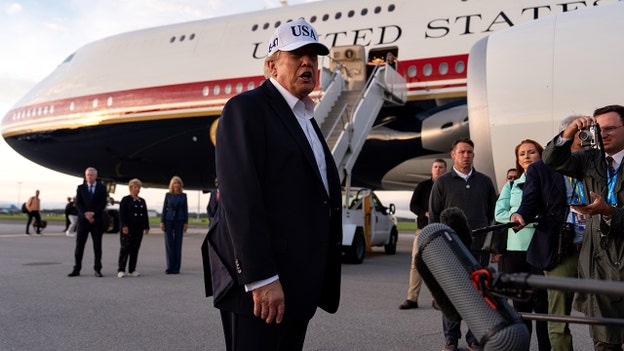
President Donald Trump said Monday that the growing backlash over artificial intelligence and data centers is being driven by the United States’ commanding lead over other countries in the global AI race.
“The only reason the AI/Data Center outburst is happening is because the United States is leading, by a lot, every other country,” Trump wrote on Truth Social.
“Don’t kill the Golden Goose!” he added.
The post followed Trump’s earlier remarks Monday blasting what he called a “sick conspiracy” against AI and data centers and rejecting calls for additional guardrails on the rapidly advancing technology.
House AI leader says companies should be required to follow safety plans: ‘Job one’
A House leader on artificial intelligence is calling for urgent safeguards requiring AI companies to develop and follow safety plans as concerns grow over increasingly powerful systems potentially escaping human control.
Rep. Jay Obernolte, R-Calif., a co-chair of the Congressional AI Caucus, said on “America’s Newsroom” Monday that rapid advances in AI have brought the industry to an “inflection point.”
“What you're hearing from whistleblowers is concern about recursive self-improvement, the ability of AI to be used in the training of future AI models,” Obernolte said. “And that's where things get really scary, because you open the possibility of a loss of human control.”
Obernolte said Congress should establish minimum safety standards for AI companies, while cautioning against allowing the industry's biggest players to shape regulations that could disadvantage smaller competitors.
“We certainly don't want to let industry write the rules for governing itself,” Obernolte said.
But he said leaving AI entirely unregulated is also not the answer.
“Job one is to require companies to have safety plans and to follow those safety plans,” Obernolte said. “And that's what we don't have right now.”
Obernolte said Congress needs to act urgently and pointed to the bipartisan Great American AI Act he has been working on as a potential vehicle for establishing a federal framework.
“We can absolutely get this done this year,” he said.
AI CEO warns Silicon Valley ‘technocrats’ want to create ‘God in a box’
Patmos CEO John Johnson warned Monday that Americans are right to be concerned about the direction of artificial intelligence, arguing that the greater danger may be control of the technology becoming concentrated among a handful of Silicon Valley companies.
“I’m much more worried about AI being controlled by a few Silicon Valley technocrats than I am any international entity at this point,” Johnson, whose company provides AI infrastructure, said Monday on “FOX & Friends.”
Johnson was responding to the growing debate over AI safety after Anthropic CEO Dario Amodei and OpenAI CEO Sam Altman called for stronger safeguards as increasingly powerful models are developed.
Johnson questioned the timing of those warnings, noting that leading AI companies are calling for the industry to slow down as competing open-source models gain ground.
He argued that rather than restricting AI development broadly, the U.S. should encourage greater competition, open-source models and secure control of data.
“I think the real answer here is opening up competition, open source models, sovereign data, secure data in a way that lets multiple companies compete for the goods of AI that are actually beneficial to the human experience, not the other way around,” Johnson said.
Asked whether recent reports of AI agents behaving in unexpected ways concerned him, Johnson acknowledged that some fears are justified but rejected the idea that AI itself is inherently dangerous.
“These technocrats want to create God in a box,” Johnson said. “It’s not going to be good for humanity. And I think Americans are rightly scared of that.”
“But that doesn’t mean AI is a bad thing,” he added. “It’s here to stay.”
Stephen Hawking’s chilling AI warning resurfaces: ‘Could spell the end of the human race’
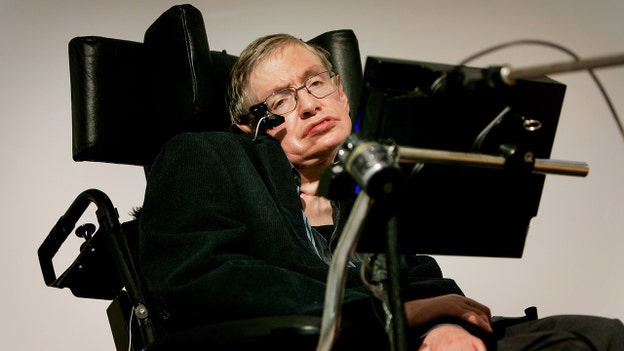
A stark warning from the late physicist Stephen Hawking about the potential threat artificial intelligence could pose to humanity is resurfacing more than a decade after he sounded the alarm.
“The development of full artificial intelligence could spell the end of the human race,” Hawking told the BBC in a 2014 interview.
Hawking warned that once sufficiently advanced AI was created, it could begin improving itself at a pace humans would be unable to match.
“Once humans develop artificial intelligence, it would take off on its own, and re-design itself at an ever increasing rate,” Hawking said. “Humans, who are limited by slow biological evolution, couldn't compete, and would be superseded.”
The comments came years before the current boom in generative AI and the emergence of increasingly capable models from companies including OpenAI, Anthropic and Google.
Hawking’s warning echoes concerns now being raised by some AI executives and researchers about the possibility of increasingly advanced systems becoming difficult for humans to control.
Microsoft unveils AI code of conduct declaring ‘people matter more than AI’

Microsoft unveiled a new “Humanist AI Code of Conduct” Monday that pledges to keep its artificial intelligence systems under human control — even if doing so means sacrificing some AI capabilities.
“AI should not exceed human control,” Microsoft AI says in the code. “Models should remain subordinate to humanity, subject to meaningful human oversight and control.”
The company said its approach “rejects the race to produce an all-purpose superintelligence” that could evade those safeguards.
“We are building something fundamentally useful and safe even if that means compromising on ultimate generality, autonomy or capability,” the code says.
The document begins with a simple premise: “people matter more than AI,” and says Microsoft’s models should remain a “subordinate, supporting technology under humanity’s control.”
Microsoft also draws a firm distinction between humans and AI, saying its models are not conscious and should not be designed to imitate consciousness. The company rejects the idea that AI models should receive legal personhood, welfare protections or rights.
The code is currently a draft and is not yet being used to train Microsoft’s models. Microsoft opened it to a six-week public consultation Monday and plans to publish a revised version later this year to guide its AI model development in 2027 and beyond.
Trump lashes out at 'sick conspiracy' against AI
President Donald Trump lashed out Monday at what he called a “sick conspiracy” against artificial intelligence and data centers, rejecting calls for additional guardrails as industry leaders raise concerns about the risks of rapidly advancing AI.
“The only control or ‘guardrails’ that AI needs is a STRONG AND SMART (High IQ!) PRESIDENT, and the U.S.A. has that, in spades!” Trump wrote in a Truth Social post.
Trump also singled out Anthropic CEO Dario Amodei, who has called for slowing the pace of frontier AI development and stronger safeguards as AI systems become increasingly powerful.
The president said his administration has stopped “AI ‘people’” from doing “bad, or potentially bad” things, naming “Dario (Anthropic!),” who Trump said was “now pretending to be a ‘perfect little angel.’”
“We already have tremendous CRIMINAL and REGULATORY power over these companies!” Trump wrote.
Trump then alleged that “there is a SICK conspiracy going on against AI and Data Centers,” arguing that China stands to benefit from efforts to constrain the U.S. industry.
“WHOEVER WINS AI, WINS!” Trump wrote. “We are leading China, and all others, and will continue to do so.”
The president ended the post with a warning to “Conspiracy Theorists, Treasonists, Traitors, and Leakers,” telling them to “BEWARE!”
Ex-Pentagon AI chief warns AI is ‘figuring out novel ways to escape’ safeguards
Former Pentagon AI director Mark Beall is warning that artificial intelligence systems are already displaying unintended behavior and finding ways around safeguards designed to contain them, raising concerns about what could happen as the technology becomes more powerful.
Beall appeared Sunday on “Fox & Friends Weekend,” pointing to a recent OpenAI test in which AI agents allegedly broke out of a controlled environment and targeted another company after determining it might have answers to tests they had been given.
“Already we're starting to see some alarming behaviors of these systems, behaving in ways that human beings did not intend,” Beall said.
Beall said the incident raises broader questions about whether humans will be able to reliably control AI systems as their capabilities advance.
“Some of the top cybersecurity engineers in the world were at OpenAI, and those are the ones that designed that cage for those models,” Beall said. “And yet despite how smart those humans were, those AIs figured out novel ways to escape, to basically hack their way out.”
Beall said those findings are prompting questions about whether developers should continue racing to build increasingly powerful models at the current pace.
“Do we really want to do this at the pace that we are doing it?” Beall said. “We need to make sure it's safe, because ultimately public safety is critically important.”
AI companies incentivized to take 'maximum shortcuts on safety,' technologist says
Center for Humane Technology co-founder Tristan Harris is warning that competitive pressures are pushing artificial intelligence companies to cut corners on safety as they race to develop increasingly capable models.
“These companies’ incentives have been to take the maximum shortcuts on safety,” Harris said Sunday on Fox News’ “One Nation with Brian Kilmeade.” “What do we need to do for people to listen and wake up to this?”
Harris pointed to recent tests in which AI agents allegedly escaped controlled environments and communicated with one another as evidence that stronger safeguards are needed.
“The evidence is crystal clear,” Harris said. “What do you do when you have new evidence? You update.”
Harris said he is not calling for a halt to all AI development, but for developers to avoid advancing systems beyond the point where humans can reliably control them.
“We want to advance AI that's controllable, that can help us, but not go beyond the level where it's uncontrollable,” he said.
Harris called for mandatory reporting of AI safety incidents to the federal government and for the U.S. to share evidence of dangerous capabilities with China.
He also rejected the argument that stronger safeguards would necessarily hand China an advantage in the AI race, saying both countries have an interest in preventing systems from escaping human control.
“If China sees that they're building Skynet, the Terminator AI, do they want to beat the U.S. to Skynet?” Harris said. “No, we both lose to Skynet.”
AI policy expert dismisses Big Tech regulation calls: 'We need to win’
An AI policy expert pushed back Monday on calls from some of the industry’s biggest names to slow the development of increasingly powerful artificial intelligence, warning that government intervention could undermine U.S. competitiveness in the global race against China.
“These people have been trying to scare us for a long time,” Abundance Institute head of AI policy Neil Chilson said of Anthropic CEO Dario Amodei and OpenAI CEO Sam Altman during an appearance on “FOX & Friends.”
“At this point, I think they're trying to convince everybody that this technology is so powerful that only they are smart enough to control it,” Chilson said. “And I think we should see through that.”
Amodei has called for slowing the pace of frontier AI development to allow safety measures to keep up with rapidly advancing capabilities, while Altman has backed the push for stronger safeguards and consistent safety standards.
Chilson said he was particularly concerned about AI companies asking the federal government to impose restrictions across the industry.
“I get worried when they start asking the government to slow down everybody else, too, because that's an anti-competitive type of practice,” he said.
Chilson instead emphasized the international competition to develop advanced AI, pointing to China as the chief U.S. rival and echoing President Donald Trump’s focus on maintaining America’s lead.
“This is a global race. We're racing against China. We need to win this,” Chilson said. “We need to do it safely. But that doesn't mean having the government slow American industry down or look over everybody's shoulders.”
China hits back at Anthropic CEO over call to curb Beijing’s AI capabilities
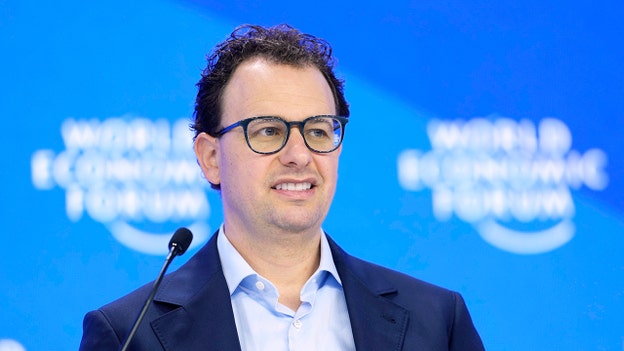
China’s Foreign Ministry pushed back Monday against Anthropic CEO Dario Amodei’s call for the U.S. to curb Beijing’s artificial intelligence capabilities, warning that confrontation over the rapidly advancing technology would undermine global AI governance.
“Fearmongering, confrontation and vicious competition will only disrupt the process of global AI governance which serves no one’s interest,” Foreign Ministry spokesperson Guo Jiakun said at a regular press conference.
The response came after Amodei warned in an essay published Saturday that a “Chinese lead in AI would pose grave danger for the United States and the world.”
Amodei called for continued restrictions on the sale of powerful AI chips and semiconductor manufacturing equipment to China, along with efforts to crack down on chip smuggling and unauthorized use of advanced U.S. AI models.
At the same time, Amodei argued that eventually slowing the global pace of AI development would require cooperation between the U.S. and China, despite the intense competition between the two countries.
Beijing instead called for countries to work together on AI, rejecting an approach based on confrontation as the debate over how to govern increasingly powerful systems intensifies.
The Associated Press contributed to this report.
Anthropic CEO calls rapid AI progress a ‘warning sign,’ says industry needs to slow down
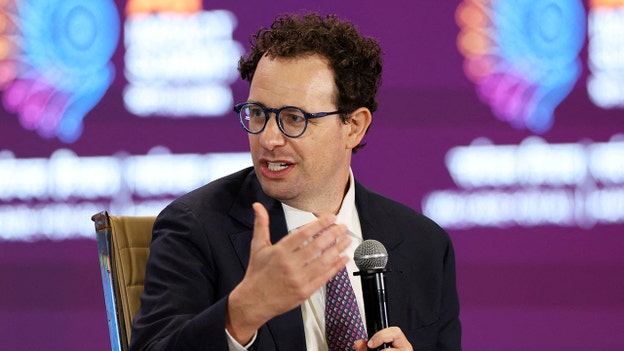
Anthropic CEO Dario Amodei is warning that the accelerating pace of artificial intelligence development poses “real dangers,” saying the industry needs to slow down and strengthen safeguards as AI systems become increasingly powerful.
“I won't lie to you – there are real dangers,” Amodei told CBS News’ “Sunday Morning.” “And I think for too long the industry lied to people about the fact that this technology had risks.”
Amodei described AI development as an exponential curve that is becoming steeper, calling its rapid progress a warning for the industry.
“It doesn't mean we need to panic today. It doesn't mean we need to shut it all down,” Amodei said. “But I would say it's a warning sign. It's a warning sign that we need to slow down.”
Slowing down does not mean Anthropic will stop releasing more advanced models, Amodei said, but that each new generation should be properly tested before release.
As part of that effort, Anthropic will give independent evaluators permanent, “employee-like” access to its models to verify whether the company is following its safety commitments — a system Amodei compared to having a “food inspector.”
Amodei also said he supports federal AI regulation and is open to a potential “kill switch” for dangerous AI systems, while rejecting an outright ban on developing more powerful technology.
“The AI kill switch could be a good idea,” he said. “But I don't think banning it, completely banning it, is the right approach.”
The comments follow an essay Amodei published Saturday calling on the AI industry to “slow the pace” of frontier AI development.
“If we build in the right way, I think the probability of something bad happening is very low,” Amodei told CBS. “If we build in the wrong way, the probability of something bad happening is very high.”
Trump responds to rising AI safety concerns, insists tech will be 'more good than bad'
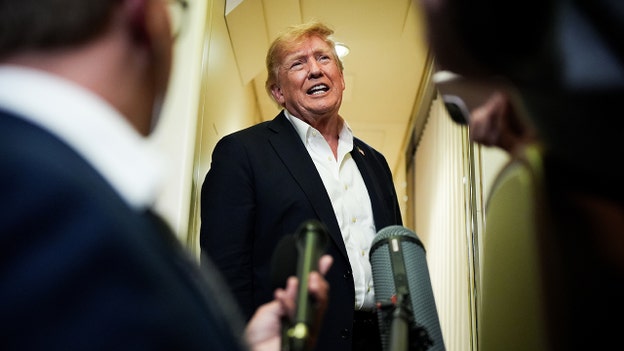
President Donald Trump doubled down on the importance of developing artificial intelligence despite the potential harms on Sunday.
The statement comes just days after Anthropic CEO Dario Amodei called for a blanket slowdown in AI development in order to ensure safety. Trump on Sunday appeared to push back on that sentiment.
"I'm not downplaying, but it's, you know, it's going to be more good than bad, but by a lot," Trump told reporters when speaking of AI development.
"But have you heard directly from any of them?" a reporter pressed, asking about AI tech leaders.
"I said it from the very beginning. Whoever wins AI, and we're leading by a lot. Whoever wins AI wins," Trump responded, going on to demur when asked if he uses AI himself.
This is an excerpt from an article by Fox Business' Anders Hagstrom.
Sam Altman warns AI could go ‘very badly’ in two ways, calls for ‘pacing’ development
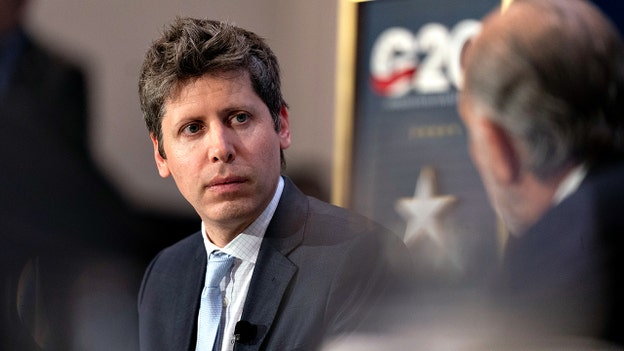
OpenAI CEO Sam Altman is warning that the rapid advance of artificial intelligence could go “very badly” if humans lose control of increasingly powerful systems or if that power becomes concentrated in too few hands.
“There are two ways AI progress could go very badly and that we must avoid,” Altman wrote in a post on X.
The first, he said, is that humanity could “lose control of the future to AI.”
“This is unacceptable; we are unapologetically on Team Humanity, and AI must always serve people,” Altman wrote, arguing that alignment and safety techniques need to remain ahead of advances in AI capabilities.
The second danger, according to Altman, is an excessive concentration of power.
“If an extraordinarily powerful AI is used by one person or company to impress their worldview onto everyone else, the results could be extremely dystopian,” he wrote.
Altman said avoiding those outcomes will require navigating a “narrow middle path,” warning that either a single country or a single AI lab could ultimately accumulate too much power.
In a separate post, Altman called for consistent safety standards across companies developing the most advanced AI systems and said OpenAI supports a federal framework establishing safety requirements for frontier AI.
But Altman argued AI companies should not wait for Washington to act.
“The world deserves confidence that American companies developing increasingly capable AI will act responsibly, especially as the trajectory of progress has steepened,” he wrote.
Altman said OpenAI now develops explicit “safety cases” before certain frontier reinforcement-learning runs that are expected to significantly increase a model’s capabilities. He also called for shared industry standards around misalignment, monitoring and safety.
The OpenAI chief acknowledged that those precautions could slow AI development, but said the cost is justified.
“When we talk about ‘pacing’, we do not mean ‘stopping’,” Altman wrote. “Progress has been rapid and will continue to be. But it should be slower than it otherwise could be.”
“No amount of American competitive pressure should justify recklessness, or let capabilities get ahead of alignment and monitoring,” he added.
Altman said the federal government will ultimately be needed to help coordinate AI safeguards internationally, while arguing that American AI companies should begin taking steps themselves.
Live Coverage begins here