



























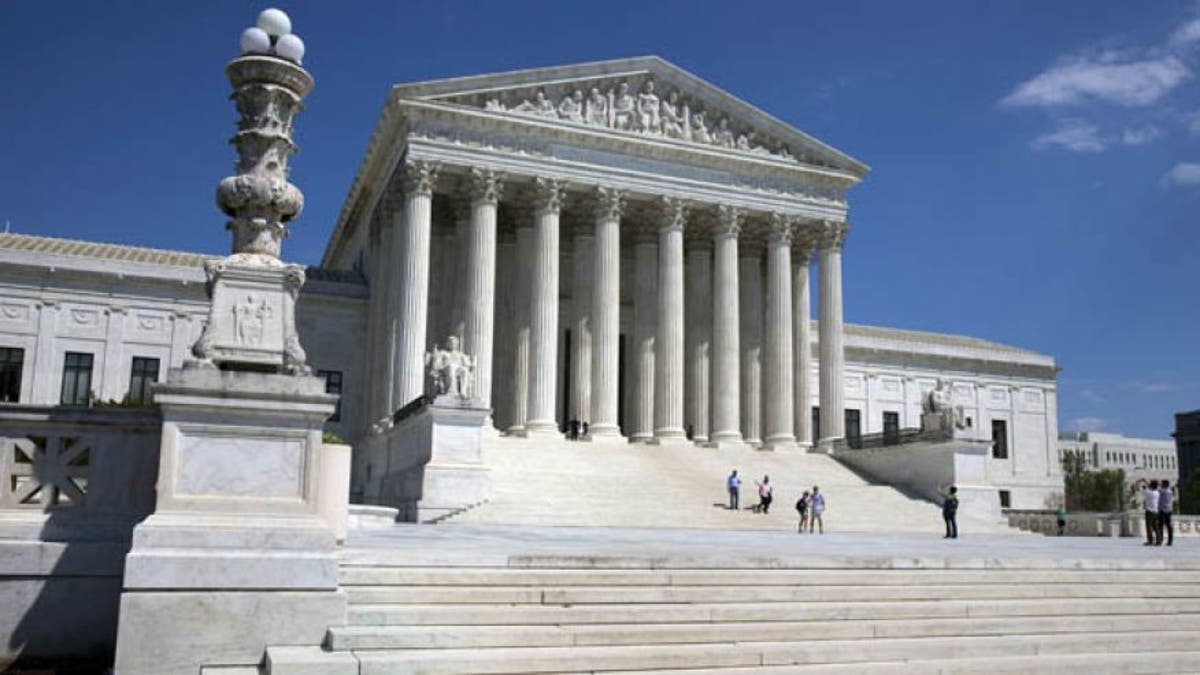
The Supreme Court has upheld the right of local officials to open town council meetings with prayer, ruling that this does not violate the Constitution even if the prayers routinely stress Christianity.
The court said in a 5-4 decision Monday that the content of the prayers is not critical as long as officials make a good-faith effort at inclusion.
The ruling was a victory for the town of Greece, N.Y., outside of Rochester.
"The prayer opportunity is evaluated against the backdrop of a historical practice showing that prayer has become part of the Nation's heritage and tradition," the majority wrote in the opinion. "It is presumed that the reasonable observer is acquainted with this tradition and understands that its purposes are to lend gravity to public proceedings and to acknowledge the place religion holds in the lives of many private citizens."
The majority justices further argued that the intended audience "is not the public, but the lawmakers themselves."
In 1983, the court upheld an opening prayer in the Nebraska legislature and said that prayer is part of the nation's fabric, not a violation of the First Amendment. Monday's ruling was consistent with the earlier one.
Justice Anthony Kennedy, writing for the majority, said the prayers are ceremonial and in keeping with the nation's traditions.
"The inclusion of a brief, ceremonial prayer as part of a larger exercise in civic recognition suggests that its purpose and effect are to acknowledge religious leaders and the institutions they represent, rather than to exclude or coerce nonbelievers," Kennedy said.
Justice Elena Kagan, in a dissent for the court's four liberal justices, said the case differs significantly from the 1983 decision because "Greece's town meetings involve participation by ordinary citizens, and the invocations given -- directly to those citizens -- were predominantly sectarian in content."
A federal appeals court in New York ruled that Greece violated the Constitution by opening nearly every meeting over an 11-year span with prayers that stressed Christianity.
Click here for the full story
