Iran issues threat after Trump plans to guide ships through Strait of Hormuz
Iran's military warned that any U.S. forces that enter the Strait of Hormuz will be "targeted and attacked" after President Donald Trump announced plans for U.S. escort missions through the strait on Monday.
Coverage for this event has ended.
USS Truxtun, USS Mason come under 'sustained' Iranian attack in Strait of Hormuz: report
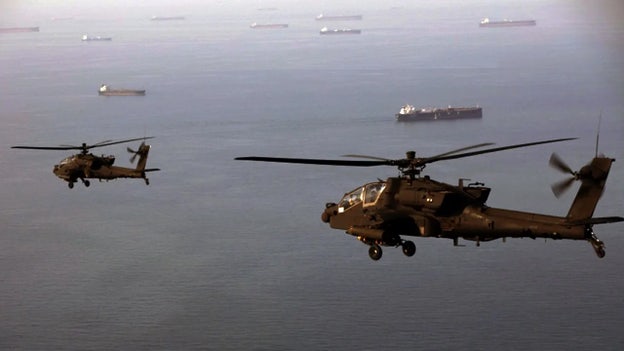
Two U.S. Navy destroyers transited the Strait of Hormuz under Iranian fire Monday as the vessels came under a barrage of small boats, missiles and drones, according to reports.
The USS Truxtun and USS Mason were backed by fighter aircraft and AH-64 Apache helicopters during the encounter, with officials describing it as a "sustained barrage," the CBS report said.
Despite the attack, neither of the destroyers was impacted, with forces intercepting or deterring each threat.
F-16s deployed to protect forces, commericial shipping in Strait of Hormuz: CENTCOM
U.S. Central Command (CENTCOM) said Monday that F-16 aircraft are helping defend its forces and protect shipping in the Strait of Hormuz.
“Air Force F-16 fighter aircraft are among more than 100 land- and sea-based aircraft supporting Project Freedom,” the command said in a post shared on X.
“During the defensive operation, these advanced warfighting platforms are helping to protect U.S. forces and defend commercial shipping,” CENTCOM said.
GOP candidate, Pahlavi ally opposes US boots on the ground in Iran
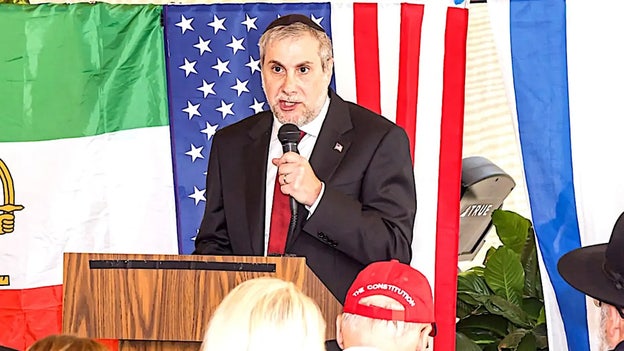
A Republican congressional candidate in Florida with ties to Iranian exiled crown prince Reza Pahlavi is staking out a hardline foreign policy stance in his run while drawing a clear line against deploying U.S. troops to Iran.
Joe Kaufman, a GOP challenger running in Florida’s newly formed 25th District, also bills himself as a "terrorist hunter" and brings foreign policy credentials to the table.
"I do counter-terrorism research, writing and lectures,” he said before describing how he had been involved in "the shutdown of terrorist charities and the imprisonment of terror-related individuals."
He also said in regard to foreign policy that he has been “very involved these past few years in what's been taking place. 17 years ago, I was honored to co-found a group called Cyrus Force with His Majesty Crown Prince Reza Pahlavi, who we believe is going to be soon to be a future leader of Iran."
Despite being a foreign policy hawk, Kaufman is opposed to putting troops on the ground in Iran.
"No, I don't support ground troops, at least not from the United States. I don't want to see what took place in wars past happen here with seeing Americans come back in body bags. I feel the same way about our friends in Israel,” Kaufman added.
"But there are third parties that want to get involved, and I say, give them the green light to do so. So, if there's any ground troops…they shouldn't be from America or Israel. It should be from these third parties,” he said.
This is an excerpt from a report by David Unsworth.
Pezeshkian clashes with IRGC over ‘irresponsible’ UAE strikes: report
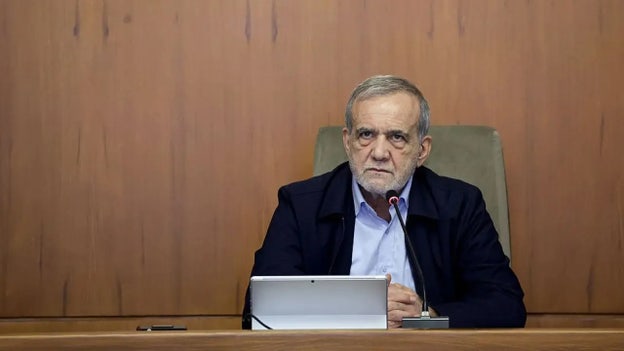
Iranian President Masoud Pezeshkian has expressed anger at actions by the Islamic Revolutionary Guard Corps (IRGC), describing missile and drone strikes on the United Arab Emirates as “completely irresponsible,” according to reports.
Citing new information suggesting an unprecedented surge in tensions between the government and the IRGC, Iran International also said the strikes had been carried out without the government’s knowledge or coordination.
Pezeshkian is said to have called the approach of escalating tensions with Iran’s neighboring countries “madness,” while warning of potentially irreversible consequences, the outlet reported.
UK condemns Iranian strikes on the UAE
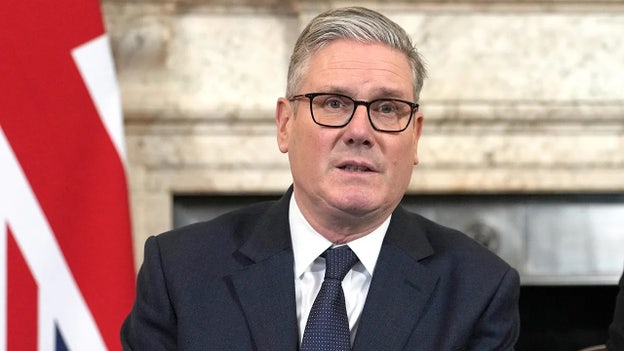
UK Prime Minister Keir Starmer condemned the Iranian drone and missile strikes on Monday that targeted the United Arab Emirates.
Starmer urged Iran to engage in diplomacy to prevent further escalation in the Middle East, the prime minister’s office said.
"We stand in solidarity with the UAE and will continue to support the defence of our partners in the Gulf. This escalation must cease. Iran needs to engage meaningfully in negotiations to ensure the ceasefire in the Middle East endures, and a long-term diplomatic solution is achieved," Starmer said.
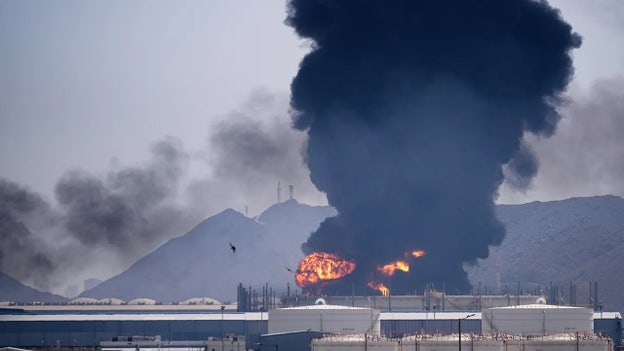
Iran also struck several vessels in the Strait of Hormuz on Monday and set a UAE oil port on fire.
This came as President Donald Trump launched Project Freedom to free up shipping in the key waterway.
Saudi crown prince denounces Iran attack in call with UAE leader
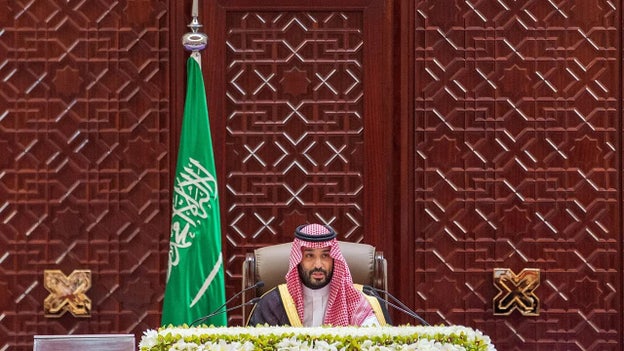
Saudi Crown Prince Mohammed bin Salman condemned Iran’s attacks on the United Arab Emirates in a phone call with UAE President Mohammed bin Zayed Al Nahyan on Monday, according to Saudi state media.
Bin Salman said the renewed strikes on the region were “unjustified Iranian attacks targeting the sisterly United Arab Emirates” and reaffirmed Riyadh’s support for Abu Dhabi.
He also expressed Saudi Arabia’s backing for the UAE in its “defense of its security and stability,” underscoring regional alignment against Tehran’s actions, Iran International reported.
Araghchi warns US, UAE against being 'dragged back into a quagmire by ill-wishers'
Iran’s foreign minister warned the U.S. and the UAE against getting pulled into a prolonged conflict by others with bad intentions on Monday, despite saying talks were making progress.
Seyed Abbas Araghchi’s remarks came amid rising tensions in the Strait of Hormuz.
“Events in Hormuz make clear that there's no military solution to a political crisis,” Araghchi said in a post shared on X.
“As talks are making progress with Pakistan's gracious effort, the U.S. should be wary of being dragged back into a quagmire by ill-wishers. So should the UAE,” he added.
“Project Freedom is Project Deadlock,” Araghchi said.
Man to plead guilty in Colorado firebombing of pro-Israel demonstrators
A man accused of killing one person and injuring a dozen others in a firebomb attack on Colorado demonstrators supporting Israeli hostages in Gaza is expected to plead guilty this week, according to court documents cited by The Times of Israel.
Mohamed Sabry Soliman faces life without parole if a judge accepts his plea for the 2025, attack.
He had previously pleaded not guilty to throwing two Molotov cocktails. An 82-year-old woman later died from her injuries, and 12 others were hurt.
Soliman, an Egyptian national who is allegedly in the U.S. illegally, is accused of planning the attack for a year and acting on wanting “to kill all Zionist people.”
He faces dozens of state charges, including murder and attempted murder, with prosecutors considering the death penalty.
His attorneys say he previously offered to plead guilty in exchange for a life sentence.
US closer to resuming 'major combat operations' with Iran: officials
The U.S. is edging closer to restarting major combat operations against Iran, senior officials said Monday, with the final decision resting with President Donald Trump and Tehran’s new leadership.
The assessment came as the ceasefire was tested in the Strait of Hormuz at the start of Project Freedom.
“We are closer to the resumption of major combat operations than we were 24 hours ago after Iran fired on US vessels and targeted UAE today with missiles and drones and fast boats," senior officials told Chief National Security Correspondent Jennifer Griffin.
Officials also said it would be up to President Donald Trump and Iran’s leaders to determine whether military operations wold resume. No orders to end the ceasefire have been given, they said.
The U.S. military “stands ready to respond.” It is “rearmed and retooled,” the officials added.
No orders have been received to restart the bombing campaign. There has been “no un-pause of the ceasefire.”
For now, the U.S. military is focused on defensive actions to protect ships in the Gulf.
The UAE said Monday that more than a dozen Iranian missiles and drones were launched, leaving three people injured, while an Iranian drone strike sparked a fire at an oil facility that wounded three Indian nationals.
The British military also reported two cargo vessels ablaze off the UAE, and the U.S. said it sank six Iranian boats targeting civilian ships.
“The commanders on scene have all the authorities they need to protect themselves and commercial shipping,” according to one well-placed U.S. defense official.
The commander can strike “if US forces see missile launchers moving or identity missiles being put on the rails or identify targets of opportunity that threaten commercial shipping.”
“We preserve the right to eliminate those threats. We don’t have to wait. We can anticipate and preempt. There is a level of maneuverability.”
“We can hit a known threat. We don’t have to wait until Iran fires first.”
The difference between a defensive umbrella and escorting ships through the strait is akin to zone versus man-to-man defense, one source said.
Trump launched Project Freedom Monday to help guide vessels that have been stuck for weeks in the key shipping route.
The source also said escorting each ship through the strait is “inefficient,” but that a defensive umbrella of air and sea power and surveillance “creates a layered defense that takes advantage of numbers and capability.”
Fox News' Jennifer Griffin contributed to this report.
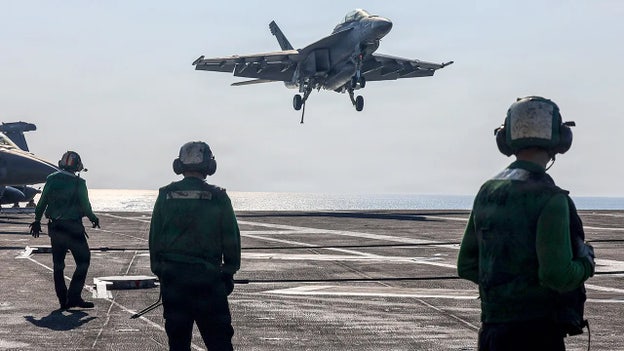
F/A-18 Super Hornets deployed to enforce blockade, support Project Freedom: CENTCOM
F/A-18 Super Hornets were deployed Monday from the USS Abraham Lincoln as the aircraft carrier took part in a blockade of Iranian ports and in support of Project Freedom, U.S. Central Command (CENTCOM) said.
“U.S. Navy F/A-18 Super Hornets launch from USS Abraham Lincoln (CVN 72). Lincoln is one of two aircraft carriers enforcing the blockade on Iranian ports while also supporting Project Freedom,” the command said in a post shared on X.
Iran secretly buries executed Swedish citizen at suspected mass grave site: report
The body of an Iranian-Swedish citizen has been secretly buried by Iran’s security agents outside Tehran after he was executed in March on charges of spying for Israel, Iran International reported Monday.
Citing sources, the outlet said Kourosh Keyvani was executed on March 18 without his family being informed. His body was buried on March 23 in Khavaran.
Keyvani’s family tried to mark the unmarked gravesite by placing stones nearby, but authorities removed them to prevent the burial location from being identified, the sources said.
Khavaran, in southeast Tehran, is known as a burial site associated with executed political prisoners, including victims of Iran’s 1988 mass executions.
US Embassy in UAE urges Americans in the country to reconsider travel
The U.S. Embassy in the UAE warned of potential aerial threats Monday and urged U.S. citizens in the country to reconsider travel as it monitored the situation.
“Our travel advisory for the UAE remains at Level 3: Reconsider Travel,” the alert said.
The U.S. Embassy and Consulate General remain open, the alert said, but are “on ordered-departure status, meaning that non-emergency U.S. government personnel have been relocated outside the UAE,” the embassy said.
This came as the UAE remained on high alert after Iran launched renewed strikes on the region, injuring three Indian nationals on Monday
Iran's defense council warns US of 'asymmetric operations' as Project Freedom launches
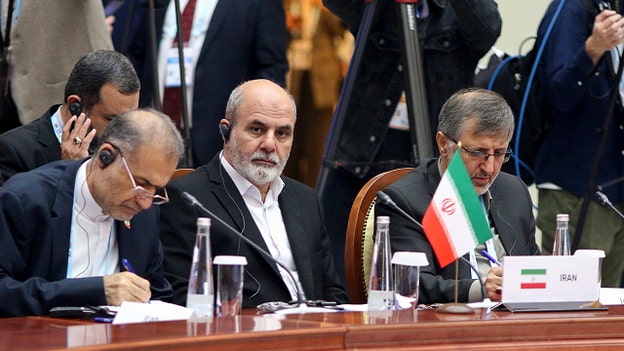
An Iranian military official and member of Iran’s Expediency Discernment Council said Monday that the United States is holding the world’s shipping and energy “captive,” as President Donald Trump’s “Project Freedom” got underway.
Dr. Ali Akbar Ahmadian, a representative of the Supreme Leader in Iran’s Defense Council, also labeled the U.S. as “American Pirates.”
“The Islamic Republic of Iran is a sanctuary, and its security is a non-negotiable principle,” Ahmadian said in a post shared on X.
“Let the American pirates, who have held the world's shipping and energy security captive, know that complex, combined asymmetric operations in the depths of the battlefield will alter the equations in such a way that the cost of their decision will,” he added.
“It will go beyond the threshold of tolerance. This is not a warning, but part of a reality that, by God's permission, will become manifest,” Ahmadian added.
Mike Waltz pushes UN resolution to stop Iran mining key global shipping route
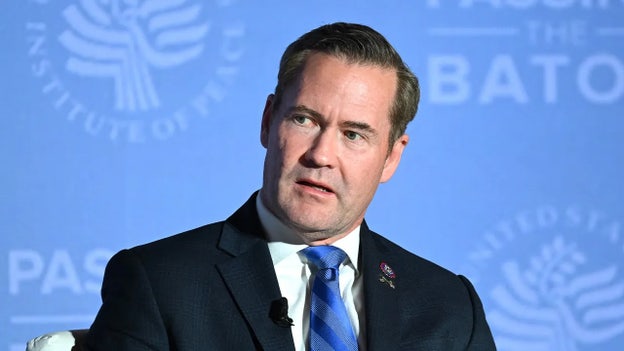
The United States is advancing a new United Nations Security Council resolution targeting Iran’s actions in the Strait of Hormuz as the administration seeks to reinforce its ongoing maritime operation with international backing.
U.S. Ambassador to the United Nations Mike Waltz said Monday the effort is designed to hold Iran accountable for mining international waters, threatening global shipping and attempting to disrupt one of the world’s most critical trade routes.
"The president and Secretary Rubio have instructed us to come to the Security Council in full cooperation and craft a resolution with Bahrain and the GCC countries," Waltz said during a press briefing.
"We’re working on a parallel effort at the Security Council that is separate and distinct from Project Freedom, but obviously related."
"The resolution will involve holding Iran to account for its blatant violations of international law," he added, including requiring Tehran to stop laying sea mines, disclose their locations and work with the United Nations to establish humanitarian corridors used by dozens of U.N. agencies to deliver aid globally.
The diplomatic push comes as U.S. forces moved Monday to secure commercial shipping through the strait under President Donald Trump’s Project Freedom.
U.S. Central Command confirmed American forces sank six Iranian small boats threatening vessels, underscoring the fragility of the ceasefire and the ongoing risks to global energy flows.
This is a an excerpt from a report by Efrat Lachter.
UAE on 'high alert' after Iran launches renewed strikes, injuring three Indian nationals
The United Arab Emirates on Monday condemned what it called renewed Iranian attacks, saying the strikes marked a dangerous escalation.
This came as the Ministry of Defense confirmed that it is on “high alert.”
The renewed attacks, the UAE Ministry of Foreign Affairs (MoFA) said, had “resulted in the injury of three Indian nationals.”
In a statement, the MoFA also said that the attacks constituted “a dangerous escalation, an unacceptable act of aggression, and a direct threat to the UAE’s security, stability and territorial integrity, in violation of the principles of international law and the Charter of the United Nations.”
In a post shared on X, the Ministry of Defense also said the total number of civilian deaths from the strikes overall stands at 10.
It also confirmed that it is on “high alert” and was ready to deal with “any threats.”
Iran warns UAE all its interests will become targets if it takes 'unwise' action against Tehran
Iran warned the United Arab Emirates on Monday that any military action against it would put UAE interests at risk.
The IRGC-affiliated Tasnim news agency cited an Iranian military source as saying that if the UAE takes “unwise” action against Iran, all its interests would become targets for Iran, Reuters reported.
“No official threat has so far been announced by the Emiratis,” the military source told Tasnim, according to Iran International. “But if the Emiratis become a plaything of Israel and make a wrong move, they will learn a lesson they will never forget.”
“The UAE knows it is sitting in a very fragile glass house, and insecurity is absolute poison for it,” the source said.
“If it wants to repeat the mistake of the 40-day war, we will completely abandon restraint and treat this Zionist nest as part of the Zionist regime,” the source added, according to Iran International.
The remarks came as the UAE’s Defense Ministry confirmed 15 missiles and four drones from Iran had been intercepted.
IDF strikes approximately 15 Hezbollah infrastructure sites, dismantles weapons facilities
Israel Defense Forces (IDF) said Monday that troops uncovered explosive devices and anti-tank missiles at a Hezbollah weapons facility, as operations continued against the group’s infrastructure.
“IDF troops inside a Hezbollah weapons storage facility prior to its dismantling, where dozens of explosive devices and anti-tank missiles were located,” the IDF said in a post shared on X.
“In addition, several weapons storage facilities were dismantled, and about 15 Hezbollah infrastructure sites were struck,” the force said.
In a separate statement Monday, the IDF said the 226th Brigade had dismantled an approximately 30-meter-long tunnel route used by Hezbollah to “advance attacks against IDF soldiers and Israeli civilians.”
“Over the past 24 hours, IDF soldiers of the 146th Division struck approximately 15 infrastructure sites,” the statement said.
CENTCOM confirms 50 commercial ships redirected during US blockade against Iranian ports
U.S. Central Command (CENTCOM) on Monday confirmed that U.S. forces had redirected 50 commercial vessels during the blockade of Iranian ports.
“Guided-missile destroyer USS Pinckney (DDG 91) observes a merchant vessel while on patrol enforcing the U.S. blockade against Iran,” the command said in a post shared on X.
“As of today, 50 commercial vessels have been redirected by U.S. forces to ensure compliance,” CENTCOM said.
Iran launches ballistic, cruise missiles, drones at UAE as air defenses engage threats
The UAE Ministry of Defence said Monday its air defense systems were continuing to actively intercept a wave of ballistic and cruise missiles, along with drones launched from Iran.
“The UAE's air defenses are currently dealing with missile attacks and incoming drones from Iran, and the Ministry of Defence confirms that the sounds heard in various parts of the country are the result of the UAE's air defense systems intercepting ballistic missiles, cruise missiles, and drones,” the ministry said in a post shared on X.
“UAE air defense systems are actively engaging with missile and UAV threats,” it said.
“The ministry asserts that the sounds heard across the country are the result of ongoing engagement operations involving missiles and UAVs,” the ministry added.
Reuters also reported authorities in Fujairah said a fire broke out at the Fujairah Oil Industry Zone following what they described as a drone attack originating from Iran.
Civil defence teams were deployed immediately to contain the blaze, the Fujairah Media Office said in a statement, the outlet said.
Iran disputes that US sank fast boats
A senior Iranian military official disputed U.S. claims that American forces eliminated six Iranian small boats near the Strait of Hormuz on Monday.
U.S. Central Command Commander Adm. Brad Cooper said earlier Monday that the U.S. eliminated six Iranian small boats during a "quick" operation.
Iranian media says an unnamed senior military official denied that version of events.
'"The U.S. claim of sinking a number of Iranian warships is false," the official reportedly said.
Trump calls on South Korea to join Strait of Hormuz mission
President Donald Trump called on South Korea to join in the U.S. Project Freedom aimed at guiding trade vessels through the Strait of Hormuz on Monday.
Trump made the statement in a post on his Truth Social account, noting that Iranian forces have shot at at least one South Korean trade ship.
"Iran has taken some shots at unrelated Nations with respect to the Ship Movement, PROJECT FREEDOM, including a South Korean Cargo Ship. Perhaps it’s time for South Korea to come and join the mission!" Trump wrote.
"We’ve shot down seven small Boats or, as they like to call them, 'fast' Boats. It’s all they have left. Other than the South Korean Ship, there has been, at this moment, no damage going through the Strait. Secretary of War Pete Hegseth and Chairman of the Joint Chiefs of Staff, Dan Caine, will have a News Conference tomorrow morning," the president added.
Trump vows Iran will be 'blown off the face of the Earth' if they intervene in Project Freedom
President Donald Trump says Iran will be "blown off the face of the Earth" if they attack U.S. vessels carrying out Project Freedom.
Trump made the comments during an interview with Fox News' Trey Yingst on Monday, adding that he believes Iran has become "much more malleable" in peace negotiations.
The president also emphasized that U.S. military buildup in the region is continuing.
“We have more weapons and ammunition at a much higher grade than we had before," Trump said. “We have the best equipment. We have stuff all over the world. We have these bases all over the world. They’re all stocked up with equipment. We can use all of that stuff, and we will, if we need it.”
US sinks 6 Iranian small boats as violence flares amid ceasefire
U.S. Forces sank six Iranian small boats near the Strait of Hormuz amid President Donald Trump's "Project Freedom" on Monday.
U.S. Central Command announced the engagement in a press call with reporters, saying Iran's military capability has been "dramatically degraded."
CENTCOM Commander Adm. Brad Cooper said on the call that Iran historically has deployed "between 20 and 40 small boats" when harassing vessels in the strait.
"Today, we saw just six, and eliminated them quickly," Cooper said.
"We have an enormous amount of capability and firepower concentrated in and around the Strait, including 864 Apache and MH 60 Seahawk helicopters used just this morning to eliminate six Iranian small boats threatening commercial shipping," he added.
CENTCOM says two US-flagged ships passed through Strait of Hormuz
Vice Adm. Robert Harward (Ret.) analyzed President Donald Trump’s "Project Freedom" initiative and assessed the state of Iran’s economy on "The Faulkner Focus" on Monday.
UAE responding to 'missile threat' amid conflict with Iran
The United Arab Emirates says its air defenses are responding to a missile threat on Monday.
The country's National Emergency Crisis and Disaster Management Authority announced the attack in a post on social media.
"Air defense systems are currently responding to a missile threat. Please remain in a safe location and follow official channels for warnings and updates," the statement read.
The UAE's defense ministry says it intercepted four missiles launched from Iran, Reuters reported.
Congress ignores key deadline as Republicans ready 'restraint' on Trump's war in Iran
Congress left Washington, D.C., without flexing its legal muscle against President Donald Trump's Iran war, despite growing concern among Republicans about what comes next in the Middle East.
The 60-day deadline, enshrined into law by the War Powers Act Resolution, requires that Congress authorize or halt the war. That mark came and went Friday while lawmakers were back home.
While Senate Democrats have voted six times in lockstep to handcuff Trump’s war powers in Iran, Republicans broadly have not wanted to interfere with the administration’s plans.
Senate Majority Leader John Thune, R-S.D., said he didn’t see a desire from most Republicans to take action on the deadline and noted that lawmakers were getting "readouts from our military leadership on a somewhat regular basis" to guide their decision-making.
Still, some Republicans want to put guardrails on Trump when Congress returns.
Sen. Lisa Murkowski, R-Alaska, has been working on an Authorization for Use of Military Force (AUMF) that she described as more than an authorization, but also a "restraint."
"If we pass this 60-day mark from the start of hostilities with still a lack of a credible plan and information from the administration, it is one — it is something that I intend to introduce once the Senate reconvenes here," Murkowski said.
Trump wrote to congressional leaders on Friday that he never needed their say-so and noted that hostilities in Iran — despite scant skirmishes and an ongoing blockade of the Strait of Hormuz — had been "terminated."
"On April 7, 2026, I ordered a two-week ceasefire," Trump wrote. "The ceasefire has since been extended. There has been no exchange of fire between the United States Forces and Iran since April 7, 2026. The hostilities that began on February 28, 2026, have terminated."
This is an excerpt from an article by Fox News' Alex Miller.
Pakistan announces US release of seized cargo ship amid Trump's 'Project Freedom'
As the tensions between the United States and Iran persist, including an ongoing U.S. blockade against the Islamic Republic, President Donald Trump declared in a Truth Social post that the U.S. would launch "Project Freedom" to help ships from other nations escape the Strait of Hormuz.
"Countries from all over the World, almost all of which are not involved in the Middle Eastern dispute going on so visibly, and violently, for all to see, have asked the United States if we could help free up their Ships, which are locked up in the Strait of Hormuz, on something which they have absolutely nothing to do with — They are merely neutral and innocent bystanders!" the president declared in a Sunday Truth Social post.
"This process, Project Freedom, will begin Monday morning, Middle East time," he noted.
But Iran has threatened to attack.
"We have repeatedly said the security of the Strait of Hormuz is in our hands and that the safe passage of vessels needs to be coordinated with the armed forces," Iran's Ali Abdollahi declared in a statement, according to Reuters. "We warn that any foreign armed forces, especially the aggressive U.S. Army, will be attacked if they intend to approach and enter the Strait of Hormuz."
U.S. Central Command noted that 15,000 service members will be involved in the effort.
"U.S. military support to Project Freedom will include guided-missile destroyers, over 100 land and sea-based aircraft, multi-domain unmanned platforms, and 15,000 service members," CENTCOM noted in a press release on Sunday.
An Iranian-flagged ship seized last month by the U.S. will be returned to its owners, Pakistan's Ministry of Foreign Affairs said in a statement on Monday.
"As a confidence-building measure by the United States of America, twenty-two crew members held aboard the seized Iranian container ship, 'MV Touska', have been evacuated to Pakistan. The individuals, who were flown to Pakistan last night, will be handed over to the Iranian authorities today. The Iranian ship will also be backloaded to Pakistani territorial waters for return to its original owners after necessary repairs," the statement noted.
This is an excerpt from an article by Fox News' Alex Nitzberg.
Bessent accuses Dem Sen Reed of joining 'surrender lobby' on Iran war
Treasury Sec. Scott Bessent blasted Sen. Jack Reed, D-R.I., for joining the "surrender lobby" with respect to U.S. operations against Iran on Monday.
Bessent made the statement during an interview on Fox News after Reed said the U.S. is in a "much worse position" thanks to the war in Iran.
"I would say, unfortunately, Senator Reed, who had a distinguished military career, has now joined the surrender lobby," Bessent said in response.
"This has been going on for three weeks. The Iranian economy is in free fall, and to be clear here, this is an international humanitarian operation. We are opening the strait. The Iranians do not have control of the strait, and for him to say that, it's sad he believes the Iranian propaganda," he added.
US-flagged vessels 'successfully transited' Strait of Hormuz amid Trump's 'Project Freedom': CENTCOM
U.S. Central Command says two U.S.-flagged vessels have successfully transited the Strait of Hormuz after President Donald Trump announced "Project Freedom" on Monday.
"U.S. Navy guided-missile destroyers are currently operating in the Arabian Gulf after transiting the Strait of Hormuz in support of Project Freedom. American forces are actively assisting efforts to restore transit for commercial shipping. As a first step, 2 U.S.-flagged merchant vessels have successfully transited through the Strait of Hormuz and are safely headed on their journey," CENTCOM wrote in a post on X.
OPINION: Iran blockade ‘going global’ is a warning signal to China and Russia
This is an excerpt from an opinion article by Dr. Rebecca Grant.
On Tuesday, U.S. Marines from USS Tripoli once again fast-roped from their MH-60 Seahawk helicopters onto the deck of a suspicious container ship named Blue Star III heading for Iran. That makes a total of 39 vessels turned back, boarded or seized since April 13.
"The blockade has been unbelievably effective," President Donald Trump said on Sunday. Economic pressure is the main point of the blockade, but it has military impact far beyond the Strait of Hormuz.
"We seized their sanctioned ships, and we will seize more," U.S. Secretary of War Pete Hegseth briefed at the Pentagon on Friday, April 24. "Our blockade is growing and going global," Hegseth added.
"Going global" is sending shockwaves through China. China imports at least 70% of its oil. Of that, 90% moves by sea. Iran alone supplied 14% of China’s imports last year, with Russia adding another 18%. Most of that oil was moved by shadow fleet tankers.
For all the talk of China’s growing naval power, this sea power phase of Operation Epic Fury is an incredible boost to deterrence in the Pacific. The tactics and joint force coordination on display are not something China can easily match. The web of air and maritime surveillance, intelligence, financial forensics and sheer audacity is something only America can pull off.
Iran claims it fired 'warning shot' against US ship near the Strait of Hormuz
Iran claims it fired a "warning shot" against a U.S. Navy ship near the Strait of Hormuz on Monday.
A senior Iranian official says the shot was intended to prevent the U.S. vessel from entering the strait.
"Iran fired a warning shot against U.S. warship to prevent its entry into Strait of Hormuz, unclear whether there was any damage," the official said.
The statement comes after U.S. Central Command denied reports from an Iranian news agency that two Iranian missiles had struck a U.S. ship in the strait.
Reuters contributed to this report.
CENTCOM denies reports Iranian missiles struck US Navy ship: 'They made this up'
U.S. Central Command says Iran's claims that they struck a U.S. vessel with missiles in the Strait of Hormuz are propaganda and false.
CENTCOM spokesman Cpt. Tim Hawkins issued the denial in a statement to Fox News Digital on Monday.
"They made this up. It's not true," Hawkins said.
Iran's semi-official Fars News Agency, which is tied to the Islamic Revolutionary Guard Corps, first reported claims of a missile strike early Monday morning.
They claimed two Iranian missiles hit an unidentified U.S. vessel near the port of Jask.
Fox News' Liz Friden contributed to this report.
Somali pirate and Houthi alliance targets $1T oil trade route with revived hijack tactic
A surge in Somali piracy is fueling fears of a Red Sea "security vacuum" across the region as analysts warn of a revived maritime crime playbook, now linked to Iran-backed Houthis.
The warning follows a May 2 report from Yemen’s coast guard that armed men hijacked an oil tanker off Shabwa and steered it toward the Gulf of Aden, and the vessel has since been located with recovery efforts underway, Reuters reported.
"There is a fundamental shift in the maritime center of gravity amid a new phase of maritime instability in the region," Ido Shalev, chief operating officer at RTCOM Defense, told Fox News Digital.
"Somali and Houthi-linked groups are teaming up — using skiffs and new tech to strike ships with coordination not seen in a decade — while Saudi crude rerouted from the Strait of Hormuz has created a ‘target-rich environment for them,’" he added.
"There is an opportunistic alignment, with the Houthis providing geopolitical cover and advanced GPS and surveillance, and Somali groups providing the boots on the ground or skiffs on the water," Shalev said.
With the MT Eureka taken off Shabwa, Shalev, a former Israeli naval officer, suggested what he called the "Somali model" had returned "with a vengeance."
"This is a transactional collaboration, and in the exact area where the Houthis are active and would like to cause damage and support their IRGC sponsor," he said before describing how pirates would hijack the entire ship and cargo, taking them to a secure anchorage "like Qandala or Garacad."
"They then demand a ransom for the entire package: the vessel, the tens of millions of dollars in oil, and the crew," he said.
The surge in regional risk is also exacerbated, Shalev said, by the volatility of the Strait of Hormuz. As Iranian-backed threats persist in the Persian Gulf, global energy flows are shifting.
This is an excerpt from an article by Fox News' Emma Bussey.
Iran threatens ceasefire breach if US intervenes in Strait of Hormuz 'maritime regime'
Any U.S. interference in Tehran’s maritime rules in the Strait of Hormuz would be considered a violation of the current ceasefire, a senior Iranian lawmaker warned Sunday.
Ebrahim Azizi, the head of Iran’s Parliament’s National Security and Foreign Policy Committee, also said the key waterway was not the place for rhetoric.
“Any American interference in the new maritime regime of the Strait of Hormuz will be considered a violation of the ceasefire,” he said in a translated post shared on X.
“The Strait of Hormuz and the Persian Gulf would not be managed by Trump’s delusional posts!” he said.
“No one would believe Blame Game scenarios!” Azizi added.
“The Strait of Hormuz and the Persian Gulf are not a place for rhetoric,” Azizi said in another post.
Azizi’s remarks came after President Donald Trump announced “Project Freedom,” in which the U.S. military would begin guiding ships safely out of the strait starting Monday.
The announcement came after Trump expressed doubt about a 14-point peace plan proposed by Iran over the weekend.
Fox News' Emma Bussey contributed to this report.
Live Coverage begins here