Iran makes new offer to open Strait of Hormuz, seeks end of US blockade, officials say
Iran has offered to reopen the Strait of Hormuz in exchange for the U.S. ending its blockade on Iranian ports Monday. It is the latest offer since President Donald Trump cancelled in-person talks in Pakistan.
Coverage for this event has ended.
Trump 'doesn't love' new Iran proposal, official says offer falls short: report
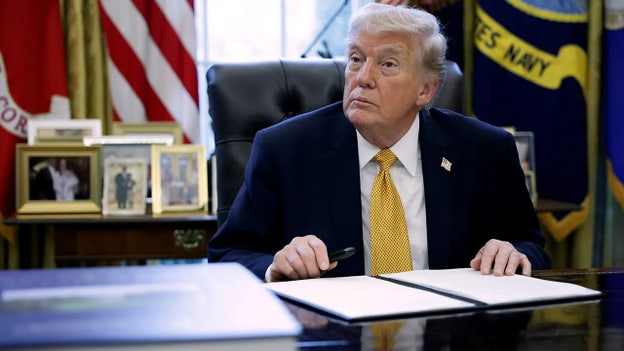
President Donald Trump is not keen on the second proposal sent by Tehran through Pakistani mediators on Monday, according to reports.
An official told Reuters that Trump is unhappy with an Iranian proposal because it did not address Iran’s nuclear program.
"He doesn't love the proposal," the U.S. official said, referring to Trump, Reuters reported.
Trump held a Situation Room meeting with key members of his administration regarding the war with Iran on Monday, according to ABC News.
According to Reuters, work to bridge the gaps between the two parties has not stopped, sources said.
German chancellor says US 'being humiliated' by Iranian leadership
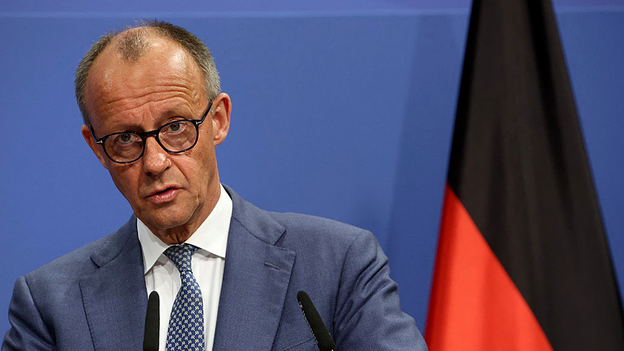
German Chancellor Friedrich Merz said on Monday that Iranian leaders are humiliating U.S. officials by having U.S. envoys travel to Pakistan for negotiations only to leave without results.
"The Iranians are obviously very skilled at negotiating, or rather, very skilful at not negotiating, letting the Americans travel to Islamabad and then leave again without any result," Merz said during a talk to students in the town of Marsberg.
"An entire nation is being humiliated by the Iranian leadership, especially by these so-called Revolutionary Guards. And so I hope that this ends as quickly as possible," he added.
Merz said during his remarks that it was clear the Strait of Hormuz had been at least partially mined.
"We have offered, also as Europeans, to send German minesweepers to clear the strait, which has obviously been mined in part," he said.
The chancellor also said the war on Iran was costing Germany "a lot of money, a lot of taxpayers' money and a lot of economic strength."
Reuters contributed to this report.
Russia's UN ambassador likens Western countries to pirates as he rises to Iran's defense
Russia’s ambassador to the United Nations, Vassily Nebenzia, defended Iran and accused Western countries of hypocrisy on Monday, arguing that the Islamic Republic has a right to restrict movement in the Strait of Hormuz.
"There was an attempt to pin full responsibility on Iran as if it was Iran which attacked its neighbors and Iran is deliberately obstructing the navigation through the Strait of Hormuz," Nebenzia said at a UN Security Council meeting. "In times of war, a coastal state that is under attack may limit navigation in its territorial waters for the purpose of security."
Nebenzia also compared Western nations to pirates.
"Unlike pirates who raise their black flags with a skull and crossbones in their vessels, Western countries are attempting to conceal their lawless actions with references to unilateral coercive measures," Nebenzia said.
"This is merely a fig leaf, the purpose of which is to conceal the fact that the [European Union] is engaged in blatant robbery at sea," he added.
This comes after Russia and China earlier this month vetoed a Security Council draft resolution that sought to secure freedom of navigation in the Strait of Hormuz.
Iran welcomes Russia's 'support for diplomacy,' foreign minister says
Iranian Foreign Minister Abbas Araghchi said on Monday that the Islamic Republic is "pleased to engage with Russia at the highest level" and that it is "grateful for solidarity" from Moscow.
"Pleased to engage with Russia at the highest level as the region is in major flux," Araghchi wrote on X after meeting with Russian President Vladimir Putin.
"Recent events have evidenced the depth and strength of our strategic partnership. As our relationship continues to grow, we are grateful for solidarity and welcome Russia's support for diplomacy," the foreign minister continued.
Rubio: Iran’s nuclear ambitions central to any US negotiations
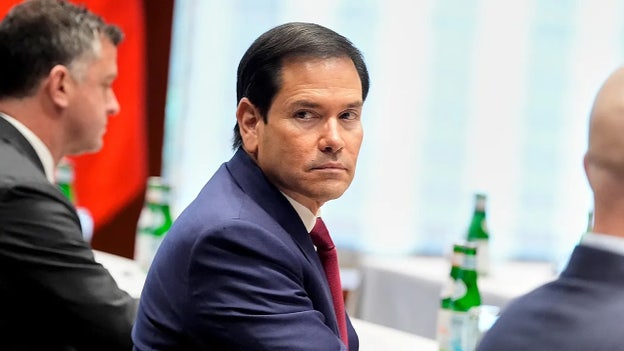
Iran’s nuclear ambitions are the central issue in any negotiations with the U.S., Secretary of State Marco Rubio said Monday.
Rubio was responding to Tehran’s latest reported proposal to postpone nuclear talks in exchange for ending the blockade and reopening the Strait of Hormuz.
“There’s no doubt in my mind that at some point in the future, if this radical clerical regime remains in charge in Iran, they will decide they want a nuclear weapon,” Rubio said.
“I think they are serious about getting themselves out of the mess that they’re in,” he told Chief Foreign Correspondent, Trey Yingst, pointing to Iran’s worsening economic conditions.
He also said Iranian negotiators were likely trying to buy time and warned that Washington must ensure “any agreement that is made, is one that definitively prevents them from sprinting toward a nuclear weapon at any point.”
Democrats to force sixth Iran war powers vote: Schumer
Senate Democratic Leader Chuck Schumer said Monday that Democrats will force a sixth vote on a War Powers Resolution to end President Donald Trump’s “war of choice” in Iran as the conflict reaches its 60-day mark.
“THIS WEEK: Senate Democrats will force a SIXTH vote on our War Powers Resolution ending Trump’s war of choice in Iran,” Schumer said in a post shared on X.
“As we reach 60 days of a reckless and unpopular war, will Republicans continue to back Trump and dig themselves deeper into this hole?” he said.
US Navy destroyer intercepts tanker bound for Iran, CENTCOM says
A U.S. Navy guided-missile destroyer intercepted a commercial tanker bound for Iran on Monday, U.S. Central Command (CENTCOM) said.
This is the latest enforcement action in the U.S. naval blockade to cut off maritime access to Iranian ports.
“Guided-missile destroyer USS Rafael Peralta (DDG 115) enforces the U.S. blockade of Iranian ports against M/T Stream after it attempted to sail to an Iranian port, April 26,” the command said in a post shared on X.
French foreign minister urges Iran to make 'major concessions' as ceasefire talks stall
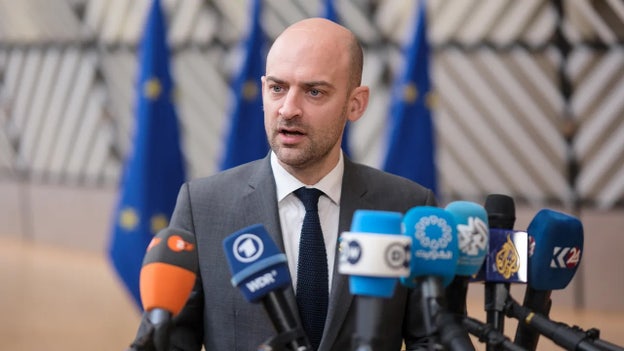
Tehran must consent to major concessions and commit to radical change, French Foreign Minister Jean-Noel Barrot said Monday.
Speaking to Fox News’ Bret Baier, Barrot also said France would “overcome” any tension with the U.S.
Addressing the war with Iran, Barrot pointed to rising concerns beyond Iran’s nuclear ambitions.
“The only way out of this crisis, it seems to me, is for the Iranian regime to consent to major concessions and to radical change, to give up its nuclear program,” Barrot said.
“But we cannot only focus on the nuclear program because, as I was saying, the ballistic capacity, the support to terrorist groups and proxies in the region constitute threats that we cannot accept,” he added.
His remarks came as the United Nations on Monday opened a monthlong conference to review the Nuclear Non-Proliferation Treaty.
The 11th Review Conference of the NPT, which came into force in 1970, is being held in New York.
“We need this treaty to be upheld, and that's the reason for my presence today. In particular, we need Iran and North Korea to refrain from developing their nuclear programs, which are causing threats to international security and global peace,” Barrot said.
On French-U.S. relations, Barrot emphasized continued cooperation despite periodic disagreements.
Macron, for example, said April 24 that Trump, along with Russia’s Vladimir Putin and China’s Xi Jinping, are “dead against” Europe amid rising tensions over Europe’s stance on the Iran war.
“We sometimes do have disagreements, even sometimes strong disagreements. We’ve had some of them, but fortunately we’ve always been able to overcome them,” Barrot said.
US defense leaders brief Congress on Pentagon budget amid Iran war
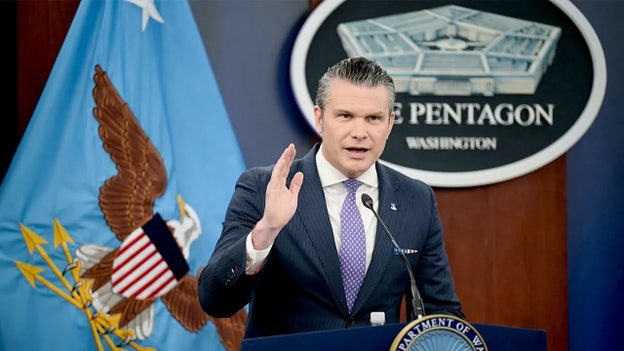
Secretary of War Pete Hegseth and Gen. Dan Caine, chairman of the Joint Chiefs of Staff, met with congressional leaders on Capitol Hill on Monday to discuss the Pentagon’s budget and defense priorities.
The meetings included lawmakers from the House and Senate Armed Services Committees, as well as defense appropriations panels.
According to reports, discussions focused on defense spending levels and how resources should be allocated across the armed forces.
The briefings come at a time of U.S. military operations and tensions in the Middle East.
Iran defense deputy meets Russian, Belarusian officials, reaffirming support: report
Russian Defense Minister Andrei Belousov met with Iran’s Deputy Defense Minister Reza Talaei-Nik on Monday, according to Russia’s state-run TASS news agency.
Iran International reported that Belousov reaffirmed Moscow’s position that the war in Iran should be resolved exclusively through diplomatic means.
Belousov said he was confident Russia and Iran would continue to support one another, the outlet said.
Talaei-Nik also traveled to Belarus, where he discussed the war with Belarusian Defense Minister Viktor Khrenin, Belarus’ Defense Ministry said.
The ministry, quoted by state news agency BelTA, said both sides agreed the only way to resolve the conflict was through “a political-diplomatic settlement” and negotiations.
Iran's 'creaking oil industry' on brink of collapse, gasoline shortages next, warns Bessent
Treasury Secretary Scott Bessent said Monday that the U.S. blockade of Iranian ports is beginning to cripple the country’s oil sector, warning production could soon “collapse” and trigger gasoline shortages.
“While the surviving IRGC Leaders are trapped like drowning rats in a sewage pipe, Iran’s creaking oil industry is starting to shut in production thanks to the U.S. BLOCKADE,” Bessent said in a post on X.
“Pumping will soon collapse. GASOLINE SHORTAGES IN IRAN NEXT!” Bessent added
Macron to press Iran on Hormuz reopening, France urges 'major concessions'
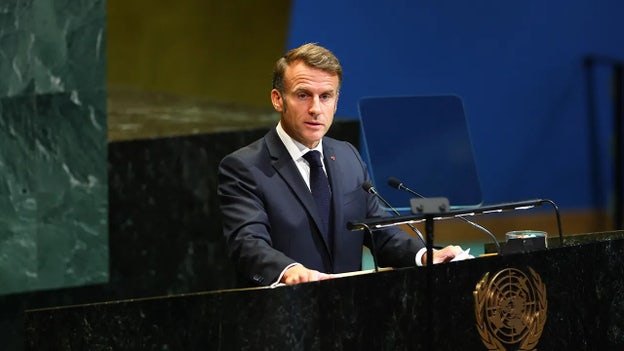
French President Emmanuel Macron said Monday he will speak with Iran in the coming days and press for the reopening of the Strait of Hormuz.
“We have established a coalition whose purpose is precisely to ensure security — to secure and stabilize, and to demonstrate that the international community supports reopening the Strait of Hormuz. I hope we will be able to convince the stakeholders in the coming days,” he told reporters, according to the Times of Israel.
France’s Foreign Minister also said Iran must be prepared to make “major concessions” in talks to end the ongoing crisis.
“There can be no lasting solution to this crisis unless the Iranian regime agrees to major concessions and a radical shift in its stance,” Jean-Noël Barrot told a UN Security Council session.
Iran accused of holding global economy ‘hostage’ over Strait of Hormuz
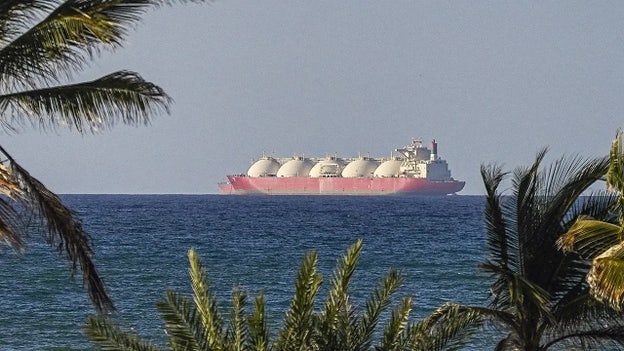
Iran is holding the global economy “hostage” by blocking the Strait of Hormuz and using the waterway as leverage over its nuclear program, U.S. envoy Dorothy Shea said Monday.
At a U.N. Security Council debate on maritime security, Shea also warned the strait was “not Iran’s hostage, not Iran’s bargaining chip, not Iran’s toll road.”
She also accused Tehran of laying sea mines, firing on civilian ships, threatening to charge tolls and launching missiles at Gulf capitals.
Shea criticized China and Russia for vetoing a Bahrain-backed Security Council resolution aimed at protecting freedom of navigation in the strait.
Iran slams Europe’s 'embarrassing descent into irrelevance,' rebukes sanctions stance
Iran and the European Union traded sharp rhetoric Monday, as Esmaeil Baqaei, spokesperson for Iran’s Foreign Ministry, criticized European Commission President Ursula von der Leyen over her remarks on sanctions on Tehran.
Speaking at a press conference in Berlin, von der Leyen had said it “would be too early” to lift sanctions on Iran, citing ongoing human rights concerns.
She added that a “fundamental change” would be needed before any easing them.
The Council of the European Union had imposed additional sanctions given human rights violations in Iran and following internal protests in January.
Baqaei accused the EU of acting in bad faith in a post shared on X.
“The EU’s inhuman sanctions on Iran were never about ‘human rights’ — they were designed to trample the basic rights of ordinary Iranians,” he said.
“No one is buying this tired moral theater.”
“Such posturing won’t earn you—or your constituency—an ounce of credibility on the world stage.”
“If anything, it only further demonstrates Europe’s ruling class’s double standard and hypocrisy, and hastens Europe’s embarrassing descent into irrelevance," he said.
IDF says weapons cache found in children’s room in southern Lebanon
The Israeli Defense Forces (IDF) said they uncovered a cache of weapons inside a children’s room in the southern Lebanese village of Aadshit al-Qusayr on Monday.
The discovery was part of ongoing operations in the area against Hezbollah.
“Weapons storage facility with numerous weapons was located inside a children’s room in the area of Aadshit al-Qusayr,” the IDF said in a post shared on X.
“Among the weapons located: explosives, Kalashnikov rifles, grenades, RPGs, machine guns, munitions and combat equipment,” it said.
Iran is 'playing games,' regime’s behavior the real problem, warns Graham
Sen. Lindsey Graham said Monday that Iran’s “game playing” and ongoing problematic behavior are at the core of the negociation stalemate between Washington and Tehran.
His comments come after diplomatic efforts to end the Iran war stalled again. Iran reportedly said it would reopen the Strait of Hormuz only if the United States lifts its blockade and agrees to end the conflict.
President Donald Trump is pursuing a broader agreement to address Iran’s nuclear program, missile capabilities and regional proxy activities.
“I don’t know how accurate the reporting is regarding Iran’s supposed new offer to end the war by lifting the blockade, opening the strait, and dealing with the other issues later,” Graham said in a post on X.
“But all I can say is I understand why Iran would make that offer,” he added, noting he believes such a proposal would be unacceptable and reflects the true state of negotiations.
“This is an offer that ignores the strong positions President Trump has rightfully taken regarding Iran’s nuclear operations and its desire to be the world’s largest state sponsor of terrorism,” Graham said.
Graham emphasized that successful negotiations require “two willing partners,” suggesting Iran is not acting in good faith.
“Clearly, if this offer is accurate, Iran is playing games,” he said. “Mr. President, stick to your guns for the good of the nation and the world. The Iranian regime and their behavior are the problem, not you," he said.
Bessent warns foreign firms against working with sanctioned Iranian airlines
U.S. Treasury Secretary Scott Bessent warned Monday that businesses and governments risk sanctions if they work with Iranian airlines designated by Washington, as commercial flights resume from Tehran.
“Doing business with sanctioned Iranian airlines risks exposure to U.S. sanctions,” Bessent said Monday in a post on X.
“Foreign governments should take all actions necessary to ensure that companies in their jurisdictions do not provide services to those aircraft, including the provision of jet fuel, catering, landing fees or maintenance,” he added.
“Under Economic Fury, the @USTreasury will impose maximum pressure on Iran and will not hesitate to act against any third parties that facilitate or conduct business with Iranian entities," Bessent said.
Waltz: Iran has still tried to kill 'even more Americans than they have in the last 47 years'
Ambassador Mike Waltz, U.S. representative to the United Nations, spoke at a U.N. Security Council open debate on maritime security Monday and warned of Iran’s actions in the Strait of Hormuz.
Focusing on Tehran's control of the critical waterway, he claimed it was using it as a “bargaining chip because of its illegal nuclear aspirations.”
“This Strait is not—despite Iran’s foreign minister’s claims—this Strait is not Iran’s to wield like its own moat and drawbridge,” Waltz said.
“It is not Iran’s hostage, it is not Iran’s bargaining chip, it is not Iran’s toll road.
“And that’s what over 100 countries right outside these doors just testified in one of the most supported press conferences in recent years—100 countries just said what I said.
“This is not for Iran to play with like some type of bargaining chip because of its illegal nuclear aspirations,” he added.
He also demanded Iran cease its attacks against neighboring states.
“Regardless of what you feel about the ongoing conflict, it has chosen to shoot in all directions against its neighbors’ civilian infrastructure.
“And the entire world condemned the obstruction of freedom of navigation through the Strait of Hormuz, citing sea mines and fire on civilian ships.
“And, in true form, they have still tried to kill even more Americans than they have in the last 47 years,” he added.
Waltz urged the Council to hold the regime accountable for its “blatant and recurring violations of international law,” calling it “an international criminal” and “pirates of the straits.”
Seattle festival applauds freed Al-Aqsa terrorist released in October 7 deal: report
An Al-Aqsa Martyrs’ Brigades terrorist who was released as part of a ransom for hostages held in Gaza was applauded at a Seattle Palestinian cultural festival, according to reports.
Speaking by video call from Egypt, Raed Abduljalil told people at the festival that their actions were “an essential part of the battle we are waging against the occupation and its supporters,” the Jerusalem Post reported.
“Stay vigilant, for homelands are protected only by their conscious and aware. And I tell you today: I am more convinced than ever that I chose the right path,” the Fatah-affiliated terrorist said.
“Until we meet, God willing, under the sky of a liberated homeland,” he added.
Abduljalil was released in 2025 after serving 23 years of a life sentence in prison. According to Quds News and Wattan, he responsible for terrorist attacks that resulted in deaths and injuries
In promotions for the festival, Abduljalil was described as a “freed Palestinian political prisoner and author.”
Islamabad streets reopen, US-Iran sides not close to signing memorandum: report
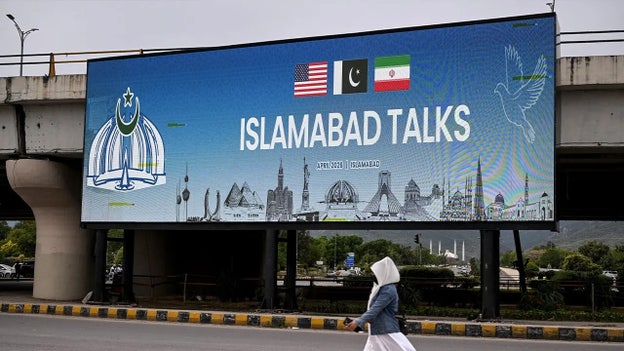
Islamabad streets reopened Monday signaling that no meetings would be taking place soon between the U.S. and Iran to end the war, according to reports.
Pakistani officials told Reuters that negotiations were still taking place remotely, but there were no plans to convene a meeting in person until the sides were close enough to sign a memorandum.
Sources also told the outlet that the proposal carried by Araghchi to Islamabad outlined talks in stages, with the nuclear issue to be set aside at the start.
They said the first step would require ending the U.S.-Israeli war on Iran and providing guarantees that Washington could not restart it.
Then negotiators would resolve the U.S. blockade and he Strait of Hormuz, which Iran aims to reopen under its control.
Only then would talks address other issues, including the dispute over Iran's nuclear program.
Iran is still looking for U.S. acknowledgment of its right to enrich uranium for what it says are peaceful purposes, Reuters reported.
Iran’s hijab enforcement appears to ease amid ongoing resistance: reports
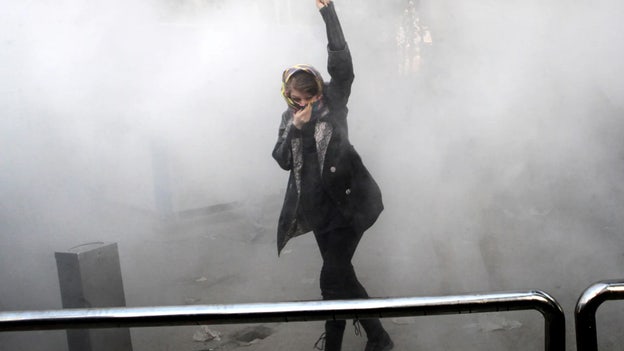
Iranian women without hijabs have been seen in Tehran in apparent defiance of the Islamic Republic’s strict dress rules, according to reports.
However, enforcement remains inconsistent, with elements of repression continuing, The Times of Israel reported.
“It is not at all a sign of any change in the government, in my opinion. Because no achievement has been made regarding women’s rights,” Selnaz, 32, a painter in Tehran, told AFP in Paris.
“Under the surface, in reality, no real change has taken place in people’s freedom, especially when it comes to women’s basic rights,” she said.
Wearing the headscarf in public has been mandatory for women since shortly after the 1979 Islamic Revolution.
Following the death in custody of Mahsa Amini and the 2022-23 protests, enforcement appears to have loosened in parts of Tehran and other cities. Amini had been arrested for allegedly violating the dress code.
Amnesty International said this month that “widespread resistance” to the obligatory hijab “forced authorities to retreat from the violent mass arrests and assaults of previous years.”
But experiences vary, The Times of Israel said.
“Before the 12-day war against Israel in June, in Mashhad, they wouldn’t let us in anywhere without a hijab,” one woman said.
“Now they do let people in, but unfortunately, we haven’t had the same level of change that people in Tehran have seen.”
Iranian Canadians fear regime intimidation in Canada, lawmaker says
Iranian Canadians are living in fear of intimidation by Tehran's regime on Canadian soil, according to Member of Parliament Costas Menegakis.
Speaking to Iran International, Menegakis urged authorities to identify, expose and remove operatives linked to Iran’s Islamic Revolutionary Guard Corps (IRGC).
Menegakis also rejected diplomacy with the regime and argued that Iranian citizens cannot confront the regime alone.
UN chief warns forces driving nuclear proliferation are accelerating
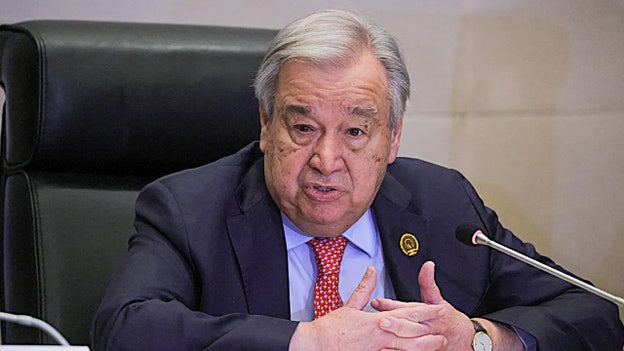
United Nations Secretary-General António Guterres warned Monday that the forces driving nuclear proliferation are increasing, speaking at the 11th Review Conference of the Parties to the Treaty on the Non-Proliferation of Nuclear Weapons (NPT).
“Commitments remain unfulfilled. Trust and credibility are wearing thin. The drivers of proliferation are accelerating. We need to breathe life into the Treaty once more,” Guterres said at the opening of the conference.
The NPT, which came into force in 1970, is to prevent the spread of nuclear weapons, promote peaceful uses of nuclear energy and advance nuclear disarmament.
It has near-universal membership, with exceptions including India, Pakistan, and Israel.
Araghchi thanks Putin for Russia’s 'firm support' at St Petersburg talks
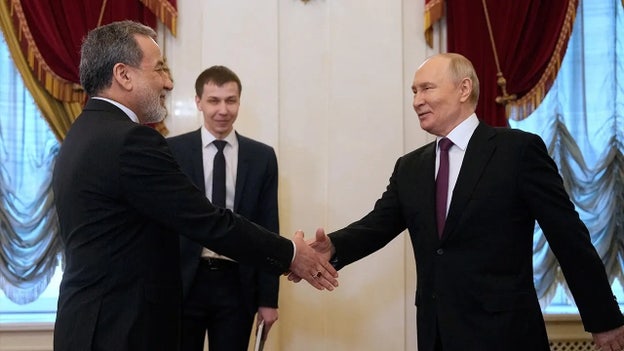
Iranian Foreign Minister Abbas Araghchi on Monday expressed gratitude to Russian President Vladimir Putin for Moscow’s continued support of Tehran, as the two officials met in St. Petersburg for talks.
At the start of the meeting, Araghchi emphasized the strength of ties between the two countries, describing their relationship as a strategic partnership at the highest level.
“I was asked to confirm during this visit that Russian-Iranian relations continue to be a strategic partnership at the highest level. This is the way we will move forward,” Araghchi said.
He also underscored Russia’s backing of Iran during challenging periods, highlighting the importance of alliances.
“It was proven to everyone that Iran has friends and allies, such as Russia, who stand by Iran during difficult times. We thank you for your firm position in support of Iran,” he added.
Putin pledges support for Iran, receives message from Supreme Leader Mojtaba Khamenei
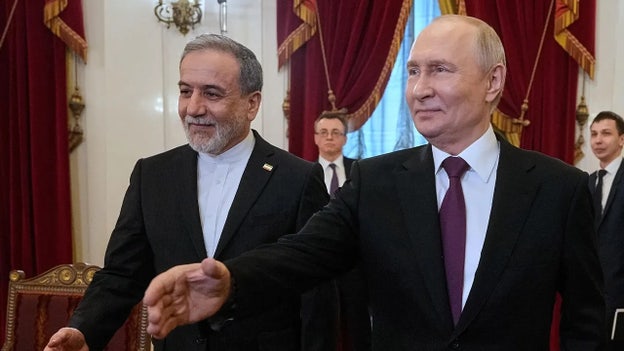
Russian President Vladimir Putin said Monday that Moscow would do everything it can to support Tehran, as diplomatic efforts between the United States and Iran are ongoing.
Putin made the remarks while hosting Iran’s foreign minister, Abbas Araghchi, in St. Petersburg. Araghchi had arrived in Russia following stops in Oman and Pakistan.
“Last week, I received a message from the supreme leader of Iran,” Putin said at the start of the meeting.
“I would like you to convey my most sincere words of gratitude and to confirm that Russia, like Iran, intends to continue our strategic relations,” he added.
Putin also praised Iran’s resilience, saying, “We see how courageously and heroically the Iranian people are fighting for their independence and sovereignty.”
“Of course, we very much hope that, based on this courage and will for independence, the Iranian people will, under the leadership of a new leader, make it through this difficult period of trials, and that peace will follow,” he said.
“From our side, we will do everything that is in your interest, in the interests of all nations in the region, so that peace is reached as soon as possible. You know our position very well," Putin added.
Leavitt says Trump met with top officials to discuss Iran's latest offer
White House press secretary Karoline Leavitt confirmed that President Donald Trump met with top administration officials to discuss Iran's latest peace proposal on Monday.
Reporters asked Leavitt whether Trump considered accepting Iran's latest offer.
"Well, only because it's been reported, I will confirm the president has met with his national security team this morning. The meeting may be ongoing. Maybe not. I don't want to speak, affirmatively because I was prepping to come out here, but the proposal was being discussed. I don't want to get ahead of the president or his national security team. What I will reiterate is that the president's red lines with respect to Iran have been made very, very clear, not just to the American public," Leavitt said during Monday's press briefing.
"I wouldn't say they're considering it. I would just say that there was a discussion this morning that I don't want to get ahead of. And you'll hear directly from the president, I'm sure, on this topic very soon.
Trump admin warns Iraq over Iran terror proxies as US reportedly blocks cash payments
The Trump administration has reportedly ramped up its punitive measures to compel Iraq to disband Iranian regime-backed militias known as the Popular Mobilization Force (PMF) that form part of its government after sustained attacks on U.S. personnel and facilities.
Amid a tenuous ceasefire between the U.S. and the Islamic Republic of Iran, the administration tightened the screws on Iraq by stopping U.S. dollar shipments to Baghdad. The growing disagreements over policy between the U.S. and Iraq could lead to weakening Iran’s presence in the region and advance U.S. war aims against Tehran.
In a statement against Iraq’s government, a State Department spokesperson told Fox News Digital, "The United States has consistently been clear we will take all measures to counter Iran’s destabilizing activities in Iraq, protect U.S. interests against Iran-aligned terrorist militias in Iraq, and make clear our concerns about the Iraqi government’s failure to prevent this terrorism."
The spokesperson added that "While we acknowledge the efforts of Iraqi Security Forces to respond to terrorist attacks by Iran-aligned militia groups, we continue to emphasize that the Iraqi government’s failure to prevent these attacks while some elements associated with the Iraqi government continue to actively provide political, financial, and operational cover for the militias adversely impacts the U.S.-Iraq relationship. The United States will not tolerate attacks on U.S. interests and expects the Iraqi government to immediately take all measures to dismantle the Iran-aligned militia groups in Iraq."
The Wall Street Journal first reported last week about the security and financial penalties imposed on Iraq. According to the report, the U.S. halted security cooperation programs with Iraq’s military and stopped "a cargo-plane delivery of nearly $500 million in U.S. banknotes, the proceeds from Iraqi oil sales from Federal Reserve Bank of New York accounts."
The newspaper said it was the second blocked delivery of dollars to the Central Bank of Iraq since the start of the U.S.-Israel war on Feb. 28 against Iran.
The Treasury Department declined to comment on the blocked payments.
An Iraqi official told Fox News Digital that "With regard to relations with the United States, Iraq views them as an important partnership based on shared interests and cooperation. The two sides have fought together in a decisive battle against ISIS, reflecting the depth and significance of this relationship."
In reference to the pro-Iran militias, the Iraqi official said, "As for the issue of armed factions, it is important to note that the Iraqi reality is highly complex, with overlapping political, security and social dimensions. Some of these factions also possess political and popular influence. Accordingly, addressing this issue requires careful and gradual approaches grounded in a deep understanding of the domestic context, in a way that strengthens state authority and ensures that weapons are confined to the hands of the state while maintaining internal stability."
This is an excerpt from an article by Fox News' Benjamin Weinthal.
Iran turns to Putin as US talks collapse, Hormuz standoff threatens global oil flow
Iran’s foreign minister met with Russian President Vladimir Putin Monday as U.S.–Iran negotiations appeared to collapse, raising the risk of further escalation in the Strait of Hormuz — a critical global oil choke point.
Abbas Araghchi arrived in Moscow for talks with Putin as diplomatic efforts to end the conflict between Iran and Washington remain stalled.
"We see how courageously and heroically the people of Iran are fighting for their independence, for their sovereignty," Putin said at the meeting in St. Petersburg, according to Russian state news agencies.
"The significance of this conversation is hard to overestimate in terms of how the situation around Iran and in the Middle East is developing," Kremlin spokesperson Dmitry Peskov told reporters earlier.
The visit comes just days after Araghchi held talks with Pakistani mediators, where he said Iran had shared its position on ending the war but questioned whether the U.S. was "truly serious about diplomacy."
President Donald Trump has pushed back sharply on that characterization, signaling Washington believes it holds the advantage.
The meeting comes at a pivotal moment, as tensions at sea intensify and scrutiny grows over Russia’s role following reports Moscow may have shared intelligence with Tehran during the conflict.
War Secretary Pete Hegseth warned in March that Russia "should not be involved" in the escalating war, as reports emerged suggesting Moscow may be providing intelligence to Iran on U.S. military positions in the region.
U.S. officials say they are closely tracking any potential intelligence-sharing between Russia and Iran, while downplaying the confirmed operational impact. Still, the possibility of Russian support — whether through intelligence, technology transfers or other assistance — has raised concerns that Moscow could indirectly influence the battlefield without committing forces.
This is an excerpt from an article by Fox News' Morgan Phillips.
Royals visit US amid Trump tension with Starmer over Iran
Fox News' Benjamin Hall joined "The Faulkner Focus" to discuss King Charles III and Queen Camilla's visit to the White House this week as tension mounts between Washington and London over the war in Iran.
Trump to hold Situation Room meeting on Iran
President Donald Trump is expected to hold a Situation Room meeting with key members of his administration regarding the war in Iran on Monday, according to ABC News.
The meeting comes after Iran issued a new offer to reopen the Strait of Hormuz in exchange for the U.S. ending its blockade on Iranian ports.
That offer still falls far short of Trump's demands, which center around preventing Iran from obtaining a nuclear weapon.
Rubio identifies main roadblock to US-Iran agreement
Secretary of State Marco Rubio revealed what he believes to be that largest impediment to coming to an agreement with Iran in an interview with Fox News' Trey Yingst on Monday.
Rubio referenced Iran's "fractured" leadership and said Iranian negotiators often are in disagreement with other factions within the Iranian regime, severely limiting the scope of peace talks.
"Other than the fact that the country is run by radical Shia clerics, that's a pretty big impediment. The other is that they're deeply fractured internally, and I think that's always been the case, but I think it's far more pronounced now. The best way to understand Iran is you have a political class now. I think, look, people talk about moderates and hardliners. They're all hardliners in Iran. But there are hardliners who understand they have to run a country and an economy, and there are hardliners that are completely motivated by theology," Rubio said.
"The hardliners that are motivated by theology are not just the IRGC officials, but obviously the supreme leader and the council that surrounds him. And then you've got the political class, the foreign minister, the president, the speaker of the moguls. These guys, they're hardliners, too, but they also understand the country has to have an economy. People have to eat, they have to figure out a way to pay salaries and their government. And so you see a tension, and you always have in that system between the Iranians who understand, let's be hardliners. But let's also balance that with the need to run a country and the hardliners who don't care and have this apocalyptic vision of the future," he continued.
Unfortunately, the hardliners with an apocalyptic vision of the future have the ultimate power in that country," he added. "So as much as anything else, one of the impediments here is that our negotiators aren't just negotiating with Iranians. Those Iranians then have to negotiate with other Iranians in order to figure out what they can agree to, what they can offer, what they're willing to do, even who they're willing to meet with."
Rubio says Iran 'serious' about making a deal after economy has been 'flattened'
Secretary of State Marco Rubio says he believes Iranian negotiators are "serious" about coming to a deal with the U.S.
Rubio made the statement during an interview with Fox News' Trey Yingst on Monday, saying the regime's leadership is in tatters and looking to "buy themselves more time."
"I think they are serious about getting themselves out of the mess that they're in, there are all the problems Iran had. They had riots a few months ago, and these were economic riots, all the riots and all the, I'm sorry, all the problems that Iran had before the start of this conflict are still in place and most of them are worse. Price inflation is worse. They still have a drought going on. They still have trouble making payroll. Their economies flattened, they face crippling economic sanctions around the world. All those problems are there and many of them are worse. And now they have half the missiles, none of the factories, and no navy and no air force. All of that's been destroyed. So they're worse off and weaker," Rubio said.
"If there is no deal, what comes next" Yingst asked.
"Well, again, that's the president's decision to make. I would start out by reminding everybody that the level of sanctions on Iran are extraordinary. The pressure on Iran is extraordinary, and I think more can be brought to bear," Rubio responded.
"But I hope that in the aftermath of this conflict, the whole world's eyes have been opened to the threat Iran poses. Again. They want to do with the world, with a nuclear weapon. What they are doing now with oil, they want to hold the world hostage so they can do whatever they want. That's unacceptable," he added.
US turns to drones after retiring minesweepers to reopen Strait of Hormuz amid Iran crisis
The U.S. is racing to reopen the Strait of Hormuz as Iran threatens one of the world’s most critical shipping lanes, testing a Navy that has recently retired most of its dedicated minesweepers and is now relying on a smaller fleet of unmanned systems to do the job.
President Donald Trump has warned Tehran against further escalation and signaled the U.S. is prepared to act to keep the strait open, while Iranian forces have laid mines and threatened commercial traffic in the narrow waterway that carries a significant share of global oil.
The confrontation is now testing a weakness in the Navy’s mine-warfare posture. As the U.S. moves to reopen the Strait of Hormuz after Iranian mining threats, it is doing so after retiring most of the ships once dedicated to that mission and while still relying on a limited mix of legacy vessels and newer unmanned systems to clear one of the world’s most critical shipping lanes.
At the current moment, any mine-clearing effort is unfolding amid an active standoff in the strait. The U.S. has imposed a naval blockade on Iranian ports, while Iran has responded with attacks on commercial vessels, seizures of ships and threats to close the waterway entirely.
At least several commercial ships have come under fire in recent days, and both sides have intercepted vessels as they attempt to move through the choke point, underscoring the risks facing any operation to restore traffic.
Iran has tied further negotiations to the lifting of the U.S. naval blockade, while Washington has insisted on security guarantees and reopening the strait, leaving little immediate path to a deal.
The operation comes after a major shift in how the Navy handles mine warfare. The service retired its four Bahrain-based minesweepers last year, ending a decades-long presence of dedicated mine-hunting ships in the Middle East.
At the start of the current crisis, the Navy’s remaining minesweepers were based in Japan, not the Persian Gulf, and newer littoral combat ships equipped for mine countermeasures were not all positioned in the region.
Multiple news outlets have reported Iran has laid at least a dozen mines in the strait, citing intelligence assessments, though some estimates put the number higher.
This is an excerpt from an article by Fox News' Morgan Phillips.
Hakeem Jeffries lashes out at Trump over gas prices, condemns 'war of choice' in Iran
House Minority Leader Hakeem Jeffries blasted President Donald Trump's "war of choice" against Iran on Monday.
"The Strait of Hormuz is closed, gas prices are soaring and billions of taxpayer dollars have been wasted," Jeffries wrote in a post on X.
"How is this reckless war of choice working out for the American people?" he added.
Israel strikes Hezbollah targets after terrorist leader condemns Lebanon-Israel talks
The Israeli Defense Force says it launched strikes against Hezbollah targets on Monday after Hezbollah leader Naim Qassem condemned negotiations between Israel and Lebanon.
The IDF strikes targeted Lebanon's Beqaa Valley as well as other areas in the nation's southern region.
Qassem on Sunday called negotiations between Israel and Lebanon a "grave sin."
“We categorically reject direct negotiations with Israel, and those in power should know that their actions will not benefit Lebanon or themselves,” Qassem said in a statement, according to the Times of Israel.
"These direct negotiations and their outcomes are as if they do not exist for us, and they do not concern us in the slightest,” he added, vowing to "continue our defensive resistance for Lebanon and its people.”
Putin to meet with Iranian foreign minister as Tehran looks for backers amid US talks
Iranian Foreign Minister Abbas Araghchi is in St. Petersburg, Russia on Monday for a meeting with Russian President Vladimir Putin.
The meeting comes a day after President Donald Trump cancelled plans for a U.S. delegation to travel to Pakistan for peace talks.
Kremlin Spokesman Dmitry Peskov told Russian media that the "importance of this conversation is hard to overestimate in terms of how the situation around Iran and in the Middle East is developing."
Earlier this month, Russia's Foreign Minister Sergey Lavrov said that Iran has an "inalienable" right to enrich uranium for civilian purposes.
Iran turmoil erupts: Ultra-hardliner who mocked Trump poised to take over nuclear talks
Further signs of turmoil are emerging in Iran’s U.S. negotiating team as hardliner Mohammad Bagher Ghalibaf looks set to be replaced by a veteran conservative known for rejecting nuclear concessions, according to reports.
Iran International reported April 24 that Saeed Jalili, 60 — who already leads what has been described as a "shadow government" — is expected to succeed Ghalibaf following his sudden departure amid internal disputes.
Jalili also heads Iran’s ultra-hardline faction known as the Stability Front (Paydari), which is known to be a "bastion of ultraconservatism in Iran," according to reports.
Ali Safavi, an official with the Iranian opposition coalition, the National Council of Resistance of Iran (NCRI), told Fox News Digital that Jalili "has evolved from a nuclear negotiator to an influential actor within the regime."
Ghalibaf was reportedly forced to step down after attempting to bring the nuclear issue into talks with Washington, a move that triggered backlash within Iran’s political establishment.
President Donald Trump had called off plans for U.S. envoys to travel to Pakistan for peace talks with Iran on April 25.
The rivalry between Jalili and Ghalibaf is said to span more than a decade and intensified during the 2024 elections, when Jalili refused to step aside, contributing to the victory of President Masoud Pezeshkian.
Safavi said, "The increased visibility of latent divisions stems from recurring nationwide uprisings, deep economic crises and the pressures of war, all of which have intensified internal feuding.
"Far from signaling transformation, these developments reflect accelerating erosion and mounting pressure, deepening fractures and leaving the regime ever weaker and more vulnerable," he added.
This is an excerpt from an article by Fox News' Emma Bussey.
Iran submits deal to reopen Strait, pushes off nuclear talks
Tehran has offered a new deal to the U.S. in order to reopen the Strait of Hormuz and bring an end to the war in Iran.
The new deal, sent via Pakistani mediators, would postpone nuclear negotiations to a later stage, according to officials.
In the nearer term, the deal would see Iran reopen the Strait of Hormuz in exchange for the U.S. ending its blockade on Iranian ports.
The absence of any nuclear concession is a critical one, given President Donald Trump's insistence that preventing Iran from obtaining a nuclear weapon is the single most important point for the U.S. in negotiations.
“We have all the cards. If they want to talk, they can come to us, or they can call us,” Trump told Fox News on Sunday.
Live Coverage begins here