US forces could strike Iran within 96 hours of Trump order as Tehran hosts regional leaders
U.S. military forces in the Middle East could launch major operations against Iran within 96 hours of receiving an order from President Donald Trump, according to reports, as senior officials from Saudi Arabia, Turkey and Pakistan met with Iranian President Masoud Pezeshkian in Tehran to discuss regional security and de-escalating tensions.
Coverage for this event has ended.
Officials from Saudi Arabia, Turkey and Pakistan met Iranian President Masoud Pezeshkian in Tehran on Monday in a bid to de-escalate Middle East tensions.
The leaders focused on "Islamic unity, regional security & standing against US-backed Israeli aggression," the Iranian government said in a post on X.
The meeting also marked the first high-level engagement between Iran and the three signatories to August's Mecca mutual defense pact.
During the talks with Saudi Defense Minister Prince Khalid bin Salman, Pakistani Army Chief Gen. Asim Munir and Turkish intelligence chief İbrahim Kalın, Pezeshkian urged Islamic nations to act as "a single force," with Tehran framing the summit around regional security, Islamic solidarity and resistance to U.S.-backed Israeli actions.
According to Reuters, Saudi Arabia also said the visit was intended to open negotiating channels to "prevent the return of military escalation."
General Mohsen Rezaei, the Secretary of Iran’s Supreme National Security Council, hosted Monday's meeting.
U.N. Secretary-General António Guterres called for a fundamental overhaul of Middle Eastern diplomacy on Monday, urging regional powers to build a “new security architecture.”
“No country in the Middle East can achieve lasting security at the expense of another,” Guterres wrote on X, calling for a new regional framework.
“One in which the future is shaped by the peoples & countries of the region, rather than by war after war after war – many times fueled by external actors,” he said.
The Saudi-led coalition shot down three ballistic missiles fired by the Houthis toward the Eastern Province on Monday, thwarting a fresh cross-border assault as hostilities between the two sides escalated.
“Air defenses intercepted and destroyed 3 ballistic missiles launched by the terrorist Houthi militia toward the eastern region,” Saudi military spokesman Col. Turki al-Malki said in a post on X.
Earlier, Saudi Civil Defense issued warnings of a potential hostile threat in the Eastern Province and Al-Kharj, before later saying the danger had passed in both areas.

President Donald Trump / Kevin Lamarque / Reuters
President Donald Trump declared Monday that past ceasefires with Iran were ineffective, brushing aside previous efforts to de-escalate tensions with Iran.
“We did a little cease-fire, which I never liked very much,” he said of the April arrangement. “I considered it sort of a waste of time,” he added.
“But, you know, you like to listen to professionals,” Trump said at a rally in Mississippi.
“But we did a little cease-fire, so we let some ships get in.”
“You know, we want to be nice, but it was just a waste of time as far as I'm concerned.”
“But, we're doing a job. We're doing a job for you,” Trump added.
The U.S.-Iran ceasefire took effect in April following its initial announcement. It was later formalized and extended under the 60-day Islamabad Memorandum signed in June before collapsing in July.
President Donald Trump said Monday that Iran was responsible for starting the war between the two countries.
“We didn’t start the war with Iran. Iran started the war with us,” Trump said Monday at a campaign rally in Mississippi and pointed to Iran’s history of hostile actions against the United States dating back to 1979.
Trump also said Iranian leaders were just two weeks away from developing a nuclear missile and described them as “very smart people.”
“But we've beat the sh**t out of them. And I don't feel we had a choice.
“They were two weeks away from having a nuclear missile. They're considered the number one state sponsor of terror in the world,” the president added.

Hezbollah / Fadel Itani / NurPhoto via Getty Images
Hezbollah has spent three months preparing for the possibility of a new war with Israel after receiving funds from Iran, Lebanese security personnel told Reuters.
The focus, the officials said, was on procuring explosives and producing drones that can be flown into Israeli positions.
Hezbollah had received tens of millions of dollars from Iran to help boost its military capabilities, the sources said.
Hezbollah's media office also said that Israel's occupation of Lebanese land made any resistance to it a legitimate right.
Hostilities had eased over the summer as an interim U.S.-Iran deal included a ceasefire in Lebanon, and as Washington mediated talks between Lebanon and Israel.

Soleimani / Trump / Getty Images
President Donald Trump blasted Iran and the late Qasem Soleimani on Monday, blaming Tehran for decades of American casualties caused by sophisticated roadside bombs.
“In 1979, and they were killing our people for years,” Trump said at a rally in Mississippi.
“A lot of people died individually with the roadside bombs,” he added.
“Soleimani. You know, Soleimani. I killed him in my first term. Soleimani.
“You know, we have people all over the country with no legs or with no arms, with a face that's been destroyed, young, beautiful people.
“Soleimani was the father of the roadside bomb. And our guys were getting really good at detecting them. So they started making them more powerful and all out of plastic," he said.
“They're made out of plastic and so the metal detectors don't work," Trump explained before adding, "That was done by Iran because they made those bombs. They made all of the roadside bombs."
“They gave them out. It was Soleimani's favorite weapon,” Trump said.
“And I heard you, Congressman, get up and say about 1979, that's absolutely true.
“It was. They've been killing our people and other people too,” the president said.
U.S. Central Command highlighted ongoing flight operations aboard the USS George Washington on Monday, sharing footage of flight deck crew refueling jets in the Arabian Sea.
"U.S. Sailors refuel aircraft during flight operations aboard USS George Washington (CVN 73)," CENTCOM said on X.
"Every military mission success begins and ends with people," it added.
The supercarrier is currently deployed in the Arabian Sea within the U.S. 5th Fleet's and CENTCOM's areas of responsibility.

Hormuz / Razieh Poudat / ISNA via AP
Iran's armed forces chief of staff, Maj. Gen. Ali Abdollahi, issued a warning to shipping companies Monday, stating that any ship violating the country's security protocols in the southern waters of the Strait of Hormuz is at risk.
“Any vessel that attempts to deviate from the designated route or disregard Iranian procedures, for any reason, will put itself at risk and face serious damage,” Abdollahi said, according to the state-run Islamic Republic News Agency (IRNA).
Iranian authorities imposed transit restrictions and tolls on vessels passing through the critical waterway following the start of Operation Epic Fury.

Hormuz Tanker / GIUSEPPE CACACE / AFP via Getty Images
Oil prices retreated following a sharp rally as signs of easing hostilities in the Middle East prompted traders to unwind positions, Reuters reported Monday.
Brent crude futures (LCOc1) fell 0.78% to settle at $115.81 a barrel, while U.S. crude (CLc1) dropped 1.46% to close at $101.76 a barrel.
Despite the losses, crude held near recent highs as security threats against exporter Saudi Arabia kept markets on edge.
Yemen’s Houthis also claimed responsibility for targeting Riyadh airport and pumping stations along Saudi Arabia’s East-West pipeline, the outlet said.
Israeli Prime Minister Benjamin Netanyahu brushed off reports that he plans to fire Israel's military chief, Eyal Zamir, pivoting instead to his pledge to eliminate Iran’s nuclear threat alongside President Donald Trump.
“Another piece of fake news on panic channels 12 and 13 on the eve of the elections: I have no intention of firing the Chief of Staff, and we will continue working together for Israel's security,” Netanyahu said on X.
“I do intend to permanently remove the Iranian nuclear threat,” he added before saying that he would do so “together with my friend President Trump.”
“We will also sign peace agreements with additional countries,” he added.
Netanyahu's remarks came ahead of Israel's election and reports that he was considering replacing or firing Zamir if reelected.
The reports alleged an impending confrontation between Israel's political and military leadership over military operations and strategy toward Iran.
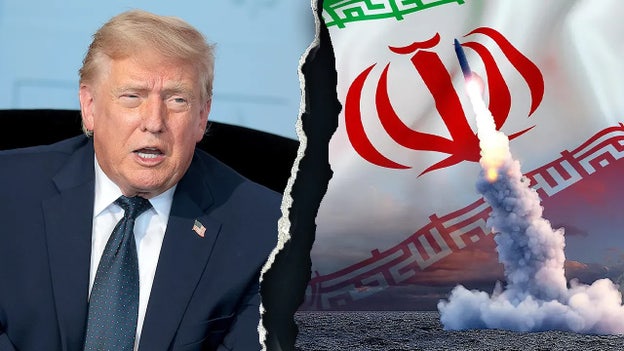
President Trump / Iran / Anna Moneymaker / Getty Images
U.S. military forces stationed in the Middle East are ready to launch major operations against Iran within 96 hours of receiving an order from President Donald Trump, according to reports.
CNN, citing officials, reported that the strikes would likely go beyond a limited military operation and maintaining the status quo such as targeting radar systems, launchers and other assets.
“It will be a big effort,” a source explained.
“We do not comment on sensitive military plans that may or may not exist,” a White House official told Fox News Digital when asked about the reports.
“President Trump keeps all options on the table to ensure that Iran can never have a nuclear weapon,” the official added.
Iranian President Masoud Pezeshkian touched down in Moscow on Monday night ahead of a Gas Exporting Countries Forum (GECF) summit on Tuesday.
President Vladimir Putin is expected to meet with Pezeshkian on Tuesday after hosting GECF leaders at a summit in Moscow, Kremlin aide Yuri Ushakov said, according to Reuters.
Iranian and Russian officials are expected to discuss expanding political and economic cooperation, reviewing progress on their comprehensive strategic partnership agreement and addressing regional and international developments, according to IRNA.
Pezeshkian is also scheduled to address the summit Tuesday, Habibollah Abbasi, director-general of the Iranian Presidential Office's Public Relations Department, the outlet said.
The GECF includes Russia, Iran, Qatar, Algeria, Egypt, Nigeria, the United Arab Emirates and Venezuela.
The Yemeni Armed Forces announced Monday that they had carried out 1,276 precision strikes against Houthi military assets across multiple front lines as part of their "Dawn of Yemen" campaign.
In a post on X, the military said the nationwide assault dealt a significant blow to the militia's capabilities, neutralizing approximately 382 fighters and commanders, destroying 140 combat vehicles and heavy weapons, and destroying multiple key ammunition depots.
In recent weeks, the Houthis have also launched barrages of ballistic missiles and long-range drones into Saudi Arabia, targeting civilian and commercial hubs.
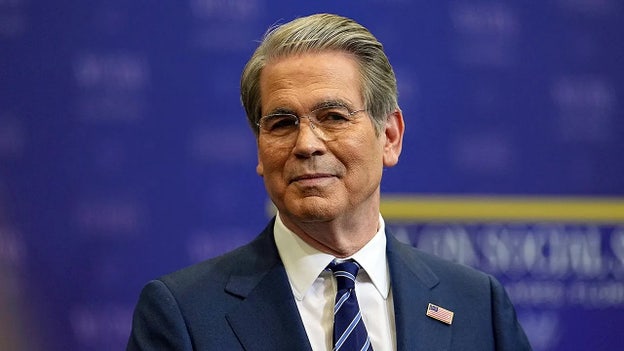
Scott Bessent / Matt Rourke / AP
Treasury Secretary Scott Bessent told Iranians not to pay their taxes and stock up on fuel, warning of a devastating economic contraction as Washington intensifies pressure on Tehran.
“I would predict that from March of '26 until March of '27, the economy would contract more than 25 percent, which is more than the Soviet Union contracted after its collapse,” Bessent told Iran International.
“My advice to the Iranian people would be: don't pay your taxes because you're not going to get anything back from the government,” Bessent said.
“You should start stocking up on heating fuel. There's going to be a big heating fuel shortage. In terms of gasoline, everyone should fill up their tanks now.”
Turning to the blockade of Iranian ports, Bessent said the pressure was already disrupting oil operations.
“There have been no loadings at Kharg Island. Production is starting to falter.”
“We've been going for eight weeks, and I can tell you the next eight weeks is going to get even more intense,” he added.
The United Kingdom Maritime Trade Operations (UKMTO) announced Monday that it had received multiple reports of a ship on fire about 63 nautical miles southeast of Al-Faw, Iraq.
“Crew status, damage assessment, and environmental impact are unknown at time of report,” UKMTO said before advising vessels to travel through the area with caution and report any suspicious activity while authorities investigate.
Treasury Secretary Scott Bessent joined Brian Kilmeade to discuss President Donald Trump's economic crackdown on Iran, mounting pressure on the Iranian regime, trade tensions with Canada and Mexico and the outlook for the U.S. economy.
This is an excerpt from an opinion article by Erfan Fard, a Washington, D.C.–based counterterrorism analyst specializing in Iranian intelligence and security structures
Throughout the history of Middle Eastern wars, one strategic mistake has been repeated time and again: great powers achieve victory on the battlefield, only to give their defeated adversaries an opportunity at the negotiating table to transform military defeat into political triumph. President Donald Trump faces precisely this danger. After eight months of war, the Islamic Republic of Iran, despite suffering devastating military and economic losses, continues to seek political survival through nuclear blackmail, threats to global energy security and the deliberate prolongation of negotiations. Washington must not allow a regime that has paid a heavy price for its reckless adventurism to regain, through a hastily negotiated agreement, the very position it occupied before the war.
The developments of Oct. 20 demonstrate that Tehran has abandoned none of its familiar tactics of confrontation, intimidation, bluffing and extortion. On the one hand, Islamic Republic officials speak of negotiations and ending the war; on the other, they impose imaginary conditions on Washington that, if accepted without credible guarantees, could dismantle much of America's leverage.
Mohsen Rezaei, secretary of the Islamic Republic's Supreme National Security Council — a former terrorist affiliated with the Islamic terrorist group Mansouroun, who even sought to visit the United States in the 2000s but was opposed by the CIA — emphasized during his meeting with Pakistan's army chief that not a single gram of Iran's enriched uranium would leave the country.
Meanwhile, Abbas Araghchi — a former Islamic Revolutionary Guard Corps member acting as foreign minister — has made reopening the Strait of Hormuz conditional upon acceptance of Tehran's proposed plan. Far from demonstrating a genuine willingness to compromise, these positions reveal the regime's determination to preserve its instruments of coercion on the eve of a potential agreement.
The most significant issue, however, lies in the political calculations of the Islamic Republic's rulers. Tehran is deliberately dragging out negotiations to weaken Trump's political standing ahead of the Nov. 3 midterm elections — in other words, to exert psychological pressure on the American president.
This is no longer merely a dispute over centrifuges or economic sanctions. The Islamic Republic is attempting to weaponize the exhaustion of war, the anxieties of American voters and rising energy costs as instruments of political pressure against the president of the United States. Such calculated deception must be understood in Washington as part of Tehran's asymmetric warfare strategy, not dismissed as an ordinary diplomatic tactic.
Fox News senior strategic analyst Gen. Jack Keane (Ret.) joined "America's Newsroom" to discuss an unclassified memo detailing Iran's increased efforts to target U.S. citizens and analyzes potential military responses in the region
Polling ahead of Israel’s Oct. 27 election projects that National Security Minister Itamar Ben-Gvir’s Otzma Yehudit Party will win between seven and ten seats in the 120-member Knesset, potentially making any future government led by Benjamin Netanyahu’s Likud Party contingent on his support and positioning him to secure senior ministerial portfolios.
His political rise mirrors a broader trend across Europe and the West, where parties such as Marine Le Pen and Jordan Bardella's National Rally in France, Geert Wilders’ Party for Freedom in the Netherlands, Australia's One Nation leader, Pauline Hanson, Italy’s Matteo Salvini and Germany's Alice Weidel of the AfD have all gained ground on traditional conservative political parties.
The highly controversial Ben-Gvir, as national security minister, oversees the ministry responsible for internal security, including the Israel Police, Israel Prison Service and civilian firearms licensing.
"I always say that Minister Ben-Gvir, if he were in America, he would just be called a Texan," Yishai Fleisher, international spokesman for the Jewish community of Hebron and a candidate ranked No. 12 on the Otzma Yehudit list, told Fox News Digital.
In a video interview with Fox News Digital, Fleisher continued, "Meaning law and order, the death penalty for murderers, tough conditions for jihadists in our prisons and gun rights for the average Jewish person to be able to defend themselves in our national state. That’s what Itamar Ben-Gvir stands for," he added.
Former Israeli Prime Minister Naftali Bennett is seeking a political comeback with an ambitious vision for the Middle East: expanding the Abraham Accords, building economic partnerships with Arab nations and rebuilding Israel's strained international relationships, particularly with the United States.
For Bennett, whose American parents moved to Israel from San Francisco, the U.S. connection is both personal and political. The 54-year-old former technology entrepreneur, a familiar face on American television, believes his business background could help him work with President Donald Trump to advance regional diplomacy.
"He was a businessman, not a career politician, same as me," Bennett told The Times of Israel in June, referring to Trump. "His worldview is, let's get stuff done. Let's look at results, not process. And that's precisely my view."
Bennett said he would aggressively pursue regional agreements through economic cooperation, seeking to build on the U.S.-brokered Abraham Accords. But while his ambitions overlap with Trump's regional agenda, the president endorsed Prime Minister Benjamin Netanyahu for re-election on Oct. 18.
Bennett also faces an unusual political challenge at home. His joint Beyachad, or Together, party with former Prime Minister Yair Lapid is polling behind both Netanyahu's Likud and former military chief Gadi Eisenkot's Yashar party.
A Channel 12 poll published Oct. 23 projected 23 Knesset seats for Eisenkot, 21 for Netanyahu and 15 for Bennett and Lapid.Yet Bennett knows better than most Israeli politicians that leading the largest party is not necessary to become prime minister. In 2021, he took office despite his Yamina party winning just seven of the Knesset's 120 seats, demonstrating the power of coalition negotiations in Israel's parliamentary system.
This is an excerpt from an article by Fox News' Efrat Lachter.
Israeli national security expert warns a single missile launch could spark rapid escalation amid major military drill.
Former Secretary of State Mike Pompeo reacted to a memo about potential Iranian attacks on Americans, the reported threats to U.S. interests abroad and the American military presence in the region.
Israeli Prime Minister Benjamin Netanyahu is reportedly weighing renewed Iran strikes as elections loom, with a similar situation facing President Donald Trump in the U.S.
President Donald Trump sharply criticized former President Barack Obama's previous JCPOA deal with Iran, calling it the "worst and dumbest deal" he has ever seen.
His comments come after Obama lashed out at Trump at a recent midterm campaign rally.
Fox News senior strategic analyst Gen. Jack Keane (Ret), discussed recent reports of satellite images showing Iran attempting to rebuild its nuclear program on Sunday.
Iran has "substantially increased" efforts to target U.S. personnel abroad, with plots to kill Americans reaching "advanced stages" in the Middle East and other countries, according to an intelligence memo obtained by Fox News.
The memo, sent Friday to Secretary of State Marco Rubio by Director of National Intelligence Jay Clayton, comes just days after the State Department ordered non-emergency U.S. government employees and their family members to leave Saudi Arabia due to escalating attacks by Iran-backed Houthi rebels.
U.S. officials confirmed the authenticity of the unclassified intelligence memo, which was first reported by Axios.
"Specifically, through various channels, we have received intelligence that Iran has substantially increased efforts to target U.S. personnel," the memo states.
"The lethal plotting efforts by the Iranians against U.S. citizens have reached advanced stages in both the Middle East and certain other countries."
The memo also states that intelligence officials will work to downgrade the classification of certain intelligence so it can be disseminated and shared with State Department personnel.
A U.S. official told Fox News Digital that the government continually monitors and evaluates evolving security threats.
"When it comes to our staffing at embassies, we constantly evaluate new information about the security environment," the official said. "The threat of Houthi attacks and of Iranian terror plots targeting U.S. officials are informing our decisions on staffing adjustments for embassies on RO Status in the region."
This is an excerpt from an article by Fox News' Michael Sinkewicz.
President Donald Trump joined "Sunday Morning Futures" to discuss the economy, midterm elections and the war in Iran.
Trump argued that the U.S. economy is booming with the exception of oil prices, which he says will plummet once the war in Iran ends.
President Donald Trump says he anticipated that the war in Iran would cause oil prices to rise in the U.S., but argues it was necessary to prevent Iran from obtaining a nuclear weapon.
Trump made the statement during an interview with Fox 2 Detroit on Sunday night, pointing to recent reports that the oil industry is already recovering.
"You worry that people are gonna vote with their pocketbooks and not reflect as deeply, perhaps, as you are on the Iran war," Fox 2's Roop Raj told Trump. "They're just worried about getting food on the table, gas in the tank."
"Think about it. If they're great Americans, they're going to do what I'm doing because you cannot let--You want to see problems? You want see not only energy problems, but death problems? Let them have a nuclear weapon, because they would use it. And I have to do that first," Trump responded.
"I knew when I did it. Look, we blew the hell out of their nuclear capacity. You know that? Far greater than anyone even thought. It's gone. But I knew that that was going to raise the prices a little bit. Now, if you take a look, the oil, just on the front page of the Wall Street Journal yesterday, oil coming out of the Strait of Hormuz is now topping what it was before the war. Because we have a blockade and it's been, our Navy is, our military, but our Navy has been incredible. We have a naval blockade, and we have more oil coming right now out of the Strait of Hormuz than it was, before the war started," he added.
Iran is approaching a financial reckoning as a U.S. naval blockade threatens to wipe out its seaborne crude oil revenues by mid-December — but the economic pain may fall more heavily on ordinary Iranians than on the military Washington is trying to constrain.
Iran’s trackable floating oil inventory outside the U.S. blockade zone has fallen to zero, according to energy intelligence firm Kpler, which projects that Tehran's crude revenues could dry up by the middle of December as outstanding payments are settled.
But the loss of oil revenue would not necessarily translate into an immediate military funding crisis. Tehran could shield military spending while cutting civilian programs, allowing inflation to erode purchasing power and drawing on alternative revenue sources.
That complicates Washington's pressure campaign: The blockade may deprive Tehran of one of its biggest sources of cash without immediately starving the military and Islamic Revolutionary Guard Corps of the money they need to operate.
Oil directly accounts for roughly 30% of Iran's government budget, according to Gregory Brew, a senior Iran and energy analyst at Eurasia Group, and Miad Maleki, an Iran sanctions and financial expert at the Foundation for Defense of Democracies.
Iran entered the year expecting to export about 1.7 million barrels per day at roughly $54 per barrel, Brew said. Actual exports have fallen short of that target, though higher oil prices allowed Tehran to build some financial cushion.
Maleki estimated that oil and refined petroleum products account for between 50% and 60% of regime revenue when indirect income is included.
Still, the December deadline is not a date on which Iran suddenly runs out of money.
This is an excerpt from an article by Fox News' Morgan Phillips.
The Israeli military launched large-scale domestic military exercises on Sunday to counter surprise border infiltrations and ground raids across northern and central Israel, mobilizing multiple divisions and air assets amid rising regional tensions.
The drills, set to continue over 48 hours, came as an Israeli security expert invoked the 1973 Yom Kippur War, when Egypt and Syria used exercises to disguise preparations for a surprise attack, warning that escalating tensions in the region could in fact trigger what he described as a "dangerous miscalculation."
The large-scale maneuvers, the IDF said, involve the Northern Command’s 210th Division, the West Bank Division, and the Central Command’s 98th and 96th divisions, alongside the Israeli Air Force.
The exercise, scheduled just ahead of Israel's elections Oct. 27, aims to "maintain the forces’ alertness and readiness, strengthen the ability to defend communities, and make full use of aerial capabilities for defense in the area," according to the IDF.
On Friday, the IDF said troops would practice "a variety of scenarios, including a surprise attack and infiltration into Israeli territory by air and land," incorporating lessons learned from the Oct. 7, 2023, Hamas-led attacks on Israel.
"This exercise is mostly about non-state actors with or without Iranian support," Israeli national security analyst Dr. Ehud Eilam told Fox News Digital.
"It's aimed at those in Syria, Lebanon, and Jordan who might try to infiltrate into Israel or send ground raids. Some are supported by Iran; others are not. It could be planned by Iran or be a local initiative."
This is an excerpt from an article by Fox News' Emma Bussey.
Fox News senior strategic analyst Jack Keane joined "Sunday Morning Futures" to discuss reports that Iran could be rebuilding nuclear facilities.
Keane also weighed in on President Donald Trump's military options and the potential for further U.S. action.
"The Big Weekend Show" co-hosts discuss President Donald Trump’s options for dealing with Iran as intelligence warns the regime may be ramping up efforts to target Americans.
Iran has "substantially increased" efforts to target U.S. personnel abroad, with plots to kill Americans reaching "advanced stages" in the Middle East and other countries, according to an intelligence memo obtained by Fox News.
The memo, sent Friday to Secretary of State Marco Rubio by Director of National Intelligence Jay Clayton, comes just days after the State Department ordered non-emergency U.S. government employees and their family members to leave Saudi Arabia due to escalating attacks by Iran-backed Houthi rebels.
U.S. officials confirmed the authenticity of the unclassified intelligence memo, which was first reported by Axios.
Live Coverage begins here