
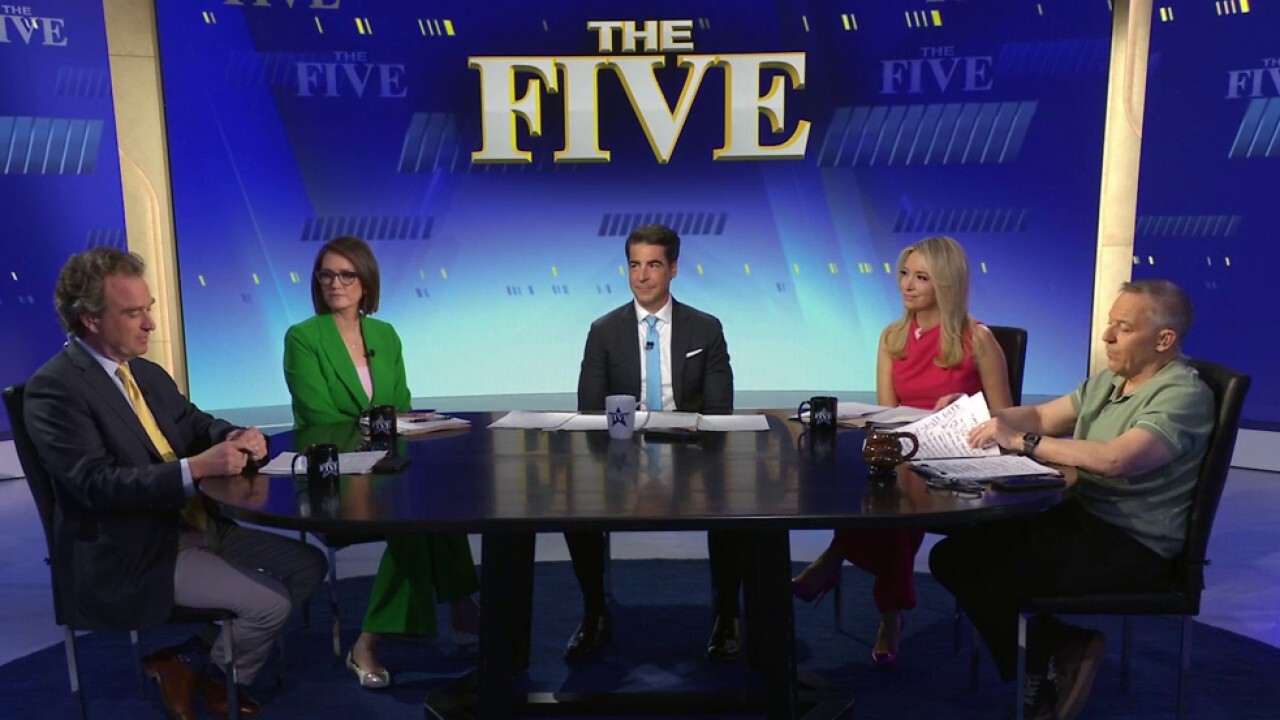
• With: Bob Beckel, Eric Bolling, Dana Perino, Andrea Tantaros, Kimberly Guilfoyle

    This is a rush transcript from "The Five," January 11, 2013. This copy may not be in its final form and may be updated.

    ANDREA TANTAROS: Yesterday, Vice President Biden met with the Hollywood crowd about gun violence and they promise to have, quote, "a dialogue" about the problem. But "Django Unchained" director Quentin Tarantino isn't interested in talking about the impact of his notorious, violent movies. Here's what happened when he was asked about it.

    (BEGIN VIDEO CLIP)

    KRISHNAN GURU-MURTHY, REPORTER: Why are you sure there is no link between enjoying movie violence and enjoying real violence?

    QUENTIN TARANTINO, MOVIE DIRECTOR: I don't -- well, I'm going to tell

    you why I'm so sure? Don't ask me a question like that. I'm not going to

    -- I'm not biting. I refuse your question.

    GURU-MURTHY: Why?

    TARANTINO: Because I refuse your question. I'm not your slave and

    you are not my master. You can't make me dance to your tune. I'm not your

    monkey.

    GURU-MURTHY: I can't make you answer anything. I'm just -- I'm asking you an interesting question.

    TARANTINO: And I'm saying I refuse.

    (END VIDEO CLIP)

    TANTAROS: Well, he eventually tried to end the conversation by saying, "I'm shutting your butt down" and he stormed out.

    And so, Dana, do you think he should have answered the question? Because Quentin Tarantino has history to make violent movies or does he have a right to say I'm not talking, I want to talk about my movie?

    DANA PERINO, CO-HOST: He would be great in a dictatorship. He also wants all this free publicity and earned media for his movies. Well, there was news involved, after the Newtown shooting. And so, he is going to have to answer to it.

    Remember when Harry Reid said to the reporter, that's a clown question, bro. Basically saying, I'm not going to answer that.

    But what Tarantino just did is like he could be a better actor than he is, because even though you might think you are not going to answer the question. You don't say you are not going to answer the question. You just don't answer the question and you try to move it on to something else.

    So, if he needs a P.R. consultant, I've got a lot of people I could send his way.

    TANTAROS: Doesn't it seem, though, Eric, like he wanted to make a point about this? Like I don't think violence contributes to movies and don't ask me, I'm going to keep making them, I don't care what you think?

    ERIC BOLLING, CO-HOST: I'm not sure he was making, I didn't hear him make a point. If I heard him make a point I would say, yes. He doesn't want to talk about it. Here is the issue. Joe Biden met with Hollywood people. He's meeting with people who produce violent videogames. First person shooter, which means you are actually the guy pulling the trigger.

    Some of them you can literally walk in a crowded place of innocent civilians and mass murder them, you know, right -- so there's a whole culture. What does Biden do? He's got Tuesday to make some recommendations to the president. Does he take the information and ignore these aspects, movie aspect, the Hollywood aspect, the video game aspect, and go after gun control laws only or does he take the recommendations from -- Dana yesterday made a great point. You think it's going to fall somewhere in between all of them to make everyone just a little bit squishy, no one happy.

    TANTAROS: Well, I would like to see, Bob, some of these actors who speak out about it. I mean, look, I like Quentin Tarantino. I happen to agree with his right to say I don't want to talk about it, not because they confuse our last name all the time.

    I think he has the right to can make whatever movies he wants. If he doesn't want to answer any questions, who cares? It's his right. He wants to talk about his movie. Let him guide the interview.

    But it's the other celebrities that make the movies, that direct these movies, write these movies, star in these movies that come out and say, oh, I can't believe we have this violence. That's what I get angry about, the hypocrisy.

    BOB BECKEL, CO-HOST: Well, you know, first of all, let me say this about the Tarantino, I think he's been interviewed so many times because the movie is out. At a certain point, you do get tired of listening to reporters ask question.

    Dana is probably right, he could have acted better about it. But my guess is that -- remember when they had the big furor how are you going to rate movies? Jack Valenti, who had been the head of the MPA --

    PERINO: Yes.

    BECKEL: -- came up with a rating system that caused furor about First Amendment rights. I think that there might be something now to do with rating movies, a more detail rating.

    The other thing is let's not prejudge as I said yesterday, what Biden is going to say or not say.

    The last thing I say is the only group that came out and open their mouths about prejudging this was the National Rifle Association, who came out and dumped all over it.

    KIMBERLY GUILFOYLE, CO-HOST: This is like Groundhog Day.

    BECKEL: Here we go, here we go.

    TANTAROS: Kimberly, Bob makes a good point about the rating system, because back in the day, "Urban Cowboy" was x-rated. Now, it's considered PG-13. So, I think they have watered down the requirements.

    But isn't the real issue, though, mental health? A normal person can watch a movie, can play a videogame and not go out and shoot people.

    GUILFOYLE: Not act on it. Right.

    TANTAROS: So, isn't that the real issue? And the White House just seems to be ignoring it.

    GUILFOYLE: Well, they have to do this and meet with the groups to create this, you know, balanced approach where they actually addressing it across the board. What's going to come of it, as Bob says, let's not prejudge it. Nevertheless --