 Print
Print
 Close
Close

Trump’s Iran war now comes down to one brutal question: What comes next?
By Robert Maginnis
Published May 19, 2026

In the first weeks of America’s confrontation with the Islamic Republic of Iran, U.S. and allied airpower imposed real costs on Tehran. That tactical success was welcome. But as I wrote previously, "Round one of the Iran fight went to the U.S. military." What was not resolved — and what now shapes everything — is the strategic outcome.
The United States faces a fundamental fork in the road. One path leads toward kinetic escalation, risking broader regional and global catastrophe. The other leads toward a calibrated off-ramp. The hard question is whether that off-ramp actually exists.
What Happened in Beijing
Just days ago, President Trump concluded a high-profile summit with Chinese President Xi Jinping in Beijing. Both leaders agreed the Strait of Hormuz must remain open and that Iran cannot obtain a nuclear weapon. Beijing produced no concrete plan to pressure Tehran.
WHY TRUMP, IRAN SEEM LIGHT-YEARS APART ON ANY POSSIBLE DEAL TO END THE WAR
Trump was direct about it. He told U.S. interviewers he did not ask China for "help" because "when somebody helps you, they always want something on the other side."
Beijing’s actual behavior told the real story. While Trump was in China, Iranian semiofficial agencies reported that Chinese vessels began transiting the Strait under new Iranian protocols after requests from China’s foreign minister and ambassador to Iran. Beijing was not pressuring Tehran. It was accommodating it.
Why That Matters
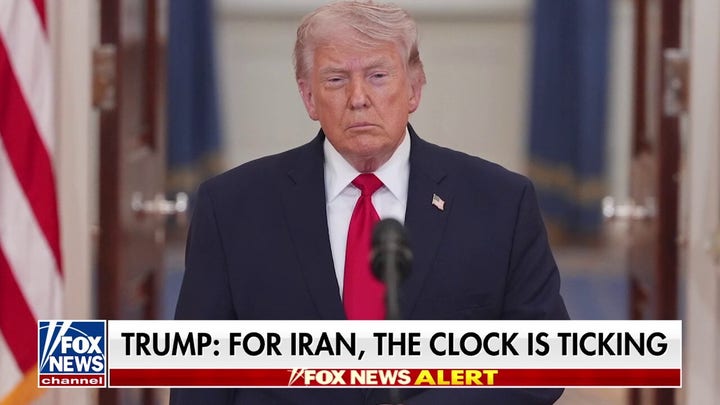
President Trump declared the ceasefire "on life support" on May 10 after rejecting Tehran’s previous proposal as "just unacceptable." On May 18th, Tehran submitted another response through Pakistani mediation while simultaneously declaring that nuclear enrichment rights "cannot be negotiated" — calling enrichment "a right that already exists." That is not the posture of a country moving toward settlement.
The Strait of Hormuz remains the central flashpoint. On May 15, a vessel was seized off the UAE coast and an Indian-flagged cargo ship sank near Oman after an attack. Iran’s senior vice president declared the strait "belongs to Iran" and will not be surrendered "at any price."
The top U.S. commander in the region, Adm. Brad Cooper, told Congress that Iran’s military capabilities have been "dramatically degraded," but that Tehran’s leaders are disrupting global shipping with rhetoric alone — threats "clearly heard by the merchant industry and the insurance industry." He said the U.S. has the power to permanently reopen the strait but deferred to policymakers.
The result is a dual blockade: the U.S. Navy blockading Iranian ports since April 13, Iran blockading the Gulf. Neither side has blinked.
The Limits of Military Force
The case for escalation is emotionally compelling. If Iran refuses to concede on nuclear enrichment or maritime control, deeper strikes might seem like the only lever left. History counsels otherwise.

Bombing Iran’s electrical grid, major bridges, or civilian infrastructure might produce dramatic images. It will not produce capitulation. Iran holds roughly 460 kilograms of uranium enriched to 60 percent — weeks from weapons-grade material. Satellite imagery of Natanz published in March showed no new damage to the facility’s tunnels after strikes Trump described as "obliterating" Iran’s nuclear program. Kinetic pressure defers the nuclear problem. It does not erase it.
Wider bombardment could push Tehran to target desalination plants, power grids, and civilian infrastructure across Gulf states. Iran has already demonstrated the will to strike regionally: tankers seized, a cargo vessel sunk, cruise missiles fired at commercial shipping throughout May. Escalation that triggers full Hormuz closure risks a global recession, not just a regional disruption.
We Have Seen This Pattern Before
Iran and its proxies have absorbed punishing strikes before and kept fighting. After major blows they reasserted maritime harassment, sustained proxy pressure, and preserved regime cohesion. Tactical gains did not translate into strategic defeat for Tehran, and there is little reason to expect a different outcome now. Wider bombardment is more likely to produce a refugee crisis than political moderation. Regimes under existential pressure dig in. They do not capitulate.
The Off-Ramp Illusion
Any deal Washington can realistically offer will resemble the 2015 Joint Comprehensive Plan of Action — capped enrichment levels, reduced stockpiles, international verification, sanctions relief. The JCPOA capped enrichment at 3.67 percent and cut Iran’s uranium stockpile from 10,000 kilograms to three hundred kilograms. Trump called that deal "the worst deal ever." He is not returning to it. But even those generous terms failed to hold. And Iran today is in a harder posture than it was in 2015.
Tehran’s foreign ministry declared that nuclear enrichment is "a right that already exists" and cannot be negotiated. That position has held through the JCPOA years, through two military campaigns, and through the death of its supreme leader. Trump demands zero enrichment. Iran will not accept it. The gap is not bridgeable through diplomacy. A deal Iran rejects is no deal. A deal Iran signs, by definition, preserves enrichment. That is not the outcome the administration says it wants.

The arithmetic is stark. Iran’s 460 kilograms of uranium enriched to 60 percent will not be voluntarily surrendered. If the administration’s core objective is a non-nuclear Iran, and Tehran will sign no agreement that removes its enrichment program, then at some point the United States will be forced to go take it. There is no third option.
What the Administration Must Consider
Domestic politics cannot be ignored. High energy prices and an unresolved conflict cut directly into voter sentiment with midterms approaching. Reuters analysts have warned that protraction risks leaving the president worse off than before the war began — draining political capital without delivering peace. A broader war that shatters energy markets and risks global recession is a far worse outcome than a negotiated framework on the Strait. But the nuclear problem will not be resolved by a framework Tehran will not sign.
The Real Fork in the Road
CLICK HERE TO DOWNLOAD THE FOX NEWS APP
The United States can and should pursue de-escalation on the Strait of Hormuz. That is achievable and worth the diplomatic cost. But the nuclear question has a harder logic. Clausewitz taught that war is an instrument of policy, not a substitute for it. The policy objective here is a non-nuclear Iran. The instrument being employed has not achieved it, and the diplomacy on offer will not either.
No regime that survived 39 days of American and Israeli strikes, watched its supreme leader killed, and still declared enrichment non-negotiable is going to surrender that leverage at a table in Islamabad. The real fork is not escalation versus diplomacy. It is this: accept a nuclear-capable Iran as the permanent outcome of this war or accept the cost of physically removing the threat. Washington should make that decision deliberately — not by default when the ceasefire finally collapses.
CLICK HERE TO READ MORE FROM ROBERT MAGINNIS
https://www.foxnews.com/opinion/trumps-iran-war-comes-one-brutal-question-comes-next