 Print
Print
 Close
Close

STEVE FORBES: Regulators risk destroying local TV by blocking key media merger
By Steve Forbes
Published May 04, 2026
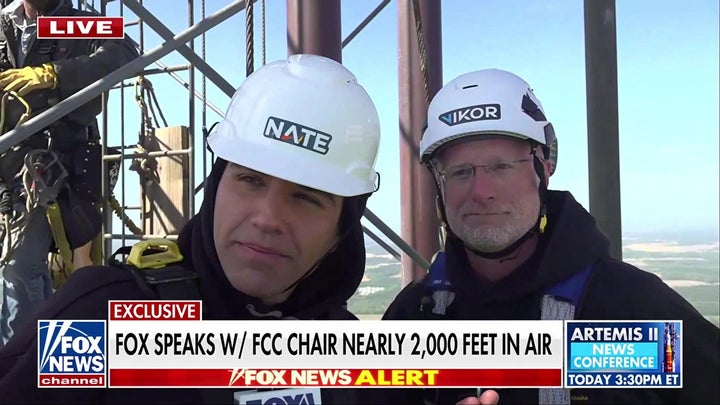
The Nexstar-Tegna transaction is exactly the kind of pro-growth, common-sense deal Washington should applaud, not bury under a mountain of legal briefs, bureaucratic nostrums and political posturing.
These two companies are major owners of local television stations.
For years, America’s local broadcasters have been battered by forces far larger than any single station group: Big Tech, streaming behemoths, social-media platforms, cord-cutting, cable fragmentation and the steady siphoning of advertising dollars away from local outlets. The old world of three networks, a handful of hometown stations and a captive evening-news audience has long gone the way of the dinosaurs.
STEVE FORBES: 4 WAYS TO FIX WHAT'S WRONG WITH NEW YORK CITY AND STOP THE EXODUS
Local television today is not operating in a sheltered village. It is competing in a global, fiercely competitive marketplace.
That is why the Nexstar-Tegna deal matters.

This is not just another media merger. It is a test of whether policymakers understand the real economy — or whether they remain trapped in a regulatory museum, polishing rules written for a media world that no longer exists.
Nexstar has made the case that acquiring Tegna would strengthen local journalism by giving stations more resources, better technology, stronger programming capabilities and the scale needed to compete. CEO Perry Sook has said the combined company would be positioned to deliver strong local journalism and local programming with enhanced assets, capabilities and talent.
Translated from corporate language into plain English: newsrooms need money, people, cameras, technology and staying power. Scale supplies those things. Starvation does not.
Yet several state attorneys general, joined by DirecTV, have tried to block the transaction, warning darkly that Nexstar would gain too much influence in local television markets. This argument has the musty smell of 1985, or even 1955. It collapses the moment one looks at how Americans actually consume information today.
Local broadcasters are not merely competing with the station across town. They are competing with Google, Meta, YouTube, Netflix, Amazon, TikTok, Apple, podcasts, cable channels, newsletters, satellite providers and a tsunami of digital content that never stops.
That is the marketplace. Not theory. Not nostalgia. Reality.
The 39% national television ownership cap is a relic. It belongs in the same storage closet as rotary phones, rabbit-ear antennas and three-martini lunches. It was designed for a broadcast era that has vanished. Applying it rigidly today is like regulating automobiles with horse-and-buggy rules.
The Federal Communications Commission was right to recognize that broadcasters need room to maneuver. In today’s marketplace, scale is not the enemy of competition. Scale is the oxygen that keeps local journalism alive.
The Trump administration has rightly made growth, deregulation and the clearing away of bureaucratic barnacles central to its economic philosophy. This deal fits squarely within that agenda. It lets an American media company adapt, invest and compete instead of punishing it for trying to survive.
Blocking this transaction would not preserve competition. It would weaken local broadcasters precisely when they need muscle. It would make it harder for stations to fund reporters and provide investigative stories, weather coverage, emergency alerts and community programming that national outlets rarely provide, and Big Tech certainly does not produce.
Local news is not a luxury good. It is civic infrastructure.
It tells families when storms are coming, when schools are closed, when roads are dangerous, when crime is rising, when local officials are wasting tax dollars and when communities are in crisis. When local newsrooms shrink, corruption gets a holiday. Citizens get less information. Community needs become easier to ignore.
That is why this debate should be judged by the public interest, not by the self-interest of competitors or the political ambitions of state attorneys general eager for headlines.
DirecTV’s role in opposing the deal deserves special scrutiny. DirecTV is a major national distributor with its own commercial agenda. Its lawsuit should not be confused with some noble crusade for local journalism. More likely, it is about leverage, bargaining power and protecting its own margins. Businesses are free to fight for their interests. But regulators and courts should not mistake a competitor’s complaint for the national interest.
The irony is rich. Opponents claim they want to protect local news. Yet their position would make it harder for local broadcasters to compete against the far larger digital and streaming giants that are hollowing out the economics of local journalism.
The dodo bird rationales of the merger’s opponents are in spirit with the "thinking" that had Washington torpedo the merger in 2022 of JetBlue and Spirit Airlines. We all know Spirit is in bankruptcy today, reduced to begging for a government bailout.
That is not consumer protection. That is economic malpractice.
The Nexstar-Tegna transaction offers a path toward stronger local stations, more durable newsrooms and a fighting chance for community journalism to endure. It reflects the hard truth of modern media: companies need size, capital and technological heft to survive in a market dominated by global platforms and deep-pocketed streamers.
Washington should not cling to yesterday’s rule book while today’s local newsrooms vanish.
The administration understands that America prospers when industries are allowed to modernize, consolidate where necessary and compete with the real giants of the modern economy. This is one of those moments. Supporting the Nexstar-Tegna transaction would send a clear message: America will not let stale regulations and political lawsuits strangle necessary adaptation.
CLICK HERE TO DOWNLOAD THE FOX NEWS APP
Local journalism is too important to be sacrificed on the altar of regulatory nostalgia.
The choice is stark. Let broadcasters build the scale they need to survive — or watch more local newsrooms fade to black.
CLICK HERE TO READ MORE FROM STEVE FORBES
https://www.foxnews.com/opinion/steve-forbes-regulators-risk-destroying-local-tv-blocking-key-media-merger