 Print
Print
 Close
Close

The everyday places Americans could be exposed to hantavirus — without knowing it
By Melissa Rudy
Published May 13, 2026

Amid the current hantavirus outbreak that started on the MV Hondius cruise ship as it sailed across the Atlantic, health experts are now examining whether Americans may be encountering the virus in everyday places without realizing it.
The rare Andes strain, which was linked to the MV Hondius outbreak, is the only known hantavirus that has the capability to spread from person to person, usually through prolonged close contact with an infected person.
Most cases of hantavirus in the U.S. occur in the desert southwest and on the west coast, according to Dr. Linda Yancey, an infectious disease specialist at Memorial Hermann in the Houston area.
ANDES VIRUS LINKED TO CRUISE SHIP DEATHS RAISES CONCERN OVER HUMAN-TO-HUMAN SPREAD
"In Texas, cases are mostly seen on the west side of the state," she told Fox News Digital. "The strain of hantavirus native to east Texas and west Louisiana, the Bayou strain, is not as infectious in humans as the western strain, the Sin Nombre strain."
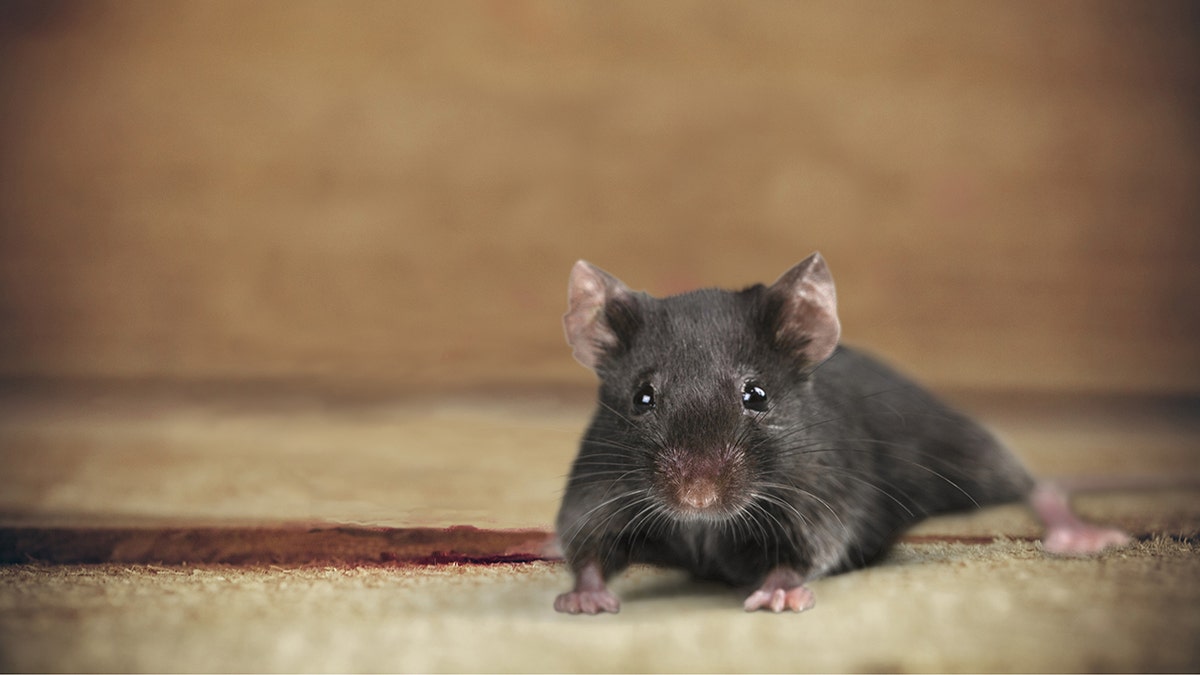
Hantavirus is primarily spread through contact with infected rodents – primarily deer mice – and their urine, droppings or saliva. (iStock)
Hantavirus is mainly spread through contact with infected rodents – primarily deer mice – and their urine, droppings or saliva, according to the Centers for Disease Control and Prevention.
People can become infected after breathing in contaminated particles that are stirred into the air or touching contaminated surfaces and then touching their nose or mouth. More rarely, rodent bites can spread the virus.
HANTAVIRUS OUTBREAK TIMELINE HIGHLIGHTS KEY MOMENTS IN DEADLY CRUISE CRISIS
Exposure is most likely when cleaning enclosed or poorly ventilated areas where rodents may nest unnoticed for weeks or months, health officials say.
Risky locations can include garages, sheds, cabins, attics, barns and crawl spaces. Storage units, stables, kitchen cabinets, and spaces behind appliances if rodents are present.
CLICK HERE FOR MORE HEALTH STORIES
Rodents can also nest in unused cars, RVs, campers and boats, which can be sources of exposure when reopened.
The National Park Service says that most human cases of hantavirus occur in the spring and are linked to buildings that become heavily infested with rodents over the winter.

The risk of inhalation is also higher when opening buildings that have gone unused for longer periods of time, sweeping dusty floors, or moving and unpacking boxes. (iStock)
"Most people are exposed when cleaning out sheds and garages where rodents have been living," Yancey confirmed. "You can be exposed by just the dust and droppings left behind by rodents – you don't even need to even see the rodent to be exposed."
The risk of inhalation is also higher when opening buildings that have gone unused for longer periods of time, sweeping dusty floors, or moving and unpacking boxes, experts cautioned.
CLICK HERE TO SIGN UP FOR OUR HEALTH NEWSLETTER
Rodent exposure is not limited to buildings. Health officials say people can also encounter hantavirus risk while handling firewood, working in rodent-prone outdoor areas, or disturbing rodent nests and burrows.
To prevent infection, if cleaning a structure that might have harbored rodents, Yancey recommends wearing a mask and using a diluted bleach solution to wet down any dust or loose debris.
CLICK HERE TO DOWNLOAD THE FOX NEWS APP
"This will help kill the exposed virus and reduce the amount of infectious dust," Yancey said.
The CDC advises against vacuuming or sweeping rodent urine, droppings or nesting materials, as this can aerosolize the virus and increase the risk of inhalation.
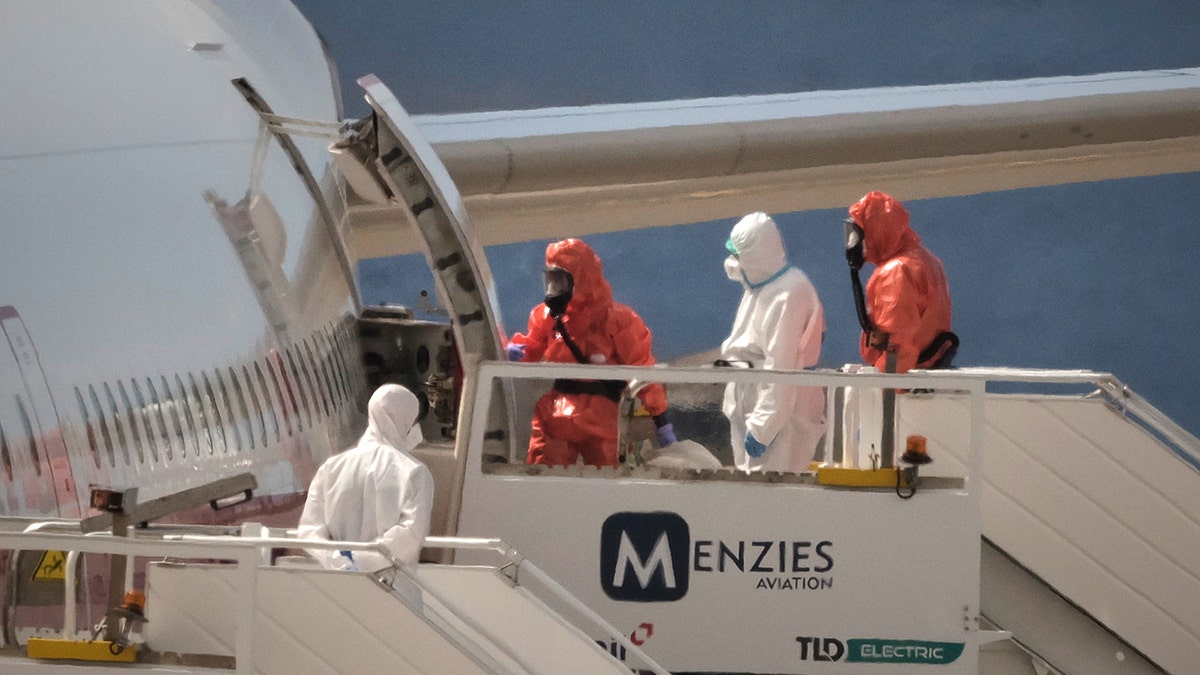
A Spanish passenger boards a government plane after disembarking from the hantavirus-stricken cruise ship MV Hondius at the airport in Tenerife, Canary Islands, on May 10, 2026. (Arturo Rodriguez/AP Photo)
Instead, health officials recommend wearing gloves, soaking rodent droppings with disinfectant, wiping them up with paper towels, properly disposing of waste and thoroughly cleaning surfaces, followed by careful handwashing.
Some signs of rodent activity can include droppings, shredded nesting materials, gnaw marks, strong musky odors and scratching sounds in the walls or ceilings, according to public health guidance.
TEST YOURSELF WITH OUR LATEST LIFESTYLE QUIZ
Dr. Marc Siegel, Fox News senior medical analyst, emphasized that hantavirus is not something that most Americans encounter in daily life, and is more prominent in certain parts of Europe and Asia.
"It is very rare in the U.S. and is seen out west, but rarely," he told Fox News Digital. "We need to avoid overpersonalizing the risk of a very rare virus."
https://www.foxnews.com/health/everyday-places-americans-could-exposed-hantavirus-without-knowing