







A suggested lesson plan that calls on school kids to write letters to themselves about what they can do to help President Obama is troubling some education experts, who say it establishes the president as a "superintendent in chief" and may indoctrinate children to support him politically.
But the White House says the speech is merely "designed to encourage kids to stay in school."
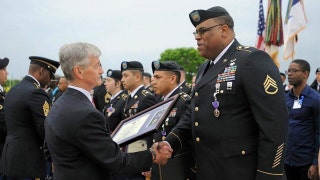
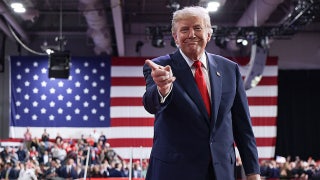
Obama will deliver a national address directly to students on Tuesday, which will be the first day of classes for many children across the country. The address, to be broadcast live on the White House's Web site, was announced in a letter to school principals last week by Education Secretary Arne Duncan.
Obama intends to "challenge students to work hard, set educational goals and take responsibility for their learning," Duncan wrote. Obama will also call for a "shared responsibility" among students, parents and educators to maximize learning potential.
"The goal of the speech and the lesson plans is to challenge students to work hard in school, to not drop out and to meet short-term goals like behaving in class, doing their homework and goals that parents and teachers alike can agree are noble," Tommy Vietor, a White House spokesman, told FOXNews.com. "This isn't a policy speech. This is a speech designed to encourage kids to stay in school."
But in advance of the address, the Department of Education has offered educators "classroom activities" to coincide with Obama's message.
Students in grades pre-K-6, for example, are encouraged to "write letters to themselves about what they can do to help the president. These would be collected and redistributed at an appropriate later date by the teacher to make students accountable to their goals."
Teachers are also given guidance to tell students to "build background knowledge about the president of the United States by reading books about presidents and Barack Obama."
During the speech, "teachers can ask students to write down key ideas or phrases that are important or personally meaningful."
For grades 7-12, the Department of Education suggests teachers prepare by excerpting quotes from Obama's speeches on education for their students to contemplate -- and ask as questions such as "Why does President Obama want to speak with us today? How will he inspire us? How will he challenge us?"
Activities suggested for after the speech include asking students "what resonated with you from President Obama's speech? What lines/phrase do you remember?"
Obama announced his intention to deliver the address to students during an interview with Damon Weaver, a middle school student from Florida who gained a following of his own last year on the campaign trail for his interviews of high-profile figures.
The Department of Education is using the president's address to kick off a video contest titled, "I Am What I Learn," in which students are invited to submit videos of up to two minutes on the importance of education in achieving their dreams.
Obama's critics say the lesson plans and the president's calls for a "supportive community" are troubling on many levels.
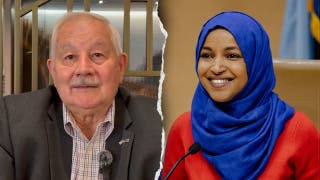
"In general, I don't think there's a problem if the president uses the bully pulpit to tell kids to work hard, study hard and things like that. But there are some troubling hints in this, both educationally and politically," said Neal McCluskey, associate director of Cato Institute's Center for Educational Freedom.
Among the concerns, McCluskey said, is the notion that students who do not support Obama or his educational policies will begin the school year "behind the eight ball," or somehow academically trailing their peers.
"It essentially tries to force kids to say the president and the presidency is inspiring, and that's very problematic," McCluskey said. "It's very concerning that you would do that."
Parents of public school students would also have to pay for that "indoctrination," regardless of their political background, he said.
"That's the fundamental problem. They could easily be funding the indoctrination of their children."
Meanwhile, Patti Kinney, a former teacher and middle school principal with 33 years of teaching experience, said she found nothing wrong with the lesson plans.
"They're designed as a menu, so it doesn't mean you have to do everything," said Kinney, associate director for middle level services at the National Association of Secondary School Principals. "You have to pick and choose which will work best for your class."
Kinney said suggestions like asking students to recall "other historic moments" when the president spoke to the nation and to hone their listening skills by taking notes during the address are useful.
"You're asking them to listen to particular things and to take notes," she said. "That's a good teaching strategy to help students develop their listening skills."
Asked if she was troubled by the suggestion that students write letters "about what they can do to help the president," Kinney said she would have reworked that sentence.
"I would have probably reworded that to say goals the president is suggesting," Kinney said. "But again, you call upon teacher expertise to do what's appropriate with their students ... I did not see anything that I saw as problematic."
Frederick Hess, director of education policy studies at the American Enterprise Institute, a conservative think tank, said the suggested lesson plans cross the line between instruction and advocacy.
"I don't think it's appropriate for teachers to ask students to help promote the president's preferred school reforms and policies," Hess said. "It very much starts to set up the president as a superintendent in chief."
Amid the debate on the federal government's level of involvement on issues like health care and others, Hess said, "There's a lot of people" on both sides of the political spectrum who will rightfully be concerned with the president's call to action.
"It shows exactly what the problem is," he said. "This is going to open the door to all kinds of concerns."
After reading the Department of Education lesson plans for the speech, McCluskey said he noticed several passages that should set off "alarm bells," including language that attempts to "glorify President Obama" in the minds of young students.
"It could be a blatantly political move," he said. "Nobody knows for sure, but it gives that impression."
McCluskey also noted that the lesson plans for young students contain suggestions to write letters to themselves on how they can help the president, but that suggestion is not in the lesson plan for middle and high schoolers -- perhaps due to the likelihood of increased political ties at that age.
"You don't want to see this coming from the president," McCluskey said. "You don't want to see this coming from the federal government."
FOXNews.com's David Paulsen contributed to this report.
