 Print
Print
 Close
Close

House Republicans drop Jack Smith transcripts in explosive Arctic Frost records fight
By Stepheny Price, Leo Briceno, Charles Creitz
Published September 22, 2026

House Republicans released six closely watched transcripts Tuesday, offering a new-look inside former Special Counsel Jack Smith’s controversial investigation of President Donald Trump and Republican lawmakers.
Committee Republicans allege investigators improperly subpoenaed phone records belonging to more than a dozen GOP lawmakers during the Arctic Frost probe, and secured gag orders preventing lawmakers from learning the Biden-Harris Justice Department had obtained their records.
Taken together, they add substantial detail about the reasoning behind investigatory decisions — especially concerning how they approached probing lawmaker communications — as they investigated whether Trump had attempted to block the peaceful transfer of power after the 2020 election. They reveal efforts that Smith's office took to make sure the investigation followed the norms and processes that would apply to any investigation. But it also laid bare key differences in the way the investigation was practically carried out that separated it from most probes.
The documents include testimony from five members of the special prosecutor's office, including J.P. Cooney, Molly Gaston, Ray Hulser, Tad Duree and Thomas Windom, all members of Smith's team. The released files also include testimony from Brian Burnett, an agent for the Office of Inspector General (OIG).
The new revelations focus especially on communications gathered from Rep. Scott Perry, R-Pa., the only lawmaker who had his phone seized as a part of the investigation.
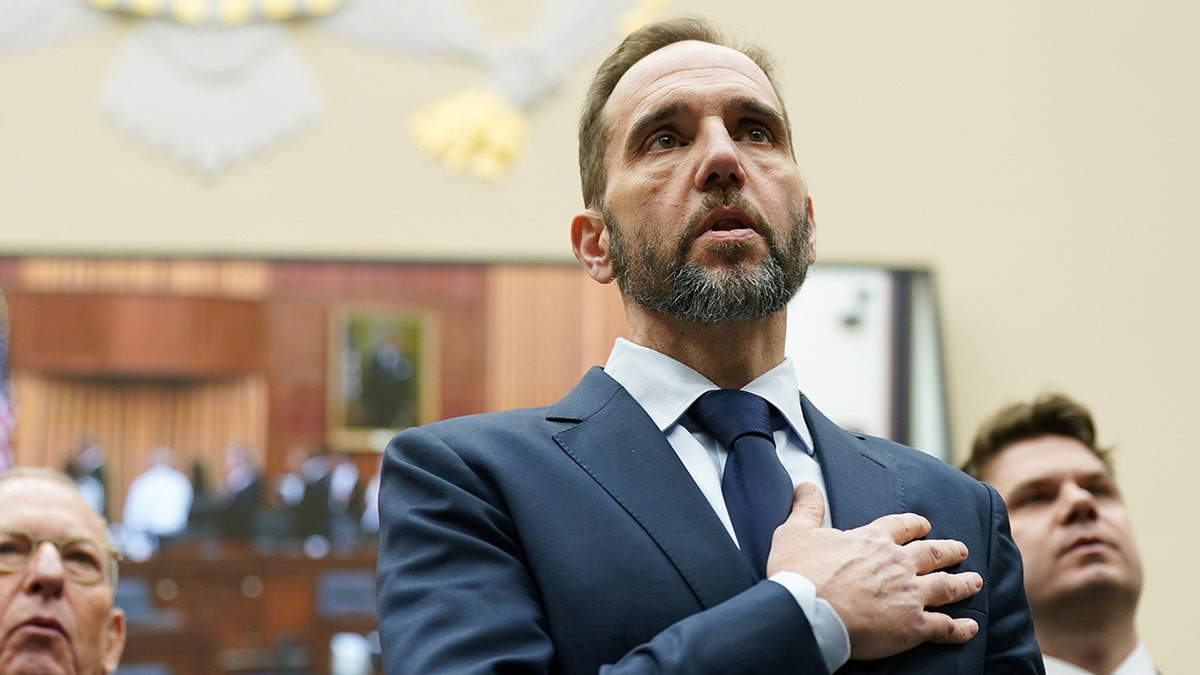
Former Special Counsel Jack Smith prepares to testify during a hearing before the House Judiciary Committee in the Rayburn House Office Building on Capitol Hill, Jan. 22, 2026, in Washington, D.C. (Al Drago/Getty Images)
According to testimony from Smith's prosecutor, Timothy "Tad" Duree, investigators had decided to seize the phone using a warrant because of his proximity to Trump and his hand in trying to find a legal strategy to keep Trump in office after he lost. Notably, Perry was a go-between from Trump to Jeffrey Clark, the highest-ranking DOJ official willing to explore weaknesses in the 2020 election.
Duree described that warrant process as comparable to other investigations.
"If you seek to obtain something voluntarily, people can just choose not to give it to you. That's one obvious thing. But there are myriad opportunities for evidence to be altered, tampered with, deleted, added to. And in this search warrant, same as any others, it was important to me and our team to obtain evidence in a way that it was unadulterated," Duree said in his testimony.
The operation entailed pinging Perry’s phone to find its location.
Thomas Windom testified investigators obtained a "location-warrant" — which found Perry to be on vacation in New Jersey. According to Duree’s transcript, agents located Perry, seized his phone and imaged it, then returned it.
"In this particular case … the whole team wanted to image the phone and get it back to Congressman Perry as quickly as possible. We were trying real hard to do this in a way that was minimally disruptive, it was as respectful as it could be, and it didn't put Congressman Perry in an awkward spot where we're seizing a phone right out on Independence [Avenue] in front of the Rayburn Building or it's some big hubbub," Windom recalled.
More broadly, investigators also reassured lawmakers that Smith had been cautious about subpoenaing communications from members of Congress. Husler, another one of the prosecutors on Smith's team, said that they had looked to narrow the scope of which ones were deemed necessary.
"Well, I talked with him about it," Husler recalled about the selection process. "And, as we got into the May subpoenas, you could see, not only was it [a] narrow list of people, but there were written justifications for it. So he wanted to be very careful if we were going to be getting subpoenas for members."
Naturally, securing the communications of lawmakers came with complications.
Duree acknowledged that court-ordered secrecy surrounding subpoenas for lawmakers’ phone records often prevented the lawmakers from challenging the demands while the orders were active. Duree said he did not particularly remember specifics from correspondence about obtaining Rep. Chip Roy's, R-Texas, phone records that were raised during his interview with investigators.
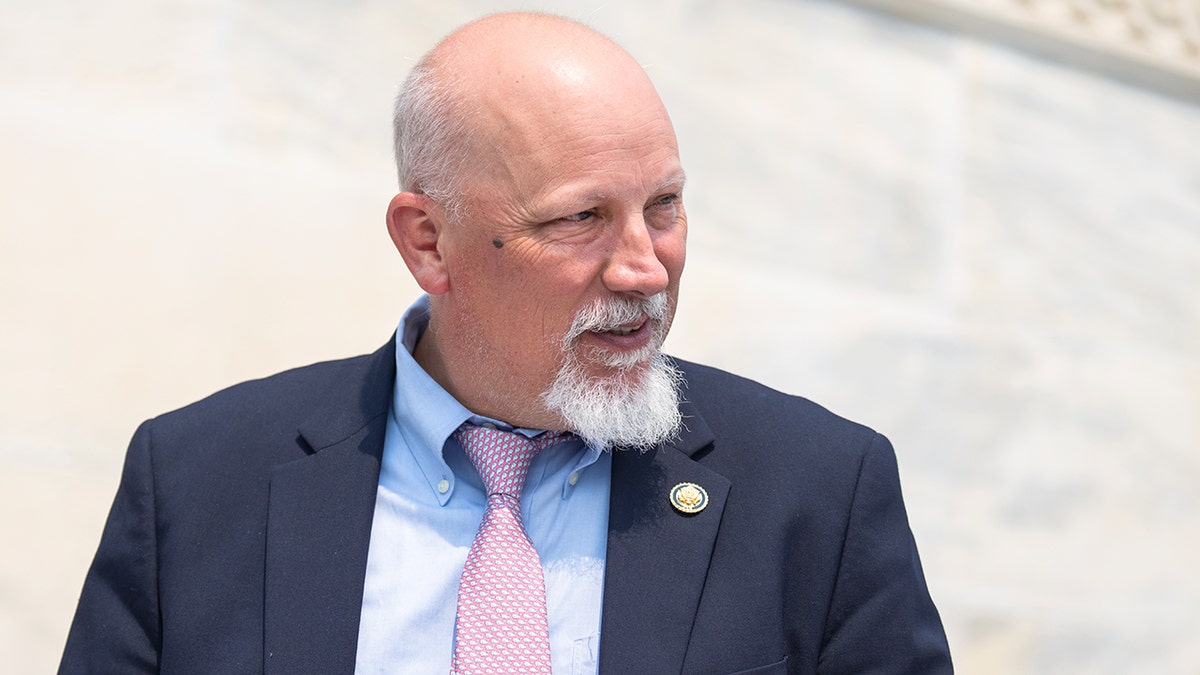
Rep. Chip Roy, R-Texas, talks with reporters outside the U.S. Capitol after the last votes of the week on Thursday, July 16, 2026. (Tom Williams/CQ-Roll Call, Inc via Getty Images)
Rather than serving the subpoena on Roy, investigators sought the records from his phone provider. A nondisclosure order (NDO) prevented the provider from notifying the subscriber about the government’s demand, essentially preventing the lawmaker from asking questions.
Duree acknowledged the practical limitation. A nondisclosure order "will prohibit a person who holds that phone number from litigating issues surrounding the subpoena," he testified.
He was then pressed as to whether he believed the act violated the Speech or Debate Clause of the Constitution that protects lawmakers.
Duree did not concede that obtaining the lawmakers’ toll records violated the Speech or Debate Clause. Later in his testimony, he maintained that prosecutors believed the records they sought were not protected by the clause, while acknowledging there was a "lack of clarity on certain points" of the law that arose during the investigation.
"I would say we were hypervigilant and extremely aware of the contours of the Speech or Debate Clause. We knew that Speech or Debate was something that we had to navigate. We treated it seriously," he said, adding that while case law on the clause can appear "underdeveloped," he took it seriously.
"[It’s] a common thing, particularly in complex investigations, to run into the corners of the law that aren't fully built out," he said.
While parts of the testimony underscored efforts to manage the investigation by the book, other parts highlighted some unusual characteristics.
The Justice Department’s Public Integrity Section knew investigators were seeking Jordan’s phone records when it approved the investigative step in April 2022, according to page seven of the transcript of Jack Smith team prosecutor Tad Duree. However, the OIG agent who served the subpoena to Verizon – Brain Burnett – did not know who the particular number belonged to, and only purportedly figured it out much later.
"It was not until I had been retired and this was on the news and there was conversation about Mr. Jordan's toll records being subpoenaed and then there was a subpoena that came up on the internet," Burnett testified, according to his own transcript.
"But I do not know, as we sit here today, if that was his number or not."
He said that if he had known just who the toll records belonged to, he would have raised the issue with his superiors. Burnett said that the records sought by "AUSAs" – federal prosecutors--were typically nameless: "Just phone numbers," he said.
The testimony illustrates a gap in the process – in that the DOJ’s Public Integrity Section knew a particular phone number sought belonged to Jordan, while that information was not disclosed to subordinates.
Transcript testimony also revealed that Smith's work was more hands-on than other investigations.
A veteran agent assigned to the Jeffrey Clark investigation testified that the probe operated in a way "unique, as far as the over 30 years of law enforcement experience I have," according to transcript documents released by Jordan’s panel.
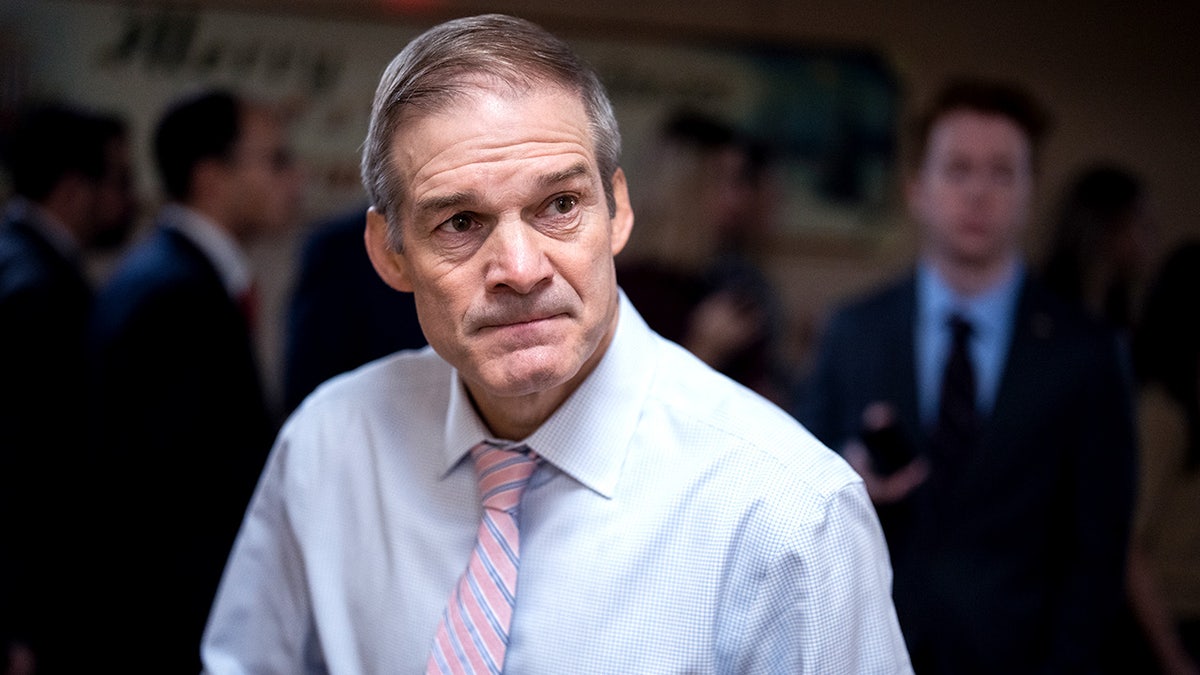
Rep. Jim Jordan leaves a House Republican Conference meeting at the U.S. Capitol in Washington, D.C., on Dec. 10, 2024. (Tom Williams/CQ-Roll Call, Inc via Getty Images)
CLICK HERE TO DOWNLOAD THE FOX NEWS APP
Prosecutors directed investigative steps normally handled by agents, he said, describing the dynamic as "top down," in that when a forensics agent receives the results of a subpoena, it would go back to the prosecutor – not the agent who subpoenaed the records, according to Brian Burnett – one of six individuals whose interviews were released.
Burnett spent 15 years in the DOJ’s inspector general’s office before his 2024 retirement, and was a senior narcotics detective with the Chesterfield County Sheriff’s office in a Richmond, Virginia suburb for nine years.
Asked whether he had encountered another case during his career in which prosecutors dictated the investigation in that manner, Burnett responded, "Not in my entire 30 years of law enforcement."
https://www.foxnews.com/politics/house-republicans-drop-jack-smith-transcripts-explosive-arctic-frost-records-fight