 Print
Print
 Close
Close

Archaeologists in Israel uncover 1,700-year-old Roman-era statues buried face down
By Andrea Margolis
Published June 27, 2026
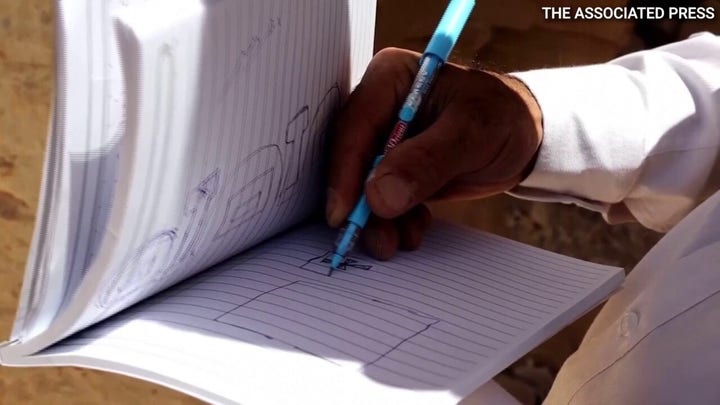
An archaeological excavation in Israel recently revealed ancient faces that haven't been seen in centuries.
Two statues were discovered near Binyamina, Israel, according to a June 15 press release from the Israel Antiquities Authority (IAA).
Archaeologists were digging ahead of construction of a coastal high-speed railway when they found two marble statues in the wine collection pit of a Roman-Byzantine winepress, the IAA said.
RARE 1,600-YEAR-OLD MOSAIC FROM CHRISTIAN MONASTERY UNVEILED AFTER CENTURIES OF OBSCURITY
The statues, which date back around 1,700 years, depict two unknown figures from the ancient Greco-Roman world.
One of the statues bears a Greek inscription with the name "Lycurgus," according to officials.
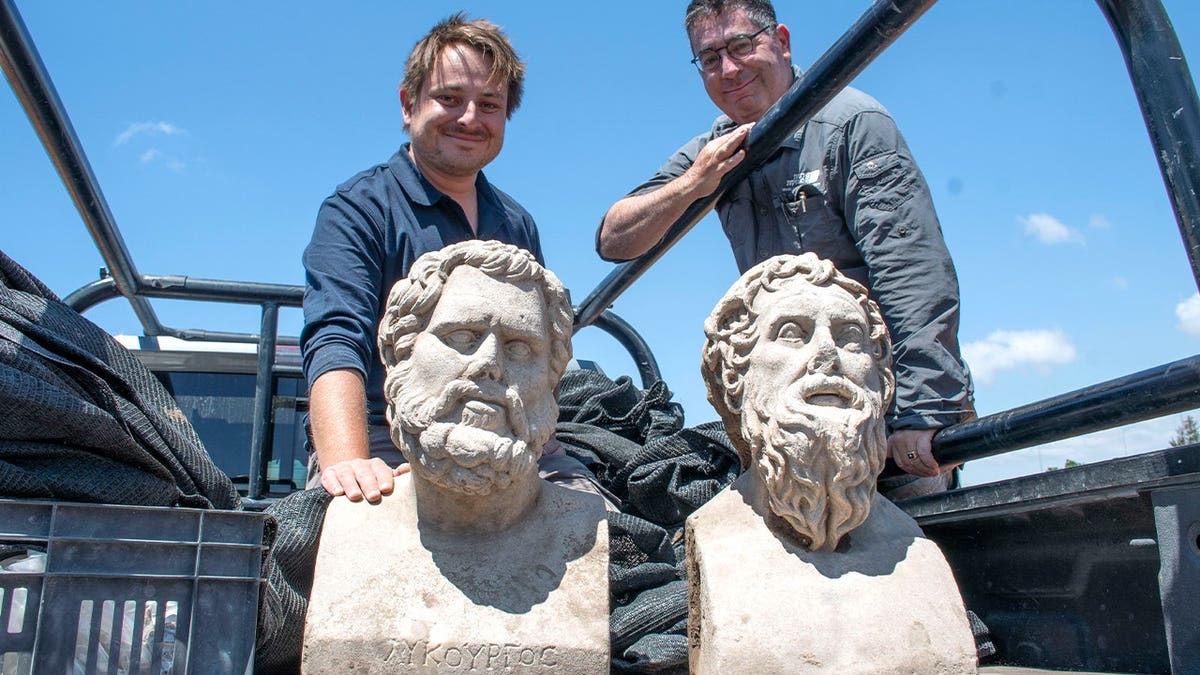
A recent excavation near Binyamina revealed two ancient marble statues that researchers believe were intentionally buried centuries ago. (Israel Antiquities Authority)
Michael Sorotskin, an IAA archaeologist who helped find the statues, called the discovery "simply wondrous."
"While digging the winepress, something was sticking out of the ground, and the workers called me," said Sorotskin in the release. "There was a feeling that we were about to discover something that really shouldn't be there."
ANCIENT CHRISTIAN FIGURINES DISCOVERED IN 1,500-YEAR-OLD DESERT GRAVES
"Suddenly, we saw that this was not the usual pottery – it was marble," he added. "Then, slowly, slowly, the two statues were revealed. I'm still struggling to find the right words."
Eliran Oren and Avishag Reiss, the excavation directors for the project, said the statues were found "neatly laid, face down." It appeared they had been intentionally buried when the winepress went out of use.
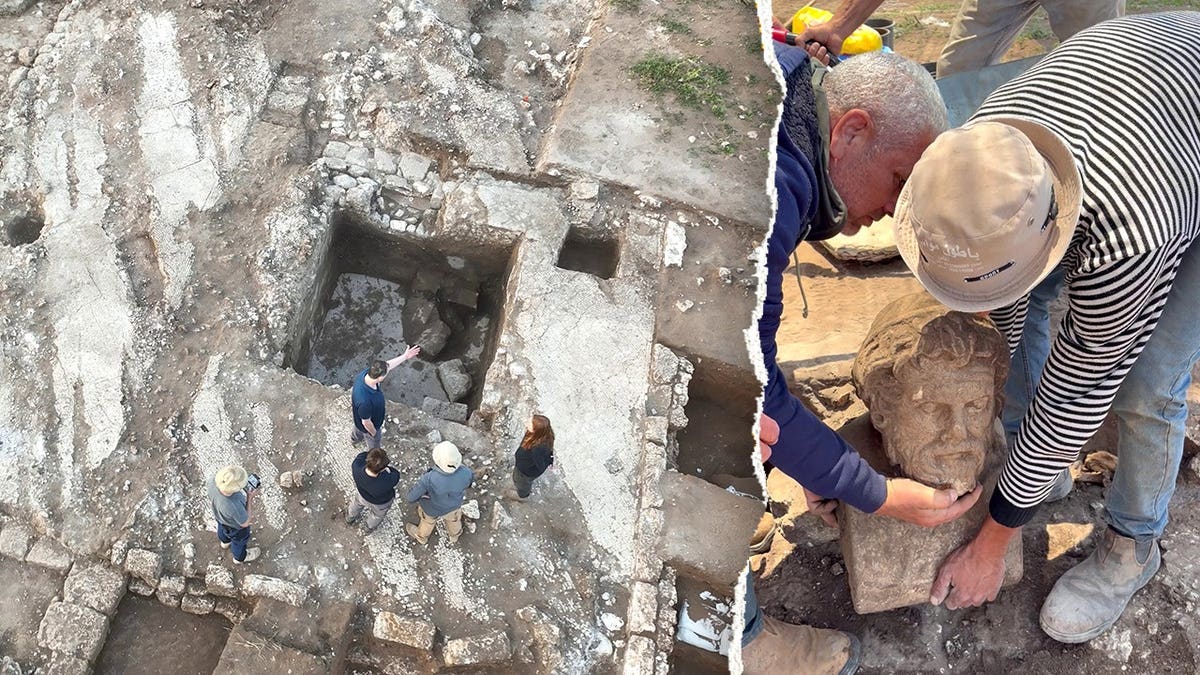
Archaeologists described the discovery of the two marble figures as a rare and unexpected find from the Roman period. (Israel Antiquities Authority)
"At present, it is not known why the statues were hidden here – perhaps to preserve them," Oren and Reiss said in a joint statement.
"This is a once-in-a-lifetime discovery."
CLICK HERE TO SIGN UP FOR OUR LIFESTYLE NEWSLETTER
"It was very unexpected, but somehow, the really big discoveries always turn up on the excavation’s very last day," they added.
Peter Gendelman, a Caesarea region expert from the IAA, said the discovery was the first of its kind in roughly three decades.
"This is a once-in-a-lifetime discovery."
The "Lycurgus" statue could depict two different men, one named Lycurgus of Sparta and another named Lycurgus of Athens, Gendelman said.
CLICK HERE FOR MORE LIFESTYLE STORIES
"Possibly this statue may prove to be one of these two historical figures, but our research is just beginning," he said.
The statues were likely displayed in public buildings or the homes of wealthy residents during the Roman period as a way to "connect themselves to the cultural and spiritual world of antiquity," the expert noted.
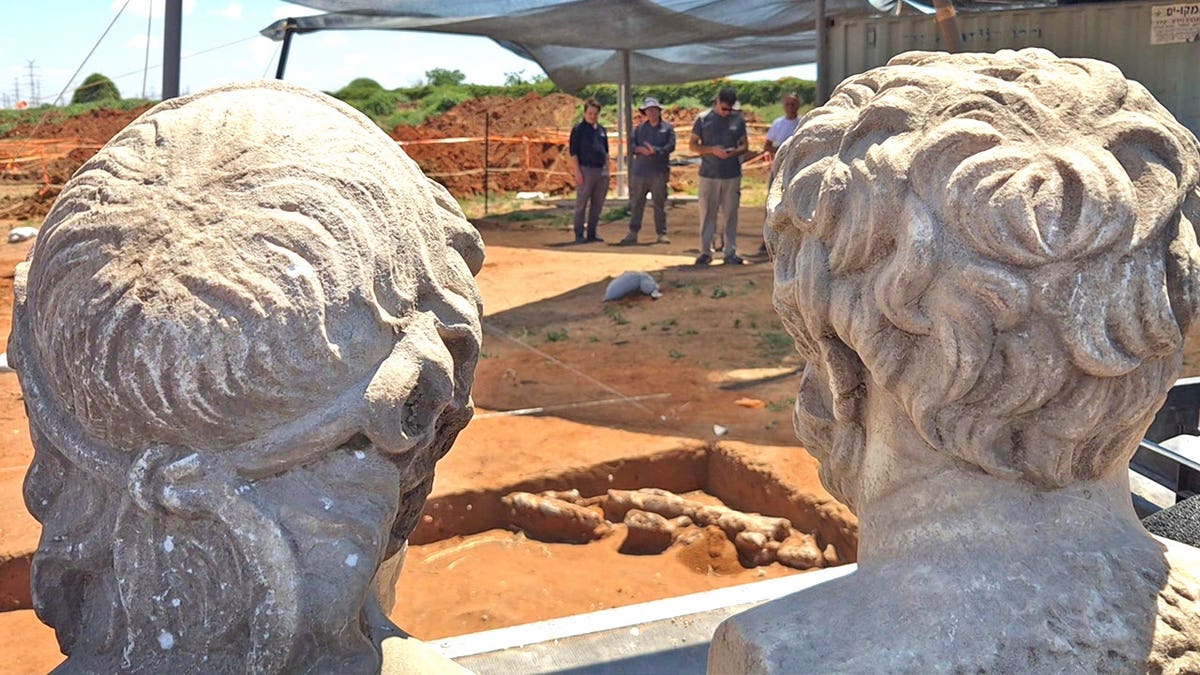
Israeli researchers say the marble figures, hidden face down, may have been preserved when the winepress fell out of use. (Israel Antiquities Authority)
"Not far from the discovery site, remains of a bathhouse were previously uncovered, and it is possible that the statues decorated a luxurious villa of a Caesarea resident," he said.
CLICK HERE TO DOWNLOAD THE FOX NEWS APP
Researchers are currently cleaning and conserving the statues before analyzing them further, in hopes of determining exactly whom they depict.
The discovery is the latest in a series of notable archaeological finds announced by Israeli researchers this year.
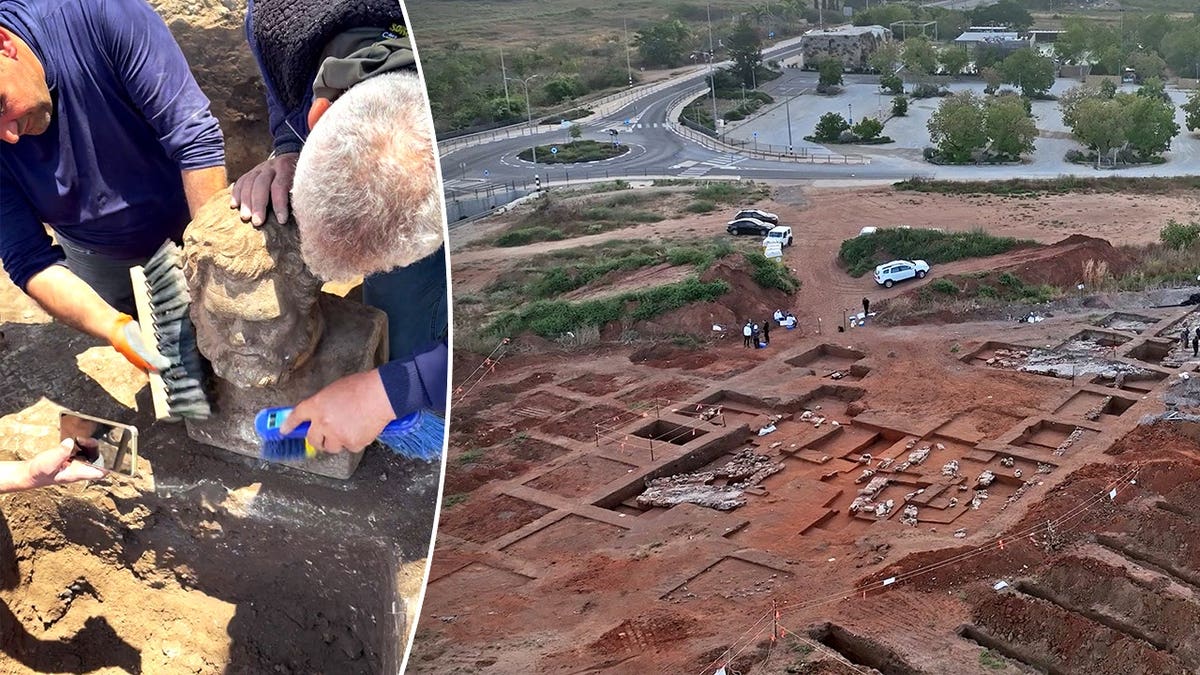
Researchers are now cleaning and conserving the statues as they work to determine the identities of the figures depicted. (Israel Antiquities Authority)
Earlier this May, IAA officials said a child's chance discovery in the Negev Desert led to the identification of a 1,700-year-old Roman-era statuette fragment.
TEST YOURSELF WITH OUR LATEST LIFESTYLE QUIZ
At around the same time, archaeologists uncovered a "mysterious and impressive" ancient tunnel near Jerusalem, not far from sites associated with the biblical Kingdom of Judah.
https://www.foxnews.com/travel/archaeologists-israel-uncover-1700-year-old-roman-era-statues-buried-face-down