 Print
Print
 Close
Close

Violent crime soars in Baltimore despite federal police oversight
Published March 14, 2019
This is a rush transcript from "The Story," March 14, 2019. This copy may not be in its final form and may be updated.
ED HENRY, ANCHOR: All right. Breaking tonight, new info on the FBI's controversial insurance policy to try and prevent Donald Trump from ever becoming president. These new revelations coming straight from one of the plans chief architects, disgraced FBI official Peter struck.
Good evening, everybody. I'm Ed Henry, in for Martha MacCallum and this is “The Story.”
This information breaking tonight is contained in a fresh -- freshly released transcript of private testimony from Strzok that comes on the heels of admissions from his former lover, FBI attorney Lisa Page.
In a closed-door interview with lawmakers, Page revealed the Obama Justice Department ordered her not to prosecute Hillary Clinton over her e-mail scandal.
Even though, then-President Barack Obama promised our own Chris Wallace there was quote no political influence in FBI investigations, period. The president said, full stop. Remember that?
Well, tonight, we're learning even more new details of just how far the bureau may have gone to try and take his successor, President Trump out. Big lineup of guests to break all this down, including an exclusive interview with Congressman Doug Collins, the lawmaker behind the release of those transcripts. Why he says they reveal a "two-tiered justice system". One for Hillary Clinton, one for Donald Trump.
Plus former House Oversight Committee chair Trey Gowdy. He says these new revelations are just proof the FBI was "engaging in election forecasting instead of doing their jobs."
But, we begin tonight with Congressman Collins. Congressman, we appreciate you joining us.
REP. DOUG COLLINS, R-GA: I'm glad to be here. Thank you.
HENRY: What is the most alarming part of Peter Strzok's testimony that you want to share with the American people?
COLLINS: The most alarming part of Peter Strzok's testimony is he seemed to believe that he and he alone could do whatever he wanted to do and that his own bias, his own indiscretions with Lisa Page and anything else nothing mattered except what he believed that he was untouchable. And I think that's a problem that interferes did not only an e-mail investigation but also started at Russia investigation that has led us down a lot of paths that have ended up fruitless.
But it goes back to a fact that here's an FBI -- you know, someone who at the department just FBI who says, "I believe I can solve the world's problems politically."
HENRY: Well, let's take that piece by piece. First of all, in the idea that Peter Strzok thought he was untouchable. What about the fact that we're learning now, he deleted some of his text messages with his lover, Lisa Page.
He says it's because they were messages of a personal nature but we simply don't know whether there was some official business there that they're deleting or whether this was a cover-up.
COLLINS: Well, he's asking us to take his word for it, but yet, we have a lot of text messages that have been uncovered that have a plenty of personal stuff that I'm not sure he would ever want to get in to in a public setting. But also at a certain point in time, is when did he become the arbiter of what he could decide was needed to be deleted or not. That's what I mean by the oversize importance of himself and saying that I can decide what I can delete and what I can keep.
HENRY: What about the fact that he says that the Justice Department under President Obama did not want to seize Hillary Clinton's e-mail server. And then, ended up cutting a deal with Clinton's legal team where they get some access to the server, but they could not see e-mails involving the Clinton Foundation. Does that suggest they were hiding something?
COLLINS: It does suggest that there is a problem at the DOJ. This is something that these -- releasing these transcripts have provided an insight into what many of us have feared and also talked about for, for going on 40 years now.
And when we understand that Hillary Clinton was treated differently, it started with frankly with the President Obama's Department of Justice. We're now seeing insight through Lisa Page's testimony through Peter Strzok's discussion of this that it was the Department of Justice basically saying there is no way Hillary Clinton is going to be charged here because we're not going to use the standard of intent.
And the intent is not a part of gross negligence here. So, well, that's what we're seeing. And then, FBI just completely went against protocol when they would interview her with fact witnesses in the room and not give her any other thing. This just shows you there's a sure tier system here.
HENRY: Congressman, I've got 30 seconds. I want to end on what I thought might be most important. Republican John Ratcliffe asks Strzok about August 2016, his back and forth with Lisa Page about the insurance policy. We've heard so much about that of them essentially a going rogue, as you say, and trying to prevent Donald Trump from being president. And Strzok admitted that he at one point said, "No, no, no, we'll stop it. We'll basically stop him from being president."
But then, next part struck me most that he was asked directly under oath. Has Robert Mueller and his team ever come to you to ask you about this insurance policy, and he says, "No"? Why hasn't the independent counsel -- the special counsel gotten to the bottom of that?
COLLINS: We'll see what is going on now because we do know that, that has been discussed a year later. And what he actually has said, is he set himself as this -- is individual and being part of that team, he -- I don't think was playing -- you know, honest with the facts.
We know that him -- the -- I've called them the corrupt (INAUDIBLE) Page, Strzok, and McCabe had this. They were part of all of these investigations, and they knew what was going on and they were the insurance policy they believed themselves to protect the country, from who? From a president that they didn't like, from a man that they didn't like.
HENRY: Stunning series of revelations. In part, we know about this because Congressman Collins put these transcripts out there. Congressman, appreciate you joining us tonight.
COLLINS: Ed, thanks so much.
HENRY: Well, my next guest has plenty of experience getting information out of Peters Strzok or at least trying.
(BEGIN VIDEO CLIP)
TREY GOWDY, CONTRIBUTOR: Did you write it?
PETER STRZOK, FORMER DEPUTY ASSISTANT DIRECTOR, FBI: My point --
(CROSSTALK)
GOWDY: Did write that?
STRZOK: I did write that, sir.
GOWDY: Where you under duress?
STRZOK: The expression of political expression, engaging in hyperbole.
That text in no way suggested that I or the FBI would take any action to influence the candidacy of President Trump.
(CROSSTALK)
GOWDY: Agent Strzok, that is -- that is a fantastic answer to a question nobody asked.
(END VIDEO CLIP)
HENRY: Former House Oversight Committee chair, a former prosecutor, and Fox News contributor Trey Gowdy joins me live. Congressman, good to see you.
GOWDY: You too, Ed. How are you?
HENRY: What's it -- what's it like to hear that playback where Peter Strzok, under oath, told you to your face, he didn't try to do anything to influence the election?
GOWDY: Well, I mean, I'm not a big fan of public hearings. I much more of a fan of the deposition you just made reference to a lot of question that Johnny Ratcliffe engaged in.
I read the deposition again today. The most constructive information we got from Peter Strzok is when we were behind closed doors, no time limits could ask whatever we want. That's where the real information came. Listen to that, oh, the insurance policy.
I mean, being pressed on that, the most charitable view of what they meant by the insurance policy is they had a source. They had a confidential informant that they didn't want to burn. And I would invite you to use this analogy. If you've got a drug source, you've got a confidential informant, you're not going to use that source to burn Jeff Spicoli in Fast Times. But you might -- you might to get Pablo Escobar.
HENRY: Right.
GOWDY: So, their analysis was, "We're not going to burn this source because we don't think Donald Trump is going to win. So, lay aside their poor election forecasting for a moment. Guess what? He did.
So, if you have a source that has information or evidence that the leader of the free world is an agent of Russia, come on with it. Give it to us. Your concern that you were burning a source also wanting you could win, that's over.
(CROSSTALK)
HENRY: Yes. Here we are more than two years later.
GOWDY: He won. Give us the information.
HENRY: They haven't come out with it more than two years later, Congressman. You mentioned on John Ratcliffe -- yes. Go ahead.
GOWDY: Because there is no information. Because there is nothing, there is no source.
HENRY: So, John Radcliffe, you mentioned the questioning. We've gotten part of that graphic where basically, he pressed and said, "Did special counsel Mueller or anyone with the special counsel's team, did they come to you, Peter Strzok, and asked you about whether any of this evidence -- you know, the insurance policy and all of that had any impact on the election?" And Peter Strzok, under oath, says, "No."
Why hasn't Bob Mueller or any other investigative authority gone to him and gotten to the bottom of this insurance policy?
GOWDY: Ed, because I think you and I just got to the bottom of it. The insurance policy is Lisa Page, Peter McCabe, and -- Andy McCabe and Peter Strzok, all sitting in a room saying, "Look, he's not likely to win, but upon the remote chance that he is, we have an insurance policy which is this FISA investigation. It's a counterintelligence investigation that we launched in July."
HENRY: Right.
GOWDY: That was their insurance policy. They just never thought he was going to win.
(CROSSTALK)
HENRY: But doesn't that suggest that Mueller probe --
GOWDY: So, they can't admit that.
HENRY: The Mueller probe, was it started with a lie?
GOWDY: I view the Mueller probe is looking into what Russia did to this country in 2016. That part is not a lie. The second part of what Mueller is doing is with whom if anyone did they do it. I've seen no indictments, no convictions on the crime of collusion. In part, because it's not a crime.
HENRY: Yes.
GOWDY: But, let's say, conspiracy to hack the DNC server, conspiracy to hack Podesta's e-mails. I've seen no indictments of any Americans, much less Trump campaign officials on either one of those.
HENRY: Yes.
GOWDY: So, yes, I think Mueller -- Russia? Yes. Collusion? No.
HENRY: Got it. Congressman, real quick. I want to be fair because we've been going around and around about this transcript going after Peter Strzok. His attorney put out this statement, "Pete welcomes the release of the transcript, contrary to the impression that the president's allies in Congress tried to create with their selective and often inaccurate leaks.
Pete at all times," the attorney says, "discharge his duties honorably, patriotically, and without regard to his personal political opinions." True or false?
GOWDY: That's why you hire a lawyers, so you can pay them to say what nobody else in the world would say. I actually do think, the transcript should be made public. I'd love for Jerry Nadler to release every bit of it and let the American people see whether or not Peter Strzok is a patriot. Judge for yourselves.
HENRY: OK. I mentioned this at the top. Barack Obama as President in 2016 sat down with our own Chris Wallace. And was pressed about whether there's -- there was any interference by the Obama Justice Department who was supporting Hillary Clinton essentially, the Obama team. Was there any interference with this in FBI investigation on the e-mail and other matters? Here is what he said.
(BEGIN VIDEO CLIP)
BARACK OBAMA, FORMER PRESIDENT: I guarantee that there is no political influence in any investigation conducted by the Justice Department or the FBI, not just in this case but in any case.
CHRIS WALLACE, ANCHOR: And she will --
(CROSSTALK)
OBAMA: Full stop, period.
(END VIDEO CLIP)
HENRY: Full stop, period. And yet, Lisa Page in another transcript testified again, under oath that, that same Obama Justice Department told her and others at the FBI, basically do not prosecute Hillary Clinton. Doesn't that sound like interference?
GOWDY: I don't even have to get to that, Ed. How about what the president said it? He said that she had no intent to jeopardize national security. The president himself, not his Department of Justice. He himself in the middle of an ongoing investigation said that there was no evidence on the most important evidentiary element, which was intent. He also did it, and the IRS targeting scandal.
Remember that he said there was not an ounce of corruption.
HENRY: Yes, of course.
GOWDY: So, that's twice. And two high-profile investigations where the top of the executive branch has weighed in. We asked Comey about it, that didn't bother.
HENRY: Yes.
GOWDY: Of course, when Trump says, "Can you let Flynn go?" That's obstruction of justice.
HENRY: Congressman --
GOWDY: But when the president weighs in, is not.
HENRY: I got 15 seconds. John Huber was his prosecutor in Utah. He was supposed to get to the bottom of FBI abuses, whether there was a Russia hoax. What's the deal? Do we need to send a search party out to find him? I haven't heard anything from him.
GOWDY: Well, I mean, prosecutors aren't great at handling media. I think Barr is going to make him do his job. The Inspector General Michael Horowitz is going to do his job. I think at some point, we're going to know all of what happened in 2016, 17, and 18 as it relates to the Department of Bureau.
HENRY: We shall see if the Attorney General William Barr, follows up. Congressman Gowdy, appreciate you coming in with your insight.
GOWDY: Yes sir, thank you.
HENRY: All right, up next. Stunning news from the Southern Poverty Law Center, the media's arbiter of hate groups. This liberal powerhouse just ousted its founder. The shocking details, next.
(COMMERCIAL BREAK)
HENRY: Breaking tonight, some shocking developments involving a powerful group on the left, the Southern Poverty Law Center just fired its founder Morris Dees. He's been at the center of the SPLC since 1971 transforming it into a group that has been part of the morale police targeting Conservative organizations by labeling some of them "hate groups."
So one of the Liberal groups has been taking shots at our colleague Tucker Carlson and others finds itself tonight in a bit of hot water. Trace Gallagher has “The Story” from a West Coast newsroom. Good to see you, Trace.
TRACE GALLAGHER, ANCHOR: Good to see you, Ed. The SPLC has certainly had a rough few years but the group won't say exactly what led to the firing of co-founder Morris Dees. Instead, the Alabama nonprofit issued a statement saying the conduct of their staff should reflect the group's mission. Quoting here, when one of our own fails to meet those standards no matter his or her role in the organization, we take it seriously and must take the appropriate action.
The group also plans to bring in an outside organization to assess its workplace practices and climate. For his part Morris Dees told The Associated Press the matter involved a personnel issue and that he wishes the group luck in the future. SPLC gained notice in the early 80s after suing the KKK on behalf of one of its murder victims leading to three Klansmen firebombing the group's building in 1983.
But the organization that claims to target hate has also been accused of engendering hate after adding people like Maajid Nawaz and Ayaan Hirsi Ali to its list of 15 anti-Muslim extremists who critics say are the very people doing the work the SPLC is supposed to be doing.
In 2014, SPLC also added Dr. Ben Carson's name to the list for allegedly being anti-gay. The group later removed his name and apologized. In 2012 when the conservative Christian Family Research Council was added to the hate list, a gunman walked into the FRC headquarters in D.C. and shot a guard.
The gunman who was targeting Family Research Council officials said he wanted to intimidate opponents of gay rights. It's notable the Southern Poverty Law Center has now been deleted from the FBI's list of legitimate sources on hate crimes. Others call it a big-money smear machine that uses its nonprofit status to mask highly political fundraising. Ed?
HENRY: Trace, thanks for laying out the facts. My next guest was once placed on SPLC s hate watch list. Michael Knowles is host of the Michael Knowles Show on the Daily Wire. Good to see you, Michael.
MICHAEL KNOWLES, HOST, MICHAEL KNOWLES SHOW: Good to see you, Ed.
HENRY: Now, Morris Dees has been known among other things as the Mother Teresa of Montgomery and he puts you on his hate-watch. Why are you a hater, Michael?
KNOWLES: And this was an amazing example that on their hate watch blog the Southern Poverty Law Center wrote up about a video that I did for Prager U. Now, the irony here is that the video condemned racism. It was explicitly a video about anti-racism and the Southern Poverty Law Center called it the most egregious video --
HENRY: They didn't like that you were going after racism?
KNOWLES: -- which I think is a badge of honor. That's right. they went after -- because what it did was it contradicted their narrative. What the SPLC has done, maybe it began as a good organization. It had credibility, it did good work. Morris Dees apparently is being fired over some personnel matter. He should be fired for destroying that once credible organization and turning it into a half billion dollar smear factory that will go after anyone to the right of Hillary Clinton.
To call -- I mean, forget me. I take it as a badge of honor that they call my anti-racist video hateful. But to call Ben Carson an extremist possibly the most soft-spoken and moderate man in all of America shows you that they have no credibility whatsoever and they may have to pay up because they have a lot of lawsuits that they're facing.
HENRY: Yes. Absolutely. And to be clear, Morris Dees deserves a presumption of innocence. We don't know the details. We're reporting the facts. And we should point out even if you didn't like -- you don't like his politics, going after the KKK was a good thing and we applaud that for sure.
KNOWLES: Of course.
HENRY: But how did this mission go astray it seems and all of a sudden it became about not about going after the KKK, not going after legitimate hate, but using politics and going after people because they're conservative.
KNOWLES: All you have to do is look at the bank account. What this enterprise turned into is from one that was legitimately fighting racial bigotry to a major fundraising apparatus that put over a $100 million overseas. It turned, it became partisan, even the Washington Post of all outlets admitted that it had undermined its own credibility.
And now the people that it has smeared are fighting back. The SPLC in recent years has had to pay out millions of dollars in lawsuits to people that it is defamed. The Family Research Council, an Gavin McInnes, the Center for Immigration Studies are all suing them. And they're specifically citing RICO Act violations.
HENRY: Yes. Well, we'll all follow it.
KNOWLES: They are describing the -- that's right. We should follow it because they've turned into as social media gangsters against the right.
HENRY: Well, Michael Knowles, he's no hater, and we appreciate him coming in tonight. Thanks, Michael. Actor Jussie Smollett facing a judge today for crimes related to staging his own attack. A live update in Chicago, that is next.
(BEGIN VIDEO CLIP)
UNIDENTIFIED MALE: Do you plead guilty or not guilty?
UNIDENTIFIED FEMALE: Your honor, we waive formal reading of the indictment and Mr. Smollett enters a plea of not guilty.
(END VIDEO CLIP)
(COMMERCIAL BREAK)
HENRY: Actor Jussie Smollett back in court today pleading not guilty to charge related to staging his own hate crime. And tonight, there are new details about how a former Obama official may have played a bit of a role in the FBI taking over the investigation. Our correspondent Matt Finn is live from Chicago tonight. Good to see you, Matt?
MATT FINN, CORRESPONDENT: Ed, today Jussie Smollett once again walked into Chicago's Criminal Courthouse flanked by his siblings. They were wearing what has become their signature look, the dark sunglasses and they were expressionless as they walked into the courthouse, and they did not take questions from the media.
Inside of the courtroom, Jesse Smollett stood next to his attorney from Mark Geragos Law Firm. Here is Smollett and that attorney entering their not guilty plea and then receiving instruction from the judge.
(BEGIN VIDEO CLIP)
UNIDENTIFIED MALE: Now, do you plead guilty or not guilty?
UNIDENTIFIED FEMALE: Your honor, we waive formal reading of the indictment and Mr. Smollett enters a plea of not guilty.
UNIDENTIFIED MALE: Please be advised that you must be in court each and every court date. Your failure to come to court can result in a warrant for your arrest.
(END VIDEO CLIP)
FINN: A judge approved a camera in court today in part because in an unusual move Smollett's team said they welcome the cameras inside the courtroom claiming there's been so many false leaks in this case they want the public to hear what they claim is the truth. Smollett faces up to three years in prison for each of the 16 felony charges against him.
However, those 16 charges could fold into just one dramatically reducing potential jail time. And the U.S. Post Office confirms to Fox News it is assisting the FBI as it investigates that death threat letter that Chicago police say Jesse Smollett sent to himself a week before the alleged attack. Smollett faces a federal charge of mail fraud which could end up being Smollett's biggest legal trouble. And Chicago Police say they have even more evidence against Smollett that is yet to be revealed.
Meanwhile, Smollett's legal team says they don't think there's sufficient evidence to convict Smollett. The actor is back in court April 17th. Ed?
HENRY: It gets stranger and stranger. Matt Finn, I appreciate that. Also breaking tonight, more details on the largest college admissions scam ever prosecuted. Tonight the legal fallout has begun for the elite colleges at the center of that scandal. Several students now joining a class action lawsuit against eight schools, you see them there, alleging those who are denied entry have been victimized, and those accepted will have a degree that does not hold the same way.
"Unqualified students found their way into the admissions rolls of highly selective universities while those students who played by the rules and did not have College bribing parents were denied admission."
Well, Emily Compagno is an Attorney, Fox News Contributor. Emily, what are these students exactly demanding?
EMILY COMPAGNO, CONTRIBUTOR: Hi, Ed. They're demanding an application fee to be returned. In one class-action suit we literally have a former California teacher and the mother of a prospective student suing for $500 billion. When I originally read that, I thought it was a typo. They're arguing that not only --
HENRY: $500 billion?
COMPAGNO: Literally. So not only are they arguing their degrees are devalued but they're also arguing that the universities were negligent in failing to uphold what they deemed or what they understood to be this kind of infallible process.
I frankly find it at best weak because there's no way that a court is going to see this as some type of compensable damage, right. Short of the university's agreeing to refund application fees, it's simply too competitive even aside from the bribery scheme.
Stanford for example, this freshman class accepted four percent, a record- low. 8,000 of the rejected students had perfect GPAs and perfect ACTs. So it's impossible I think for the students to argue that they really had a chance.
HENRY: Sure. So it seems like you believe this suit as an attorney, doesn't really have merit, but are the universities vulnerable in other ways? We know about the criminal part of this of course, but there may be a whole host of other lawsuits might be more targeted and could really hurt.
COMPAGNO: Yes. And to be clear, they are two present class actions. There is one representing the rejected students essentially, and there is one representing students that didn't get into Yale but got into Stanford and they argued that their degree was subsequently under valued or devalued.
I think that if there is any liability on the part of the universities, it would come and that you should have known argument that you should have known you had this rogue coach letting people in the side door. I think that is a bit attenuated. It's better for the universities to deploy a P.R. campaign rather than negotiate in these lawsuits frankly.
HENRY: And as bad as this whole deal was and is, the investigation continues. It might be hard to make the case why I didn't get into -- the kid didn't get into Stanford but got into Yale and they still got a pretty good deal.
COMPAGNO: Exactly. That's why I feel like any court is going to kind of laugh at this or any jury at the argument that there is again, a compensable damage associated with that. And frankly, again, if the universities want to make themselves look better optically, they can refund application fees, otherwise, I see them doing all they can to just get this off of the books.
HENRY: Well, now you see why, Emily Compagno is one of our great friends especially on "Fox & Friends Weekend," but here on THE STORY as well with that smart analysis. I appreciate you coming in.
COMPAGNO: Thanks Ed.
HENRY: All right. Beto O'Rourke lit up the crowds in Iowa today by climbing on countertops and shouting he could change the world. Is this the winning message Democrats need?
(BEGIN VIDEO CLIP)
BETO O'ROURKE, D-TX, PRESIDENTIAL CANDIDATE: We are truly now more than ever the last great hope of Earth.
(END VIDEO CLIP)
(COMMERCIAL BREAK)
(BEGI VIDEO CLIP)
UNIDENTIFIED FEMALE: Can I just get your reaction really quickly about Beto O'Rourke (inaudible) for president?
REP. AL GREEN, D-TX: I'm excited about it. I think he is a candidate who will bring a lot of energy to the campaign.
NANCY PELOSI, SPEAKER OF THE HOUSE: Beto has brought vitality in Congress. Beto is a welcome addition to the field.
(END VIDEO CLIP)
HENRY: Well, some Democrats here praising Beto O'Rourke entry into the 2020 as a breath of fresh air they say. He now one of at least 12 candidates vying for the Democratic nomination, may be more coming. But even in "New York Times" points out "Mr. O'Rourke enters without a signature proposal that might serve as the ideological anchor of his bid."
Here now, Gilberto Hinojosa, he is the chair of the Texas Democratic Party who says the key to winning the White House is turning Texas blue. Good to see you, sir.
GILBERTO HINOJOSA, CHAIR, TEXAS DEMOCRATIC PARTY: Good to see you to.
HENRY: So let's jump right in. What would you say is Beto O'Rourke's top accomplishment that he brings to the table?
HINOJOSA: I think what Beto O'Rourke has done particularly in this last senatorial campaign that he ran in 2018 is I think show the people of Texas and now the people of America what it means to be an honest politician, an honest person who is going to talk about the things that are important to families all across this country. You don't always see that with politicians. This guy is going to tell it like it is.
HENRY: Sure.
HINOJOSA: He's going to be talking about the issues --
HENRY: But sir, Nancy Pelosi -- pardon me, but Nancy Pelosi was asked today about his biggest accomplishments and she couldn't really name one even though he served in the House for a brief time admittedly. But you are telling me he is an honest politician. That's his biggest accomplishment?
HINOJOSA: The entire time he served in United States House of Representatives, the Republicans controlled the House of Representatives.
HENRY: Sure.
HINOJOSA: They would not allow anything to pass that was sponsored by a Democrat. So, the fact that he was unable to get major legislation into different --
HENRY: OK, so name something else. I'm not even pinning it on Congress. I ask you his biggest accomplishments. So what did he -- what has he done in life?
HINOJOSA: Well, that's what you were asking me about, you know.
HENRY: OL, well, let me broaden it out to be fair.
HINOJOSA: He's been a United States congressman. He was a city councilmember.
HENRY: So, what did he get done?
HINOJOSA: He has talked to people -- he got a lot done.
HENRY: Such as?
HINOJOSA: He talked about the issues that are important to the people of the state of Texas. He got as much -- could be done as you can do in a right-wing Republican Congress that we had for the last eight years here in the United States.
HENRY: Sure, OK. I get your politics about right-wing Republicans.
HINOJOSA: What did they do but try to eliminate Obamacare about 80 times during the time that they were in control of the Congress. They didn't get anything done and no one can get done any --
HENRY: Sure. OJ, I want to move on to another topic, but one last time sir. Pardon me.
HINOJOSA: Sure.
HENRY: But did he create a job somewhere? Did he create a product? Is he - - what has he accomplished? I'm just -- it is an honest question.
HINOJOSA: I'm just -- you are asking me about what he did. What he did was all that he could do with the Congress and your people controls for eight years --
HENRY: It's not my people (inaudible). I'm not talking about Congress. What has he gotten done in his life, sir? Has he created a job?
HINOJOSA: How can he get anything done? How could he get anything done in a Congress that would not allow anybody including --
HENRY: I'm not talking about Congress. What has he got done in his life?
HINOJOSA: You know, your question is meaningless under the circumstances, sir.
HENRY: OK. I'm just looking for an accomplishment.
HINOJOSA: Ask me a question that's relevant.
HENRY: All right, let me ask you a question about --
HINOJOSA: Well, I've been looking for a question that is meaningful.
HENRY: OK, how about this one about his website. So, on his website, Beto for America, on the English version it says Beto for America. This is the beginning of his campaign, The Spanish version says Beto para Todos, as in all. What does that mean? American citizens and noncitizens? Why didn't he say para America.
HINOJOSA: Because America is for everyone. That's what this country stands for and that's what this country was founded on the basis of that. It is a country for everybody. It doesn't matter who you are, where you came from, you know, where your family is from.
It is a country that provides opportunity to every human being that lives in this country whether you are a U.S. citizen or not. Whether you came from England or whether you came from Mexico or whether you came from Africa. It is a system that provides -- it is a country that provides for todos, for all.
HENRY: For all. So to your point --
HINOJOSA: Why not be that way for you? (Inaudible) because that's what it is supposed to be that the founding fathers intended it to be.
HENRY: It is actually. Well, hang on a second sir. That doesn't sound like it is for Beto. Hang on.
HINOJOSA: Because now --
HENRY: But why does the English version --
HINOJOSA: It may not sound like it's for people like you, but it is for people like Beto and people all across America who care.
HENRY: I am not sure why you are attacking me.
HINOJOSA: All human beings deserve --
HENRY: Here's my question.
HINOJOSA: No, because these kinds of questions are suggestive and you don't believe this country is for everybody. That is what you are trying to say.
HENRY: I never suggested that. Let me ask you this --
HINOJOSA: And I think that that really shows the kind of person that you are.
HENRY: Oh, really. OK, pardon me, sir. Why doesn't the English version say Beto for everyone? You just said he's for everyone. The English version doesn't say that.
HINOJOSA: Because it doesn't matter. It makes no difference. The English version says Beto for America and the Spanish version says Beto for Everybody, but they mean the same exact thing if you really care about this country, but you apparently only care for a small group of people by asking that silly almost stupid question.
HENRY: OK. I don't know why you're getting there. Last question then. What do you want the American people to know tonight about Beto O'Rourke and why do you think he's going to get the nomination and ultimately become president. This is your chance.
HINOJOSA: Well, I don't that he's going to get the nomination. We have two great Texans that are running today for president, Julian Castro and Beto O'Rourke. Both bring a lot to the table. They bring I think an understanding of what is important for working families all across America.
The need for health care for all Americans, and the need to ensure that all Americans earn a livable wage, and the need to ensure that all Americans receive the quality public education. These are what they bring to the table and I think this is what America wants and needs and I think that is why one of these two gentlemen will be on the ticket or both of them in 2020.
HENRY: Gilberto Hinojosa, we appreciate you giving your views and also making your case.
HINOJOSA: Thank you.
HENRY: For why you think these Texas Democrats have a chance. Thank you sir.
HINOJOSA: Well, you didn't give me much of a chance to make my case but that's fine.
HENRY: OK, we tried. Thank you sir. Up next, Baltimore erupted into powder keg after the 2015 death of Freddie Gray. Now, four years later, guess what is happening? It's triggering the city's resurgence into a violent crime.
(COMMERCIAL BREAK)
HENRY: It's been nearly four years since the death of Freddie Gray. He suffered a fatal spinal injury while in a Baltimore police van of course. His death sparked massive protest and sweeping reforms to the Baltimore police department including federal oversight.
But tonight there are some new statistics that suggest violent crime in that city may be worse than ever. For that, we turn once again to Trace Gallagher. Good to see you, Trace.
TRACE GALLAGHER, CORRESPONDENT: Good to see you again, Ed. The "New York Times" did a deep dive on this subject in a 25-page report that offers context and perspective on the past 40 years of Baltimore's crime problem beginning with the 1980s when crack cocaine came on the drug market and lead to an epidemic of violence.
In the late '90s,m that epidemic prompted a zero-tolerance policy on drugs implemented by then Baltimore Mayor Martin O'Malley. The mayor's policy didn't result in a decrease in the murder rate, but also a dramatic increase in the arrest rate especially of young minority men which led to its own social economic problems.
By the mid-2000s, Baltimore appear to find balance by focusing on mostly violent crime which led to a drop in the number of arrest and murders. Then in 2015, state's attorney Marilyn Mosby asked a police commander to target a downtown Baltimore intersection for "enhanced drug enforcement."
That led to the arrest of Freddie Gray who was put into a police van where he suffered catastrophic spinal injury. The cause of which is still unknown. Gray's death sparked accusations of racism and police brutality which in turn led to days of violence.
Five police officers were charged in connection to Gray's death and the Baltimore police department responded by doing nothing. Here is a resident back in 2015.
(BEGIN VIDEO CLIP)
HAROLD PERRY, BALTIMORE RESIDENT: They don't come around. These guys are turning on the corner. They are not being arrested by the police no more. You know, they stand and talk. The police used to running. They are not running them no more. They just drive by.
(END VIDEO CLIP)
GALLAGHER: Because the officers feared that making arrest could lead to their own prosecution. They conducted what was known as the pullback, a month-long retreat from policing even though it was never a declared protest, it was deliberate and extraordinarily impactful.
In April 2015, the month after Freddie Gray died, there were 42 homicides, Baltimore's deadliest month in decades -- 2015 ended up being the city's deadliest year on record, 2016 was the second deadliest year until 2017 topped 2016. Last year's murder dropped slightly to 309 but so far this year, homicides are up 13 percent.
Alex McGillis, a Baltimore resident who wrote the "New York Times" story says for each murder victim, the church he attended started hanging purple ribbons on a long cord. By years end, "the ribbons crowded for space like shirts on a tenement clothesline."
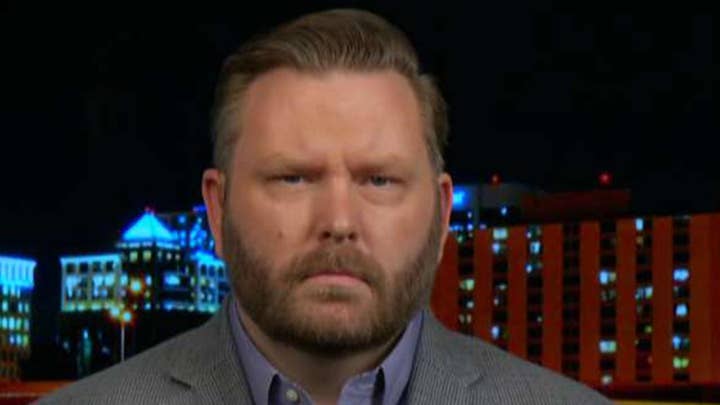
HENRY: What a horrific image. Trace, appreciate that report. My next guest has more than 13 years of experience on Baltimore's police force. Eric Kowalczyk is a former Baltimore police captain. He was chief spokesperson during the Freddie Gray riots. He is now the author of "The Politics of Crisis: An Insider's Prescription to Prevent Public Policy Disasters." Good to have you on the show, Eric.
ERIC KOWALCZYK, FORMER BALTIMORE POLICE CAPTAIN: Thank you for letting me be here.
HENRY: I wish we could say we have an answer to prevent what seems like not just a policy disaster but a human disaster.
KOWALCZYK: You know it is heartbreaking. I live in the city still and to see the violence and understand the impact that it has on families and the communities and on all of us who want to see the city move forward in a positive way, it is heartbreaking.
What I talk about in my book is the need for communities to feel like they have the opportunity to engage with their police officers and police officers that want to feel supported by their communities. And we are not there yet, and as I travel the country, what we see in Baltimore like the culture of the city is unique. The same issues manifest themselves in cities across the country. We just saw that in Sacramento the other day.
HENRY: Yes, absolutely. And eric obviously no matter what race someone is in your police custody, white, black, any race, any religion, any creed, they should be treated fairly, humanely and we've got to make sure police are doing that.
On the other hand, when you don't let police officers do their jobs, there area people warning way back a few years ago right here on Fox about what might happen in Baltimore, listen to this.
(BEGIN VIDEO CLIP)
HEATHER MACDONALD, POLITICAL COMMENTATOR: Policing is political and if somehow the country decides wrongly that the police are a threat, then we will get less policing. But, you know, the people who are going to be most hurt by this are the law-abiding residents of poor communities.
MARK LEVIN, HOST: There is mentality in this country thrashing law enforcement like law enforcement has to be perfect. The fact of the matter is, if we lose order, we lose liberty and we lose the society.
JUAN WILLIAMS, HOST: You know who needs police the most? Poor minority neighborhoods that otherwise become the wild, wild west.
(END VIDEO CLIP)
HENRY: People warned on the left and on the right. You crackdown on the police you got too far, it's going to become the wild, wild west.
KOWALCZYK: What all of that misses is the complexity of the relationship of trust that exists between law enforcement and communities that they serve. If we want to get to a place where the police can go and do what they want to do, look, I know hundreds of police officers that are still serving in Baltimore. I know thousands of police officers across the country.
These are good people who want to be able to go and then help communities, but there has to be a relationship of trust. And the complexity of that relationship, we need to have a fundamental conversation about the role we want law enforcement to play in the first place. There is a balance between police officers going in and doing enforcement where enforcement needs to be done and building relationships.
You cannot reach out to the community with one hand while you are choking it with the other. That doesn't work and that's where we lose trust. What we see right now is that law enforcement in cities like Baltimore and New York, Chicago are at the forefront of some of society's most challenging issues from alcohol abuse, drug addiction to homelessness and poverty.
But they are not given the tools, the time, the resources, the partnerships necessary to address those issues in a fundamental way. This is about trust.
HENRY: Well, you said, Eric, you said well, trust and balance as well. People need to be treated humanely. The police need to do their job as well. Eric we appreciate you coming in tonight.
KOWALCZYK: Thank you so much.
HENRY: This is a Fox News Alert. You are looking live at the Gaza skyline where Israeli forces are right now striking terror sites in response to rockets that targeted Tel Aviv earlier today.
(COMMERCIAL BREAK)
HENRY: Moments ago, Israeli defense forces confirming they are striking terror sites right now in the Gaza strip, this in response to two rockets fired earlier toward Tel Aviv. The first time rockets reached the area since 2014. Here's what that scene looked like earlier.
(BEGIN VIDEO CLIP)
(SIRENS)
(EXPLOSION)
UNIDENTIFIED MALE: (SPEAKING IN FOREIGN LANGUAGE).
(END VIDEO CLIP)
HENRY: Here now live, Fox News senior strategic analyst General Jack Keane. General, good to see you, sir.
JACK KEANE, SENIOR STRATEGIC ANALYST: Good to see you, Ed.
HENRY: What's your reaction to this video we are seeing?
KEANE: Well, first of all, it seems like it's a pretty limited attack, a more harassing attack. It's not triggered by a particular event like previous attacks have been. We don't know for sure if this is going to be sustained. We will obviously find that out in the days ahead.
And, obviously, the Israelis will respond to this. They don't take any of this lightly. But, it does accentuate the real challenges that exist here. Hamas is a terrorist organization that runs Gaza. It does not recognize the state of Israel. As a matter of fact, its policy and they are committed to the destruction of Israel. And we have a real impasse here.
HENRY: Well, this comes as our own Brian Kilmeade sat down earlier today with the Secretary of State, someone you know well, Mr. Pompeo. Here is what he said about the influence of Iran in the region.
(BEGIN VIDEO CLIP)
MIKE POMPEO, SECRETARY OF STATE: I think we are making progress on developing a strong independent south of Iraq, but there is no doubt Iran has its eyes set on taking control of that country. I don't think that's good for the Iraqi people. I know it's not good for the United States of America.
(END VIDEO CLIP)
HENRY: So talk as well about Iraq, Iran and U.S. influence in the region.
KEANE: Well, yes, certainly. Iran clearly since 1980 when they took over, the Islamic Republic of Iran has stated clearly they want to dominate and control the region. To do that, drive the United States out and destroy the state of Israel, and they have done fairly well.
And they own Lebanon, lock, stock and barrel. They own most of Syria. Clearly the eastern part, where we are, they do not control. They have great political influence in Iraq and clearly they have started a civil war in Yemen to gain control there and the prize is undermining the state of Saudi Arabia to its north.
HENRY: General, I want to shift to one last topic which is China. And there is this report about these war games that the U.S. military has been exercising that suggests we could lose a war with China. This comes as the president is trying to beef up our forces, beef up the military. But here is what Nancy Pelosi said real quick, watch.
(BEGIN VIDEO CLIP))
PELOSI: We are very dismayed by the president's budget. The budget is supposed to be a statement of our national values, what's important to us as a nation. It's appalling.
(END VIDEO CLIP)
HENRY: Can you give me 15 seconds on why you think the military needs all this new money?
KEANE: Well, I spent a year plus on a commission looking at the national defense strategy and I'm telling you we are in a crisis stage. We haven't been in a dangerous situation like this in years. All the war games we played against Russia and China, we struggled to win and we could in fact, lose. We have to rebuild our military.
HENRY: Serious stuff.
KEANE: The American people really don't know for sure what bad shape it really is, but it's going to take some time to dig us out of this hole.
HENRY: It will. General Keane, appreciate your insight tonight.
KEANE: Yes, good talking to you.
HENRY: That is “The Story” on this Thursday night. We will see you back here tomorrow night at 7:00. "Tucker" is up next.
Content and Programming Copyright 2019 Fox News Network, LLC. ALL RIGHTS RESERVED. Copyright 2019 ASC Services II Media, LLC. All materials herein are protected by United States copyright law and may not be reproduced, distributed, transmitted, displayed, published or broadcast without the prior written permission of ASC Services II Media, LLC. You may not alter or remove any trademark, copyright or other notice from copies of the content.
https://www.foxnews.com/transcript/violent-crime-soars-in-baltimore-despite-federal-police-oversight