 Print
Print
 Close
Close

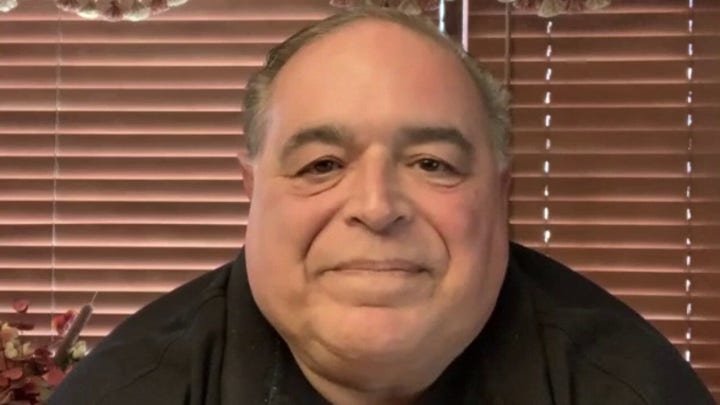
'Sopranos' star delivering food to health care workers
Published April 14, 2020
This is a rush transcript from "Your World with Neil Cavuto," April 15, 2020. This copy may not be in its final form and may be updated.
NEIL CAVUTO, FOX NEWS ANCHOR: This meeting that you talked about, the president is gathering with health care executives at the White House. He met earlier today with a half-a-dozen COVID-19 survivors, many of whom said that they like the direction this is going in and will do anything they can to help the country, much like Bill's guests here, if it requires their plasma or anything else, anything to keep advancing the ball.
And, by the way, that is one thing that has been happening, one of the reasons why, as Bill pointed out, Wall Street was up today, seeing some clarity on this, and maybe America getting back to work, if in stages or not.
We're going to get the read from governors and the president. They have two different views on this, but they do seem to be on the same page eventually getting us all back to what was before, as if we can go back to what was before.
Welcome, everybody. I'm Neil Cavuto, and this is YOUR WORLD.
Let's go to Hillary Vaughn at the White House right now, because a busy day still in store for the president. We have that health care task force meeting.
The president, I guess, at that, Hillary, will also outline this advisory board that will help him decide ultimately when and how much to reopen the government, right?
HILLARY VAUGHN, FOX NEWS CORRESPONDENT: That's exactly right, Neil.
And we're expecting that announcement in less than an hour, the details on who exactly is a part of this economic advisory council that will brainstorm the best way to get American businesses back open.
We already know it will include administration officials, various governors, and also business leaders. And just this afternoon, we did get new details from the president himself dishing the information on what industries he's getting insight from.
(BEGIN VIDEO CLIP)
DONALD TRUMP, PRESIDENT OF THE UNITED STATES: I'm going to be making a decision pretty quickly. And it's being done in conjunction with governors, whether it's restaurants or whether it's airplane business or whether it's a lot of other things.
We have a lot of businesses. And we have the best people in every -- every profession, including medical and including political. We want to have a sampling of everybody.
(END VIDEO CLIP)
VAUGHN: In the meantime, governors around the country are getting to work, figuring out when to lift restrictions on businesses and stay-in-place orders in effect in their own states.
An East Coast working group of governors from New York, New Jersey, Connecticut, Pennsylvania, Delaware, Rhode Island, and Massachusetts, including public health officials and economic officials from each state, all of them are crafting an economic reopening plan for their region.
And also a pact of West Coast governors from California, Washington and Oregon will also synch up a timeline to lift stay-in-place orders there. The president insists he has the power to override whatever these governors decide, Neil, but insists that, at this point, he is working with them to come up with a plan to reopen businesses and restart the economy.
But just because the government may decide to lift restrictions on the national level, it doesn't mean the economy will reboot right away, Neil, because a new Gallup poll found that 71 percent of people say that even if the government does lift these restrictions, they're still going to wait to resume their life back to normal -- Neil.
CAVUTO: Which could take a little while.
All right, Hillary Vaughn, thank you very much.
Again, 5:00 p.m., all that is ironed out or at least detailed.
In the meantime, how will we decide to loosen things up in this country? Well, the CDC actually has a lot to say about that, in tracking the number of cases, the number of hospitalizations, all of that.
Jonathan Serrie in Atlanta with the latest on that front.
Hey, Jonathan.
JONATHAN SERRIE, FOX NEWS CORRESPONDENT: Hi there, Neil.
Well, the nation as a whole appears to be reaching its apex in new cases, but the way that's panning out, it's unfolding differently in each individual state.
I want to show you just one of the models. According to the Institute for Health Metrics and Evaluation, more than a third of U.S. states have already reached their peaks in hospital use. Over the next week, peaks are forecast for an additional nine states.
They include California, which has managed to dramatically lower its projected hospital surge through intense social distancing and a strong public health response. The model shows an additional 14 states peaking between April 22 and the 30th.
And in the first half of May, nine states are forecast to reach their peak hospital usage. To prepare for the surge, states are building temporary hospitals. Here in Atlanta, they're setting up a 200-bed unit at the Georgia World Congress Center, a major convention facility.
The beds can be doubled to 400, if need be. But once states reach their peaks, wide-scale testing will be needed to isolate infected individuals and trace their contacts, so America can go back to a containment strategy, rather than mitigation, which is what we're doing right now.
International health experts warn, reaching the top of the curve is not the end of our problems.
(BEGIN VIDEO CLIP)
TEDROS ADHANOM GHEBREYESUS, DIRECTOR GENERAL, WORLD HEALTH ORGANIZATION: The way down is much slower than the way up.
That means control measures must be lifted slowly.
(END VIDEO CLIP)
SERRIE: President Trump says he wants to reopen the country as soon as possible, but we will base his decision the best advice from experts on health and the economy.
And, right now, what public health officials are advising, don't do it all at once -- Neil.
CAVUTO: All right, Jonathan, thank you very much, Jonathan Serrie in Atlanta.
Now let's go out to William La Jeunesse in Los Angeles, how the West Coast now has to plan for this, because, as we said, this could be a rollout or at least an ease-out from these restrictions that go state by state, quite literally -- William.
WILLIAM LA JEUNESSE, FOX NEWS CORRESPONDENT: Well, Neil, Both Governor Newsom of California and Governor Brown of Oregon said they fear right now that reopening soon will backfire.
So we didn't get a date when the stay-at-home will end. But Newsom said, in the first week of May, if hospitalization and ICU rates not flatten, but decline, he will reveal a new timeline. He also said mass gatherings even late summer, MLB, NFL, college football, in his words, not going to happen.
Each governor has their own benchmarks to guide decision-making. Governor Newsom said California needs to, number one, expand testing, tracing and tracking to identify new infections and suppress hot spots, so they don't bleed into other states or communities.
Secondly, having the infrastructure to isolate and quarantine infected people, and finally protect vulnerable populations, elderly, homeless. Finally, the health care system needs to be robust, should the virus reemerge. Both governors say that their decision will be based on science, but recognize the economic balance.
Governor Newsom:
(BEGIN VIDEO CLIP)
GOV. GAVIN NEWSOM (D-CA): We are not out of the woods yet. And we are not spiking the ball. But we also extend a recognition in that light that this can't be a permanent state.
(END VIDEO CLIP)
LA JEUNESSE: Governor Kate Brown said Oregon is sharing best practices with California and Washington state. Her decision to open will be based on slowing the infection, securing adequate PPE for health care workers, doubling testing capacity, and hiring enough people for contact tracing, then isolate anyone who is positive anywhere in the state.
(BEGIN VIDEO CLIP)
GOV. KATE BROWN (D-OR): I think you will see a higher level of coordination and alignment in terms of how we take actions.
But is our framework going to look the same as California's framework? Absolutely not.
(END VIDEO CLIP)
LA JEUNESSE: Now, Washington is likely to be the first state to lift its order. And Governor Inslee said he will not wait for California or Oregon. Newsom said this will not be a statewide order, but it'll allow different communities to act independently.
But he also added you will probably see restaurants at half capacity, if you will, people still wearing their masks even when he does handle this order or at least mediate this order -- back to you.
CAVUTO: Yes, it makes sense. They're not going to jump and run out of their homes, probably walk, maybe crawl, as they get used to this, whenever it happens.
William, great job, as always, William La Jeunesse in Los Angeles.
What are they going to look forward to justify a move to slowly unwind this so-called lockdown?
We have with us right now Dr. Qanta Ahmed, a pulmonologist over at the Langone Medical Center in New York.
Doctor, great to have you.
What would you look for, Doctor, to sort of unwind this or justify unwinding this?
DR. QANTA AHMED, PULMONOLOGIST: I mean, great to be with you, Neil.
Everything that's been said makes common sense. But I think what we're talking about as a nation is that we had a hard stop, we came to a grinding halt abruptly, and now we're looking to softly restart the economy. That's what we have to do.
And that is what we should do in a peri-pandemic, or, let's hope, soon a post-pandemic period. Remember, this pandemic that's arrived like a tsunami to New York isn't just going to be the only wave. Pandemics have a habit of coming in successive waves, localized outbreaks. And we now know how to handle them. We have learned a great deal in New York at NYU Langone. We are ready. We know how to treat them. We have the resources, and we can surge capacity. All of that is great.
But at the same time, I also want to hear from business leaders on a global level. And I'm so thankful our president is a businessman. For instance, Fred Smith, the CEO of FedEx, and how they resumed services in China. Today's Financial Times, the CEO of Volvo talked about how they have resumed work at Volvo in China and will be opening in South Carolina in May 6.
So what they do is, every employee gets their temperature checked. Every employee has PPE. The cafeteria is now serving only a certain number of employees.
All work forces in the U.S. are going to have to think about working around the clock, so that you can reduce office density by 60 percent. You have 30 percent of your work force working on three different shifts. We're going to have to make so many changes. And we can do it quickly. And we can reignite this economy.
CAVUTO: I don't know what is more impressive, Doctor, that you're all over this whole pulmonology and medical stuff, but you would make a darn good financial anchor with those references to -- about business developments.
Touche to you.
(LAUGHTER)
CAVUTO: As a pulmonologist, Doctor -- and you really look at respiratory tract, that sort of thing.
They are -- those with problems in that area tend to be the most vulnerable or among the vulnerable. Would you recommend that that group, that subset of the population -- there are others, those with diabetes, et cetera -- who would not be in that first wave of workers returning?
AHMED: Super question. And what you're referring to, I would absolutely support, because, in my critically ill patients, many of them have preexisting conditions that you're mentioning.
But I think the number one risk factor the United States is facing is our extraordinarily high levels of obesity. The obese patients are becoming more critically ill. We have seen that in 1957, in 1968, in 2000. And in this time, pandemic viral pandemics are more dangerous for the obese person.
So we have to identify populations that are more at risk. Some of that geographic, from what we know from Dr. Fauci and Dr. Birx. And some of that, for instance, New Orleans has twice the death rate as New York right now. And partly that's the underlying conditions and the obesity.
But also, in -- within employers, we are not going to discriminate against people. We're not going to shame people that are dealing with obesity, but we must protect them more aggressively and provide them better access to all of the technology we're gaining.
And partly why I want to see our economy revived is because I am seeing the enormous suffering of the families and the patients that are dealing with this illness. And we're not really mentioning the economic impact on American health care.
New York Presbyterian is $1 billion in the hole last month. Health care workers are out of work and health care workers are in need of hazard pay that are on the front lines. So, our whole country needs to get moving. The president has shown pretty good instincts in this pandemic.
One of them is, we can't stay frozen forever. We are going to reopen. And we're going to do it in a tailored fashion, based on demographics, based on risk factors, and based on epidemiology. And we can do this.
CAVUTO: Dr. Ahmed, very good catching up with you. Thank you very much. A lot of good ideas there.
To the doctor's point, it could be soon. It could be a little sooner than thought. And this breakdown wouldn't be all at once. But this de-lockdown phase is one of the things that the financial markets are looking for.
We had a heady advance in the Dow Jones industrials today, better than 550 points. We have retraced more than half the ground we lost through this brutal market response to the coronavirus and the spreading world conditions here, and that despite the sort of earnings season, where we had a couple of doozies, mostly banks reporting today, not exclusively.
J&J had much-better-than-expected numbers. That stock was racing along. But the banks, like Wells Fargo, J.P. Morgan Chase, not surprisingly, they had warned it would be awful, and it was, but even in some of those cases, investors rewarded them, because it wasn't as awful as they thought, and they think there will be a short shelf life on all of this.
As one analyst put it to me earlier today, we know things are bad. We're just happy they're not worse.
Stay with us.
(COMMERCIAL BREAK) CAVUTO: Small business relief, but with a big price tag, and the $360 billion committed to it is nothing compared to the extra $250 billion largely Republicans are leading to make sure it happens.
Mike Emanuel with the latest on what appears to be a struggle to get it -- Mike.
MIKE EMANUEL, FOX NEWS SENIOR POLITICAL CORRESPONDENT: Neil, good afternoon.
Yes, this small business program is due to run out of funding by the end of the week. So Senate Majority Leader Mitch McConnell is pushing to add another $250 billion to it, saying -- quote -- "Clean funding for worker pay in a crisis shouldn't be controversial. I hope our Democratic colleagues will let Congress act this week. American workers deserve paycheck, not pink slips caused by political games."
A top House Republican made this appeal today:
(BEGIN VIDEO CLIP)
REP. STEVE SCALISE (R-LA): We can get focused back on making sure this Paycheck Protection Program stays afloat, not just for the million businesses that already applied, but for the other maybe million businesses that are waiting to come.
(END VIDEO CLIP)
EMANUEL: Speaker Nancy Pelosi is trying to convince Treasury Secretary Steven Mnuchin to add funding to other programs, including state and local governments.
And she's attacking the Trump administration for implementation.
(BEGIN VIDEO CLIP)
REP. NANCY PELOSI (D-CA): The administration has been very delinquent in how it has managed the supply -- the supply chain and the distribution of what we need to fight this.
(END VIDEO CLIP)
EMANUEL: Program running out of funding. Now it's a question of which side will blink first -- Neil.
CAVUTO: Mike Emanuel in Washington, thank you very, very much.
Well, there are a lot of companies -- Google and Apple come to mind, a host of others -- that have come up with technologies to trace coronavirus patients that those with whom they got in contact with.
It has gone to the next stage in Massachusetts, where they hope to make that easier than ever. But there are a lot of privacy concerns with that as well. But it's simply been, at its surface, an argument to protect the people.
We have got Dr. Sandro Galea right now, Boston University School of Public Health dean.
Doctor, what do you make of this technology? I know there are a lot of personal privacy advocates who have issues with it. But looking, if I can, at just the medical benefits of that, or the heads up that people will have about who is contacting whom, who's out there, what do you make of it? DR. SANDRO GALEA, DEAN, BOSTON UNIVERSITY SCHOOL OF PUBLIC HEALTH: Well, first of all, this is nothing new.
We do contact tracing all the time. Right now, if there's an outbreak of measles, tuberculosis or sexually transmitted disease, including HIV, we do contact tracing. And, essentially, the principle is very simple, is that you identify people who are infected early, and then you find out who they have been in contact with, so that you can test them as well.
And the idea is that you contain the disease. So it is not a new concept. I mean, it's a concept that has been around for hundreds of years. And in many respects, it is what we should have done right from the beginning of the COVID epidemic.
The fact that we didn't do it really is a reflection of the fact that we were unprepared.
(CROSSTALK)
CAVUTO: All right.
So, how do we keep track of those contacts? What kind of technology are we using? I know, in the case of the high-tech cases like Google, what have you, how are we monitoring that?
GALEA: Well, at a very simple level, you don't need fancy technology. At a simple level, you need a phone to call the people who are infected, find out who their contacts are, and you can document them on a spreadsheet.
Now, you can get fancy. You can have apps that document that. You can have apps that talk to each other. My phone can talk to your phone if we have been close to each other, which means that, if I have COVID, you would know that you're at risk of COVID.
But the technology is in service of the fundamental issue. The fundamental issue is, we identify people with infection early, we identify their contacts, so we can test them and isolate them to keep disease from spreading.
CAVUTO: Do you see this under control, Doctor, from your vantage point, or more under control? What are some of your worries?
GALEA: Well, I think we are -- we're probably cresting the epidemic nationally, as you said earlier in your program.
I think it's going to take us another couple of months. And we are going to get to a place where we have a chance almost as a do-over, where we're going to have the epidemic down to manageable levels, and then run the risk of having any recurrence or having other spikes, as have happened in other places.
So this is our moment. This is our moment to implement contact tracing, where we can find cases quickly to contain it, so, if there are cases of infection, they do not become an outbreak, the outbreak doesn't become an epidemic again, and the epidemic doesn't result again in us having to close down economies and close down the country.
But to do that, we need to have testing. We need to identify cases quickly. We need to contact trace, find people who are at risk, isolate and test those people. And contact tracing is at the heart of all of that.
CAVUTO: Do you have any worries about beginning this unwinding process, Doctor, May 1?
GALEA: Yes and no.
I mean, yes, I do. I suppose the operative question is, what you mean by the unwinding? Unwinding has been interpreted in some of the public conversations as being we undo everything, everybody goes back to normal. And that obviously is not the right solution.
And -- or unwinding can be, let's take it a step at a time, see where we're at in the epidemic, and slowly start reintroducing contact, while being measured, judicious and making sure that we are monitoring cases and have the testing and the capacity to monitor if cases spread.
If that's what we mean by unwinding, then I think it's reasonable to start slowly asking ourselves, how do we slowly reintroduce normal day-to-day life? If by unwinding, we mean changing everything overnight, that's not the right idea.
CAVUTO: All right, Doctor, thank you very, very much. We will watch it very, very closely.
In Michigan, forget about when to shop. What to shop for -- after this.
(COMMERCIAL BREAK) (BEGIN VIDEO CLIP)
BARACK OBAMA, FORMER PRESIDENT OF THE UNITED STATES: I'm so proud to endorse Joe Biden for president of the United States.
Choosing Joe to be my vice president was one of the best decisions I ever made. And he became a close friend. And I believe Joe has all the qualities we need in a president right now.
(END VIDEO CLIP)
CAVUTO: All right, Barack Obama making it official. He has given his blessing to Joe Biden to be the Democratic nominee.
Of course, with Bernie Sanders out of the race, it was a foregone conclusion here, even though there are a lot of people trying to recruit folks like Andrew Cuomo to run, saying that Biden might be a weak general election candidate.
Be that as it may, it is most likely his nomination to turn down at this point. And the support of Barack Obama, wildly popular in the Democratic Party and elsewhere, will seal the deal and help that.
We will get a read of that with Susan Crabtree of RealClearPolitics.
Susan, do you know what role the former president played in dealing with Bernie Sanders? There are reports of conversations, maybe your own reporting. And I'm wondering if he kind of prepared the Vermont senator to step out early.
What do you know on that front?
SUSAN CRABTREE, REALCLEARPOLITICS: Well, it is interesting that we have President Obama coming out and endorsing Biden, his former vice president. At least we can end that sort of Washington parlor game of will he or won't he endorse him, why hasn't he yet?
That was going on for more than a year so far now, and even President Trump got into the game. But when you talk about the timing of this, it's very interesting. Sanders, last week, as we know, got out of the race. But he really didn't, keeping his delegates in there, saying he still wanted as many delegates as he could to influence the platform of the party.
He has already been a huge influence in the party. And we actually saw that during President Obama's endorsement today, when he said he believed that it was time for real structural reform. That's what really struck me from this endorsement.
He was obviously talking a lot about President Trump, without mentioning him by name, talking about the need for competent leadership and honest leadership and somebody who can empathize during this pandemic.
But he didn't mention Trump by name. And, instead, he really, at the end of his endorsement video, was talking about how -- endorsing some of the same things that Bernie Sanders was doing, how we need real structural change, and that Joe Biden's platform is the most progressive that we have had from any Democratic nominee in history, and that he needs -- there needs to be a public option to take Obamacare one step further, as well as a bold Green New Deal, and things like $15 federal minimum wage.
CAVUTO: I see and notice in a lot of the comments that the former presidents has made that he himself has taken a hard left charge.
What do you make of that?
CRABTREE: Like I said, it seems like he has.
He said in the video that, if it were him running today, it would be a different campaign and a different platform. So you do see this sort of move to the left. And you also -- one of the reasons I believe he didn't come out and endorse Joe Biden right away is he didn't want to alienate progressives in the party that were really beholden to Bernie Sanders and Elizabeth Warren throughout the time.
CAVUTO: Right.
CRABTREE: So, you saw this. This is a real -- a way for President Obama to bring the party together now, but he's also really pushing Joe Biden, it seems to me, to the left, when most candidates during the general election go more towards the center. That's what was striking to me from the video.
CAVUTO: Yes, it's very interesting, and still early in the process. We will see how it all falls out. There's no shortage of help the former president provided Hillary Clinton. And that didn't do much good, we know, in retrospect. We will see with Joe Biden.
Thank you, Susan, as always.
We are waiting to hear, by the way, from the Democratic governor of Michigan, Gretchen Whitmer. She is going to be addressing reporters, not only the latest on the coronavirus and battling it in her fine state, but she has been under fire a little bit, not only over the issue of when people could return to shop, but when they do, what they can and cannot shop for -- after this.
(COMMERCIAL BREAK)
CAVUTO: We have just gotten word that the major airlines have come to an agreement with the Treasury on payroll support, part of a $25 billion aid package that the government says is not going to be a grant. It's a loan.
We will see -- after this.
(COMMERCIAL BREAK)
CAVUTO: Michigan Democratic Governor Gretchen Whitmer has a world controversy right now, will soon be addressing reporters, an outcry over her recommendations about what -- when people are in her state ready to shop, what they can shop for and not shop for.
It's a little confusing to me, but it isn't to Mike Tobin, who has been following the story quite closely.
Mike, what's going on here?
MIKE TOBIN, FOX NEWS CORRESPONDENT: Well, Neil, there's a protest organized largely on Facebook by a group called the Michigan Conservative Coalition called Operation Gridlock.
And they're saying that the executive orders from Democratic Michigan Governor Gretchen Whitmer are too restrictive and arbitrary. So the demonstrators are going to drive over to the Capitol in Lansing and create a big visual by locking up the otherwise empty streets.
Now, Whitmer said the family of Education Secretary Betsy DeVos is behind it.
(BEGIN VIDEO CLIP)
GOV. GRETCHEN WHITMER (D-MI): The group is funded in large part by the DeVos family. And I think it's really inappropriate to -- for a sitting member of the United States president's Cabinet to be waging political attacks on any governor.
But, obviously, on me here at home, I think that they should disavow it. And I encourage people to stay home and be safe.
(END VIDEO CLIP)
TOBIN: Now, the connection is the Michigan Freedom Fund, of which Secretary DeVos' husband was a founding member, but he's no longer active.
Now, Freedom Fund spent $250 sponsoring an ad for the Conservative Coalition.
(BEGIN VIDEO CLIP)
UNIDENTIFIED MALE: I wish the governor would focus more on this crisis and coming up with a more nuanced approach to her orders than playing politics and slinging mud like this.
(END VIDEO CLIP)
TOBIN: And Michigan is now the third most severe state in the nation in terms of infections and deaths -- Neil.
CAVUTO: Mike Tobin, thank you very, very much.
Well, can the governor do this, even hint at this?
Judge Andrew Napolitano with us right now.
Is she going as far as her critics say? And if she is, Judge, what are the issues you have?
ANDREW NAPOLITANO, FOX NEWS SENIOR JUDICIAL ANALYST: Well, the issue that she's generated are not with me. They're with the Constitution, Neil.
And she deserves the political blowback that she's getting. I mean, if you're at a Costco or Walmart, and you want to get groceries and paper towels, but you also want to get grass seed and a garden hose, she's told them they can't sell you the grass seed and the garden hose. They can only sell you the paper towels and the groceries.
I mean, there's no rational basis for that type of an order. It also interferes with the intimate choices of people to purchase what they want and what they need. These are people who have already been subject to the maximum number of humans per square footage of the store and are practicing the social distancing while in the store.
This is an example, probably the most egregious, of a governor assuming to herself near totalitarian powers, nowhere authorized by the United States Constitution or the constitution of Michigan. So I don't feel sorry for her at all.
I'm waiting for one of those people to file a lawsuit because the first federal judge that hears this, I think, will restrain her from enforcing these orders.
CAVUTO: What I don't understand is the logic behind it.
At first, trying to give the benefit of the doubt, I thought, was she trying to say spread the wealth around, if you want to get some of these other items, go elsewhere, don't let it concentrate at the big box guys?
But even that was a stretch. What do you think?
NAPOLITANO: I mean, it is central economic planning that we all know has never worked.
It doesn't work in time of emergency. If she were divvying out N95 face masks or ventilators, that would be one thing, but to say to people what they can put on their grocery list and what they can't is almost as absurd as our home state governor saying you can't drive between 8:00 p.m. and 5:00 a.m.
It's beyond me what public health benefit that produces. But these governors are getting carried away with issuing decrees, because people are accepting them like sheep. There should be more challenges to more of these things on the streets and in the courts.
CAVUTO: But Governor Murphy of New Jersey is allowing that, enforcing that, and getting away with that.
NAPOLITANO: Yes.
CAVUTO: I'm talking about the driving between 8:00 and 5:00 a.m.
And maybe the Michigan governor will feel she's fully justified and empowered to do this now.
NAPOLITANO: Without a challenge, whether political, like the Michigan governor is confronting, or legal, as I understand will soon be confronting Governor Murphy, they will just keep changing their minds, rewriting laws, adding punishments.
Look, in our system, governors don't write laws, and they don't craft punishments. Legislatures do that, people responsible to the citizenry, after public hearings and public debates.
Andrew Cuomo is right. We have a Constitution. We don't have a king. And we don't have a king in each state capital. All right, I will get off my high horse.
(LAUGHTER)
CAVUTO: Well, it looks like a beautiful high horse there.
(LAUGHTER)
CAVUTO: Judge, thank you very, very much, Judge Andrew Napolitano.
By the way, I'm trying to get a little more details on this $25 billion payroll support package that the airlines have signed onto with the government, namely, the Treasury.
One of the prior snafus was, the airlines wanted this to have grant potential. In other words, they wouldn't have to pay it back, especially if they kept workers, or backed up their payroll to protect those workers.
We don't know how that issue has been settled. We do know that one of the big snafus has been addressed. We just don't know the details of that, just that it could possibly clear the way for a $25 billion rescue, which, with the money the airlines are losing, will probably in the end be chump change, since their business has crashed about 90-plus percent from a little more than a few months ago.
Stay with us.
(COMMERCIAL BREAK) CAVUTO: All right, we still don't know what California Governor Newsom's plans are to reopen California, what will be included, what won't be.
But we have an interesting little tidbit that's coming via Reuters right now, that the governor would likely say that mass gatherings, those of hundreds of thousands of people, would likely be banned at least through the summer. That is through the summer.
Remember, this is a big concert and convention state, but hundreds of thousands of people -- we don't know where they would put the limit -- that that would be verboten, at least through the summer.
How far does this go? What other items are being considered to entertain slowly unwinding the lockdown that exists, or quasi-lockdown that exists, in California?
Representative Raul Ruiz joins us right now, Democrat there.
What do we know, Representative, what the governor wants to do, what you want to do? Are you on board with the very large gatherings of hundreds of thousands probably not a great idea right away?
REP. RAUL RUIZ (D-CA): Well, I know that it's -- this stay-at-home policy has really taken a toll on our economy.
But the safety measures in our public health are not in contradiction with the economic factors that we need to take into account, because the economic depression is directly correlated with the rise in transmission of the coronavirus.
So, for us to focus on the public health and safety aspects is the right way to help get our economy back in order. And I am in accordance with the social distancing, because it's proven scientifically that the way right now -- without a vaccine or without treatment, the way we're going to get ahold of decreasing the transmission of coronavirus is to practice early and aggressive social distancing measures.
CAVUTO: So, if we practice those measures, it's fair to say that a lot of crowded workplaces -- California has plenty of them -- where I am, too, Congressman, it's the same deal -- you're going to have fewer people able to return to work right away.
Is that your sense in California as well, whenever this is lifted?
RUIZ: Yes, well, we need to take care of not only those that are not in work and practicing social distancing by not being in large gathering outside in public, but we also have to take care of our workers, our essential workers, who need to also practice social distancing within the workplace as well.
It's going to take some time, and it's going to be targeted, and it's going to be gradual. I think the governor laid a road map, an aspirational, science-based way to lift the stay-at-home orders in the safest way possible, because we know this, according to the science, that the virus is not going away, that we only have assumed 8 percent of people who have been exposed and have developed immunity.
So, we're nowhere near having a population-based natural herd immunity that will protect us. And we're about a year away from developing a vaccine.
So, this virus is going to be around, and it's also going to come back during the fall months. So, if we know that's going to happen, then we should develop the systematic framework by helping our hospitals deal better with a surge capacity, by making sure we have the right amount of testing, diagnostic and serology...
CAVUTO: All right.
RUIZ: ... as well as the capacity to contain the virus once it reappears.
And so I think that this was a road map to demonstrate how we can build the framework or the building blocks for the state of California to then give people an expectation that we will lift the stay-at-home orders in the most safe way possible.
CAVUTO: Yes, we just need to find out what's on that road map.
Congressman, thank you very much. Very good seeing you.
Meanwhile, from wise guy to nice guy. You remember, years ago, he was killed off on "The Sopranos." Well, he's back with a vengeance doing some very good deeds.
Meet him next.
(COMMERCIAL BREAK) CAVUTO: Maybe they killed off this guy on "The Sopranos" prematurely. He's a nice and a wonderful guy.
Joseph Gannascoli is with us right now, "The Sopranos" actor. A lot of people, you know the face instantly, certainly the voice. But he's doing a lot of good right now helping those who are dealing with the coronavirus in Long Island, New York, and New York City hospitals, getting a lot of important stuff to them, including a lot of delicious food.
I'm happy to have him back with us.
Joseph, good to see you, my friend. How you doing?
JOSEPH GANNASCOLI, ACTOR: I'm doing good, Neil. Thank you.
CAVUTO: I love what you're doing.
And what gave you the idea for it? Because I know it's grown quite a bit.
GANNASCOLI: It has.
My sister-in-law works for -- in the labor and delivery in South Nassau. And she was telling me, you know, what they're going through. And I wanted to take you -- this is where my daughter was born. So I wanted to take them lunch.
And it sort of started growing. I wanted to do it for other hospitals.
And I got to mention the couple of restaurants that have been matching the funds that, when I go there, they just add in so much more. So there's food left for the night crew or to spread around, Vincent's Clam Bar in Long Island, in Carle Place, Long Island, and Villa Maria Restaurant in my neighborhood, East Rockaway.
And one of the customers got what we were doing, two brothers from Thomas Novelli contractors, and they made a huge donation. So this allowed me to expand to five -- five hospitals.
I did the post office this morning. I'm doing the fire departments in my neighborhood Friday. And I just want to keep it going. So everyone has really been so generous. And, really, these hospital workers, it's just so brave, that it makes me want to keep going.
CAVUTO: I have a feeling, Joe -- I know you have a big heart. And I have seen evidence of that over the many, many years.
But I think some people are scared of you, frankly. And I think, when you walk into a restaurant (AUDIO GAP) would be a real good idea if you help these people out, they're not going to argue, right?
GANNASCOLI: Well, I -- I can be convincing.
(LAUGHTER)
CAVUTO: But you get a good response.
Now, how do you coordinate? That's a big thing to organize and get to the people on time. How are you doing all that?
GANNASCOLI: Well, I got to say one good thing about -- I mean, if there's any good thing about it, there's not much traffic out there.
CAVUTO: Well, there is that.
GANNASCOLI: Even from -- when I went to Staten Island -- when I went from Long Island, like Roosevelt Field, where Vincent's is, to Staten Island University, I did it in about 35 minutes.
So, traffic has been great.
CAVUTO: Wow.
GANNASCOLI: So that is a help.
I pick it up around 11:30. And I'm there about 12:05, 12:10, just in time for lunch.
CAVUTO: That's awesome.
Now, I know that route you're taking. That would easily be 90 minutes in the old traffic we used to have.
What kind of reaction do you get?
GANNASCOLI: Oh, just people are so thankful and grateful.
And we still do pictures, but it's six feet apart. So I wound up taking pictures for everybody. And I do the selfie. But they're way in back of me.
(LAUGHTER)
CAVUTO: Now, are you partial to Italian restaurants? Or you open it up?
Of course, a lot of great fish restaurants. You mentioned one. Or do you care? Whoever wants to sign up and help, sign up and help?
GANNASCOLI: Well, I try to spread it around to the restaurants in my neighborhood.
So, I did them with Italian a few times. I'm thinking about doing some Greek.
CAVUTO: OK.
GANNASCOLI: And maybe some Mexican, so just to give them a little variation.
CAVUTO: How are you holding up through this, Joe, and your family?
And this sheltering in place, for a lot of folks, has been driving them nuts. How about you?
GANNASCOLI: I have been getting out. I wear my mask, my gloves. I got Padre Pio with me all the time.
(LAUGHTER)
GANNASCOLI: And I do my rubs. I wash down.
But I'm OK. My daughter's loving it. She's having -- she's doing her schoolwork. But she's in the pajamas most of the day. And, well, my wife is...
CAVUTO: Yes. There you go.
I can imagine, your kids don't do -- your kids don't do your homework, that's going to be a long day, I just have a feeling. So you're -- let's say you're very forceful.
Joe, you have a -- you're just a great guy. This -- when I heard about this, I said, we got to get this guy on.
It's great seeing you again. Be well and be safe, my friend.
GANNASCOLI: Thank you, Neil.
And if they can go to my Twitter @JoeRGannascoli, they will see the GoFundMe account. They can make it whatever they can afford, so I can keep this going for as long as I can.
Thank you.
CAVUTO: Joe, we knew you would want to mention that, so we put it on our site. And we will put it on our site, because we didn't want to upset you, if we didn't.
So, Joe just said, I think it'd be a really good idea for you to have those details on your site. And it is.
Joseph, thank you very much, my friend.
We will have more after this.
GANNASCOLI: Thank you.
(COMMERCIAL BREAK) CAVUTO: When you think about it, there have been so many hit hard by the coronavirus, something the president's going to address momentarily, when he has his health care task force briefing minutes from now.
But when it comes to groups that seem to be unfairly targeted or disproportionately hit, it has got to be transit workers. More than 50 have lost their lives. And that's what we know right now.
It's a big problem in the New York metropolitan area
Bryan Llenas on a problem that is not apparently going away, even now -- Bryan.
BRYAN LLENAS, FOX NEWS CORRESPONDENT: Neil, New York's public transit workers are the first responders who go in every day and do their jobs, with little fanfare, each day bringing doctors, nurses, and first responders back and forth from the front line.
And it's come at a heavy price. At least 59 MTA employees are now dead, thousands quarantined, thousands also sick.
It has come, like I said, at a heavy price. It's more than the FDNY and NYPD combined, in terms of the dead, people like Oliver Cyrus, a 20-year veteran bus operator, remembered as a humble man who did everything for his daughter, Tamia, who was the love of his life.
Or Warren Tucker, a maintenance employee, friends called him Big Tuck, remember for his happy personality and Yankees hat.
The MTA doing a lot of things to try to separate drivers from passengers, including reducing hand-to-hand cash transactions. And they're doing everything they can thus far, but we will see.
Transit unions across the country are very worried moving forward about having enough personal protective equipment for public transit workers nationwide -- Neil.
CAVUTO: Yes, I didn't think of that, Bryan. You're right. They are on the front line of this, whether they like it or not.
Thank you very much, my friend.
All right, the president's briefing coming up. He's also going to be announcing that advisory board that will help him decide if and when he lifts some restrictions on leaving your home.
Content and Programming Copyright 2020 Fox News Network, LLC. ALL RIGHTS RESERVED. Copyright 2020 ASC Services II Media, LLC. All materials herein are protected by United States copyright law and may not be reproduced, distributed, transmitted, displayed, published or broadcast without the prior written permission of ASC Services II Media, LLC. You may not alter or remove any trademark, copyright or other notice from copies of the content.
https://www.foxnews.com/transcript/sopranos-star-delivering-food-to-health-care-workers