 Print
Print
 Close
Close

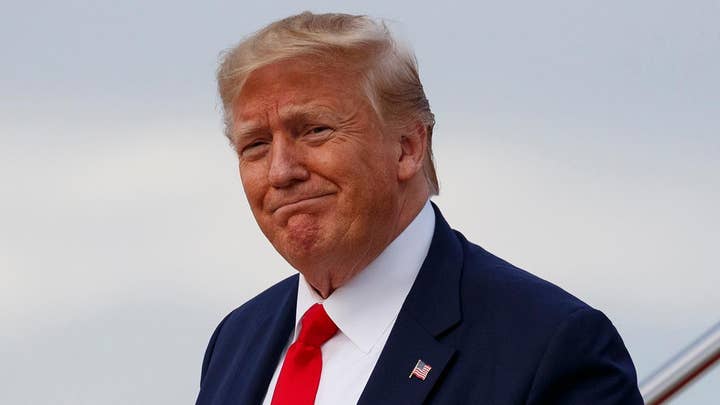
President Trump declares himself a Florida resident
Published November 01, 2019
This is a rush transcript from "Your World," November 1, 2019. This copy may not be in its final form and may be updated.
NEIL CAVUTO, ANCHOR: All right, well that quickly confirmed the Chris Wallace has a lower torso, which is good to know.
(LAUGHTER)
CAVUTO: Welcome, everybody. I'm Neil Cavuto.
Stocks surging today, because a lot more people like you are working today, in fact, more than ever. Welcome, everybody.
"Your World" gets going right now with news of 128,000 new jobs added last month. Now, I know what you're thinking. That doesn't sound like a lot. But when you consider we were in the middle of that GM strike, and you had nearly 50,000 people walking a picket line, and that a lot more jobs were then created in August than September than first thought -- try 95,000 more -- well, that's the kind of thing -- things that get Wall Street's attention.
The S&P 500, the NASDAQ both closing at records today. Take a look at the Dow today, within a stone's throw of a record itself. Amazing.
This as the president heads off to Tupelo, Mississippi, moments from now, big rally planned. He makes any remarks, you know the drill, we will take you to them.
First to John Roberts on how the White House is responding to this, well, economic gift -- John.
JOHN ROBERTS, CHIEF WHITE HOUSE CORRESPONDENT: Neil, good afternoon to you.
I was just glad myself to find out that Chris Wallace wasn't wearing a speedo underneath that suit jacket.
(LAUGHTER)
ROBERTS: The president pretty happy about the job numbers today, as you said, the official number 128,000.
The president tweeting -- quote -- "Wow. A blowout jobs number just out. Adjusted for revisions and the General Motors strike, 303,000. This is far greater than expectations. USA rocks."
So, the president there said that the 128,000 number is actually 303,000. So how do they get to that number? You were alluding to this at the top. So you got the base, 128,000 jobs created last month, and then there was 95,000 in the upward revisions for the prior two months. They added that in.
Then the Council of Economic Advisers and the National Economic Council estimate that there's a 60,000-person adjustment for the GM strike, and then they threw in $20,000 for census -- 20,000 jobs, rather, for census workers. So that's how they get to that total of 303,000.
The president chief economic adviser, Larry Kudlow, saying this morning that the real winners here are the middle class. Listen here.
(BEGIN VIDEO CLIP)
LARRY KUDLOW, DIRECTOR, NATIONAL ECONOMIC COUNCIL: We are in a middle- class boom, a middle-class boom, where inflation adjusted after-tax income has increased for per household by $5,000, or roughly 7 percent, in just two-and-a-half years.
And those numbers are far and away better than the prior 16 years under Democrats and Republicans. That's how good this middle-class boom has been.
(END VIDEO CLIP)
ROBERTS: Kudlow insists that people are underestimating the strength of the economy. The stock market still doesn't seem to really believe him, because, yesterday, we saw the stock market dive on manufacturing numbers.
Today, it's up near a record high. Lord only knows what Monday is going to bring -- Neil.
CAVUTO: All right, John, thank you very, very much.
And as they're dotting the I's, crossing the T's on these markets here, to John's point, the Dow within about 12 points of a record. S&P 500 and the NASDAQ already hit them today.
So, the strong economy, the wind at the president's back?
Gary Kaltbaum, market extraordinaire, what do you think?
GARY KALTBAUM, CONTRIBUTOR: Neil, there is just a little bit over a year to go, and every data point, every job, every person entering the job market, every person coming off welfare, and every Dow point is going to matter.
And with the big four indices either breaking out or just about to break out of a long range, that is definitively the wind at the back. And I'm sure you're going to hear the president yelling and screaming at -- about it in the weeks to come if it continues.
CAVUTO: You know, it also took a lot of the pressure off in the middle of all this impeachment focus on, his fundamental argument is that, you want to go after me, chase me out of office, you're chasing all of this out of office too.
What do you think?
KALTBAUM: For me, impeachment on a scale of one to 100, is about a five.
His base is going to stay with him. The people that don't like him are going to continue to go after him. That's the media, the Democrats. I don't think it's going to mean a lot.
And I think everything's going to come down on November 3, is, how do people feel about their wallets, their situation, the jobs? And I have to throw one more thing into this, Neil. I know the president is going after Jay Powell.
But if I was the president, I would be giving Jay Powell a lifetime pass to Mar-a-Lago.
(LAUGHTER)
KALTBAUM: He is instilling -- he is putting more liquidity into the system now than Ben Bernanke did when we at 9 percent unemployment and in a financial meltdown with his Q.E. that he doesn't want us to call Q.E., which is -- which is pure liquidity.
And markets have loved it for over 10 years. And so the economy has reacted to it. So that is a big time help, also.
CAVUTO: All right.
All right, you're a genius, but just to bring this back to a lot of the folks who aren't savvy of this stuff, you're referring to, of course, Jerome Powell, the chairman of the Federal Reserve, and what he's done, now with these three rate cuts and other things, to keep the party rolling.
Now, do you think then this removes the possibility of a recession by, let's say, next year around this time?
KALTBAUM: I have never thought that we would go into recession here. I have been always thinking slowdown.
My bigger worry has been Europe and Asia. I'm not so worried about here. And why? The employment situation look -- just continues to look really, really good. You cannot fight a number. I believe we finished at 3.6 percent right now.
And people having a job and contributing to the government, instead of the other way around, there is nothing better than that. And if that momentum continues into next year, good on the president and good for the president.
CAVUTO: And good on you, my friend. Thank you very, very much, Gary Kaltbaum following all this.
KALTBAUM: You got it.
CAVUTO: Meantime, Medicare for all without tax hikes for all?
(BEGIN VIDEO CLIP)
SEN. ELIZABETH WARREN, D-MASS., PRESIDENTIAL CANDIDATE: I have a plan that shows we can have Medicare for all without raising taxes one cent on middle-class families.
And it's all fully paid for by asking the top 1 percent and giant corporations to pay a fair share.
(END VIDEO CLIP)
CAVUTO: All right, now, it might be debatable whether it's all paid for.
What she wants to do is spend an additional $20.5 trillion new spending Medicare-, health care-related, on top of the 30-plus-trillion we're roughly spending right now.
Now, to pay for that over 10 years, she's boosting taxes, in other words, $35 trillion more in tax revenues, a good chunk of which will come, nearly $9 trillion, in new taxes on financial firms and corporations, $6 trillion bucks on very wealthy individuals and some firms that she says are trying to dodge taxes.
About $2.66 trillion she hopes to realize from tighter tax enforcement, $2 trillion taxing capital gains at the regular income rate for the very well- to-do, and $800 billion, again, over 10 years, in something called a financial transaction tax on every Wall Street trade, whether you're buying stocks, bonds, you name it.
Will that not only pay for this? Again, the numbers might be a little off. And if she were to succeed and become president and get Congress to go along -- a big leap on all fronts -- what happens to the economy?
To RealClearPolitics' Susan Crabtree.
Susan, we already know that a lot of our opponents say the numbers don't add up. Joe Biden didn't waste a nanosecond to rip it. What's the reaction on the stump?
SUSAN CRABTREE, REALCLEARPOLITICS: Well, I think you have a headline saying, even from The New Yorker, saying, well, she doesn't really have a plan for this. This is not a realistic plan.
It's sort of a fairy tale that you have -- it came on the same day -- we sort of see this Friday news dump -- on the same day we had a great jobs report that the president is celebrating. And a lot of people are crediting the tax cut that he and Republicans imposed for this great economy and sustained economic growth.
So here she is. She's going -- obviously, when she was attacked by Joe Biden on this about a credibility -- her credibility on this issue, she said, well, we can go big in this country. And so she feels like -- it seems like she does feel like that this is something that the economy can sustain.
But we're seeing this -- the recession fears overturned with this jobs report because of the tax cuts. And I think she has a credibility problem on this issue, and you saw back in the Democratic debates in Detroit that she was rubbing her hands together, saying sort of like -- salivating over the chance to get her hands on more tax dollars.
And so I think this could be a huge liability for her, make Joe Biden more of a centrist candidate and make his campaign a little bit more attractive, when he's been faltering and she's been rising.
CAVUTO: Well, if you think about it too, you can say what you will about Bernie Sanders, but he did just come out and say it, the middle class are going to have higher taxes as well. They will get a lot more back and the benefits and other things because of it, but that's neither here nor there.
She didn't do that. She did raise clearly -- and I went through this line by line -- she did raise the possibility -- not the possibly, the plan here, that if you junk all private health insurance plans, Americans just leave those, the money that they might have been paying toward premiums on those plans, some of whom are in tax-advantaged accounts, you lose that, so your taxable income goes up, and that's why your taxes go up.
That was kind of pooh-poohed minimized, but that means the middle class, others would pay more, right?
CRABTREE: Well, here's the situation.
I think that you can debate whether the premium -- the better premiums that Americans would pay would offset the tax cuts that they may incur. She's saying the middle class is not going to get tax cuts.
But if they don't have a job, that's sort of a moot factor, right? This is the economy and whether you're better off four years than you are now, better off than you were four years ago is the real test of any president.
And, right now, we're seeing the economy continue sustained growth there. And we have Elizabeth Warren coming up with this plan that could indeed hurt the economy by imposing greater taxes, $52 trillion it's going to take over the next decade to pay for this plan.
CAVUTO: Oh, it's going to be big
I mean, you're talking about just the added tax revenue part from the hiking on the rich and the other well-to-do, $35 trillion alone there. We will see how it pans out.
But, Susan, thank you. Always good seeing you.
CRABTREE: Thank you, Neil.
CAVUTO: By the way, the president is going to be going to this Mississippi rally tonight.
You can bet that the timing of this, as Susan pointed out, with Elizabeth Warren talking up these tax hikes and everything else, reversing what the president says has been the kind of thing that produced the job numbers we are seeing and the market rallies and records we are seeing, that's going to be a big topic -- after this.
(COMMERCIAL BREAK)
CAVUTO: All right, phase one maybe on.
New signs of progress in the China trade talks. I'm going to have more on that with the commerce secretary of the United States, Wilbur Ross, in a minute.
First to our Edward Lawrence with what he is hearing.
Hey, Edward.
EDWARD LAWRENCE, BUSINESS CORRESPONDENT: Hey, Neil.
Yes, inching closer to the signing of a phase one trade deal with China. The U.S. trade representative, Robert Lighthizer, and Treasury Secretary Steven Mnuchin talked by phone with the Chinese vice premier today.
The call, according to the U.S., was constructive. And they made progress in a variety of areas, as they are in the process of resolving outstanding issues.
Now, the Chinese read on the call similar, but adding that they reached consensus on principles. Now, that last part is exactly what President Donald Trump said back on October 11. The bottom line is that progress was made today.
White House economic adviser Larry Kudlow says the two sides are almost finished on the agriculture section. He says the financial services section almost finished, where American companies will not be forced to partner with Chinese companies. Kudlow also says the currency manipulation section almost finished.
Now, one big thing hangs out there, though. Listen.
(BEGIN VIDEO CLIP)
KUDLOW: Enormous progress has been made on the intellectual property theft issues. That one is not completed, but there's lots of progress.
(END VIDEO CLIP)
LAWRENCE: And the forced transfer of technology section will be in phase two. The deputy level calls will continue to get that language right -- Neil.
CAVUTO: All right, my friend, thank you very much.
Well, Commerce Secretary Wilbur Ross telling me on FOX Business, which, if you don't get, you should demand, that talks with China are looking up.
(BEGIN VIDEOTAPE)
WILBUR ROSS, COMMERCE SECRETARY: We're pretty comfortable that the phase one is in good shape.
CAVUTO: All right, when you say in good shape, for both leaders to sign off within the next couple of weeks?
ROSS: Well, Who will sign and what date is a good question.
It was nice having the natural deadline of the Chilean conference...
CAVUTO: Right.
ROSS: ... because that made everybody focus on a finite date.
Hopefully, we can resurrect a date right in that range, because we know there's a gap in President Trump's calendar. We know there's a gap in President Xi.
CAVUTO: Right.
ROSS: So the question ought to be, where, not...
(CROSSTALK)
CAVUTO: Where is a middle ground to have it?
The Chinese had interesting things to say the other day about this process and that phase one might be -- I'm just interpreting it here, sir -- as good as it gets, and maybe the only thing they get, and that they complained even about the president being unpredictable, impulsive and all that.
What did you think?
ROSS: Well, he uses unpredictability as a negotiating tool.
We wouldn't have gotten as far as he has now he were a run-of-the-mill, old-fashioned, in-the-rut-type president. That's not what he is. That's not why the American people elected him.
They elected him for what he I.
CAVUTO: I know these are political events, Secretary.
But when you look at them, and particularly the recent furor over the president's call to the Ukrainian leader, at any level -- and you were an international businessman long before you got to the White House -- on any level, does that hurt the president's case, that it just looks unseemly?
ROSS: Well, if we were allowed to see what people are actually testifying and to hear the actual words, I think we'd have a very different image from the one the Democrats are putting forward.
There is yet to be a single person who says the president made an actual quid pro quo, not one.
What you hear is, well, I interpreted it this way, I was very concerned about this and that.
They're talking about their reactions, not what the president did, number one.
Number two, Zelensky very calmly said there was no pressure. And the most important thing is, the aid was restored and there was no quid pro quo.
So...
(CROSSTALK)
CAVUTO: Does the quid pro quo matter, though, sir, when -- in terms of just how it looks?
And you're quite right. Maybe that is not to the degree. We talk to congressmen who say, no, no, we don't think that's an impeachable offense.
But to a man or woman, they all say, would I have done it kind of that way? I don't know. You're talking to another leader of a country about inserting himself, a sovereign nation, in another U.S. election.
ROSS: Well, that's the way they're pitching it.
CAVUTO: If you were talking -- if you were talking to the president at the time, would you have advised, as some of these aides who have apparently talked to this committee have, that it would -- that it wasn't good to do?
ROSS: Well, first of all, it's the Democrats who are characterizing it as the president inserting himself into an election. Corruption...
CAVUTO: Well, if this weren't Joe Biden we were talking about, would he have even inserted himself?
ROSS: Well, corruption in the Ukraine is still a problem.
(CROSSTALK)
CAVUTO: I know. I know.
But -- I'm sorry, sir, but if this were anyone else but Joe Biden and his son, would he have done that?
ROSS: That's a hypothetical.
But I think the key thing is, corruption is what he was talking about, corruption in the Ukraine. IMF yesterday complained about corruption in the Ukraine. That's a perfectly legitimate topic to be discussed between the two leaders.
And he didn't say, you must do this, or I will do that. That's one thing that's very clear.
CAVUTO: If we had proof that he did, if something came out that he did?
ROSS: Well, there's nobody so far. And they have had, what, a dozen or so witnesses.
(CROSSTALK)
CAVUTO: But would that, in your -- I know you're not a constitutional lawyer and all that, but would that be an impeachable offense there, that he did hold that aid?
ROSS: I don't think an aggressive phone call to a world leader rises to the level of high crimes and misdemeanor.
CAVUTO: So...
ROSS: I mean, if he got four parking tickets, is that high crime and misdemeanor?
CAVUTO: So, you think he survives this; he might be impeached in the House, given just the number -- the sheer number Democrats, but it wouldn't go anywhere in the Senate?
ROSS: Well, the House action would be a political action, not a judicial action, particularly the way that they're handling it.
The idea that the case would be, in effect, tried before Republicans can be permitted to ask questions, before the president is being permitted to cross-examine witnesses, what kind of a process is that?
That's not a process. That's not a real process. You get more deference from the court for a civil violation, a car accident, than they're giving the president.
CAVUTO: You know, the president has said, Secretary, that if he's -- if he's voted out, you can kiss this -- this good market goodbye. If he is impeached, you can have a market crash.
Do you agree?
ROSS: Well, I think that's true. I think it's 100 percent true.
Look what the market has done since he came in. Now, sure, there are occasional glitches in it, but that's the way markets are.
Point to point, this is an extraordinary achievement that he's made. And even forgetting the China deal, USMCA is the largest and I think the best trade deal we have ever done.
(END VIDEOTAPE)
CAVUTO: All right.
He was talking about -- that is, Wilbur Ross -- the trade deal we have with the Mexicans and the Canadians. It's still just stalled in the House. And he hopes to see Nancy Pelosi and company move on that.
In the meantime, what is worse right now than being al-Baghdadi? Try being his replacement.
(COMMERCIAL BREAK)
CAVUTO: All right, these guys can be like the next PEZ dispenser.
ISIS naming al-Baghdadi's the successor. His name is, well, Abu Ibrahim al-Hashimi al-Qurayshi.
And, right now, the president is saying, well, he's the new leader, and I know who he is.
To retired U.S. Army Lieutenant Colonel Bob Maginnis.
Colonel, it's interesting. I the know if it's a good or bad thing for the world to know who you are. But now we know. And we know that we're already hearing from ISIS that they might be wounded, but they're not dead.
What do you think?
LT. COL. BOB MAGINNIS, RET., U.S. ARMY: Well, Neil, it's like the backup quarterback to a losing team.
He's going to go out there and try a couple Hail Marys to bring attention back to his constituency across the world and cause them to do jihadi-type of mass murders. But we do know who he is, I suspect.
We picked up a trove of laptops and thumb drives and cell phones. And we have tracked probably everything in the last 105 or so hours at a fusion cell. We're probably launching human intelligence operatives throughout the region, trying to track down his trail, as well as others.
So I suspect this is not something that's surprising. We have done it many times before. That's how we came across al-Baghdadi and how we came across Usama bin Laden. It wasn't by chance. It was by just sheer analysis and hard work.
CAVUTO: You know, obviously, it heightened a sense of urgency and security alerts across the country here al-Baghdadi's killing.
And I'm wondering whether a wounded, cornered animal is something we should be aware of? It's better to have the wounded and cornered by far, but what now? What do you think?
MAGINNIS: Well, yes, they were wounded and they are cornered.
But they have franchised, as we have indicated, in at least 40 different countries. The question is whether or not they're going to establish liaison and I suppose partnership with other jihadi groups, as they have in the past.
Now, they have tried to maintain some sort of purity from Al Qaeda and some of these other groups. But I suspect that they will reach out. They will try to reconstitute. They have had plans. But with our departure, with the Russians and Turks along the northeast corner, and with some dissidents in Lebanon and Iraq and Baghdad, and, of course, with the Iranians threatening Israel, we have a region that is very volatile.
And that helps our kind of. And it helps ISIS in this case. So, unless we keep our eye on the target here, this new leader, we may have him slip away and some ability to reconstitute some of his warriors, which would be bad news for the entire region.
CAVUTO: You know, while I have you here, Colonel -- and this might sound like an odd question to ask someone like you, but there's a reason.
Elizabeth Warren has this Medicare for all plan that's out today. It's going to cost a lot of money. She's raising taxes by $35 trillion over 10 years to get it going.
But among some of the other cost savings she's looking at is taking a trillion dollars out of the defense budget over the same 10 years. What do you think of that?
MAGINNIS: Well, we have already suffered that in the past. And we're concerned that the agreement made years ago, Neil, would restart very soon.
We suffered tremendously under the Obama years in terms of just spare parts and ability to train ourselves for contingencies. The world's changed. The world today that we face is one in which China is an incredibly strong and rising adversary, not just in the Pacific, but across the world.
And we look at that daily. The Russians are not something to dismiss either. It's not just in Syria, but -- or Ukraine. They have just expanded their air defense systems into their exclave in the Baltics.
So this is an incredibly important time. To back out of our defense spending and our investment and our readiness, I think, is really existential in its threat.
CAVUTO: Colonel, thank you very much. Have a good weekend, my friend.
MAGINNIS: Thank you, Neil.
CAVUTO: Meanwhile, N.Y., see you later.
President Trump becoming the latest to flee the high taxes in New York and make Florida his home.
The Republican Senator, the former governor, Rick Scott, who's ready to welcome him -- after this.
(COMMERCIAL BREAK)
CAVUTO: United Auto Worker leaders have just approved a deal with Ford Motor Company.
This is coming from Reuters right now. Now it's up to the rank and file 55,000-strong to see if they go along.
Now, on top of the GM deal and this deal, it's up to Fiat Chrysler next.
(COMMERCIAL BREAK)
CAVUTO: Well, the president's getting ready to leave the White House. He's going to a big rally in Mississippi.
He is also getting ready to leave his home state of New York. He's tired of the taxes, the grief and all of that, and figures, you know what, Florida is a lot sunnier place in more ways than one.
Florida Republican Senator, the former governor, Rick Scott on all of that.
Senator, always good to have you.
SEN. RICK SCOTT, R-FLA.: Lower taxes, better weather, number one higher education system.
What's not to like, Neil?
CAVUTO: All right.
Now, obviously, he would not be the first, probably the most prominent name, to say, I don't need this. But Florida's been a huge beneficiary of that. That was going on during your governorship and now it continues.
The draw is much lower taxes. When it comes to estate tax, no estate tax, and on and on, we go.
Where do you see this going?
SCOTT: Well, I don't know how these -- I don't how New York and Connecticut and Pennsylvania, Massachusetts, Illinois, California can survive. I -- first off, I'm -- thank goodness for Cuomo. I used to send him notes as people moved to Florida. Thank you. Keep raising taxes. It's great for Florida. Keep raising that regulation. The same thing.
What are these states thinking? If you keep raising taxes, what's going to happen to their citizens? They're moving. They can't pay those taxes. And it's impossible to do business up there. So they're going to just keep moving and moving and moving to Florida.
So I don't -- it's a death spiral for the -- by the way, Neil, think about it. Their most productive citizens that pay the highest taxes are the ones that keep moving. And so what happens to their tax structure?
They have to keep raising taxes on everybody else. Who's it hurt? The poorest. The poorest. There's less money for roads, for schools, for all the things that the poor need to get ahead.
CAVUTO: But you know what is interesting, Senator? This wouldn't be an issue for the president, and given his wealth, that he would really care that there's a limit on how much taxes you can write off in a state to $10,000.
But for people far less wealthy who are facing this conundrum, that's a big reason to leave these high-tax states. Do you think that Republicans, Democrats ought to work together to address that, that limitation that was really -- they came up with that to make the numbers match -- I know what the drill was and all -- and to get this all done, but that that boomeranged.
And while the goal was to send a message to high-tax states that maybe you have got to watch your spending, not one of them has, and yet those hurt in this process are those who are trying to stay.
SCOTT: First off, Neil, people were moving before the tax cut.
On top of that, why should Florida citizens pay for the state government of New York? Think about it. We have about three million more people than New York, and their budget is almost double ours.
Why would Floridians have to pay for that? Why would Texans have to pay for that? The states that focus on keeping their governments small, they're -- what's happening is, people are moving to those states. And the two beneficiaries are Texas and Florida.
And it's because we don't have an income tax. We have lower overall taxes. We have less regulation. And we're nice places to live. And -- but New York, I mean, there -- and, by the way, we have pension plans that are better funded. We have better roads than they have. We have better schools.
We're the -- Florida is number one in higher education in the entire country right now, second lowest tuition. There's something going on here that New York is not doing.
(CROSSTALK)
CAVUTO: No, you're right about that. You're right, that there is a draw here, because it's been proven in not only states like Florida, but in Texas, in Nevada, where a lot of Californians are moving.
I'm just wondering how this is sorted out. This is the same day we have learned, Senator, as you know, that your colleague Elizabeth Warren has come up with a plan, Medicare for all, that calls for a lot more taxes, about $35 trillion over the next 10 years.
And, as you know, as a former businessman, that that is not a static number. The wealthy and corporations, they can find ways to avoid that or get out of Dodge to not have to deal with that.
What do you think of it?
SCOTT: Well, there's -- there ultimately will be a process where states will go bankrupt. They can't pay their pensions. They can't pay off their debt.
There's going to have to be a process eventually like what's happening with Puerto Rico right now.
Number two, think about Elizabeth Warren's plan. Whether it's $20 trillion, $30 trillion, $52 trillion, whoever -- whatever the number is, it's basically a double.
So whatever you're paying in taxes now, because it's going to be a double. The federal government only collects $3 trillion a year now. And so, if it's $30 trillion, that's a double. That's -- that's $3 trillion a year. That's a double in your taxes.
So it doesn't matter at what income bracket you are. You should assume your taxes are going to have to double.
CAVUTO: Well, it wouldn't double for everybody.
SCOTT: And you're going to lose your health care.
CAVUTO: Well, it wouldn't double for everybody, right?
The numbers are staggering, but we would be taking in double the total revenue that we're taking now, if she gets -- if she gets in and if she gets her way. We will see.
Senator, thank you very much. Feel better. You sound like you got a cold or something. All right?
SCOTT: I'm good. The allergies in D.C.
CAVUTO: I hear you.
All right, thank you very much.
In the meantime, to Tupelo, Mississippi, where crowds are already building up inside the arena before the president has even left Washington.
(COMMERCIAL BREAK)
CAVUTO: All right, the president is set to take off for Mississippi.
He plans to talk up political achievements tonight.
Kaylee McGhee joins us right now, The Washington Examiner.
Kaylee, he has certainly the wind at his back with this better-than- expected jobs report today, the records in the markets. He's very fond of talking about the markets, S&P and Nasdaq at records, the Dow within about 12 points of one.
I imagine that will be a big focus.
KAYLEE MCGHEE, THE WASHINGTON EXAMINER: Yes, absolutely.
I mean, if Trump continues to focus on the tasks of governance and its economic improvements, it's going to -- it's going to go well for him tonight. And that's exactly what his base needs to hear right now, rather than focusing on the impeachment drama.
CAVUTO: You know, a lot of Republicans have told him, don't get immersed in this, don't do Ukraine-like fireside chat, explaining what you did. Instead, focus on this kind of stuff.
Do you think he will?
MCGHEE: I think that it's going to be hard for Trump to step away from the partisan back and forth, because he does seem pretty obsessed with the impeachment saga right now.
But if he was smart, he would take a page out of former President Bill Clinton's book and focus less on the impeachment drama, and more on the other things that his administration is accomplishing, because the last thing that we need right now is what happened with Mick Mulvaney a couple of weeks ago during that press conference, when there was essentially an inadvertent implication, when he admitted that there was a kind of quid pro quo, and then he walked it back.
So we don't need that right now. Trump needs to focus not on impeachment.
CAVUTO: So, Kaylee, when -- you're well wired into these folks.
When the vote came down, as it did, on this process, and it was only Democrats voting for it, and only Republicans voting against it, and two Democrats in vulnerable districts voting against it, that's as partisan as you can get.
So were Democrats surprised, the leadership surprised that, wow, this does look like a cabal?
MCGHEE: Yes, and it's interesting.
It'll be interesting to see moving forward what the rest of the Democratic Party does, especially in the Senate, and as well as some Republicans that have voiced concerns about the impeachment saga as well.
We have heard from Mitt Romney and a few other moderates that they could perhaps join the Democrats on the impeachment side. So focusing on that during tonight's rally for Trump would probably energize his base quite a bit.
But it's important to keep in mind that his base is not representative of the general electorate. And if you look at recent polls, it does show that support for impeachment is gradually increasing.
CAVUTO: But in the battleground states, it's still more than half who don't want to see it, right?
MCGHEE: Right.
And I think that that's because the general electorate is just pretty fed up with the drama at this point. They don't really want to be dragged into the back and forth. They do want to focus on the economic approval and all of those other things that actually make a difference back at home.
CAVUTO: Kaylee, thank you very, very much. We will watch it closely.
Still keeping an eye out in the president the South Lawn there, when he hops on Marine One to leave.
All right, in the meantime, Martin Scorsese's got a new gangster flick out. Now, I don't know what's more shocking here, the new de-aging technology -- it's wild -- or Robert De Niro playing an Irishman.
(COMMERCIAL BREAK)
(BEGIN VIDEO CLIP, "THE IRISHMAN")
ROBERT DE NIRO, ACTOR: Back then, there was nobody in this country who didn't know who Jimmy Hoffa was.
UNIDENTIFIED ACTOR: Get that gun out of his hand!
DE NIRO: You always charge a guy with a gun. With a knife, you run away.
So, you charge with a gun. With a knife, you run.
(END VIDEO CLIP)
CAVUTO: All right, now, the question is, will people be running to theaters, the few of them that are showing "The Irishman," or just wait a few weeks, when Netflix will stream it for any one of them who wants to do it?
Let's ask our very august panel here as we get going, "Your World" audio technician and author Dion Baia. We got Rebelle Communications founder Laura Fink back with us, Spectator USA's Melissa Chen.
Melissa, it's a big movie. It's a big event. I had a devil of a time finding where it would play by me. So when they say a select few theaters, it's a select few theaters.
MELISSA CHEN, SPECTATOR USA: Right. Right.
CAVUTO: What do you think?
CHEN: Well, firstly, I'm a millennial. And I can tell you for a fact that we just -- we just don't go out.
And the value proposition of Netflix, I mean, the chill part notwithstanding, it's just too high. You can just watch the same movie. And it's a 3.5-hour epic?
(CROSSTALK)
CAVUTO: Yes. Don't go in with a large drink.
CHEN: It just seems like a long time.
DION BAIA, AUDIO TECHNICIAN: Yes, and I feel like a lot of younger people may not even care that it's a Martin Scorsese-Robert De Niro-Joe Pesci film.
CHEN: They don't. They don't.
BAIA: Not like older generations, who will go flock to the theater.
CAVUTO: I think she's just cheap.
(CROSSTALK)
CAVUTO: Right?
BAIA: No, but, I mean, also, nowadays, people don't want to go spend 20 bucks for a ticket, another 20 bucks for a popcorn and soda, when you can just sit at home in your underwear and have a beer and just watch it and pause it whenever you want.
CHEN: Exactly.
(CROSSTALK)
CAVUTO: Just seeing you doing that, it's just unsettling.
(CROSSTALK)
BAIA: The lure of the theater, I think, is going away, sadly.
CAVUTO: What do you think, Laura?
LAURA FINK, DEMOCRATIC STRATEGIST: But let's think about this.
This is truly middle-aged man candy. So you're going to see middle-aged men flocking to the arty-farty theaters, grabbing a bag of real popcorn and sitting down and watching it.
I really think the big...
CAVUTO: Someone has a bit of an attitude.
(LAUGHTER)
FINK: Well, I like -- who doesn't like middle-aged man candy? I will be there watching it.
CHEN: There is a sweet spot.
FINK: There is.
CAVUTO: But it's long.
And I guess the idea, it's for Oscar qualification.
(CROSSTALK)
BAIA: Yes. I think you have to -- for them to qualify for the Oscar, it has to show in select cities for a certain limited amount of time.
CAVUTO: But only three weeks later, to her point, you can watch it at home.
BAIA: Well, that's the problem, is that theaters initially balked because they didn't want to put it against and take up screening houses because -- instead of having a Marvel movie or something big that's a guaranteed shoo- in to take up the theater space.
FINK: Yes.
But the thing is, the theaters will make their money in the first four weeks. That's been proven time and time again. And so I would say, just to quote "The Godfather" or one of "The Godfather"s, leave the gun, take the cannoli.
Make your money.
(CROSSTALK)
BAIA: But they were worried about that. They thought that people would stay at home and not just -- wait a month and they won't come into the theaters. And they would lose that space.
CAVUTO: It's a different world.
BAIA: Yes.
CAVUTO: Speaking of Netflix, they're doing -- they're testing this playback speeds so that you can -- when you the stream something, you stream a little faster. You get a little bit more.
Is that a problem?
BAIA: I think it's a big problem. And I think it's the future, like we used to see when we used to get mad about having commercials in the theater. And now, all of a sudden, that's commonplace.
Where what they're doing is, they're speeding it up just enough, but they're keeping the audio level the same. And it's for people, say, on Netflix, if you want to binge six hours, you can maybe do it in five-and-a- half.
We're seeing that already on TV, like networks do that.
CAVUTO: And you don't notice it?
BAIA: I think once you call attention to it, you can notice it.
And networks do it now to get extra commercials in. But for the filmmakers' point of view, it ruins the experience of you wanting to get those emotional moments or the beats of the movie, because it's suddenly very -- faster.
CAVUTO: Would it make a big difference to you?
FINK: I like to see movies in the theaters. I like to go and I like the experience.
And I think this is going to be really fun, because if you go to those art house shops, which usually have BBC watchers, now you're going to have UFC watchers in the same theater. I will grab a bag of popcorn for that.
CAVUTO: All right, but at first blush, when I heard about this, I thought, all right, you are speeding up a little bit. Where is the problem with this?
CHEN: I personally don't -- I don't care, because I do that to my podcasts.
CAVUTO: You do?
BAIA: Yes.
CHEN: Right.
Like, I listen to my podcasts at like 2X speed.
CAVUTO: Does your voice sound like...
(CROSSTALK)
BAIA: Well, they're doing it on years too. They do that.
(CROSSTALK)
CHEN: It's just faster, so you can just consume more.
(CROSSTALK)
BAIA: If you listen to commercials on radio, they're like -- and that's how it sounds nowadays. And people get used to that.
CAVUTO: Really? I understood every word you just said.
(CROSSTALK)
(LAUGHTER)
CHEN: Like the medication ads, like when they're like the side effects.
(CROSSTALK)
CAVUTO: He's on medication right now.
BAIA: How did you know?
CAVUTO: Popeyes chicken is back with a sandwich. And I think all is right with the world.
This chicken is all the rage. You guys enraged?
BAIA: Not at all.
CAVUTO: No?
BAIA: Yes.
CAVUTO: What do you think of this?
FINK: Well, I love that this is like a chicken war between Chick-fil-A and Popeyes, with Chick-fil-A accidentally rolling out their chicken sandwich on Sunday, when they're closed, and Popeyes...
(CROSSTALK)
CAVUTO: Did they not know that? What happened to -- marketing chief, one problem here?
FINK: Fumbled the football, fumbled the football.
But I love the way that the Popeyes marketing team threw some shade and was able to capitalize on that. We will see who's picking up the chicken.
CAVUTO: But that's the draw.
And McDonald's is odd man out.
(CROSSTALK)
CHEN: Or KFC. I mean, they have the market on chicken.
(CROSSTALK)
BAIA: Do you think it's really such a big deal, in the sense of...
(CROSSTALK)
CAVUTO: Bigger than the speeding up playback.
(CROSSTALK)
BAIA: But he's doing so good after getting out of the Navy, Popeye.
(CROSSTALK)
(LAUGHTER)
CAVUTO: All right, let me switch gears a little bit.
There are -- scientists are actually working on a pill to erase, just eradicate any bad memories. What do you think of that?
CHEN: That's an interesting development. I mean, I could see it being good for PTSD, certain people that have really traumatic...
(CROSSTALK)
CAVUTO: What about you, if have you very unpleasant memories, like this experience here with Dion?
(LAUGHTER)
CAVUTO: Would you welcome a pill to just eradicate?
CHEN: Yes, there's probably one memory I would.
I definitely remember wetting my bed as a child. And ever since that one experience, every time I need to go to the restroom, like, in bed, it's just -- I'm just taking off. It's just like that one thing. And it's just -- at this age, it's just embarrassing. I would like to get rid of that memory.
(CROSSTALK)
CAVUTO: What do you think?
CHEN: I really would.
FINK: Well, two things.
One, I don't know if you know this, but the precursor to this, the science was done by a couple of Ph.D.s that made a bet about four rats and a bottle of tequila. And that was the path.
CAVUTO: Sounds like a bad joke. Two rats walk into a bar. Yes.
(LAUGHTER)
FINK: And so that was the origin of this.
But I think it's great for PTSD survivors, potentially. I think the ethics are -- can be questionable. If you want to forget a bad boyfriend, or maybe 60 percent of Americans may want to forget the last four years, I...
CAVUTO: Oh, listen to you.
(LAUGHTER)
CAVUTO: Always a little Trump zinger.
BAIA: I mean, to make a joke out of it, I thought that's what booze was for, to forget this.
How can you take a pill and have it selective remember just that memory? We're getting into that "Total Recall" territory, "We Can Remember It Wholesale," that Philip K. Dick story.
(CROSSTALK)
CAVUTO: I always worry, with this kind of stuff.
(CROSSTALK)
BAIA: That's what lobotomies are for as well.
(CROSSTALK)
CAVUTO: Yes.
But whatever your justification, be careful what memories you remove.
BAIA: How is the pill going to know what memory you wanted to erase without...
(CROSSTALK)
FINK: Well, the way that it works is that you have to go through the process of repeating the memory. And then it has to do with the proteins and whether or not they're assigned to it.
BAIA: And then God forbid if you get the wrong memory, and then all of a sudden, you're like, oh.
(CROSSTALK)
BAIA: But certainly, what you -- Melissa said, that it is for PTSD and stuff, like very traumatic stuff.
CAVUTO: I understand that.
(CROSSTALK)
CAVUTO: The bad memory of someone else is a good memory...
(CROSSTALK)
BAIA: They were doing it in the '60s with lobotomies.
(CROSSTALK)
CAVUTO: That's a great reminder.
All right, guys, I want to thank you all. Sorry I had to motor through this. We're trying to stay one step ahead of the president of the United States.
By the way, he will be going to this big rally in Mississippi. And you can bet, you can bet he is going to talk a lot about economic numbers out today and a big old tax hike he says Elizabeth Warren is planning for you tomorrow, or something like that.
(COMMERCIAL BREAK)
CAVUTO: All right, I always tell you, do not, not, not pay attention to the polls, but, man, have you seen this latest one that has come out that could spell some trouble for Joe Biden?
Peter Doocy has much more.
Hey, Peter.
PETER DOOCY, CORRESPONDENT: Neil, even though Joe Biden got into the race later than most Democrats, he shot right to the top of the polls, but now he is falling back to earth, fourth place in The New York Times/Siena College poll of Iowa Democrats, behind Pete Buttigieg, Bernie Sanders, and Elizabeth Warren, who is in Iowa right now after a stop in New Hampshire, where she agreed two million jobs could be lost if Medicare for all becomes law of the land.
And, today, she explained what would happen to people who work for private insurance companies.
(BEGIN VIDEOTAPE)
WARREN: Some of the people currently working in health insurance will work in other parts of insurance, in life insurance, in auto insurance, in car insurance. Some will work for Medicaid.
(END VIDEO CLIP)
DOOCY: Kamala Harris also in Iowa. That's the state her campaign is dedicating almost all their resources to.
We confirmed this afternoon she is shuttering three New Hampshire field offices, and all New Hampshire field staffers of hers have been fired -- Neil.
CAVUTO: All right, my friend, thank you very, very much, Peter Doocy, following all of that.
By the way, we're going to be monitoring all this, this weekend, as we do every Saturday, live on "Cavuto Live."
We will be speaking with, among others, Democratic candidate Tom Steyer, what he makes of this whole tax-the-rich-scheme on the part of Elizabeth Warren, also the House Freedom Caucus chair Andy Biggs on the Democrats' impeachment push.
That, a look at markets and trade, your money, your life, your everything.
Here comes "The Five."
Content and Programming Copyright 2019 Fox News Network, LLC. ALL RIGHTS RESERVED. Copyright 2019 ASC Services II Media, LLC. All materials herein are protected by United States copyright law and may not be reproduced, distributed, transmitted, displayed, published or broadcast without the prior written permission of ASC Services II Media, LLC. You may not alter or remove any trademark, copyright or other notice from copies of the content.
https://www.foxnews.com/transcript/president-trump-declares-himself-a-florida-resident