 Print
Print
 Close
Close

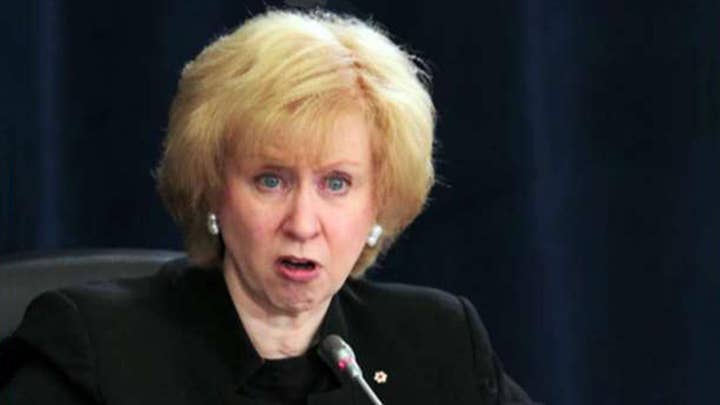
Former Canadian prime minister apologizes for saying she hoped Hurricane Dorian would hit Mar-a-Lago
Published August 30, 2019
This is a rush transcript from "Your World," August 30, 2019. This copy may not be in its final form and may be updated.
NEIL CAVUTO, ANCHOR: Florida is now bracing for a direct hit from Dorian, and Dorian is ready to hit.
Welcome, everybody. I'm Neil Cavuto.
Here is what we know right now. Dorian is a Category 3 storm, could be upgraded to a Cat 4, maybe within the hour. Florida's governor says that the state's requests for direct federal aid has already been approved. That clears the way for more federal resources.
Florida's National Guard mobilizing up to 4,000 troops, as this monster of a storm quickly approaches. Some stores in Florida are running out of water amid a lot of panicked buying. You always see that. Gas shortages also resulting in long lines at the pump.
When is this going to hit? And how bad will it get?
To Rick Reichmuth in the Fox News Weather Center.
Rick, what are we looking at?
RICK REICHMUTH, CHIEF METEOROLOGIST: Oh, I wish I had that answer for you, Neil.
I still don't have that answer, unfortunately, exactly when and exactly how strong it'll be when it does. What I have up here, this is Hurricane Matthew. It was back in 2016. And it came from a different space. It came down from the Caribbean here.
And the entire time, we had been forecasting that it was going to move overland and run up the entire coast of Florida here. And it ended up moving just about 15 to 20 miles to the east here and stayed just offshore, and then caused big problems up across parts of the Carolinas. That is a scenario that could happen in this case.
I put on here all of our weather models. You see it moves a different direction the way it's coming at Florida, but it makes this right-hand turn in some of the models just right offshore, some of the models just inshore.
That difference between 10, 20, 30 miles is really difficult and almost impossible for us to say exactly where that turn is going to happen. We're trying to get to the bottom of it, but at this point could just be right offshore, could be onshore. It could be even towards western parts of Florida.
Everybody needs to be preparing for the worst-case scenario. And let's hope for the best-case scenario, that it stays just offshore. There's the official track that -- what you see again here that I put on.
I just also want to show you that conditions right now have been more favorable for strengthening. And that's what we have seen throughout the day today. Center of the storm really clearing out. It looks just like a textbook hurricane right here. That's the visible imagery, the infrared imagery also looking at the same thing.
It's a very textbook-looking storm. And at this point, it looks like everything in its path is going to be clear sailing for additional strengthening. And that's what the official forecast does.
Again, I put on here scenarios if it did stay just offshore. Then it potentially Thursday, Friday of next week would impact Georgia, say the Carolinas. If it goes right onshore here, and then kind of disintegrates a little bit, very slowly causing a lot of damage to Florida, that's, at this point, the most likely scenario.
So our models continue to pull towards the east. And look at this, Neil. Everything makes this right-hand turn just oh so close to the coast here, and that's why this is so difficult for us to forecast.
CAVUTO: All right, thank you, my friend. I think you're going to be in for a busy couple of days, Rick Reichmuth.
Meanwhile, Florida is already dealing with the long gas lines, as people have to try to fill up before this thing strikes.
Rick Leventhal in Cape Canaveral, Florida, with the very latest on that.
Hey, Rick.
RICK LEVENTHAL, CORRESPONDENT: Neil, actually, there are four major cities in the state of Florida that have less than half their gas stations that still have fuel.
They include Miami and Gainesville and Fort Myers and West Palm Beach. And the uncertainty of the path of this storm that Rick was talking about is the main reason why no mandatory evacuation orders have been issued just yet. They don't know who to tell to leave.
But in the Keys, officials there are urging visitors to calmly leave if they have the means to do so to put less stress and pressure on services there. And the Coast Guard is telling people to stay off the water, don't take boats on the water, because rough conditions make it more difficult for the Coast Guard to effect rescues.
We have seen long lines at gas stations, at box stores and at even Home Depot, where people are picking up generators and wood and gas cans and that sort of thing.
Here was what one store manager told us.
(BEGIN VIDEO CLIP)
DESHAWN JACAS, HOME DEPOT: Everybody's prepping for the storm early, and that's a good thing. Water has gone. Generators have gone. Plywood is starting to fly off the shelf.
(END VIDEO CLIP)
LEVENTHAL: Schools are being closed ahead of this oncoming storm.
And other measures are being taken, including at military bases, where the Navy, the Air Force, they are moving jets, other aircraft, and even warships out of this area, out of the state of Florida to try and avoid any issues there.
And we heard from the governor about the dangers of this now slow-moving, but quickly strengthening storm.
(BEGIN VIDEO CLIP)
DESANTIS: I would just say this is -- the one constant on this storm -- the track has been here or there and there's been a lot of uncertainty.
But the one thing that's been pretty certain is that this thing's been getting stronger, very consistently, and completely in line with all the forecasting. And so we anticipate this arriving somewhere in Florida as a major hurricane. It could reach Category 4-plus winds.
(END VIDEO CLIP)
LEVENTHAL: And, Neil, despite the sunshine and the heat today, the ground is saturated here in Florida. So if we get anywhere near the up to foot to 15 inches or more of rain that they're predicting, flooding could be a real, real problem down here in South Florida especially.
CAVUTO: Man, oh, man, what a mess.
All right, thank you, Rick, very much.
Well, this could be the strongest storm to strike Florida since at least Hurricane Andrew back in 1992. Hollywood, Florida, could potentially take a direct hit.
The mayor of Hollywood right now joins us, Josh Levy.
Mayor, thank you for taking the time.
JOSH LEVY, MAYOR OF HOLLYWOOD, FLORIDA: Good to be here, Neil.
CAVUTO: Mayor, I'm hearing that, at least in the Florida Keys, they're asking anyone, if they want to evacuate, to evacuate. In other words, it's a request. It's not an outright order.
When does it go to an outright order, not that the Keys -- but you know what I'm saying. How do you decide something like that?
LEVY: Sure.
So, look, clearly, I think the National Weather Service takes a real big lead here. When they do declare -- and we expect them to perhaps tomorrow -- declare a hurricane watch, which means hurricane conditions are expected and anticipated within 48 hours of a given location, that usually triggers the local county, in our case, Broward County, which already had declared a state of emergency, to issue an evacuation order.
There's different phases of them. A mandatory order would really cover our barrier island, where a lot of the tourists and the hotels and thousands of residential units are. And then evacuation zone B that takes you west to US-1 includes a lot of neighborhoods, usually voluntary.
But we will see. It all depends on the storm track.
CAVUTO: Right.
Mayor, I'm wondering, what are folks doing and your constituents doing in your town? We hear these sporadic reports of fuel shortages, stores out of water, key supplies. What about in your area?
LEVY: So, look, much of the same.
I will tell you, Hollywood, Florida, we're, of course, in between Fort Lauderdale and Miami. We're the 12 largest city in the state, with 150,000 residents. We have a lot to take care of. We're also home to Port Everglades, which is the petroleum import local port for all of South Florida.
All the petroleum that comes into Miami and South Florida and our city, of course, comes through Port Everglades. Spoke this morning with, of course, the county mayor and the county administrator, was assured that there is enough petroleum supply, gasoline, in the large storage tanks at the port to continue supplying trucks.
Had Hurricane Irma two years ago, less than two years ago. Trucks, to make their way to gas stations, were escorted by police because of the mass evacuations that were taking place. This time, we're not seeing massive evacuation, because people are, rightfully so, staying put because of the uncertainty.
Two years ago, there were people finding themselves along the turnpike, trying to escape to a safe haven, finding themselves in the path of where the storm ended up. So people are nervous, but at the same time preparing.
Of course, residents are doing their part to protect their property, stocking up on essentials that the governor had pointed out. Even the White House had reached out to make sure that we had everything we needed pre-storm, but a lot of that actually takes place -- hopefully doesn't need to take place, but after a storm.
CAVUTO: You're going to be a busy, busy mayor.
So, thank you very much for taking the time to talk to us. Be well. Be safe.
LEVY: You're welcome, Neil. Thank you.
CAVUTO: All right, in the meantime, Dorian might be on the move, but passengers will not be.
And it doesn't even matter if you're near or going to that neck of the woods. We will explain.
You're looking at delays, if not outright cancellations.
(COMMERCIAL BREAK)
CAVUTO: You know, I see it every time with these storms.
Those in the affected areas obviously are getting -- feeling the travel delay and pinch, but across the country, with this hub and spoke system we have with airlines and airplanes and obviously the airports themselves, anything can happen, usually does, which means that if you're flying out, that ain't happening, no matter where you are, at least on time.
FOX Business Network's Grady Trimble at Chicago O'Hare International Airport with the latest on that.
What are you looking at there, Grady?
GRADY TRIMBLE, CORRESPONDENT: Well, Neil, it's a slow-moving storm. And that means the airlines as a result are kind of waiting until they make their decisions on cancellations and delays, because we have been talking about how uncertain the path of the storm is right now.
They want to make very sure before they change all of their plans that it is hitting in certain areas. So, right now, what we're seeing is a handful of delays, specifically out of Orlando, some out of Miami, but just 20 in Orlando, seven in Miami, so not a whole lot.
But, anyway, nonetheless, all of the major airlines are waiving fees. They're allowing anyone who wants to make changes or even cancel flights to do so. We have been seeing people, though, coming here to O'Hare, they're still getting on their planes to Florida, some people going home to make preparations.
Others are actually going on planned vacations, despite this storm ready to batter the coast of Florida.
(BEGIN VIDEO CLIP)
UNIDENTIFIED FEMALE: It's unnerving. The most recent track we saw is going to be right near where we live in Jupiter. So I'm anxious to get home. I'm anxious to get the house shuttered. And I'm anxious just to stay inside.
UNIDENTIFIED FEMALE: I took pictures of the news of the hurricane and send it to my dad. And I was like: "Are we still?"
And he was like, "Yes, I have the room. You're coming."
(LAUGHTER)
UNIDENTIFIED FEMALE: So I guess we're going to Florida.
(END VIDEO CLIP)
TRIMBLE: Now, looking at the boards here, there are a couple flights out of Miami this afternoon. Both of those are on time.
But you mentioned, Neil, the hub and spoke system, this domino effect. Once we see those delays, that's when it's going to really have wide- ranging impacts and disrupt the entire system across the country. We're waiting for that. It's only a matter of time. It's inevitable as this storm gets closer.
And we're going to stay on top of it for you -- Neil.
CAVUTO: You always do, my friend. Much appreciated, Grady Trimble of FOX Business Network at O'Hare.
Meanwhile, travelers are bracing for whatever could be coming their way. And, if he's right, a lot could be coming their way.
To Travelzoo senior editor Gabe Saglie.
Gabe, what are we looking at it? Let's say you're traveling, you're going to the airport, you feel confident, well, I'm not heading to Florida, I'm not even heading to the Southeast, I should be OK. What do you tell them?
GABE SAGLIE, TRAVELZOO.COM: Well, first of all, as soon as you see these airlines issue these waived fees, options, I say you take them, because they have already figured out it's going to be a mess.
If you're thinking about it, sort of second-guessing going to Florida over the next couple of days, I would take advantage of those -- of those -- the waived fee options, simply because it's the better way to go. If you can avoid it, if you're flexible, that's the way -- that's that's the better option.
But, certainly, as you said, there is this trickle effect. There is this downstream effect we see all the time. You could see an aircraft or crews that are stuck on the ground there in Florida or that surrounding region.
CAVUTO: Right.
SAGLIE: That could affect your flight in New York, my flight here in L.A. or anywhere in between.
CAVUTO: You know, Gabe, you often hear too that people, they're happy that you see the waived fees, but they might have booked a ticket at a big discount months ago. And they have to replace it. So what happens to them?
SAGLIE: So, very restricted windows with these change fees.
For example, United Airlines will let you change your flight, if it happens between now and September 11, for another flight to that specific destination. You have got to be in the same cabin, go to the same destination.
If you decide to change your destination, they will still waive that change fee, but you're still stuck having to pay any fare differences. So if your heart is set on Florida, wait until after September 11 travel dates and choose a flight then.
Generally speaking, though, these are very tight little windows. These airlines don't like to do this. In 2017, when we saw Harvey and Irma and Maria roll through, the airlines reported close to a half-billion dollars in losses just during the hurricane season.
So they don't want to waive these fees. The only reason they're waiving them is to really sort of minimize the pretty dramatic impact we're expecting to see, particularly early next week. Most flyers are coming out of the Labor Day weekend on that Monday, maybe Tuesday. That's when the bulk of this energy is supposed to touch land.
And that's when we will see most of the havoc be reached across the country.
CAVUTO: And there are a lot of people who double-, triple-book. What do you tell them?
SAGLIE: It's -- it's not a wise thing to do, simply because you're dealing with fees that just are going to continue to stack up.
I think that if you're flexible enough, this is a region generally that you want to avoid. But if you must go, make sure that you are following these airlines on social media, download their app on your phone, program their 800 number on your phone as well.
For cruisers, keep in mind that a lot of these call centers are based in Florida. They will be dealing with reduced staff. So, really, it's going to be online and through social media that you will be getting these very last-minute and real-time alerts come Monday into Tuesday.
CAVUTO: All right, wise words all. Gabe Saglie, thank you very much. Good seeing you.
SAGLIE: Thanks, Neil.
CAVUTO: All right.
Well, we have got a trade front -- trade fight, I should say -- it's like a front, like a hurricane -- that has really whipsawed the markets this past month. We had an up week, but a down month. And trade, for good or ill, pretty much told you the whole story.
Now what about September?
(COMMERCIAL BREAK)
CAVUTO: All right, an up week, a down month, green arrows across the board for the last week of August here.
Then it got a problematic month here. But, remember, this was one that was whipsawed and moved either up or down, depending on the latest news on the trade front, up if it looked like we and the Chinese were closer to a deal, down, and sometimes down a lot, if it looked like that was falling apart, and we were upping the ante, and there was going to be retaliation.
Well, you know the whole drill right now. Calmer now, but for how long?
Market watchers Alan Knuckman over the CME, Monica Mehta, and Tim Anderson over at the New York Stock Exchange.
Tim, end it with you, so let me begin with you.
Your sense, after this month of August, which tends to be the roughest month of the year for stocks if you go back in history here, what are we looking at for September, Tim?
TIM ANDERSON, TJM INVESTMENTS: Look, I think that -- hello?
CAVUTO: Yes, go ahead. I'm sorry.
ANDERSON: OK.
I think that we're looking to get, obviously, a little bit more clarity out of the trade scenario. And, also, there is a Federal Reserve interest rate decision coming up on September 18.
Now, really, we had -- as much as it was a roller-coaster ride on the markets for the whole month, we really stayed within a range of S&P 2850 to 2950. And we're pressed up against resistance right now.
I really think the path of least resistance is a little bit higher. And we just have to see if the yield curve situation can get straightened out, some resolution on the China trade, and some more volume into the markets, certainly than what we have seen in the last month, even though it was very volatile.
CAVUTO: You know, Monica, you follow the consumer very, very closely. And we had a consumer sentiment number that was out today that was the worst in two years, still very strong, but the biggest drop we have seen since 2012, that the consumer might, might be petering out a little bit, not going into reverse.
But how does that play into your forecast?
MONICA MEHTA, FINANCE EXPERT: Well, consumers are fickle. So while sentiment is going down, their actual spending is not going down.
So what's interesting is, right now, businesses are jittery and traders are jittery, but the consumer still feels pretty OK about their situation in the economy and their ability to spend.
So you're really not seeing a lot of the tensions that are creating chaos in the stock market creating chaos with the consumer quite yet. I think, in order for that to happen, the consumer would really have to start seeing business layoffs, companies really cutting back on their spending, the price of the goods that they buy shooting up.
Right now, inflation is still pretty low, and just a stock crash.
CAVUTO: Yes.
MEHTA: So, despite all this volatility, the consumer is hanging in there.
CAVUTO: It is remarkable.
And, Alan, you have been talking about that, the resiliency and the fundamentals behind this economy are still solid.
ALAN KNUCKMAN, MARKET STRATEGIST: Right.
CAVUTO: The one thing I did want to check back with you on is how trade is continuing to dictate the pace, the tone, the tenor, the waves and the zigs and zags of this market on a daily basis.
Better things look for trade, better things look for stock. Worse things look, just the opposite.
KNUCKMAN: Right.
CAVUTO: And that has really ruled the roost here. What do you make?
KNUCKMAN: Yes, very much in the short term, but look at the big term picture.
We have had a very strong week. Welcome to the holiday weekend. If you look behind me, you can see everybody's gone. I'm in no hurry to get out of here, because I really like the market action, the way that we have come back, had a strong week, up 3 percent.
(CROSSTALK)
CAVUTO: Well, you do know the market is closed? You do know the market is closed? You can go home now.
KNUCKMAN: I know. I'm not ready for it.
(CROSSTALK)
CAVUTO: OK. Good. OK. Understood.
(LAUGHTER)
KNUCKMAN: Turn those machines back on. So I want to see things continue right now.
CAVUTO: All right.
KNUCKMAN: And not only that. We traded in this range. We're breaking to the upside out of this range. And coming into today, we were only 3 percent off the all-time highs in the S&P.
And to use the old phrase, fight the Fed, it's like fight the Fed on steroids right now. Not only are you fighting the Fed, which is lowering rates, making it no choice but to put your money into the stock market, but you're also fighting the political -- political class right now that obviously is going to just say and do anything they can to support the stock market for their own self-interest.
So don't fight the trends and don't fight the overall sentiment.
CAVUTO: All right, Tim Anderson, you touched on this more, the expectations of a Fed cut next month, a quarter-point, to sort of get ahead of whatever trade impact we're feeling and maybe more to come.
Is it your sense that that will be enough to stave off any more of these crazy market days, or that -- we have to get used to that?
ANDERSON: I really think that the Fed could justify a 50-basis point cut in September very simply.
All they have to do is say they need to bring their benchmark Fed Funds Rate down in line with the rest of the yield curve. And after that would happen, then I think you would eliminate a lot of volatility that we have seen in the last four to six weeks.
CAVUTO: Wow.
Monica, what he's saying -- and he's a very smart guy -- you are all -- that would be one way to stop all this inversion, where shorter-term rates are higher than longer-term rates. And then that might be a quick good way to do it.
But the fear seems to be, if the Fed is cutting rates, we have something to worry about. And I'm wondering, especially if it were a half-point, whether that would send panic to the markets. What do you think?
MEHTA: I think you're exactly right.
It almost feels like we're backing into these headlines, like something happens, and then we're not really sure how we feel about it. And then we make up the rationale after the fact.
Fed cutting rates is good because it's more juice for businesses to have a lower cost of capital, but, at the same time, it's, oh, my God, fears the economy is slowing down.
So you can write this story any way you want. I think the bottom line is, you're going to see volatility. It's theater right now. It's political theater. We have got a lot going on. We have got a lot of big decisions happening in the country with this election.
And we have got a lot of players who want to create a level of chaos. So I wouldn't -- I wouldn't have any false expectation of a calm fall.
CAVUTO: All right, we will watch it closely. Guys, I want to thank you for taking the time.
And, Alan, you can go home now. We know you're a very hard worker, but you should take a break.
KNUCKMAN: Thank you.
(LAUGHTER)
CAVUTO: All right, in the meantime, Hurricane Dorian, that one not taking a break.
Why folks are very, very worried what's happening there could drag on for a while, folks like the Katrina commander General Russel Honore. Remember him?
After this.
(COMMERCIAL BREAK)
CAVUTO: Can we ask you to leave before demanding you leave?
In the Florida Keys, they are being asked to voluntarily get out of harm's way with Dorian. How many are taking them up on that?
After this.
(COMMERCIAL BREAK)
CAVUTO: We are about 30 minutes away from another update. They typically do this as storms intensify.
And Dorian, now at a Category 3 hurricane, is indeed intensifying, and one that could be Category 4, based on its current track and models that they're looking at, by the time it presumably hits somewhere in Florida, maybe all of Florida at the rate it's going.
You know the drill here, a lot of rain, storm, flooding, surging, all of that. That's the reason why the Katrina commander, remember, General Russel Honore, says we need to change the system and the way we respond to these events. Of course, Katrina was a slow-moving monster back then in 2005.
General Honore, by the way, will be my special guest tomorrow as we go live with our coverage, always going live 10:00 a.m. to noon on Saturdays. And, of course, we will be leading with this and following this very closely.
Ahead of that, we have the former FEMA official Tom Panuzio joining us.
Tom, very good for you to take the time. Thank you.
TOM PANUZIO, FORMER FEDERAL EMERGENCY MANAGEMENT AGENCY OFFICIAL: Neil, it's always a pleasure to be here.
CAVUTO: So, help me with this.
How do you help Floridians who, should I leave, should I go? In the Florida Keys, they're asking. If you want to, it's probably not a bad idea. But what do you do?
PANUZIO: Well, first, Neil, I think it's really important to understand why people don't leave.
If you look at Hurricane Katrina, they left -- they didn't leave because of financial reasons. They didn't feel that they could leave their home without the home being burglarized or looted. And they didn't leave, many of them, because of their animals and pets behind.
So I think it's really important to understand the motivations of why people don't evacuate. And I understand the General's -- who's an amazing guy -- his need or desire to change it. But I think we should focus on getting the people out and making sure no one's left behind, especially in a storm as dangerous as Dorian.
CAVUTO: You know, and you're the expert here, Tom, but I will play one on TV, that I can understand people, to your point, reluctant to leave, too, because, in this case, if it goes all over Florida and skips over into the Gulf, and they're told to go inland, well, short of like going north into the Carolinas, I mean, you don't know what to do, right?
PANUZIO: You don't, but I think it's really important to understand the dangers of Dorian.
Dorian is a potentially Cat 4 or Cat 5 storm. When Dorian comes ashore, like Andrew did, there's going to be widespread tornado-like damage. The catastrophic damage that's going to occur is going to be over a potentially 100-mile-wide system.
And although they may not figure out how to get out, they must get out, because the reality is, these -- many of these homes are going to be damaged or destroyed. Remember, Hurricane Andrew had 250,000 homes damaged or destroyed.
And so that's why it's so important with this storm. And, again, Neil, every storm has its own characteristics. And Mother Nature is very difficult to protect.
CAVUTO: Yes, because and even remember, we're so focused on the power of the storm, in this case, one that, as you say, could hit Florida as a Category 4.
But Sandy wasn't even on any of that scale in New Jersey in the Northeast back in 2012, yet it did a hell of a lot of damage because it stuck around a while, a long while. Right?
PANUZIO: Correct.
And remember the two most expensive stores in history, Harvey and Katrina, had about $125 billion of damage, each one of them.
CAVUTO: Wow.
PANUZIO: And it was primarily water.
But the great thing about today's technology, whether it's on social media, or you have fantastic meteorologists there at Fox News, you have full-time coverage on cable, and the governors and senators and local personnel tell people to get out.
And I think they really need to understand that, when a public official tells you to get out, then you should get out. And I doubt of revision to the Saffir-Simpson warning scale is going to really motivate somebody.
And, remember, Neil, there's no -- 100 percent of communications out there is never going to convince 100 percent of the people to leave. Each person doesn't leave because of certain reasons.
And I think it's really important for us to just have better communication with the individuals who want to stay behind and warn them through the warning systems that we have currently. I don't think we need any more.
CAVUTO: Yes, I think they get the nightmarish image of people just stuck in traffic, even when they open up both sides of a highway, 95, or the Florida Turnpike, what have you.
PANUZIO: Yes.
CAVUTO: And they just say, well, we're not going anywhere, so I might as well stay back in my home, because I can wait there as well, right?
PANUZIO: Yes.
And, unfortunately, again, this type of storm, if you look at Andrew and Dorian, this is going to be the strongest storm to hit the East Coast of Florida since 1992. And we hope and pray everybody's going to be OK. But everybody should understand, if they're in an evacuation area, get out, get to safety.
It is not worth risking your life or your kids' life or your wife's life over this. Stay safe. And you can always replace property, but never can replace a life.
CAVUTO: You're exactly right.
Tom Panuzio, thank you very, very much. We will see what happens.
PANUZIO: Always a pleasure to be here, Neil. Take care of yourself.
CAVUTO: All right. Same here, my friend.
All right, in the meantime, you think James Comey dodged a bullet this week? What if I told you another one could be on the way maybe in a matter of weeks?
(COMMERCIAL BREAK)
CAVUTO: All right, we don't know if the apology has been accepted, but it has been offered.
The former Canadian Prime Minister Kim Campbell apologizing for hoping that Hurricane Dorian would hit President Trump's Mar-a-Lago resort in Florida, saying she was being sarcastic and should know better.
She says: "I have deleted my tweet about the hurricane in Mar-a-Lago and sincerely apologize to all it offended. It was intended as sarcasm, not a serious wish of harm. Throwaway lines get a life of their own on Twitter. I should know better. Mea culpa."
No response from the White House.
All right, in the meantime, is the worst yet to come for the former FBI Director James Comey? As you know, this week, he might have dodged a bullet about sharing information, e-mails and the like, reports that got a slap on the wrist, but no formal punishment from the Justice Department.
Republican Congressman Mark Meadows says that a separate Justice Department investigation could be a little different for him. Take a look.
(BEGIN VIDEO CLIP)
REP. MARK MEADOWS, R-N.C.: Here we are today with not only the director of the FBI willfully and deliberately breaking protocol. We now understand why Peter Strzok and Andrew McCain thought that what they were doing was OK.
The John Durham report coming out will be more damning than this. And this wasn't a good day for the FBI's former director.
(END VIDEO CLIP)
CAVUTO: All right, to former federal prosecutor Katie Cherkasky on all of this.
It's the same I.G., independent general -- inspector general, Horowitz, who's handling this other matter. Could -- how is it distinct from the first?
KATIE CHERKASKY, FORMER FEDERAL PROSECUTOR: Well, the second matter is going to deal with a lot of the issues with the FISA warrants that were obtained and that some members from the FBI, including Mr. Comey, signed off on, and whether they were truthful representations to the court.
So that's the second issue that's being handled by the I.G. at this point.
CAVUTO: So, Katie, the Justice Department didn't really do much to Comey, outside of saying, not good, we didn't like it, he was kind of fast and loose with this sort of stuff, but no -- no formal punishment. I don't know what that punishment would be.
But does that mean -- a lot depends on what's in this final report to warrant whether Justice would respond the same way, right?
CHERKASKY: Sure.
And as disappointing as it might be to some people, the odds are that we're probably still in the realm of embarrassment over indictment even for the FISA investigation. In my opinion, it would be very difficult, depending on the evidence, of course, to show that Mr. Comey blatantly lied to the court vs. simply selectively disclosed some information.
So, in order for the DOJ to pursue a prosecution for these violations, if that's what comes out in the report, they would have to have very clear-cut evidence of unlawful representations to the court.
CAVUTO: All right, whether in this case that just passed or the other one that's pending, the whole FISA thing and going back to the beginning of the investigation, what triggered it, et cetera, when there is punishment or prosecution, what would it be?
CHERKASKY: Well, if the DOJ was going to bring actual charges against somebody, then that's a criminal sort of punishment. And that's what the DOJ considered doing with the disclosures of what was determined to be classified information.
But they ultimately made the call that they didn't have enough to pursue criminal charges against Mr. Comey, probably because it was a very, very close call on some of the intent elements of the crimes that they would have to prove, and they weren't willing to risk an acquittal.
So when they're looking at these recommendations from the I.G. for prosecution, they're looking to see if they can satisfy the standards under a criminal standard of proof.
So with the second part of the report, they're going to do the same thing, and analyze whether the evidence that's collected is enough for them to actually pursue criminal charges, because, as we know, even though Mr. Comey has been determined to have violated all these policies and procedures, he doesn't work for the FBI anymore.
So, practically speaking, there's really no consequence. The only option is a criminal prosecution, if there is going to be anything at all.
CAVUTO: But it's often in the eye of the beholder, right? If someone is going to charge you, let's say, with deliberately triggering an investigation based on false information that you knew to be false, which is, again, provable on one side and maybe disputed by the other, there's no way that advances, right?
CHERKASKY: Sure.
Well, there has to be some information that the prosecutors determine. It's always a judgment call.
CAVUTO: Right. Right.
CHERKASKY: There's always going to be discretion in making those decisions. And that's what's difficult, because I think the DOJ doesn't want to take a case forward that could be a loss.
And so they're going to want strong evidence. There could very well be strong evidence of blatant lies or blatant concealing of information to the court. And that's perjury, and that's a fraud upon the court, which is a crime.
So that is something that could be the subject of prosecution, but I think, practically speaking, it would be very unlikely that we will have very, very black-and-white information of that. I think it's going to be something that's a very closer call, and the odds of an indictment coming from it, in my opinion, are fairly slim.
CAVUTO: Interesting.
Katie, thank you for taking the time.
CHERKASKY: Thanks, Neil.
CAVUTO: All right, Democratic Congresswoman Alexandria Ocasio-Cortez praising her fellow millennials, saying that they are more informed than the older generation.
Now, I wonder if a lot of those Gen Hexers agree.
(COMMERCIAL BREAK)
(BEGIN VIDEO CLIP)
REP. ALEXANDRIA OCASIO-CORTEZ, D-N.Y.: I think young people are more informed and dynamic than their predecessors.
This new generation is very profound and very strong and very brave, because they're actually willing to go to the streets.
How about that? Like, previous generations have just assumed that government's got it. Let me tell you something. You are the government.
(END VIDEO CLIP)
CAVUTO: I think other generations protested Vietnam and all that other stuff. But that's neither here nor there.
The Democratic Congresswoman Alexandria Ocasio-Cortez says millennials like herself are actually more informed than ever, more engaged certainly than older generations, i.e., my generation and those before me.
Let's get the read on all this, "Your World" audio technician and author Dion Baia. We have got attorney Leeza Garber and, last, but not least, Fox News contributor, much, much more, Kat Timpf.
Kat, what do you think of that? You're much more jazzed and into it then old fogies like me?
KATHERINE TIMPF, CONTRIBUTOR: Well, it depends who she's talking about. Right?
Is she talking about me? If she's talking about me, then absolutely yes. I am very informed. I'm -- everyone -- my friends -- most people don't know this -- they call me Encyclopedia Timpf.
DION BAIA, AUDIO TECHNICIAN: Yes.
CAVUTO: Really?
BAIA: Yes.
TIMPF: Yes. It's not Kat.
(CROSSTALK)
BAIA: She solves mysteries on her own time.
TIMPF: It's Encyclopedia Timpf.
CAVUTO: I get that with the bond market.
(CROSSTALK)
TIMPF: No, I think, for some it is, but I also think that there is this issue with people who are younger, particularly at college campuses, where they're sort of stuck in an echo chamber.
They're not really having their views challenged. So they're hearing the same set of views repeatedly everywhere they go. But the goods news is, there is a better chance for people in our generation to be more informed, because we have the Internet, where you can look up anything.
CAVUTO: Well, but I think every generation is informed in a different way.
I'm just wondering if she's saying, are they more informed and acting on it, which I think is the next leap she's making, which is a -- but I know countless generations that have done that in their youth, right?
LEEZA GARBER, ATTORNEY: Yes, I think Kat brings up a really good point, which is, I think there's a conflation between using social media and being connected all the time vs. being well-informed.
And I think that's a really important distinction, because they're very different things.
BAIA: I think, nowadays...
CAVUTO: Yes. And they still mistype a lot of things, right?
GARBER: Yes.
BAIA: I feel like young people today live in a kind of a bubble, where they are savvy, tech-savvy, and all that, but they don't seem to really have a grasp on history, like she's saying here, where it was that there are people who've taken to the streets, women's suffrage, the '60s, and all that.
And especially when you start forgetting history in general, I think there was a poll out about the Holocaust, and maybe a third or something like that didn't know what the Holocaust was, or World War II, or you can't point to where England or Iraq is on a map.
GARBER: Yes, knowing geography.
(CROSSTALK)
BAIA: They may know pop culture, but their knowledge only goes back to 10 years.
CAVUTO: I think she's also talking about how engaged and jazzed you are.
(CROSSTALK)
TIMPF: So, I need to know England is on a map. We won the war.
BAIA: Exactly.
CAVUTO: There is that.
GARBER: Well, but, also, if you're talking about protests -- if you're talking about protests, on social media, you can have a hashtag movement, but that's not necessarily...
(CROSSTALK)
BAIA: It's a level of arrogance that I just don't like.
CAVUTO: See, I got the hashtag thing. But I thought you guys were talking hash browns. And I said, oh.
(CROSSTALK)
BAIA: You were making macaroni and cheese there?
(CROSSTALK)
(LAUGHTER)
CAVUTO: By the way, Apple is promising to stop eavesdropping on you, at least Siri users, unless it gets your permission first.
That sounds like a good goal. What do you think?
BAIA: This is insane.
I mean, I don't understand why we think it's acceptable to just have them say, we're sorry. But we're going to keep doing it.
(CROSSTALK)
CAVUTO: These devices are always listening.
BAIA: Siri is listening. Alexa is listening.
CAVUTO: Yes.
BAIA: But -- and then you have this targeted marketing, and everyone's OK with it.
But even when -- there's these huge data breaches, and it's just like, oh, we're sorry that happened.
CAVUTO: Well, no, they're giving you the power to turn it off now.
(CROSSTALK)
BAIA: They really don't, though.
CAVUTO: Oh, really?
TIMPF: It's not enough, though. It's not enough to just be like, sorry.
(CROSSTALK)
TIMPF: If I came home and I found someone that been under my bed for a long time, and they came out, we're like, sorry, dude, I wouldn't be like, OK, that's fine.
BAIA: Sorry.
(CROSSTALK)
CAVUTO: I was listening.
(CROSSTALK)
CAVUTO: You're exaggerating something here.
(CROSSTALK)
BAIA: They're listening.
CAVUTO: OK.
BAIA: It's like the old-fashioned -- the guy with the headphones on, like..
GARBER: But, at the same time, we're asking for that technology to be used in our homes.
BAIA: That's true.
GARBER: We want all the benefits.
CAVUTO: And you guys won't give it up. You love your technology.
BAIA: But what about all these data breaches where they're like, sorry, everybody has your info?
(CROSSTALK)
CAVUTO: What do you want them to do? Pay a fine?
BAIA: I don't know, but maybe we should do something that makes it a little more...
(CROSSTALK)
CAVUTO: No, it seems like you're quick to criticize, but offer no solutions.
BAIA: I'm quick to criticize is right, because they should be -- there should be a level of...
CAVUTO: All right. All right. All right.
GARBER: I think Apple's making an important distinction, in that they're giving consumers the option to opt in, while most other technologies like this, you have to opt out.
BAIA: You find about it later. We were recording you the whole time.
We heard that argument you had with your wife two days ago.
(CROSSTALK)
CAVUTO: OK. How did you know about that?
BAIA: Because I have been listening.
CAVUTO: All right, in the meantime, in the meantime, last but not least -- and this one just intrigues me, because chicken is all the rage right now.
Popeyes has become like this chicken giant, a real star, fast-food chain, ran out of chicken. In fact, it's chicken sandwich has become so popular, it's become a viral sensation. So all of a sudden you have Chick-fil-A dominating this field, all these others, Wendy's and everything.
Chicken is now the new chicken. What's going on? What do you got here?
TIMPF: OK, well, Popeyes has the best tenders.
I didn't try the Popeyes sandwich.
CAVUTO: They say Popeyes sandwich, though, won the taste test.
TIMPF: I don't know, though.
Chick-fil-A, it's like really all about...
(CROSSTALK)
CAVUTO: That looks really dry. How long ago did you get this?
(CROSSTALK)
BAIA: I got this about a week ago.
CAVUTO: A week ago.
GARBER: For this part of the segment, we're talking about -- no, I actually don't eat meat.
CAVUTO: You're a vegan.
GARBER: I'm a vegan.
(CROSSTALK)
CAVUTO: Sure. Me too, yes.
BAIA: Me as well.
(CROSSTALK)
GARBER: At the same time that we're talking about youth being more informed, we're talking about people having the debate over the best chicken sandwich, while the Amazon is burning.
And, at the same time, I do want to point out that KFC sold out of its vegan chicken in five hours.
CAVUTO: Yes, it did.
GARBER: So, hopefully, we're making that vegan...
(CROSSTALK)
CAVUTO: Wait a minute. You're making a statement about the Amazon, and so you pooh-pooh this whole segment we're doing.
(CROSSTALK)
BAIA: She's saying it's silly that...
CAVUTO: That we're doing a segment on it.
BAIA: No.
CAVUTO: Right.
GARBER: I'm just saying we should be aware of this sandwich debate at the same time that the environmental consequences...
BAIA: I'm really happy that Popeye has got his stuff together with Olive Oil and he has a business.
TIMPF: Oh, that is the worst joke ever.
BAIA: Why? I learned by watching you.
(CROSSTALK)
GARBER: I eat the spinach. Get it? All right.
CAVUTO: I don't know. Maybe AOC was so wrong. I think the whole thing...
CAVUTO: Would you like some of this?
CAVUTO: No.
BAIA: It's dry. I mean, evidently, it's really good.
CAVUTO: Yes. OK.
BAIA: You like your chicken. Don't you?
Yes, sure, sure. Look at the time.
(CROSSTALK)
CAVUTO: Guys, I do want to remind, we're talking a little bit about Dorian, the storm, now.
Orlando International Airport, we're told, plans to cease commercial flight operations due to Dorian come Monday, September 2, not now, but on Monday, just to get ahead of this thing.
We have already told you the Florida Keys right now, they're requesting, if you want to leave, might be a good idea. That's up to you.
I'm kind of just simplifying it here, that their bottom line is, better to be safe than sorry, and in the case of the Orlando International Airport, better to be closed on Monday than even think of being open.
We will have more after this.
(COMMERCIAL BREAK)
CAVUTO: All right, let's get the latest on Dorian.
I told you that Orlando International Airport plans to close on Monday ahead of the hurricane. That's the day I think that it's going to hit.
Rick Reichmuth on that.
What do you -- where are we on this whole thing, Rick?
REICHMUTH: Yes.
So the latest advisory just came, stayed at, still at 150 miles an hour. So no change in that. There's been one little bit of a shift over the last few hours and that is just a little bit an easterly trajectory of this.
So this is the official forecast. Best guests at this point is kind of the center of this map. But you will notice this is just probably about 15 to 20 miles to the east of where the center of this was as of the last advisory.
Last European model run pulls this just offshore the entire way. We have been seeing a lot of flip-flopping in the models. Yesterday, the European was way down here. Now, today, its way up here. We will probably see some going back and forth of that. That's why we do not want to say exactly where we say this is going to go to tempt anybody to think, that's it.
We're still at that guessing game on this -- or not guessing, but giving the best information based off of what we know. Right now, still Florida and still Tuesday, in that time frame, and certainly the potential, Neil, for big impacts.
CAVUTO: All right, you have been excellent helping us through this, Rick. Look forward to it this weekend as well.
Speaking of which, from 10:00 a.m. to noon tomorrow, we will be following all this live with Florida's Republican Senator, former Florida Governor Rick Scott, the National Hurricane Center Director Ken Graham, the guy who was in charge of Hurricane Katrina and the recovery efforts, Lieutenant General Russel Honore, and the former FEMA Director himself Michael Brown on why everyone has to be on the same page tomorrow.
Here comes "The Five."
Content and Programming Copyright 2019 Fox News Network, LLC. ALL RIGHTS RESERVED. Copyright 2019 ASC Services II Media, LLC. All materials herein are protected by United States copyright law and may not be reproduced, distributed, transmitted, displayed, published or broadcast without the prior written permission of ASC Services II Media, LLC. You may not alter or remove any trademark, copyright or other notice from copies of the content.
https://www.foxnews.com/transcript/former-canadian-prime-minister-apologizes-for-saying-she-hoped-hurricane-dorian-would-hit-mar-a-lago