 Print
Print
 Close
Close

Bipartisan lawmakers want to strip Big Tech's legal immunity that can shield social media companies
By Brooke Curto
Published May 07, 2026

It was the mid-1990s. And the world was online.
No doomscrolling for hours through Instagram and X.
But people were plowing through GeoCities. There were Hotbot searches – before the days of Google and AI. There was even Ask Jeeves, long before Grok.
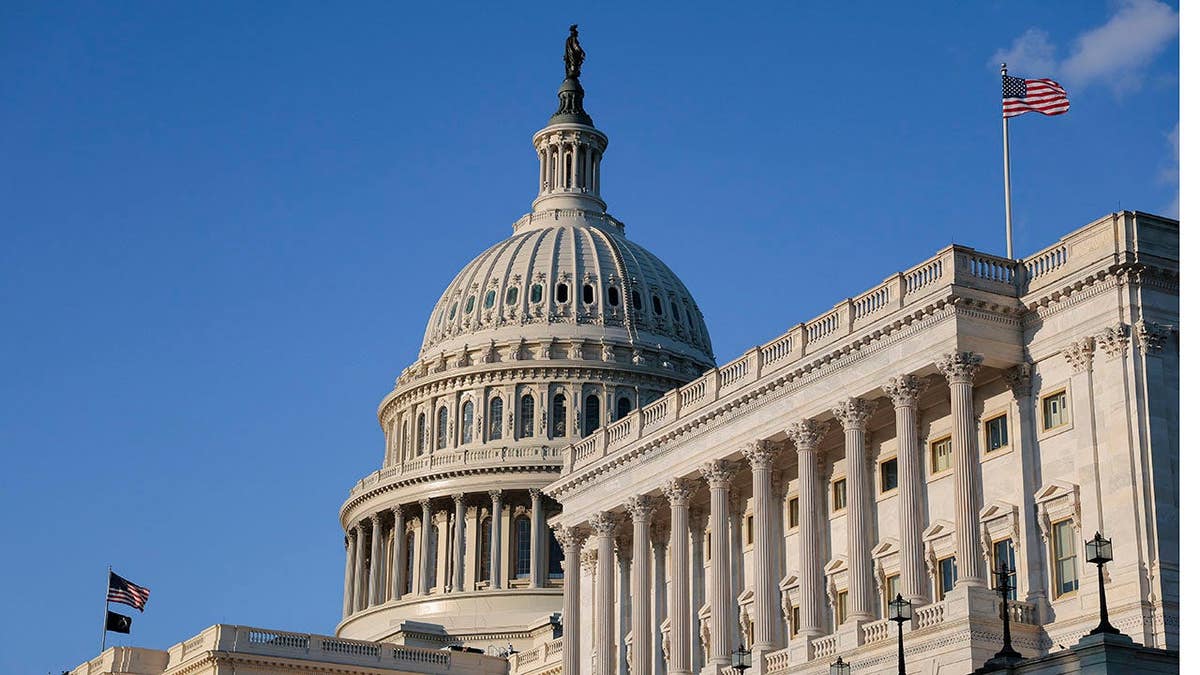
The U.S. Capitol building is shown in Washington, D.C. A Romanian man admitted to participating in a series of "swatting" calls that targeted members of Congress, as well as other government officials. (Heather Diehl/Getty Images)
Congress was on the precipice of adopting a landmark telecommunications law which would dictate the digital landscape for decades.
When signing the Telecommunications Act of 1996 into law, former President Clinton declared how the measure would plow "a superhighway to serve both the private sector and the public interest."
RAND PAUL SAYS PERSONAL EXPERIENCE WITH YOUTUBE AND GOOGLE CHANGED HIS MIND ABOUT PLATFORM LIABILITY
Yup. Back then, some still referred to the internet as "The Information Superhighway."
The 1990s were heady. Full of optimism and possibility. The. U.S. won the Cold War. The economy boomed and was "new." The internet linked the world.
But there was a serious debate about free speech. Who should regulate what was online? Should the Federal Communications Commission (FCC) address what was proper to post, the same way it oversaw the TV and radio airwaves?
In the early ‘90s, the National Security Agency (NSA) used a cryptographic backdoor to intercept phone calls called the "clipper chip." That raised questions about government surveillance. Would that carry over to what the government "watched" when people posted content online?
A U.S. National Security Agency logo is displayed on a smartphone screen with stock market percentages in the background in this photo illustration on Jan. 30, 2024, in Poland. (Omar Marques/SOPA Images/LightRocket/Getty Images)
Congress ultimately decided to give the internet a lot of leeway – in the interest of free speech. Telecommunications firms persuaded lawmakers to grant them a legal shelter. "Carriers" weren’t responsible if "customers" posted questionable or offensive material.
"We said that the FCC would not regulate either the content or the character of the internet," said then- Rep. Chris Cox (R-Calif.) during a 1995 floor debate. "We can’t have the government in the interest of uniformity coming up with standards to regulate this industry."
Cox was a key player behind shaping policy in that 1996 telecommunications law. So was then-Rep. and now Sen. Ron Wyden (D-Ore.).
"The internet is the shining star of the information age," proclaimed Wyden in 1996.
RULING AGAINST META AND GOOGLE COULD SET THE STAGE FOR CHANGES IN HANDLING HATE CONTENT
But the Oregon Democrat fretted about some of the filth which was already permeating the internet in its earliest renditions.
"My wife and I have seen our kids find their way into these chat rooms which make their middle age parents cringe," said Wyden.
But like Cox, Wyden feared that "censorship could really spoil much of its promise."
So they fought to keep some government regulation out of the telecommunications law. And they inoculated internet providers with something called "Section 230" of that law. Section 230 shielded telecom firms with immunity from lawsuits and criminal charges based on what customers posted on their forums.
Rep. Jay Obernolte (R-Calif.) described the logic behind Section 230 and the role of service providers:
"If you, as a public service, put up a billboard in a hall and someone puts something on the billboard that says, ‘Congressman Obernolte beats his wife,’ the owner of the billboard is not responsible for the content of that message," said the California Republican.
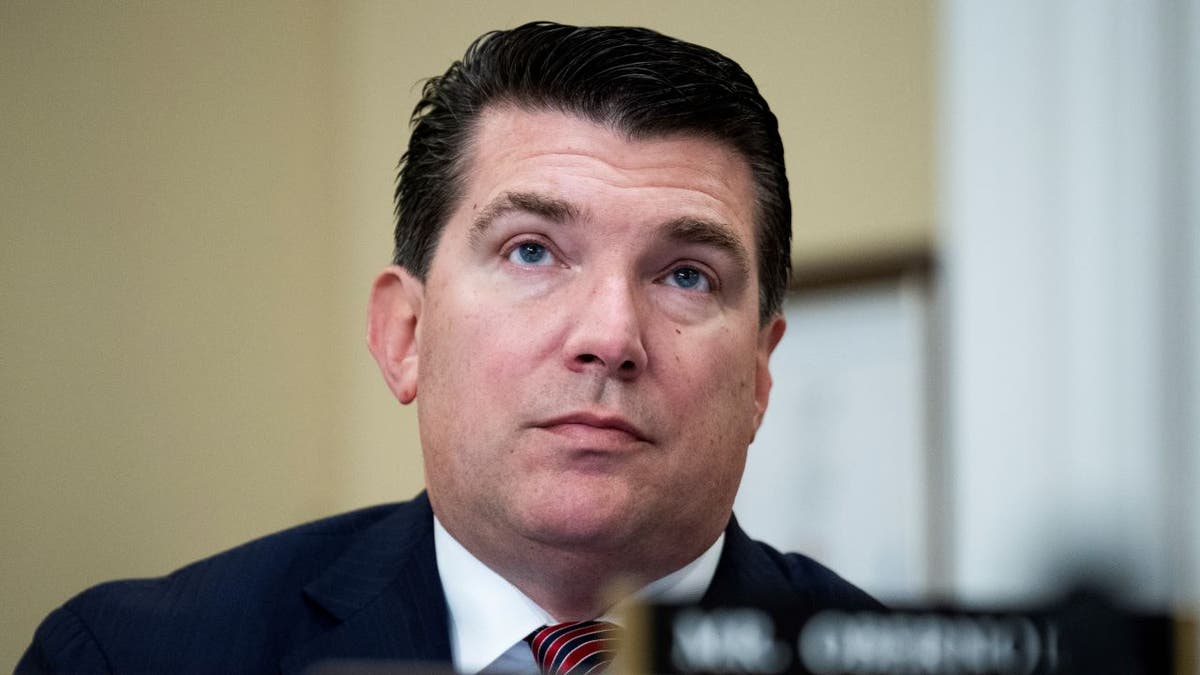
Rep. Jay Obernolte, R-Calif., attends a House Natural Resources Subcommittee on National Parks, Forests, and Public Lands hearing on the 9/11 Memorial and Museum Act and other legislation in the Longworth Building on Dec. 7, 2021. (Tom Williams/CQ-Roll Call, Inc/Getty Images)
But lots of people and entities post all sorts of things on today’s worldwide "billboard." That’s why some lawmakers want to fundamentally alter social media as we know it by paring back Section 230.
"Section 230 is absolute liability protection, immunity for the largest social media companies in the world. It's driving people to suicide. It is ruining our society," said Sen. Lindsey Graham (R-S.C.), one of the most ardent advocates for changing the law. "If you buy a bad car, you can sue. Every product you buy, the company has to stand behind it. This is the only area of the law I know where the largest companies in the world have absolute legal immunity."
Graham went as far to suggest that what is available online – and how people use social media – is "as dangerous as drinking."
WHY META AND GOOGLE ARE LOSING COURT BATTLES FOR DAMAGING KIDS BY TRYING TO GET THEM ADDICTED
"It’s putting profits over people," chimed in Sen. Richard Blumenthal (D-Conn.). "(Social media) should not have this absolute shield when it is destroying the lives of young people by driving toxic content at them through its algorithms."
Bipartisan lawmakers are boiling about what social media firms allow users to post without legal consequences – even though Congress is partially responsible for creating this problem three decades ago.
"As long as these companies believe they're immune from liability, they're going to tell all of us to go to hell," said Graham.
UNDER OATH, META'S ZUCKERBERG SHOWED WHY BIG TECH CAN'T POLICE ITSELF
Some lawmakers want to strip legal immunity from Big Tech for what winds up on their platforms.
"What we ought to do is start by allowing victims of child porn and other child abuse material and sexual abuse material to sue these companies," said Sen. Josh Hawley (R-Mo.)
Lawmakers believed that enhanced opportunities for voices and speech would enable the internet to flourish. They argued that the free market would create a rich environment online. So they sidelined their instincts to overregulate.
"Government is going to get out of the way and let parents and individuals control it rather than government doing that job for us," said Cox in 1995.
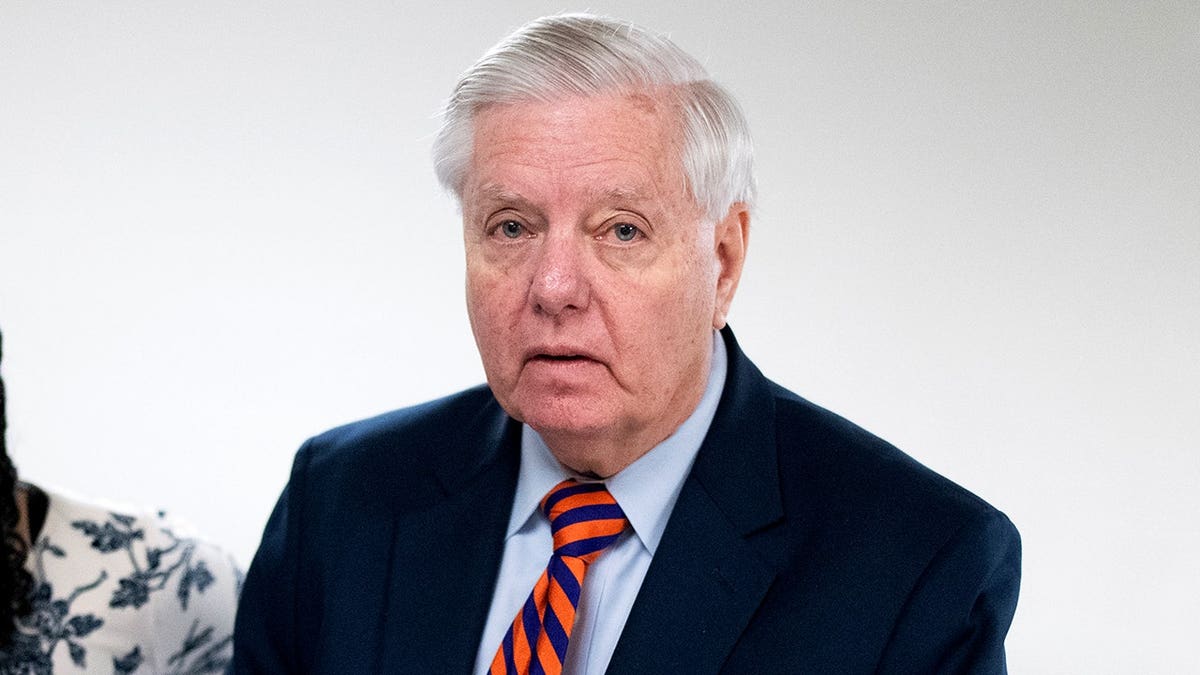
Sen. Lindsey Graham, R-S.C., talks with reporters in the U.S. Capitol during votes on Tuesday, March 10, 2026. (Tom Williams/CQ-Roll Call, Inc via Getty Images)
But lofty hopes for a lush "marketplace of ideas" online are dashed by some of the digital slop – and addictive nature of "phones" today.
"You talk to people and they're scared to death of social media. They're scared to death of AI," said
Sen. Rick Scott (R-Fla.).
That’s why lawmakers demand changes to Section 230.
One lawmaker says free speech safeguards are crucial for the people deciding what users see online. But not the technology behind it. Today, the technology makes many of those decisions about what we see and hear on our phones.
"If you just have an algorithm spewing all this information.." sighed Rep. Ro Khanna (D-Calif.). "The First Amendment doesn't protect an algorithm."
In 1996, Ron Wyden told C-SPAN during an interview that "censorship could really spoil much of (the internet’s) promise."
And in 2026, Wyden is still leery of infringing on free speech through regulation. He says the hands-off approach helped the development of Wikipedia and the social media platform Bluesky. A more aggressive posture could stifle development.
"To get rid of (Section) 230, you're going to have to roll over me," said Wyden this year.
CLICK HERE TO DOWNLOAD THE FOX NEWS APP
In 2026, people are struggling to harness the technology. Trying to ween themselves off addiction to phones. Figuring out ways to keep kids from phones in order to build reading and vocabulary skills.
The digital optimism of the mid-1990s is gone. And those who were there are nostalgic for the sound of an old, staticky modem and the delightful proclamation that "you’ve got mail."
https://www.foxnews.com/politics/bipartisan-lawmakers-want-strip-big-techs-legal-immunity-shield-social-media-companies