 Print
Print
 Close
Close

Trump tries to cut blue-state Medicaid fraud and save more green
By Tarren Bragdon
Published May 15, 2026

Just how bad is Medicaid fraud? Six months ago, Minnesota dominated the news for losing an estimated $9 billion to thieves since 2018. Yet now the federal government is saying that medical providers are likely fraudulently billing about $100 billion every year. The good news is that the Trump administration is now fighting to close what is likely one of the biggest loopholes behind this unprecedented theft of taxpayer money.
On April 21, the administrator of the Centers for Medicare & Medicaid Services — Dr. Mehmet Oz — announced that his agency will require states to develop stronger plans to review their Medicaid providers. Nationwide, there are millions of such providers, and by law, states must revalidate their enrollment in the program at least every five years.
Through this process, states check providers’ medical licenses and confirm their compliance with all relevant state and federal laws. Revalidation is expressly designed to prevent fraudsters from cheating taxpayers.
But states are failing this basic job. My organization has submitted Freedom of Information Act requests to 48 states and D.C., seeking their data on how many Medicaid providers have been revalidated. Roughly two-thirds of states haven’t responded at all, while still others provided partial responses with useless data. Still, among those few states that have taken our request seriously, the data they provided points to a deeply concerning nationwide trend.
READ: DR. OZ PUTS ALL 50 GOVERNORS ON NOTICE OVER BILLIONS LOST TO MEDICAID FRAUD
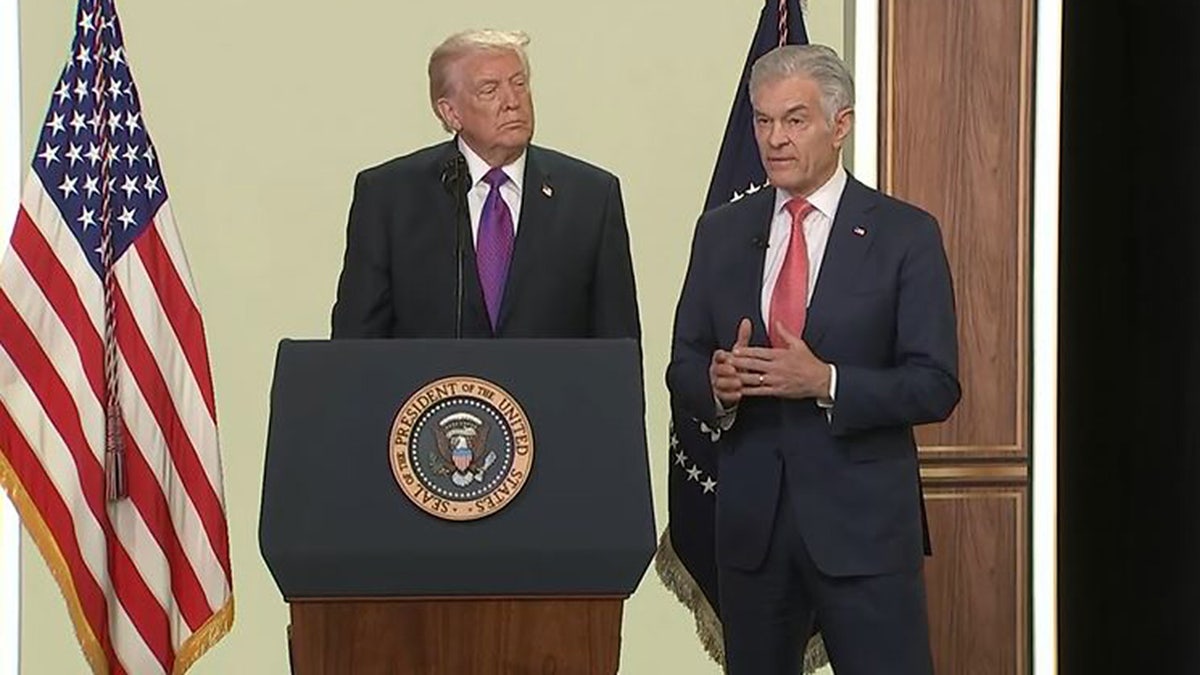
President Donald Trump and Centers for Medicare and Medicaid Services Administrator Dr. Mehmet Oz discuss the TrumpRx.gov prescription website at the White House in Washington, D.C., on Feb. 5, 2026. (Pool / Fox News)
Consider Georgia. The state has a record of 374,774 Medicaid providers, yet roughly 21,000 are longstanding providers that haven’t been revalidated in the past five years. Things are far worse in Illinois. Of the 222,000 Medicaid providers in the state, more than 25% have gone longer than five years without proving the validity of their participation in the program. One Illinois provider hasn’t been revalidated in more than nine years.
It’s unlikely that all these Medicaid providers are defrauding taxpayers. But without strict state enforcement, fraud inevitably becomes more common. Revalidation looks at license verification, checks providers against death records, flags providers excluded from participating in Medicaid, and otherwise confirms that these providers are who they say they are and do what they say they do. The Trump administration cracked down on 447 hospices in Los Angeles alone for fraudulent billing — the very sort of thing revalidation can identify.
Revalidation can also ferret out providers that are banned from practicing in one state yet still bill Medicaid in another state. For example, my organization’s research on the "Little Mogadishu" complex in Minneapolis found multiple healthcare providers that were placed on Minnesota’s Medicaid exclusion list, but not the federal exclusion list.
One was an adult day care where its license was revoked for 35 violations — including staff failing to interact with patients. Separately, an Inspector General’s report found 12% of all providers terminated for cause in one state were participating in another state’s Medicaid program just months later.

Revalidation can even flag providers that are using the identity of someone else — say, a doctor who retired years before. In California, con artists stole the identities of doctors —two of whom were deceased — to fraudulently bill millions for hospice care.
Operation Never Say Die in April 2026 charged multiple individuals for $60 million in fraudulent billings through phantom hospice clinics. When states don’t look into their Medicaid providers, scams like this abound.
CLICK HERE FOR MORE FOX NEWS OPINION
Dr. Oz has given states 30 days to tell his agency how they’ll strengthen their legally required review of Medicaid providers. History shows how urgently necessary this is. Some 1.6 million providers in the separate Medicare program were revalidated in the early 2010s, and more than 500,000 had their status deactivated and another 34,000 had their status revoked altogether, saving taxpayers $2.4 billion. Today, if better provider revalidation prevented even just five percent of improper payments in Medicaid, taxpayers would save billions annually.
It’s unlikely that all these Medicaid providers are defrauding taxpayers. But without strict state enforcement, fraud inevitably becomes more common.
It remains to be seen how states will respond to the Trump administration’s demands, which are more than justified for the sake of taxpayers. Yet even if governors get serious about revalidation, the five-year timeline is still too long. Over the course of a half-decade, bad actors could easily bilk Medicaid for enormous sums, then rinse and repeat under a different provider name in the same state or somewhere else.
CLICK HERE TO DOWNLOAD THE FOX NEWS APP
It would be far better if states had to review providers every few years. The Trump administration could pursue this via regulation — or better yet, legislation like another reconciliation bill.
In the meantime, every state should follow Dr. Oz’s lead and come up with a serious plan to confirm that every single Medicaid provider is above board. Because states have gotten lazy, untold billions of taxpayer dollars have been stolen. The Trump administration is right to demand immediate change, so that the Medicaid fraud crisis doesn’t become even more mind boggling than it already is.
https://www.foxnews.com/opinion/trump-tries-cut-blue-state-medicaid-fraud-save-more-green