 Print
Print
 Close
Close

America’s retirement system is broken. Trump may have found a bold fix
By Ted Jenkin
Published July 13, 2026

When President Donald Trump told reporters on last week that he was looking "very strongly" at Australia's retirement system, most Americans probably shrugged and thought, "Great — another retirement plan."
They shouldn't.
If this idea becomes legislation, it could represent the biggest shift in American retirement policy since Social Security was signed into law in 1935. Don’t be surprised if the Trump name is on the retirement account if it happens.
TRUMP LOOKING 'VERY STRONGLY' AT AUSTRALIA-STYLE RETIREMENT SYSTEM: 'TAKING THAT, MAKING IT SHARPER'
The important thing to understand is this main point: Trump isn't talking about copying Australia. He's talking about taking what works and making it "sharper" for America.
So what exactly is he trying to accomplish?
America has a retirement problem
Our retirement system was built for an economy that barely exists anymore.
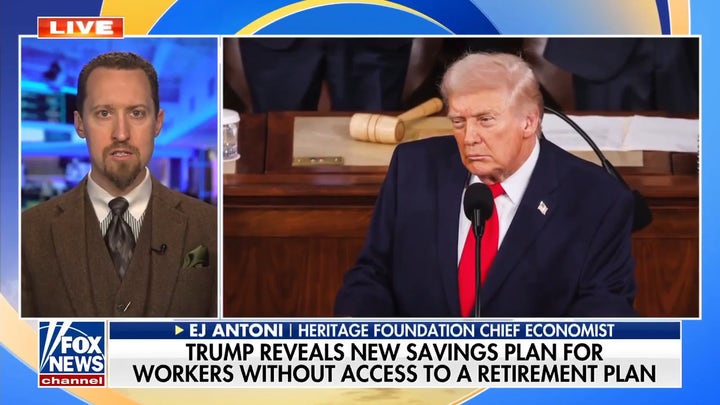
People used to work for one employer for 30 years, receive a pension, collect Social Security, and retire. Social Security was built for people to claim it at 65 and live to about 70. That’s gone. People are lucky if they work at the same company for five years, let alone 30, and pensions are nearly gone. And we know the savings rate in America is an abysmal 2.6%.
Today, Americans change jobs every few years. Millions work as freelancers, independent contractors, Uber drivers, or for employers that don't even offer a 401(k).
America has done an excellent job creating opportunities to save. We haven't done a very good job making sure people actually do it.
Meanwhile, too many workers have little or nothing saved for retirement. That's the backdrop for Trump's comments.
What Australia does differently
Australia requires employers to contribute a percentage of an employee's wages into an individual retirement account known as a "Super."
The worker owns the account. The investments stay invested. The account follows the employee from job to job.
The result?
Australia has built one of the world's largest retirement savings pools relative to the size of its population. There is a constant flow of capital into the markets. Trump likes that thought.

That isn't an accident. It's the result of automatic, long-term investing.
What an American version could look like
If I were advising the administration, I wouldn't simply copy Australia. I'd build an American version around three principles.
First, keep Social Security as the foundation. Second, create a portable retirement account that belongs to the worker, not the employer. Third, require or strongly encourage automatic retirement contributions into privately managed investment accounts.
Instead of relying almost entirely on future government benefits, Americans would retire with assets they actually own. That is the three-legged stool of retirement. That is a fundamentally different philosophy.
Why Trump may be interested
This isn't just about retirement. It's about ownership. America faces three long-term challenges simultaneously.
Social Security's long-term financing pressures. Will we really run out of money in 2034?
Wait times are down according to a September report exclusively obtained by Fox News Digital from the Social Security Administration. (AP Photo/Nam Y. Huh, File)
A retirement savings gap that leaves millions financially vulnerable.
An economy increasingly built around workers who don't fit neatly into traditional employer-sponsored retirement plans. An Australia-style system attempts to address all three.
Rather than expanding government retirement programs, it encourages Americans to accumulate private wealth through decades of investing in the capital markets.
That's a distinctly pro-market approach.
There is one huge problem
Mandatory employer contributions aren't free. Businesses ultimately pay those costs.
You could argue that a mandatory employer contribution effectively functions like a hidden payroll tax because employers will eventually recover those costs through slower wage growth, reduced hiring, higher prices, or lower profits.
TRUMP TAPS ACTING LABOR SECRETARY KEITH SONDERLING FOR PERMANENT ROLE PENDING SENATE CONFIRMATION
That's a legitimate concern, particularly for small businesses already operating on thin margins. If Washington simply mandates a 12% employer contribution overnight, as Australia has, it could create real economic disruption.
Here's how I'd make it work
If the administration wants bipartisan support, it should avoid a one-size-fits-all mandate. Here’s one way to install this massive change.
• Phase in employer contributions gradually over several years. Start at 1% and gradually grow that number.
• Offer meaningful tax credits for small businesses.
• Allow limited access to retirement funds for major life events, like purchasing a first home.
• Coordinate the system with the new Trump Accounts so every American begins adulthood with investment assets already working for them.
• Keep investment management private rather than creating another government-controlled investment fund.
That would preserve market competition while dramatically increasing retirement participation.
The retirement revolution
America has done an excellent job creating opportunities to save. We haven't done a very good job making sure people actually do it.
Behavioral economics tells us something simple about psychology, and that is automatic saving works. But we also shouldn't ignore the cost to employers or pretend mandatory contributions come without tradeoffs.
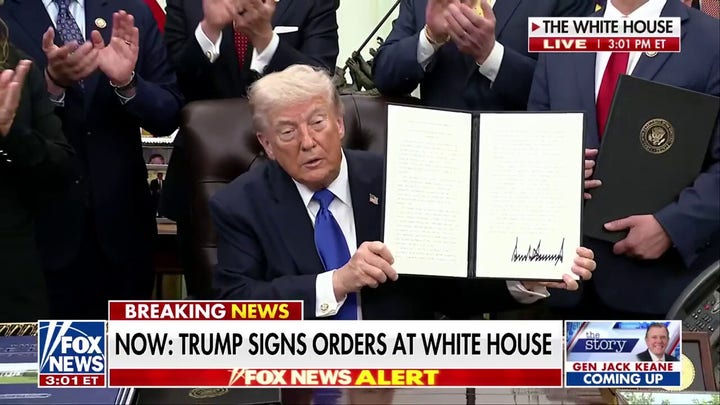
The smartest version of this policy isn't Australia. It's an American system that expands ownership without crushing small businesses.
CLICK HERE FOR MORE FOX NEWS OPINION
If done correctly, this wouldn't just change retirement. It would change who owns America's future.
Instead of producing another generation dependent primarily on government checks, we could produce millions more Americans who retire owning meaningful stakes in the companies, markets, and economy they spent a lifetime helping build.
CLICK HERE TO DOWNLOAD THE FOX NEWS APP
That's not just retirement reform.
That's an ownership revolution.
CLICK HERE TO READ MORE FROM TED JENKIN
https://www.foxnews.com/opinion/americas-retirement-system-broken-trump-may-have-found-bold-fix