 Print
Print
 Close
Close

AMB GORDON SONDLAND: Canada doesn't need Europe. It needs a new economic deal with America
By Gordon Sondland
Published September 15, 2026

The United States and Canada have spent the past several months behaving like two people in a bad marriage: each is convinced the other is taking advantage, each is speaking loudly enough for the neighbors to hear, and neither seems willing to acknowledge how much is at stake if the relationship truly breaks down.
It is time to stop measuring each other's manhood across the border.
Canada should return to the table. So should the United States. Not to negotiate another small, defensive tariff truce, but to construct a new North American economic relationship worthy of the two most integrated economies in the democratic world.
DAVID MARCUS: CANADA SEES TRUMP TRADE WAR AS ‘LIFE AND DEATH’ WHILE AMERICANS BARELY NOTICE
The first principle must be plain: Canada is a sovereign country. It is not the 51st state, and no good can come from language that treats it as one. America does not need a submissive Canada. It needs a prosperous, capable, secure, and willing partner on its northern border—one that shares a continent, a NATO commitment, a vast energy system, critical supply chains, and values that are far more alike than different.

The second principle is equally plain: sovereignty is not a license for permanent economic asymmetry. If Canada wishes to preserve privileged access to the American market—and it should—then it must be willing to address the barriers that American businesses and workers reasonably see as one-sided. Banking, dairy, procurement, digital rules, industrial subsidies, and autos all belong on the table. But they should be resolved through reciprocity, not coercion.
Washington should stop treating Canada as a trophy to be won. Ottawa should stop treating distance from the United States as a measure of national success.
The current approach has it backward. Washington has too often treated tariffs and public humiliation as a negotiating strategy. Ottawa, understandably angered by that treatment, has increasingly treated diversification away from the United States as a strategic end in itself. Both instincts are emotionally satisfying. Neither is a strategy.
CANADA REPORTEDLY SCRAPS JOINT BRIDGE CELEBRATION WITH US AFTER TRUMP RENEWS TARIFF THREAT
Canada can and should diversify trade. A country that sends the overwhelming majority of its goods exports to one market should want alternatives. Europe, Britain, Japan, India, and other partners all have a role to play. But diversification is not substitution. Canada will not replace North America with Europe, and it would be foolish to try.
The fashionable idea that Canada should join the European Union is the clearest example of mistaking a political gesture for an economic plan. It is also, as a legal matter, implausible: EU membership is available to European states, and Canada is not one. But even if Brussels chose to rewrite its treaties, full membership would be a terrible bargain for Canada.
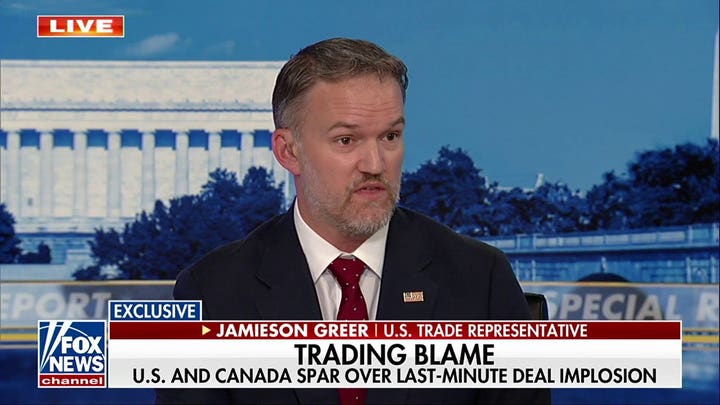
Canada would trade its own commercial policy for the European Union’s common external tariff and regulatory system. It would risk erecting a customs and regulatory border with its largest customer, most important supplier, and closest industrial partner. It would become a distant member of a bloc whose decisions are necessarily shaped by European geography, European politics, and European priorities. Canadian businesses would be subject to rules made thousands of miles away, while the factories, pipelines, farms, mines, and research centers that actually sustain the Canadian economy remain tied by roads, rails, grids, and pipelines to the United States.
That is not sovereignty. It is outsourcing sovereignty.
Canada’s future lies in a deeper North American relationship—one that preserves Canadian political independence while recognizing the economic reality that the two countries already make things together.
FMR BIDEN AMBASSADOR BLAMES TRUMP FOR CANADA PLAYING 'FOOTSIE' WITH CHINA
Consider the automobile sector. A car assembled in Ontario or Michigan is not meaningfully "Canadian" or "American" in the old-fashioned sense. Its parts may cross the border several times before final assembly. Engineers, tooling companies, battery suppliers, semiconductor firms, steel producers, and logistics operators work on both sides. The sensible goal is not to force Canadian manufacturing to become an appendage of American manufacturing, nor to let either country subsidize factories that merely displace the other’s workers. It is to create a common North American manufacturing zone in which both countries benefit from production, investment, and innovation.

Canada should return to the table. So should the United States. (iStock)
That means common rules of origin with real North American content; common standards for electric vehicles, batteries, and charging; mutually recognized safety and environmental rules; and incentive programs designed to reward continental production rather than trigger subsidy wars. If a Canadian worker, American worker, and Mexican worker all contribute to a product made in North America, the system should favor that product over subsidized imports from strategic competitors—not turn the three partners against one another.
TRUMP IS PROVING THAT THE WAY TO BETTER OUR MILITARY IS TO SECURE OUR SUPPLY CHAINS
The same principle applies to energy. The United States and Canada should be the world’s most reliable combined supplier of oil, natural gas, electricity, uranium, critical minerals, and next-generation energy technology. Canada has the resources. The United States has immense capital markets, demand, technology, and security capacity. Rather than squabble over tariffs and permits, the two countries should create a North American energy-security compact: shared infrastructure planning, accelerated cross-border approvals, joint critical-mineral processing, integrated grids, and long-term commitments to supply one another in a crisis.
Banking is another obvious place for a serious bargain. Canada has a stable banking system, but it is also one of the most protected financial markets in the developed world. America should be entitled to ask for genuine reciprocity: fair access for qualified U.S. financial institutions, transparent rules, and a level playing field for cross-border capital. In return, Canada should receive dependable access to American capital markets and a commitment that U.S. policy will not casually punish Canadian institutions simply because they are Canadian. Reciprocity must run in both directions.
TRUMP MUST CLOSE THE BACK DOOR CHINA USES TO EXPLOIT NORTH AMERICAN TRADE
The two governments should also build a North American mobility regime for workers. Not open borders. Not a surrender of either country’s immigration system. A practical, secure, reciprocal system for verified workers in designated sectors—engineers, nurses, skilled trades, energy technicians, aerospace specialists, construction crews, researchers, and advanced-manufacturing employees—to cross the border quickly and work where their skills are needed.
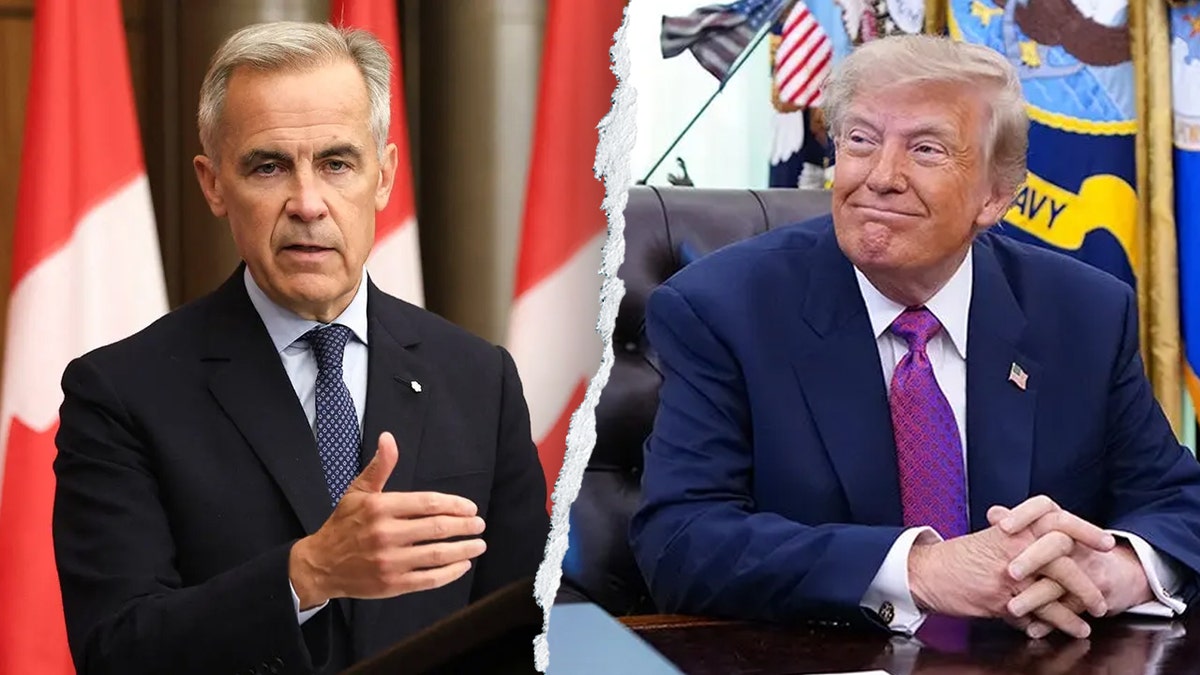
Canadian Prime Minister Mark Carney and President Donald Trump. (AFP via Getty Images)
If a Canadian electrician is needed at a Michigan battery plant, or an American aerospace engineer is needed at a Montreal facility, the answer should not be months of paperwork. It should be a trusted-worker credential, tied to an employer, subject to background checks, wage protections, and labor-law enforcement. The United States and Canada already trust each other enough to defend North America together. We should trust each other enough to let skilled workers help build it.
CLICK HERE FOR MORE FOX NEWS OPINION
There will be hard issues. Canada will not abandon supply management overnight. The United States will not abandon its desire to bring more manufacturing home. Provinces will guard their procurement authority; states will guard theirs. Those are normal negotiations between sovereign democracies. They are not reasons to turn the border into an economic fault line.
The real choice is not between American dominance and Canadian independence. It is between a continent that builds together and one that slowly hands market share, industrial capacity, and strategic leverage to others.
CLICK HERE TO DOWNLOAD THE FOX NEWS APP
Washington should stop treating Canada as a trophy to be won. Ottawa should stop treating distance from the United States as a measure of national success. The two countries should get back to the table, lower the temperature, recognize each other’s legitimate interests, and negotiate economic parity where it is warranted.
Canada does not need to join Europe to preserve its dignity. It needs to help the United States build the most competitive, secure, and productive democratic economic space on earth.
CLICK HERE TO READ MORE FROM AMB. GORDON SONDLAND
https://www.foxnews.com/opinion/amb-gordon-sondland-canada-doesnt-need-europe-needs-new-economic-deal-america