 Print
 Close

MICHAEL RUIZ: What is a dirty bomb? Explosive terror threat explained
By Michael Ruiz
Published November 19, 2026

While no dirty bomb is known to have been successfully detonated in a terror attack, a reported Iranian effort to explore such an option has placed a new spotlight on long-standing fears of one — even as experts say the disruption could spread farther than the blast.
A dirty bomb is an explosive designed to spread radioactive material — but not in the way an atomic bomb like those dropped in World War II would.
"Anything involving radiation sounds frightening, but there’s a big difference between a dirty bomb and a nuclear weapon," said Jason Pack, a retired FBI supervisory special agent who at one point served as the Jackson Field Office's weapons of mass destruction coordinator.
Dirty bombs use a conventional blast to spread radioactive dust or a similar contaminant.

Secretary Markwayne Mullin, Director of National Intelligence Jay Clayton and Deputy FBI Director Christopher Raia testify during a House Homeland Security Committee hearing on "Worldwide Threats to the Homeland: 25 Years after 9/11" on Capitol Hill in Washington, D.C., on Nov. 18, 2026. (Brendan Smialowski/AFP via Getty Images)
"The initial blast may pose the greatest immediate danger, but the contamination, fear and disruption afterward could be significant," Pack told Fox News Digital. "A dirty bomb doesn’t have to kill thousands of people to terrorize millions."
An attack could certainly be deadly. It would also shut down significant portions of a targeted city, he said, displacing families and businesses.
They're also risky to build, according to Pack. Bomb makers are at risk of exposing themselves to the same radioactive material they plan on using against the public, it's difficult to ensure the contaminants are dispersed in the explosion, and the terrorist would need to procure something to disperse to begin with.
"Just because somebody puts radioactive material with an explosive doesn’t mean they’re going to contaminate half a city," he said. "But even a relatively small incident could create tremendous fear, evacuations and disruption. That’s why we take these threats seriously."

Iranian Deputy Foreign Minister for Legal and International Affairs Kazem Gharibabadi immediately rejected the allegations of a dirty bomb plot in a post on X, invoking Iran's history as a victim of chemical warfare. (Askin Kiyagan/Anadolu Agency via Getty Images)
The radioactive materials to make them can be gathered without the ability to produce nuclear power or weapons, according to Paul Mauro, a retired NYPD inspector and Fox News contributor. One potential source is medical waste, he said, such as byproducts of certain cancer treatments.
"That's why they call it dirty," he said. "It's waste."
The greatest danger of a dirty bomb is the blast itself, according to the U.S. Centers for Disease Control and Prevention, but radioactive material can spread and quietly cause dangerous health problems for people who unknowingly breathe it in.
"The radioactive materials used in a dirty bomb would probably not create enough radiation exposure to cause immediate serious illness, except to people who are very close to the blast site," according to the CDC.
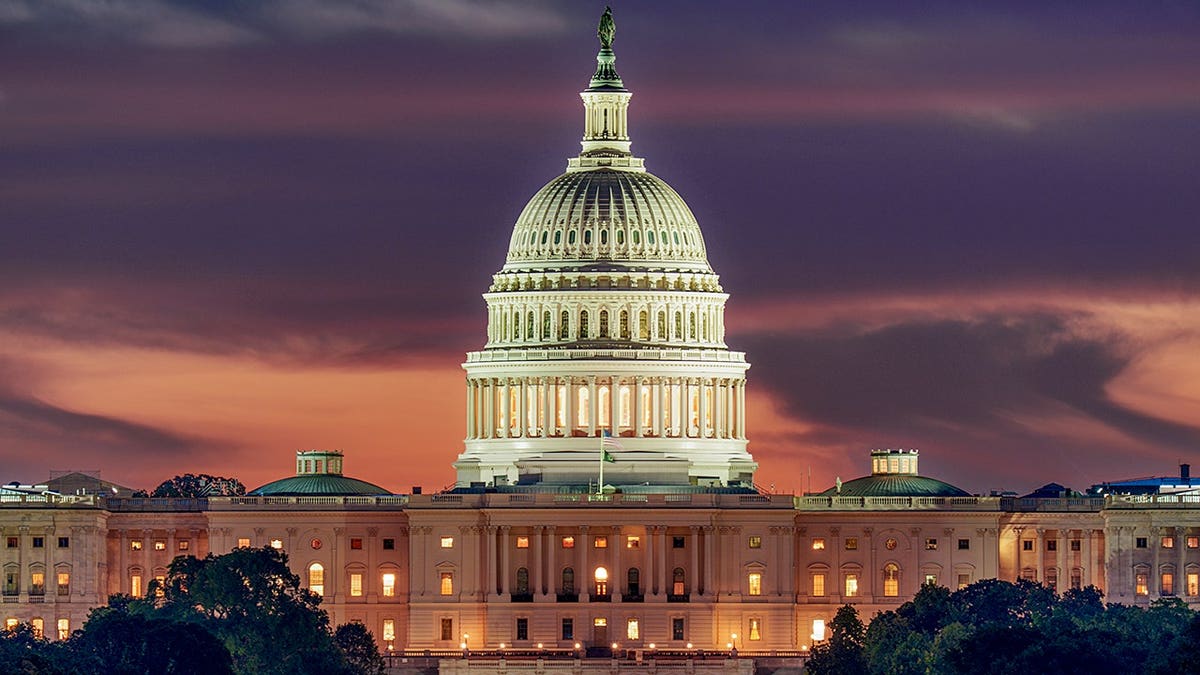
The west front of the U.S. Capitol Building is seen at daybreak on Oct. 1, 2025, in Washington, D.C. (J. David Ake/Getty Images)
Police departments are equipped with devices that can detect radiation, Mauro said — which are sensitive enough to flag medical radiation in a passing ambulance.
IRAN HAS 'SUBSTANTIALLY INCREASED' EFFORTS TO TARGET AMERICANS ABROAD, US INTELLIGENCE MEMO WARNS
CNN reported earlier this week that U.S. intelligence indicated Iran was developing potential plans to target senior Trump administration officials in Washington with a radiological device or chemical weapon, although sources described the effort as Iran exploring options rather than plotting an attack.
The issue came up again at a House Homeland Security Committee hearing Wednesday morning involving testimony from Homeland Security Secretary Markwayne Mullin, Director of National Intelligence Jay Clayton and FBI Deputy Director Christopher Raia.

Christopher Raia, deputy director of the FBI, speaks during a news conference at the Department of Justice in Washington, D.C., on Thursday, Nov. 12, 2026. (Daniel Heuer/Bloomberg via Getty Images)
Clayton acknowledged that the threat of a dirty bomb attack has existed for years, but officials said they haven't seen evidence of an imminent plot.
"In the aftermath of September 11, 2001, there is heightened concern that terrorists may try to smuggle nuclear or radiological materials into the United States," the United States Government Accountability Office warned in a 2006 report. "These materials could be used to produce either an improvised nuclear device or a radiological dispersal device, known as a dirty bomb."
The GAO report cited a failed attack in Russia's capital in the mid-1990s as an example of the "capability and willingness" of terrorists to resort to such weapons of mass destruction.
Chechen separatists had placed a canister packed with cesium-137 and dynamite in a Moscow park, but it wasn't detonated.
The report included a summary of Department of Energy plans in place to scan for and detect sources of radiation that could be linked to terror plots or weapons smuggling and even locate material washed away in the wake of a natural disaster like Hurricane Katrina.
Now, the source of potential threats is believed to be Iran or its proxy militia group, Hezbollah.
"The best dirty bomb response is the one that you never hear about," said Pack, the retired FBI agent. "Because somebody stopped the plot before a bomb ever made it onto our streets."
Radiation has no taste or smell, according to the CDC.
If you find yourself in the midst of a suspected dirty bomb attack, the CDC warns that you should cover your mouth and nose and try not to breathe it in. If you aren't already indoors, seek shelter. Remove your clothes and seal them in a bag, then shower up, making sure to thoroughly wash your hair to remove any potential contaminants. Indoors, close doors and windows and turn off fans that bring in outside air.
LISTEN TO THE NEW 'CRIME & JUSTICE WITH DONNA ROTUNNO' PODCAST
Monitor TV, radio or social media for official updates. Authorities will announce when it's safe to go outside again.
"The good news is that it can be cleaned up," Mauro said of the dispersed material. "It would be expensive, time-consuming, a nightmare, sure."
CLICK HERE TO DOWNLOAD THE FOX NEWS APP
Fox News' Krista Garvin and Morgan Phillips contributed to this report.
https://www.foxnews.com/us/michael-ruiz-what-is-dirty-bomb-explosive-terror-threat-explained