 Print
Print
 Close
Close

'Your World' on Afghanistan exit, retail stocks
Published August 18, 2021
This is a rush transcript from "Your World with Neil Cavuto," August 17, 2021. This copy may not be in its final form and may be updated.
NEIL CAVUTO, FOX NEWS ANCHOR: The scene outside the Kabul International Airport earlier today, shots being fired even as the Taliban was putting out a statement that declared no one from the U.S. will be hurt, no one will be hurt, declaring amnesty across the country.
But it is a country that has an airport open, but a perimeter around it that is impenetrable. So, if you're inside that perimeter, the odds are good you just might get out. Outside, the odds are good you never will.
Welcome, everybody. I'm Neil Cavuto, and this is "Your World."
And what to make of a situation at that country's airport that seems to go from bad to outright confusing, as well as where all of those thousands eventually will descend. We're told, among many places in the United States, Texas. That's right, Texas, the border.
But the crowd maybe trying to get out remains a big worry, as we're getting on indications at least from the Taliban that anyone who wants to go can, but that is proving easier said than done, especially with that perimeter.
Jennifer Griffin now has the very latest from the Pentagon -- Jennifer.
JENNIFER GRIFFIN, FOX NEWS NATIONAL SECURITY CORRESPONDENT: Neil, CENTCOM Commander General Frank McKenzie flew into Kabul to inspect the security today after meeting the Taliban in Doha, Qatar, Sunday.
The Pentagon says the 82nd Airborne has landed in Kabul and have been put in charge of securing the airport; 1,000 troops arrived last night and the airport resumed military and some civilian flights overnight.
(BEGIN VIDEO CLIP)
JAKE SULLIVAN, U.S. NATIONAL SECURITY ADVISER: Throughout the night, nine C-17s arrived, delivering equipment and approximately 1,000 troops. Additionally, seven C-17s have departed. These flights lifted approximately 700 to 800 passengers.
(END VIDEO CLIP)
GRIFFIN: But the situation remains tenuous and dependent on the Taliban, who have been seen in videos like these intimidating those trying to make their way to the Kabul Airport.
(BEGIN VIDEO CLIP)
SULLIVAN: The Taliban have informed us that they are prepared to provide the safe passage of civilians to the airport. And we intend to hold them to that commitment.
(END VIDEO CLIP)
GRIFFIN: The U.S. military is in communications with the Taliban, who have set up a cordon around the airport.
(BEGIN VIDEO CLIP)
JOHN KIRBY, PENTAGON PRESS SECRETARY: There's been no hostile interactions with the Taliban on either our people or on operations.
(END VIDEO CLIP)
GRIFFIN: But the U.S. military is not seeing what is happening around the city with Taliban fighters going door to door with lists from the previous government of those who worked with the Americans.
A former senior defense official in contact with commanders on the ground in Kabul tells Bret Baier -- quote -- "The Taliban have a ring outside of the airport and won't let anyone inside it, 82nd securing airport. The big issue here is that no people outside of the Taliban ring will get in. No way they get 30,000, not even close."
Four thousand U.S. troops will be on the ground by tomorrow, we're told, and they hope to avoid scenes like these from yesterday, which caused them to halt flights into and out of Kabul. The goal for the U.S. military is to begin one departure flight per hour in the next 24 hours.
The Pentagon says it can get an estimated 5,000 to 9,000 passengers out per day -- Neil.
CAVUTO: Jennifer, thank you very much.
And, to Jennifer's point, we have heard again repeatedly that the Taliban has said that any civilian who wants to reach the airfield can, but per some follow-up examinations on all of this, especially from The Wall Street Journal, thousands of Afghans who had been employed by the Western embassies or non-government organizations, they're unable to reach the airport at these Taliban checkpoints.
In other words, at the checkpoint, they just won't let you in. And, furthermore, they won't let anyone outside help get you in.
The read for the White House now on all of this with Jacqui Heinrich -- Jacqui.
JACQUI HEINRICH, FOX NEWS CORRESPONDENT: Hey, good afternoon, Neil.
This was the first Q&A we have had with the White House since the Taliban took Afghanistan. And National Security Adviser Jake Sullivan defended the decision to withdraw. He framed the fallout as an inevitable product of concluding 20 years of military action.
He maintained that the administration planned for all contingencies. And even though we have had assurances now, we have learned, from the Taliban that Americans needing to get out will get safe passage to the airport, the U.S. is not providing transport for those people.
And we have just learned exactly how many Americans are out there.
(BEGIN VIDEO CLIP)
QUESTION: How many Americans are in Afghanistan, both inside Kabul and outside Kabul, and should they get priority on evacuation flights?
John Kirby said that it's going to be a mix of SIV applicants and Americans, but should those remaining American citizens get priority? And how many are there in the country right now?
JEN PSAKI, WHITE HOUSE PRESS SECRETARY: What I should tell is that there are individuals who will self-identify as American citizens. That number is around 11,000. Beyond that -- around the country.
Beyond that, though, there are individuals who may not have self-identified who may come and request assistance and come to the airport. We're going to work to assist, of course, American citizens, but we also have a responsibility and obligation to help the men and women who served by our side.
(END VIDEO CLIP)
HEINRICH: Psaki said the administration is prioritizing a number of groups, including American citizens, 11,000, of whom we learned are around Afghanistan right now, as well as embassy employees, staff and their families, as well as Afghan refugee visa holders and applicants.
Now, that answer is consistent with the answer I got from Pentagon press Secretary John Kirby on Sunday that the evacuations would not just be American citizens first, and only then Afghan refugees.
Jake Sullivan defended against criticism that this was executed in a haphazard fashion, saying the U.S. has been telling Americans to get out for weeks. But he also placed some of the blame for all this chaos, as President Biden did, on Afghanistan, on the Afghan refugees who did not immediately want to leave.
And he said that the Afghan government made a passionate plea not to do any sort of mass evacuations, because that might undermine confidence in the Afghan government. So, now there are tens of thousands of Afghan refugees who are trying to get onto these flights, trying to get past those Taliban checkpoints, and right now only guarantees from the Taliban for Americans, Neil.
CAVUTO: So, when the administration looks to the Taliban to do the right thing and follow these international standards to do the decent thing, who's to say that there's anything in the past, Jacqui, that would indicate that the Taliban has changed its stripes?
HEINRICH: Well, they're certainly talking about how well the discussions are going. They say they have gotten assurances, but they are not necessarily placing trust in them.
I think everyone realizes that this is the Taliban and anything could happen. That being said, any sort of them reneging on that promise could invite some retaliation from the U.S. So I think that they're hoping that the Taliban will stick to their promises and not invite some sort of retribution against that promise from the U.S. -- Neil.
CAVUTO: Jacqui, thank you very, very much. Maybe they are tempting that.
We should point out here that already, as Jacqui has reported, the language has changed from the Taliban, hasn't it, now to provide safe haven for Americans leaving the country? Earlier on, the Taliban had said that it would grant civilians safe passage to the airport. And that prompted the national security adviser, Jake Sullivan, to say: "We intend to hold them to that commitment."
Christian Whiton joins us right now, the former State Department official.
Christian, that's an important distinction and an important change, if true, that the Taliban has made, from making sure Americans can get out to making sure that civilians who want a safe passage to the airport can get out as well. They seem to have drawn the line at Americans. What do you think?
CHRISTIAN WHITON, FORMER U.S. DEPUTY SPECIAL ENVOY: Right.
Well, and they, I think, probably -- I mean, just guessing here -- but they don't want to create a situation where, six weeks from now, half the country is leaving just because they can or because they can say that they worked with the Americans, and it's unclear if that's true until they're safely in some other third country being processed or in the United States.
So, definitely, it's very interesting. So far, the Taliban has been shockingly pragmatic. It's very disappointing that we have to depend on their good graces and their pragmatism, but -- in seemingly allowing the situation at the airport to unfold and halting people going to the airport, but perhaps a willingness to let people that they dislike very much, Afghans who collaborated with the United States, leave, rather than implement or inflict victor's justice on them.
CAVUTO: So, let me ask you about these lines and throngs that are gathering outside the airport around this perimeter. I guess it goes a full 360 degrees around because Hamid Karzai Airport.
Now, is it your understanding, then, that they don't want to tempt, that the Taliban doesn't want to tempt fate, that the administration is saying you better let these people through, including those who want safe passage out who might not necessarily be Americans?
Are they thinking that the administration wouldn't send soldiers to that perimeter to go outside the airport perimeter to gather up those individuals to allow them safe passage? Are -- someone is taking a big sort of a gamble here.
WHITON: Right.
I mean, it seems as though we are, because even though 6,000 troops sounds impressive at a condensed area like an airport, the fact is, the Taliban has their entire army pretty much in Kabul and controls the -- if not the airspace, at least the ground space there.
We are depending on their tender mercies, if you will. Throughout this closing era of the war, though, they have been pragmatic, surprisingly so. Even before they took Kabul, you saw, for example BBC reporters interviewing Taliban administrators. That's somewhat of a breakthrough that they were allowing interviews, rather than beheading the Western reporters.
And, also, one of the reasons the Afghan national army melted away so quickly was that the Taliban offered amnesty and seemed to stick by that, saying, basically, drop your rifle, take off your uniform and go back to your hometown and you will be OK.
Now, we will have to see if that's if that holds a week from now, a month from now, a year from now. So it seems the Taliban doesn't want to take on the U.S. force that's at the airport, says let those people go. These are the former leaders, people who collaborated. Maybe we don't want them in our country.
But who knows how that lasts, especially if the Taliban decide that they want yet another sort of humiliating picture for the United States.
CAVUTO: Interesting, Christian Whiton.
Thank you very much, Christian. Very good catching up with you.
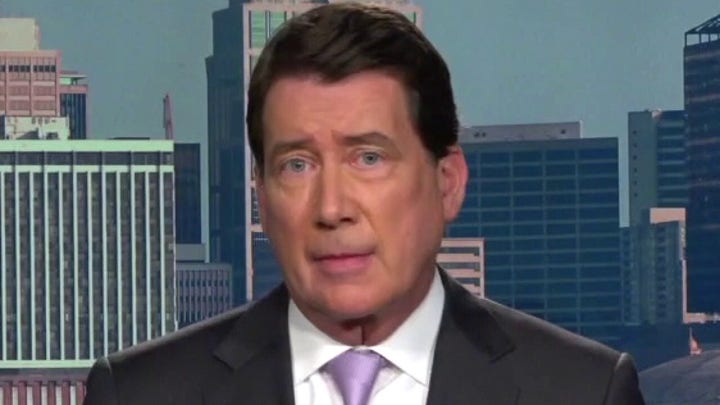
To Senator Bill Hagerty right now, the Tennessee Republican who sits on the Senate Armed Services Committee.
Senator, do you think we should test that then? Do you think that we should go beyond that perimeter, through that phalanx of Taliban soldiers to gather those waiting outside, Afghan nationalists and the rest, to and through the airport?
SEN. BILL HAGERTY (R-TN): Well, Neil, we should do what it takes to save and preserve American lives.
What we should have is a coherent plan. That's what I haven't seen. As you know, Neil, before I took on the position of senator, I served as U.S. ambassador to Japan, third largest economy in the world. At any point in time, we had over a quarter-of-a-million Americans in Japan.
Every chief of mission under their authority is responsible for those lives and have a plan to evacuate people. I redid mine as soon as I got to Japan, because, if you remember, North Korea was launching rockets over us at that point.
But I had a plan in place, a workable plan, to move and flow Americans out of the country under any type of contingency. We're not seeing that type of planning in place here. That's responsible leadership. That's lacking here right now.
CAVUTO: All right, now, sitting on the Foreign Relations Committee -- I think I misspoke -- I apologize -- how do you think we achieve relations, or should we, with the Taliban?
How do you think we talk to them? Obviously, administration types have been. I don't know the details of those discussions, outside of arranging and maintaining this exodus.
But what do we do?
HAGERTY: Well, let me be clear, Neil.
The Taliban are terrorists. There was an agreement in place, put in place last year, where the Taliban were going to accede to a cease-fire, they were going to abide by the Afghan constitution, there would be a negotiated process, where the Afghan -- where the Taliban would actually work with the Afghan government, not attack them.
What we have seen take place here is a military coup d'etat. We can't begin to recognize a government like this.
CAVUTO: So, when they say, Senator, to the degree they have, all the right things -- I don't know what -- if they're concerned about P.R., but it would seem like a P.R. offensive, where they said, no one from the U.S. is going to be hurt, we're declaring amnesty across the country, women can continue pursuing work and education.
You don't believe them? Bottom line, you just don't think a leopard changes his stripes.
HAGERTY: Neil, it's contrary to the reports that I'm getting.
And, again, what you're seeing in Kabul, with international journalists and cameras around, could be far different from what you're seeing in more rural areas. But what I'm hearing is that girl schools are being burned, that revenge lists are being executed, that they are going door to door looking for people who have cooperated with America.
So, again, I hope that's not the case. We certainly don't want it to be the case. But I have had plenty of experience looking at the Taliban, what they're capable of. And I think that we need to be extremely concerned about their word vs. their deeds.
CAVUTO: All right, Senator, thank you.
Bill Hagerty on all of that.
Meantime, the fear now that the Taliban has taken control of Afghanistan and will launch more attacks around the world, including on us.
That's not critics of the administration saying that. That's the fear raised by General Mark Milley, the chairman of the president's Joint Chiefs of Staff -- after this.
(COMMERCIAL BREAK)
(BEGIN VIDEO CLIP)
SULLIVAN: This is not a question about whether we're clear-eyed about the terrorist challenge from Afghanistan. It is about whether the terrorist challenge in 2021 is fundamentally different from the terrorist challenge in 2001.
We believe it is fundamentally different. And we need to be postured effectively to deal with the terrorism challenge as we find it today, as opposed to 20 years ago.
(END VIDEO CLIP)
CAVUTO: All right, what that means, I have no idea.
But the signal seems to be that the Taliban might sound a lot different, but is it really all that different 20 years later?
General Jerry Boykin joins us, former undersecretary of defense.
General, what do you think, a different Taliban, one that we have to now kind of reconfigure, rethink? What do you think?
LT. GEN. JERRY BOYKIN (RET.), U.S. ARMY: Well, I think the real question is whether they will immediately rush back in to Afghanistan, where they launched our -- the 9/11 attack from. And I don't think that's necessarily the case.
I think, as a result of our reaction to 9/11, they spread out all over the place, in fact, a lot of places in Africa, Pakistan as well, and even Syria and Western Iraq. So I don't think they're necessarily going to rush back in there.
Al Qaeda still operates from the same theology. They are essentially the same Al Qaeda they were, except maybe more sophisticated now, with better technology. But I don't like they're going to immediately rush back into to Afghanistan.
They might, but I doubt it.
CAVUTO: General, do you worry, that kind of chatter we have heard on Islamist social media, extremist media, more to the point, that this has galvanized them, that they were so stunned by the collapse of the Afghan government, especially with the United States on the way out, that they thought similarly propped-up governments or those that thought they had sort of frightening control are equally vulnerable, and that this could be the start of something?
BOYKIN: Well, yes, it certainly could, Neil. I think that's true.
But I think we also need to realize that a lot of these terrorist groups have reached a point where they they're not working together very effectively. So, I don't know that they all will take the same message from the fall of Kabul.
And I think that many of them are probably going to stay right where they are, and continue doing their terrorist organization -- their terrorist activities in a regional fashion, rather than in a global fashion.
CAVUTO: So, I do wonder, General, what the administration got wrong here. Certainly, it had to be aware of that the Taliban would take every opportunity it could to rush this exit and take advantage of this exit.
They obviously didn't comprehend the speed with which all of that happened. I'm just wondering what else we might be missing and where else we might be missing it.
BOYKIN: Well, I will say two things.
First of all, the advice that the president is getting out of his national security apparatus, I think, is abysmal. I think he needs to fire all of them and start over and this time try to pick some people that are not recycles, that actually have some time on the ground, that actually have a situational awareness that does not seem to be part of his current national security apparatus.
But I think that what he did not recognize here is the nature of Afghanistan. This is a tribal nation. Look, the Afghan army has fought and fought well. They have lost 69,000 people that we can account for. And then they turn around and they run when the Taliban goes after them.
And that is because, again, we don't understand the tribal nature. Once the U.S. pulled out of there, that was an abandonment. And as far as they were concerned, we had abandoned them and all the support that they had had in the past was gone. And they would not fight for a central government because they don't recognize that central government.
They're tribal. They recognize the tribal chiefs. As long as the Americans were there, as long as the advisers were there, and the advisers were there to support them, to encourage them, they would fight.
So don't -- people that say the Afghans don't fight are absolutely wrong. That was proven in the 20 years that we were there that they do fight and they fight well when they have a reason to fight.
CAVUTO: And they have got leadership behind them, to your point.
General, thank you very much. Jerry Boykin, very good seeing you again, sir.
BOYKIN: Good seeing you, Neil.
CAVUTO: All right, in the meantime, this does not look good for the president, to put it mildly, when it comes to foreign policy, but is it already impacting what he wants to do in this country?
How what is going down in Afghanistan could be taking down some of his most favorite projects as we speak.
(COMMERCIAL BREAK)
CAVUTO: Stocks weren't getting hit today because of what's going on in Afghanistan, but things that are happening like at Home Depot and among just retail establishments across the country.
They're slowing down, a lot more than anyone thought -- after this.
(COMMERCIAL BREAK)
CAVUTO: All right, just when you think that all eyes were just on Afghanistan, a lot of eyes in the markets focused on us and retail sales that suddenly are slowing down and reversing.
They dropped four times more than we thought they would. And a lot of people looked at what Home Depot was saying as a sign of things to come, never mind the fact that the consumer product giant is already reporting numbers that were off the charts. They're not as off the charts as they thought, and they're not having as many customers as they thought either.
Could that be a worrisome sign for the president and for us as a result?
To Phil Wegmann of RealClearPolitics.
Phil, that would be a double whammy, I mean, coming at the worst of all times. But what are you hearing?
PHILIP WEGMANN, REALCLEARPOLITICS: Well, certainly, we know that the markets react to certainty. And there's not a lot when they look at the administration, because, look, if you boil down the central promise of the Biden campaign, it was that he was going to be the elder statesman who had the experience to be the adult in the room, who could unite a House divided here at home and restore our presence on the world stage.
Well, his approval numbers are trending in the wrong direction. Americans are worried about the direction of the country. And that was all before things in Afghanistan went haywire. The foreign policy situation is making things much more difficult.
And on top of all of that, now the president has to look back here in the United States to deal with this situation. It's going to be trying, to say the least.
CAVUTO: All right, he's already come under a little bit of fire from some other foreign leaders who are concerned about what kind of influence he might have on things they hold near and dear, like foreign policy, like in dealing on big global issues like climate change.
But even here back home, I'm wondering if it's having any residual effects on what he wants to do on infrastructure and these other big spending plans. Has it taken some of his negotiating clout away?
WEGMANN: Yes, we're going to find out, because, right, the White House certainly has an incentive to change the topic. They would like to have a conversation about infrastructure, about getting a budget deal through reconciliation.
But that's happening in a moment when the president has diminished political capital. He's not exactly in a position to be calling New Jersey Representative Josh Gottheimer or any of the eight House Democrats who are sort of standing in the way of things and say, hey, it's time for you to get on board, because the president, he's at Camp David right now.
He's focused on the situation in Afghanistan. It's going to be difficult for the administration to focus on what's going on here in Congress, and then also what's going on overseas, because there's only so much of the president to go around.
And right now, well, he's he's not front and center. Instead, his deputies are, and we're talking about the airport in Afghanistan, not whip tallies for whether or not something can get through the House or Senate.
CAVUTO: A lot of people within the White House have been saying this is an obsession with the media. And I guess that would include guys like you and me, but I think they were talking about you, Phil, but they wouldn't be saying, in all seriousness, that, look, with the American people, this doesn't resonate.
They know 20 years is enough already. Quit dwelling on it. That's what they seem to be banking on. What do you think of that?
WEGMANN: I think that the polling is pretty clear that the American public was in favor of withdrawing from Afghanistan.
But that's different than whether or not the American people are in favor of the chaos that they see on the ground right now. Clearly, the Biden administration has tried to split the difference to try and thread the needle by making an argument about withdrawing. But Americans are reacting to what they're seeing on their television screens right now.
CAVUTO: Absolutely.
WEGMANN: They're reacting what they're seeing at that airport.
And I think that what's important to note here is, yes, this has been going on 20 years, but it's the last impression that's going to matter most. And what I'm afraid of and what I'm really interested to learn more about is that this is happening at a moment when a lot of Americans don't trust our institutions.
One institution that a lot of people from back home, from where I'm I do trust is the military. And they sent their sons and daughters to make tremendous sacrifice. And now I'm wondering what leaders in the military are going to do to increase confidence in that institution, because, right now, I think that this is a -- this is a cascading crisis of confidence.
And the institution of the military certainly seems to be one that, as a country, we should not lose faith in.
CAVUTO: Yes, and it transcends politics or the incredible sacrifices; 2, 400-plus Americans made the ultimate sacrifice in that region, in that country.
Phil Wegmann, thank you very, very much.
Well, the big changes right now in Afghanistan, the Taliban, they say they are different, new and improved. They're not saying, but it certainly sounds like that. And they're saying all the right things. So I checked in with Claudia Rosett, what she thinks of this, a famous critic of the United Nations, and a big critic of the so-called new Taliban as well.
She's next.
(COMMERCIAL BREAK)
CAVUTO: Well, here's something you don't see everyday, the Taliban taking questions from the press on everything from free speech to what's the deal with Facebook? It was on. It was weird. It's a sign maybe, we're told, of the new Taliban, or so the administration hopes.
Do not count Claudia Rosett, though, among those intrigued by this so- called change. She doesn't believe a word of it.
The Independent Women's Forum, an uncanny read of all things international, with us now.
So, Claudia, you're not buying this new face?
CLAUDIA ROSETT, FOREIGN POLICY FELLOW, INDEPENDENT WOMEN'S FORUM: No, that was the most macabre festival of mendacity I have seen in a while. And I include in the component competition President Biden's speech yesterday.
No, the Taliban really took the cake. Neil, they're promising all these marvelous things. I mean, they read the press releases. They're up with the modern world in that sense. They are going to be inclusive and peaceful and great and girls can have education and everything.
But there's just this catch they keep mentioning if you look for it in this press conference, within Islamic law, OK, and appropriate for the culture. Well, when the Taliban say that, they're talking about that brutal, repressive regime that they imposed before.
That's what they mean. In fact, they said themselves, our ideology hasn't changed. They're just saying the right words. I mean, they actually sort of did that left when they came in. We're a force for law and order. Yes.
(CROSSTALK)
CAVUTO: When they talk about the rights of women, and yet say in the same breath under Sharia laws, I mean, women have no rights under Sharia laws.
So, there is nothing there, right?
ROSETT: That's the problem, Neil.
This is basically you can do whatever you want, as long as what you want is exactly what I tell you to do. That's the way this works. And they say -- they have already been -- they're lying in so many directions, say, we're fine now.
One of the most chilling things in that press conference was, they said, we're ensuring security in Kabul. We were going to stop at the gates, but then we realized that you needed more security in Kabul, so now we're here 24/7 to ensure your security.
Well, think about that for a minute. Would you want the Taliban securing the security in your town?
CAVUTO: Very good point.
ROSETT: And then they go on to say they haven't been doing anything. They have just been treating people really well.
Well, we have been seeing footage of summary executions in the provinces by the Taliban, which they deny, but sure they deny it. But the footage is there. We have been -- FOX News was reporting on people being beaten on the way to the airport. And we're -- now anyone who's in touch with people who work in Afghanistan, have contacts there, certainly myself, we're seeing reports coming in of people who are getting a knock at the door, even as the Taliban at their press conference say there will be no knocking out the door.
They're not only knocking at the door. They're assaulting people within. They're recruiting informers. In other words, right now, they're relatively restrained, I think, because they really want the U.S. gone.
But that's not the way this is likely to play out.
(CROSSTALK)
CAVUTO: So, what happens if that perimeter then, Claudia, what happens to that perimeter that encircles the airport, where they say that those who want access can have access -- but we haven't seen since they established that perimeter that they're granting anyone access.
So what if we want to tempt that or test that, our soldiers go to that perimeter to get and bring some of those, the thousands who are standing outside a chance to come in? What's going to happen?
ROSETT: This is really a guess, Neil.
I would guess they would let people go through. But the people who are facing a real nightmare are the people who went to the airport and are waiting, so clearly asking to get out of there and go to America or someplace for refuge and who don't get out, who are then left to go back into the city. It's not a big trip. It's a short distance.
But the Taliban are everywhere right now. And they will know who these people are. And that's...
(CROSSTALK)
CAVUTO: But do you think we will test that? Do you think the Biden administration, Claudia Rosett, will test that and say, we're going to go to this parameter, we're going to break through it, we're going to take these people who are outside there, take them back in?
Do you think we will even try that?
ROSETT: I doubt it.
I have seen nothing from President Biden and his staff that would suggest we're going to do anything brave, enterprising, or -- I think this is a favorite word of the administration -- genuinely bold here to protect the people who relied on us.
The effort appears to be chiefly just getting Americans out. And then they will see what else they can do. They're bringing out some Afghans, but they have basically abandoned them, Neil. And they have abandoned them to these real thugs. That's what you saw at that press conference, who are telling - - they have the right words. Anyone can read that script.
But if you look at what's actually going on, on the ground, at the record, and the stipulation, terrible vengeance is coming from the Taliban. It's already started. And I am not seeing anything from the U.S. that suggests we're going to do anything to mitigate that.
We're calling -- our ambassador to the U.N. talked about how we want the Taliban to behave well and there should be a great government. And the U.N. Security Council put out a call for unity and representative and diversity in government and form a really great new government, I suppose complete with flying pigs, because it's all fantasy.
None of that is being translated into help on the ground.
CAVUTO: Claudia, I hope you're wrong. You rarely are, but we will watch this and how it plays out.
Claudia Rosett following...
(CROSSTALK)
CAVUTO: I hear you, following all of these developments.
All right, so you know about the great exodus at that the Kabul Airport. Have you ever wondered where all of these Afghans are going? What if I told you among the places they are mentioning is Texas? That's right, Texas, oh, by the way at the border, yes, the border.
Stay with us.
(COMMERCIAL BREAK)
CAVUTO: All right, the scene in Kabul, where they are fleeing the country by the thousands.
We're getting the first indications where a lot of them are going to go, bases in Wisconsin and Virginia, and, look at that, Texas.
That is a concern of my next guest, Lieutenant Christopher Olivarez, the Texas Department of Public Safety official.
Lieutenant, always great having you. What do you make up that, right at the border, right at a time when you're dealing with a boatload of migrants to begin with? What do you do?
LT. CHRISTOPHER OLIVAREZ, TEXAS DEPARTMENT OF PUBLIC SAFETY: Hey, Neil. Well, good afternoon. Thanks for having me.
So, I mean, yes, it's tragic what is taking place right now in Afghanistan. And, of course, we're still dealing with the crisis that's taking place right now at the Southern border, where it's still out of control.
CBP reported numbers in June over 180,000 apprehensions, in July, over 200,000 apprehensions, so we know it's not decreasing. The numbers continue to spike every single month. And now, with this current situation in Afghanistan, and the possibility of more immigrants coming across and refugees coming across, it's very alarming.
It's concerning to us as a state agency, especially in our state, because, right now, the border is unsecured. So we are anticipating these refugees coming across. And, of course, again, you just don't know who could come across when these individuals make entry into the country, unless you actually apprehend them, run their criminal backgrounds.
But other than that, Neil, you don't know who these individuals are until you actually catch them. So it's very concerning.
CAVUTO: And you don't know, in the case of the Afghans, who they are, right? I mean, you're responsible for that.
And some questionable types could have gotten through and will get through, even though it's fair to say most, of course, are leaving under legitimate asylum conditions and fear for their lives. I get that.
But you have to go through them as well, right? You have to check them out as well.
OLIVAREZ: You're right.
And it just like now with the current situation with the illegal immigrants that are coming across, of course, the Mexican cartels, smuggling organizations are exploiting that crisis right now. And you have individuals that are mixed in with those groups that we don't know who they are. They're criminals.
They could be suspected terrorists. Just to put that in perspective, CBP reported over 200,000 got-aways. Those are individuals that are already in the country that got away, and we don't know who they are, what their backgrounds are, and what their intentions are. So it's very alarming.
CAVUTO: So let me just get this straight, then. You're responsible for throng, and no added personnel to deal with that. And that is before these Afghans, who could total into the thousands, coming to your area.
I'm just wondering, have you been told or promised any more help here from the Biden administration?
OLIVAREZ: Well, not from the federal government, Neil.
And that's why Governor Abbott stepped up and launched Operation Lone Star, which is a state initiative. We started this operation in March. And that's deploying state resources to the Southern border.
We initially started with 500 Texas Department of Public Safety personnel. Right now, we're up to 1,000. And that's only state resources, Neil. That's not any assistance from the federal government.
CAVUTO: Wow.
OLIVAREZ: So, right now, essentially, we are doing the job of the federal government.
CAVUTO: Well, nothing like a little bit more work for those already overworked.
Chris Olivarez, I don't know how you and your men and women do it, but you do it without complaining. But, man, that's a tall task.
Lieutenant, thank you very, very much.
In the meantime, I want to draw your attention to the issue of taking responsibility. If the buck stops with you, does it really stop with you?
For this president, many are asking questions they didn't ask of a prior Democratic president when he owned up to a problem that he said he was responsible for -- after this.
(COMMERCIAL BREAK)
(BEGIN VIDEO CLIP)
JOE BIDEN, PRESIDENT OF THE UNITED STATES: I inherited a deal that President Trump negotiated with the Taliban.
There was only the cold reality of either following through on the agreement to withdraw our forces or escalating the conflict.
Afghanistan political leaders gave up and fled the country. The Afghan military collapsed, sometimes without trying to fight.
I will not mislead the American people by claiming that just a little more time in Afghanistan will make all the difference.
(END VIDEO CLIP)
CAVUTO: All right, Joe Biden that, in the end, the buck stops with him.
But he did pass it along to his predecessor in the process. And it got me thinking. It happens sometimes, folks.
I remember, in history, another president, Democratic president, who also inherited something, and he could have easily blamed his predecessor on that recommendation. I'm talking, of course, John F. Kennedy and the Bay of Pigs, a crisis and an embarrassment for which he took full responsibility.
Do you remember this?
(BEGIN VIDEO CLIP)
JOHN F. KENNEDY, PRESIDENT OF THE UNITED STATES: There's an old saying that victory has 100 fathers and defeat is an orphan. And I wouldn't be surprised if information is poured into you in regard to the recent activities.
(END VIDEO CLIP)
CAVUTO: Bottom line, he took the blame for that. And he took the responsibility for that, even though he could have easily said it's just the president into a first few months in office, that this whole Bay of Pigs thing that was concocted by his predecessor, a decorated war general, at that, Dwight Eisenhower, and all the chief military honchos, the best and brightest minds on the planet.
But he didn't. He didn't throw them under the bus. He took responsibility for it.
Historian Burt Folsom joins me now from Hillsdale College.
And that's something that make great leaders, right? We might point out that in JFK's case it actually boosted his popularity, right?
BURT FOLSOM, HISTORIAN: It did eventually. But you're right. At first, he had a disaster at the Bay of Pigs. We were going to have written an invasion to knock Castro out. Castro went on to nationalize a whole lot of American property.
And so Americans were trying to figure out a way to oust him. And we settled on this plan to have the Cubans who had fled come back, and then they would oust Castro, and we would back them. However, we provided no air support. And that was Kennedy's mistake.
Without the air support, Castro captured them all, jailed them and ultimately killed them. So, Kennedy did take credit for that, and said, hey, I made a mistake. And he had a chance to correct it, actually, because the Russians took advantage of their victory there and put some missiles into Cuba, aimed them at the United States.
And the next year, 1962, Kennedy stood up to them and said, no, withdraw the missiles.
CAVUTO: And it was a very different case.
But it was interesting, though, at the time, Burt, when he took the responsibility for the Bay of Pigs, as many argued he should have. He was the chief and all.
FOLSOM: Yes.
CAVUTO: But we don't see that very often. His popularity went up. And I think his dad had said something at the time to the effect you should fail more often.
But we don't see that out of politicians today. I don't quite know why. I think Americans are very, very forgiving and understanding. They can see what's playing out on the TVs as well as anyone else. They can make sense of it. It looks like a disaster. Own up to it. Own up to the fact that you had a timeline, you exhausted it, you weren't prepared for it. End of story.
It doesn't -- it becomes a bigger story when you refuse to accept it.
FOLSOM: Absolutely, Neil, because what happens when you refuse to accept it, the story has legs, you have follow-ups, and you look bad in future days.
By admitting he made a mistake, the story dies, he looks somewhat courageous by admitting he did wrong, and then you move on.
CAVUTO: I'm just wondering too where it goes from here.
I mean, once you go forward, Burt, then you have to think, all right, what will the Biden position be on this, and especially if it gets worse or maybe if it doesn't? What do you think?
FOLSOM: Well, I think that it's very likely to get worse, but they're not positioned well if it does get worse, because there have been a lot of statements that say, hey, we're going to evacuate all the Americans.
And it may or may not happen. And if it doesn't, there may be more excuses. There doesn't appear to have been a good plan for the evacuation of Americans. And even in Saigon, almost 50 years ago, at the end of Vietnam, President Ford had a better plan of evacuation. And we did get most of the American personnel and a lot of South Vietnamese out before the collapse on April 30, 1975.
CAVUTO: Normally, you just assume, when someone says the buck stops with me, it truly does.
Then you might want to pass it along to others along the way, but it does carry more oomph when you own up to it that I do mean it. I'm the guy. The buck just met me. I said stop. End of story. I don't know.
Burt Folsom, so good having you, my friend. Thank you very, very much.
FOLSOM: Thank you.
CAVUTO: Again, that is something I see play out in corporate America all the time, CEOs and all who sometimes have to acknowledge when they had a lousy quarter and they botch something. They say it.
Steve Jobs would do that. Lee Iacocca famously did that. The great ones do that. And they come back to show that they have learned, as did Abraham Lincoln, who went through generals like tissue paper, but said, eventually, he would find a great one. And he did.
Here's "THE FIVE."
Content and Programming Copyright 2021 Fox News Network, LLC. ALL RIGHTS RESERVED. Copyright 2021 VIQ Media Transcription, Inc. All materials herein are protected by United States copyright law and may not be reproduced, distributed, transmitted, displayed, published or broadcast without the prior written permission of VIQ Media Transcription, Inc. You may not alter or remove any trademark, copyright or other notice from copies of the content.
https://www.foxnews.com/transcript/your-world-on-afghanistan-exit-retail-stocks