 Print
Print
 Close
Close

'Gutfeld' on US drug overdose deaths
Published November 09, 2021
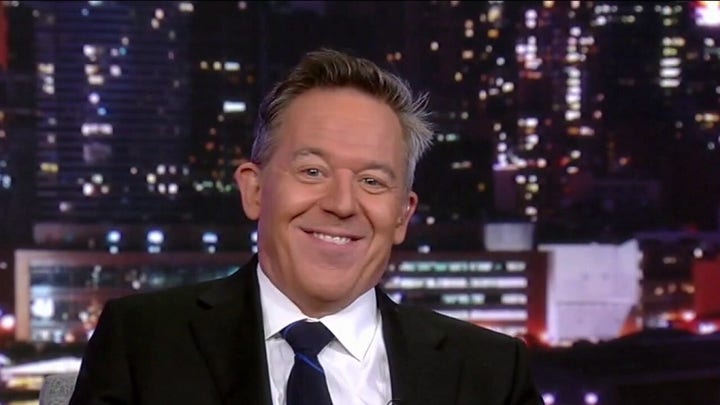
This is a rush transcript of "Gutfeld" on November 5, 2021. This copy may not be in its final form and may be updated.
GREG GUTFELD, FOX NEWS CHANNEL HOST: What a show we got in store. You know why? Because it's on drugs. I mean, the topic is about drugs. I can't say if the panelists are all on drugs, but let's just say the dogs hired by security to sniff for contraband started humping Kat's bookbag. And then pass out from a contact tie. All right, pee dogs. But first, Harris Faulkner is back. I wonder -- I wonder what she could be happy about.
(BEGIN VIDEO CLIP)
HARRIS FAULKNER, FOX NEWS HOST: I'm happy about this because just 15 minutes ago, the tattoo that I had of Greg Gutfeld on my thigh, like lower, like why my knee? Why my knee? It's gone.
UNIDENTIFIED MALE: Wow.
UNIDENTIFIED FEMALE: I saw it.
FAULKNER: Bye, Greg.
(END VIDEO CLIP)
GUTFELD: You think I would not include that in the show, Harris?
FAULKNER: And my husband now has to see that twice.
GUTFELD: Yes. Well, At least he didn't get the tattoo. You know, we've got -- didn't get the tattoo Stuart Varney and he's not complaining. All right. Also, Brian Kilmeade is back. Obviously, obviously somebody cancelled. Yes. We tried everybody including the janitor with the lazy eye. But -- and I'm very excited. We got a first time guest Dr. Carl Hart. Carl is a professor of psychology at Columbia. Relax, Kat. He doesn't do outpatients.
But Dr. Hart, where's that book? Dr. Hart wrote one of the bravest books you're going to find. Drug use for grownups. Oh, there it is. That was my major at Berkeley. I still can't believe you didn't ask me to write the foreword. So the book is about legalizing drugs. It might piss some of you off, but that's what the drugs are for. But the book isn't just about legalizing the easy ones like pot or mushrooms or the window cleaner that Kat mixes with Gatorade.
But heroin. Now this is when people say no, no, no, not heroin. Look what that drug does. The lost souls on the streets haunting city corners like ghostly zombies living for a fix. That's true. We indeed have problems. But here's the deal. That's happening while the drugs are illegal, yet they're easier to get than COVID. Even my cats -- even my cat is dealing drugs.
(BEGIN VIDEO CLIP)
(END VIDEO CLIP)
GUTFELD: Could have been more subtle. Yet while we pour billions into a drug war, not unlike Afghanistan, we just keep getting our ass kicked. We find other country's militaries to fight the drug trade, then let anyone walk across the border with a bindle up their butt. It's more counterproductive than a broom that shoots glitter. In 2019, over 70,000 people died from overdoses in the U.S.
That's 70,000 more people than have read Kilmeade's new book. Make a joke about drug death. But during the pandemic, that number exploded, probably because we were all trapped inside watching CNN. But what is causing this wave of death? Don't blame prescription opioids because as we cut down on that, the death rates skyrocket. No, today overdoses are driven by fentanyl. And like the coronavirus and cheap patio furniture.
It's made in China. It comes through our southern border and it's mixed into other street drugs to kick it up a notch. It's basically hamburger helper for junkies. Tell us, Lara Logan,
(BEGIN VIDEO CLIP)
LARA LOGAN, FOX NATION HOST: When the pandemic hit, we realized, oh well, without China we got no antibiotics.
GUTFELD: Right.
LOGAN: No medical equipment. So what did they do change that? Nothing. Right? And when China got all that capability, that's how they found the analogues for fentanyl, which they then introduced as a street drug made a deal with the Mexican cartels. And now they've got, what? How many Americans are dying every year and we hear nothing about it. I mean, go to San Francisco, nobody cares that you got people standing on the street, pissing on themselves and, you know, and defecating everywhere you know, and unable to function.
And what do they say? Well, let's reduce the mandatory minimum sentencing for fentanyl. That's what the Biden ministration Justice Department is working on right now.
(END VIDEO CLIP)
GUTFELD: So during 12 months of the pandemic, nearly 100,000 Americans have died from O.D.s. That's a 30 percent jump. Experts blame it on this stay- at-home orders. I don't buy it because when it comes to this stuff the government is like our presidents underpants. Full of crap. I feel bad just saying that. But especially when it comes to health, it's true. Remember the nutrition pyramid. It was everywhere?
Classrooms, waiting rooms, that shed where I keep the au pair. But also cereal boxes. Yes, imagine that. A box of carbs says you should stuff your face with carbs. Sadly, my chart had a typo. And I was eating 30 pounds of crabs a month. But it's cereal company telling you to eat more carbs. It's like the diamond industry telling you how many months salary you should spend on an engagement ring.
We thought we were following the science but we should have been following the money. Cookie Crisp had parents thinking kids started their day right by eating a bowl of cookies. It's amazing. It's like those stories about fake doctors tricking women into physical checkups. That's what this is. And yes, I stopped doing it years ago. They repossess my van. But this chart was dead wrong and deadly.
You had processed carbs in huge quantities turning healthy kids into mini Brian Stelter. Right now our adult obesity rate is 42 percent up from 34 percent just 10 years earlier. The only thing rising faster is our blood sugar. So what's that got to do with drugs? Well, the same people who lied about food are lying about drugs. Right now, when the government or media reports O.D.s, just like the crime stats, they never get specific. They never tell the whole truth.
It's about illegal fentanyl, not prescription drugs. And it's not overdoses, it's poisonings. People buy drugs with fentanyl in it and they die. People -- including people that you know, from Tom Petty to Michael K. Williams, to athletes and actors, but the people you heard of dying of opioid overdoses, it's actually fentanyl poisoning, not prescriptions, but a poisons used to kill people deliberately.
It's the biggest story you aren't hearing because all you hear is the word overdoses. And the worst part of this, patients who rely on legal opioids for cancer pain, and other diseases can't get them because we -- we've conflated safe drugs with fentanyl, but that's pretending two totally different things are the same, like CNN and news. Wrong way for a joke. When it's really actually terrorism, and it drives legal users to illegal stuff and they die because they can't control the dosage.
Or like hot dogs they just don't know what's in it. Imagine you could only buy cigarettes illegally. But one cigarette had a thousand times the nicotine, you would die, or at least sound like Kat. But instead you can go to any market and buy a carton. In San Francisco they even let you take it, but the dosage is controlled. Meanwhile, stats show addiction is actually rare among prescription opioids and overdoses are nearly impossible to find.
I bet you didn't know that. Because we're operating on the lie of all drugs bad and punish the law abiding. Here's an analogy you'll understand. What's the biggest complaint by gun owners? No, it's not that the gun jams when watching The View. It's that the laws -- it's that the laws punish the law abiding while doing nothing about illegal guns fueling street violence. It's the same argument here.
We punish the law abiding and let the lawless killed. We'll even provide clean needles, so it's the spiked drugs they die from. But sadly, we target the decent person who administers drugs safely in a safe environment like a doctor's office or Kat's apartment. But it's time we stop this death. It's also time to let people seek the relief they choose. And if they don't hurt anyone, and it's nobody's business.
Everyone on this planet has a right to relief, whether it's a martini, a joint or an opiod, because frankly I'm tired of buying clean urine from Steve Doocy. But if you need any D.M. me.
UNIDENTIFIED MALE: Period.
GUTFELD: Let's welcome tonight's guests. She's on your Fox News sprees more than relief factor, host of the Faulkner Focus and Outnumbered cohost, Harris Faulkner. He loves his wardrobe for the same reason he loves soccer, lots of boring ties. FOX AND FRIENDS cohost and author of the new book, The President and the Freedom Fighter Brian Kilmeade. He's an Air Force veteran and an expert on flying high.
Columbia University Psychology Professor Dr. Carl Hart. And she's 90 pounds soaking wet, probably from all those filled drinks. Fox News Contributor Kat Timpf.
GUTFELD: All right.
HARRIS FAULKNER, FAULKNER FOCUS HOST: Your audience is incredible.
DR. CARL HART, COLUMBIA UNIVERSITY PSYCHOLOGY PROFESSOR: Yes. I've never heard (INAUDIBLE)
FAULKNER: Wow. That's amazing.
GUTFELD: We -- in the spirit of this show we drug them. By the way, a lot of people don't know this about the original "FOX AND FRIENDS." But that segment cooking with friends, right?
BRIAN KILMEADE, FOX AND FRIENDS HOST: Right. That's a good -- that's a very good trivia note. And that was only you if you interviewed our staff is no way you know that.
GUTFELD: Yes. OK. What -- did I convince you in any shape or form with my monologue? Did you -- I assume that you probably are anti legalization?
KILMEADE: I have not done. It has heavily researched is as your teleprompter did, but I will -- but I will say and like the professor, but I will say fundamentally, I don't think it's good to legalize terrible behavior, but the counter argument would be, well, you have alcohol. Alcohol is out, there is an alcoholic drug. My sense is the big story in that story was what China's doing.
GUTFELD: I tried to sell it to him that way. I know that -- I know that you'd only be into it if I blame China.
KILMEADE: Well, you talk -- you have -- you have a panel here and you look past the panel. Who are you talking to?
GUTFELD: I was talking to me.
KILMEADE: You were talking the plan?
GUTFELD: Sometimes I talked to me.
KILMEADE: Oh, OK. But you were looking at the monitor.
FAULKNER: Yes. My picture is in the monitor. With that the rest of us are on the monitor.
KILMEADE: What did you realize?
GUTFELD: Well, what I realized, look at this book, look at this book, white man on the top, black man on the bottom. Racist, you are a racist. All right, I gotta move on. I'm tired --
KILMEADE: No, no, no.
GUTFELD: Thank you. Applaud.
FAULKNER: Wow.
GUTFELD: All right. All right. Professor --
KILMEADE: No, no. You're not to amend that statement?
(CROSSTALK)
KILMEADE: You act like you agree with that.
(CROSSTALK)
GUTFELD: Whatever you do in your private time, it's up to you. I want to get the professor in because he's the -- hwo would you respond -- like he brought up the alcohol thing. And there's this theory that you can only have one bad thing be legal. Right? But what's your take on that?
HART: I don't know. Alcohol is bad. Is that a bad thing?
KILMEADE: Well, I'm saying to counter to my argument. And fundamentally, I don't think legalizing heroin and all these drugs is -- the drugs are illegal now are going to be productive. And the counter argument to my statement is, well, alcohol, isn't that technically a drug? Isn't that addictive? I get it. But to me, if you legalize all these drugs, tell me a place where it works.
HART: I don't think -- I don't think were saying legalize, we're talking about legally regulating. So that means that adults have access to these activities, whether it's drugs, whether it's driving an automobile, whether it's owning a gun, adults have access to these activity.
KILMEADE: And how would that affect the people sleeping on the street?
HART: What do you mean?
KILMEADE: Did they go get more of them or less?
HART: The people sleeping on sleep -- streets, most of those people are not there because of drugs. I know that's the popular thing for people to say. Most of those people are there because they're having financial problems because of mental health issues. But it's easy to blame drugs. That's what we do in this country. We blame drugs for all of our sort of ills. That's not -- that's not what's going on.
KILMEADE: You've been living in the city though, right?
HART: Of course.
KILMEADE: Yes. So the city over the last six months, mentally ill are populating most of what we're seeing right now.
GUTFELD: And on this panel.
HART: Right. Yes. I feel it.
GUTFELD: I want you here --
(CROSSTALK)
HART: Excluding Harris.
(CROSSTALK)
GUTFELD: Yes. The same "FOX AND FRIENDS."
FAULKNER: One thing that I would say though is that you're looking at two different categories of drugs, though, because what the doctor is talking about legalizing like you would alcohol or something like that. You're talking about regulating the age of people who can use a certain drug that's already considered a controlled substance. But people are dying from fentanyl because they're buying it off the street.
GUTFELD: Yes.
FAULKNER: They think is Xanax. What they think --
GUTFELD: Right.
FAULKNER: And they're -- and some of them are doing it because those substances are hard to get right now, because they're not regulated.
KILMEADE: Yes, yes.
FAULKNER: And we're trying to comes into play. And where -- because I don't need to tell.
GUTFELD: Yes.
FAULKNER: So where -- yes. It's low hanging fruit. Where China comes into play is right at the nexus of where Mexico is feasting like scorpions that are border off those people who want to try to get into here illegally and using them as Coyote --
(CROSSTALK)
KAT TIMPF, FOX NEWS CONTRIBUTOR: But that would -- a lot of that problem would be solved if drugs were legalized here, there would be no demand for this supply that the cartels --
(CROSSTALK)
FAULKNER: And perhaps controlling your border --
(CROSSTALK)
TIMPF: -- for all adults that wanted to do these things. I don't think that you can say you live in a free country if you don't own your own body. And they're putting fentanyl not just in -- they're putting it in cocaine.
FAULKNER: They're putting it everywhere.
TIMPF: Nobody was trying to do cocaine wants to fall asleep. That's why they're doing cocaine. So --
(CROSSTALK)
HART: One thing about fentanyl.
GUTFELD: Yes.
HART: It's important for us to know that fentanyl has been a legal drug in the United States since the 1960s. And it's an important drug in terms of pain reliever. It's prescribed to treat moderate to severe pain and it's an excellent drug as long as people understand that they have fentanyl. The problem is when people don't understand that they have fentanyl they may take too much of it and overdose --
(CROSSTALK)
FAULKNER: So they'll take a Xanax not knowing that fentanyl, which is you say is as powerful as morphine and gives you the same kind of high. That's why they use it to lace it to make those --
(CROSSTALK)
HART: It's more potent than morphine. It's a lot more potent than morphine. But the problem -- the thing is nobody really wants to mix their cocaine, even people who are selling cocaine, they don't want to mix their cocaine with fentanyl. These things happen accidentally. But there are easy fixes to this. Just like they do in Europe, we can have these things called drug checking. Drug checking facility allows people to submit small samples of their drugs.
And then they get a chemical printout and then a fentanyl is in it, then we -- everyone knows that fentanyl is in it, and you don't take it or you scale back how much you take. We have the technology in this country to make these things available. We haven't made them available to the public because we don't care.
GUTFELD: Yes, you know, I have a -- I have an alternative. I just have a -- you know, because I'm -- fairly well off I just have a drug tester. So I just give it to them and if they fall down, I don't take it.
(CROSSTALK)
FAULKNER: (INAUDIBLE)
GUTFELD: Yes, exactly. All right. We got to move on. We got more. We love this topic.
KILMEADE: Yes, we do.
GUTFELD: Yes. I'm sure Brian, we changed your mind. All right. Up next, a mask obsessed professor becomes an obnoxious email aggressor.
(COMMERCIAL BREAK)
ASHLEY STROHMIER, FOX NEWS OVERNIGHT CORRESPONDENT: This is a Fox News alert. I'm Ashley Strohmier live in New York. The House of Representatives now voting on the bipartisan infrastructure vote. We're joined now by Congressional Correspondent Chad Pergram who has closely been following all the action on Capitol Hill. Chad, around 10:00 it got a little bizarre because they took a recess for 15 minutes. And then they came back for a couple of seconds. And now they're back in and they are voting.
CHAD PERGRAM, FOX NEWS CONGRESSIONAL CORRESPONDENT: That's right. You know, this infrastructure vote has been a long time in coming. There's a long time running joke in Washington that it's infrastructure week and it never was. This is in fact, infrastructure week because the House of Representatives is in fact voting on this bill right now. The Senate approved this bipartisan plan back in August.
Here was the holdup. You had these liberal Democrats, the progressives who were not willing to provide their votes for the infrastructure plan until they got things kind of etched in stone on the social spending plan. The $1.75 trillion plan which just a couple of weeks ago was $3.5 trillion and even higher than that. What has happened in the past hour, and you refer to these two recesses and why they're here working late on a Friday night, they're trying to get this across the finish line.
What has happened is that there was an agreement between the moderate Democrats and the Liberal Democrats. The moderate Democrats secured a deal that they would get a start on the social spending plan no later than the week of November 15th. And tonight, the progressive Democrats would provide their votes for the infrastructure bill, and also for a procedural vote to tee up that social spending bill perhaps later this month.
So the reason they have to do this is that Democrats only have a three vote radius in the House of Representatives. So if you lose, you know, less than a handful of votes, they cannot pass a bill on their own. Now on the infrastructure bill, keep in mind that there is a coalition of anywhere from about nine to 15 Republicans who are willing to vote yes. And I'm looking at the scoreboard right now. There are five Democratic nos on the board.
But there are 10 Republican yeas and I should also say that even though this vote is not closed, yet nothing is final until they actually gavel it down in the chair, announces the total. They have 219 yeas on the scoreboard right now. The House of Representatives right now has 434 members. So the magic number is 218. There one above that. So this bill has basically passed and the House and Senate are in alignment.
This could conceivably go to the president immediately and he could sign it into law. That's the first part of President Biden's domestic policy agenda here. The problem that you had is that you had this disagreement between progressives and moderates, and they just did not have the votes. If they had the votes earlier in the day, Ashley, they probably would have voted. How Speaker Nancy Pelosi does not go to the floor and lose.
That's what she always says she held off all day long. And guess what they have the votes to pass this bill tonight, Ashley?
STROHMIER: OK, Chad. We've got about a minute here. But I do just want to bring this up. Because when you think of infrastructure, you think of bipartisanship, but there's been a lot of back and forth on that. How much of this bill is actually infrastructure?
PERGRAM: That's a big criticism, especially from some Republicans here who said this is kind of a gateway to the Green New Deal. Something that's been pushed by the left. You know, earlier on our air you had Republicans like Steve Scalise, the Republican whip And Jim Banks, a Republican from Indiana dismissing this bill, even kind of throwing some of their own Republican members who are voting for this under the bus.
But keep in mind that this is a plan that was supported by Mitch McConnell, the Minority Leader in the Senate. But there are some provisions in this -- in this particular piece of legislation which Republicans definitely do not like and that's why the super majority of Republicans are voting no on this bill this evening.
STROHMIER: Right. And of course we will keep you updated. And Chad you're going to keep an eye on this for us all night until something comes down and we will get back with you as soon as it happens. Chad Pergram on Capitol Hill. Thanks so much. We're going to send you back now to regular programming. That's Greg Gutfeld.
(BEGIN VIDEO CLIP)
UNIDENTIFIED MALE: Please God make this in.
(END VIDEO CLIP)
GUTFELD: A masked Professor bitches than asks for COVID snitches. At Cornell University, go fighting herpes. Professor Bruce Monger, what a great name, Monger, e-mailed his class to narc on two maskless students so he could fail them. This would seem like the perfect time to avoid detection though by wearing masks. Last week fearmonger, see what I did there? E-mailed his introductory oceanography class describing the pair in detail.
"One student is a male with red hair and a fairly prominent hooked nose. His hair was pretty long, thick and wavy. The other student is a male sitting to the left he has short brown hair, maybe 1-1/2 to two inches in length and a small nose." This guy is really obsessed with noses. We just have names for that. For the record, Monger can be described as a puffy hair ginger with teeth like Gary Busey.
He then concluded if when I find the identity of these two students, I will be failing them both for this semester. So yet again, another introductory oceanography professor that let the power -- let the power go to his head. That happens all the time. But after this e-mail went viral the school stood by the jackass but admitted his e-mail was inappropriate, saying Monger, "Regularly advise to students of the mask requirements. He described the student's physical characteristics in ways that do not reflect Cornell values."
He has since acknowledged that his approach was not handled in an appropriate manner. Yes, it's the describing people that's the only problem, not the notion that the vaccinated unmasked are putting the vaccinated mask at risk or that he enlisted other students to narc. He's been replaced for the rest of the semester by Professor Splash.
I take a class from that guy. You're a professor. Would you consider ever doing anything like this to your students like asking your students to find the other students?
HART: know I mean, he said it was inappropriate and he was right for saying that is inappropriate. You know, it's one of these things where I have a class of 200 students and so you want to make sure everybody is respecting everybody else's rights.
GUTFELD: Right.
HART: That's it. That was inappropriate. He said it. Cool. I have -- I move on.
GUTFELD: All right, Kat.
TIMPF: Yes.
GUTFELD: What is it about humans that are intrinsic -- their intrinsic desire to righteously grab a pitchfork and like, go after somebody? That's what this tells me all -- every time I hear something like this, it pisses me off.
TIMPF: I don't have that in me.
GUTFELD: No.
TIMPF: I'm not a snitch.
GUTFELD: Yes, you're not a snitch.
TIMPF: At all.
GUTFELD: Right.
TIMPF: It also -- like when you're in college, you shouldn't your -- you know, you shouldn't be getting graded for your conduct anymore by your teacher.
GUTFELD: Yes. True.
TIMPF: That's over in like third grade, right? Like, thank God for me.
GUTFELD: Yes, I got terrible conduct.
TIMPF: Yes. I was always so smart. But my behavior was unacceptable. And I had a, "difficulty regulating my emotions in a manner appropriate for the classroom."
GUTFELD: Good to see nothing has changed.
TIMPF: Yes.
GUTFELD: Describe this show. Kilmeade, I wish you wore a mask.
(CROSSTALK)
KILMEADE: -- down there. That's not the question. I will say this. Two things. Ivy League schools was so timid during the whole virus, they immediately told everyone get off campus. Don't say a word or kick you out, pay your $72,000 and learn from your laptop. Number two, that just shows the obsession. He's a -- he's emblematic of the obsession. People have with masks and distancing and the craziness that happened in the anger that was directed that made everything so much worse.
This professor represents everything that I hated most about the pandemic. Almost as bad as the spiky virus.
GUTFELD: Hmm. You know what I hated most about the virus?
KILMEADE: What?
GUTFELD: Having to see you.
KILMEADE: We didn't have to see each other because we were isolated from each other. We couldn't come into the studio.
GUTFELD: I know.
(CROSSTALK)
FAULKNER: Apparently the time was not long enough.
HART: Yes. No kidding.
(CROSSTALK)
FAULKNER: You know what.
GUTFELD: Go ahead.
FAULKNER: No. I just want to pick up on something that you said about, you know, the pitchfork, the spiky fork, whatever going after people. That's what I see in this. I see a collision of two things. I see a pandemic that actually was stomped out by another pandemic, like you had -- you had COVID and that was going on. But what got worse was this guy's desire to cancel to students. Like, why couldn't he have done that privately? Why didn't he -- but you know what he was hoping?
GUTFELD: What's with the hooked nose?
FAULKNER: He was hoping -- he was hoping at least his actions would indicate this, that the woke folk would take aside, and that there would be a brigade that would help him out and suddenly, they could all cancel these two kids, whoever they are. And look, I mean, maybe there's a nose job that needs to be had somewhere in there. No judgment there. But I mean --
GUTFELD: Look how Kat looks. It was great.
FAULKNER: Oh stop.
TIMPF: I have never had plastics surgery.
FAULKNER: He looks amazing.
TIMPF: I had only had medically necessary surgery.
FAULKNER: Oh my goodness.
GUTFELD: She's not a snitch, but she's got stitches.
FAULKNER: So what's worse?
TIMPF: It's true.
FAULKNER: What's worse? The disease that we're trying to fight?
GUTFELD: Yes.
FAULKNER: Right? And keeping everybody safe is a good doctor said or the disease of we're trying to hate each other.
GUTFELD: Well, you know what, it goes -- it kind of goes back to the the prison of two ideas, a concept that I invented that like people, you either -- you're either wearing a mask or you want --
(CROSSTALK)
FAULKNER: I think I said it two minutes ago, but go ahead.
GUTFELD: No, but I mean like -- no. You either wear a mask or you want people to die. There's so many -- there's so many subtle points in between those two places that you can rest and --
(CROSSTALK)
TIMPF: And sometimes people wear a mask who do want people to die. That is true.
TIMPF: They called murderers.
GUTFELD: You watch too much Forensic Files.
TIMPF: Yes.
GUTFELD: Coming up, do bands on applause promote a school's boards cause?
(COMMERCIAL BREAK)
GREG GUTFELD, FOX NEWS CHANNEL HOST: They're afraid you'll clap because they're full of crap. Yes, the latest list of woke demand spans the act of clapping hands. Debates at local school board meetings have grown heated as parents push back against COVID restrictions in the teaching of CRT. At the center of this, is Douglas County, Colorado named after Douglas County, Georgia. That's not true. I just threw that in there because it sounded funny. We're in an effort to make things safer, they're trying to ban clapping.
(BEGIN VIDEO CLIP)
UNIDENTIFIED MALE: Audience again, I'm sorry McKinley --
UNIDENTIFIED FEMALE: That 5-year-old girl.
UNIDENTIFIED MALE: McKinley, if I could just have your stop again. Audience, this is the second time I've had to pause. I've clearly stated the expectations we cannot comment, it makes it an unsafe environment for someone who has a different perspective. And I will take a break if we need to, for you to get yourself to a place where we can make sure this is a safe place for everyone.
(END VIDEO CLIP)
GUTFELD: There it is, again the word "safe." Anytime you want to shut someone down claim it's about being safe. We want you to be safe, so please keep your mask on at all times even outside; to ensure your safety, we removed all gun emojis from your smartphone. And so, we can all be safe, we banned Greg Gutfeld from the Planet Fitness sauna. Oh, clap for that! I didn't know that. You have to wear a towel. So, now, it's clapping, right? But sorry, back in the day if you wanted to be somewhere with zero clapping, you had to go see Brian Kilmeade do stand up.
BRIAN KILMEADE, FOX NEWS CHANNEL HOST: Because you're too busy laughing.
GUTFELD: Thank you. You sure did clear out those homeless encampments. But seriously, first, it was silence is violence, then words equal violence, now clapping is unsafe? I haven't seen such fake outrage since Rachel Dolezal ran out of Afro-sheen. No wonder parents are pissed. Seriously, banning clapping? Who is that protecting? Imagine where this is headed.
(BEGIN VIDEO CLIP)
UNIDENTIFIED MALE: So, Britain, as you know you were caught clapping in my classroom. Do you know how many clapping related COVID deaths there were in 2020?
UNIDENTIFIED MALE: Zero?
UNIDENTIFIED MALE: OK, well 2021 isn't over yet anyhow, OK. And as your math teacher, I have one principal clapping causes division. OK, and I won't let it multiply.
UNIDENTIFIED MALE: Is it Mr. Daniels, the principal? Principal, not -- you know what, all right, if you're going to show approval from now on in my class, you do this. Try it. Hello, FBI, my student is a terrorist.
(BEGIN VIDEO CLIP)
GUTFELD: I have to say cat that is some amazing acting by our producer Tom, a 40-year-old playing a 20-year-old college.
KAT TIMPF, FOX NEWS CHANNEL HOST: He's seen some --
KILMEADE: It's kind of like, welcome back, Kotter. We realize those guys were shaving in 11th grade.
GUTFELD: I know. I know. That was a great show.
KILMEADE: It was.
GUTFELD: it really was.
KILMEADE: Based on a true story. He went back to the sweat OGS after getting out, and that was his ticket back.
GUTFELD: I don't think I asked for a description.
KILMEADE: I'm sorry.
GUTFELD: But I understand. Do you even know what applause sounds like?
KILMEADE: No idea. Because I don't, because I am not so insecure. I have to hire people to clap for me.
GUTFELD: No, no, you're all out of here. All right. You know what's worse than clapping? OK, so I know Kat knows that. You must know this because you were in college like 20 years ago. This, this stuff? People who do this? Did you have --
TIMPF: Snap? Yes.
GUTFELD: I hate that.
TIMPF: And I also hate using words like, you know, unsafe -- I guess what they mean is uncomfortable. But for me, I think it's the opposite. To me, nothing is less comfortable than being in a room full of people and I have no idea how any of them feel about anything.
GUTFELD: Yes.
TIMPF: That's scary. And it makes you paranoid like, OK, can I say this? Can I say that? Where they go? How are they going to react if I say this? Can I be myself or do I need to hide my everything that I am. And if people are clapping, it's tough Harris, you know, I'm not -- I'm not for everyone I'm more of like you know like a you know like different a special, like special like cult following maybe but I'm not like, you know, I could not probably host a morning show like you do. But I will know that in certain rooms and I will tone it down. If I don't know, then, then that is that's that actually might be unsafe for me, but I could get fired.
GUTFELD: I never thought about that. But I did a speech at a like what do you call it a Chamber of Commerce thing in Wisconsin, and I did my normal thing and that was I was up there and I'm going like, holy crap. I think this is the wrong crowd.
TIMPF: But then that gives you an opportunity to be like, all right, let me pretend to be somebody else real quick.
GUTFELD: But boy was I right? It was the wrong crowd. They tried to unpay me --
TIMPF: Oh, yes, I remember that story.
GUTFELD: Yes.
TIMPF: That's true.
GUTFELD: Yes. They tried to unpay me. They had a newsletter, they wrote about it. Because I swore -- I think I said (BLEEP) whatever.
TIMPF: Which you can't do on the "FAULKNER FOCUS."
HARRIS FAULKNER, FOX NEWS CHANNEL HIST: No, you can't do that on the "FAULKNER FOCUS." But wait, I love Kat Timpf, I didn't know you had all that other stuff going on, though.
TIMPF: Oh, like what. the paranoia?
FAULKNER: Oh, my goodness.
GUTFELD: This is why, this side wants decriminalization. Professor when you do when you speak when you when you do classes. Do anybody, do you, do you have the same anxiety when, when you're looking out that people are they understanding what I'm talking about?
DR. CALK HART, NEUROSCIENTIST: Of course, I worry whether they understand or not, but they can clap or not clap. Most of the time they don't clap because I'm not funny. So --
GUTFELD: This made me laugh. I guess.
HART: Yes.
GUTFELD: That was a lot.
KILMEADE: I would think a couple things. Is this the real Kat, this is the real you though, right?
TIMPF: Well, no -- the problem is I don't have a way of really pretending I'm too impulsive. But you know, it's always better to know where you stand. It's scarier to be like, What did they think about what I just said? Because you have to think about it at night when you're trying to fall asleep.
FAULKNER: I wish I actually have that going on.
TIMPF: Really?
FAULKNER: Because what I have going on is expressing everything that I'm feeling every moment I'm having it.
TIMPF: Yes.
FAULKNER: According to my husband.
TIMPF: But then, you, but you worry about it later or no?
FAULKNER: No.
TIMPF: OK, that second part, I need help with.
FAULKNER: It's a talk show, it's unscripted. I really don't. I really don't. I wish I did.
GUTFELD: She says everything that she thinks and then she doesn't think about it, isn't she a sociopath?
FAULKNER: Am I? I mean, can you diagnose me right now?
HART: No, I can't say that.
FAULKNER: Oh, no, you just don't want to say it for free.
KILMEADE: I've never seen a host try to get the panel to turn on each other. You want to see a fight. Jerry Springer used to host this show and then run behind the audience.
GUTFELD: I'm, I'm too lazy to be Jerry Springer. I want people to turn on each other while sitting --
KILMEADE: I know you know. You don't, you don't want to be inconvenienced.
GUTFELD: I know. I know. All right. Do you want me to go?
FAULKNER: Where are we going?
GUTFELD: I don't know. Yes, she was teasing. All right, coming up, with smoking grass help ballers pass? Oh, more drugs.
(COMMERCIAL BREAK)
GUTFELD: Smoking a blunt help you run past or punt, could smoking a bone put athletes in the zone? Could smoking chronic make athletes feel bionic? Well, a new report claims that pro athletes across all sports are using marijuana to help performance. I guess that explains how Snoop Dogg became the world's top kite surfer. The reasoning goes like this: exercise helped, I don't know if this is right.
Exercise helped produce (INAUDIBLE) bide which chemists say is responsible for those good feelings that exercise produces. It's also a cannot avoid (INAUDIBLE) -- and therefore, a compound in the same family, I can do this as THC which has psychoactive effects. And the thinking goes that a moderate dose of THC can help induce the production of an (INAUDIBLE) --
FAULKNER: Did you try something before you tried to read this?
GUTFELD: I'm very bad at this and athletes have caught on explains, Josiah has, "Professional athletes in every sport from the MMA to the PGA from the MLB to the NFL are using cannabis before, during or after their training and competition. And amateur athletes as well are sheepishly confessing that they've been getting high before their runs, basketball games, rock climbing, or weightlifting for years certain that they were the only ones." Now, if your regular pot user, you zoned out two seconds into that explanation. I've seen that looking Kat's eyes for the past five years. But for more, let's go to Olympic hopeful Speed McJohnson for more.
(BEGIN VIDEO CLIP)
UNIDENTIFIED MALE: Speed, is it true that you use marijuana edibles to enhance your performance?
JOE MACHI, COMEDIAN: Do you see this temple, you tell me?
UNIDENTIFIED MALE: And does it make you faster?
MACHI: You want to see me run around the building?
UNIDENTIFIED MALE: Yes, I mean, I think we would all love to.
MACHI: You want to see it again?
(END VIDEO CLIP)
GUTFELD: Joe Machi. All right, I want to get the science down before I talk to the lay people. OK, what -- what's the I mutilated the science there. What -- is there a science that that or is it just is this like a cover? Just to say we like smoking pot?
HART: No. When we exercise for example, there's an increase in anandamide in the brain. Anandamide is the endogenous odor chemical that we have in our brain that is like THC. So, that's the endogenous sort of THC.
GUTFELD: Right?
HART: There's an increase when you exercise, what that means in terms of when you smoke marijuana. Do you get runner's high all of these things people have speculated.
GUTFELD: Right.
HART: Whether that's true or not, we don't we don't know.
GUTFELD: Yes, that's a good answer. You know, Brian, so a lot of people in sports claim this works. But, but also in soccer.
KILMEADE: So, a couple of things. I understand it's used as a pain relief and they say that if you have some pain, you start working out, the pain goes away with or without, without drugs, and they say this will enhance that to speed that process up. I could never see taking, getting high, if you want to win. If you just want to finish the game or have a good time losing, to me, that's when pot comes into play. It's like I'd rather stop winning in my life, I want to mellow out and care less about being successful.
GUTFELD: I don't think you do it in a game, you do it like in practice, or you do it.
FAULKNER: Yes, so, I ran marathons for many years. I don't run marathons anymore, but when I was training for them, I was not smoking the weed, but what I was getting -- no. But if I felt down about something and I went out and I ran 15 miles, I did feel better. Like there is something to that, and I understand what you're saying, Doctor, I would then have to immediately go to a lab and have them test my brain to tell me if it was actually, you know, being enhanced in some way. But I know I felt a release and I felt like I could do more in life total when I don't train for marathons anymore. But every now and then, I'll go and run as far as I possibly can.
GUTFELD: That's nice.
FAULKNER: Away from Greg Gutfeld.
GUTFELD: If I could run away from me, I would.
FAULKNER: So, I think there's something to it and there were people when I was running marathons, particularly in Southern California, I did see people who, you know, they would enhance themselves --
GUTFELD: Yes.
FAULKNER: With the weed when they were training. So, I don't know.
GUTFELD: Everybody in California is always enhancing themselves, it's really obvious. I know those aren't real. Kat --
FAULKNER: No, that's not what I meant.
GUTFELD: When you get high, you also run but it's often to Burger King.
TIMPF: I don't do any of those. I order Burger King on my phone. I just -- the anecdotal stuff doesn't really get to me because I don't like the other side of it, I don't like either, like people who are like anti-weed. They're like, oh, my cousin Kevin smokes weed and always sits in the basement doesn't do anything. Like my Aunt Linda ate a whole pan of weed brownies, then she freaked out.
It's like, well, then I guess Kevin and Linda maybe shouldn't do weed, that doesn't mean that other people it doesn't work for. Like, it doesn't make sense to me -- I mean, to make something illegal or to say it's bad because of a story that it's bad for. Like, there are plenty of people who have been bad for me. Does that mean those people should be illegal? No, not all of them.
HART: Can I just say one thing.
GUTFELD: Yes.
HART: So, we're talking about anandamide. That's just one chemical in the brain. There are hundreds that we know of there, probably more. And there are multiple things going on. So, there was a time in the 80s when we said exactly the same thing about endorphins.
FAULKNER: Yes.
HART: And so, this notion that we focus on one chemical and that's it, that's probably --
FAULKNER: Doesn't that lower your stress, though? Isn't that also why athletes do it because it lowers the anxiety that they have before they're about to --
HART: Certainly, cannabis can do that, a number of drugs can do that.
TIMPF: What should I do, because I'm having anxiety that what I said earlier to Harris was weird.
FAULKNER: Kat, you have no worries. I love you with all my full heart.
TIMPF: You too. I'll, I'll hopefully sleep tonight. OK.
GUTFELD: Up next, a NASCAR driver used a bad word but is his punishment absurd?
(COMMERCIAL BREAK)
GUTFELD: They'll still let him drive in circles even though he act like a jerk-cle. Using an inappropriate label that insulted the disabled. Yes, Kyle Busch drives a racecar when it's raining, but they worried about sensitivity training. NASCAR driver Kyle Busch is being sent to sensitivity training -- I just said that -- after using the R-word to describe another driver. And no, I don't mean racy, see that?
(BEGIN VIDEO CLIP)
KYLE BUSCH, NASCAR DRIVER: For what second place? To do what? He wasn't going to transfer through with that. It's freaking (BLEEP), man. So, stupid. I don't understand these guys. I should be (BLEEP) right now, but I should do but that doesn't do me any good either.
(END VIDEO CLIP)
GUTFELD: Now, that's especially inappropriate considering he was dressed like a peanut M&M. I'll never eat them again. Busch later tweeted in one of my post-race interviews, "I used the word I should ever use, and I want to apologize for it." Since the word violated NASCAR Conduct Guidelines, he will be required to do the training. But he's still allowed to compete at Phoenix on Sunday. But it's funny that they're worried racecar drivers aren't sensitive. I see those guys make lane changes without signaling constantly. Kat, what do you make of the punishment?
TIMPF: I just don't know why we do sensitivity, sensitivity training at all in general, anywhere. We have hundreds of studies going back to like the 1930s saying it doesn't do anything to change people's thoughts or behavior. And life is really short, and I'd rather waste my time on things that are at least waste of time that are fun.
GUTFELD: There you go. You know, Brian, your book is fantastic. Shouldn't we just call people Kilmeades instead? Hey, you're such a Kilmeade! Knock it off, Kilmeade.
KILMEADE: If it, if it helps me sell books, I'd be all for that. But I mean, it was that word in particular up until 10 years ago. Geraldo Rivera was one of the leading, he had a foundation with that word in it and just showed you how appropriate it was. He was doing great work for, for people who are learning disabled, let's say, and that was in the title.
GUTFELD: Yes. Well, should we cancel Geraldo? Get them off my back.
KILMEADE: Right. You guys fight a lot.
GUTFELD: Oh, Professor, two Kat's point, sensitivity -- I always feel that sensitivity training is more for the corporation to say, hey, look, we did something and then they could go. The sense -- do you think sensitive, sensitivity training works?
HART: Oh, of course not. No, to your point, your point, training is for the corporation. It's not actually for the behavior. Like how Busch said, you know, he made a mistake if he was wrong, and no one really -- and he's right, he made a mistake. But no one said anything about the fact that, he this guy almost caused him to kill himself or hurt himself, and he inhibited and he didn't go hit the guy. And no one said anything about that appropriate behavior.
KILMEADE: That's a good point. I didn't know that.
GUTFELD: Yes, last word, Harris.
FAULKNER: I'm ready the book. I'm learning all about it.
GUTFELD: Yes, no -- what do you think about this? Do you believe in sensitivity training?
FAULKNER: You know, I believe in just conversations between people. I don't know why we have to handle everything so publicly.
GUTFELD: Yes, that's true. That's a great point.
FAULKNER: Yes, I've never understood that because the point isn't then to get him to understand a different you know outcome for the words or behavior or whatever. The point is what, just to share shame him for not knowing suddenly, like I've never really understood that. That's the opposite of sensitivity training. It's the, it's the -- it's insensitivity training. Oh, title of my next book.
KILMEADE: I know this was a headline a long time ago, but when, when you were in a locker room, there was nothing sensitive. It was all to offend in locker, the so-called locker room talk.
GUTFELD: Yes.
KILMEADE: That we heard a lot about in 2016. That's what that was.
HART: Yes, well, not exactly. Kyle Busch apologized. So, and he recognized that he made a mistake. And now if people are saying well, I said this before and I should be able to say it now, that's different. But if you recognize that you made a mistake, cool. Let's move on.
FAULKNER: So, why did the Former Governor of Virginia, Northam, keep wearing blackface?
GUTFELD: I don't know.
FAULKNER: Did we have that kind of time?
GUTFELD: I don't think so. We're out of time, Harris. She's waving us. All right, don't go -- don't go away. We'll be right back.
(COMMERCIAL BREAK)
GUTFELD: We're out of time. Thanks to Harris Faulkner, Dr. Karl Hart, Brian Kilmeade, Kat Timpf, our studio audience. "FOX NEWS @ NIGHT" with evil Kevin Corke is next. I'm Greg Gutfeld. I love you, America.
Content and Programming Copyright 2021 Fox News Network, LLC. ALL RIGHTS RESERVED. Copyright 2021 VIQ Media Transcription, Inc. All materials herein are protected by United States copyright law and may not be reproduced, distributed, transmitted, displayed, published or broadcast without the prior written permission of VIQ Media Transcription, Inc. You may not alter or remove any trademark, copyright or other notice from copies of the content.
https://www.foxnews.com/transcript/gutfeld-on-u-s-drug-overdose-deaths