 Print
Print
 Close
Close

The data center fight could decide the next president and cost America the AI race
By Len Khodorkovsky
Published August 31, 2026

It’s the fall of 2028. A debate moderator turns to two presidential nominees who spent their governorships fighting over data centers. "China’s AI lead is now a fact," she says. "In 2026, you decided to restrict data-center construction, and the machinist in Youngstown, Ohio, watched his job follow the servers to the Gulf. What do you tell him? Which of your policies would you take back?"
That reckoning is two years away, but the choices that will decide it are being made now. Rising electric bills deserve a real fix, but not one rushed for political expediency that leaves the people it’s meant to help worse off down the road.
The pressure to do something is building. Gary Elder retired to Lewisport, Ky., on a fixed income that makes any bill feel precarious. At a Public Service Commission hearing in Hancock County this July, the 69-year-old told regulators he was worried a 500-megawatt data center proposed nearby could push his electric bill toward $1,000 or more. Elder represents seven in 10 Americans who oppose a data center in their own backyard. And when politicians sense trouble, they move fast.
FOX NEWS POLL: COOL YOUR SERVERS! VOTERS REJECT DATA CENTERS
By August, Pennsylvania Democrat Gov. Josh Shapiro and Texas Republican Gov. Greg Abbott, two governors who spent recent years courting hyperscale data centers, were both moving the other way. Shapiro signed an executive order he called the "strictest guardrails in the nation." Abbott froze new grid connections pending a statewide audit.
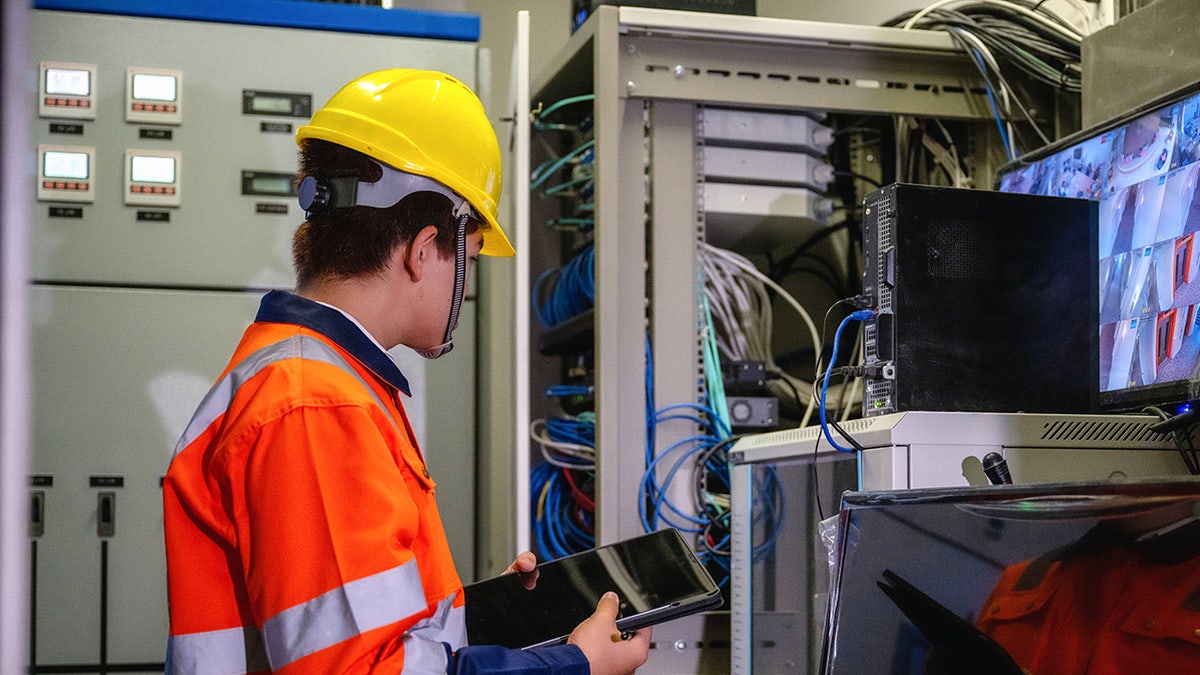
IT technician holding tablet and inspecting a server rack network data center, maintaining telecommunication server room, checking cables mainframe cabinet, auditing a hardware networking router station.
New York Democrat Gov. Kathy Hochul went further, pausing environmental permits for a year, and Florida Republican Gov. Ron DeSantis guaranteed local governments’ authority to reject data centers. Republicans and Democrats are arriving at the same anxiety from different directions.
FROM NEW YORK TO TEXAS, STATES SHOULD RESPECT LOCAL CONTROL ON DATA CENTERS
In contrast, President Donald Trump has been the most unambiguous pro-buildout voice in the country, calling Abbott’s freeze a "mistake," while Senate Republicans have privately warned the issue could cost them Ohio’s Senate seat, where Trump-endorsed Sen. Jon Husted trails as "the face of data centers." The same dynamic is now repeating in the state’s gubernatorial race with Republican Vivek Ramaswamy calling for a moratorium of his own, and Democrat Amy Acton countering with hers.
For any ambitious politician eyeing 2028, there is little downside to running as the candidate who stood for cutting electric bills and considerable risk in being the one who has to explain why America’s compute lead matters.
TRUMP HEADS TOWARD UNLIKELY CLASH WITH CLOSE ALLY OVER FUTURE OF MULTIBILLION-DOLLAR INDUSTRY
Data centers are not just computer warehouses. They are the physical foundation of artificial intelligence (AI), cloud computing, advanced manufacturing, scientific research, autonomous systems and, increasingly, national-security capabilities. Goldman Sachs estimates that U.S. AI-related investment will approach $600 billion in 2026. But every gigawatt of capacity America fails to build can flow to countries with faster permitting, cheaper power or more predictable policy, taking construction jobs, supply-chain work and the tax base with it.
Ironically, many of this year’s stalled projects aren’t zoning fights at all. They’re running into a more fundamental constraint: scarce high-voltage transformers, a bottleneck that exists with or without protests. The strategic vulnerability is that China accounts for roughly 60% of global transformer production capacity. Saudi Arabia’s $100 billion HUMAIN program, the UAE’s Stargate and a Japan buildout backed by Gulf sovereign wealth are courting the same capital American localities are turning away.
CHINA IS BUILDING AN AI WAR MACHINE. WASHINGTON MUST WAKE UP BEFORE IT’S TOO LATE
So how do we address legitimate concerns while keeping our eye on the strategic imperative of becoming the "AI capital of the world," as Trump put it?
Start by recognizing what this fight is actually about. Americans don’t oppose data centers; they oppose feeling like someone else gets the benefit while they get the bill. This shouldn’t be treated as us vs them, but as a solvable problem that comes down to three practical questions: where the power gets built, who pays for it and how fast the permits move.
DATA CENTERS FORGOT THE CONSUMER — AND THAT COULD COST AMERICA THE AI RACE
Data centers should pay the incremental cost of the electricity infrastructure they require, enter transparent power agreements, invest in new generation and storage where feasible and use energy- and water-efficient technologies. Communities should have meaningful input, and governments should tie tax incentives to measurable economic benefits.
For any ambitious politician eyeing 2028, there is little downside to running as the candidate who stood for cutting electric bills and considerable risk in being the one who has to explain why America’s compute lead matters.
Done right, this isn’t just fair, it works. Columbia University’s Center on Global Energy Policy found that large loads haven’t been the principal driver of rising rates, and in some places with the highest demand growth, prices have actually fallen, provided supply, cost allocation and tariff design are sound.
AMERICA NEEDS AI TO SURVIVE. WORKING FAMILIES ALSO NEED TO SURVIVE IT
States should also encourage data centers to locate where power is abundant, as West Virginia is doing. Its leaders view data centers as critical infrastructure and are positioning abundant energy, microgrids and proximity to population centers as advantages. Republican Gov. Patrick Morrisey has described the approach as a 20-year strategy, while Google has announced a multibillion-dollar project there.
That’s the model America should pursue: more capacity, in more places, with smarter rules.
THE WAR ON DATA CENTERS JEOPARDIZES OUR ECONOMY AND NATIONAL SECURITY
Technology companies have a role, too. In March, Amazon, Google, Meta, Microsoft, OpenAI, Oracle and xAI signed the White House’s Ratepayer Protection Pledge, committing to bring or buy power for their facilities and cover required infrastructure upgrades rather than shift those costs onto households.

Get that sequencing right, and there’s a benefit even the buildout critics tend to overlook: the trades.
CLICK HERE FOR MORE FOX NEWS OPINION
Building a data-center campus requires a large skilled workforce, including electricians, pipefitters and high-voltage crews. Meta’s president estimates the U.S. could need roughly 500,000 additional electricians alone to support the AI infrastructure buildout. Microsoft’s president has called the electrician shortage the company’s biggest constraint. That’s why Google, Microsoft and the electrical workers’ union are pouring money into apprenticeships that lead to well-paying careers without student debt.
CLICK HERE TO DOWNLOAD THE FOX NEWS APP
We don’t have to choose between Gary Elder’s electric bill and America’s technological lead. We can do both. When those presidential nominees face the data-center question in 2028, they can say: "We kept bills affordable while keeping America in the lead."
CLICK HERE TO READ MORE FROM LEN KHODORKOVSKY
https://www.foxnews.com/opinion/data-center-fight-could-decide-next-president-cost-america-ai-race